Claudia Anna Michal, a Polish youth currently studying at Hainan University in south China, reflected on why Chinese movies resonate with her -- particularly through their focus on moral values and societal progress -- on the occasion of the ongoing 27th Shanghai International Film Festival.
The 10-day festival, featuring over 400 domestic and international films screened across Shanghai, opened on Saturday at the Shanghai Grand Theater under the guidance of the China Film Administration and co-hosted by China Media Group (CMG) and Shanghai Municipal People's Government.
Commemorating the 130th anniversary of world cinema and the 120th anniversary of Chinese cinema, the festival is set to capture the attention of local cinephiles and global audiences alike.
Michal said that her taste in film spans the entire globe, as well as the spectrum of genres.
"I have watched European, American, Chinese and Indian movies and series. Most often, I choose to watch periodical costume movies and series, as well as thrillers and dramas which are my favorite types of movies. However, I'm open to all kinds of movies which are well-made. So I have my favorite comedies, musicals and action movies too. For example, "Inception" and "The Prestige" by Christopher Nolan, "Passion (of the Christ)" and "Apocalypto" by Mel Gibson, "Titanic" and "Avatar" by James Cameron, "The Shining" and "Eyes Wide Shut" by Stanley Kubrick," she said.
The young movie buff also highlighted a few aspects of Chinese cinema that have resonated with her.
"As for Chinese movies, I really like Chinese criminal movies with action based on Hong Kong. And my favorite Chinese movie by now is "Raging Fire." I rarely enjoy action movies and this one is great. Xie Tingfeng (Nicholas Tse) is also one of my favorite Chinese actors. I appreciate that the main actors in the movie have real fighting skills so there is not so much need of CGI, which makes it wonderful to watch," said Michal.
"What I appreciate about Chinese cinema industry is that it is not afraid of highlighting the society's successes and achievements. I think it builds strong morals among the people and gives them hope that not everything is going wrong with the world. Chinese cinema touches on daily life, family life, moral struggles and issues. And most movies that I have watched really want to teach viewers something important about life, so it's not just an entertainment watching," she said.
Michal expressed her hopes for collaboration between filmmakers in China and her own country.
"This year's Shanghai International Film Festival marks the 130th anniversary of the birth of world cinema, and the 120th anniversary of the birth of Chinese cinema. I would love if Chinese and Polish directors and filmmakers could exchange ideas and concepts. I think both sides could add a lot of value to each other's work," she said.
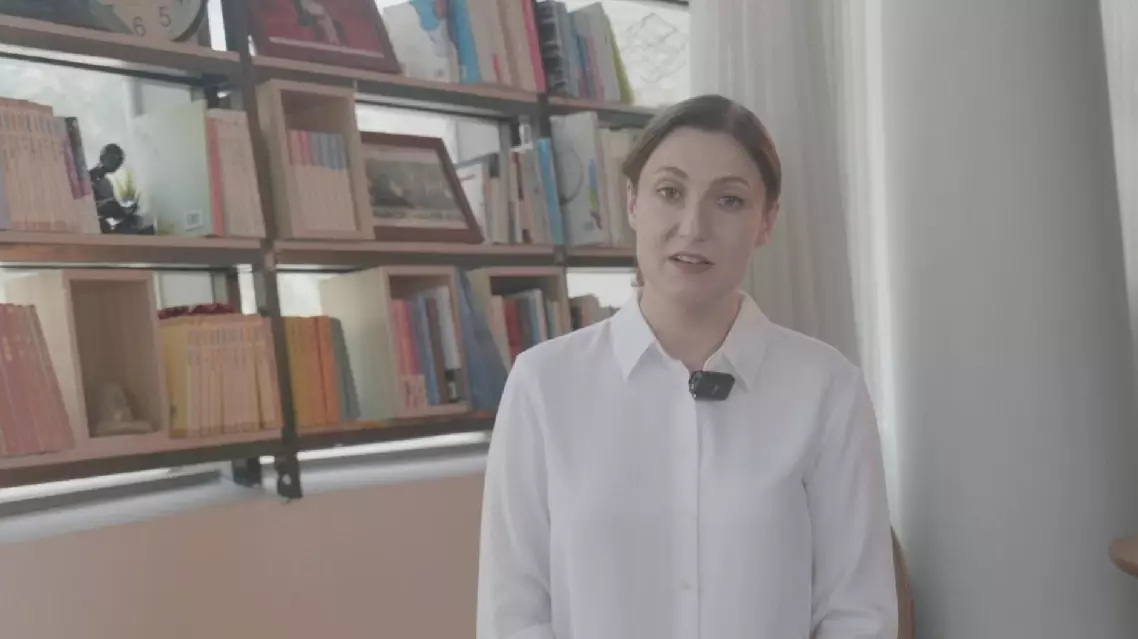
Polish student highlights hope, moral power of Chinese cinema