A listeria food poisoning outbreak that has killed three people and led to one pregnancy loss is linked to newly recalled heat-and-eat chicken fettucine alfredo products sold at Kroger and Walmart stores, federal health officials said late Tuesday.
The outbreak, which includes at least 17 people in 13 states, began last July, officials said. At least 16 people have been hospitalized.
FreshRealm, a large food producer with sites in California, Georgia and Indiana, is recalling products made before June 17. The recall includes these products, which were sold in the refrigerated sections of retail stores:
— 32.8-ounce trays of Marketside Grilled Chicken Alfredo with Fettucine Tender Pasta with Creamy Alfredo Sauce, White Meat Chicken and Shaved Parmesan Cheese with best-by dates of June 27 or earlier.
— 12.3-ounce trays of Marketside Grilled Chicken Alfredo with Fettucine Tender Pasta with Creamy Alfredo Sauce, White Meat Chicken, Broccoli and Shaved Parmesan Cheese with best-by dates of June 26 or earlier.
— 12.5-ounce trays of Home Chef Heat & Eat Chicken Fettucine Alfredo with Pasta, Grilled White Meat Chicken and Parmesan Cheese, with best-by dates of June 19 or earlier.
The strain of listeria bacteria that made people sick was found in a sample of chicken fettucine alfredo during a routine inspection in March, U.S. Agriculture Department officials said. That product was destroyed and never sent to stores.
Officials said they have not identified the specific source of the contamination. Cases have been identified through retail shopper records and interviews with sick people.
The listeria strain tied to the outbreak has been detected in people who fell ill between July 24 and May 10, the U.S. Centers for Disease Control and Prevention reported. The deaths were in Illinois, Michigan and Texas. Cases have been reported in Florida, Illinois, Indiana, Louisiana, Michigan, Minnesota, Missouri, North Carolina, Nevada, Ohio, South Carolina, Texas and Virginia.
The number of sick people is likely higher than now known and cases may be detected in additional states. Officials are continuing to receive reports of illnesses linked to the product and “are concerned that contamination is still occurring," the CDC said.
Consumers shouldn't eat the products, which may be in their refrigerators or freezers. They should be thrown away or returned to the place of purchase.
Listeria infections can cause serious illness, particularly in older adults, people with weakened immune systems and those who are pregnant or their newborns. Symptoms include fever, muscle aches, headache, stiff neck, confusion, loss of balance and convulsions.
About 1,600 people get sick each year from listeria infections and about 260 die, the CDC said. Federal officials in December said they were revamping protocols to prevent listeria infections after several high-profile outbreaks, including one linked to Boar's Head deli meats that led to 10 deaths and more than 60 illnesses last year.
The Associated Press Health and Science Department receives support from the Howard Hughes Medical Institute’s Department of Science Education and the Robert Wood Johnson Foundation. The AP is solely responsible for all content.
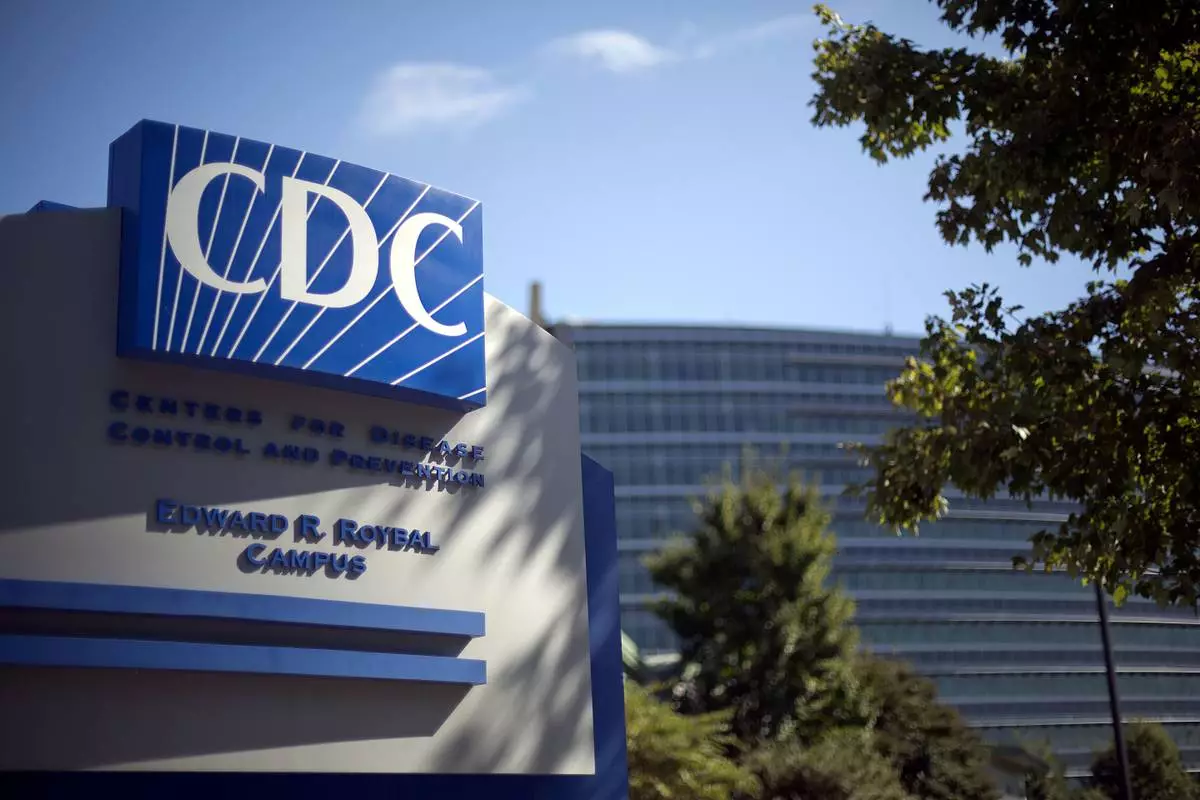
FILE - A sign marks the entrance to the federal Centers for Disease Control and Prevention (CDC) in Atlanta, on Oct. 8, 2013. (AP Photo/David Goldman, File)
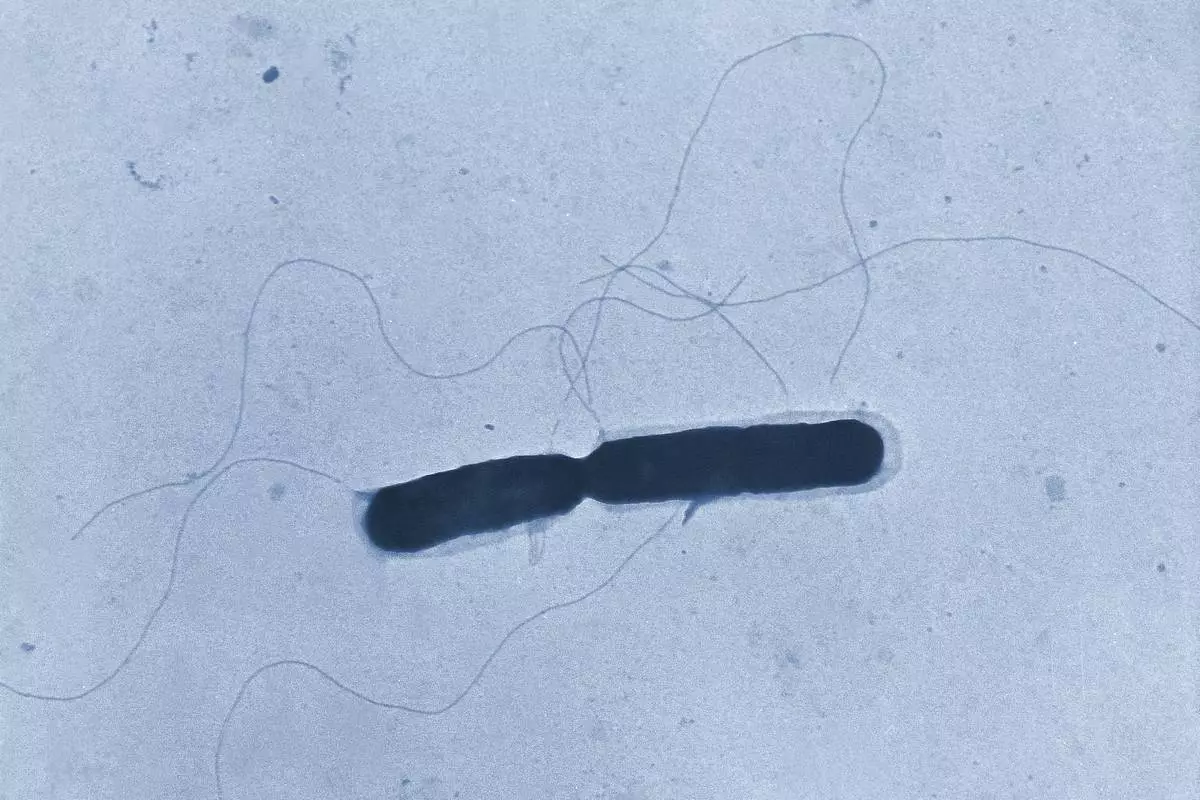
This 1966 transmission electron microscope image provided by the Centers for Disease Control and Prevention shows a Listeria bacterium with its flagella, in the process of cell division. (Graham Heid/CDC via AP)
ORCHARD PARK, N.Y. (AP) — Buffalo Bills fans arrived early and lingered long after the game ended to bid what could be farewell to their long-time home stadium filled with 53 years of memories — and often piles of snow.
After singing along together to The Killers' “Mr. Brightside” in the closing minutes of a 35-8 victory against the New York Jets, most everyone in the crowd of 70,944 remained in their seats to bask in the glow of fireworks as Louis Armstrong's "What A Wonderful World” played over the stadium speakers.
Several players stopped in the end zone to watch a retrospective video, with the Buffalo-based Goo Goo Dolls’ “Iris” as the soundtrack while fans recorded selfie videos of the celebratory scene. Offensive lineman Alec Anderson even jumped into the crowd to pose for pictures before leaving the field.
With the Bills (12-5), the AFC's 6th seed, opening the playoffs at Jacksonville in the wild-card round next week, there's but a slim chance they'll play at their old home again. Next season, Buffalo is set to move into its new $1.2 billion facility being built across the street.
The farewell game evoked “a lifetime of memories,” said Therese Forton-Barnes, selected the team’s Fan of the Year, before the Bills kicked of their regular-season finale. “In our culture that we know and love, we can bond together from that experience. Our love for this team, our love for this city, have branched from those roots.”
Forton-Barnes, a past president of the Greater Buffalo Sports Hall of Fame, attended Bills games as a child at the old War Memorial Stadium in downtown Buffalo, colloquially known as “The Rockpile.” She has been a season ticket holder since Jim Kelly joined the Bills in 1986 at what was then Rich Stadium, later renamed for the team’s founding owner Ralph Wilson, and then corporate sponsors New Era and Highmark.
“I’ve been to over 350 games,” she said. “Today we’re here to cherish and celebrate the past, present and future. We have so many memories that you can’t erase at Rich Stadium, The Ralph, and now Highmark. Forever we will hold these memories when we move across the street.”
There was a celebratory mood to the day, with fans arriving early. Cars lined Abbott Road some 90 minutes before the stadium lots opened for a game the Bills rested most of their starters, with a brisk wind blowing in off of nearby Lake Erie and with temperatures dipping into the low 20s.
And most were in their seats when Bills owner Terry Pegula thanked fans and stadium workers in a pregame address.
With Buffalo leading 21-0 at halftime, many fans stayed in their seats as Kelly and fellow Pro Football Hall of Famer Andre Reed addressed them from the field, and the team played a video message from 100-year-old Hall of Fame coach Marv Levy.
“The fans have been unbelievable,” said Jack Hofstetter, a ticket-taker since the stadium opened in 1973 who was presented with Super Bowl tickets before Sunday’s game by Highmark Blue Cross Blue Shield. “I was a kid making 8 bucks a game back in those days. I got to see all the sports, ushering in the stadium and taking tickets later on. All the memories, it’s been fantastic.”
Bud Light commemorated the stadium finale and Bills fan culture with the release of a special-edition beer brewed with melted snow shoveled out of the stadium earlier this season.
In what has become a winter tradition at the stadium, fans were hired to clear the stands after a lake-effect storm dropped more than a foot of snow on the region this week.
The few remaining shovelers were still present clearing the pathways and end zone stands of snow some five hours before kickoff. The new stadium won’t require as many shovelers, with the field heated and with more than two-thirds of the 60,000-plus seats covered by a curved roof overhang.
Fears of fans rushing the field were abated with large contingent of security personnel and backed by New York State troopers began lining the field during the final 2-minute warning.
Fans stayed in the stands, singing along to the music, with many lingering to take one last glimpse inside the stadium where the scoreboard broadcast one last message:
“Thank You, Bills Mafia.”
AP Sports Writer John Wawrow contributed.
AP NFL: https://apnews.com/hub/nfl

Fans watch a ceremony after the Buffalo Bills beat the New York Jets in the Bills' final regular-season NFL football home game in Highmark Stadium Sunday, Jan. 4, 2026, in Orchard Park, N.Y. (AP Photo/Adrian Kraus)
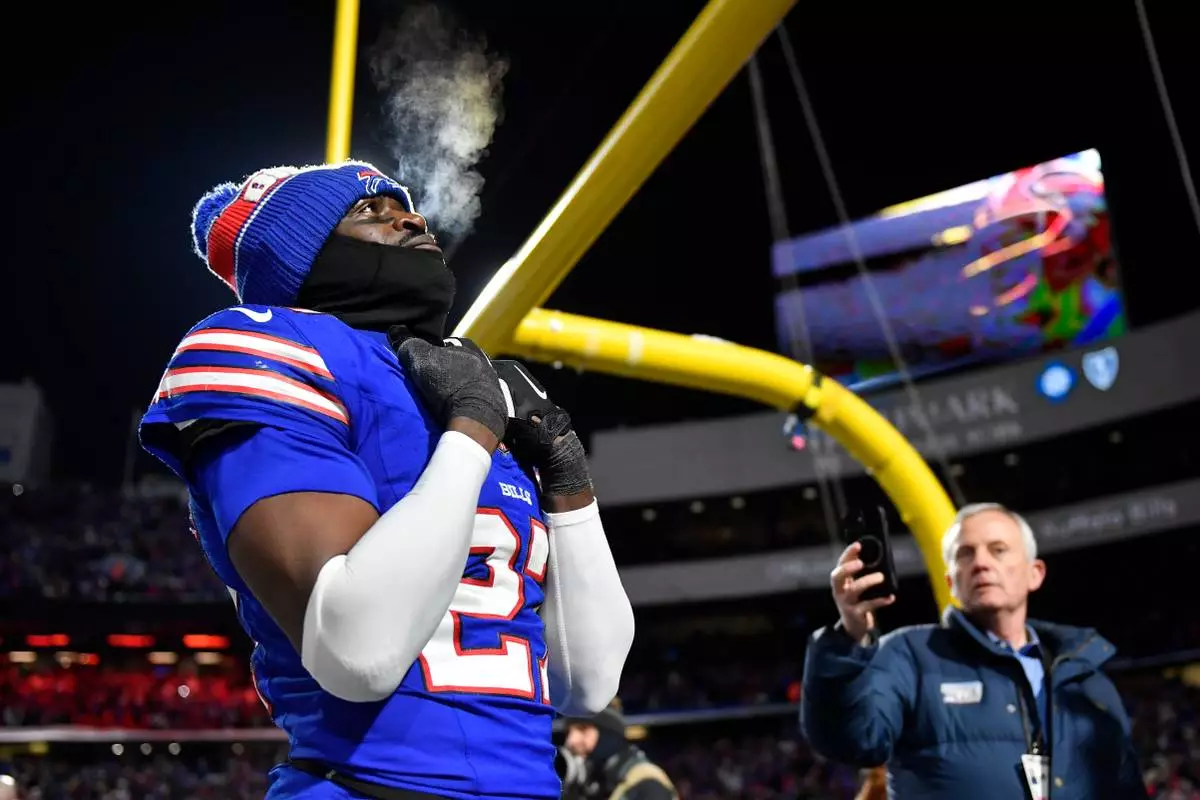
Buffalo Bills cornerback Tre'Davious White (27) remains on the field to watch a tribute video after the Bills beat the New York Jets in the Bills' final regular-season NFL football home game in Highmark Stadium Sunday, Jan. 4, 2026, in Orchard Park, N.Y.(AP Photo/Adrian Kraus)

Fans watch a ceremony after the Buffalo Bills beat the New York Jets in the Bills' final regular-season NFL football home game in Highmark Stadium Sunday, Jan. 4, 2026, in Orchard Park, N.Y. (AP Photo/Adrian Kraus)

Fans celebrate after the Buffalo Bills scored a touchdown during the first half of an NFL football game against the New York Jets, Sunday, Jan. 4, 2026, in Orchard Park, N.Y. (AP Photo/Carolyn Kaster)
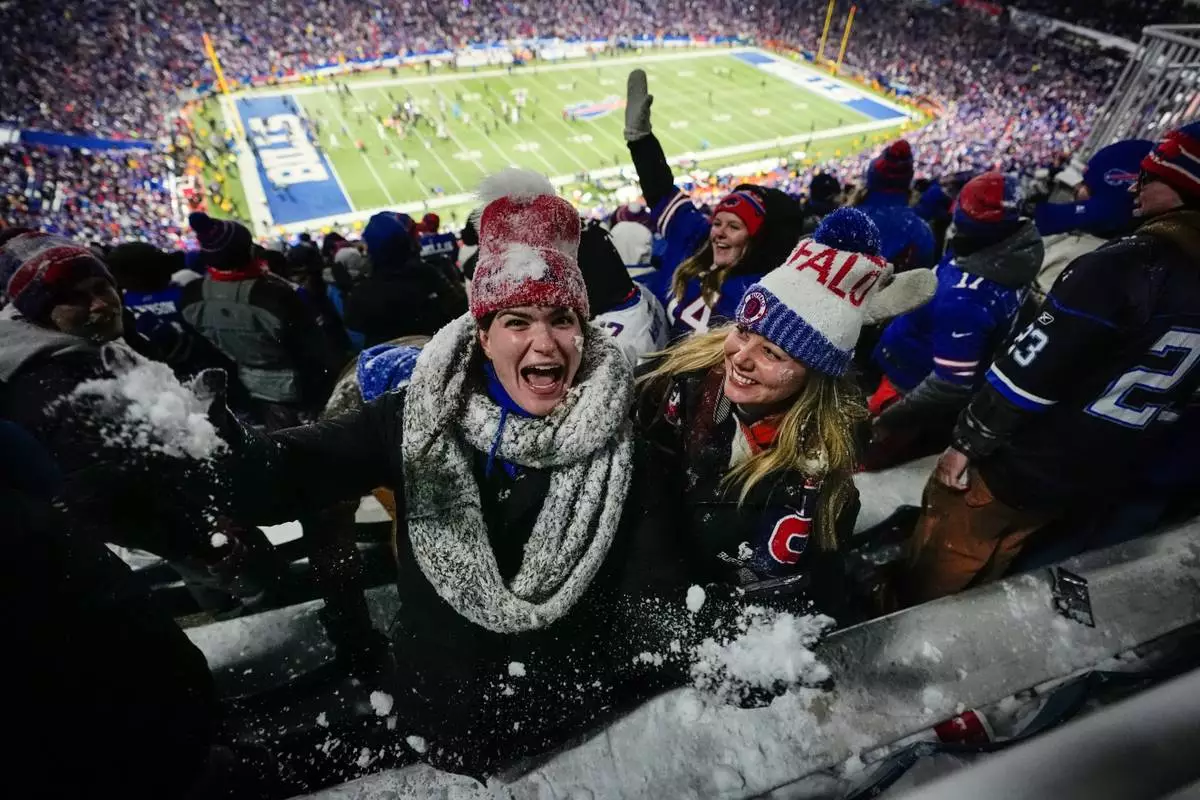
Fans celebrate and throw snow in the stands after an NFL football game between the Buffalo Bills and the New York Jets, Sunday, Jan. 4, 2026, in Orchard Park, N.Y. (AP Photo/Carolyn Kaster)
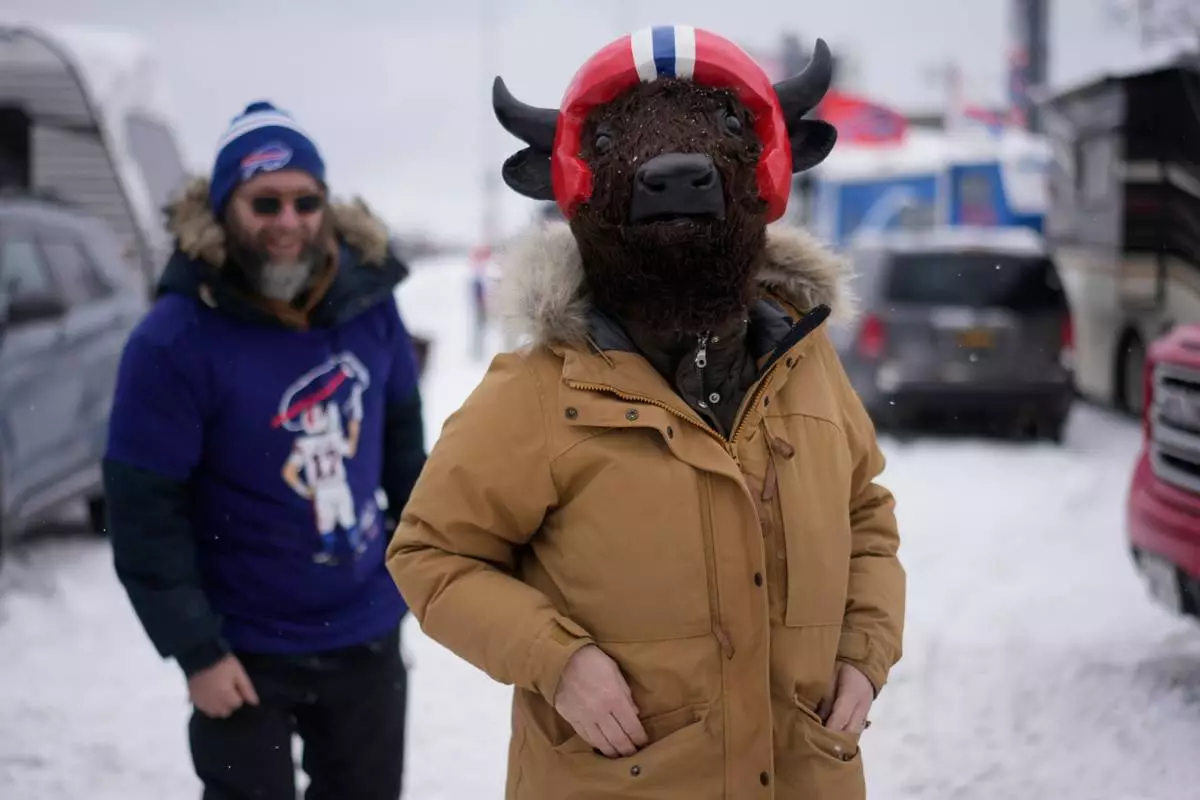
Aga Deters, right, and her husband Fred Deters, walk near Highmark Stadium before an NFL football game between the Buffalo Bills and the New York Jets, Sunday, Jan. 4, 2026, in Orchard Park, N.Y. (AP Photo/Carolyn Kaster)
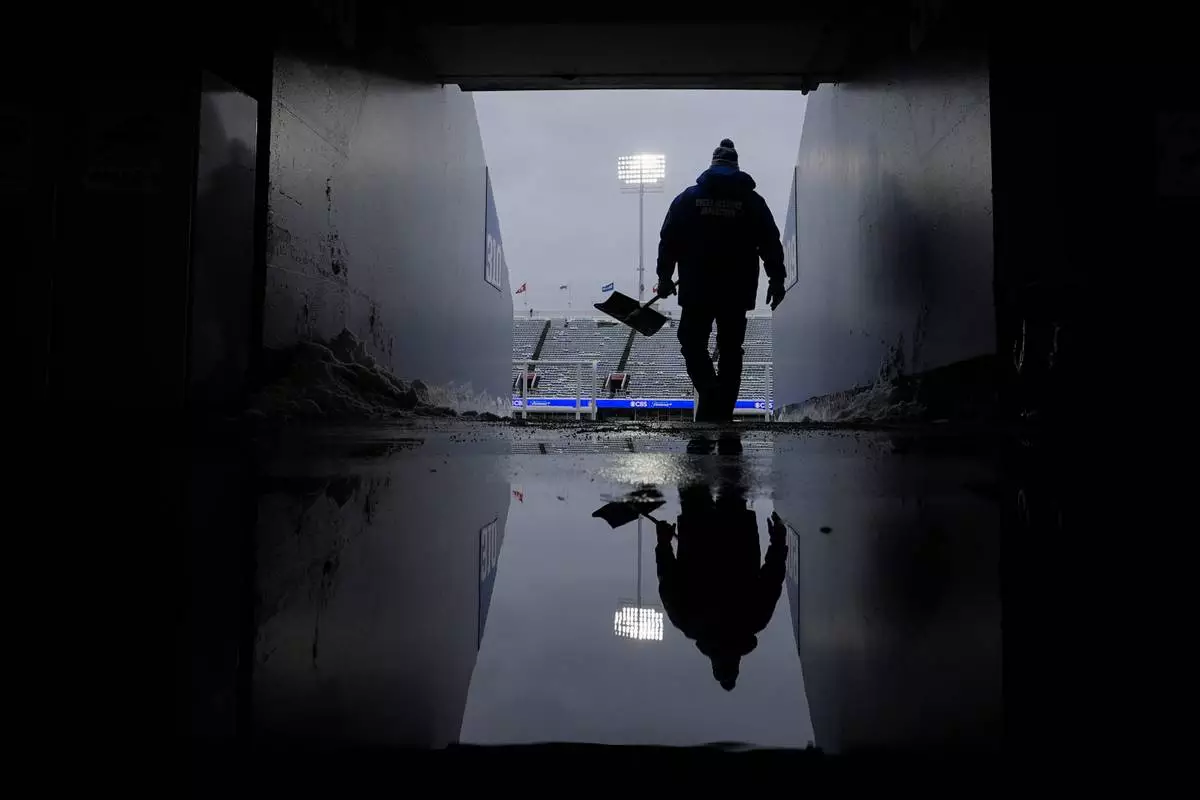
Michael Wygant shoves snow from a tunnel before an NFL football game between the Buffalo Bills and the New York Jets at Highmark Stadium, Sunday, Jan. 4, 2026, in Orchard Park, N.Y. (AP Photo/Carolyn Kaster)
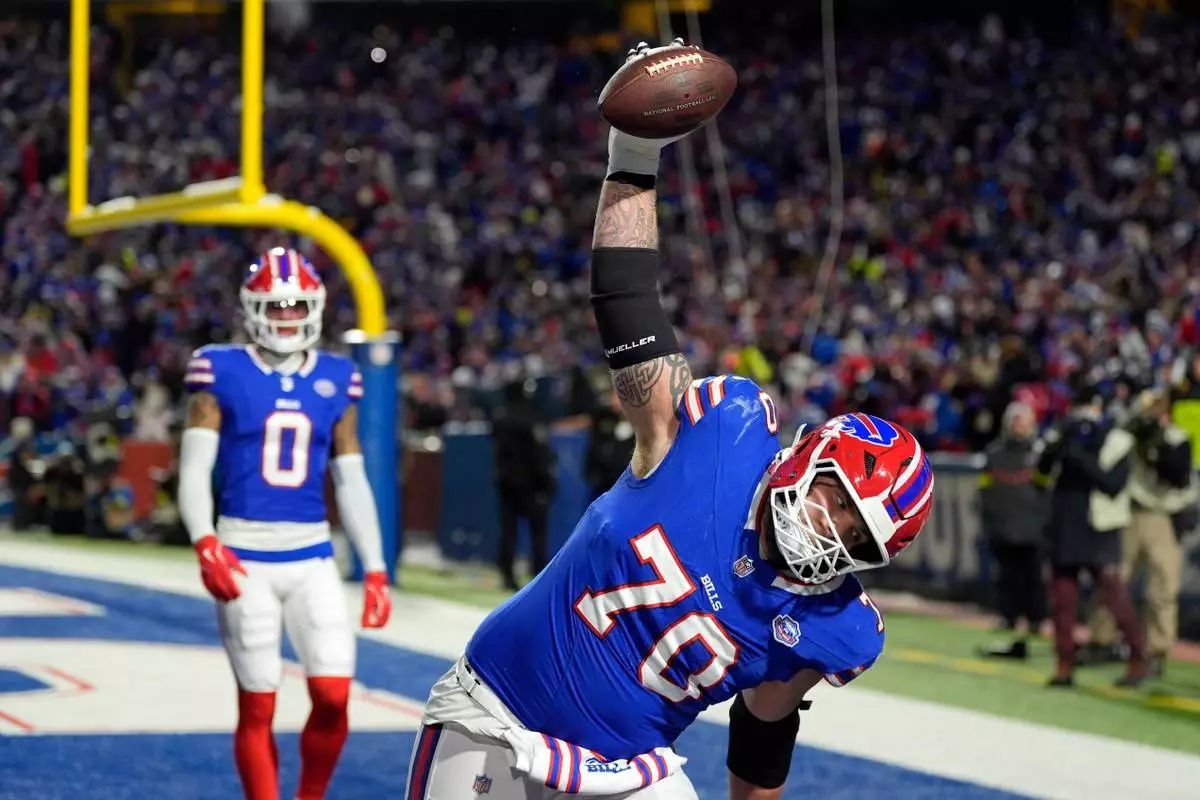
Buffalo Bills offensive tackle Alec Anderson (70) spikes the ball after running back Ty Johnson scored a touchdown against the New York Jets in the first half of an NFL football game Sunday, Jan. 4, 2026, in Orchard Park, N.Y. (AP Photo/Seth Wenig)
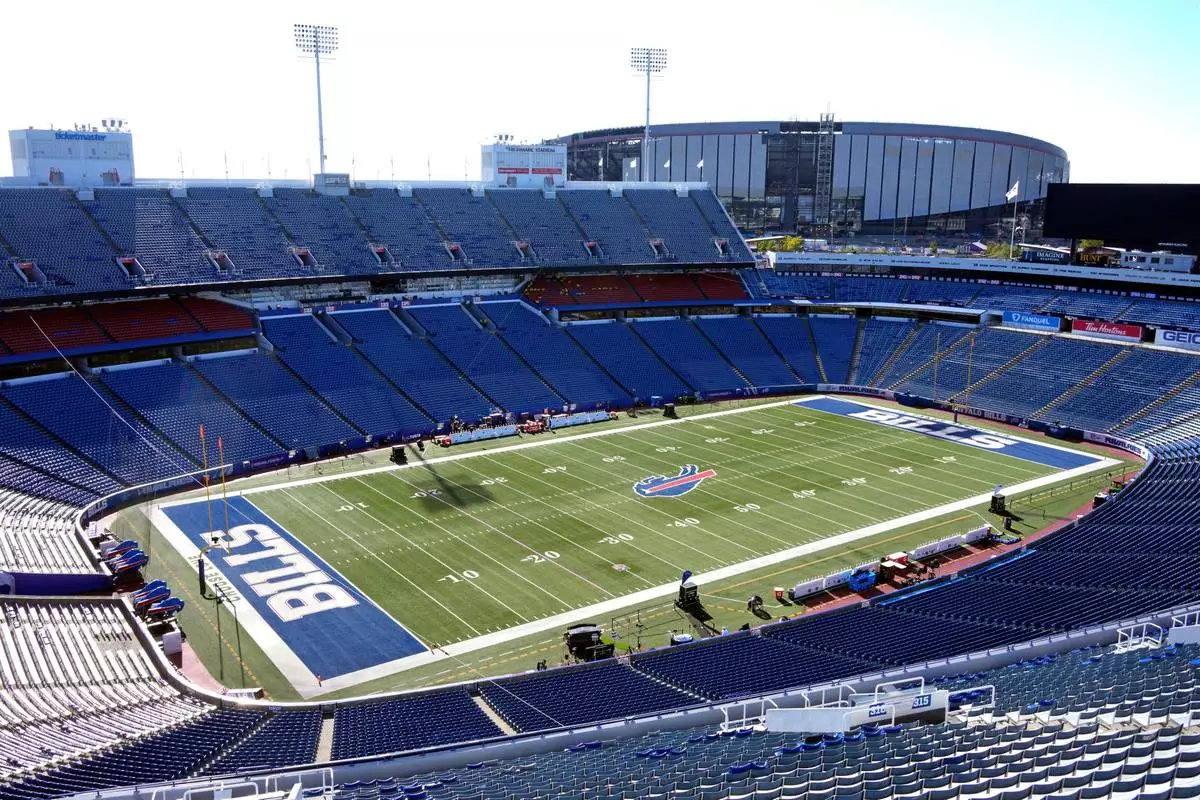
FILE - The existing Highmark Stadium, foreground, frames the construction on the new Highmark Stadium, upper right, which is scheduled to open with the 2026 season, shown before an NFL football game between the Buffalo Bills and the New England Patriots, Oct. 5, 2025, in Orchard Park, N.Y. (AP Photo/Gene J. Puskar, File)
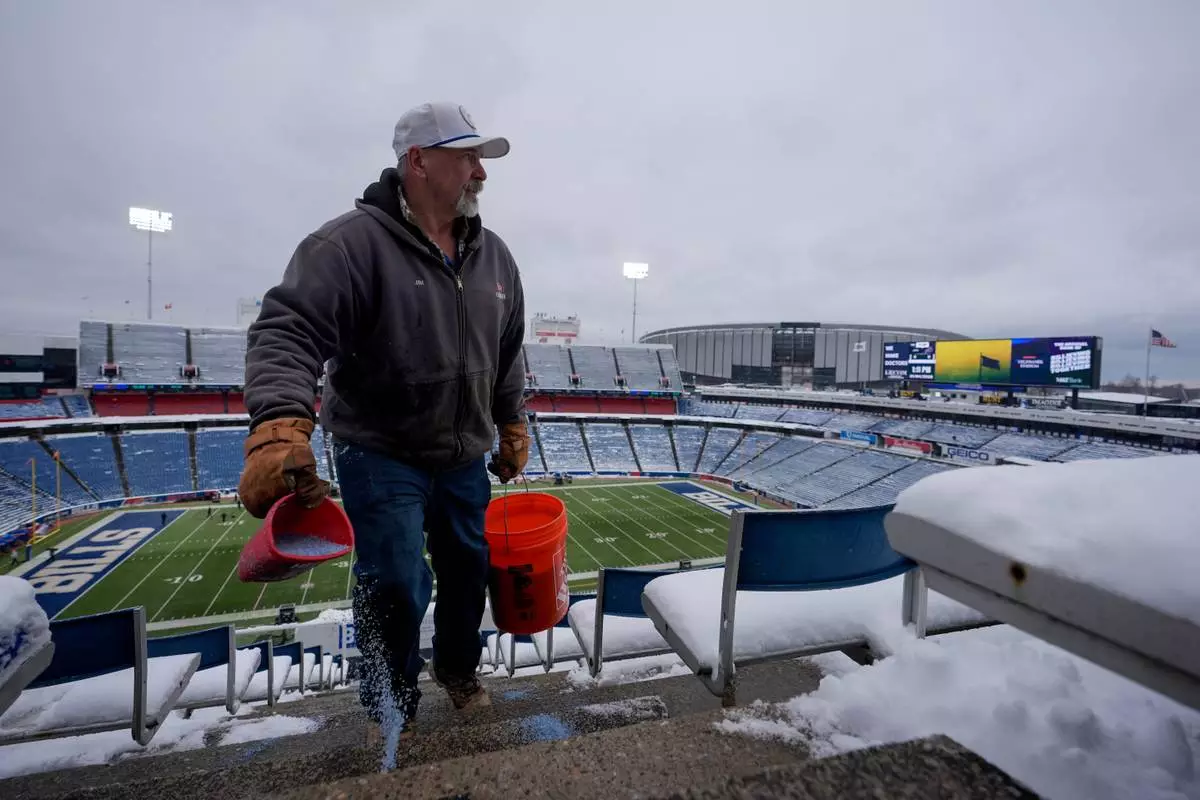
Salt crew member Jim Earl sprinkles salt in the upper deck before an NFL football game between the Buffalo Bills and the New York Jets at Highmark Stadium, Sunday, Jan. 4, 2026, in Orchard Park, N.Y. (AP Photo/Carolyn Kaster)