Skip to Content Facebook Feature Image

What to know about the impacts of the Supreme Court's ruling on transgender care for youth

News

What to know about the impacts of the Supreme Court's ruling on transgender care for youth
News

News

What to know about the impacts of the Supreme Court's ruling on transgender care for youth

2025-06-19 06:08 Last Updated At:06:11

The U.S. Supreme Court has upheld Tennessee's ban on gender-affirming surgery for transgender youth in a ruling that’s likely to reverberate across the country.

Most Republican-controlled states already have similar bans.

In his majority opinion Wednesday, Chief Justice John Roberts wrote that Tennessee’s ban does not violate the Constitution’s equal protection clause, which requires the government to treat similarly situated people the same.

Since President Donald Trump returned to office this year, the federal government has been trying to restrict access.

Here are some things to know about gender-affirming care and the court's ruling:

Gender-affirming care includes a range of medical and mental health services to support a person’s gender identity, or their sense of feeling male, female, neither or some combination of both. Sometimes that's different from the sex they were assigned at birth.

The services are offered to treat gender dysphoria, the unease a person may have because their assigned gender and gender identity don’t match. Studies, including one from 2023 by researchers at institutions including London Children's Hospital and Children's Hospital of Philadelphia, have found the condition is linked to depression and suicidal thoughts.

Gender-affirming care encompasses counseling and treatment with medications that block puberty and hormone therapy to produce physical changes. Hormone therapy for transgender men causes periods to stop, increases facial and body hair and deepens voices. The hormones used by transgender women can have effects such as slowing growth of body and facial hair and increasing breast growth. Fewer than 1 in 1,000 U.S. adolescents receive gender-affirming medications, a study released this year found.

Gender-affirming care can also include surgery, including operations to transform genitals and chests. These surgeries are rarely offered to minors.

There are documented uses of genital surgery for adults dating back to the 1920s. But for youth, gender-affirming care has been more common since the 1990s.

As a medical consensus emerged in support of gender-affirming care for youth, the issue also became politically divisive in other ways. Some states approved measures to protect transgender people, who make up around 1% of the nation's population.

Many critics dismiss the idea that gender is changeable and lies along a spectrum. About two-thirds of U.S. adults believe that whether a person is a man or woman is determined by biological characteristics at birth, an Associated Press-NORC Center for Public Affairs Research poll conducted in May found.

In the last five years, most GOP-controlled states have passed laws to block transgender girls from sports competitions for girls. About half the Republican-controlled states have now banned transgender people from using school bathrooms that align with their gender identity.

Opponents of gender-affirming care sometimes refer to it as “mutilation" and say people who transition when they're young could later regret it.

In addition to Tennessee, 26 other states have passed bans or restrictions on gender-affirming care for youth. Judges have struck down the bans in Arkansas and Montana, though the legal fights there aren't over.

All of the laws have been adopted in the past five years and nearly all have been challenged in court.

The Supreme Court's decision may doom some of those challenges. But lawyers who challenged Tennessee’s law said the ruling applies only to that policy – and that it doesn’t automatically end the cases against other bans on gender-affirming care.

Lambda Legal lawyer Karen Loewy noted that the opinion focused on the fact that it involved minors and that the court did not find sex-based discrimination against transgender people.

Lynly Egyes, legal director of the Transgender Law Center pointed out that the ruling sidestepped key arguments in some of the cases, including claims that the laws are intended to be discriminatory and that they take away the rights of parents seeking medical treatment for their children.

Further, some of the lawsuits against the bans — including in Kansas, Montana, North Dakota and Ohio — are based on arguments rooted in state constitutions. It still possible that judges could find more protections in those state constitutions than are in the U.S. Constitution.

The ruling probably won’t make any difference immediately on states without bans on gender-affirming care for transgender minors. Several have laws or executive orders intended to protect access.

But the question about whether the care will continue isn’t only about what’s legal. It’s also about funding.

That’s where Trump comes in.

Trump campaigned last year pledging to rein in rights of transgender people. He’s followed through on many fronts, though court challenges have resulted in some of his efforts being blocked, at least for now.

He has ordered that no federal taxpayer money be used to pay for the care for those under 19. Enforcement of that order is on hold.

Trump has also tried to block federal funding from institutions — including hospitals and the universities that run some of them — that provide gender-affirming care for youth. A judge has blocked that effort while challenges to it proceed.

His administration published recommendations that therapy alone – and not medication – be used to treat transgender youth. The position contradicts guidance from major medical organizations. But it could impact practices.

Other actions Trump has taken include initiating the removal of transgender troops from military service; ordering that transgender women and girls be kept out of sports competitions for females; erasing the word “transgender” from some government websites; and saying the government would recognize people only by their sex at conception.

That's resulted in efforts to move transgender women inmates to men's prisons and change how passports are issued to transgender and nonbinary people. A judge this week blocked the Trump administration from limiting passport sex markers for many transgender and nonbinary Americans.

Associated Press writers Matthew Brown in Billings, Montana; Jack Dura in Bismarck, North Dakota; and Kenya Hunter in Atlanta contributed to this report.
FILE - People gather outside the Supreme Court in Washington, Oct. 8, 2019. (AP Photo/Susan Walsh, File)
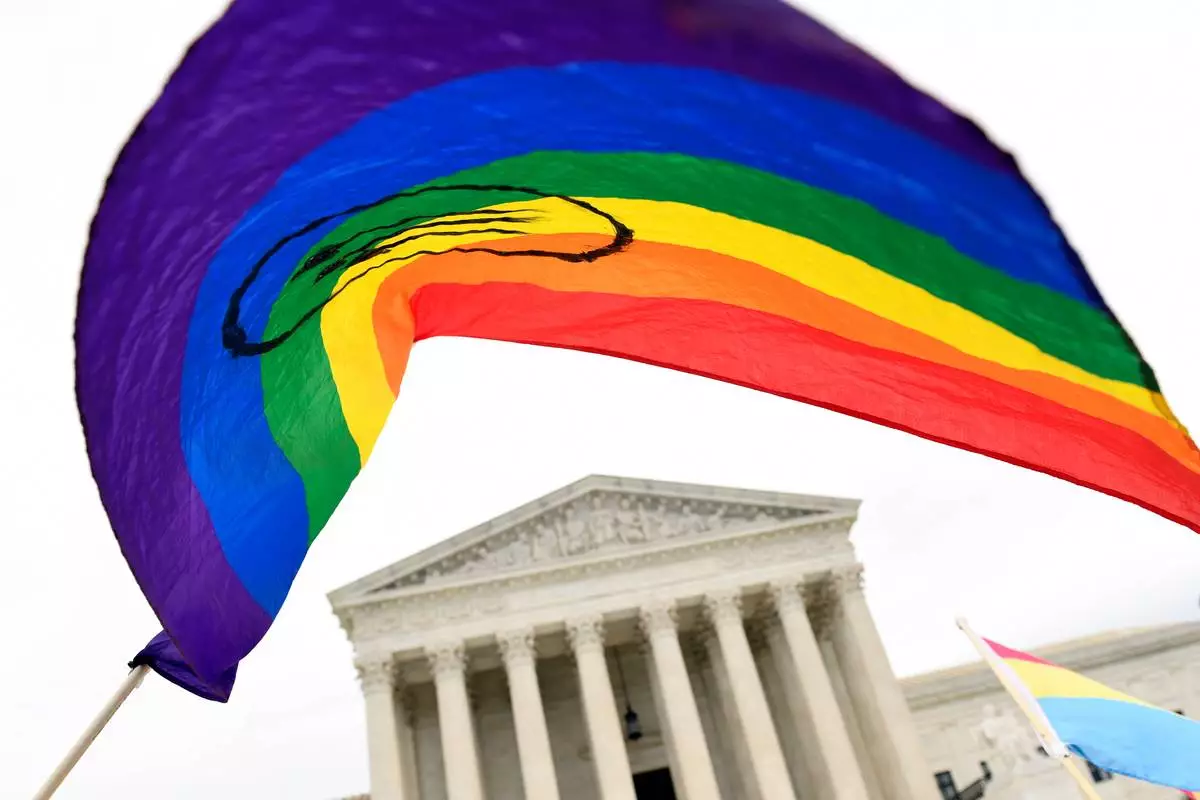
FILE - People gather outside the Supreme Court in Washington, Oct. 8, 2019. (AP Photo/Susan Walsh, File)
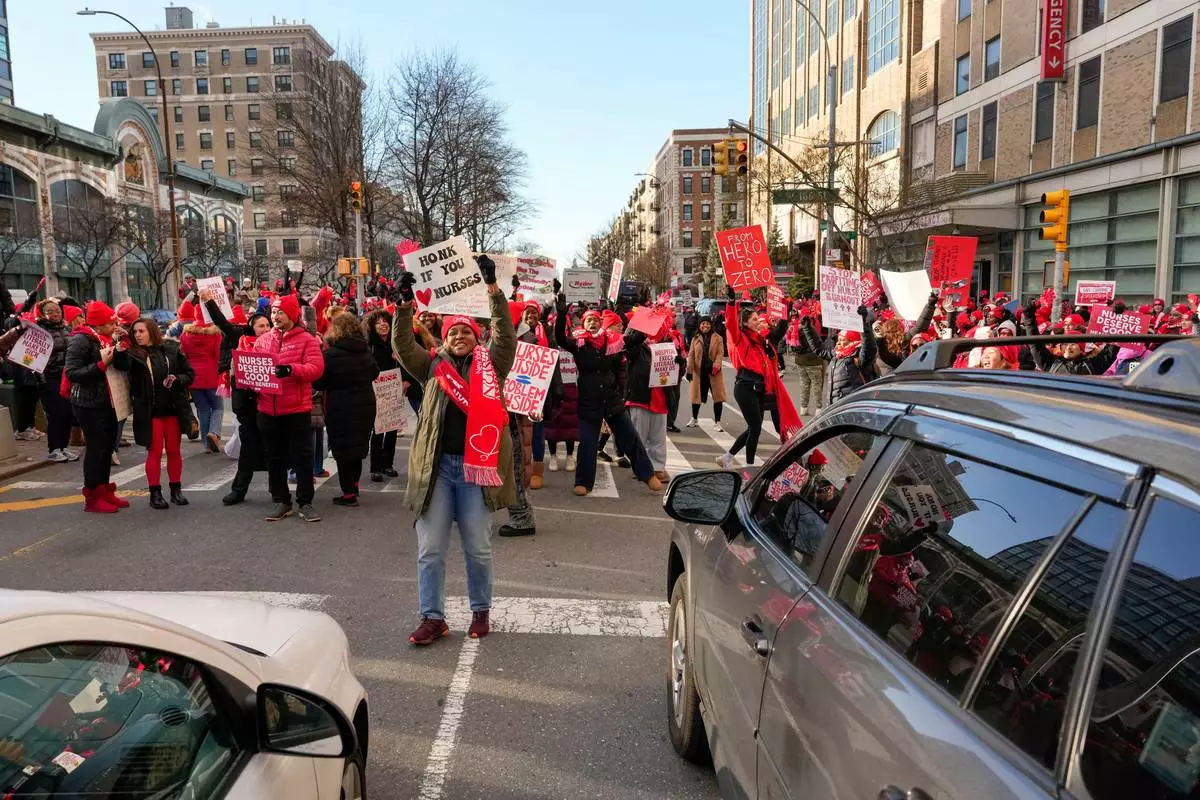
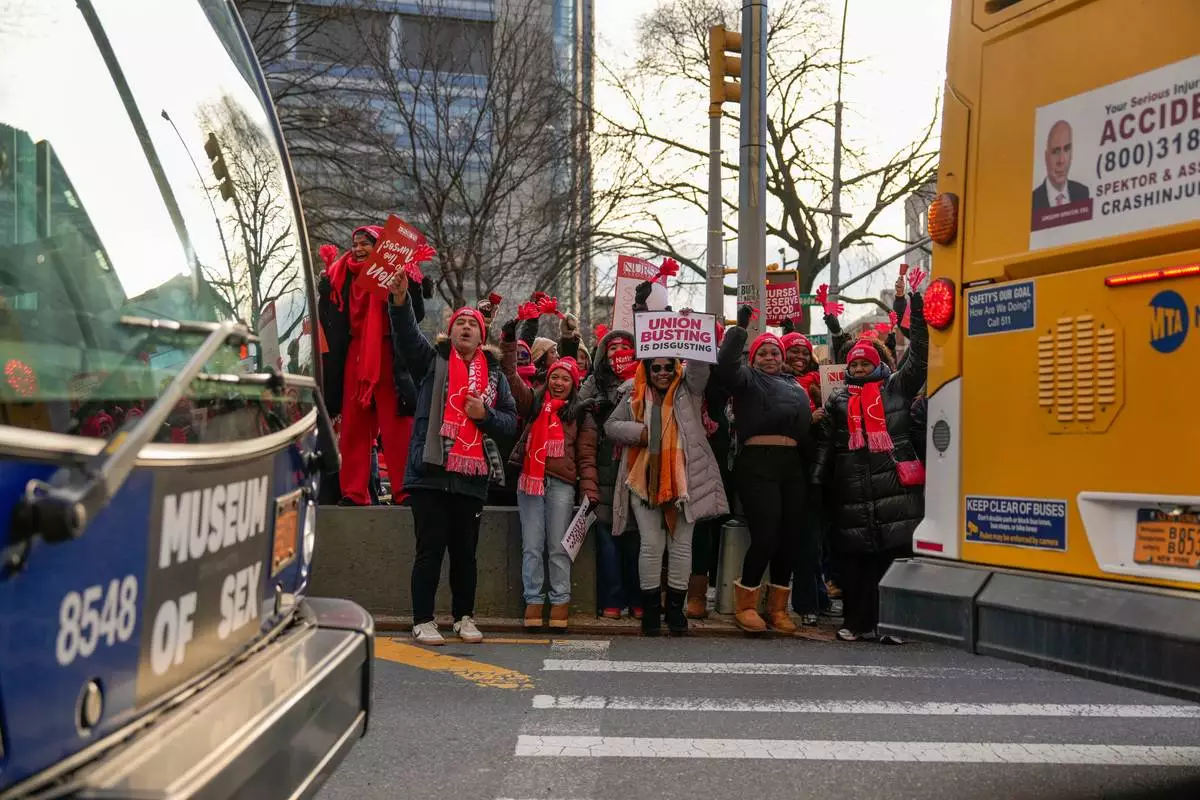
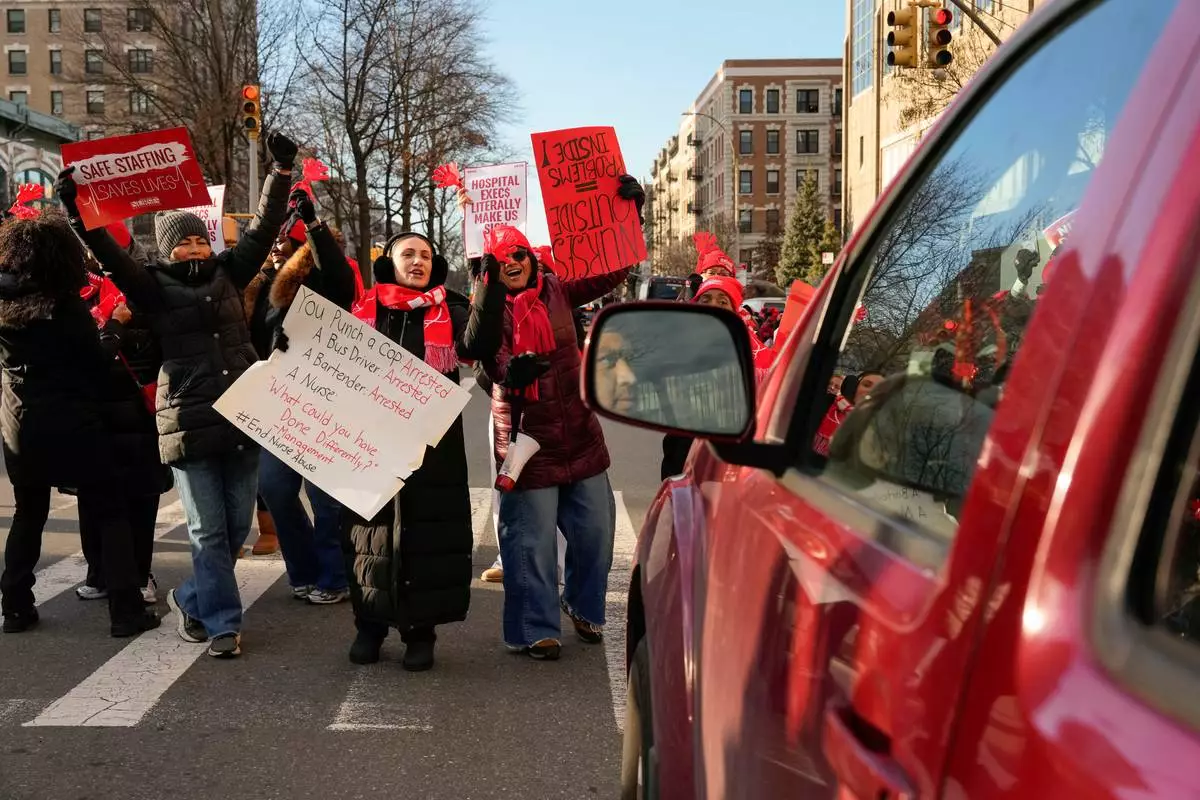
NEW YORK (AP) — Thousands of nurses in three hospital systems in New York City went on strike Monday after negotiations through the weekend failed to yield breakthroughs in their contract disputes.

The strike was taking place at The Mount Sinai Hospital and two of its satellite campuses, with picket lines forming. The other affected hospitals are NewYork-Presbyterian and Montefiore Medical Center in the Bronx.

About 15,000 nurses are involved in the strike, according to New York State Nurses Association.

“After months of bargaining, management refused to make meaningful progress on core issues that nurses have been fighting for: safe staffing for patients, healthcare benefits for nurses, and workplace violence protections,” the union said in a statement issued Monday. “Management at the richest hospitals in New York City are threatening to discontinue or radically cut nurses’ health benefits.”

The strike, which comes during a severe flu season, could potentially force the hospitals to transfer patients, cancel procedures or divert ambulances. It could also put a strain on city hospitals not involved in the contract dispute, as patients avoid the medical centers hit by the strike.

The hospitals involved have been hiring temporary nurses to try and fill the labor gap during the walkout, and said in a statement during negotiations that they would “do whatever is necessary to minimize disruptions.” Montefiore posted a message assuring patients that appointments would be kept.

“NYSNA’s leaders continue to double down on their $3.6 billion in reckless demands, including nearly 40% wage increases, and their troubling proposals like demanding that a nurse not be terminated if found to be compromised by drugs or alcohol while on the job," Montefiore spokesperson Joe Solmonese said Monday after the strike had started. "We remain resolute in our commitment to providing safe and seamless care, regardless of how long the strike may last.”

New York-Presbyterian accused the union of staging a strike to “create disruption,” but said in a statement that it has taken steps to ensure patients receive the care they need.

"We’re ready to keep negotiating a fair and reasonable contract that reflects our respect for our nurses and the critical role they play, and also recognizes the challenging realities of today’s healthcare environment,” the statement said.

The work stoppage is occurring at multiple hospitals simultaneously, but each medical center is negotiating with the union independently. Several other hospitals across the city and in its suburbs reached deals in recent days to avert a possible strike.

The nurses’ demands vary by hospital, but the major issues include staffing levels and workplace safety. The union says hospitals have given nurses unmanageable workloads.

Nurses also want better security measures in the workplace, citing incidents like a an incident last week, when a man with a sharp object barricaded himself in a Brooklyn hospital room and was then killed by police.

The union also wants limitations on hospitals’ use of artificial intelligence.

The nonprofit hospitals involved in the negotiations say they’ve been working to improve staffing levels, but say the union’s demands overall are too costly.

Nurses voted to authorize the strike last month.

Both New York Gov. Kathy Hochul and Mayor Zohran Mamdani had expressed concern about the possibility of the strike. As the strike deadline neared, Mamdani urged both sides to keep negotiating and reach a deal that “both honors our nurses and keeps our hospitals open.”

“Our nurses kept this city alive through its hardest moments. Their value is not negotiable,” Mamdani said.

State Attorney General Letitia James voiced similar support, saying "nurses put their lives on the line every day to keep New Yorkers healthy. They should never be forced to choose between their own safety, their patients’ well-being, and a fair contract.”

The last major nursing strike in the city was only three years ago, in 2023. That work stoppage, at Mount Sinai and Montefiore, was short, lasting three days. It resulted in a deal raising pay 19% over three years at those hospitals.

It also led to promised staffing improvements, though the union and hospitals now disagree about how much progress has been made, or whether the hospitals are retreating from staffing guarantees.

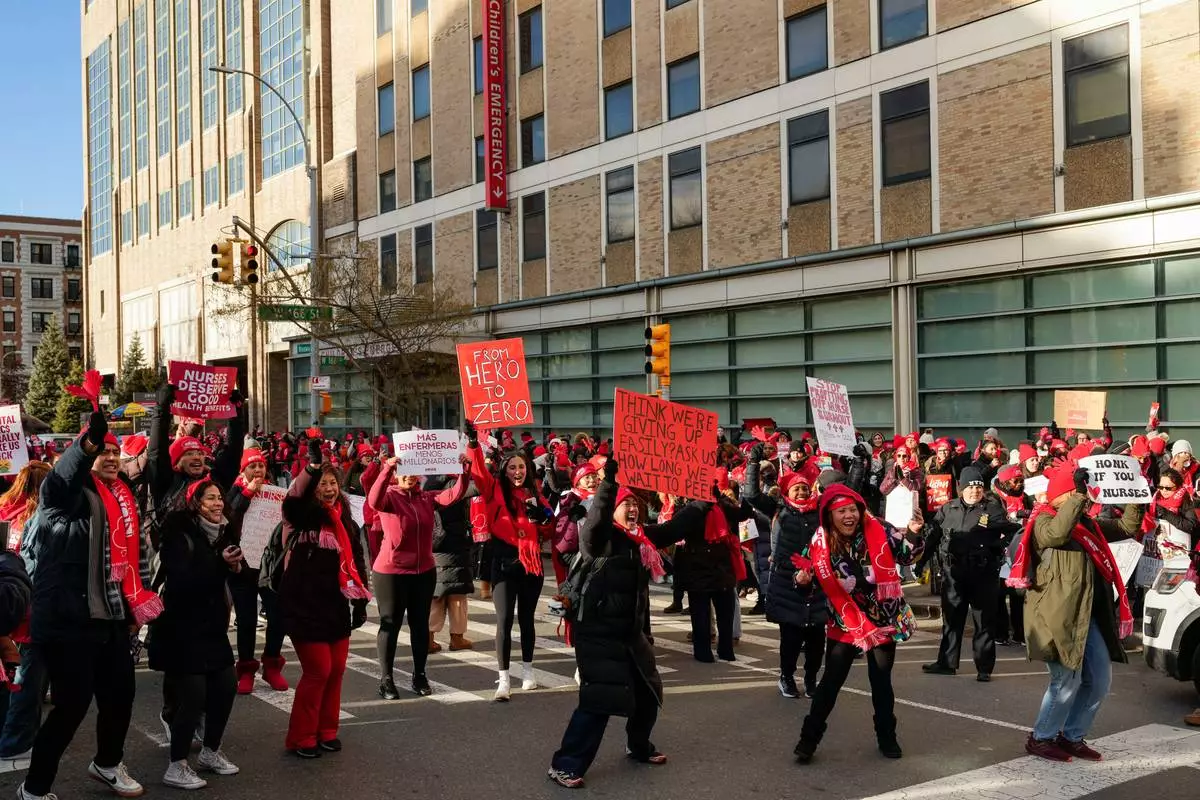
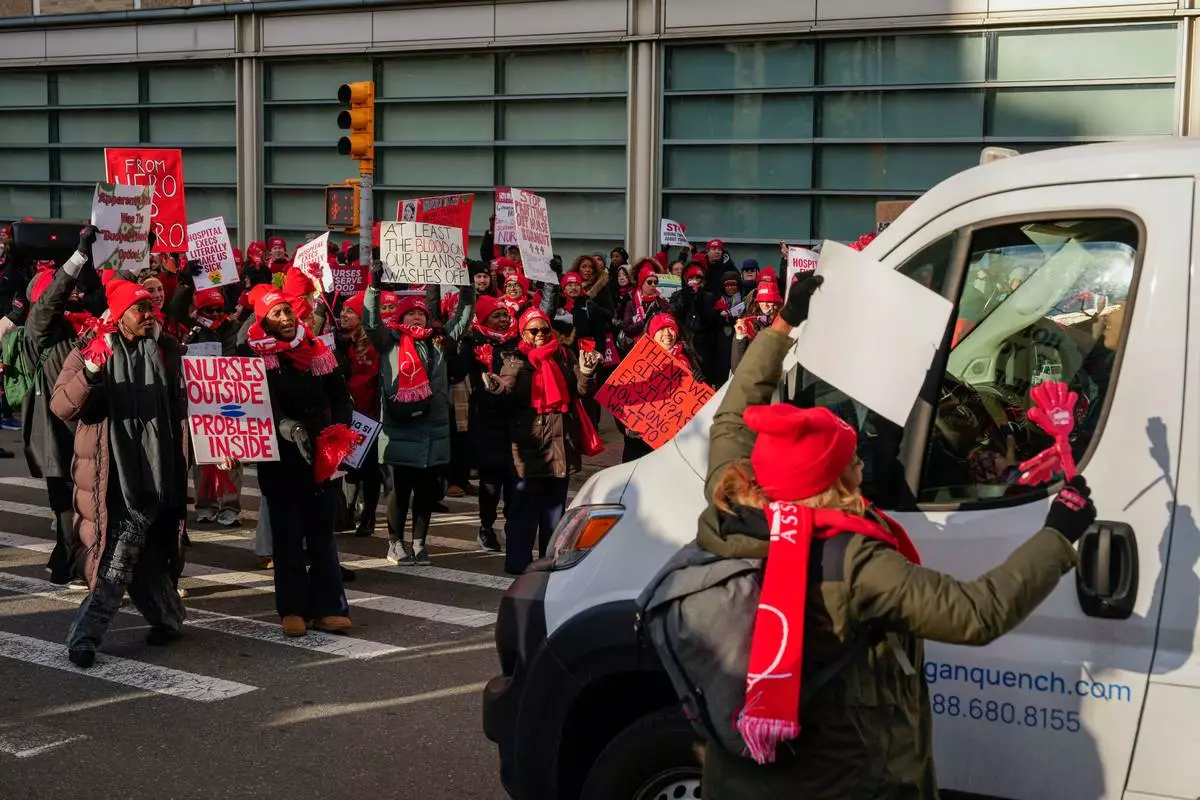
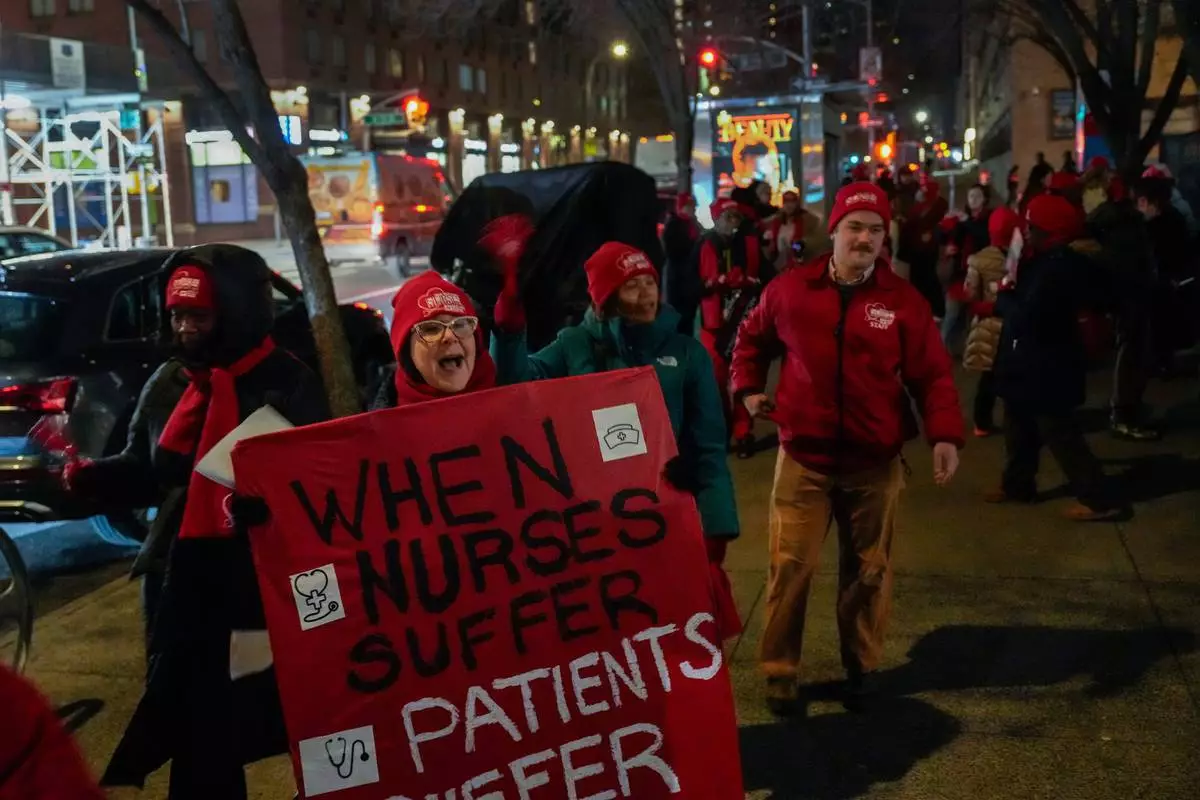
Nurses strike outside New York-Presbyterian Hospital, Monday, Jan. 12, 2026, in New York. (AP Photo/Yuki Iwamura)

Nurses strike outside New York-Presbyterian Hospital, Monday, Jan. 12, 2026, in New York. (AP Photo/Yuki Iwamura)

Nurses strike outside New York-Presbyterian Hospital, Monday, Jan. 12, 2026, in New York. (AP Photo/Yuki Iwamura)

Nurses strike outside New York-Presbyterian Hospital, Monday, Jan. 12, 2026, in New York. (AP Photo/Yuki Iwamura)

Nurses strike outside New York-Presbyterian Hospital, Monday, Jan. 12, 2026, in New York. (AP Photo/Yuki Iwamura)

Nurses strike outside New York-Presbyterian Hospital, Monday, Jan. 12, 2026, in New York. (AP Photo/Yuki Iwamura)

Nurses strike outside New York-Presbyterian Hospital, Monday, Jan. 12, 2026, in New York. (AP Photo/Yuki Iwamura)

Nurses strike outside New York-Presbyterian Hospital, Monday, Jan. 12, 2026, in New York. (AP Photo/Yuki Iwamura)

Nurses strike outside New York-Presbyterian Hospital, Monday, Jan. 12, 2026, in New York. (AP Photo/Yuki Iwamura)

Nurses strike outside New York-Presbyterian Hospital, Monday, Jan. 12, 2026, in New York. (AP Photo/Yuki Iwamura)

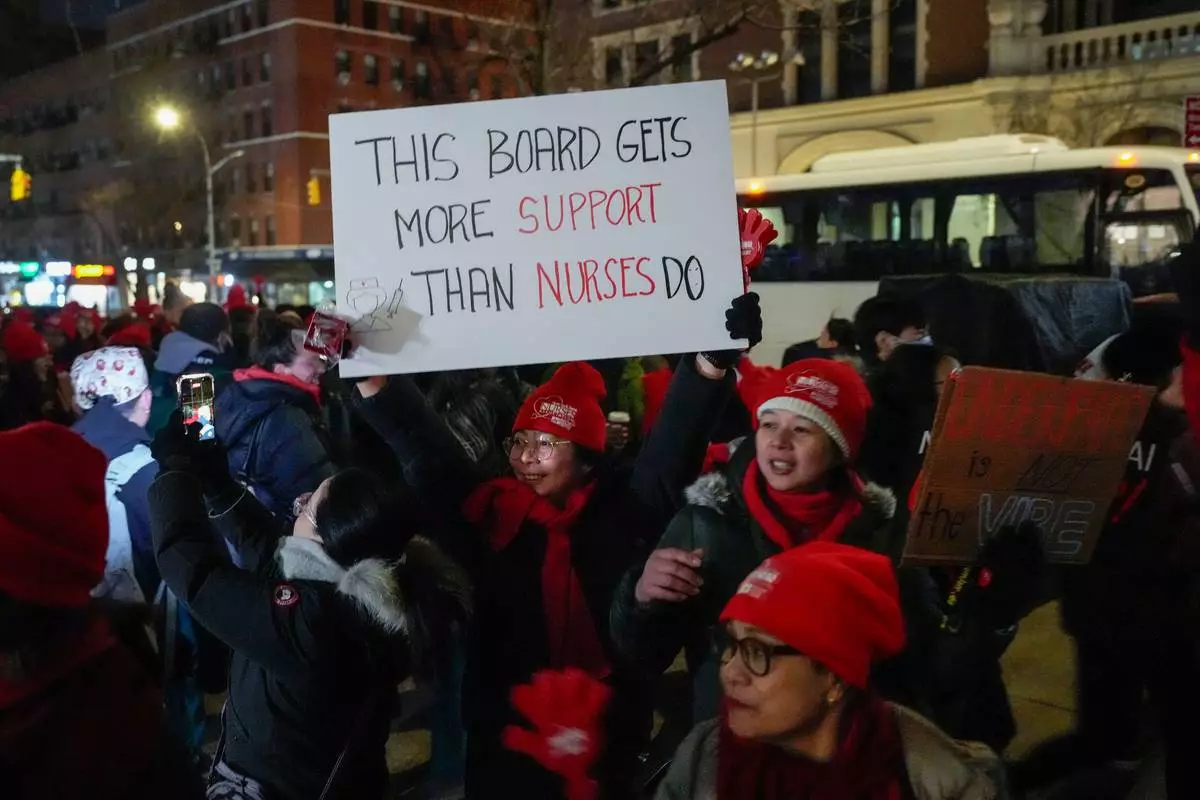
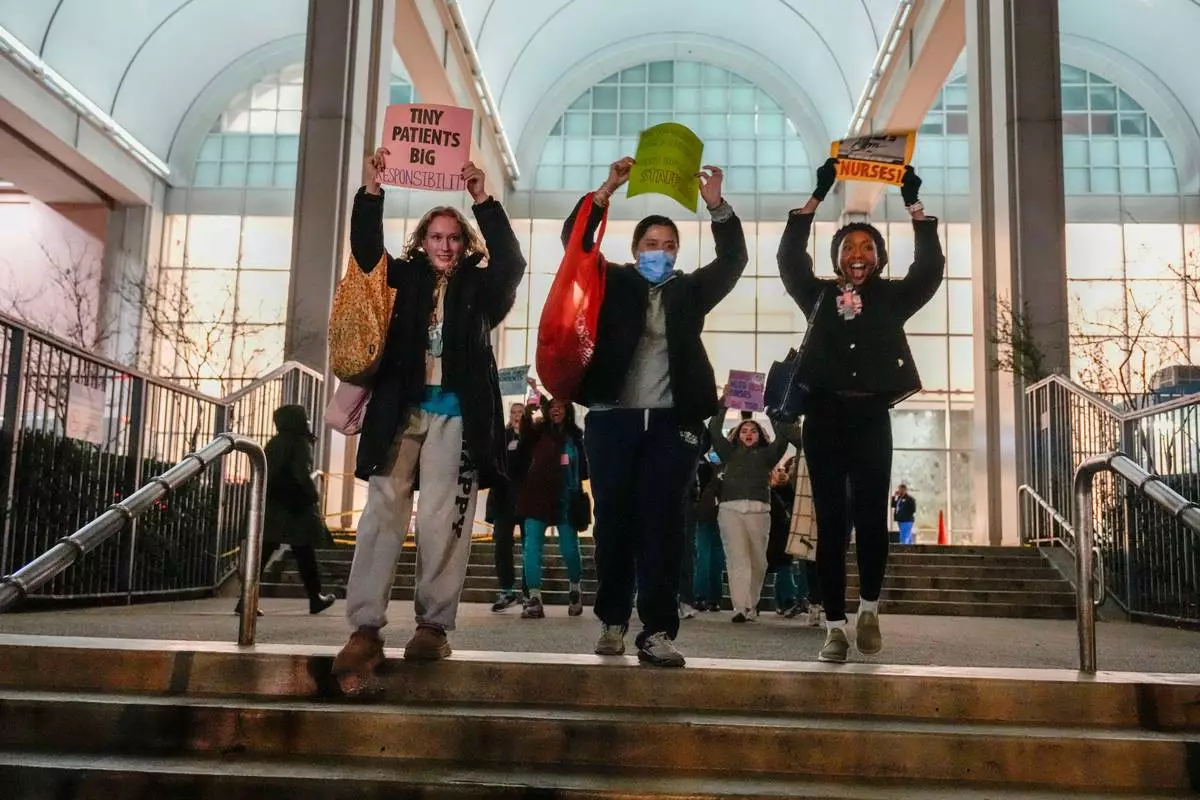
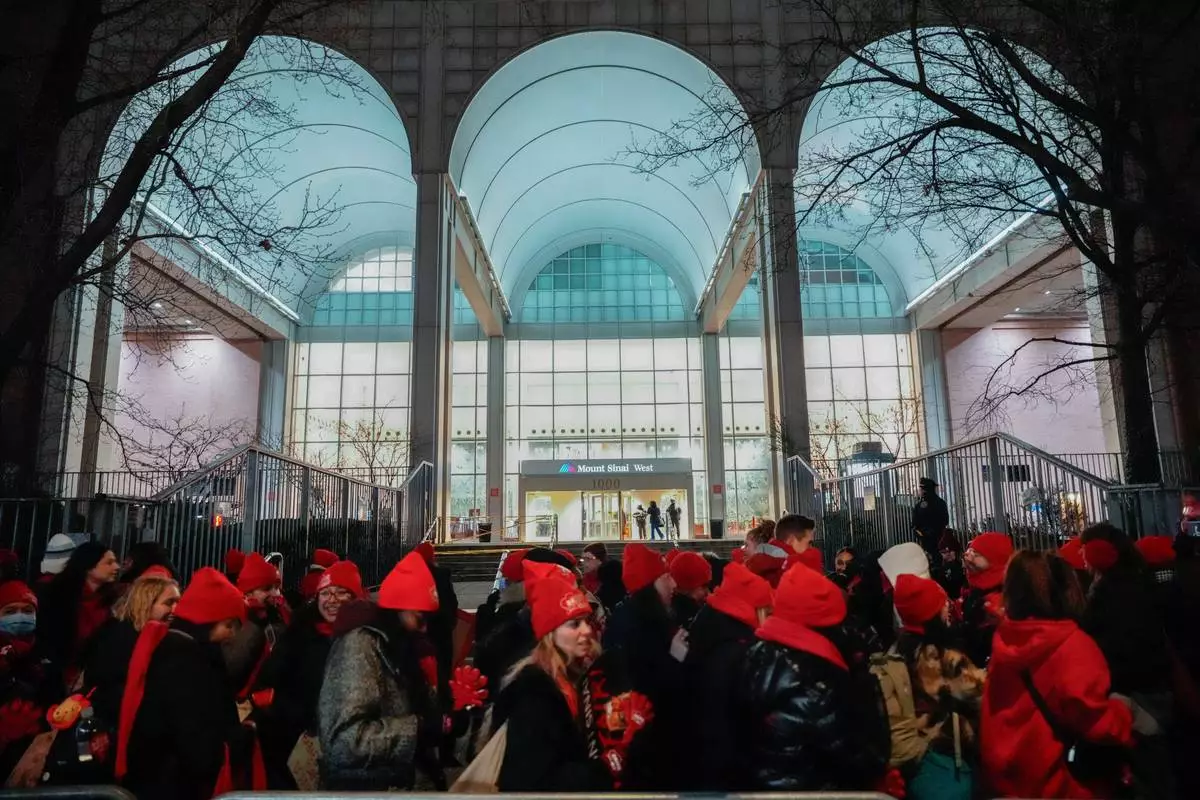
Nurses strike outside Mount Sinai West Hospital, Monday, Jan. 12, 2026, in New York. (AP Photo/Yuki Iwamura)

Nurses strike outside Mount Sinai West Hospital, Monday, Jan. 12, 2026, in New York. (AP Photo/Yuki Iwamura)

Nurses strike outside Mount Sinai West Hospital, Monday, Jan. 12, 2026, in New York. (AP Photo/Yuki Iwamura)

Nurses strike outside Mount Sinai West Hospital, Monday, Jan. 12, 2026, in New York. (AP Photo/Yuki Iwamura)

Nurses strike outside Mount Sinai West Hospital, Monday, Jan. 12, 2026, in New York. (AP Photo/Yuki Iwamura)

Nurses strike outside Mount Sinai West Hospital, Monday, Jan. 12, 2026, in New York. (AP Photo/Yuki Iwamura)

Nurses strike outside Mount Sinai West Hospital, Monday, Jan. 12, 2026, in New York. (AP Photo/Yuki Iwamura)

Nurses strike outside Mount Sinai West Hospital, Monday, Jan. 12, 2026, in New York. (AP Photo/Yuki Iwamura)

FILE - A medical worker transports a patient at Mount Sinai Hospital, April 1, 2020, in New York. (AP Photo/Mary Altaffer, File)

FILE - A medical worker transports a patient at Mount Sinai Hospital, April 1, 2020, in New York. (AP Photo/Mary Altaffer, File)

Recommended Articles