Michigan wildlife experts finally were able to trap a black bear and remove a large lid that was stuck around his neck — for two years.
“It’s pretty incredible that the bear survived and was able to feed itself,” state bear specialist Cody Norton said Wednesday. “The neck was scarred and missing hair, but the bear was in much better condition than we expected it to be.”
The bear first turned up on a trail camera as a cub in 2023 in the northern Lower Peninsula. After that, the Department of Natural Resources was on the lookout for the elusive animal with a hard plastic lid around the neck, Norton said.
The bear appeared again on a camera in late May, still wearing the barrel lid, and the DNR responded by setting a cylindrical trap and safely luring him inside. The bear was immobilized with an injection and the lid was cut off in minutes on June 3. The bear eventually woke up and rambled away.
Angela Kujawa, a wildlife biologist who was at the scene, said she wondered about the bear's ability to climb trees with the uncomfortable accessory.
“And he probably laid more on his back or side when he was resting,” she said.
Norton said it's not precisely known how the lid got stuck on the bear's neck. Bear baiting is legal in Michigan, but the hole on a barrel lid typically must be large enough to avoid what happened to this bear.
The bear weighed 110 pounds (49.9 kilograms), which is fairly typical for a 2-year-old.
“We were pleasantly surprised. It was still able to make a living like a pretty typical bear,” Norton said.

In this image provided by the Michigan Department of Natural Resources, wildlife biologist Angela Kujawa collects data from an immobilized black bear after a lid was removed from the animal’s neck near Hillman, Michigan, on June 3, 2025. ( Michigan Department of Natural Resources via AP)
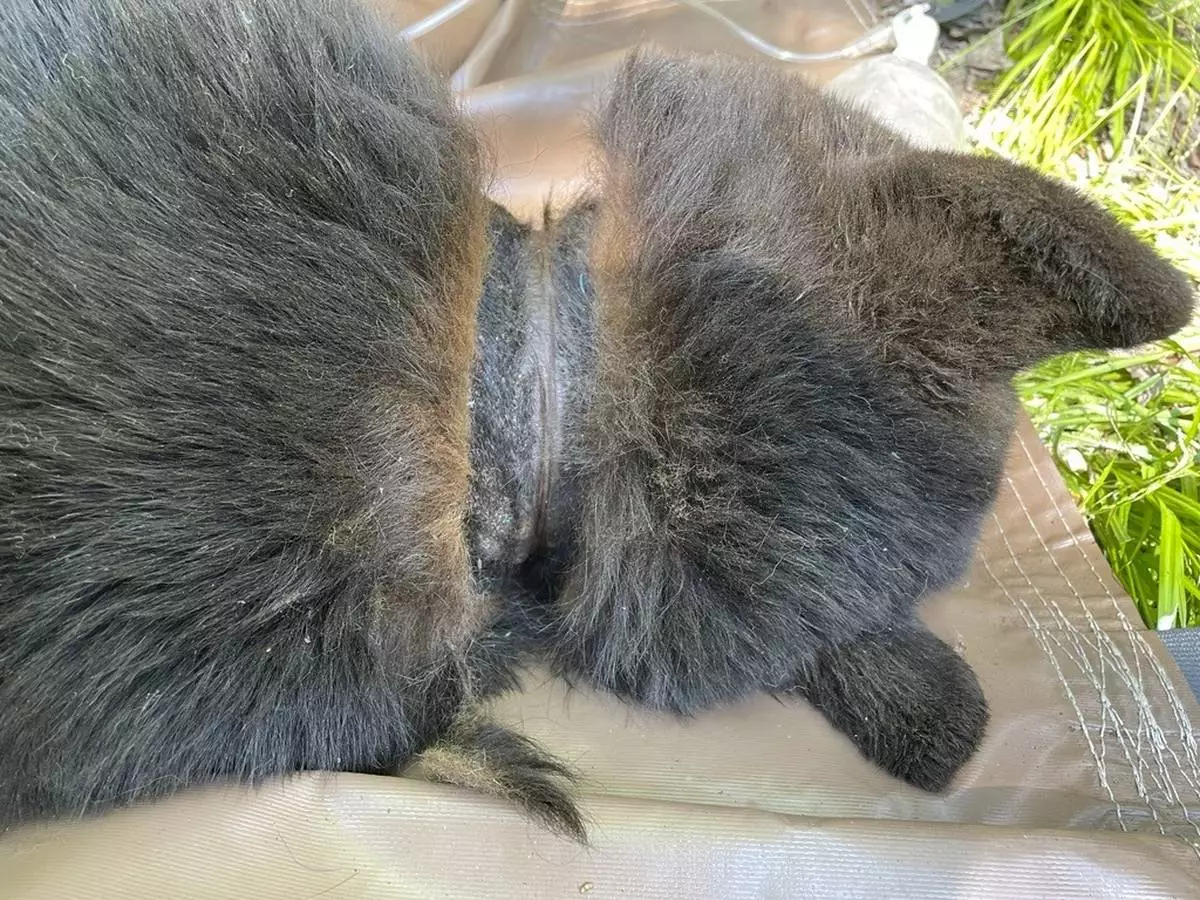
In this image provided by the Michigan Department of Natural Resources, the neck of a black bear is shown after a lid was removed after two years on June 3, 2025, near Hillman, Mich. ( Michigan Department of Natural Resources via AP)

In this image provided by the Michigan Department of Natural Resources, DNS staffers, from left, Angela Kujawa, Sherry Raifsnider and Miranda VanCleave work to remove a lid from the neck of an immobilized black bear near Hillman, Michigan, on June 3, 2025. ( Michigan Department of Natural Resources via AP)
NEW YORK (AP) — Thousands of nurses in three hospital systems in New York City went on strike Monday after negotiations through the weekend failed to yield breakthroughs in their contract disputes.
The strike was taking place at The Mount Sinai Hospital and two of its satellite campuses, with picket lines forming. The other affected hospitals are NewYork-Presbyterian and Montefiore Medical Center in the Bronx.
About 15,000 nurses are involved in the strike, according to New York State Nurses Association.
The strike, which comes during a severe flu season, could potentially force the hospitals to transfer patients, cancel procedures or divert ambulances. It could also put a strain on city hospitals not involved in the contract dispute, as patients avoid the medical centers hit by the strike.
The hospitals involved have been hiring temporary nurses to try and fill the labor gap during the walkout, and said in a statement during negotiations that they would “do whatever is necessary to minimize disruptions.” Montefiore posted a message assuring patients that appointments would be kept.
The work stoppage is occurring at multiple hospitals simultaneously, but each medical center is negotiating with the union independently. Several other hospitals across the city and in its suburbs reached deals in recent days to avert a possible strike.
The nurses’ demands vary by hospital, but the major issues include staffing levels and workplace safety. The union says hospitals have given nurses unmanageable workloads.
Nurses also want better security measures in the workplace, citing incidents like a an incident last week, when a man with a sharp object barricaded himself in a Brooklyn hospital room and was then killed by police.
The union also wants limitations on hospitals’ use of artificial intelligence.
The nonprofit hospitals involved in the negotiations say they’ve been working to improve staffing levels, but say the union’s demands overall are too costly.
Nurses voted to authorize the strike last month.
Both New York Gov. Kathy Hochul and Mayor Zohran Mamdani had expressed concern about the possibility of the strike. As the strike deadline neared, Mamdani urged both sides to keep negotiating and reach a deal that “both honors our nurses and keeps our hospitals open.”
“Our nurses kept this city alive through its hardest moments. Their value is not negotiable,” Mamdani said.
The last major nursing strike in the city was only three years ago, in 2023. That work stoppage, at Mount Sinai and Montefiore, was short, lasting three days. It resulted in a deal raising pay 19% over three years at those hospitals.
It also led to promised staffing improvements, though the union and hospitals now disagree about how much progress has been made, or whether the hospitals are retreating from staffing guarantees.

Nurses strike outside Mount Sinai West Hospital, Monday, Jan. 12, 2026, in New York. (AP Photo/Yuki Iwamura)

Nurses strike outside Mount Sinai West Hospital, Monday, Jan. 12, 2026, in New York. (AP Photo/Yuki Iwamura)

Nurses strike outside Mount Sinai West Hospital, Monday, Jan. 12, 2026, in New York. (AP Photo/Yuki Iwamura)

Nurses strike outside Mount Sinai West Hospital, Monday, Jan. 12, 2026, in New York. (AP Photo/Yuki Iwamura)

FILE - A medical worker transports a patient at Mount Sinai Hospital, April 1, 2020, in New York. (AP Photo/Mary Altaffer, File)