Skip to Content Facebook Feature Image

The success of a key NATO summit is in doubt after Spain rejects a big hike in defense spending

News

The success of a key NATO summit is in doubt after Spain rejects a big hike in defense spending
News

News

The success of a key NATO summit is in doubt after Spain rejects a big hike in defense spending

2025-06-20 19:24 Last Updated At:19:31

BRUSSELS (AP) — The success of a key NATO summit hung in the balance on Friday, after Spain announced that it cannot raise the billions of dollars needed to meet a new defense investment pledge demanded by U.S. President Donald Trump.

Trump and his NATO counterparts are meeting for two days in the Netherlands from next Tuesday. He insists that U.S. allies should commit to spending at least 5% of gross domestic product, but that requires investment at an unprecedented scale.

More Images
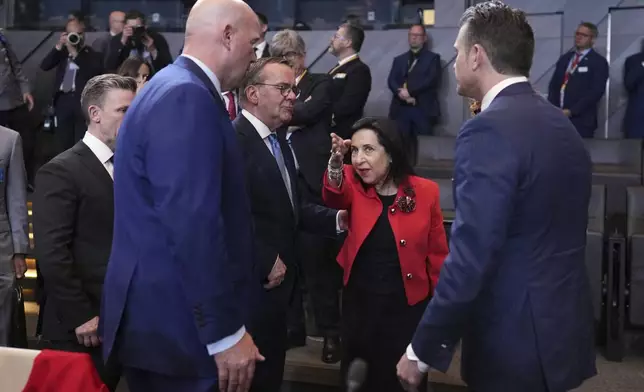
FILE- From left, Sweden's Defense Minister Pal Jonson, US Ambassador to NATO Matthew Whitaker, Germany's Defense Minister Boris Pistorius, Spain's Defense Minister Margarita Robles and Defense Secretary Pete Hegseth during a meeting of NATO defense ministers at NATO headquarters in Brussels, June 5, 2025. (AP Photo/Virginia Mayo, File)

FILE- From left, Sweden's Defense Minister Pal Jonson, US Ambassador to NATO Matthew Whitaker, Germany's Defense Minister Boris Pistorius, Spain's Defense Minister Margarita Robles and Defense Secretary Pete Hegseth during a meeting of NATO defense ministers at NATO headquarters in Brussels, June 5, 2025. (AP Photo/Virginia Mayo, File)

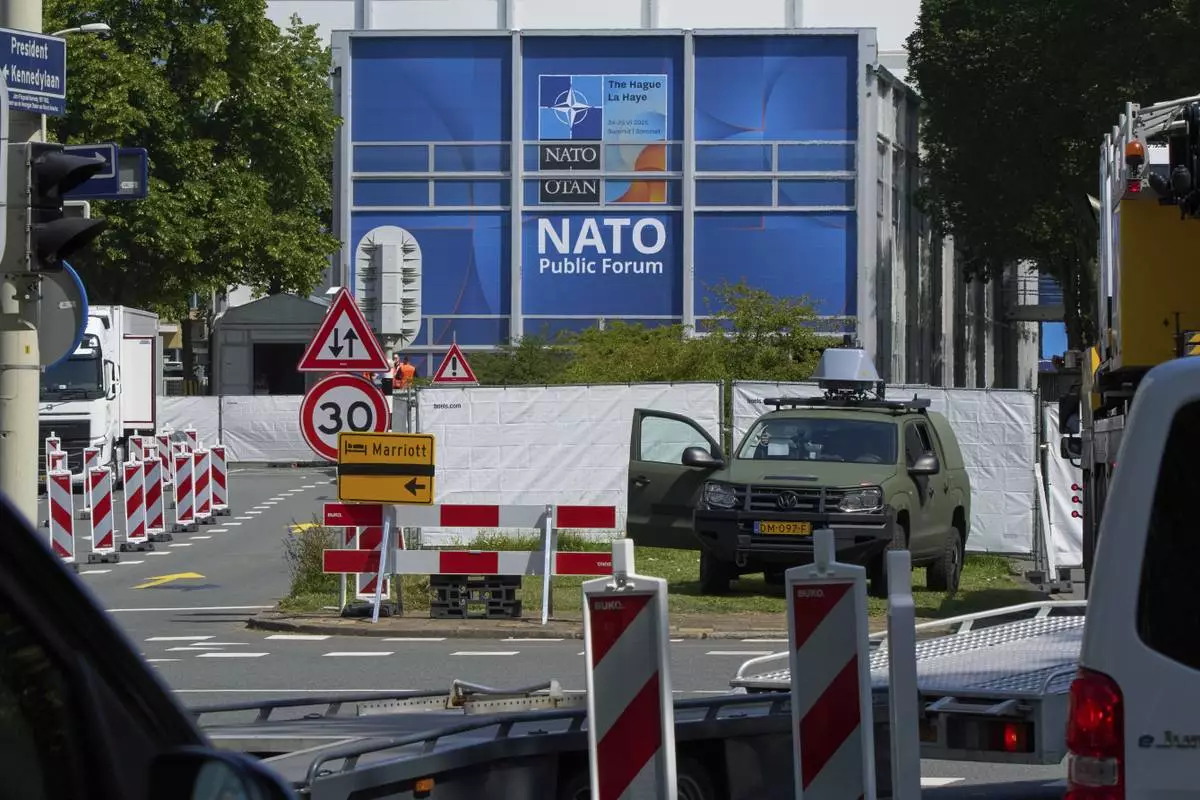
FILE- Security ahead of the NATO summit in The Hague, Netherlands, Wednesday, June 18, 2025. (AP Photo/Peter Dejong, File)
FILE- Security ahead of the NATO summit in The Hague, Netherlands, Wednesday, June 18, 2025. (AP Photo/Peter Dejong, File)

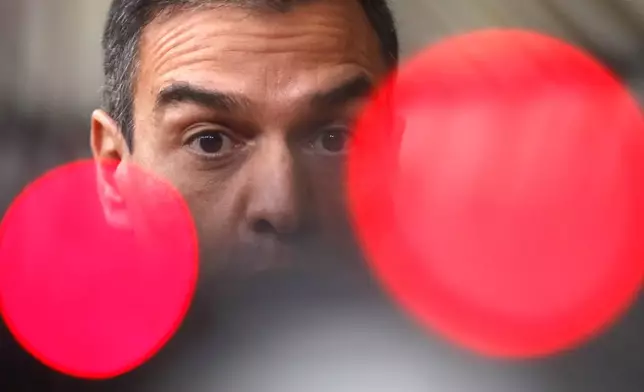
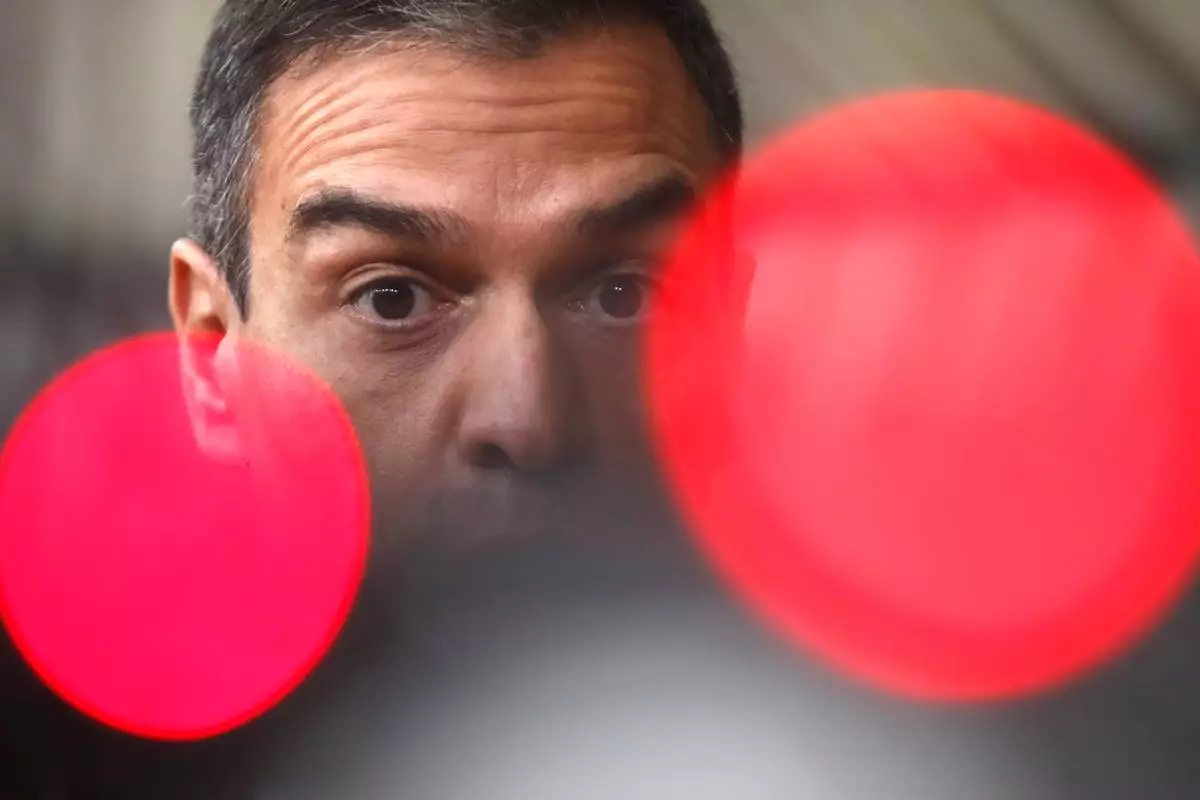
FILE- Spain's Prime Minister Pedro Sanchez speaks on camera as he arrives for an EU summit at the European Council building in Brussels, Oct. 1, 2020. (AP Photo/Francisco Seco, File)
FILE- Spain's Prime Minister Pedro Sanchez speaks on camera as he arrives for an EU summit at the European Council building in Brussels, Oct. 1, 2020. (AP Photo/Francisco Seco, File)

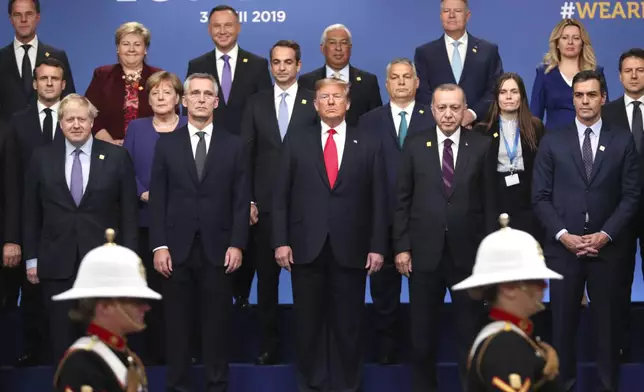
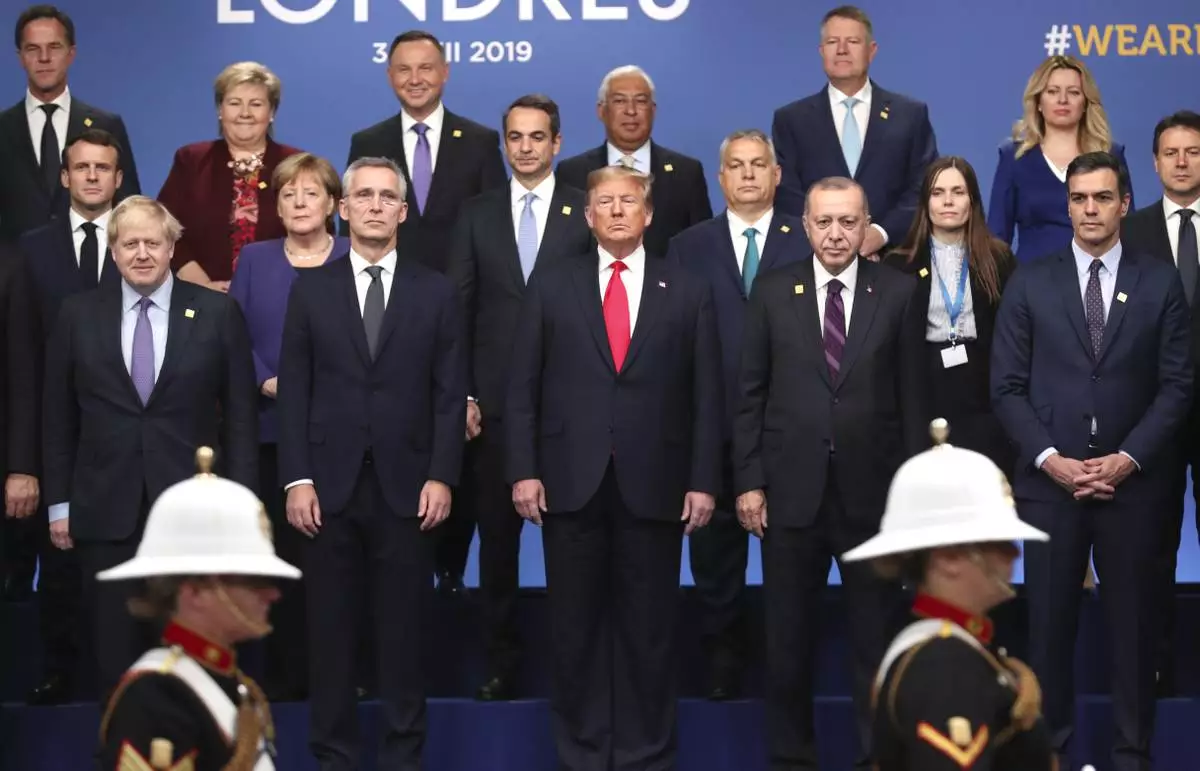
FILE - In this Dec. 4, 2019, photo, from front row left, British Prime Minister Boris Johnson, NATO Secretary General Jens Stoltenberg, U.S. President Donald Trump, Turkish President Recep Tayyip Erdogan and Spanish Prime Minister Pedro Sanchez attend a ceremony event during a NATO leaders meeting at The Grove hotel and resort in Watford, Hertfordshire, England. (AP Photo/Francisco Seco, File)
FILE - In this Dec. 4, 2019, photo, from front row left, British Prime Minister Boris Johnson, NATO Secretary General Jens Stoltenberg, U.S. President Donald Trump, Turkish President Recep Tayyip Erdogan and Spanish Prime Minister Pedro Sanchez attend a ceremony event during a NATO leaders meeting at The Grove hotel and resort in Watford, Hertfordshire, England. (AP Photo/Francisco Seco, File)

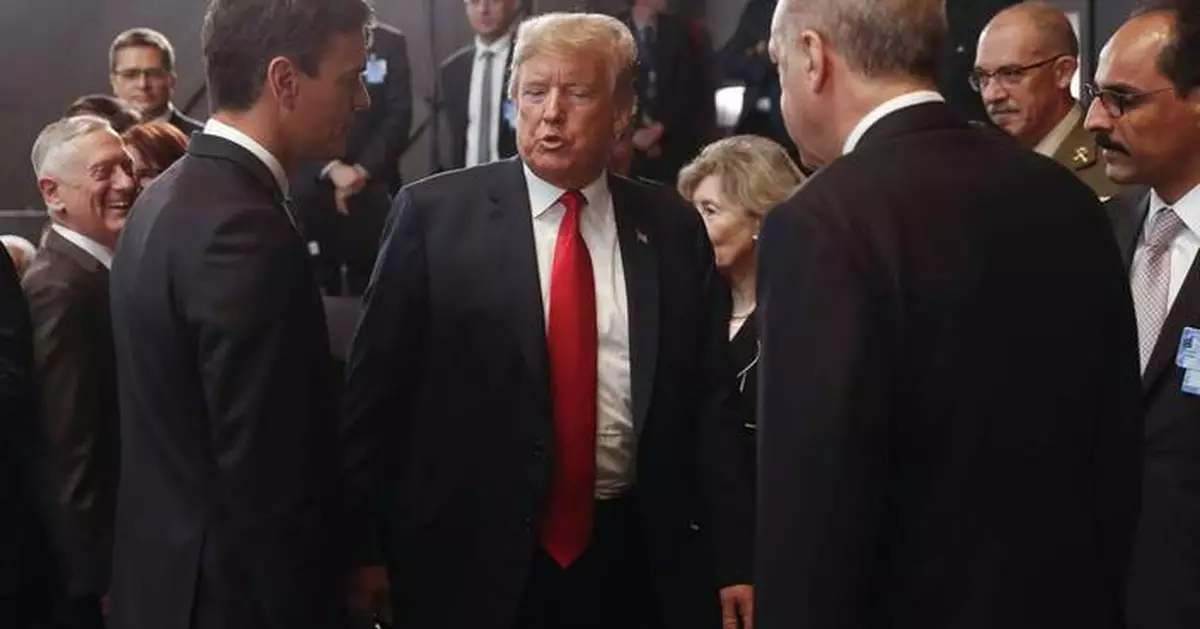
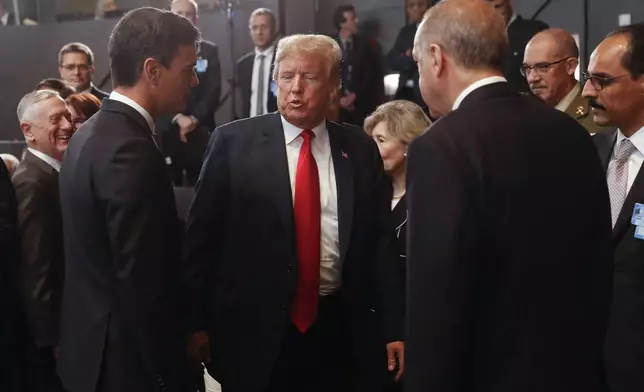
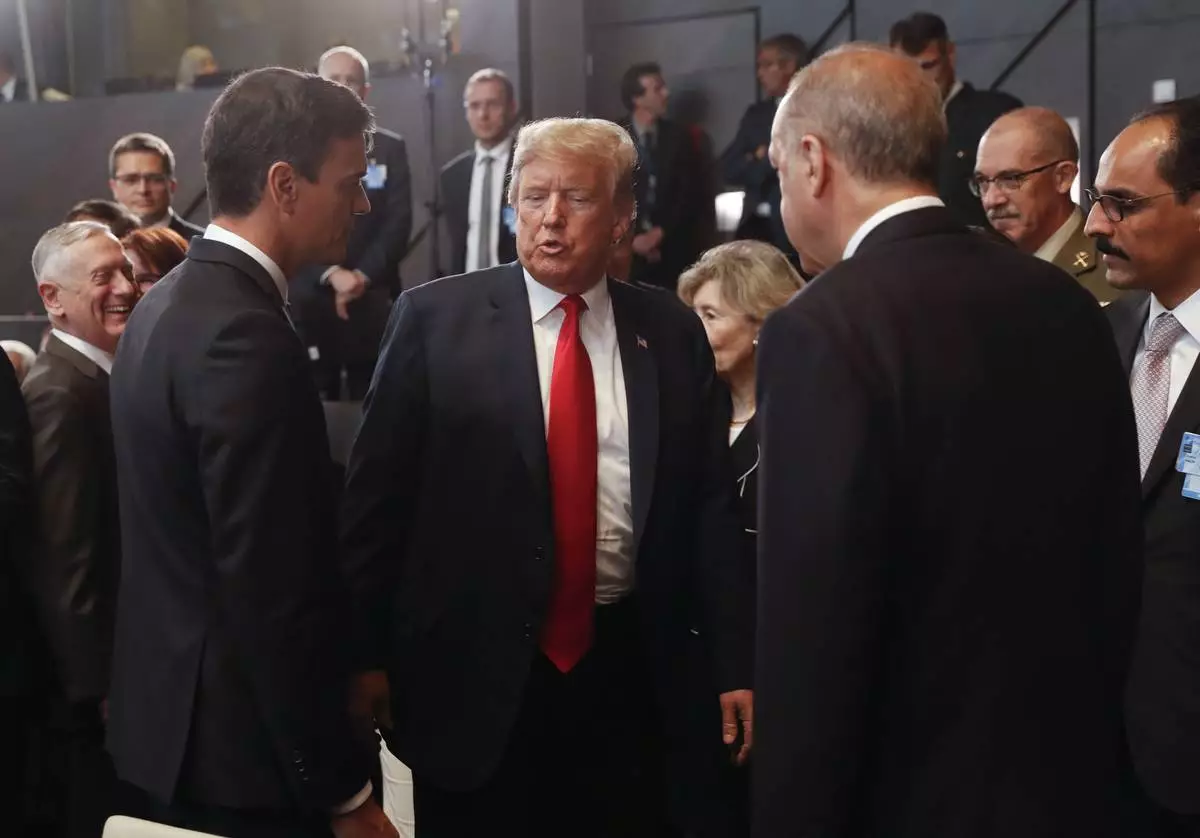
FILE- President Donald Trump, center, stops to talk with Spanish Prime Minister Pedro Sanchez, left, and Turkey's President Recep Tayyip Erdogan, right, as they attend a meeting of the North Atlantic Council during a summit of heads of state and government at NATO headquarters in Brussels on July 11, 2018. (AP Photo/Pablo Martinez Monsivais, Pool, File)

FILE- President Donald Trump, center, stops to talk with Spanish Prime Minister Pedro Sanchez, left, and Turkey's President Recep Tayyip Erdogan, right, as they attend a meeting of the North Atlantic Council during a summit of heads of state and government at NATO headquarters in Brussels on July 11, 2018. (AP Photo/Pablo Martinez Monsivais, Pool, File)

Trump has cast doubt over whether the U.S. would defend allies that spend too little.

Setting the spending goal would be a historic decision. It would see all 32 countries invest the same amount in defense for the first time. Only last week, NATO Secretary-General Mark Rutte expressed confidence that they would endorse it.

But in a letter to Rutte on Thursday, Prime Minister Pedro Sánchez wrote that “committing to a 5% target would not only be unreasonable, but also counterproductive.”

“It would move Spain away from optimal spending and it would hinder the (European Union’s) ongoing efforts to strengthen its security and defense ecosystem,” Sánchez wrote in the letter, seen by The Associated Press.

Belgium, Canada, France and Italy would also struggle to hike security spending by billions of dollars, but Spain is the only country to officially announce its intentions, making it hard to row back from such a public decision.

Beyond his economic challenges, Sánchez has other problems. He relies on small parties to govern, and corruption scandals have ensnared his inner circle and family members. He’s under growing pressure to call an early election.

In response to the letter, Rutte’s office said only that “discussions among allies on a new defense investment plan are ongoing.” NATO’s top civilian official had been due to table a new proposal on Friday to try to break the deadlock.

The U.S. and French envoys had also been due to update reporters about the latest developments ahead of the summit but postponed their briefings.

Rutte and many European allies are desperate to resolve the problem by Tuesday so that Trump does not derail the summit, as he did during his first term at NATO headquarters in 2018.

After Russia’s full-scale invasion of Ukraine in 2022, NATO allies agreed that 2% of GDP should be the minimum they spend on their military budgets. But NATO’s new plans for defending its own territory against outside attack require investment of at least 3%. Spain agreed to those plans in 2023.

The 5% goal is made up of two parts. The allies would agree to hike pure defense spending to 3.5% of GDP. A further 1.5% would go to upgrade roads, bridges, ports and airfields so that armies can better deploy, and to prepare societies for future attacks.

Mathematically, 3.5 plus 1.5 equals Trump’s 5%. But a lot is hiding behind the figures and details of what kinds of things can be included remain cloudy.

Countries closest to Russia, Belarus and Ukraine have all agreed to the target, as well as nearby Germany, Norway, Sweden and the Netherlands, which is hosting the June 24-25 summit.

The Netherlands estimates that NATO’s defense plans would force it to dedicate at least 3.5% to core defense spending. That means finding an additional 16 billion to 19 billion euros ($18 billion to $22 billion).

Supplying arms and ammunition to Ukraine, which Spain does, will also be included as core defense spending.

NATO estimates that the U.S. spent around 3.2% of GDP on defense last year.

The additional 1.5% spending basket is murkier. Rutte and many members argue that infrastructure used to deploy armies to the front must be included, as well as building up defense industries and preparing citizens for possible attacks.

“If a tank is not able to cross a bridge. If our societies are not prepared in case war breaks out for a whole of society approach. If we are not able to really develop the defense industrial base, then the 3.5% is great but you cannot really defend yourselves,” Rutte said this month.

Spain wanted climate change spending included, but that proposal was rejected. Cyber-security and counter-hybrid warfare investment should also make the cut. Yet with all the conjecture about what might be included, it’s difficult to see how Rutte arrived at this 1.5% figure.

It’s not enough to agree to spend more money. Many allies haven't yet hit the 2% target, although most will this year, and they had a decade to get there. So an incentive is required.

The date of 2032 has been floated as a deadline. That’s far shorter than previous NATO targets, but military planners estimate that Russian forces could be capable of launching an attack on an ally within 5-10 years.

The U.S. insists that it cannot be an open-ended pledge, and that a decade is too long. Still, Italy says it wants 10 years to hit the 5% target.

Another issue is how fast spending should be ramped up. “I have a cunning plan for that,” Rutte said. He wants the allies to submit annual plans that lay out how much they intend to increase spending by.

For Europe, Russia’s war on Ukraine poses an existential threat. A major rise in sabotage, cyberattacks and GPS jamming incidents is blamed on Moscow. European leaders are girding their citizens for the possibility of more.

The United States also insists that China poses a threat. But for European people to back a hike in national defense spending, their governments require acknowledgement that the Kremlin remains NATO’s biggest security challenge.

The billions required for security will be raised by taxes, going into debt, or shuffling money from other budgets. But it won’t be easy for many, as Spain has shown.

On top of that, Trump has made things economically tougher by launching a global tariff war — ostensibly for U.S. national security reasons — something America's allies find hard to fathom.
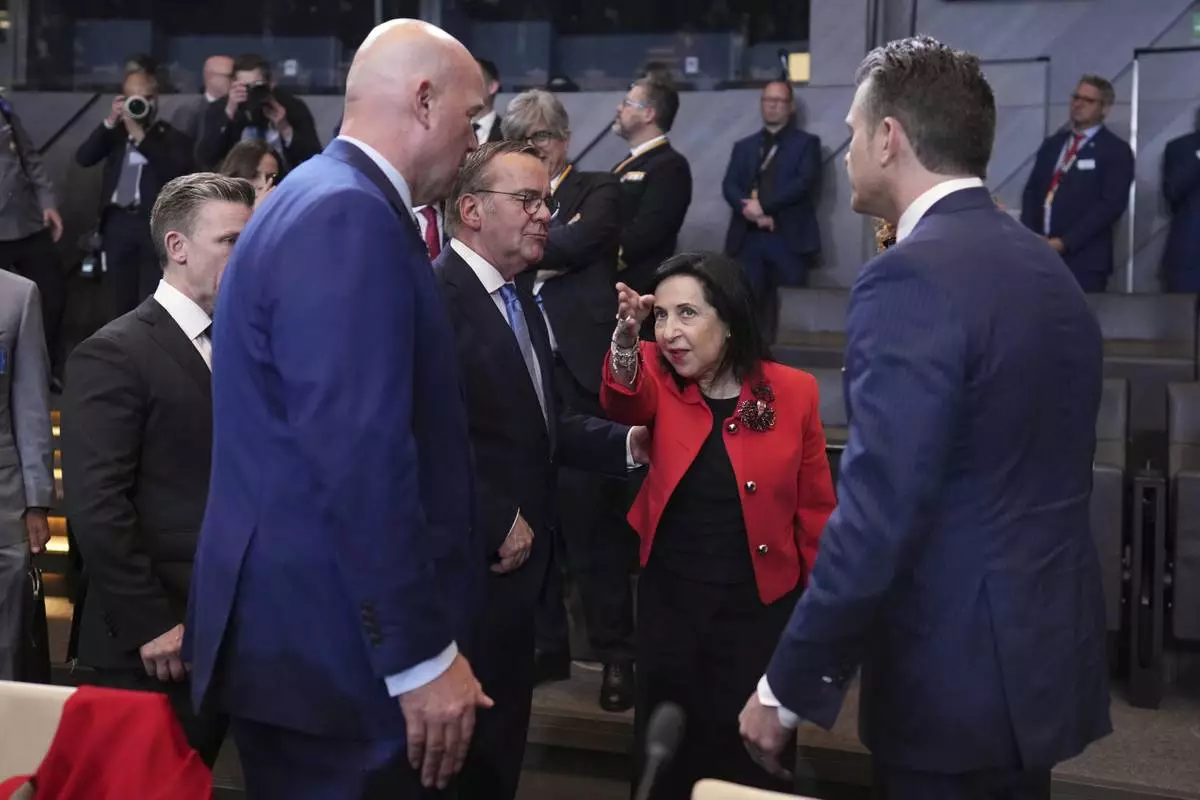
FILE- From left, Sweden's Defense Minister Pal Jonson, US Ambassador to NATO Matthew Whitaker, Germany's Defense Minister Boris Pistorius, Spain's Defense Minister Margarita Robles and Defense Secretary Pete Hegseth during a meeting of NATO defense ministers at NATO headquarters in Brussels, June 5, 2025. (AP Photo/Virginia Mayo, File)
FILE- From left, Sweden's Defense Minister Pal Jonson, US Ambassador to NATO Matthew Whitaker, Germany's Defense Minister Boris Pistorius, Spain's Defense Minister Margarita Robles and Defense Secretary Pete Hegseth during a meeting of NATO defense ministers at NATO headquarters in Brussels, June 5, 2025. (AP Photo/Virginia Mayo, File)

FILE- Security ahead of the NATO summit in The Hague, Netherlands, Wednesday, June 18, 2025. (AP Photo/Peter Dejong, File)
FILE- Security ahead of the NATO summit in The Hague, Netherlands, Wednesday, June 18, 2025. (AP Photo/Peter Dejong, File)

FILE- Spain's Prime Minister Pedro Sanchez speaks on camera as he arrives for an EU summit at the European Council building in Brussels, Oct. 1, 2020. (AP Photo/Francisco Seco, File)
FILE- Spain's Prime Minister Pedro Sanchez speaks on camera as he arrives for an EU summit at the European Council building in Brussels, Oct. 1, 2020. (AP Photo/Francisco Seco, File)

FILE - In this Dec. 4, 2019, photo, from front row left, British Prime Minister Boris Johnson, NATO Secretary General Jens Stoltenberg, U.S. President Donald Trump, Turkish President Recep Tayyip Erdogan and Spanish Prime Minister Pedro Sanchez attend a ceremony event during a NATO leaders meeting at The Grove hotel and resort in Watford, Hertfordshire, England. (AP Photo/Francisco Seco, File)
FILE - In this Dec. 4, 2019, photo, from front row left, British Prime Minister Boris Johnson, NATO Secretary General Jens Stoltenberg, U.S. President Donald Trump, Turkish President Recep Tayyip Erdogan and Spanish Prime Minister Pedro Sanchez attend a ceremony event during a NATO leaders meeting at The Grove hotel and resort in Watford, Hertfordshire, England. (AP Photo/Francisco Seco, File)

FILE- President Donald Trump, center, stops to talk with Spanish Prime Minister Pedro Sanchez, left, and Turkey's President Recep Tayyip Erdogan, right, as they attend a meeting of the North Atlantic Council during a summit of heads of state and government at NATO headquarters in Brussels on July 11, 2018. (AP Photo/Pablo Martinez Monsivais, Pool, File)

FILE- President Donald Trump, center, stops to talk with Spanish Prime Minister Pedro Sanchez, left, and Turkey's President Recep Tayyip Erdogan, right, as they attend a meeting of the North Atlantic Council during a summit of heads of state and government at NATO headquarters in Brussels on July 11, 2018. (AP Photo/Pablo Martinez Monsivais, Pool, File)
NEW YORK (AP) — Reviving a campaign pledge, President Donald Trump wants a one-year, 10% cap on credit card interest rates, a move that could save Americans tens of billions of dollars but drew immediate opposition from an industry that has been in his corner.

Trump was not clear in his social media post Friday night whether a cap might take effect through executive action or legislation, though one Republican senator said he had spoken with the president and would work on a bill with his “full support.” Trump said he hoped it would be in place Jan. 20, one year after he took office.

Strong opposition is certain from Wall Street in addition to the credit card companies, which donated heavily to his 2024 campaign and have supported Trump's second-term agenda. Banks are making the argument that such a plan would most hurt poor people, at a time of economic concern, by curtailing or eliminating credit lines, driving them to high-cost alternatives like payday loans or pawnshops.

“We will no longer let the American Public be ripped off by Credit Card Companies that are charging Interest Rates of 20 to 30%,” Trump wrote on his Truth Social platform.

Researchers who studied Trump’s campaign pledge after it was first announced found that Americans would save roughly $100 billion in interest a year if credit card rates were capped at 10%. The same researchers found that while the credit card industry would take a major hit, it would still be profitable, although credit card rewards and other perks might be scaled back.

About 195 million people in the United States had credit cards in 2024 and were assessed $160 billion in interest charges, the Consumer Financial Protection Bureau says. Americans are now carrying more credit card debt than ever, to the tune of about $1.23 trillion, according to figures from the New York Federal Reserve for the third quarter last year.

Further, Americans are paying, on average, between 19.65% and 21.5% in interest on credit cards according to the Federal Reserve and other industry tracking sources. That has come down in the past year as the central bank lowered benchmark rates, but is near the highs since federal regulators started tracking credit card rates in the mid-1990s. That’s significantly higher than a decade ago, when the average credit card interest rate was roughly 12%.

The Republican administration has proved particularly friendly until now to the credit card industry.

Capital One got little resistance from the White House when it finalized its purchase and merger with Discover Financial in early 2025, a deal that created the nation’s largest credit card company. The Consumer Financial Protection Bureau, which is largely tasked with going after credit card companies for alleged wrongdoing, has been largely nonfunctional since Trump took office.

In a joint statement, the banking industry was opposed to Trump's proposal.

“If enacted, this cap would only drive consumers toward less regulated, more costly alternatives," the American Bankers Association and allied groups said.

Bank lobbyists have long argued that lowering interest rates on their credit card products would require the banks to lend less to high-risk borrowers. When Congress enacted a cap on the fee that stores pay large banks when customers use a debit card, banks responded by removing all rewards and perks from those cards. Debit card rewards only recently have trickled back into consumers' hands. For example, United Airlines now has a debit card that gives miles with purchases.

The U.S. already places interest rate caps on some financial products and for some demographics. The Military Lending Act makes it illegal to charge active-duty service members more than 36% for any financial product. The national regulator for credit unions has capped interest rates on credit union credit cards at 18%.

Credit card companies earn three streams of revenue from their products: fees charged to merchants, fees charged to customers and the interest charged on balances. The argument from some researchers and left-leaning policymakers is that the banks earn enough revenue from merchants to keep them profitable if interest rates were capped.

"A 10% credit card interest cap would save Americans $100 billion a year without causing massive account closures, as banks claim. That’s because the few large banks that dominate the credit card market are making absolutely massive profits on customers at all income levels," said Brian Shearer, director of competition and regulatory policy at the Vanderbilt Policy Accelerator, who wrote the research on the industry's impact of Trump's proposal last year.

There are some historic examples that interest rate caps do cut off the less creditworthy to financial products because banks are not able to price risk correctly. Arkansas has a strictly enforced interest rate cap of 17% and evidence points to the poor and less creditworthy being cut out of consumer credit markets in the state. Shearer's research showed that an interest rate cap of 10% would likely result in banks lending less to those with credit scores below 600.

The White House did not respond to questions about how the president seeks to cap the rate or whether he has spoken with credit card companies about the idea.

Sen. Roger Marshall, R-Kan., who said he talked with Trump on Friday night, said the effort is meant to “lower costs for American families and to reign in greedy credit card companies who have been ripping off hardworking Americans for too long."

Legislation in both the House and the Senate would do what Trump is seeking.

Sens. Bernie Sanders, I-Vt., and Josh Hawley, R-Mo., released a plan in February that would immediately cap interest rates at 10% for five years, hoping to use Trump’s campaign promise to build momentum for their measure.

Hours before Trump's post, Sanders said that the president, rather than working to cap interest rates, had taken steps to deregulate big banks that allowed them to charge much higher credit card fees.

Reps. Alexandria Ocasio-Cortez, D-N.Y., and Anna Paulina Luna, R-Fla., have proposed similar legislation. Ocasio-Cortez is a frequent political target of Trump, while Luna is a close ally of the president.

Seung Min Kim reported from West Palm Beach, Fla.

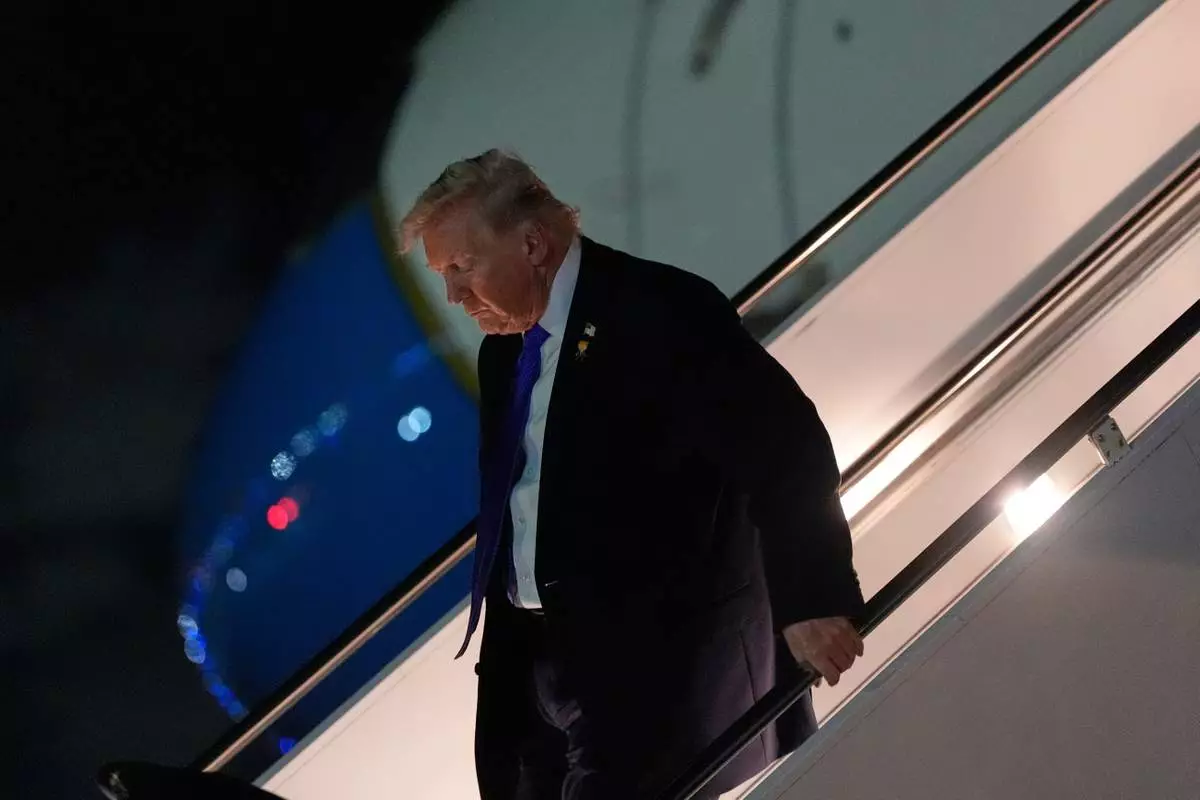
President Donald Trump arrives on Air Force One at Palm Beach International Airport, Friday, Jan. 9, 2025, in West Palm Beach, Fla. (AP Photo/Julia Demaree Nikhinson)

President Donald Trump arrives on Air Force One at Palm Beach International Airport, Friday, Jan. 9, 2025, in West Palm Beach, Fla. (AP Photo/Julia Demaree Nikhinson)

FILE - Visa and Mastercard credit cards are shown in Buffalo Grove, Ill., Feb. 8, 2024. (AP Photo/Nam Y. Huh, File)

FILE - Visa and Mastercard credit cards are shown in Buffalo Grove, Ill., Feb. 8, 2024. (AP Photo/Nam Y. Huh, File)

Recommended Articles