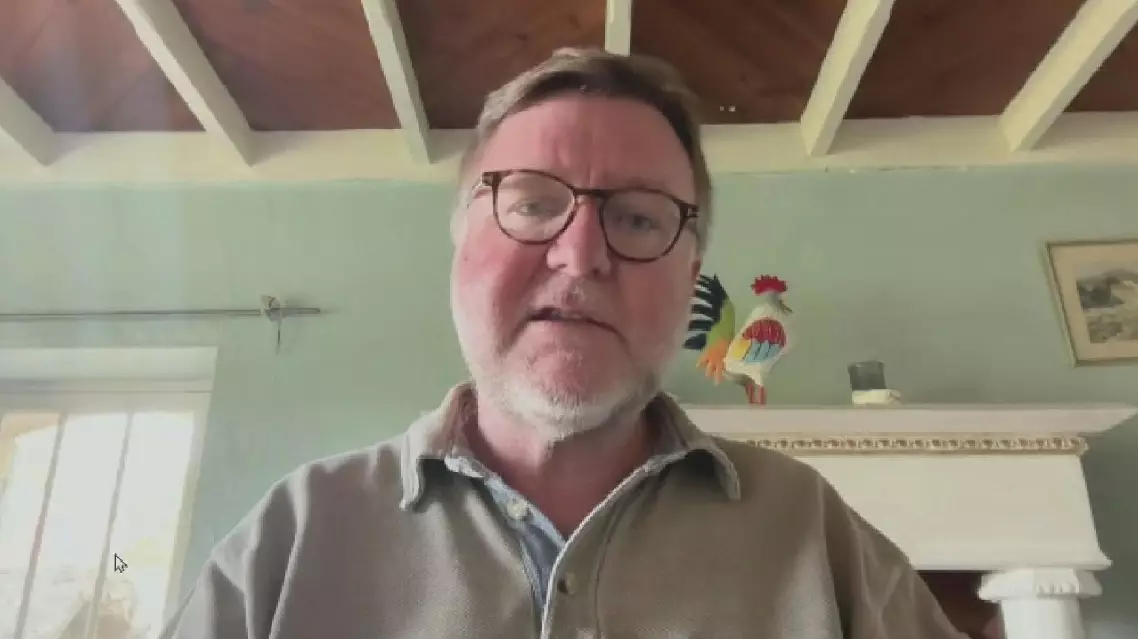
The current rivalry between China and the United States fundamentally differs from the Cold War, with President Donald Trump standing out as a disruptive figure among post-Cold War U.S. presidents, said Odd Arne Westad, a renowned historian and Cold War scholar at Yale University.
In an interview aired Friday by China Global Television Network (CGTN), Westad explored China-U.S. relations through a Cold War lens. He offered a long historical perspective essential to understanding today's world, marked by deepening ideological rifts, resurgent spheres of influence, and a breakdown in global governance.
"I think it is fundamentally different. I think for two main reasons. One is that in the Cold War between the United States and the Soviet Union, the Soviet Union was in many ways isolated by its own design. It was not part of the global international economic framework. It was outside of international markets. China and the United States compete within the same markets and within, more or less internationally, the same economic system. Secondly, there is the aspect of ideology that we touched upon before. During the U.S.-Soviet Cold War, the ideologies were very much set in stone. They were very unmalleable; they were very unchanging. Today, even though there are ideological elements in terms of the U.S.-China confrontation, they are of different kind. They are much more preoccupied with trying to frame policies, frame ideas, and concepts that can be accepted on a broad scale, whatever kind of economic system, or even political system domestically that countries aspire to," he said.
Westad highlighted a significant shift in U.S. foreign policy, noting how Trump diverged from the framework that defined America’s global role.
"He is the first one who has broken with the overall framework that was put in place in terms of how the United States functioned in the world that came out of the Cold War. The strange thing about the United States is that when the Cold War came to an end in the early 1990s, very little changed in terms of America's approach to much of the world and how the world worked. Donald Trump is the first one who says that he looks at the world very differently. He doesn't see the United States as a systemic power, as a power that is responsible for everything that goes on in the world. He is much more preoccupied with what he sees as America's national interest in a much narrower framework than what has been the case before. And that's disruption in a way," he said.
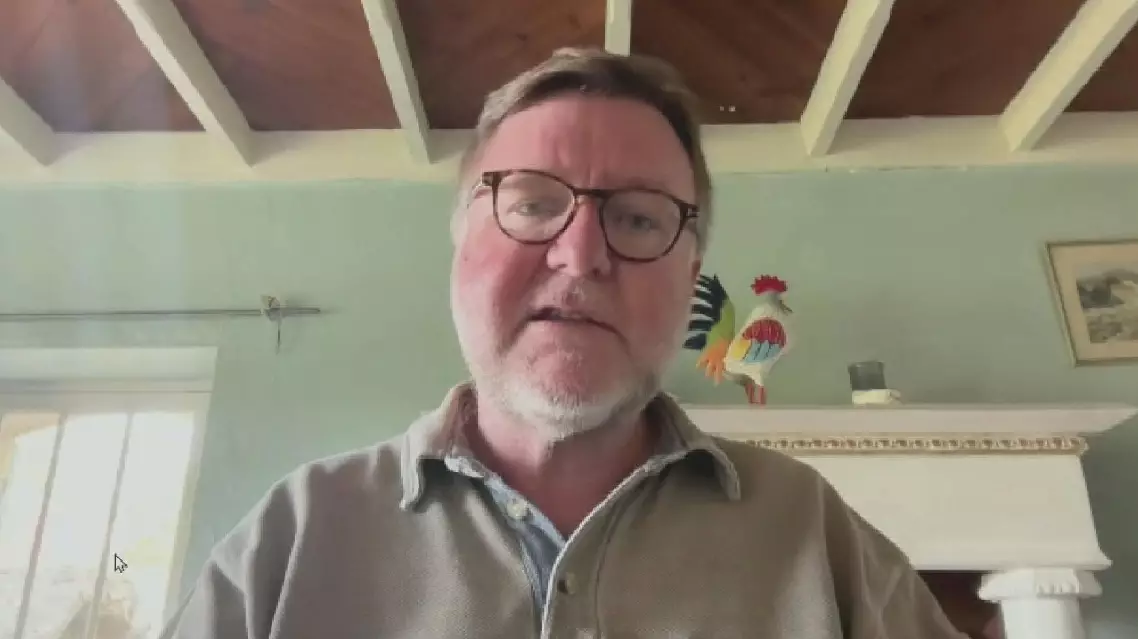
China-U.S. rivalry differs fundamentally from Cold War: Yale scholar
China-U.S. rivalry differs fundamentally from Cold War: Yale scholar
China-U.S. rivalry differs fundamentally from Cold War: Yale scholar