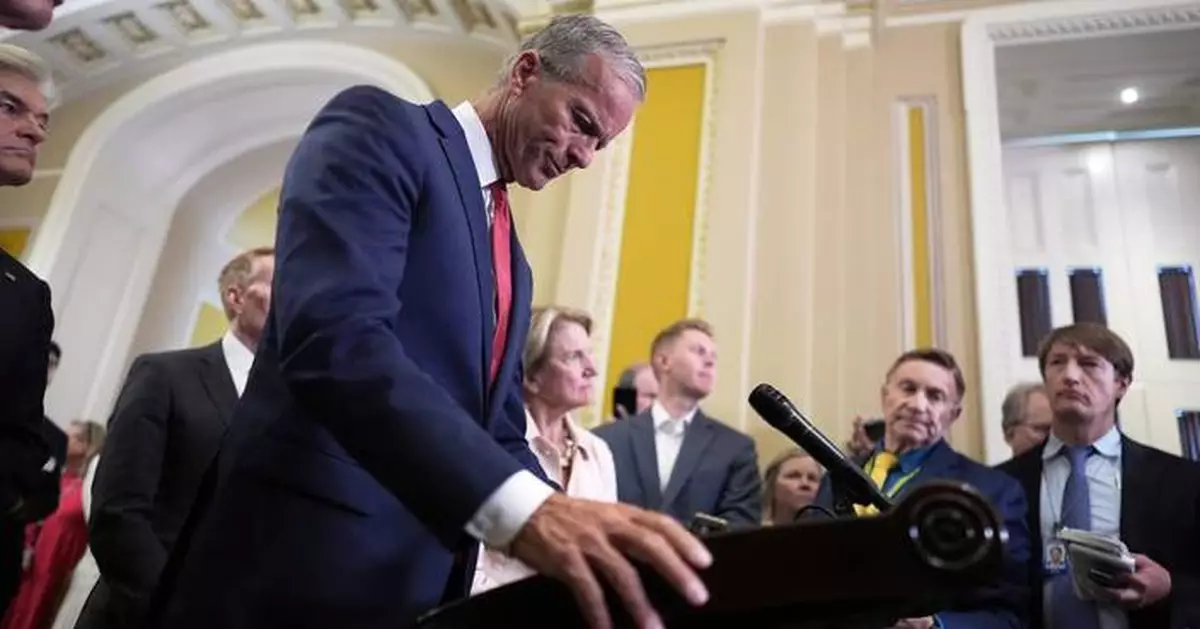
WASHINGTON (AP) — House and Senate Republicans are taking slightly different approaches when it comes to the tax cuts that lawmakers are looking to include in their massive tax and spending cuts bill.
Republicans in the two chambers don't agree on the size of a deduction for state and local taxes. And they are at odds on such things as allowing people to use their health savings accounts to help pay for their gym membership, or whether electric vehicle and hybrid owners should have to pay an annual fee.
The House passed its version shortly before Memorial Day. Now the Senate is looking to pass its version.
While the two bills are similar on the major tax provisions, how they work out their differences in the coming weeks will determine how quickly they can get a final product over the finish line. President Donald Trump is pushing to have the legislation on his desk by July 4th.
Here’s a look at some of the key differences between the two bills:
The child tax credit currently stands at $2,000 per child.
The House bill temporarily boosts the child tax credit to $2,500 for the 2025 through 2028 tax years, roughly the length of President Donald Trump's second term. It also indexes the credit amount for inflation beginning in 2027.
The Senate bill provides a smaller, initial bump-up to $2,200, but the bump is permanent, with the credit amount indexed for inflation beginning next year.
Trump promised on the campaign trail that he would seek to end income taxes on tips, overtime and Social Security benefits. Also, he would give car buyers a new tax break by allowing them to deduct the interest paid on auto loans.
The House and Senate bills incorporate those promises with temporary deductions lasting from the 2025 through 2028 tax years, but with some differences.
The House bill creates a deduction on tips for those working in jobs that have customarily received tips. The House also provides for a deduction for overtime that’s equal to the amount of OT a worker has earned.
The Senate bill comes with more restrictions. The deduction for tips is limited to $25,000 per taxpayer and the deduction for overtime is limited to $12,500 per taxpayer.
The House and Senate bills both provide a deduction of up to $10,000 for interest paid on loans for vehicles made in the United States.
And on Social Security, the bills don't directly touch the program. Instead, they grant a larger tax deduction for Americans age 65 and older. The House sets the deduction at $4,000. The Senate sets it at $6,000.
Both chambers include income limits over which the new deductions begin to phase out.
The caps on state and local tax deductions, known in Washington as the SALT cap, now stand at $10,000.
The House bill, in a bid to win over Republicans from New York, California and New Jersey, lifts the cap to $40,000 per household with incomes of less than $500,000. The credit phases down for households earning more than $500,000.
The Senate bill keeps the cap at $10,000. That's a non-starter in the House, but Republicans in the two chambers will look to negotiate a final number over the coming weeks that both sides can accept.
The House bill prohibits states from establishing new provider taxes or increasing existing taxes. These are taxes that Medicaid providers, such as hospitals, pay to help states finance their share of Medicaid costs. In turn, the taxes allow states to receive increased federal matching funds while generally holding providers harmless through higher reimbursements that offset the taxes paid.
Such taxes now are effectively capped at 6%. The Senate looks to gradually lower that threshold for states that have expanded their Medicaid populations under the Affordable Care Act, or “Obamacare,” until it reaches 3.5% in 2031, with exceptions for nursing homes and intermediate care facilities.
Industry groups have warned that limiting the ability of states to tax providers may lead to some states making significant cuts to their Medicaid programs as they make up for the lost revenue in other ways. The Medicaid provision could be a flashpoint in the coming House and Senate negotiations. Sen. Josh Hawley, R-Mo., was highly critical of the proposed Senate changes.
“This needs a lot of work. It’s really concerning and I’m really surprised by it,” he said. “Rural hospitals are going to be in bad shape.”
The House bill would allow companies for five years to fully deduct equipment purchases and domestic research and development expenses. The Senate bill includes no sunset, making the tax breaks permanent, which was a key priority of powerful trade groups such as the U.S. Chamber of Commerce.
Republicans in both chambers are looking to scale back the clean energy tax credits enacted through then-President Joe Biden's climate law. It aimed to boost the nation’s transition away from planet-warming greenhouse gas emissions toward renewable energy such as wind and solar power.
Under the Senate bill, the tax credits for clean energy and home energy efficiency would still be phased out, but less quickly than under the House bill. Still, advocacy groups fear that the final measure will threaten hundreds of thousands of jobs and drive up household energy costs.
The House bill would allow millions of Americans to use their health savings accounts to pay for gym memberships, with a cap of $500 for single taxpayers and $1,000 for joint filers. The Senate bill doesn't include such a provision.
The House reinstates a charitable deduction for non-itemizers of $150 per taxpayer. The Senate bill increases that deduction for donations to $1,000 per taxpayer.
Republicans in the House bill included a new annual fee of $250 for EV owners and $100 for hybrid owners that would be collected by state motor vehicle departments. The Senate bill excludes the proposed fees.

Speaker of the House Mike Johnson, R-La., reacts to reporters after Sen. Alex Padilla, D-Calif., was forcefully removed from Homeland Security Secretary Kristi Noem's news conference in Los Angeles and handcuffed by officers as he tried to speak up about immigration raids that have led to protests in California and elsewhere, at the Capitol in Washington, Thursday, June 12, 2025. (AP Photo/J. Scott Applewhite)
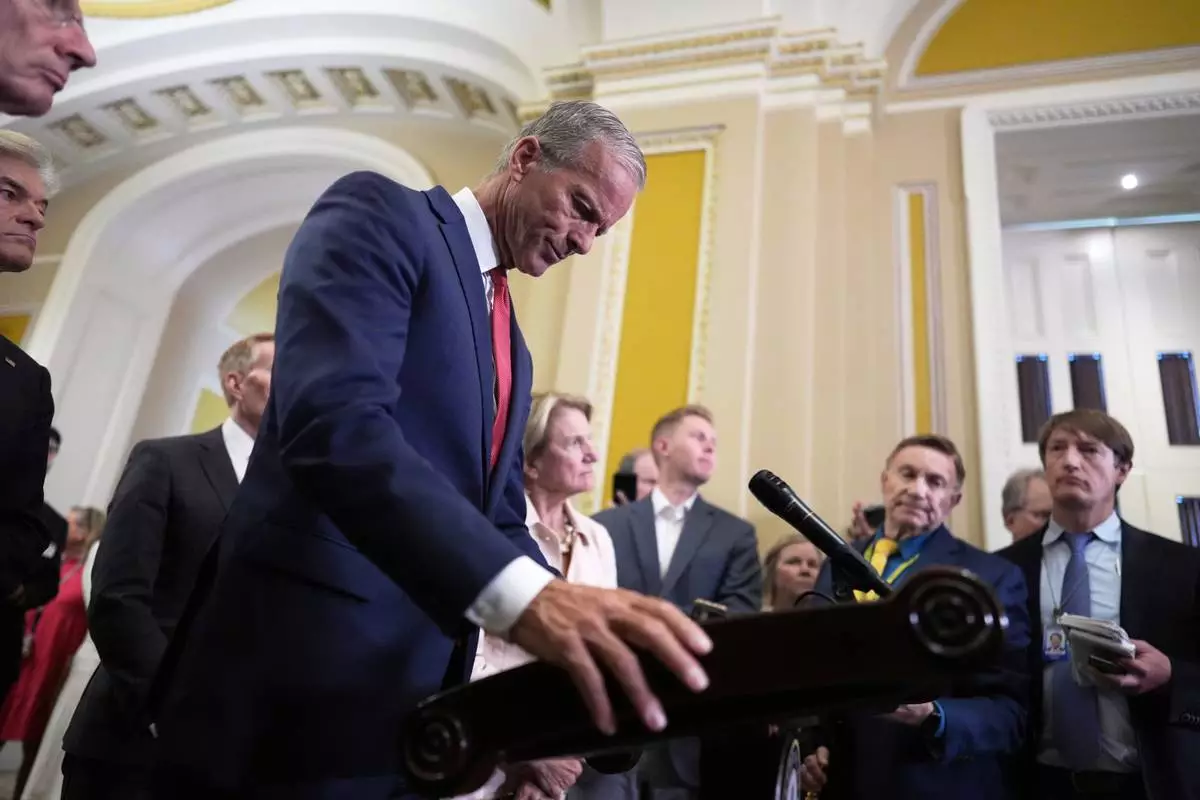
Senate Majority Leader John Thune, R-S.D., speaks to reporters following closed-door party meetings at the Capitol in Washington, Tuesday, June 17, 2025. (AP Photo/J. Scott Applewhite)