Executives from multinational enterprises gathered in Fuzhou City of east China's Fujian Province on Friday to discuss China's consumption landscape and efforts to open up the economy further.
At a roundtable meeting, suggestions were made to the National Development and Reform Commission (NDRC), China's top economic planner, about market access standards for medical services and low-carbon development to enhance exchanges.
"[China should leverage] the advantages in its strong synergy of the supply chain. On the other hand, in terms of the core technology innovation, the batteries, motors, electronic control systems can be highlighted because the automotive field is related to them. We hope to see results in the breakthrough of the core technologies in these three fields," said Bai Jiajia, market director of Deloitte (Greater China).
As a global professional think tank, Deloitte suggests introducing international environmental, social and governance standards and building low-carbon supply chains to create zero-carbon industrial clusters, which could attract more orders from multinational automakers.
"We look forward to interpretations of policies such as the unified national market and the large-scale equipment upgrades and consumer goods trade-in programs," said Liu Mingyang, government affairs director of Siemens (China).
The NDRC said it is committed to high-level opening up, welcoming enterprises from all countries to take part in development opportunities. It said it will protect foreign investments and create a competitive and law-based business environment.
The meeting discussed policies across various industries, including automobile manufacturing and the business environment. It actively promoted the development of Fujian's private sector and highlighted the province's achievements along the 21st Century Maritime Silk Road.
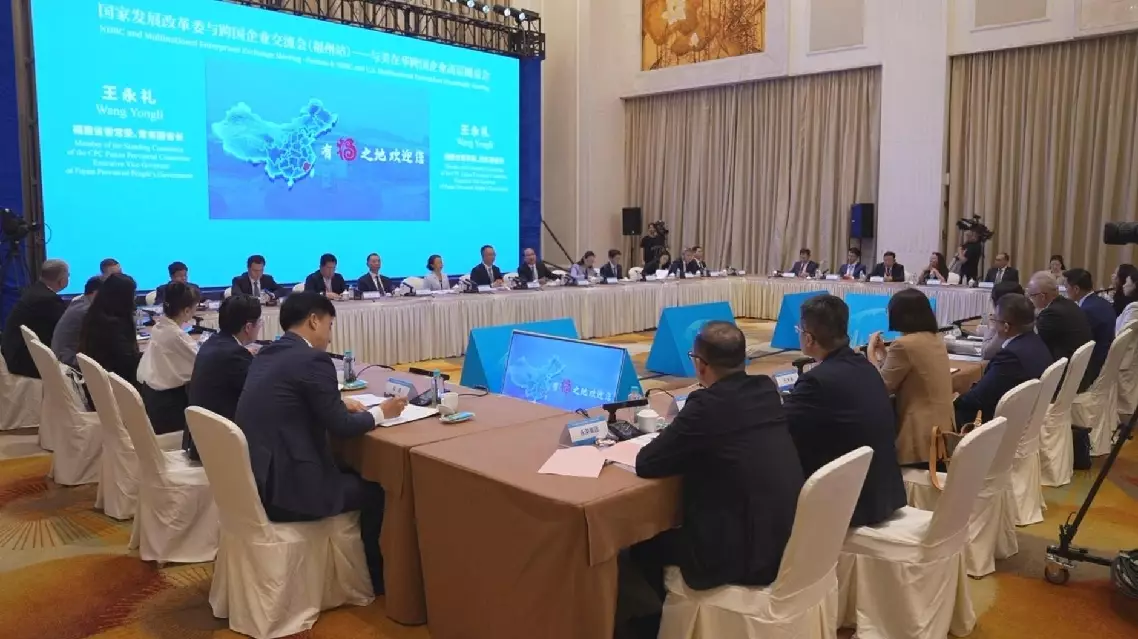
China holds roundtable with foreign enterprise executives on consumption landscape, opening up
Venezuela is facing a severe "flight suspension crisis" that has led to challenges in family reunion and severely impacted the tourism industry due to the country's heightened tensions with the U.S. and Trump's threat to shut its airspace.
Amid heightened tensions between Venezuela and the United States, both passengers and the Venezuelan airlines that operate international flights are facing pressure as the New Year holiday is near.
Julio, a resident of Caracas, is anxiously waiting for his mother at the Simon Bolivar International Airport in Maiquetia. His mother, in her 90s, has not returned to Venezuela to visit family for two years and is eagerly looking forward to spending the New Year holiday with her loved ones in Caracas. However, due to the recent extreme scarcity of international flights, she has been stranded in Bogota, Colombia, for a week before finally securing a ticket to return home.
"My mother flied from Italy. But due to issues with the airline, she had to stay in Bogota for a week waiting for a flight to Caracas. It used to be easy to buy flight tickets from Colombia. Just 20 days ago, several international airlines were still selling tickets, but now the flight cancellations have made it difficult to purchase them," he said.
The experience of Julio's family is an epitome of the difficulties faced by countless Venezuelans abroad who find it challenging to return home.
At the same time, outbound travel of Venezuelan people has also been severely affected. With most international airlines suspending their operations to and from Venezuela, traveling abroad for the New Year holiday has become both expensive and cumbersome.
A business manager of a travel agency in Caracas said that the extensive flight cancellations have led to a significant increase in travel costs, forcing approximately 35 percent of tourists to cancel their travel plans, with the routes to Europe being the most heavily impacted.
"Due to the lack of direct flights like before, the costs for outbound travel have risen. Travelers now need to purchase an additional connecting flight to reach their destinations. They are faced with the choice of buying multiple tickets or canceling their trips and staying in the country. Venezuelan airlines and the government have been working to address these challenges, but the number of travelers is vast, and many people continue to be affected," the business manager said.
In addition, the sharp decline in the number of inbound tourists has led to a significant drop in the occupancy rate at many hotels in Caracas. To attract tourists, numerous local hotels have been forced to implement substantial price reductions.
To address the series of negative impacts caused by extensive flight cancellations, Venezuela's tourism sector is taking proactive measures.
Vicky Herrera, president of the Venezuelan Association of Travel Agencies and Tourism, said that although the tourism industry is currently facing severe challenges, the government is seeking breakthroughs by strengthening routes to neighboring countries.
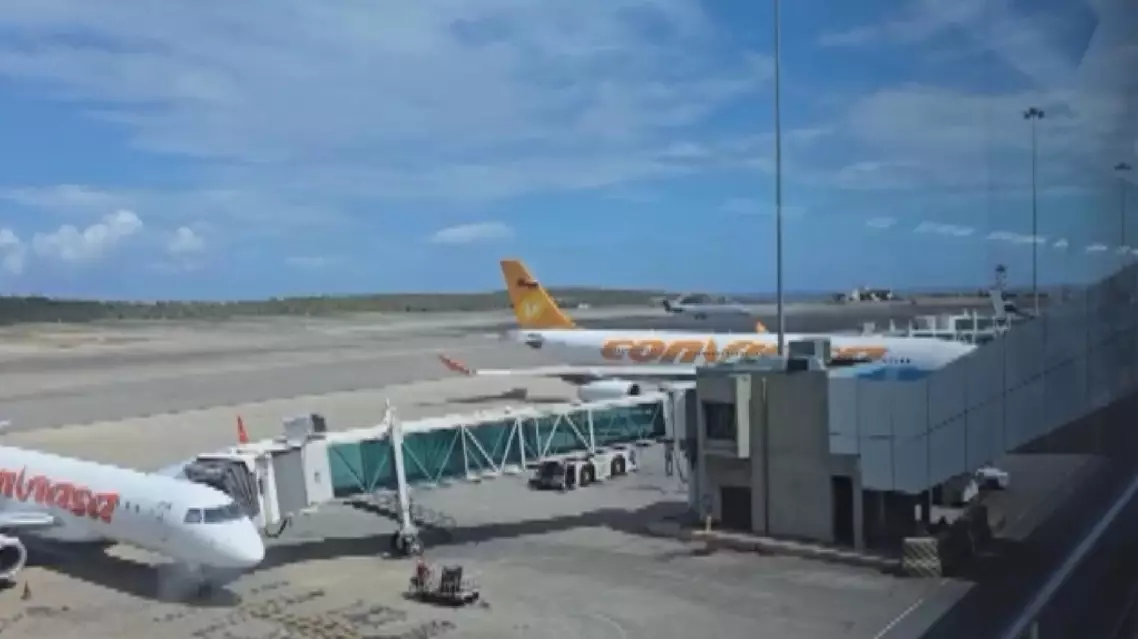
Flight suspension in Venezuela impacts tourism amid rising U.S. tensions