The human body needs protein. Proteins carry out countless functions inside cells and they are vital for the growth, repair and maintenance of muscles, bones and skin. And with food companies rolling out high-protein versions of a huge range of foods, including milkshakes and granola bars — and even pancakes and popcorn — you might be tempted to think you need to add more to your diet.
But nutritionists say that if you are getting enough food, you are probably getting enough protein.
“Adding protein to foods is very beneficial — for the profits of that food,” said Federica Amati, nutrition lead at Imperial College London and head nutritionist at the health science company ZOE. “It is not based on health, it is not backed by science.”
The amount of protein you need depends on your age, weight and personal nutritional needs and it is especially important for children and older adults to make sure they eat protein-rich foods. Here’s what to know about how much protein you need and how to ensure you're getting it from the best sources.
Protein is a macronutrient, or a basic kind of food like fat or carbohydrates that your body needs to function. There are thousands of proteins, assembled from smaller molecules called amino acids — most of which can be made by the body.
“Because protein is so important, our body has adapted really well to making sure that it can reassemble and change the building blocks of these amino acids to make sure we have what we need, as long as we’re eating adequate amounts of food,” Amati said.
Still, the body can't make all the amino acids, so some must come from food.
The World Health Organization recommends that healthy adults get about 0.4 grams of protein per pound of body weight (0.8 grams of protein per kilogram of body weight). That's roughly 60 grams for men and 50 grams for women per day, based on body weights of 165 pounds (75 kilograms) for men and 143 pounds (65 kilograms) for women.
In most rich countries, the average adult gets far more, Amati said. Protein deficiencies are mostly seen in malnourished people on subsistence diet in poorer countries, she said.
Bridget Benelam, a nutritionist with the British Nutrition Foundation, said it was important to get protein from different foods, like dairy, fish, beans, nuts, vegetables and meat. She said studies suggest vegetarians and vegans have lower protein intake than meat and fish eaters, but that their average protein levels are still OK.
Having some protein at every meal is also a likely a good idea. “It appears to be better for preserving muscle function if you have some protein throughout the day, rather than just having it all in one meal,” Benelam said.
Plant-based sources of protein include foods such as beans, lentils, peas, nuts, seeds, tofu, tempeh and meat substitutes. Fish, meat, poultry, eggs and dairy foods such as milk and yogurt are also good sources of protein. Amati said that proteins from animal-based sources may be easier for the body to break down compared to plant-based proteins, which tend to have more fiber.
“If you eat a piece of beef, you’re getting protein and things like zinc and iron, but you’re also getting more saturated fat,” she said. In comparison, Amati said eating protein-rich foods like chickpeas or beans also provides the body with fiber, something that's lacking in most of our diets.
“Unless you have a specific health issue that requires you to have more protein, most people in countries like the U.S. and the U.K. do not need more,” said Benelam of the British Nutrition Foundation.
Amati, of Imperial College London, said people should scrutinize the ingredient list of protein-enriched products to make sure they aren’t loaded with sugar and fat.
For people trying to build more muscle, she recommended a more direct solution: exercise.
“If you’re worried about your body composition and muscle strength, you have to lift (heavier) weights and give your body a challenge,” Amati said. “Eating a protein bar is not going to help.”
The Associated Press Health and Science Department receives support from the Howard Hughes Medical Institute’s Department of Science Education and the Robert Wood Johnson Foundation. The AP is solely responsible for all content.

FILE - A Thai peanut, vegetable and tofu bowl is displayed for a photograph in Coronado, Calif., on April 29, 2017. (Melissa d'Arabian via AP, File)
The National Transportation Safety Board on Sunday said it is gathering information about the evacuation of a Frontier Airlines plane after it hit and killed a person on the runway at Denver International Airport during takeoff.
The plane, on route from Denver to Los Angeles International Airport, “reported striking a pedestrian during takeoff at DEN at approximately 11:19 p.m. on Friday,” according to a post on the airport’s official X account.
Passengers were evacuated via slides, and the emergency crew bused them to the terminal. An airport spokesperson said 12 passengers suffered minor injuries and five were taken to hospitals.
Some people on board expressed concern about the evacuation, including being stuck in the plane for several minutes as smoke filled the cabin and left on the tarmac in the cold once they were out. Video also showed some passengers coming down the slide with what looked to be their carry-on bags.
“We are gathering information about the emergency evacuation to determine if it meets criteria for a safety investigation,” NTSB spokesperson Sarah Taylor Sulick said early Sunday, adding that the agency might have more details in a few hours.
Frontier Airlines didn’t respond early Sunday to a request for information about the evacuation.
A spokesman for the Denver Police Departmet said Sunday the investigation into the incident was ongoing and that the identification of the person on the runway will be confirmed and released by the Denver Office of the Medical Examiner.
The person was hit two minutes after jumping the fence and crossing the runway. The person is not believed to be an airport employee.
“We’re stopping on the runway,” the pilot tells the control tower according to the site ATC.com. “We just hit somebody. We have an engine fire.”
The pilot tells the air traffic controller they have “231 souls” on board and that an “individual was walking across the runway.”
The air traffic controller responds that they are “rolling the trucks now” before the pilot tells the tower they “have smoke in the aircraft. We are going to evacuate on the runway.”
Frontier Airlines said in a statement that flight 4345 was the one involved in the collision and that “smoke was reported in the cabin and the pilots aborted takeoff.” It was not clear whether the smoke was linked to the collision.
The airline said the plane was carrying 224 passengers and seven crew members.
“We are investigating this incident and gathering more information in coordination with the airport and other safety authorities,” the airline said.
Passengers said panic took hold on the flight after an engine caught fire and the cabin began filling with smoke.
“Honestly, I thought I was going to die,” passenger Mohamed Hassan told Colorado’s 9NEWS.
“A lot of people next to me were screaming and crying. I just closed my eyes,” he said. "At that time, you’re not really thinking of anything, you know? Because we were just about to take off and I heard that boom, so I wasn’t sure what happened. I just thought something really, really bad happened.”
Passenger Nikil Thalanki told local media outlets that he felt “this jerk” as the plane was about to take off, adding that it felt like the wheels had left the ground but then came back down.
“There was fire on the engine. There was lots of sparks that are happening. Immediately came to a stop,” Thalanki said. "As soon as we saw the sparks on the flight, smoke filled the cabin completely. It was super hard to breathe.”
Kimberly Randle said passengers were panicking and desperate to get off the aircraft.
“In a few minutes, they finally opened the door. People were running to get out of the plane," he said. "It was chaos everywhere.”
The NTSB has for years expressed concerned about evacuations, especially passengers leaving with their carry-ons. In an April report on the evacuation aboard a United Airlines flight at Houston’s George Bush Intercontinental Airport, the NTSB described a troubling scene.
Passengers were evacuated via slides and stairs last year from the jetliner after an engine problem during takeoff caused smoke and fire on the right wing.
Despite the flight attendant telling passengers to remain seated, several began shouting, “fire on the engine, let me get out!” That trigged “widespread panic" and prompted many passengers to get up and start retrieving their belongings. Some climbed over seats and began obstructing the aisle.
Three large men insisted the evacuation occur, pushing past a flight attendant and going down a slide before it had fully deployed – causing it to deflate and become unusable.
“Cabin crew training emphasizes assertive command presence and passenger control during evacuations; however, this event demonstrates how rapidly escalating passenger behavior can affect evacuation dynamics even in the absence of confirmed fire or smoke conditions,” according to the report.
The incident in Denver came a day after a Delta Air Lines employee was killed while on the job at the Orlando International Airport. In a statement, the airline said the employee was killed Thursday night without providing details of the incident or the name of the employee.
“We are focused on extending our full support to family and taking care of our Orlando team during this difficult time,” the airline said. “We are working with local authorities as a full investigation gets underway to determine what occurred.”
AP reporter John Raby contributed from Charleston, West Virginia.
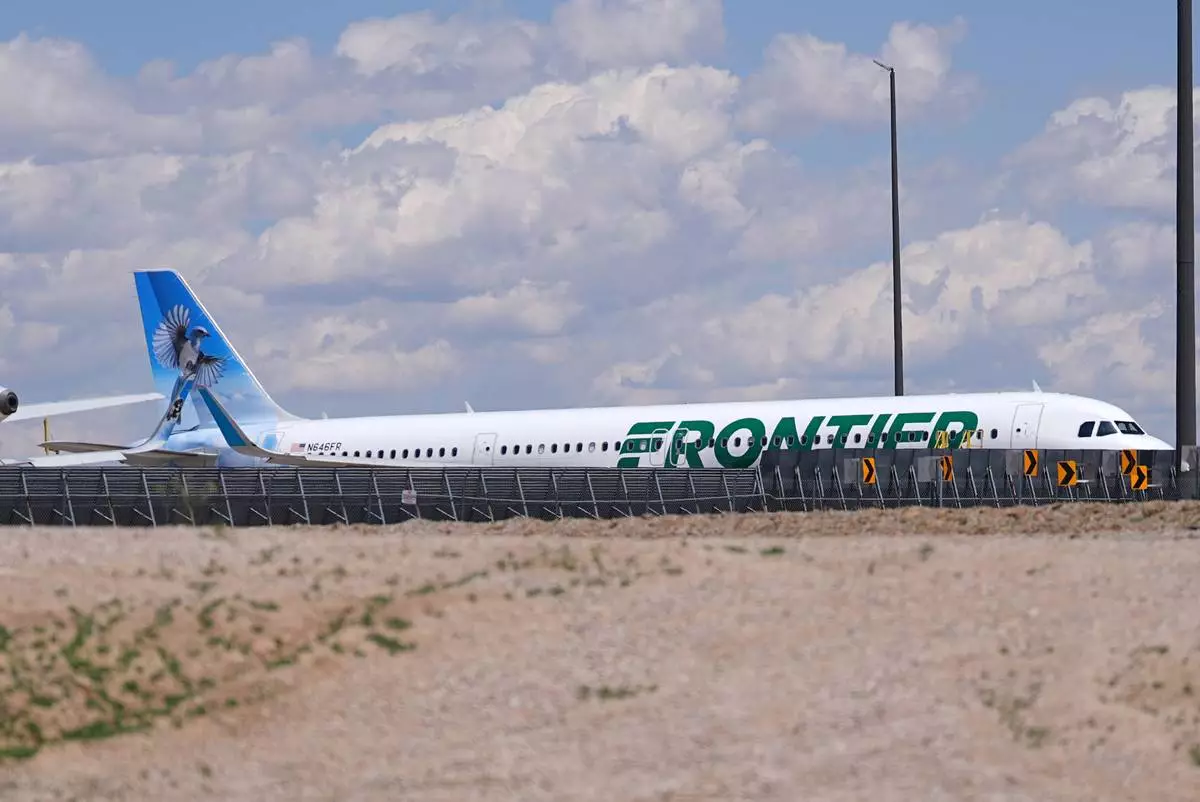
Frontier Airlines jetliner number n646fr sits outside the airlines technical operations center with other jetliners in for service north of Denver International Airport Saturday, May 9, 2026, in Denver. (AP Photo/David Zalubowski)
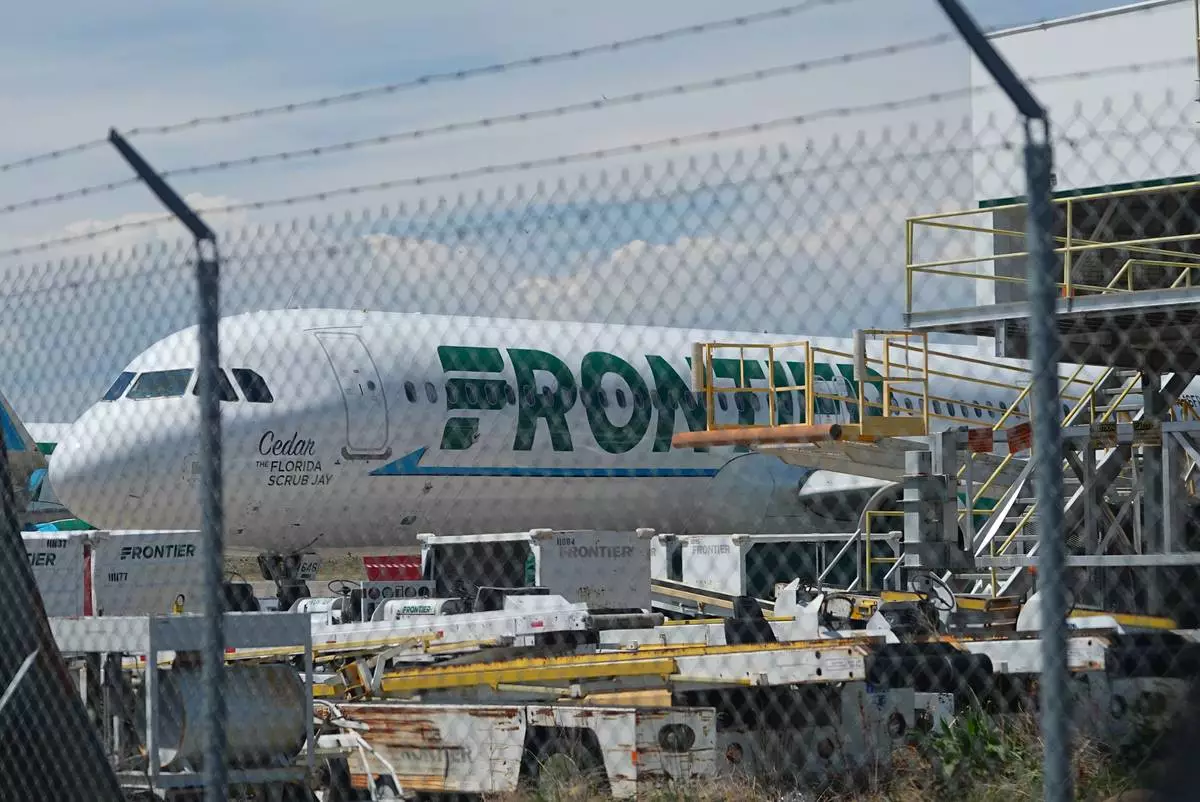
Frontier Airlines jetliner number n646fr sits outside the airlines technical operations center with other jetliners in for service north of Denver International Airport Saturday, May 9, 2026, in Denver. (AP Photo/David Zalubowski)
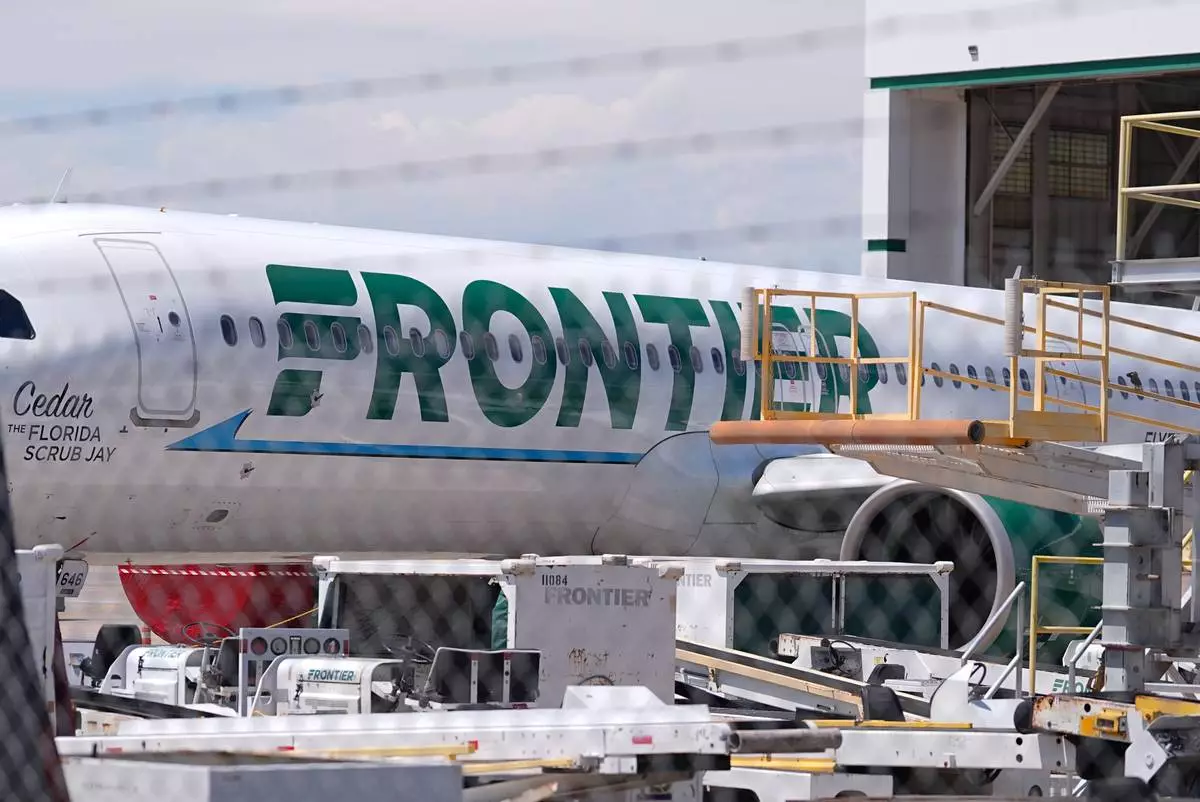
Frontier Airlines jetliner number n646fr sits outside the airlines technical operations center with other jetliners in for service north of Denver International Airport Saturday, May 9, 2026, in Denver. (AP Photo/David Zalubowski)