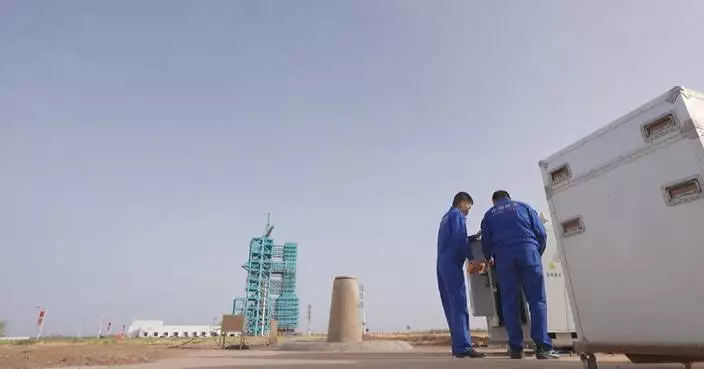
China on Saturday began constructing two advanced telescopes at the Lenghu Astronomical Observation Base in Qinghai Province, including a groundbreaking 4.2-meter dedicated astrometric telescope for precise solar system measurements.
The 4.2-meter telescope, developed by the Nanjing Institute of Astronomical Optics and Technology of the Chinese Academy of Sciences (CAS), represents China's first single-mirror astronomical telescope with an aperture exceeding 4 meters.
Its exceptional features include ultra-low distortion imaging, extremely high positioning accuracy, and deep detection limits unmatched by conventional telescopes.
"When observing the same celestial object simultaneously, this telescope provides more authentic views, captures celestial bodies with greater sensitivity, and produces more accurate images than traditional single-mirror telescopes. If there were a candle flame on the Moon, this telescope could clearly capture that flickering flame from our Lenghu observation site on Earth," said Gong Xuefei, director of the Nanjing Institute of Astronomical Optics and Technology.
The telescope's primary mission involves conducting high-precision measurements of faint moving objects within the solar system, supporting China's independent construction and maintenance of a solar system ephemeris while serving the nation's space missions and deep space exploration needs.
"With this telescope, we will establish China's independent solar system ephemeris, essentially creating a celestial map of our solar system. This will enable us to track the movements of all solar system bodies in real-time, eliminating our reliance on foreign ephemerides," said Li Fan, a senior engineer at Purple Mountain Observatory of CAS.
The companion 2.5-meter multi-purpose telescope will work in tandem with the 4.2-meter instrument at the 4,000-meter-altitude Lenghu site, providing complementary observation capabilities for comprehensive solar system studies.
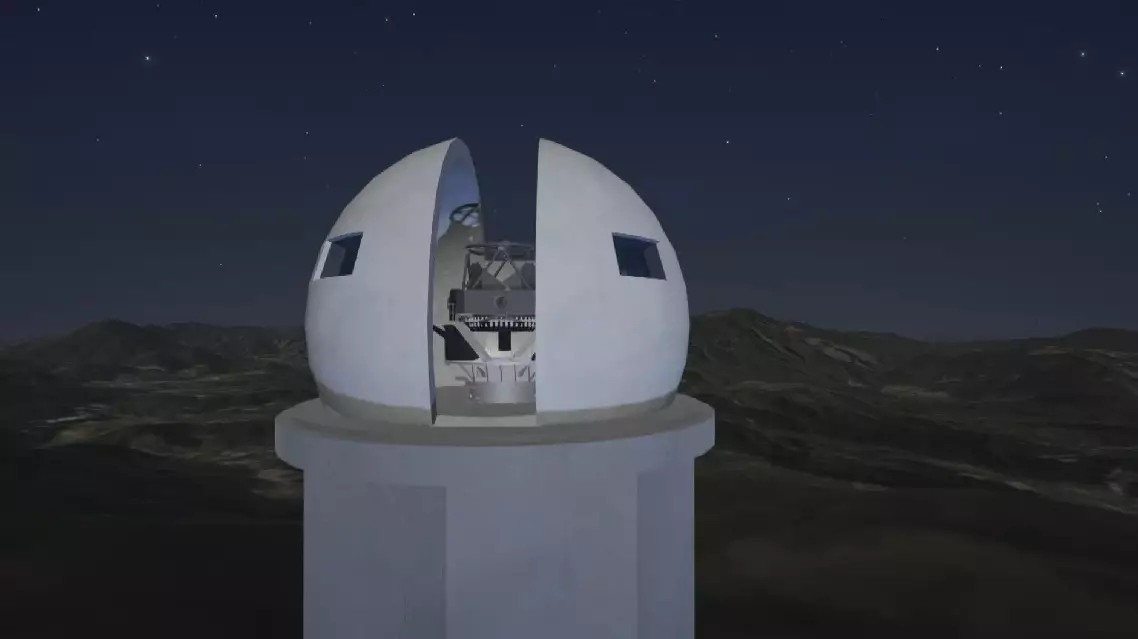
China begins construction of two advanced astronomical telescopes
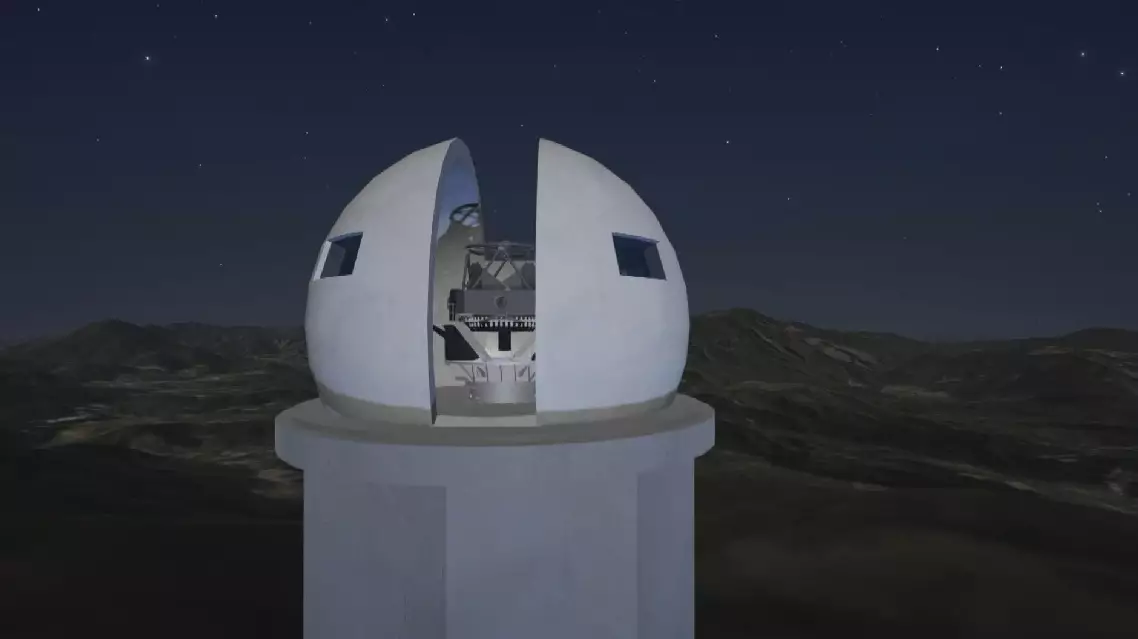
China begins construction of two advanced astronomical telescopes