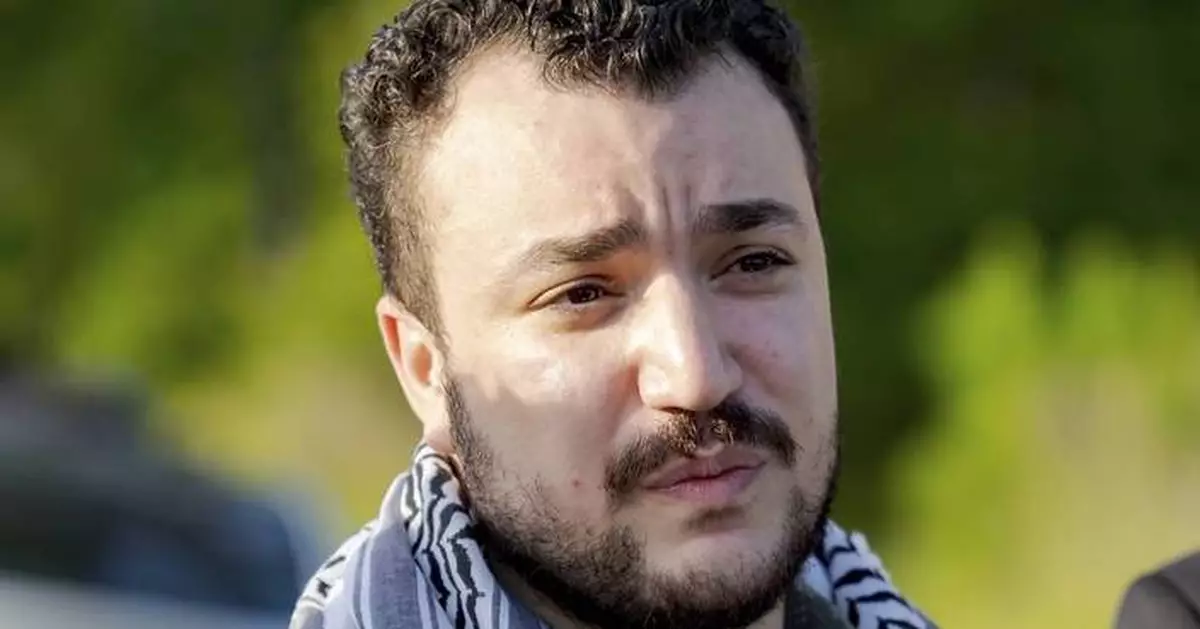
A Palestinian activist who participated in protests against Israel has been freed from federal immigration detention after 104 days.
Mahmoud Khalil, who became a symbol of President Donald Trump ’s clampdown on campus protests, left a federal facility in Louisiana on Friday. The former Columbia University graduate student is expected to head to New York to reunite with his U.S. citizen wife and infant son, born while Khalil was detained.
Here’s a look at what has happened so far in Khalil’s legal battle:
Federal immigration agents detained Khalil on March 8, the first arrest under Trump’s crackdown on students who joined campus protests against Israel’s devastating war in Gaza.
Khalil, a legal U.S. resident, was then taken to an immigration detention center in Jena, a remote part of Louisiana thousands of miles from his attorneys and his wife.
The 30-year-old international affairs student had served as a negotiator and spokesperson for student activists at Columbia University who took over a campus lawn to protest the war.
The university brought police in to dismantle the encampment after a small group of protesters seized an administration building. Khalil was not accused of participating in the building occupation and wasn’t among those arrested in connection with the demonstrations.
But images of his maskless face at protests, along with his willingness to share his name with reporters, made him an object of scorn among those who saw the protesters and their demands as antisemitic.
Khalil wasn’t accused of breaking any laws during the protests at Columbia.
However, the government has said noncitizens who participate in such demonstrations should be expelled from the U.S. for expressing views the administration considers to be antisemitic and “pro-Hamas,” referring to the Palestinian militant group that attacked Israel on Oct. 7, 2023.
Khalil’s lawyers challenged the legality of his detention, arguing that the Trump administration was trying to deport him for an activity protected by the First Amendment of the U.S. Constitution.
U.S. Secretary of State Marco Rubio justified Khalil’s deportation by citing a rarely used statute that gives him power to deport those who pose “potentially serious adverse foreign policy consequences for the United States.”
Immigration Judge Jamee E. Comans ruled in April that the government’s contention was enough to satisfy requirements for Khalil's deportation.
Comans said the government had “established by clear and convincing evidence that he is removable.”
Federal judges in New York and New Jersey had previously ordered the U.S. government not to deport Khalil while his case played out in court.
Khalil remained detained for several weeks, with his lawyers arguing that he was being prevented from exercising his free speech and due process rights despite no obvious reason for his continued detention.
Khalil was released after U.S. District Judge Michael Farbiarz said it would be “highly, highly unusual” for the government to continue detaining a legal U.S. resident who was unlikely to flee and hadn’t been accused of any violence.
“Petitioner is not a flight risk, and the evidence presented is that he is not a danger to the community,” he said. “Period, full stop.”
During an hourlong hearing conducted by phone, the New Jersey-based judge said the government had “clearly not met” the standards for detention.
Speaking Friday outside the detention facility, Khalil said, “Justice prevailed, but it’s very long overdue. This shouldn’t have taken three months.”
The government filed notice Friday evening that it’s appealing Khalil’s release.
The Department of Homeland Security said in a post on the social platform X that the same day Farbiarz ordered Khalil’s release, an immigration judge in Louisiana denied Khalil bond and “ordered him removed.” That decision was made by Comans, who is in a court in the same detention facility from which Khalil was released.
“An immigration judge, not a district judge, has the authority to decide if Mr. Khalil should be released or detained,” the post said.
Farbiarz ruled that the government can’t deport Khalil based on its claims that his presence could undermine foreign policy. But he gave the administration leeway to pursue a potential deportation based on allegations that Khalil lied on his green card application, an accusation Khalil disputes.
Khalil had to surrender his passport and can’t travel internationally, but he will get his green card back and be given official documents permitting limited travel within the U.S., including New York and Michigan to visit family, New Jersey and Louisiana for court appearances and Washington to lobby Congress.
Khalil said Friday that no one should be detained for protesting Israel’s war in Gaza. He said his time in the Jena, Louisiana, detention facility had shown him “a different reality about this country that supposedly champions human rights and liberty and justice.” In a statement after the judge’s ruling, Khalil’s wife, Dr. Noor Abdalla, said she could finally “breathe a sigh of relief” after her husband’s three months in detention.
The judge’s decision came after several other scholars targeted for their activism have been released from custody, including another former Palestinian student at Columbia, Mohsen Mahdawi; a Tufts University student, Rumeysa Ozturk; and a Georgetown University scholar, Badar Khan Suri.
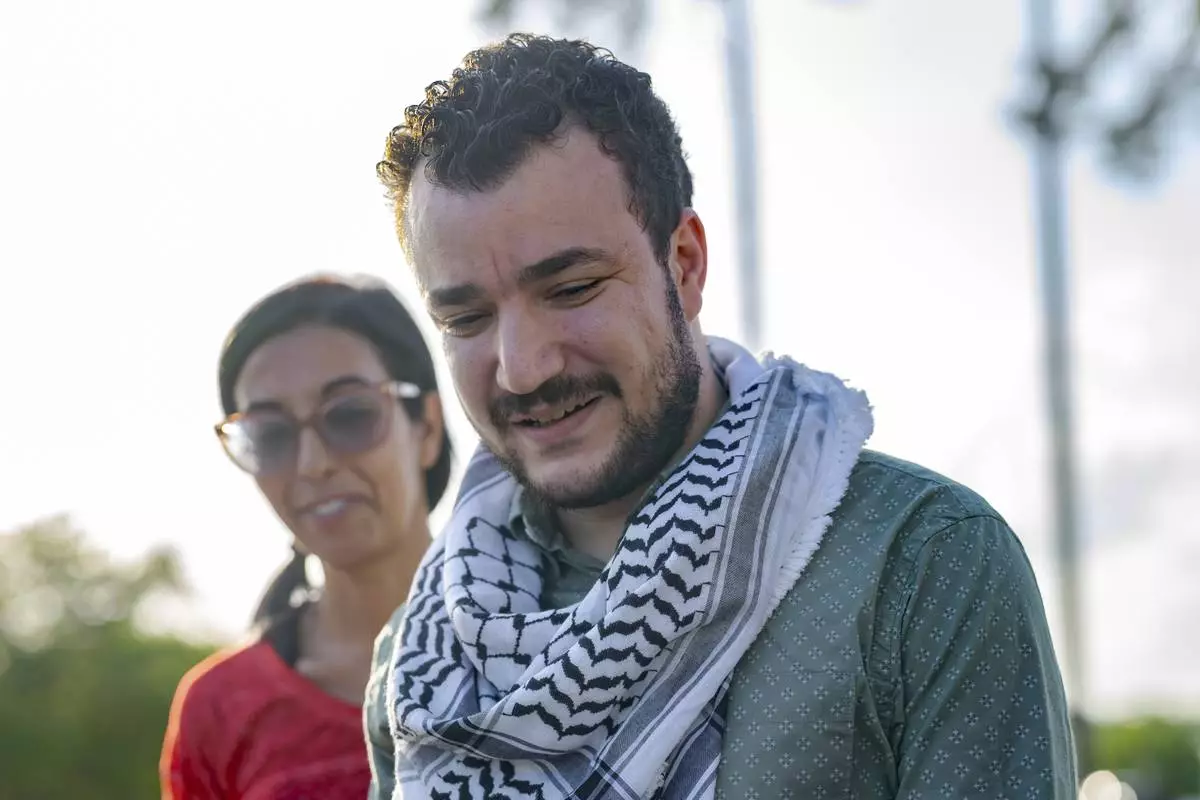
Palestinian activist and former Columbia University graduate student Mahmoud Khalil, center, speaks after his release from federal immigration detention in Jena, La., Friday, June 20, 2025. (AP Photo/Matthew Hinton)
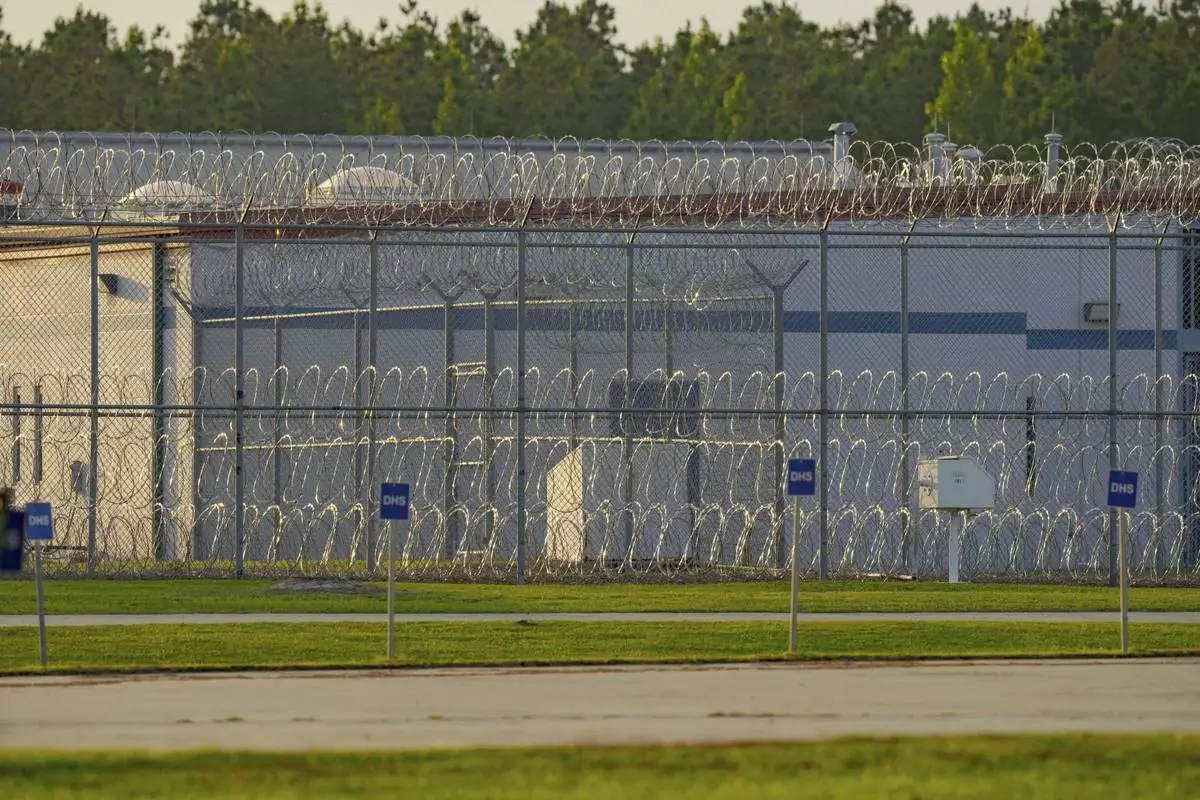
The La Salle Detention Facility is seen in Jena, La., Friday, June 20, 2025. (AP Photo/Matthew Hinton)
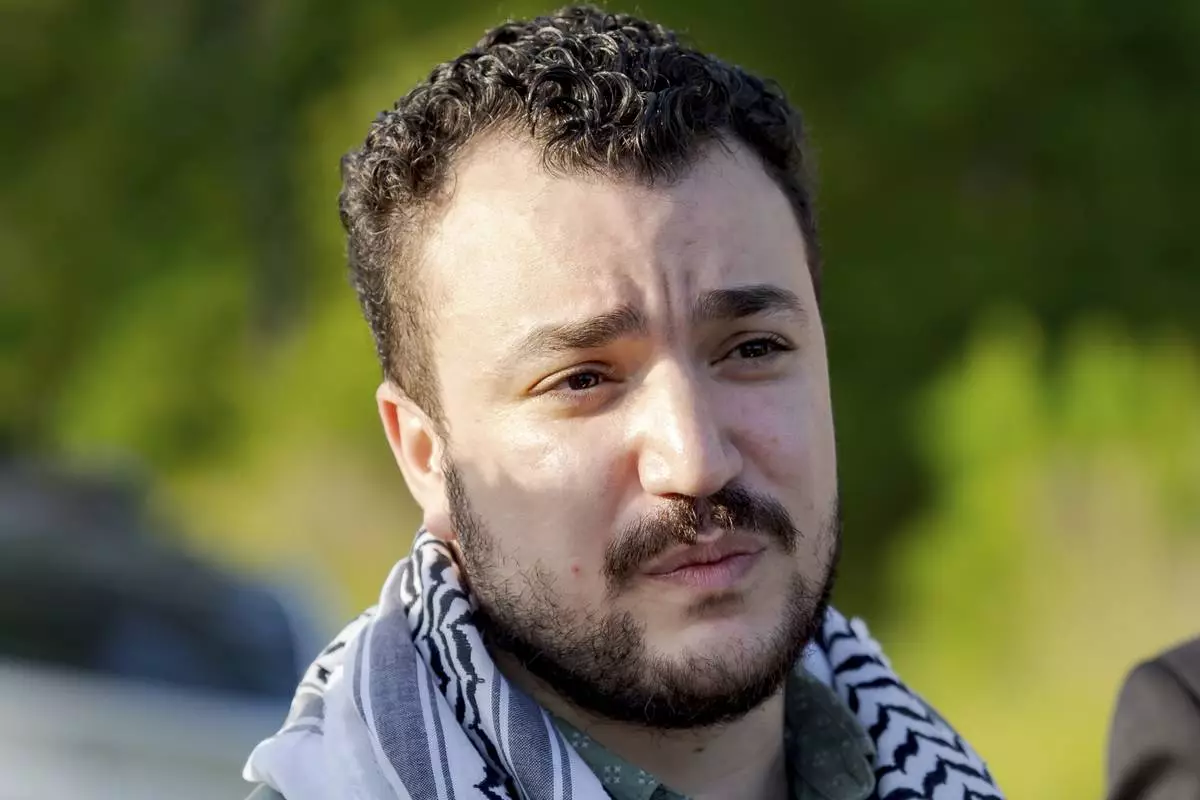
Palestinian activist Mahmoud Khalil speaks after his release from federal immigration detention in Jena, La., Friday, June 20, 2025. (AP Photo/Matthew Hinton)