After nearly two years of stark divisions over the war in Gaza and support for Israel, Democrats seemed to remain at odds over policy toward Iran. Progressives demanded unified opposition before President Donald Trump announced U.S. strikes against Tehran's nuclear program but party leaders were treading more cautiously.
U.S. leaders of all stripes have found common ground for two decades on the position that Iran could not be allowed to obtain a nuclear weapon. The longtime U.S. foe has supported groups that have killed Americans across the Mideast and threatened to destroy Israel. But Trump’s announcement Saturday that the U.S. had struck three nuclear sites could become the Democratic Party’s latest schism, just as it was sharply dividing Trump's isolationist “Make America Great Again” base from more hawkish conservatives.
Click to Gallery

President Donald Trump gestures as he boards Air Force One at Joint Base Andrews, Md., Friday, June 20, 2025. (AP Photo/Manuel Balce Ceneta)
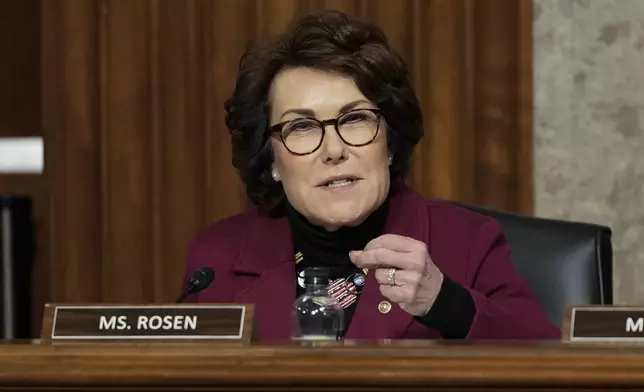
FILE - Sen. Jacky Rosen, D-Nev., speaks during a Senate Armed Services Committee confirmation hearing at the Capitol in Washington, Jan. 14, 2025. (AP Photo/Ben Curtis, File)
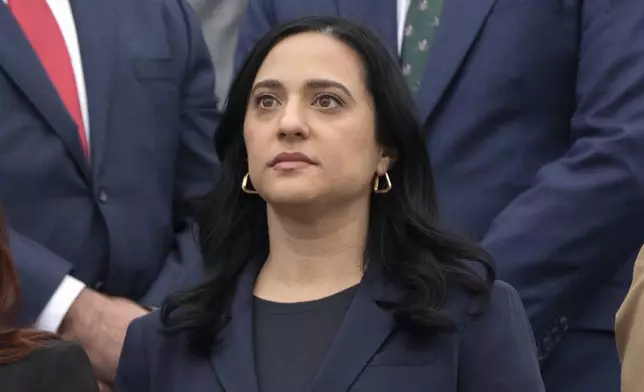
FILE - Rep.-elect Yassamin Ansari, D-Ariz., stands as newly-elected House members gather for a freshman class photo on the Capitol steps, in Washington, Nov. 15, 2024. (AP Photo/Mark Schiefelbein, File)
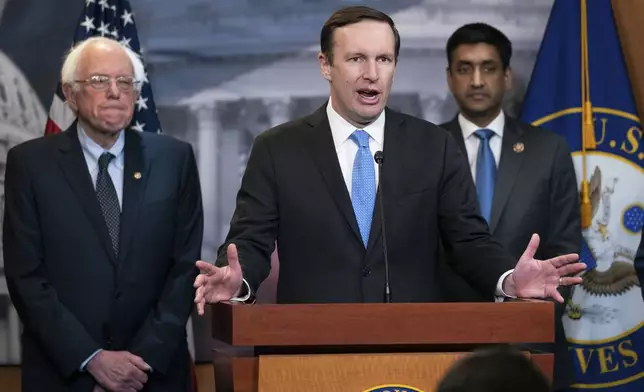
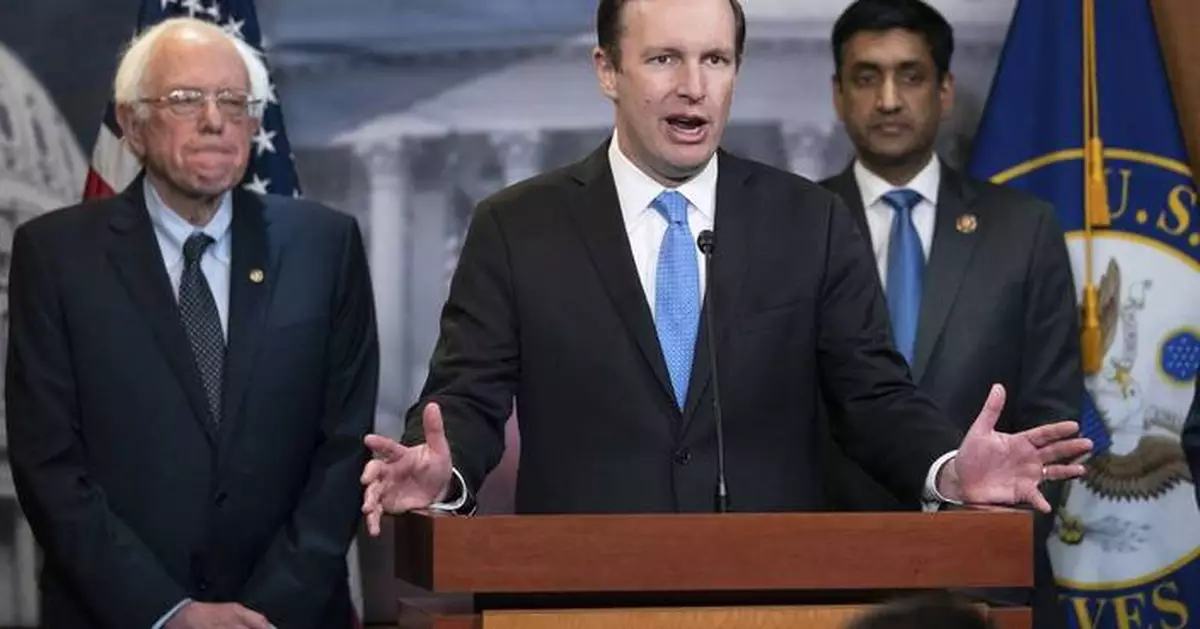
Sen. Bernie Sanders, I-Vt., from left, Sen. Chris Murphy, D-Conn., and Rep. Ro Khanna, D-Calif., speak to reporters on Capitol Hill in Washington, April 4, 2019. (AP Photo/J. Scott Applewhite, File)
Ken Martin, chair of the Democratic National Committee, noted that in January, Trump suggested the U.S. could “measure our success not only by the battles we win, but also by the wars that we end, and perhaps most importantly, the wars we never get into.”
“Today, against his own words, the president sent bombers into Iran,” Martin said in a statement. “Americans overwhelmingly do not want to go to war. Americans do not want to risk the safety of our troops abroad.”
Sen. Peter Welch, a Vermont Democrat, said the U.S. entering the war in Iran “does not make America more secure.”
“This bombing was an act of war that risks retaliation by the Iranian regime,” Welch said in a statement.
While progressives in the lead-up to the military action had staked out clear opposition to Trump's potential intervention, the party leadership played the safer ground of insisting on a role for Congress before any use of force.
Martin's statement took a similar tact, stating, "Americans do not want a president who bypasses our constitution and pulls us towards war without Congressional approval. Donald Trump needs to bring his case to Congress immediately.”
Virginia Democratic Sen. Tim Kaine called Trump's actions, “Horrible judgement" and said he'd “push for all senators to vote on whether they are for this third idiotic Middle East war.”
Many prominent Democrats with 2028 presidential aspirations had been silent on the Israel-Iran war, even before Trump's announcement — underscoring how politically tricky the issue can be for the party.
“They are sort of hedging their bets,” said Joel Rubin, a former deputy assistant secretary of state who served under Democratic President Barack Obama and is now a strategist on foreign policy. “The beasts of the Democratic Party’s constituencies right now are so hostile to Israel’s war in Gaza that it’s really difficult to come out looking like one would corroborate an unauthorized war that supports Israel without blowback.”
Rep. Ro Khanna, D-Calif., had called Trump's consideration of an attack “a defining moment for our party.” Khanna had introduced legislation with Rep. Thomas Massie, R-Ky., that called on the Republican president to “terminate” the use of U.S. armed forces against Iran unless “explicitly authorized” by a declaration of war from Congress.
Khanna used Trump’s own campaign arguments of putting American interests first when the congressman spoke to Theo Von, a comedian who has been supportive of the president and is popular in the so-called “manosphere" of male Trump supporters.
“That’s going to cost this country a lot of money that should be being spent here at home,” said Khanna, who is said to be among the many Democrats eyeing the party's 2028 primary.
Vermont Sen. Bernie Sanders, an independent who twice sought the Democratic presidential nomination, had pointed to Trump’s stated goal during his inaugural speech of being known as “a peacemaker and a unifier.”
"Supporting Netanyahu’s war against Iran would be a catastrophic mistake,” Sanders said about Israeli Prime Minister Benjamin Netanyahu.
Sanders reintroduced legislation prohibiting the use of federal money for force against Iran, insisted that U.S. military intervention would be unwise and illegal and accused Israel of striking unprovoked. Senate Democratic leader Chuck Schumer of New York signed on to a similar bill from Sanders in 2020, but so far was holding off this time.
Some believed the party should stake out a clear anti-war stance.
“The leaders of the Democratic Party need to step up and loudly oppose war with Iran and demand a vote in Congress,” said Tommy Vietor, a former Obama aide, on X.
The staunch support from the Democratic administration of President Joe Biden and Vice President Kamala Harris for Israel’s war against Hamas loomed over the party's White House ticket in 2024, even with the criticism of Israel’s handling of the humanitarian crisis in Gaza. Trump exploited the divisions to make inroads with Arab American voters and Orthodox Jews on his way back to the White House.
Today, the Israel-Iran war is the latest test for a party struggling to repair its coalition before next year’s midterm elections and the quick-to-follow kickoff to the 2028 presidential race. The party will look to bridge the divide between an activist base that is skeptical of foreign interventions and already critical of U.S. support for Israel and more traditional Democrats and independents who make up a sizable, if not always vocal, voting bloc.
In a statement after Israel’s first strikes on Iran, Schumer said Israel has a right to defend itself and “the United States’ commitment to Israel’s security and defense must be ironclad as they prepare for Iran’s response.”
Sen. Jacky Rosen, D-Nev., said “the U.S. must continue to stand with Israel, as it has for decades, at this dangerous moment."
Other Democrats have condemned Israel’s strikes and accused Netanyahu of sabotaging nuclear talks with Iran. They are reminding the public that Trump withdrew in 2018 from a nuclear agreement that limited Tehran’s enrichment of uranium in exchange for the lifting of economic sanctions negotiated during the Obama administration.
“Trump created the problem,” Sen. Chris Murphy, D-Conn., posted on X.
A Pearson Institute/Associated Press-NORC Center for Public Affairs Research poll from September 2024 found that about half of Democrats said the U.S. was being “too supportive” of Israel and about 4 in 10 said their level of support was “about right.” Democrats were more likely than independents and Republicans to say the Israeli government had “a lot” of responsibility for the continuation of the war between Israel and Hamas.
About 6 in 10 Democrats and half of Republicans felt Iran was an adversary with whom the U.S. was in conflict.
Associated Press writers Mary Clare Jalonick, Linley Sanders, Will Weissert and Lisa Mascaro in Washington contributed to this report

President Donald Trump gestures as he boards Air Force One at Joint Base Andrews, Md., Friday, June 20, 2025. (AP Photo/Manuel Balce Ceneta)
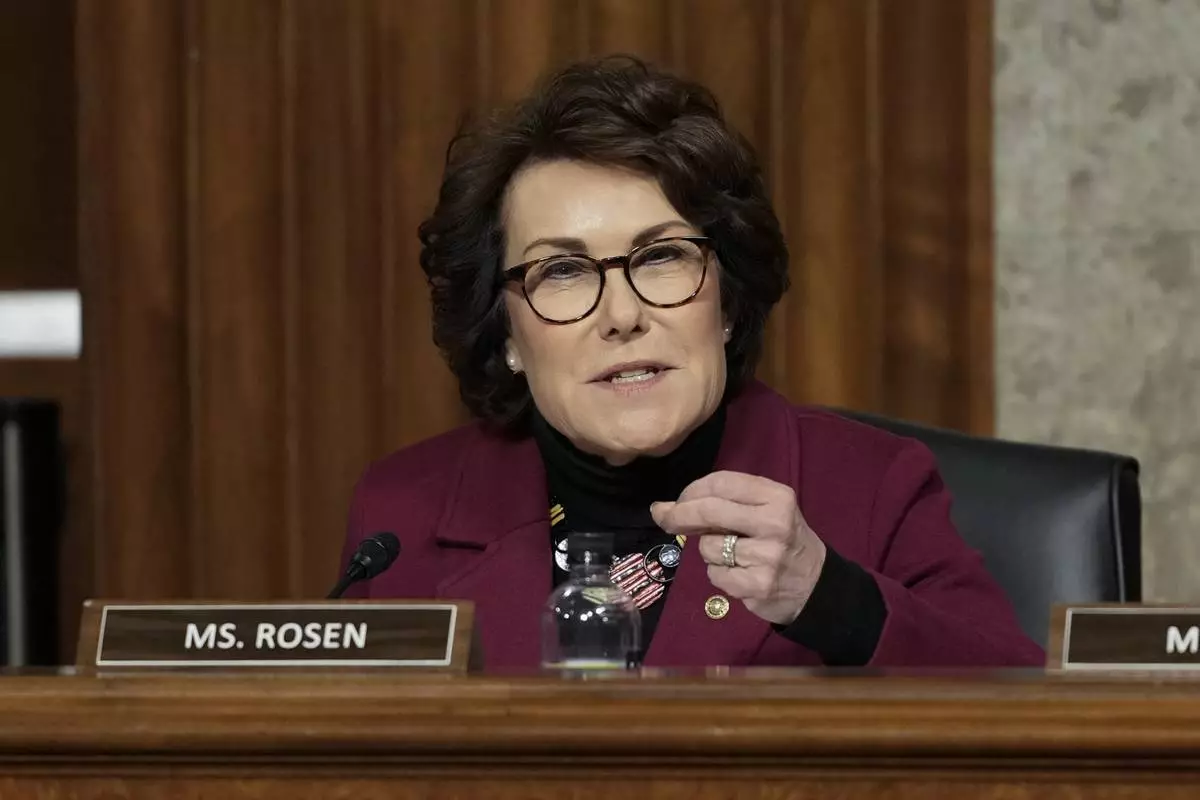
FILE - Sen. Jacky Rosen, D-Nev., speaks during a Senate Armed Services Committee confirmation hearing at the Capitol in Washington, Jan. 14, 2025. (AP Photo/Ben Curtis, File)
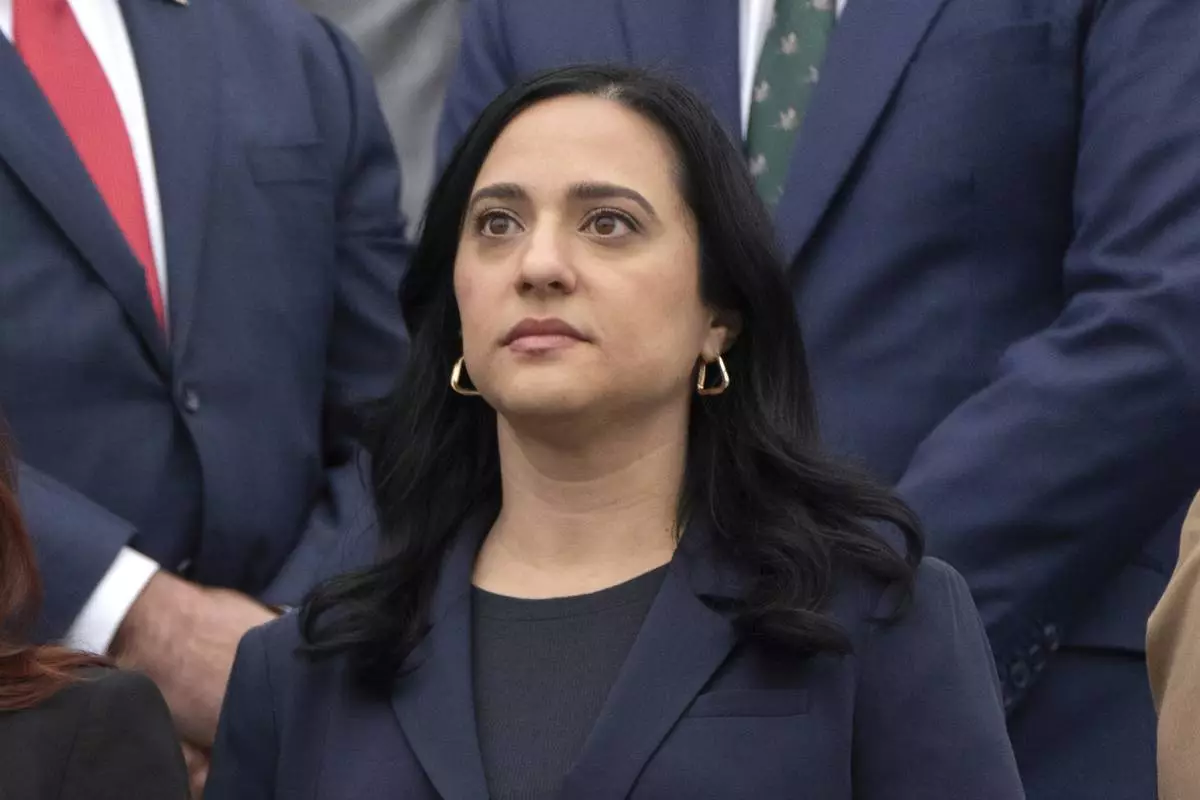
FILE - Rep.-elect Yassamin Ansari, D-Ariz., stands as newly-elected House members gather for a freshman class photo on the Capitol steps, in Washington, Nov. 15, 2024. (AP Photo/Mark Schiefelbein, File)
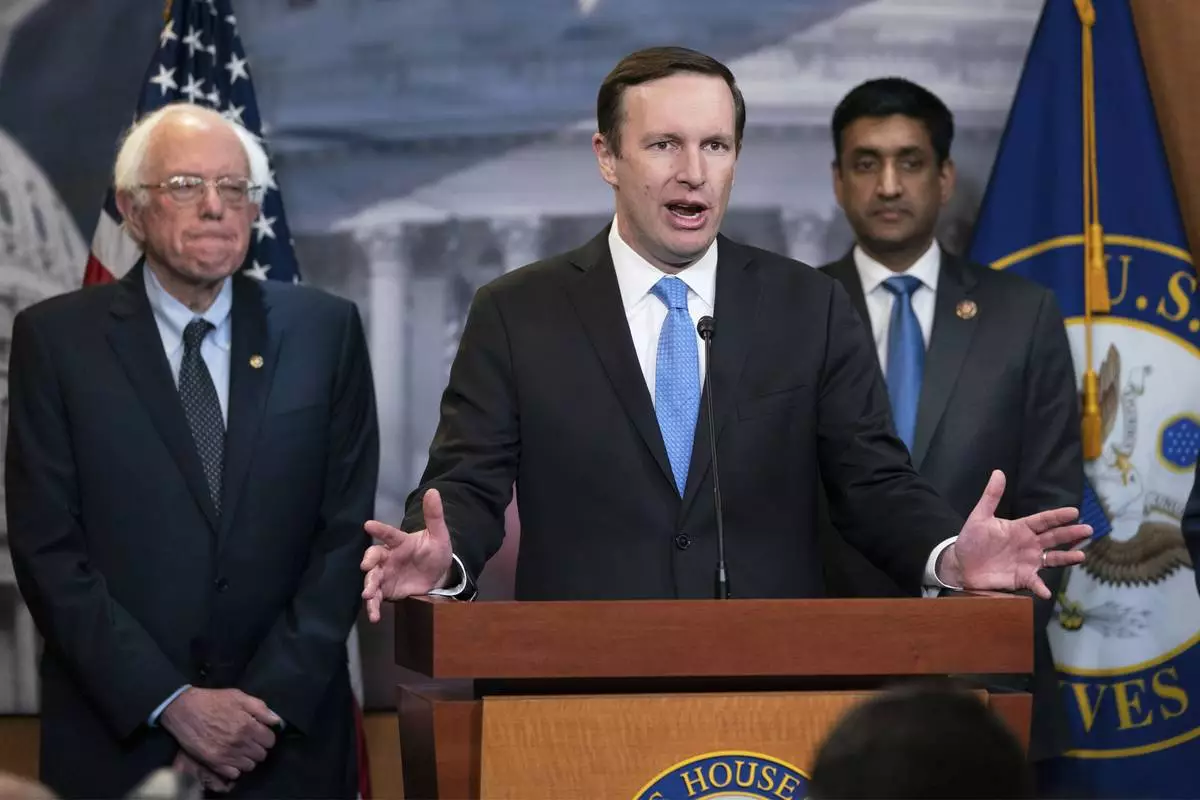
Sen. Bernie Sanders, I-Vt., from left, Sen. Chris Murphy, D-Conn., and Rep. Ro Khanna, D-Calif., speak to reporters on Capitol Hill in Washington, April 4, 2019. (AP Photo/J. Scott Applewhite, File)