TOKYO (AP) — Japan and South Korea are marking the 60th anniversary of the normalization of their diplomatic relations Sunday. The two Asian powers, rivals and neighbors, have often had little to celebrate, much of their rancor linked to Japan’s brutal colonial rule of Korea in the early 20th century.
Things have gotten better in recent years, but both nations — each a strong ally of the United States — now face political uncertainty and a growing unease about the future of their ties.
Click to Gallery
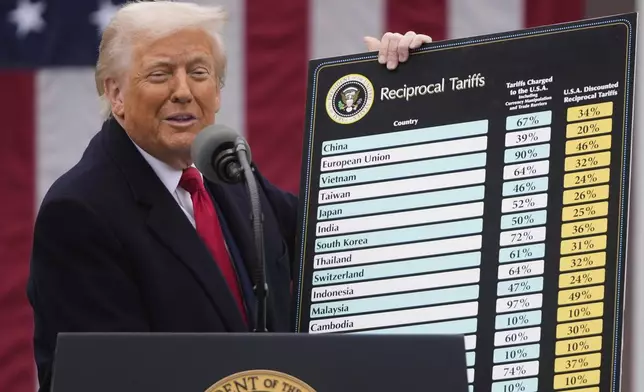
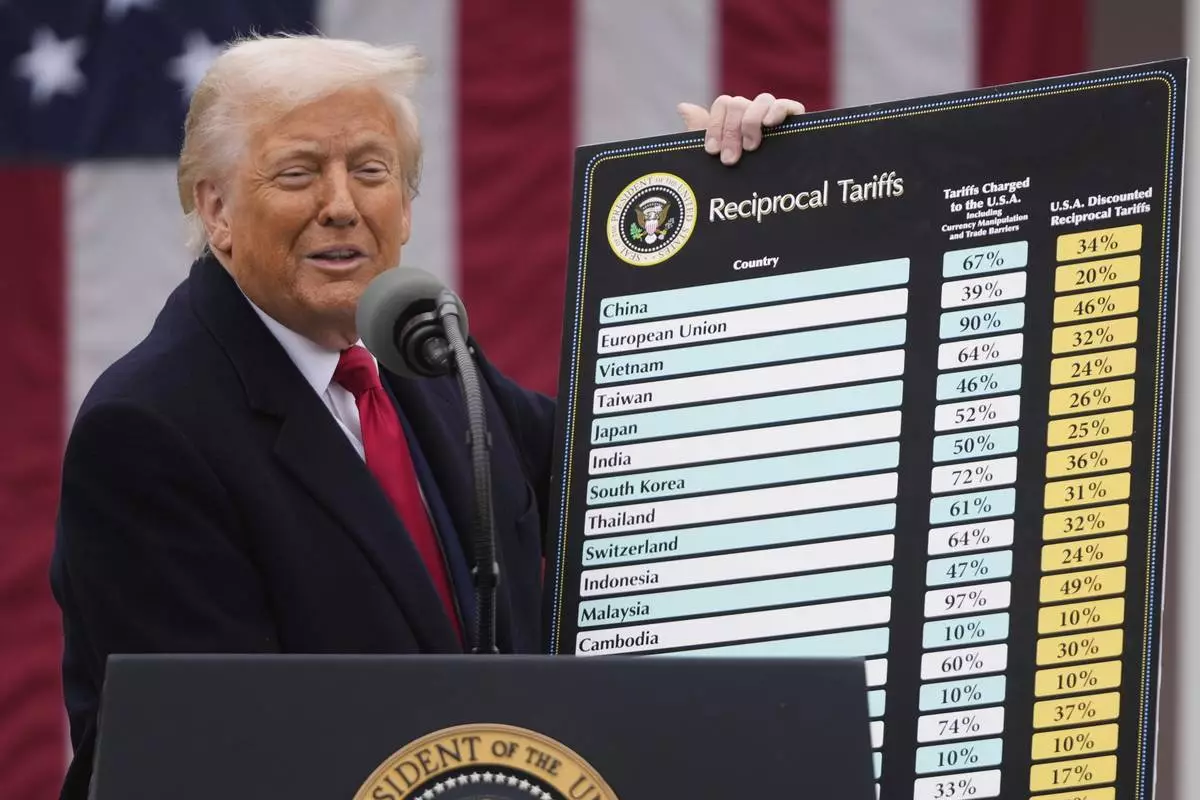
FILE - President Donald Trump speaks during an event to announce new tariffs in the Rose Garden at the White House, on April 2, 2025, in Washington. (AP Photo/Mark Schiefelbein, File)
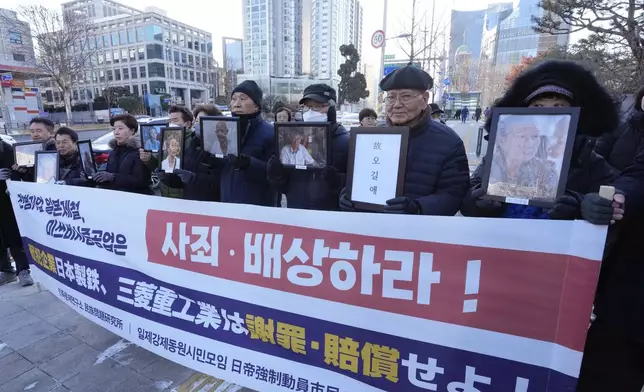
FILE - Family members of forced labor victims during the Japan's colonial period arrive at the Supreme Court in Seoul, South Korea, on Dec. 21, 2023. The sign reads "Mitsubishi Heavy Industries should compensate and apologize." (AP Photo/Ahn Young-joon, File)
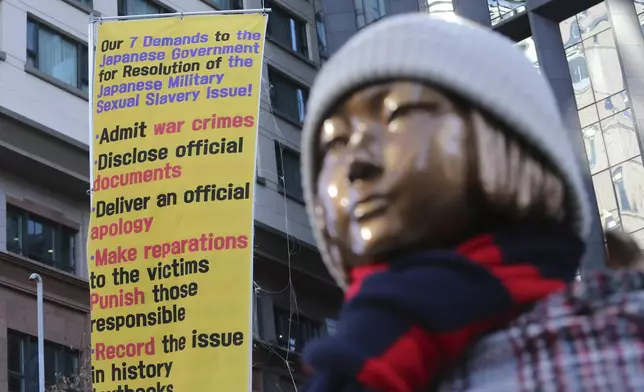
FILE - A statue symbolizing a wartime sex slave is displayed near the Japanese Embassy in Seoul, South Korea, on Jan. 8, 2021. (AP Photo/Ahn Young-joon, File)
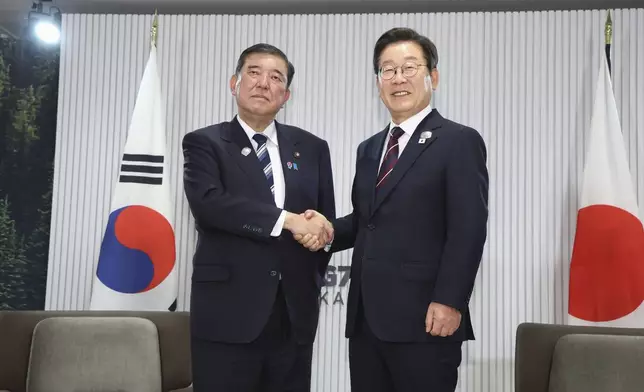
Japanese Prime Minister Shigeru Ishiba, left, and South Korean President Lee Jae Myung, right, shake hands ahead of a bilateral meeting on the sidelines of the G7, in Kananaskis, Alberta, on June 17, 2025. (Kyodo News via AP)
Here’s a look at one of Northeast Asia’s most crucial relationships, from both capitals, by two correspondents from The Associated Press.
South Korea’s new liberal president, Lee Jae Myung, is determined to break sharply from the policies of his disgraced predecessor, Yoon Suk Yeol, who now faces a trial on charges of leading an insurrection over his imposition of martial law in December.
Relations with Japan, however, are one area where Lee, who describes himself as a pragmatist in foreign policy, may find himself cautiously building on Yoon’s approach.
Before his removal from office in April, the conservative former president tried to repair relations with Japan. Yoon wanted to also tighten the countries’ three-way security cooperation with Washington to counter North Korean nuclear threats.
In 2023, Yoon announced a South Korea-funded compensation plan for colonial-era forced laborers. That decision caused a strong backlash from victims and their supporters, who had demanded direct payments from Japanese companies and a fresh apology from Tokyo.
Yoon’s outreach boosted tourism and business ties, but there’s still lingering resentment in South Korea that Japan failed to reciprocate Seoul’s diplomatic concession by addressing historical grievances more sincerely.
While advocating for pragmatism and problem-solving in foreign policy, Lee has also long criticized Japan for allegedly clinging to its imperialist past and blamed that for hurting cooperation between the countries.
Some experts say the stability of the countries’ improved ties could soon be tested, possibly around the Aug. 15 anniversary of Korea’s liberation from Japanese colonial rule at the end of World War II, when Lee is expected to publicly address the nation’s painful history with Japan.
Some in Seoul want Japanese Prime Minister Shigeru Ishiba to mark the anniversary with a stronger statement of remorse over Japan’s wartime past to put bilateral ties on firmer ground.
While wartime history will always linger in the background of Seoul-Tokyo relations, Lee and Ishiba may face a more immediate concern: U.S. President Donald Trump’s rising tariffs and other America-first trade policies.
South Korea’s Hankyoreh newspaper in an editorial this week called for South Korea and Japan to “collaborate immediately” on a joint response to Trump’s policies, arguing that the proposed U.S. tariffs on automobiles pose similar threats to both countries’ trade-dependent economies.
Ishiba, eager to improve ties with Seoul, has acknowledged Japan’s wartime aggression and has shown more empathy to Asian victims than his recent predecessors.
His first encounter with Lee seemed positive, despite worries in Japan about South Korea’s stance under a liberal leader known for attacks on Japan’s wartime past.
Lee, in that meeting with Ishiba at the G7, likened the two countries to “neighbors sharing the same front yard” and called for building a future-oriented relationship that moves beyond their “small differences and disagreements.”
Ishiba and Lee agreed to closely communicate and to cooperate on a range of issues, including North Korea’s nuclear and missile development.
Under a 1965 normalization treaty, Japan provided $500 million in economic assistance to South Korea, saying all wartime compensation issues were settled.
However, historical issues including forced labor and sexual abuse of Korean women during the war have disrupted ties over the decades, while South Korea has become an Asian power and a rival to Japan, and while Tokyo, especially during the late Prime Minister Shinzo Abe 's rule, has promoted revisionist views.
Japan has since offered atonement money twice for the so-called “comfort women,” an earlier semi-private fund and a second one unilaterally dissolved by former South Korean President Moon Jae-in’s liberal government.
Things have improved in recent years, and Japan is watching to see whether Lee sticks with his conservative predecessor’s more conciliatory diplomacy or returns to the confrontation that marked previous liberal governments.
Cooperation between the two sides is “more essential than ever” to overcome their shared problems such as worsening regional security and Trump’s tariffs that have shaken free trade systems, Japan’s largest-circulation newspaper Yomiuri said in a recent editorial.
At a 60th anniversary reception in Tokyo, Ishiba said that he sees “a bright future” in the relationship. He expressed hope also for cooperation in “common challenges” such as low birth rates and declining populations.
Kim reported from Seoul, South Korea.
FILE - President Donald Trump speaks during an event to announce new tariffs in the Rose Garden at the White House, on April 2, 2025, in Washington. (AP Photo/Mark Schiefelbein, File)
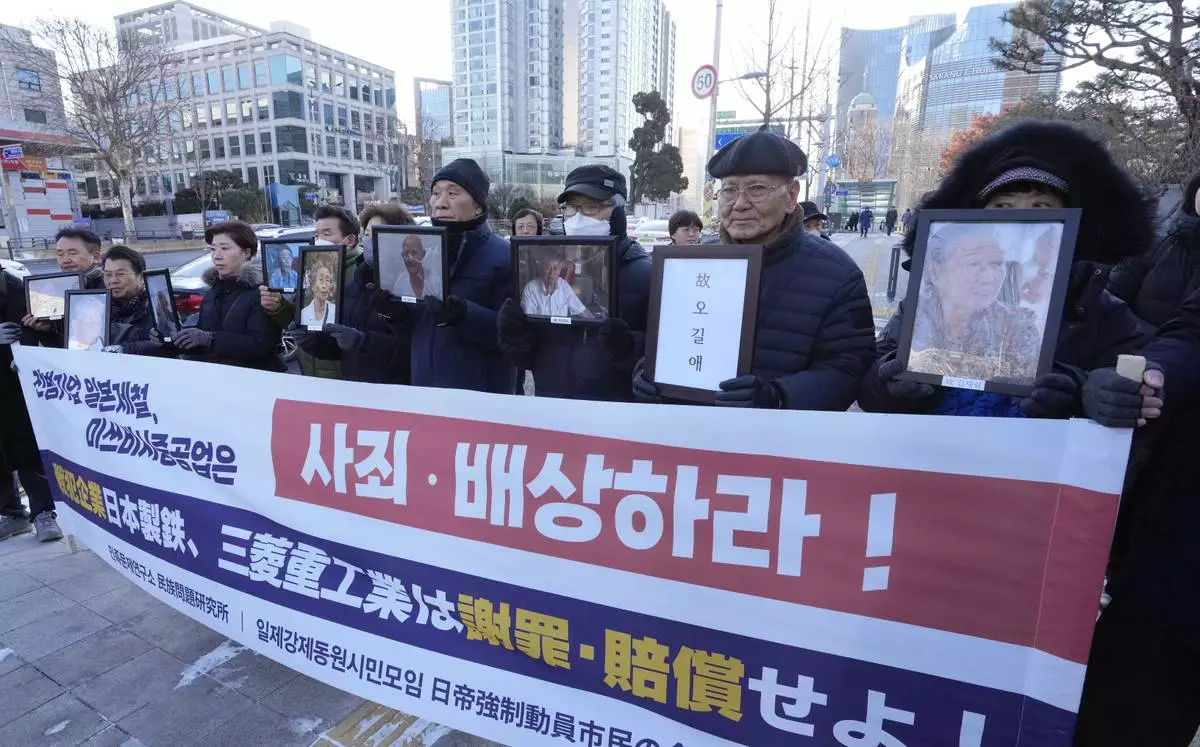
FILE - Family members of forced labor victims during the Japan's colonial period arrive at the Supreme Court in Seoul, South Korea, on Dec. 21, 2023. The sign reads "Mitsubishi Heavy Industries should compensate and apologize." (AP Photo/Ahn Young-joon, File)
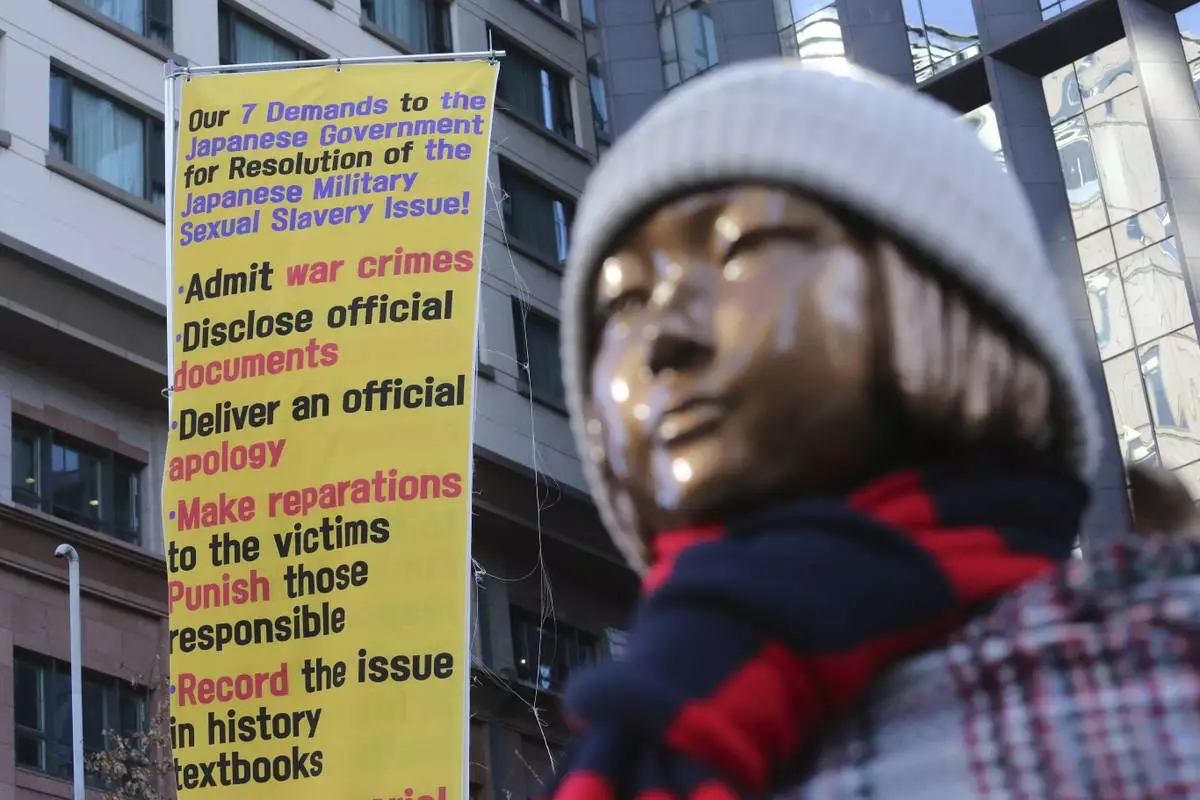
FILE - A statue symbolizing a wartime sex slave is displayed near the Japanese Embassy in Seoul, South Korea, on Jan. 8, 2021. (AP Photo/Ahn Young-joon, File)
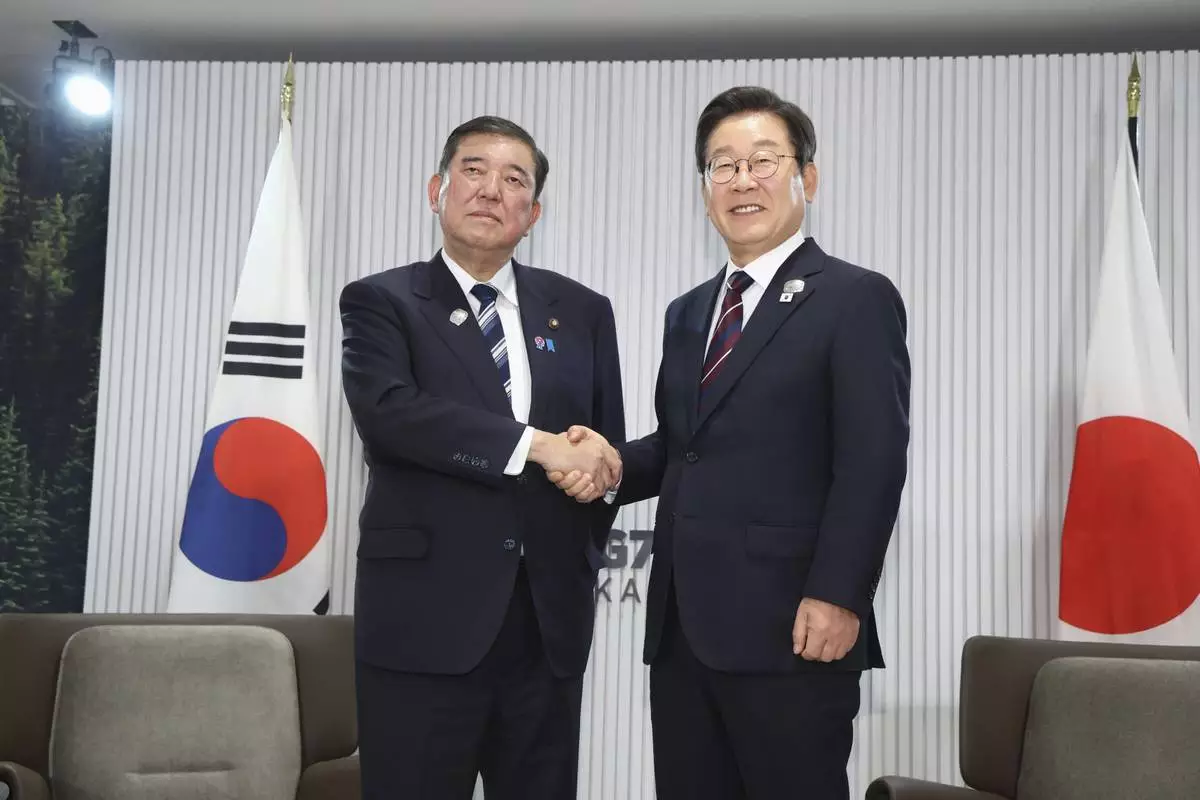
Japanese Prime Minister Shigeru Ishiba, left, and South Korean President Lee Jae Myung, right, shake hands ahead of a bilateral meeting on the sidelines of the G7, in Kananaskis, Alberta, on June 17, 2025. (Kyodo News via AP)