Towering Terracotta Warriors and ornate chariots are showcasing the grandeur of the ancient Chinese civilization, featuring a series of relics on display for the first time in North America.
The exhibition "World of the Terracotta Warriors: New Archaeological Discoveries in Shaanxi in the 21st Century" at the Bowers Museum in Orange County, California is the third time that China's iconic Terracotta Warriors have been showcased in the United States.
Upon entering the exhibition hall of the Bowers and laying eyes on the Terracotta Warriors and other relics, part of the burial complex for China's first emperor, Qin Shi Huang of the Qin Dynasty (221 B.C.-207B.C), visitors paused to admire and took photos of the displays, immersed in a sea of history.
This display features more than 110 newly unearthed artifacts, including Terracotta Warriors, Chariot regalia, jade and gold adornments and bronze vessels, many of which are on display for the first time in North America.
"Bowers Museum is famous for hosting Terracotta Warrior shows. The first one was in 2008 and the second one in 2011. But this one is completely different. The first one focused exclusively on Terracotta Warriors. The second one explored the influence of the Qin Dynasty to the Han (202 B.C.-A.D. 220) and Tang (618-907) dynasties. But this one, we're going the other direction. We are chasing the origin, the sources of 2,000 years, leading up to the rise of the Qin Empire," said Jiao Tianlong, chief curator and director of the Asian Exhibition Program at the museum.
"This is an exhibition that puts together collections from more than one museum, so this is unusual. You've got to see stuff from the Shang (1600-1046 B.C.), Zhou (1046-256 B.C.) dynasties, Qin Dynasty," said Sean O'Harrow, president and CEO of the museum.
The museum has incorporated cutting-edge multimedia and interactive technology into the show. Visitors can digitally "paint" colorful uniforms for the Terracotta Warriors with computers, or "step into" a formidable Qin Dynasty military formation via a panoramic surround screen.
Many visitors to the gallery said that the experience is like being transported in time and coming face-to-to face with China's ancestors.
"None of us have ever seen anything like this, and for them to be outside of China is really important to us. But also, my children are half Chinese American, and so it's really important for me, for them, to learn about their culture and their heritage," said Jamie Sah, a visitor.
"I've learned a little bit more about the Bronze Age, and I'm really intrigued by just how they could sculpt these structures here, or these soldiers -- they're so realistic," said Salvia Fernandez, another visitor.
At a time of global uncertainty, this exhibition offers not just ancient relics, but a reminder that cultural understanding can transcend borders.
"This exhibition carries special significance, especially amid current tensions between China and the United States. It represents a valuable moment of cultural exchange," said Anne Shih, chairwoman of the Bowers Museum's Board of Governors.
Founded in 1936, the Bowers Museum is the largest and one of the oldest museums in Orange County. the museum houses over 100,000 works of art and cultural artifacts from around the world. The museum previously hosted Terracotta Warrior exhibitions in 2008 and 2011, both of which sparked significant interest in Chinese culture throughout Southern California.
The exhibition will run through Oct 19.
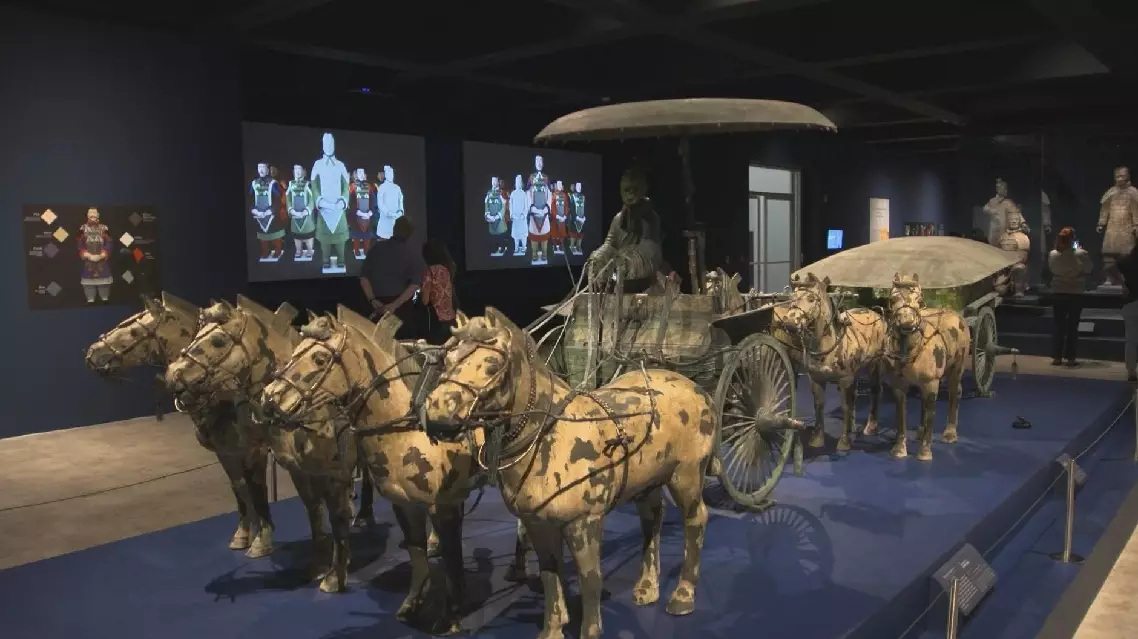
Terracotta Warriors exhibition in southern California showcases China's ancient civilization
European countries and international organizations have widely condemned Israeli air strikes on Lebanon which have resulted in more than 1,000 civilian casualties, including children, and have caused damage to civilian infrastructure.
Israel launched large-scale air raids across Lebanon on Wednesday, saying it had carried out 100 strikes within a matter of minutes on positions they claimed belonged to the Hezbollah group.
Lebanon's Ministry of Public Health reported more than 300 had been killed in the attacks, with roughly 1,150 wounded.
The attacks came after a two-week ceasefire agreement was reached by the United States and Iran. However, both Israel and the United States have maintained Lebanon is not included in the truce.
Spanish Foreign Minister Jose Manuel Albares on Thursday accused Israel of violating international law to carry out the air strikes on Lebanon, calling the attacks "a shame on the conscience of all humanity".
Earlier on Thursday, Albares announced that Spain would reopen its embassy in Tehran in the hope of achieving peace in the region.
Italian Prime Minister Giorgia Meloni said that Israel had "disrespected" the two-week ceasefire with Iran by carrying out the strikes.
Meloni also warned of further economic turmoil if U.S.-Israeli strikes on Iran flare up again, and said the European Union should consider a temporary suspension of the Stability and Growth Pact, an agreement which ensures economic stability within the European Union, in order to handle the potential monetary consequences.
Meanwhile, German Chancellor Friedrich Merz on Thursday warned that Israel's military operations in Lebanon could cause the entire peace process as a whole to fail, telling a press conference in Berlin "that must not happen."
Merz announced that the German government will resume direct talks with Iran in order to support the newly agreed two-week ceasefire between Washington and Tehran.
He also stated that a window of opportunity for a negotiated solution has opened for the first time since the outbreak of the conflict, though he cautioned that the situation in the Middle East remains "fragile."
The UK's Foreign Secretary Yvette Cooper said on Thursday that she is "deeply troubled" by Israel's escalating attacks on Lebanon, expressing hope that Lebanon will be included in the current ceasefire arrangement.
Cooper also reiterated the importance of reopening the Strait of Hormuz, saying that the effective closure of the vital shipping chokepoint had been "deeply damaging for the world", while stressing how crucial the passageway is to the entire global economy.
French Foreign Minister Jean-Noel Barrot described the Israeli strikes on Lebanon as "intolerable."
In a radio interview, Barrot said France strongly condemns "the massive strikes" which seriously undermine the temporary ceasefire reached earlier between the United States and Iran. The European Union's foreign policy chief Kaja Kallas said Thursday that Israel's latest strikes on Lebanon, which killed hundreds overnight, could not be considered as an act of self-defense.
"Israel's right to defend itself does not justify inflicting such massive destruction," Kallas said in a post on the social media platform X. She warned that the strikes risk further destabilizing the region and added that Israel's actions were putting the U.S.-Iran ceasefire under severe strain.
Despite this widespread criticism, Israeli Prime Minister Benjamin Netanyahu insisted on Thursday there would be no ceasefire in Lebanon, signaling that Israel will continue its military operations while pursuing planned negotiations with Beirut.
"There is no ceasefire in Lebanon," Netanyahu said in a video address to residents of northern Israel, adding: "We continue to strike Hezbollah with force and we will not stop until we restore your security."
Netanyahu said he had instructed his cabinet to open direct talks with Lebanon following what he described as repeated requests from the Lebanese government.
The negotiations, which are expected to begin next week in Washington, aim to disarm Hezbollah and reach a "historic and lasting" peace agreement, Netanyahu added. Delegations will be led by the Lebanese and Israeli ambassadors to the United States.
Israel and Lebanon have no formal diplomatic relations and technically remain in a state of war.
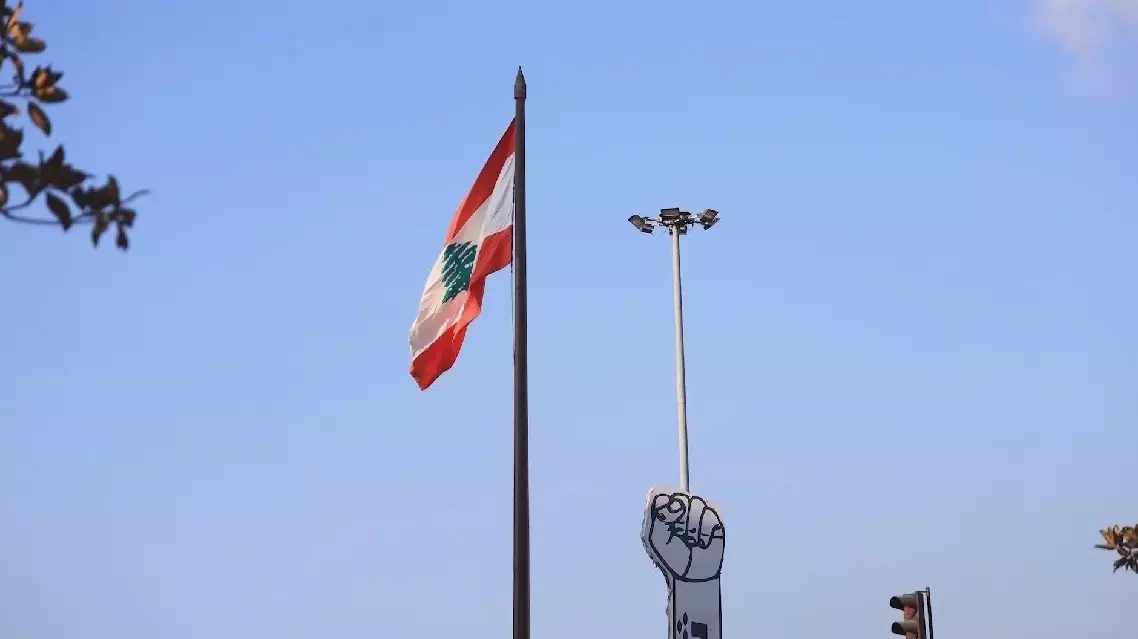
European Leaders widely condemn Israeli attacks on Lebanon