DUBAI, United Arab Emirates (AP) — It was an unprecedented attack years in the making, with some last-minute misdirection meant to give the operation a powerful element of surprise.
U.S. pilots dropped 30,000-pound bombs early Sunday on two key underground uranium enrichment plants in Iran, delivering what American military leaders believe is a knockout blow to a nuclear program that Israel views as an existential threat and has been pummeling for more than a week. American sailors bolstered the surprise mission by firing dozens of cruise missiles from a submarine toward at least one other site.
Dubbed Operation Midnight Hammer, U.S. officials say the plan was characterized by a “precision strike” that “devastated the Iranian nuclear program,” even as they acknowledged an assessment was ongoing. For its part, Iran denied that any significant damage had been done, and the Islamic Republic pledged to retaliate.
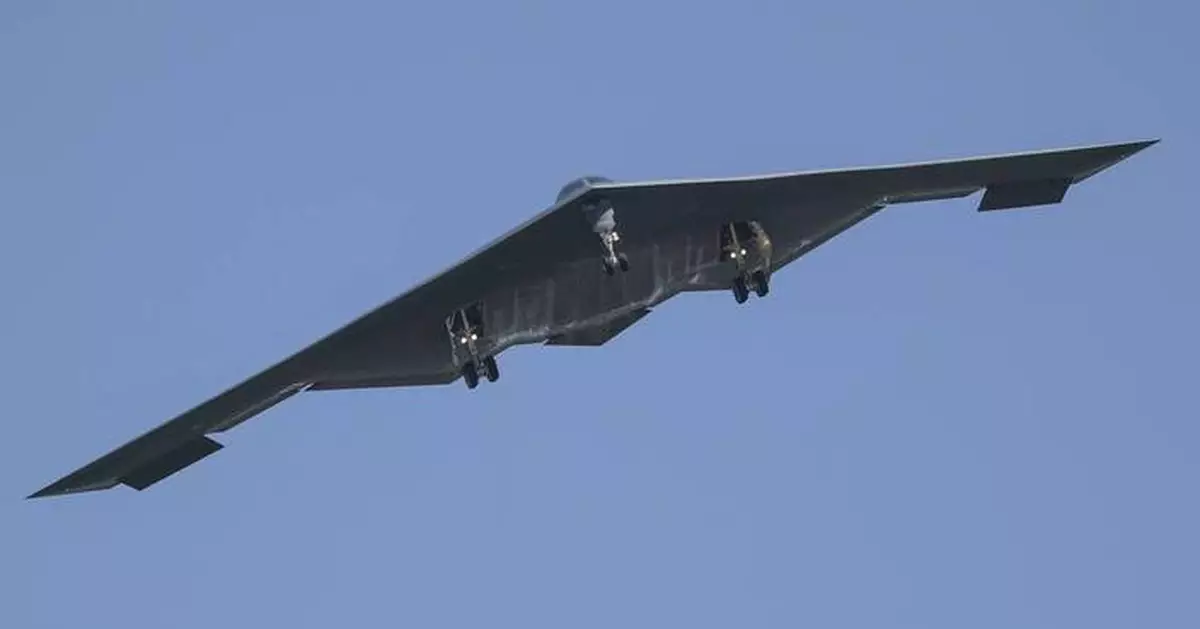
Taking off from the U.S. heartland, B-2 stealth bombers delivered a total of 420,000 pounds of explosives, aided by an armada of refueling tankers and fighter jets — some of which launched their own weapons. U.S. officials said Iran neither detected the inbound fusillade, nor mustered a shot at the stealthy American jets.
The operation relied on a series of deceptive tactics and decoys to maintain the secrecy, U.S. officials said hours after the attack, which was preceded by nine days of Israeli attacks that debilitated Iran's military leadership and air defenses.
Even before the planes took off, elements of misdirection were already in play. After setting parts of the plan in motion, Trump publicly announced Thursday that he’d make a decision within two weeks on whether to strike Iran — ostensibly to allow additional time for negotiations, but in actuality masking the impending attack.
One group of B-2 stealth bombers traveled west from Missouri on Saturday as decoys, drawing the attention of amateur plane spotters, government officials and some media as they headed toward a U.S. air base in the Pacific. At the same time, seven other B-2s carrying two “bunker buster” bombs apiece flew eastward, keeping communications to a minimum so as not to draw any attention.
Air Force Gen. Dan Caine, the chairman of the Joint Chiefs of Staff, said at Sunday's briefing that it was all "part of a plan to maintain tactical surprise” and that only “an extremely small number of planners and key leaders” knew about it in Washington and Florida, where U.S. Central Command is based.
After 18 hours of furtive flying that required aerial refueling, the armed B-2 Spirit bombers, each with two crew members, arrived on time and without detection in the Eastern Mediterranean, from where they launched their attack runs. Before crossing into Iran, the B-2s were escorted by stealthy U.S. fighter jets and reconnaissance aircraft.
A graphic released by the Pentagon showed the flight route as passing over Lebanon, Syria and Iraq. It was unclear whether those countries were notified of the U.S. overflight in advance. Most U.S. lawmakers were also kept in the dark, with some Republicans saying they were provided a brief heads-up by the White House before the strike.
“Our B-2s went in and out and back without the world knowing at all,” Secretary of Defense Pete Hegseth told reporters Sunday.
About an hour before the B-2s entered Iran, Caine said that a U.S. submarine in the region launched more than two dozen Tomahawk cruise missiles against key targets, including a site in Isfahan where uranium is prepared for enrichment.
As the U.S. bombers approached their targets, they watched out for Iranian fighter jets and surface-to-air missiles, but encountered none.
At 6:40 p.m. in Washington and 2:10 a.m. in Tehran, the first B-2 bomber dropped its pair of GBU-57 massive ordnance penetrators on the deeply buried Fordo uranium enrichment plant. It was the first time these so-called “bunker busters” had ever been used in combat. Each 30,000-pound bomb is designed to burrow into the ground before detonating a massive warhead.
The Fordo site received the bulk of the bombardment, though a couple of the enormous bombs were also dropped on a uranium enrichment site at Natanz.
The U.S. bombs fell for about half an hour, with cruise missiles fired from submarines being the last American weapons to hit their targets, which included a third nuclear site at Isfahan, Caine said.
Both Iran and the U.N. nuclear watchdog said there were no immediate signs of radioactive contamination around the sites.
The mission included:
— 75 precision-guided weapons: these included 14 GBU-57 “bunker buster” bombs deployed by the seven B-2 Spirit stealth bombers, and more than two-dozen Tomahawk cruise missiles launched from a U.S. submarine.
— 125 aircraft, including the B-2 bombers, fighter jets and refueling planes.
Hegseth said Sunday that “our boys in those bombers are on their way home right now.”
But a U.S. official said one woman was among those piloting the B-2 bombers. The official spoke on the condition of anonymity because they were not authorized to speak about the mission publicly.
Caine said the use of the bunker-buster bombs made the mission historic, as did other elements.
“This was the largest B-2 operational strike in U.S. history, and the second longest B-2 mission ever flown, exceeded only by those in the days following 9/11," he told reporters Sunday.
Lolita C. Baldor in Narragansett, Rhode Island and Nicholas Ingram in Knob Noster, Missouri, contributed reporting. Kinnard reported from Chapin, South Carolina.
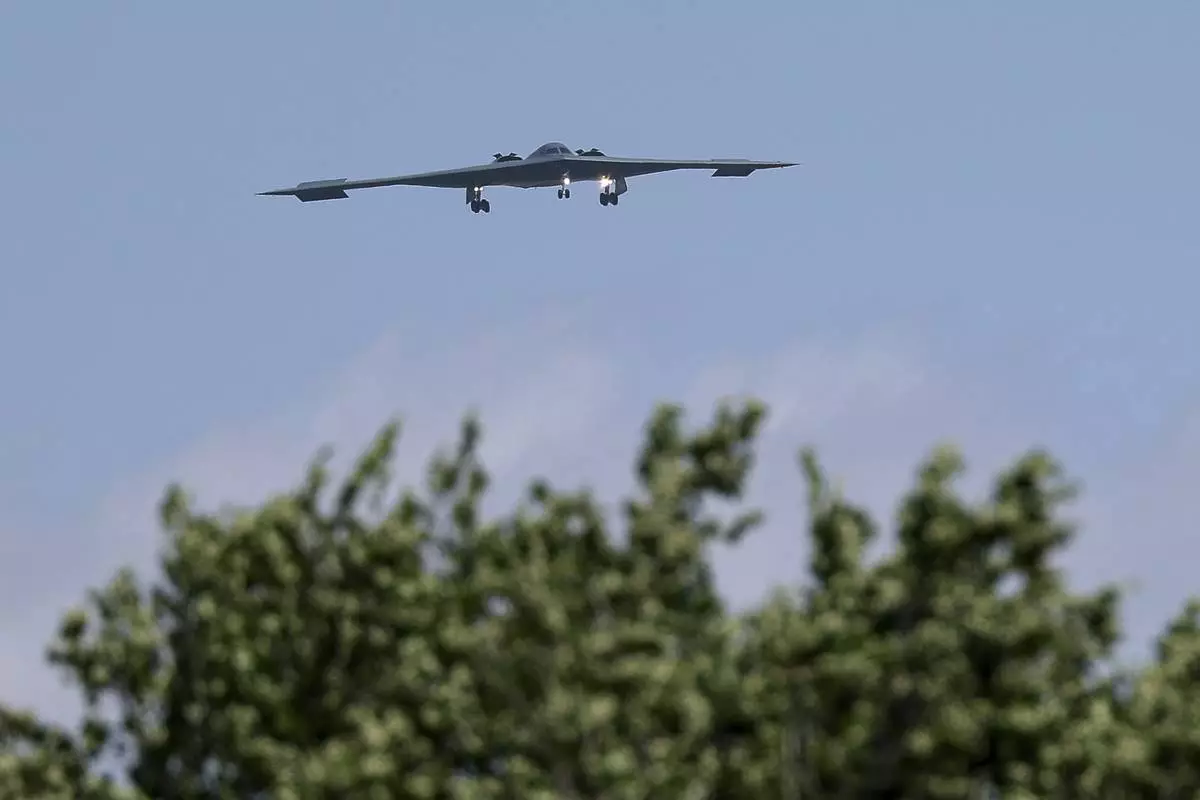
A B-2 bomber arrives at Whiteman Air Force Base Mo., Sunday, June 22, 2025. (AP Photo/David Smith)
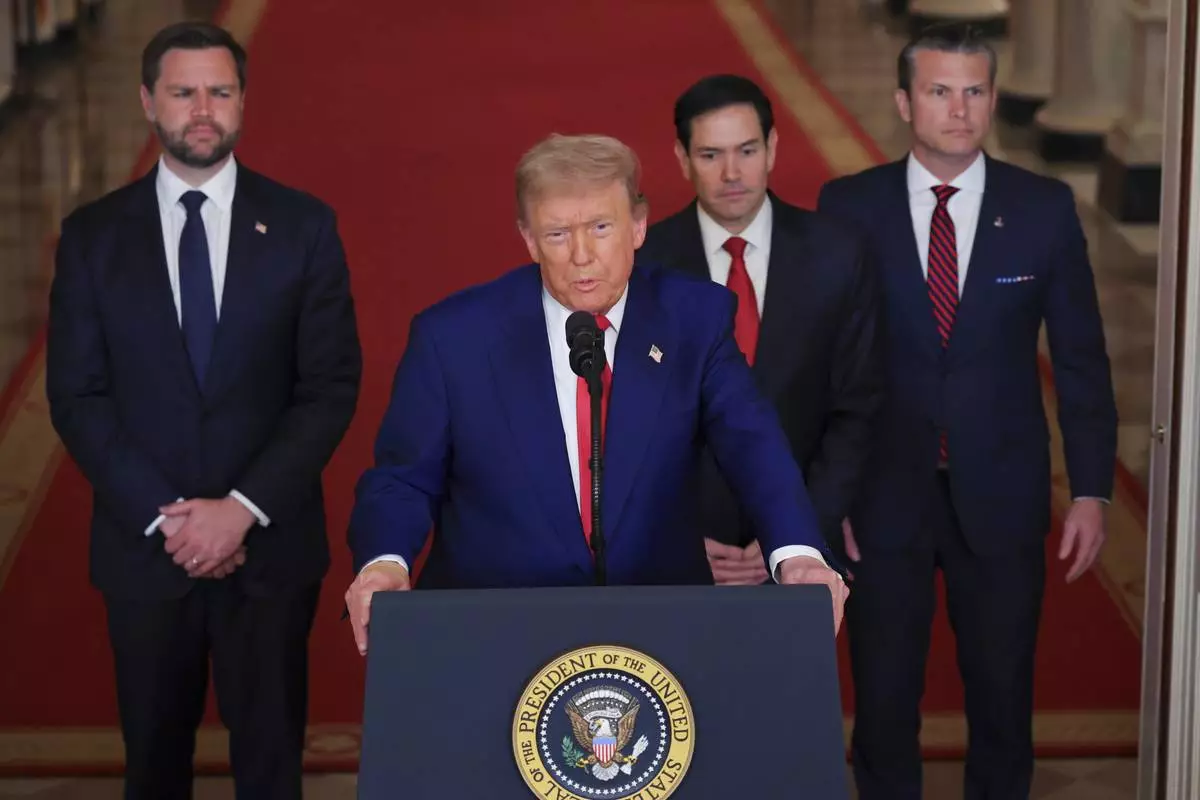
President Donald Trump speaks from the East Room of the White House in Washington, Saturday, June 21, 2025, after the U.S. military struck three Iranian nuclear and military sites, directly joining Israel's effort to decapitate the country's nuclear program, as Vice President JD Vance, Secretary of State Marco Rubio and Defense Secretary Pete Hegseth listen. (Carlos Barria/Pool via AP)
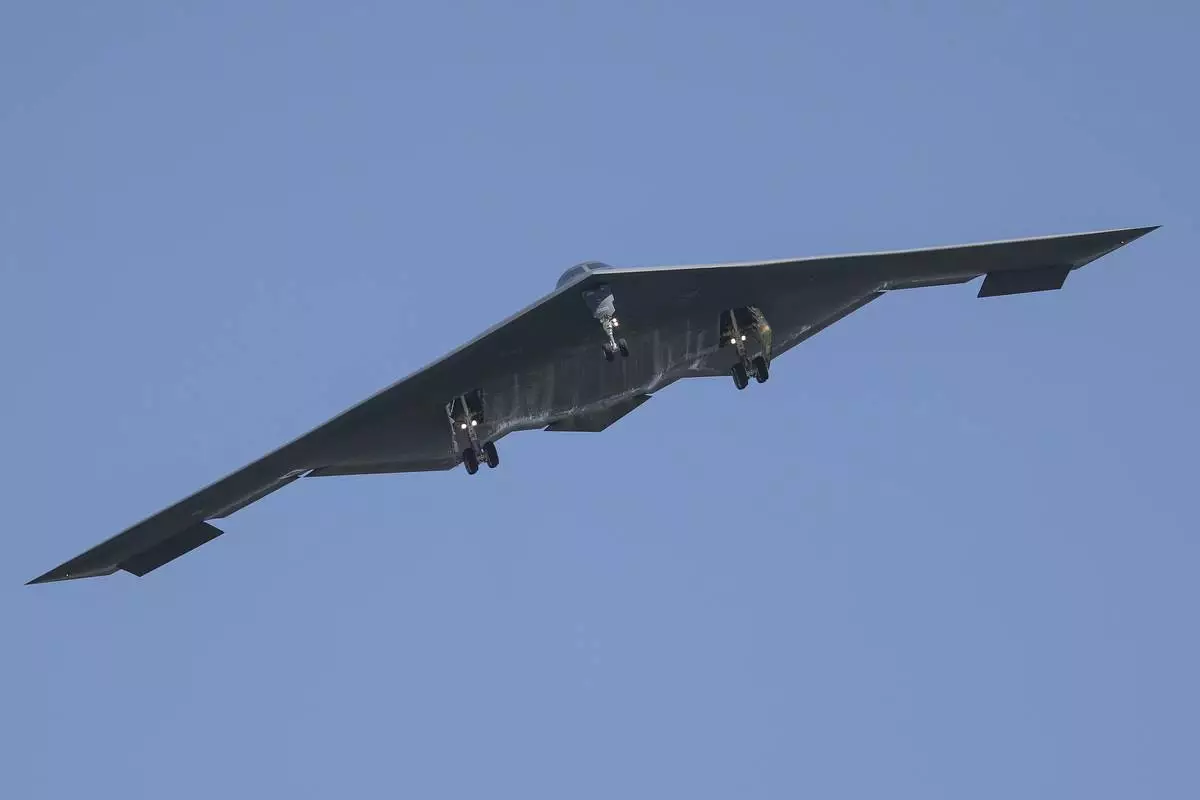
A B-2 bomber arrives at Whiteman Air Force Base Mo., Sunday, June 22, 2025. (AP Photo/David Smith)