ROME (AP) — Arnaldo Pomodoro, one of Italy's most prominent contemporary artists whose bronze spheres decorate iconic public spaces from the Vatican to the United Nations, has died at age 98, his foundation said Monday.
Pomodoro died at home in Milan on Sunday, the eve of his 99th birthday, according to a statement from Carlotta Montebello, director general of the Arnaldo Pomodoro Foundation.
Pomodoro’s massive spheres are instantly recognizable: shiny, smooth bronze globes with clawed out interiors that Pomodoro has said referred to the superficial perfection of exteriors and the troubled complexity of interiors.
In a note of condolences, Italian Culture Minister Alessandro Giuli said Pomodoro's “wounded” spheres “speak to us today of the fragility and complexity of the human and the world.”
The Vatican’s sphere, which occupies a central place in the Pigna Courtyard of the Vatican Museums, features an internal mechanism that rotates with the wind. “In my work I see the cracks, the eroded parts, the destructive potential that emerges from our time of disillusionment,” the Vatican quoted Pomodoro as saying about its sphere.
The United Nations in New York received a 3.3-meter (10 foot, eight inch) diameter “Sphere Within Sphere” sculpture as a gift from Italy in 1996. The U.N. sphere has refers to the coming of the new millennium, the U.N. said: “a smooth exterior womb erupted by complex interior forms,” and “a promise for the rebirth of a less troubled and destructive world,” Pomodoro said of it.
Other spheres are located at museums around the world and outside the Italian foreign ministry, which has the original work that Pomodoro created in 1966 for the Montreal Expo that began his monumental sculpture project.
Pomodoro was born in Montefeltro, Italy, on June 23, 1926. In addition to his spheres, he designed theatrical sets, land projects and machines. He had multiple retrospectives and taught at Stanford University, the University of California at Berkeley and Mills College, according to his biography on the foundation website.
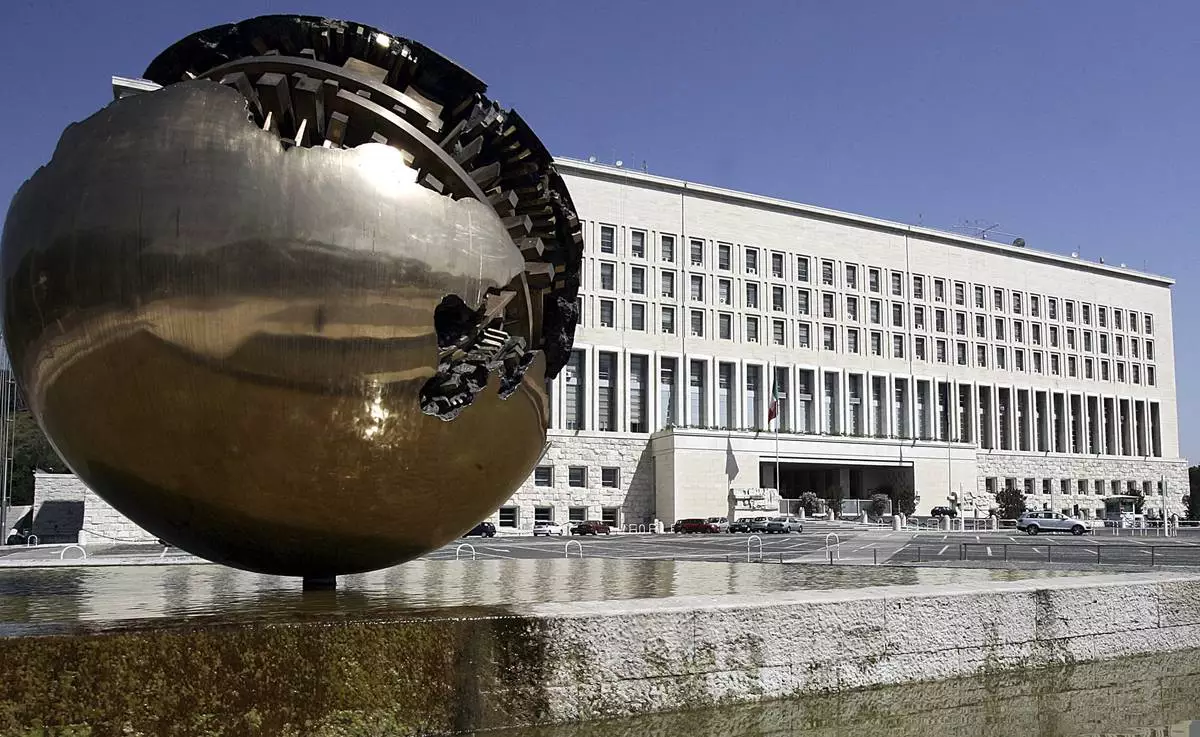
FILE-- A spherical bronze sculpture by Italian artist Arnaldo Pomodoro, is seen outside the Italian Foreign Ministry Farnesina building, in Rome, Saturday, July 22, 2006. (AP Photo/Plinio Lepri)
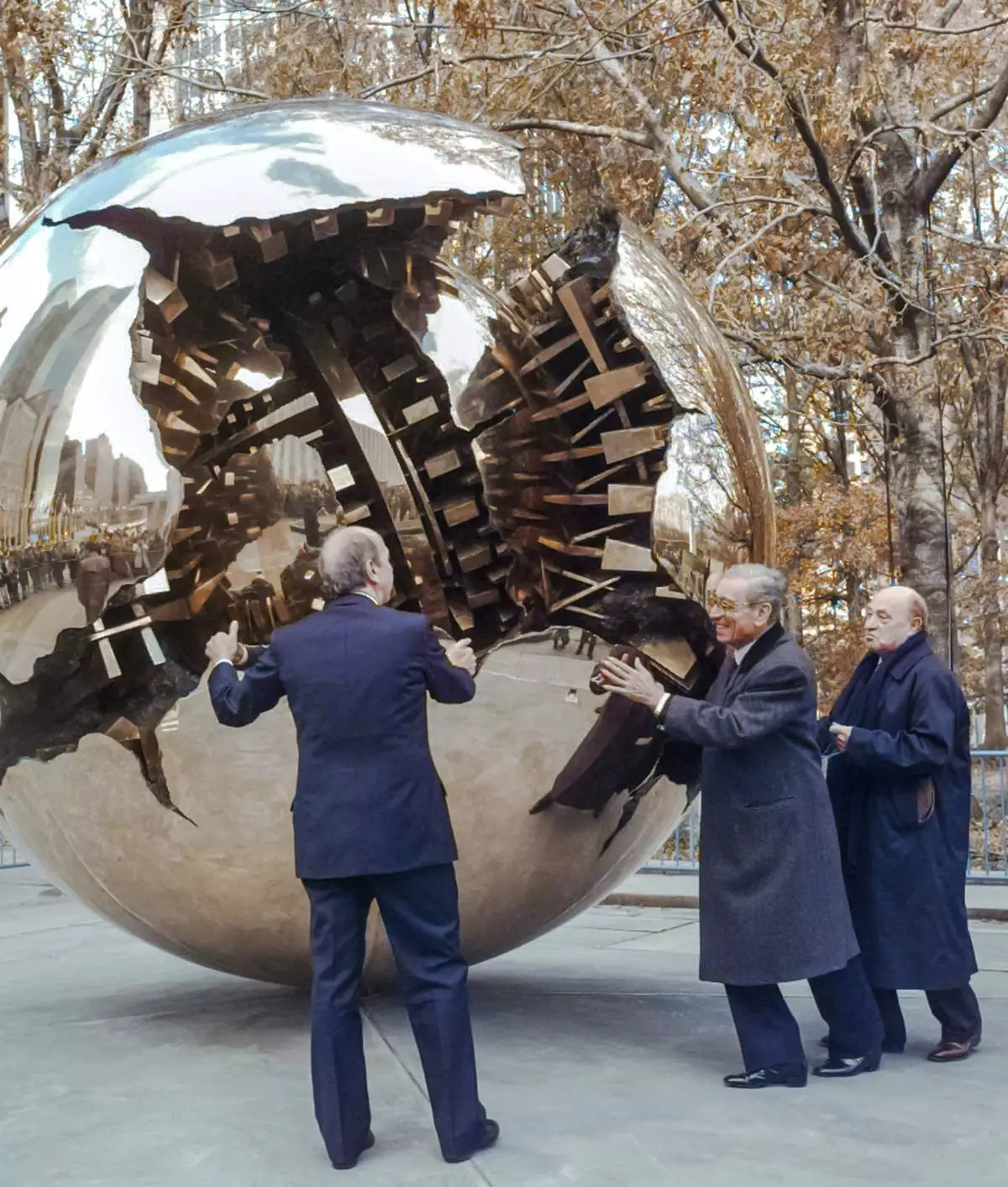
FILE-- Boutros Boutros-Ghali, center, secretary general of the United Nations, gives a push to Italian sculptor Arnaldo Pomodoro's, right, "Sphere Within a Sphere" during its unveiling at the United Nations, Thursday, Nov. 21, 1996. Helping him to rotate the 8-ton bronze sculpture is Italy's Foreign Minister Umberto Dini, left. (AP Photo/Mark Lennihan)
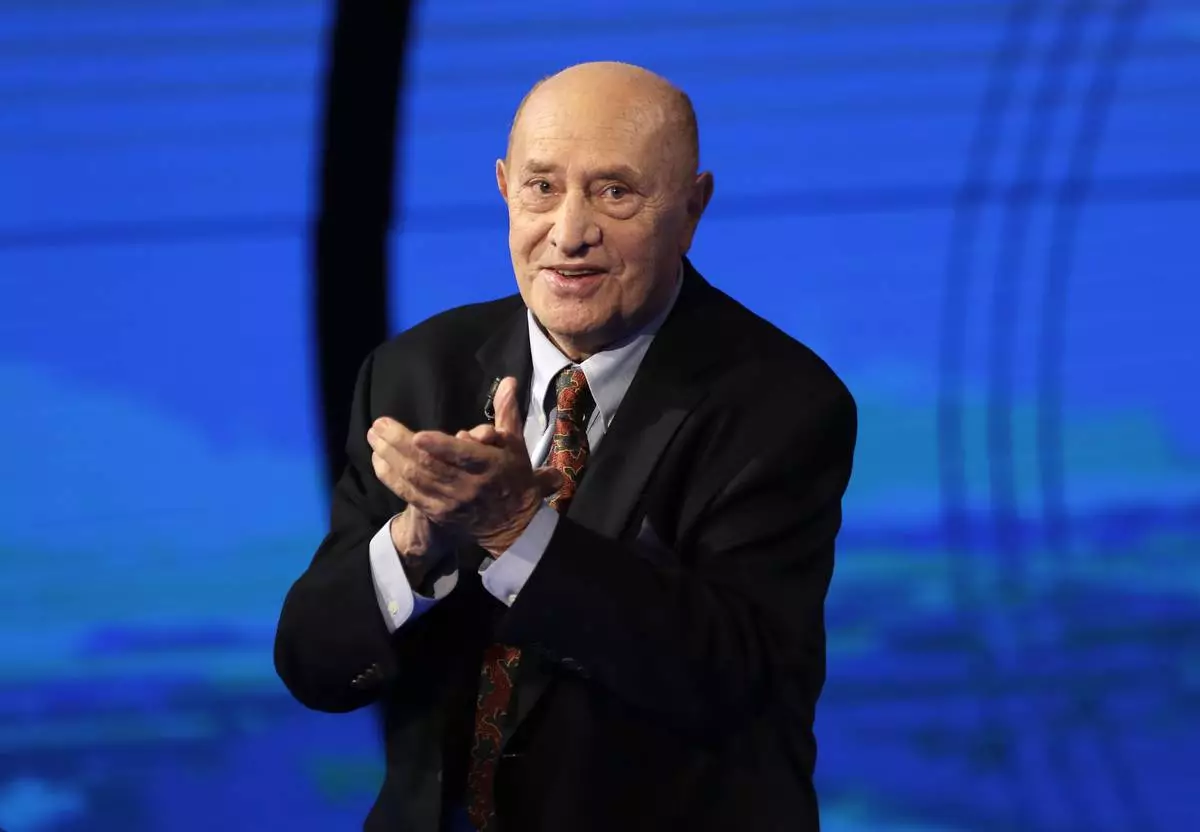
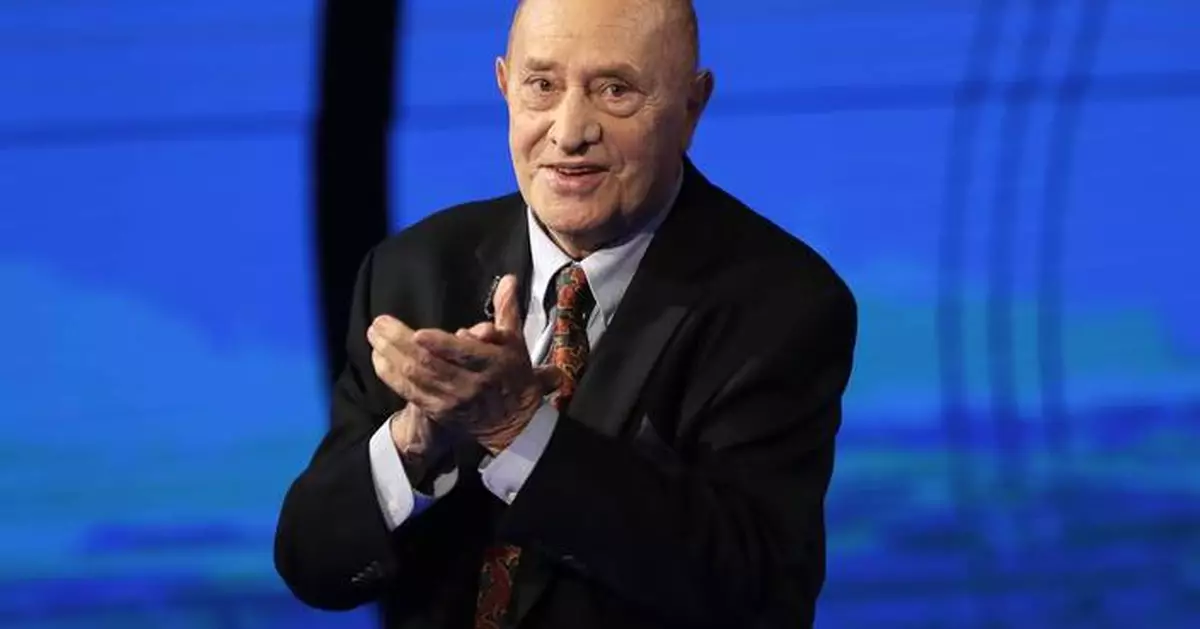
FILE -- Italian sculptor Arnaldo Pomodoro attends the Italian State RAI TV program "Che Tempo che Fa", in Milan, Italy, Sunday, Dec. 18, 2016. (AP Photo/Antonio Calanni)
WASHINGTON (AP) — President Donald Trump is meeting with oil executives at the White House on Friday in hopes of securing $100 billion in investments to revive Venezuela’s ability to fully tap into its expansive reserves of petroleum — a plan that rides on their comfort in making commitments in a country plagued by instability, inflation and uncertainty.
Since the U.S. military raid to capture former Venezuelan leader Nicolás Maduro on Saturday, Trump has quickly pivoted to portraying the move as a newfound economic opportunity for the U.S., seizing tankers carrying Venezuelan oil, saying the U.S. is taking over the sales of 30 million to 50 million barrels of previously sanctioned Venezuelan oil and will be controlling sales worldwide indefinitely.
On Friday, U.S. forces seized their fifth tanker over the past month that has been linked to Venezuelan oil. The action reflected the determination of the U.S. to fully control the exporting, refining and production of Venezuelan petroleum, a sign of the Trump administration's plans for ongoing involvement in the sector as it seeks commitments from private companies.
It's all part of a broader push by Trump to keep gasoline prices low. At a time when many Americans are concerned about affordability, the incursion in Venezuela melds Trump’s assertive use of presidential powers with an optical spectacle meant to convince Americans that he can bring down energy prices.
The meeting, set for 2:30 p.m. EST, will be open to the news media, according to an update to the president's daily schedule. “At least 100 Billion Dollars will be invested by BIG OIL, all of whom I will be meeting with today at The White House,” Trump said Friday in a pre-dawn social media post.
Trump is set to meet with executives from 17 oil companies, according to the White House. Among the companies attending are Chevron, which still operates in Venezuela, and ExxonMobil and ConocoPhillips, which both had oil projects in the country that were lost as part of a 2007 nationalization of private businesses under Maduro’s predecessor, Hugo Chávez.
The president is meeting with a wide swath of domestic and international companies with interests ranging from construction to the commodity markets. Other companies slated to be at the meeting include Halliburton, Valero, Marathon, Shell, Singapore-based Trafigura, Italy-based Eni and Spain-based Repsol.
Large U.S. oil companies have so far largely refrained from affirming investments in Venezuela as contracts and guarantees need to be in place. Trump has suggested on social media that America would help to backstop any investments.
Venezuela’s oil production has slumped below one million barrels a day. Part of Trump's challenge to turn that around will be to convince oil companies that his administration has a stable relationship with Venezuela’s interim President Delcy Rodríguez, as well as protections for companies entering the market.
Secretary of State Marco Rubio, Energy Secretary Chris Wright and Interior Secretary Doug Burgum are slated to attend the oil executives meeting, according to the White House.
Meanwhile, the United States and Venezuelan governments said Friday they were exploring the possibility of r estoring diplomatic relations between the two countries, and that a delegation from the Trump administration arrived to the South American nation on Friday.
The small team of U.S. diplomats and diplomatic security officials traveled to Venezuela to make a preliminary assessment about the potential re-opening of the U.S. Embassy in Caracas, the State Department said in a statement.
Trump also announced on Friday he’d meet with President Gustavo Petro in early February, but called on the Colombian leader to make quick progress on stemming flow of cocaine into the U.S.
Trump, following the ouster of Maduro, had made vague threats to take similar action against Petro. Trump abruptly changed his tone Wednesday about his Colombian counterpart after a friendly phone call in which he invited Petro to visit the White House.
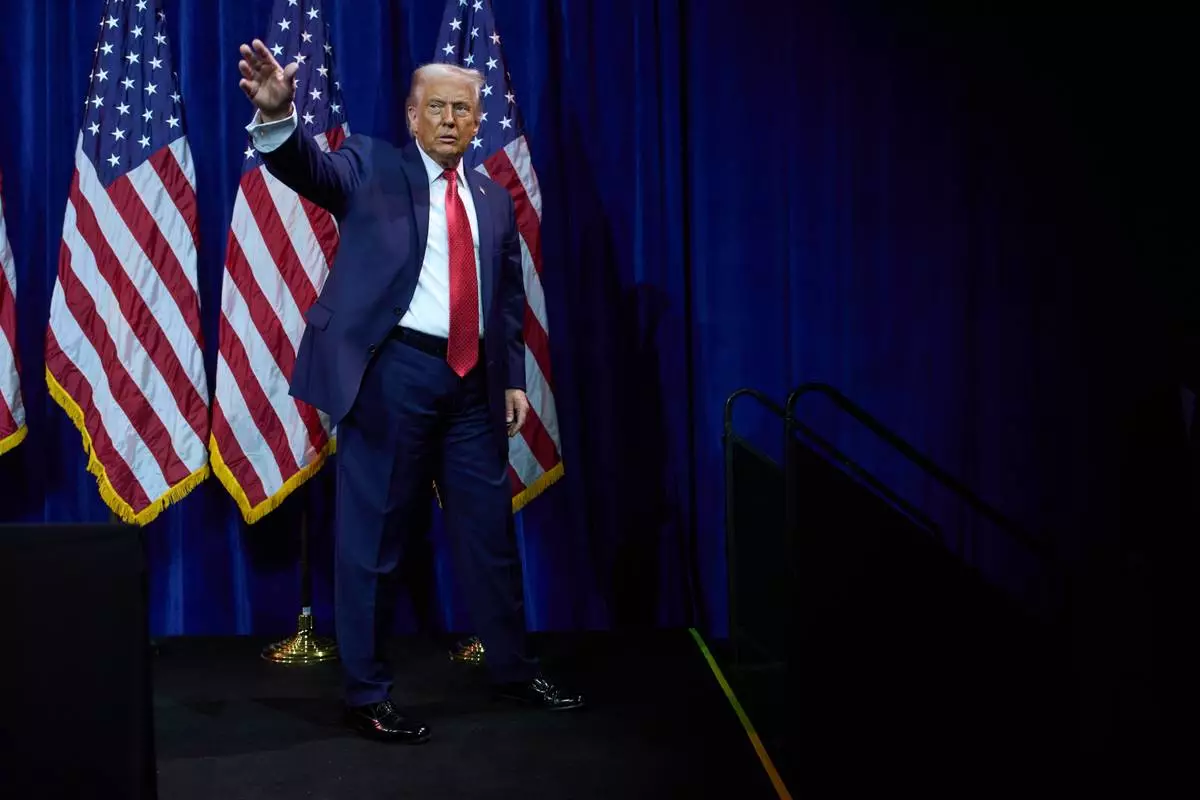
President Donald Trump waves as he walks off stage after speaking to House Republican lawmakers during their annual policy retreat, Tuesday, Jan. 6, 2026, in Washington. (AP Photo/Evan Vucci)