CHICAGO (AP) — Many of the protesters who flooded the streets of Los Angeles to oppose President Donald Trump’s immigration crackdown wore masks or other face coverings, drawing scorn from him.
“MASKS WILL NOT BE ALLOWED to be worn at protests," Trump posted on his social media platform, adding that mask-wearing protesters should be arrested.
Click to Gallery
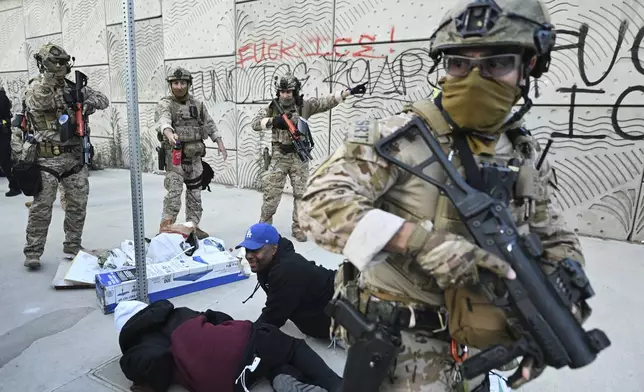
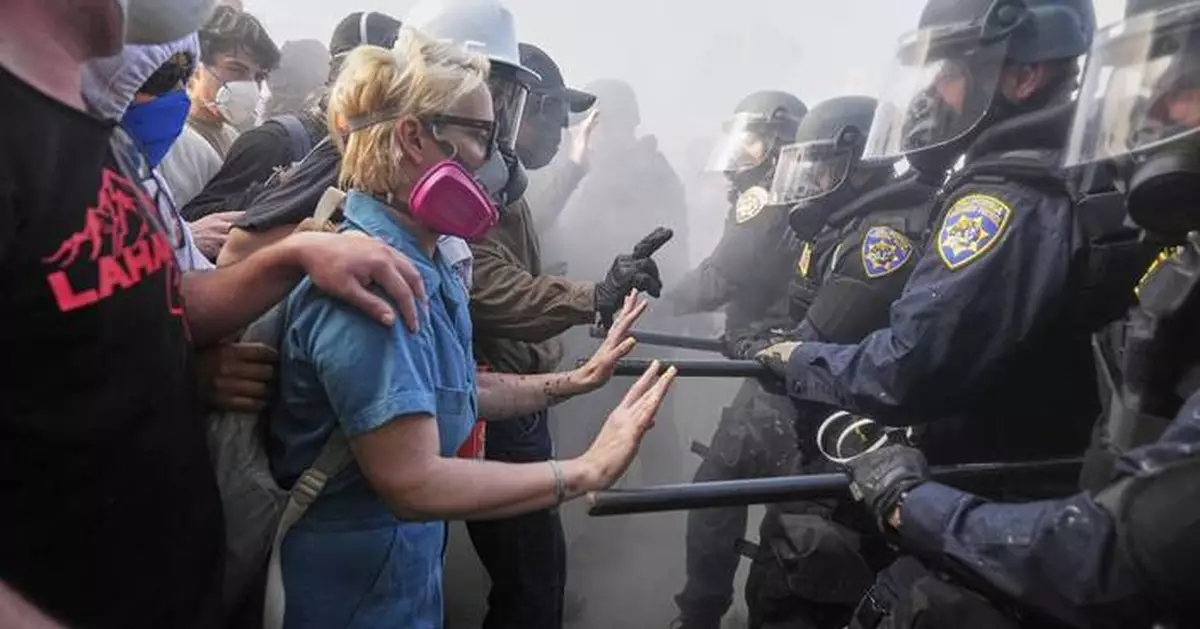
EDS NOTE: OBSCENITY - Agents from US Customs and Border Protection surround demonstrators during protests on Thursday, June 12, 2025, in Los Angeles (AP Photo/Wally Skalij)
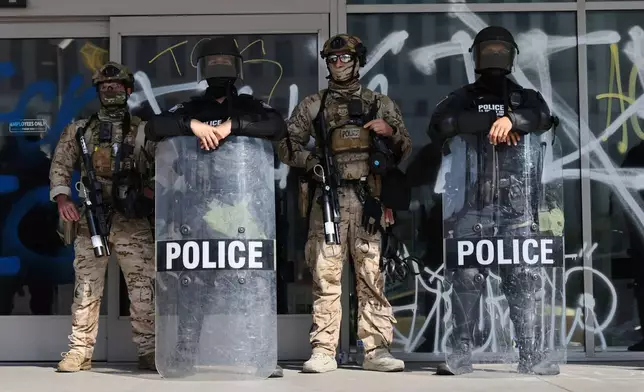
US Customs and Border Protection officers guard an entrance of the Federal Building in Los Angeles while protesters rally during a demonstration in response to a series of US Immigration and Customs Enforcement (ICE) raids throughout the country, on Tuesday, June 10th, 2025. (Gabrielle Lurie/San Francisco Chronicle via AP)
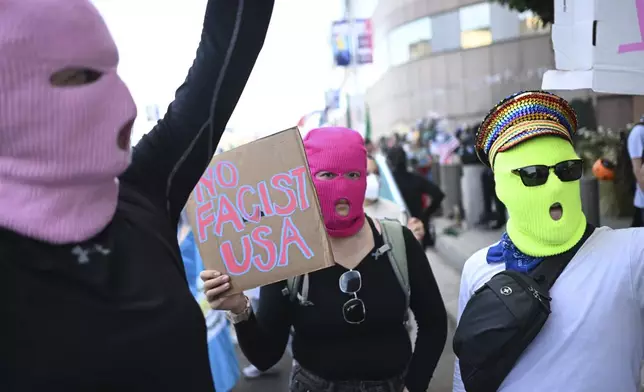
Demonstrators wearing masks hold signs outside the Federal Building during a protest on Friday, June 13, 2025, in Los Angeles. (AP Photo/Wally Skalij)

FILE - Protesters confront police on the 101 Freeway near the Metropolitan Detention Center in downtown Los Angeles, Sunday, June 8, 2025, following last night's immigration raid protest. (AP Photo/Jae C. Hong, File)
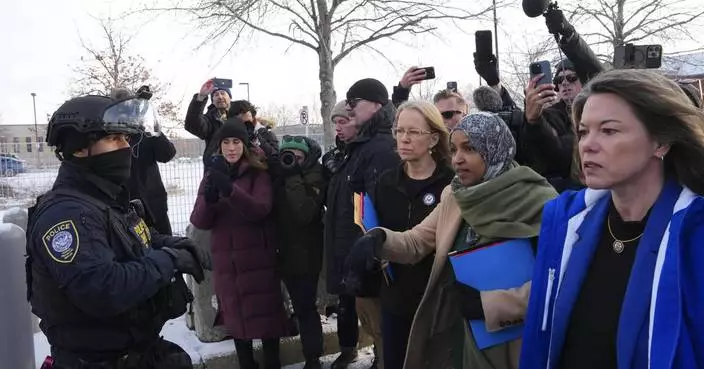
Protesters and their supporters argue Trump's comments and repeated calls by the Republican president's allies to ban masks at protests are an attempt to stifle popular dissent. They also note a double standard at play: In Los Angeles and elsewhere, protesters were at times confronted by officers who had their faces covered. And some U.S. Immigration and Customs Enforcement agents have worn masks while carrying out high-profile raids in Los Angeles and other cities.
All of which begs the question: Can something that covers your mouth protect free speech? Protesters say the answer is an emphatic yes. Several legal experts say it's only a matter of time before the issue returns to the courts.
Trump's post calling for a ban on masks came after immigration raids sparked protests, which included some reports of vandalism and violence toward police.
“What do these people have to hide, and why?” he asked on Truth Social on June 8.
The next day, Trump raged against the anti-ICE protests, calling for the arrest of people in face masks.
It's not a new idea. Legal experts and First Amendment advocates warn of a rising number of laws banning masks being wielded against protesters and their impacts on people’s right to protest and privacy amid mounting surveillance.
The legal question became even more complicated when Democratic lawmakers in California introduced legislation aiming to stop federal agents and local police officers from wearing face masks. That came amid concerns ICE agents were attempting to hide their identities and avoid accountability for potential misconduct.
“The recent federal operations in California have created an environment of profound terror," state Sen. Scott Wiener said in a press release.
Department of Homeland Security Assistant Secretary Tricia McLaughlin called the California bill “despicable."
“While ICE officers are being assaulted by rioters and having rocks and Molotov cocktails thrown at them, a sanctuary politician is trying to outlaw officers wearing masks to protect themselves from being doxed and targeted by known and suspected terrorist sympathizers,” McLaughlin said in a statement.
At least 18 states and Washington, D.C., have laws that restrict masks and other face coverings, said Elly Page, senior legal adviser with the International Center for Not-For-Profit Law. Since October 2023, at least 16 bills have been introduced in eight states and Congress to restrict masks at protests, the center says.
The laws aren't just remnants of the coronavirus pandemic. Many date back to the 1940s and ’50s, when many states passed anti-mask laws as a response to the Ku Klux Klan, whose members hid their identities while terrorizing victims. Amid protests against the war in Gaza and Trump’s immigration policies, Page said there have been attempts to revive these rarely used laws to target protesters.
Page also raised concerns about the laws being enforced inconsistently and only against movements the federal government doesn't like.
In May, North Carolina Senate Republicans passed a plan to repeal a pandemic-era law that allowed the wearing of masks in public for health reasons, a move spurred in part by demonstrations against the war in Gaza where some protesters wore masks. The suburban New York county of Nassau passed legislation in August to ban wearing masks in public.
Ohio Attorney General Dave Yost, a Republican, last month sent a letter to the state’s public universities stating protesters could be charged with a felony under the state’s anti-mask law. Administrators at the University of North Carolina have warned protesters that wearing masks violates the state’s anti-mask law, and University of Florida students arrested during a protest were charged with wearing masks in public.
People may want to cover their faces while protesting for a variety of reasons, including to protect their health, for religious reasons, to avoid government retaliation, to prevent surveillance and doxing, or to protect themselves from tear gas, said Tim Zick, law professor at William and Mary Law School.
“Protecting protesters’ ability to wear masks is part of protecting our First Amendment right to peacefully protest,” Zick said.
Geoffrey Stone, a University of Chicago law professor, said the federal government and Republican state lawmakers assert that the laws are intended not to restrict speech but to “restrict unlawful conduct that people would be more likely to engage in if they can wear masks and that would make it more difficult for law enforcement to investigate if people are wearing masks.”
Conversely, he said, First Amendment advocates oppose such laws because they deter people from protesting if they fear retaliation.
Stone said the issue is an “unresolved First Amendment question” that has yet to be addressed by the U.S. Supreme Court, but the court “has made clear that there is a right to anonymity protected by the First Amendment.” Few of these laws have been challenged in court, Stone said. And lower-court decisions on mask bans are mixed, though several courts have struck down broader anti-mask laws for criminalizing peaceful expression.
Aaron Terr, director of public advocacy at the Foundation for Individual Rights and Expression, said the right to speak anonymously has “deep roots in the nation’s founding, including when anonymous pamphlets criticizing British rule circulated in the colonies.”
“The right to speak anonymously allows Americans to express dissenting or unpopular opinions without exposing themselves to retaliation or harassment from the government,” Terr said.
First Amendment advocacy groups and Democratic lawmakers have called the masks an attempt by ICE agents to escape accountability and intimidate immigrants. During a June 12 congressional hearing, Minnesota Gov. Tim Walz, a Democrat, criticized ICE agents wearing masks during raids, saying: “Don’t wear masks. Identify who you are.”
Viral videos appeared to show residents of Martha’s Vineyard in Massachusetts confronting federal agents, asking them to identify themselves and explain why they were wearing masks. U.S. Rep. Bill Keating, a Democrat who represents Cape Cod, decried “the decision to use unmarked vehicles, plain clothed officers and masks” in a June 2 letter to federal officials.
Republican federal officials, meanwhile, have maintained that masks protect agents from doxing.
“I’m sorry if people are offended by them wearing masks, but I’m not going to let my officers and agents go out there and put their lives on the line and their family on the line because people don’t like what immigration enforcement is," ICE acting Director Todd Lyons said.
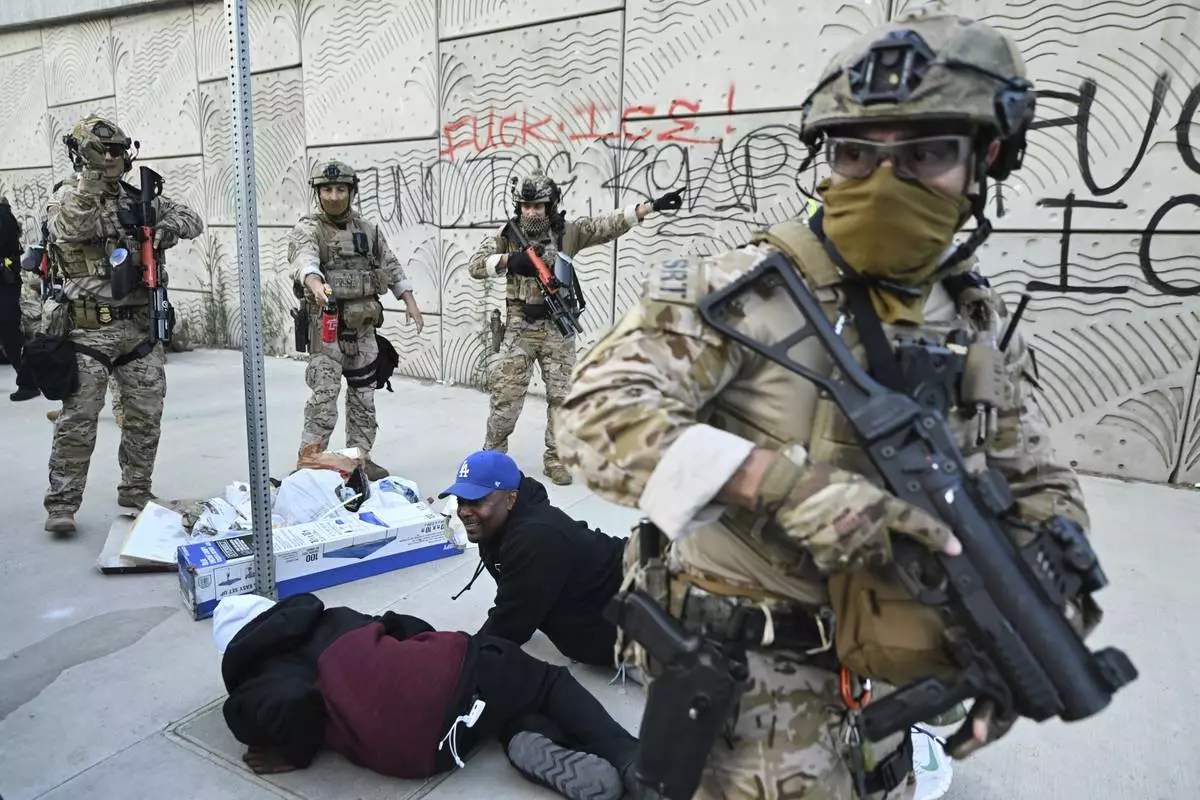
EDS NOTE: OBSCENITY - Agents from US Customs and Border Protection surround demonstrators during protests on Thursday, June 12, 2025, in Los Angeles (AP Photo/Wally Skalij)
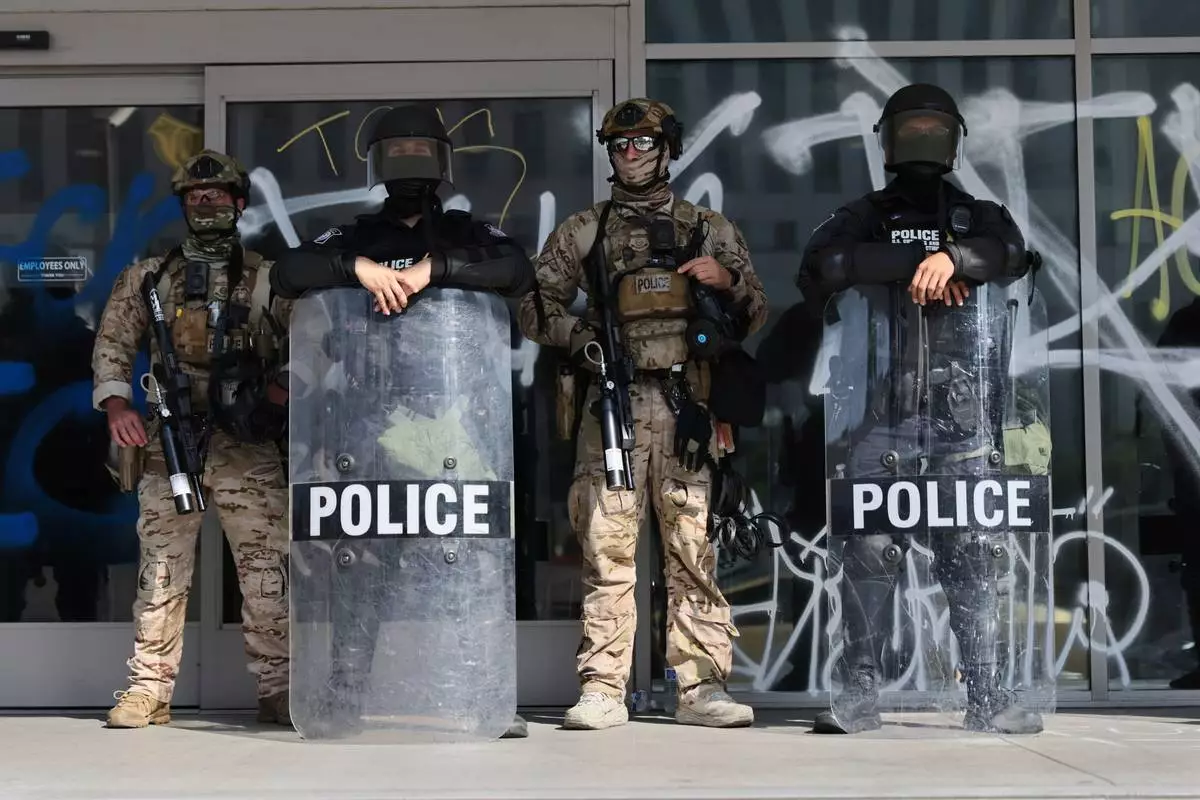
US Customs and Border Protection officers guard an entrance of the Federal Building in Los Angeles while protesters rally during a demonstration in response to a series of US Immigration and Customs Enforcement (ICE) raids throughout the country, on Tuesday, June 10th, 2025. (Gabrielle Lurie/San Francisco Chronicle via AP)
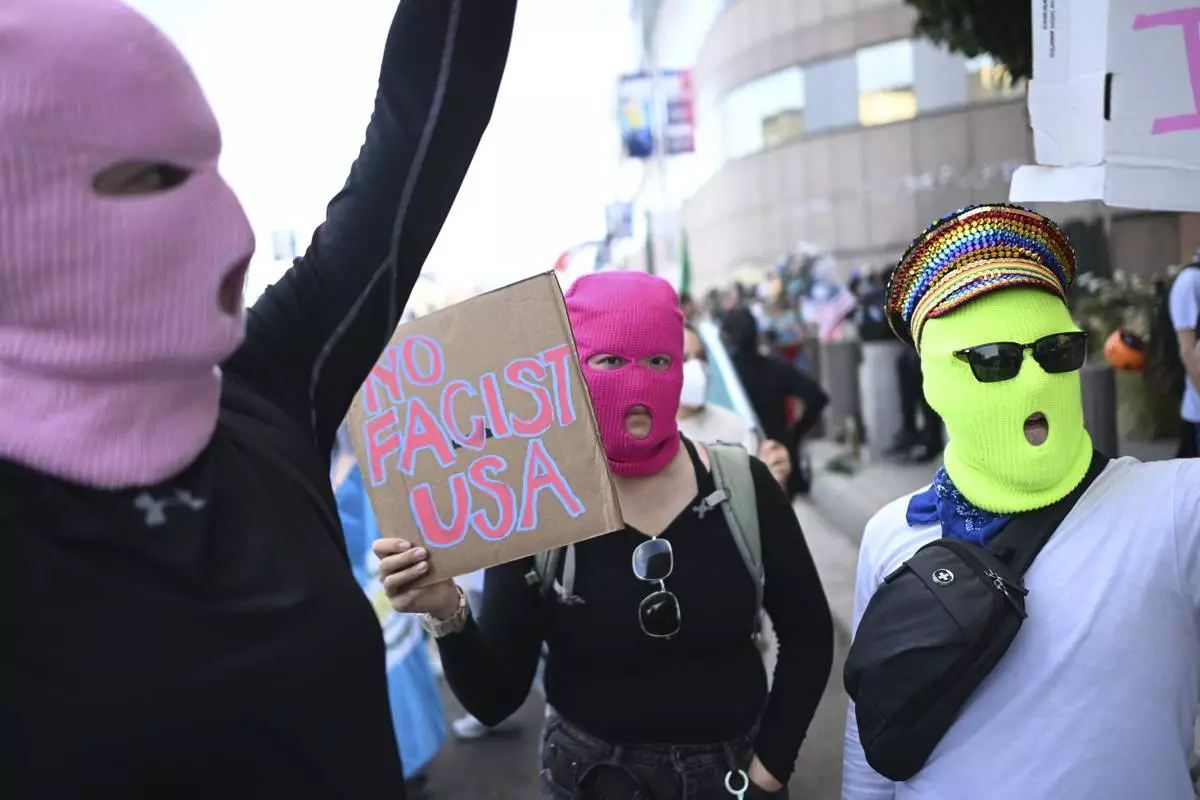
Demonstrators wearing masks hold signs outside the Federal Building during a protest on Friday, June 13, 2025, in Los Angeles. (AP Photo/Wally Skalij)
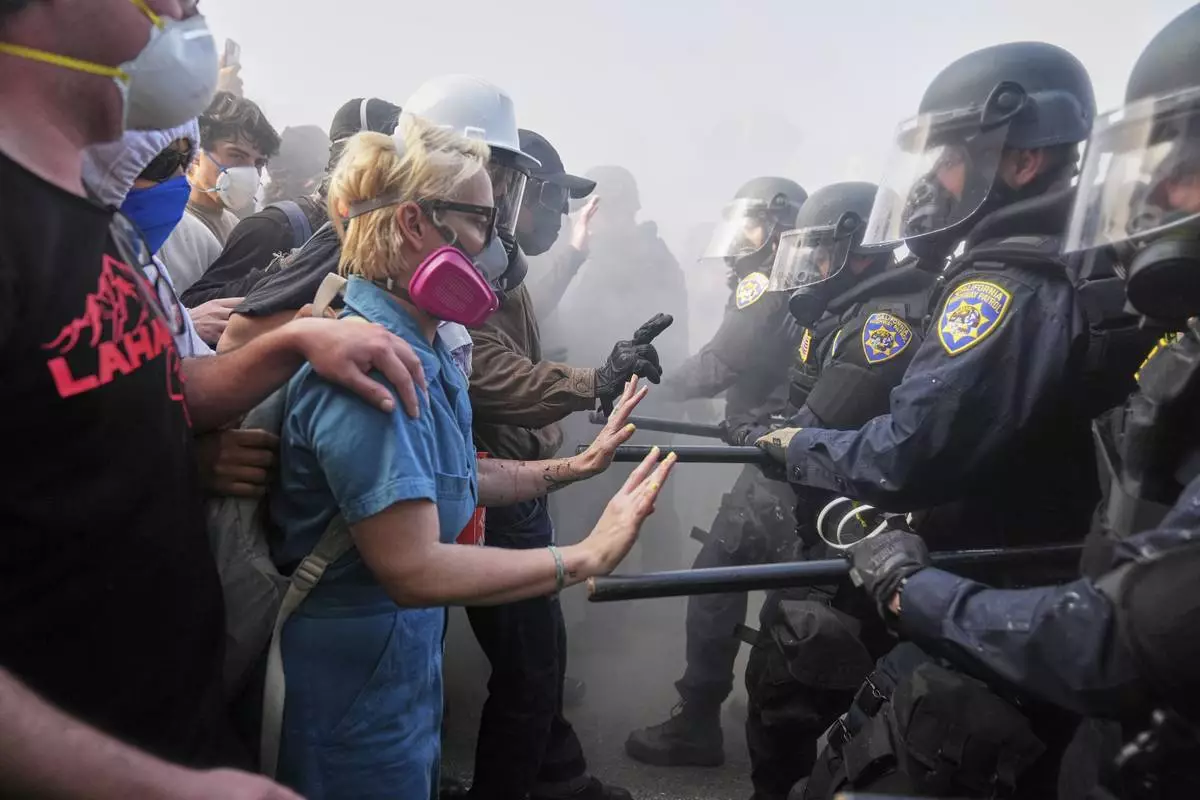
FILE - Protesters confront police on the 101 Freeway near the Metropolitan Detention Center in downtown Los Angeles, Sunday, June 8, 2025, following last night's immigration raid protest. (AP Photo/Jae C. Hong, File)