NEW YORK (AP) — With his calm and cool demeanor, fashion disruptor and multi-hyphenate Virgil Abloh artfully challenged the fashion industry's traditions to leave his mark as a Black creative, despite his short-lived career.
In the years since his 2021 death at just 41, his vision and image still linger. Pulitzer Prize-winning writer Robin Givhan sheds new light on how Abloh ascended the ranks of one of the top luxury fashion houses and captivated the masses with her latest book, “Make It Ours: Crashing the Gates of Culture with Virgil Abloh.”
In the book out Tuesday, Givhan documents Abloh’s early life growing up as the son of Ghanaian immigrants in Rockford, Illinois, his days as graduate student studying architecture and his working relationship and friendship with Kanye West.
Before taking the helm of Louis Vuitton as the house’s first Black menswear creative director, Abloh threw himself into his creative pursuits including fine art, architecture, DJing and design. Abloh remixed his interests with his marketing genius and channeled it into fashion with streetwear labels like Been Trill and Pyrex Vision.
These endeavors were the launchpad for his luxury streetwear label Off-White, known for its white diagonal lines, quotation marks, red zip ties and clean typeface. Off-White led to Abloh's collaboration with Ikea, where he designed a rug with “KEEP OFF” in all-white letters and also with Nike where he deconstructed and reenvisioned 10 of Nike's famous shoe silhouettes.
Throughout his ventures, Abloh built a following of sneakerheads and so-called hypebeasts who liked his posts, bought into his brands and showed up in droves outside his fashion shows. Social media made Abloh accessible to his fans and he tapped into that.
Off-White had built a loyal following and some critics. Givhan, a Washington Post senior critic-at-large, openly admits that she was among the latter early on. Givhan said she was fascinated that Abloh’s popularity was more than his fashion.
“For me, there was something of a disconnect really,” she said. “That here was this person who had clearly had an enormous impact within the fashion industry and outside of the fashion industry, and yet it wasn’t really about the clothing. It was about something else.”
For her latest project, Givhan spoke with The Associated Press on how she approached each of Abloh’s creative undertakings and his legacy during a period of heightened racial tension in America. This interview has been edited for brevity and clarity.
GIVHAN: Fashion doesn’t just sort of happen in a vacuum. People are the product of their parents, their family, their environment, their timing, their interests, all of those things.
I always like to see, what is swirling around people when they make certain decisions? What is sort of in the water that you’re absorbing, that you are not even conscious that you’re absorbing it.
GIVHAN: The skater culture — in part because it was such a sort of subculture that also had a very specific aesthetic and was such a deep part of the whole world of streetwear — and then the DJing part intrigued me because so much of his work as a designer seems to reflect a kind of DJ ethos, where you’re not creating the melody and you’re not creating the lyrics. You’re taking these things that already exist and you're remixing them and you're responding to the crowd and the crowd is informing you. And so much of that, to me, could also be used to describe the way that he thought about fashion and the way that he designed.
GIVHAN: He certainly raised the question within the industry of what is the role of the creative director? How much more expansive is that role? ... And I do think he has really forced the question of how are we defining luxury? Like what is a luxury brand? And is it something that is meant to sort of have this lasting impact? Is it supposed to be this beautifully crafted item? Or is it really just a way of thinking about value and beauty and desirability? And if it’s those things, then really it becomes something that is quite sort of quite personal and can be quite based on the community in which you live.
GIVHAN: He really used social media as a way of connecting with people as opposed to just sort of using it as kind of a one-way broadcast. He was telling his side of things, but he was also listening to other people. He was listening to that feedback.
That’s also what made him this larger-than-life person for a lot of people, because not only was he this creative person who was in conversation with fans and contemporaries, but he was this creative person inside. He was this creative person at the very top of the fashion industry. For a lot of people, the idea that you could ostensibly have a conversation with someone at that level, and they would seemingly pull back the curtain and be transparent about things — that was really quite powerful.
GIVHAN: Their individual ambitions, aesthetic ideas and curiosity kind of propelled them forward in separate directions. I did reach out to Kanye after a lot of the reporting because he obviously is this thread that is woven throughout the book. And, ultimately, he elected not to engage.
But I was lucky enough to get access to an unpublished conversation that Virgil had had around, I think it was 2016-ish, where he talked at length about his working relationship with Kanye and sort of the differences between them and the similarities and the ways in which ... Kanye inspired him and sort of the jet fuel that he got from that relationship.
More than anything, because Virgil’s personality was in so many ways kind of the opposite of Kanye’s, that for every door that Kanye was kind of pounding on, Virgil was able to politely sort of walk through.
GIVHAN: For one, he had such an enormous output of work. I think there’s a lot of it to consider. Also, sadly, because his career was cut so short that there is this sense of someone who sort of stops speaking mid-sentence.
I’ve been thinking about how Virgil might have responded, how his creativity might have responded to this moment because so much shifted post-George Floyd that like this is another inflection point and it makes me wonder, “OK, how would he have responded today?” And with the person who said, “I’m not a rebel and I’m not a flame thrower,” would he have picked up some matches? I don’t know.
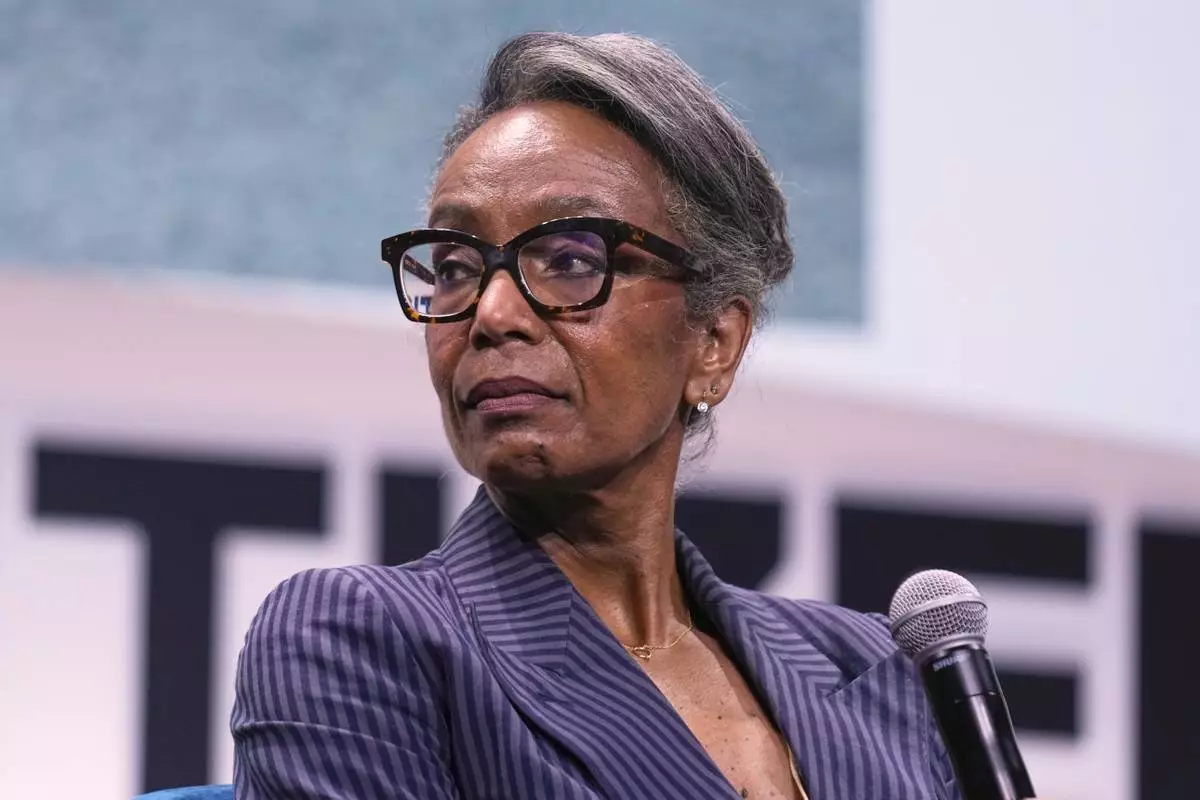
FILE - Robin Givhan participates in the Global Citizen NOW conference in New York on April 28, 2023. (AP Photo/Seth Wenig, File)