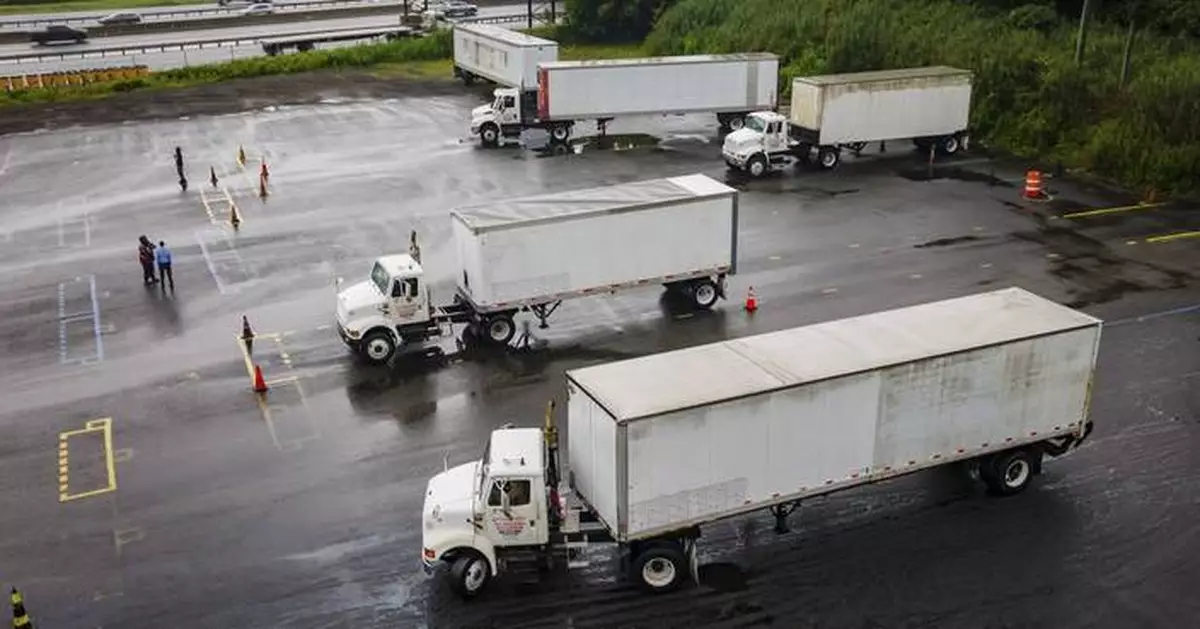
LINDEN, New Jersey (AP) — At a trucking school in New Jersey, students are maneuvering 18-wheelers around traffic cones. Other future drivers look under hoods to perform safety checks, narrating as they examine steering hoses for cracks and leaks.
An instructor glides between speaking Spanish and English as he teaches Manuel Castillo, a native Spanish speaker, how to inspect a school bus. They’re using a printed script of English phrases to practice what Castillo would say during a roadside inspection.
Click to Gallery
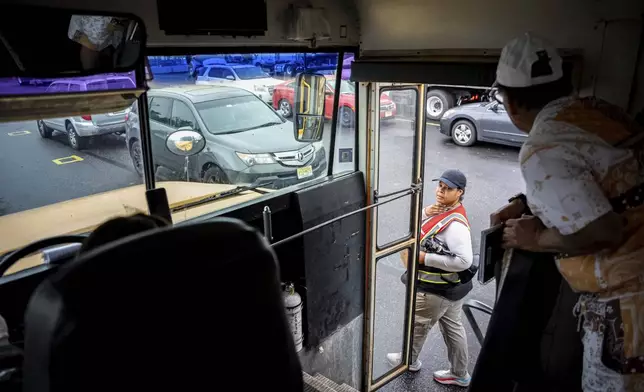
An instructor checks in on students practicing in a school bus at the Driving Academy on Tuesday, June 10, 2025 in Linden, N.J., where students prepare to obtain a Commercial Driver’s License (CDL) with multilingual instructors. (AP Photo/Angelina Katsanis)
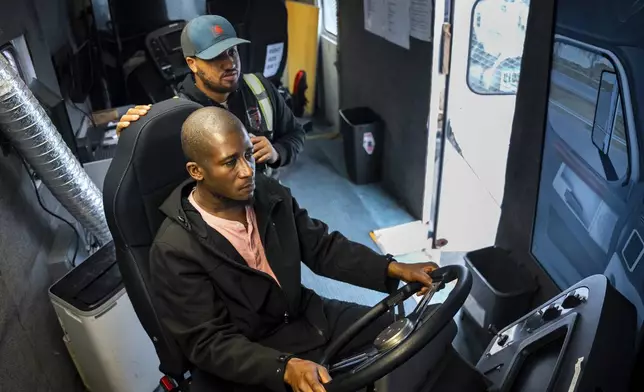
Trucking student Mohammed Kamal, left, overseen by instructor Tom Panton, practices driving a tractor-trailer truck in a simulation at the Driving Academy on Tuesday, June 10, 2025 in Linden, N.J. (AP Photo/Angelina Katsanis)

Mohammed Kamal practices handling a tractor-trailer truck in a driving simulator at the Driving Academy on Tuesday, June 10, 2025 in Linden, N.J., where students prepare to obtain a Commercial Driver’s License (CDL) with multilingual instructors. (AP Photo/Angelina Katsanis)

Mohammed Kamal practices handling a tractor-trailer truck in a driving simulator at the Driving Academy on Tuesday, June 10, 2025 in Linden, N.J. (AP Photo/Angelina Katsanis)
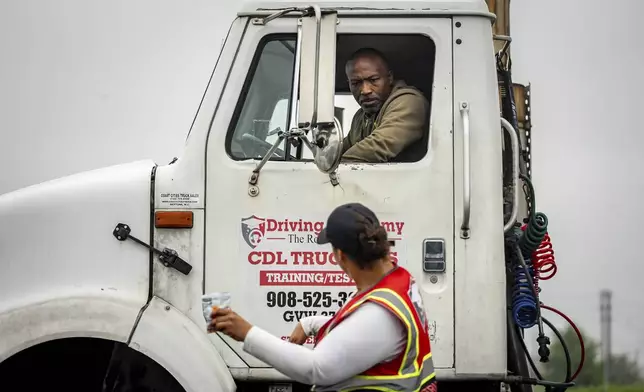
An instructor provides reverse parking advice to a student at the Driving Academy on Tuesday, June 10, 2025 in Linden, N.J., where students prepare to obtain a Commercial Driver’s License (CDL) with multilingual instructors.(AP Photo/Angelina Katsanis)
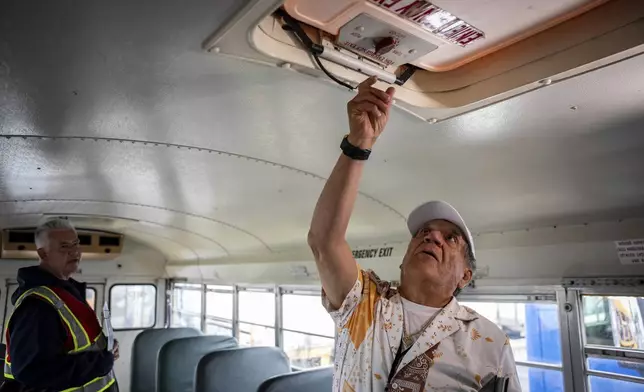
Manuel Castillo, right, one of the Spanish-speaking truck driving students, runs through a safety check with guidance from instructor Paul Cuartas on a training school bus at the Driving Academy on Tuesday, June 10, 2025 in Linden, N.J. (AP Photo/Angelina Katsanis)
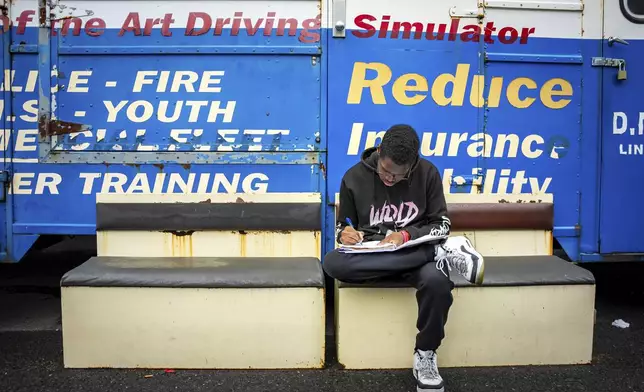
Solane Ellis studies at the Driving Academy on Tuesday, June 10, 2025 in Linden, N.J., where students prepare to obtain a Commercial Driver’s License (CDL) with multilingual instructors. (AP Photo/Angelina Katsanis)
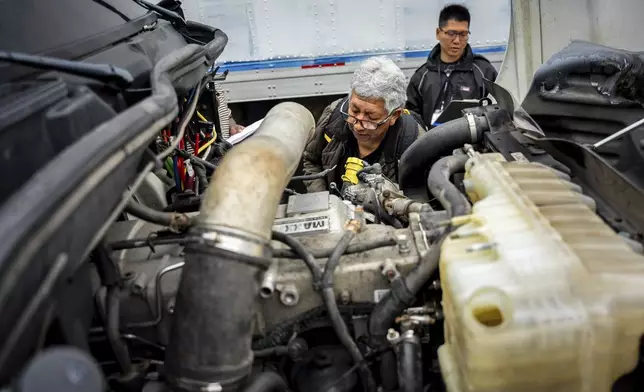
A student studies a truck engine at the Driving Academy on Tuesday, June 10, 2025 in Linden, N.J., where students prepare to obtain a Commercial Driver’s License (CDL) with multilingual instructors. (AP Photo/Angelina Katsanis)
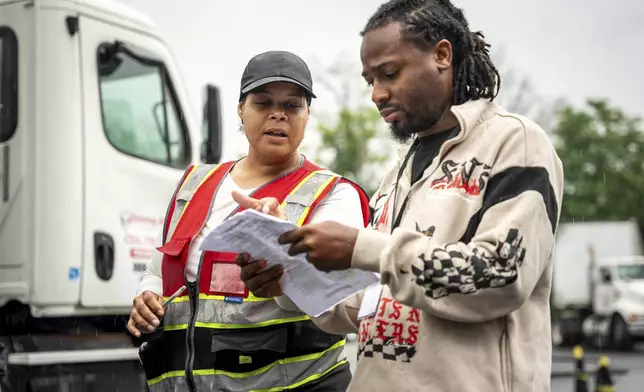
An instructor helps a student study at the Driving Academy on Tuesday, June 10, 2025 in Linden, N.J. where students prepare to obtain a Commercial Driver’s License (CDL) with multilingual instructors. (AP Photo/Angelina Katsanis)
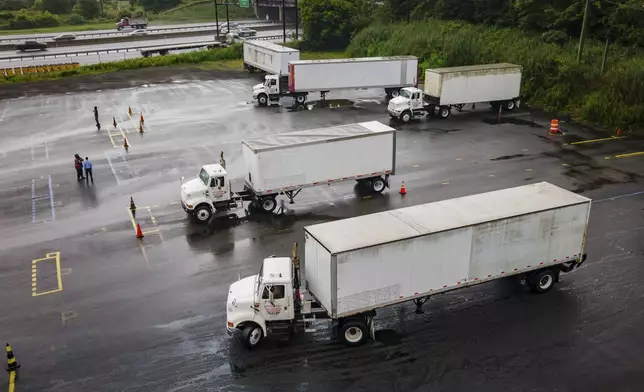
Trucking students practice reverse parking in training trucks at the Driving Academy on Thursday, Sept. 14, 2017 in Linden, N.J., where students prepare to obtain a Commercial Driver’s License (CDL) with multilingual instructors. (AP Photo/Angelina Katsanis)
Brushing up on English has taken on new urgency for future and current truck drivers after President Donald Trump issued an executive order saying truckers who don’t read and speak the language proficiently would be considered unfit for service.
“A driver who can’t understand English will not drive a commercial vehicle in this country. Period," Transportation Secretary Sean Duffy said last month while announcing enforcement guidelines that take effect on Wednesday.
Updated U.S. Department of Transportation procedures call for enhanced inspections to determine if commercial motor vehicle operators can reply to questions and directions in English, as well as understand highway traffic signs and electronic message boards.
Truckers who learned English as a second language are concerned they may lose their jobs if they make a mistake or speak with a heavy accent while under questioning. Some have worked to improve their English fluency by taking classes, reciting scripts and watching instructional videos.
“If it’s not the language that you prefer to use daily, you may get a little nervous and you may feel, ‘What if I say the wrong thing?’” said Jerry Maldonado, chairman of the board of the Laredo Motor Carriers Association, a trade association in Laredo, Texas, that represents approximately 200 trucking companies. “It’s going to be, at the end of the day, the interpretation of the officer, so that makes people nervous.”
The guidance applies to truck and bus drivers engaged in interstate commerce. It aims to improve road safety following incidents in which truck drivers' inability to read signs or speak English may have contributed to traffic deaths, the Transportation Department said.
Requiring truck drivers to speak and read English isn’t new, but the penalty for not meeting the proficiency standard is becoming more severe.
To get a commercial driver’s license, applicants must pass a written test and be able to name the parts of a bus or truck in English as they check tire inflation, tread depth, lug nuts and coolants.
The revised policy reverses guidance issued nine years ago, near the end of then-President Barack Obama’s final term, according to the Federal Motor Carrier Safety Administration. In 2016, the agency said drivers whose English skills were found lacking could receive a citation but not be prohibited from working. Before that, the penalty was getting placed on “out-of-service status.”
“We have bridges that get hit because drivers don’t understand the signs on the bridges for things like height clearance,” Owner-Operator Independent Drivers Association President Todd Spencer said.
In Laredo, a border city where many residents speak a mix of English and Spanish, Maldonado’s association is offering free English classes on weekends to help truckers feel more confident in their ability to communicate.
“Everybody knows what a stop sign looks like,” Maldonado said. “But if there’s construction or if there is an accident five miles down the road, and they have to put up a sign — ‘Caution, must exit now, road closed ahead,’ and you are not able to read that or understand that, that could potentially be a safety issue.”
At Driving Academy in Linden, New Jersey, multilingual instructors teach students how to inspect vehicle parts in their first language and then provide explanations in English, according to founder Jonathan Marques. The school created scripts so students could practice what to say if they're stopped, he said.
Students are advised to watch training videos as homework, while licensed truckers can listen to English language apps instead of music when they're on the road, Marques suggested.
Instructor Paul Cuartas helps students prepare but worries that inspectors will now expect truckers and bus drivers to have perfect English. “I’m concerned because now for all the Spanish people it’s more difficult,” he said.
Castillo, who moved to the U.S. from Ecuador in 1993, said he has no problem understanding English but has been watching videos to study industry terms. “Some words I don’t understand, but I try to learn more English,” he said.
Asked whether he supports the president's executive order, Castillo said he voted for Trump but doesn’t agree with the president's push to deport some immigrants who haven’t committed crimes.
“He makes a lot of problems, especially for Hispanic people,” Castillo said.
GTR Trucking School in Detroit also has offered students ESL classes. Co-owner Al Myftiu drove a truck after moving to the U.S. from Albania in 1993. He said he wants to create a small book of phrases that truckers need to learn.
For students with a thick accent, “I tell them, ‘Slow down, speak slowly and people can understand you, and if you don’t understand something, you can ask,’" Myftiu said.
Roadside inspections can be initiated over issues such as a faulty brake light or on a routine basis, and often take place at weigh stations.
The guidance directs inspectors who suspect a driver doesn’t understand what they're saying to administer an English proficiency test, which includes both an interview and a highway traffic sign recognition component.
In the past, some drivers used translation apps to communicate with federal inspectors. The updated policy bars the use of interpreters, smartphones, cue cards or other aids during interviews.
Several truck drivers taking a break at Flying J Travel Center in New Jersey said they support Trump's order, adding that drivers who heavily rely on translation programs probably wouldn’t be able to read important signs.
“We try to ask them questions about the business just to strike a conversation, ... and they’re not able to communicate with us at all,” Kassem Elkhatib, one of the drivers at Flying J, said.
It’s unclear how safety inspectors will decide whether a driver knows enough English because that portion of the instructions was redacted from the guidance distributed by Transportation Department.
The department advised motor carriers that drivers should be able to answer questions about shipping documents, the origin and destination of trips, and how long they've been on duty.
A trucker placed out of service and the company they work for are responsible for ensuring a language violation is corrected before the driver hits the highway again, the Transportation Department said.
Truck drivers who practice the Sikh religion already face discrimination in hiring and at loading docks, according to Mannirmal Kaur, federal policy manager for Sikh Coalition, an advocacy group. Now they are worried about inspectors making subjective, non-standardized determinations about which of them are proficient in English, she said.
“A truck driver who does speak English sufficiently to comply with federal standards but maybe they speak with an accent, or maybe they use a different vocabulary that the inspector isn’t used to hearing: Is that person then going to be subject to an English language violation?” Kaur asked. “And under the new policy, are they then going to be designated out-of-service, which could result in unemployment?”
Video journalist Mingson Lau contributed from Carneys Point Township, New Jersey.
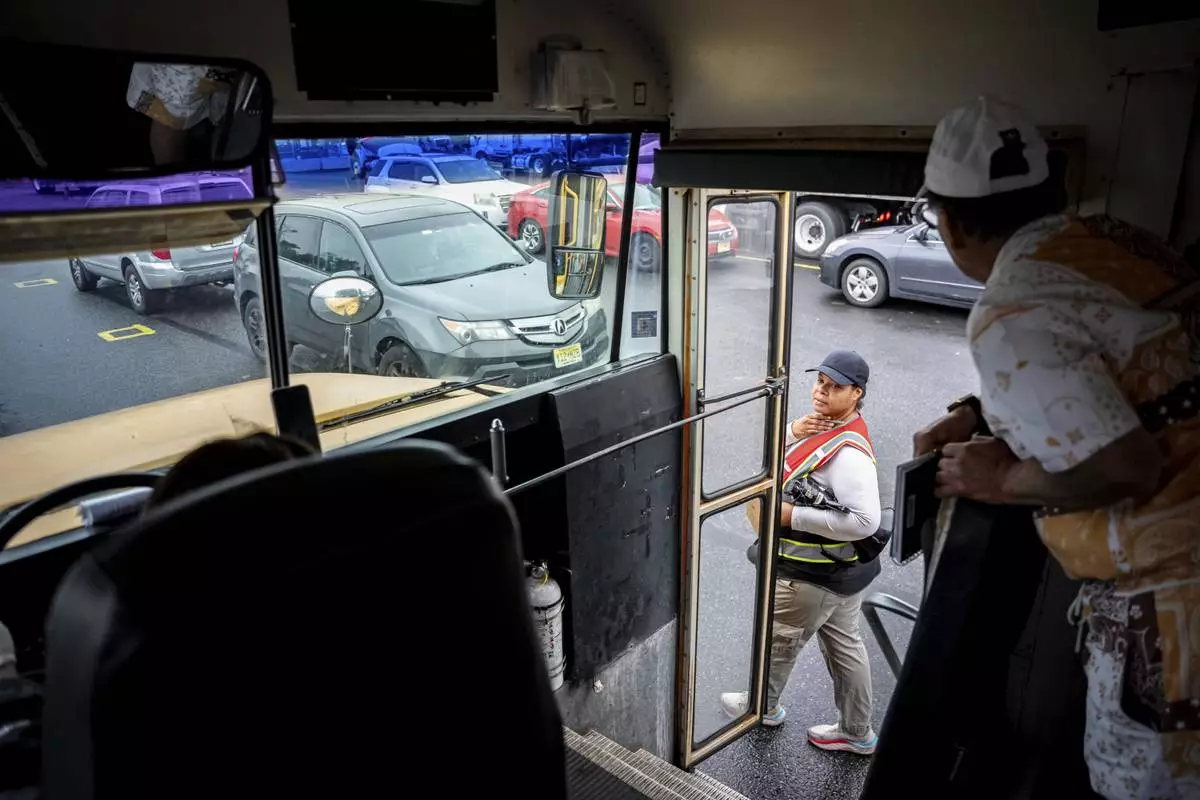
An instructor checks in on students practicing in a school bus at the Driving Academy on Tuesday, June 10, 2025 in Linden, N.J., where students prepare to obtain a Commercial Driver’s License (CDL) with multilingual instructors. (AP Photo/Angelina Katsanis)
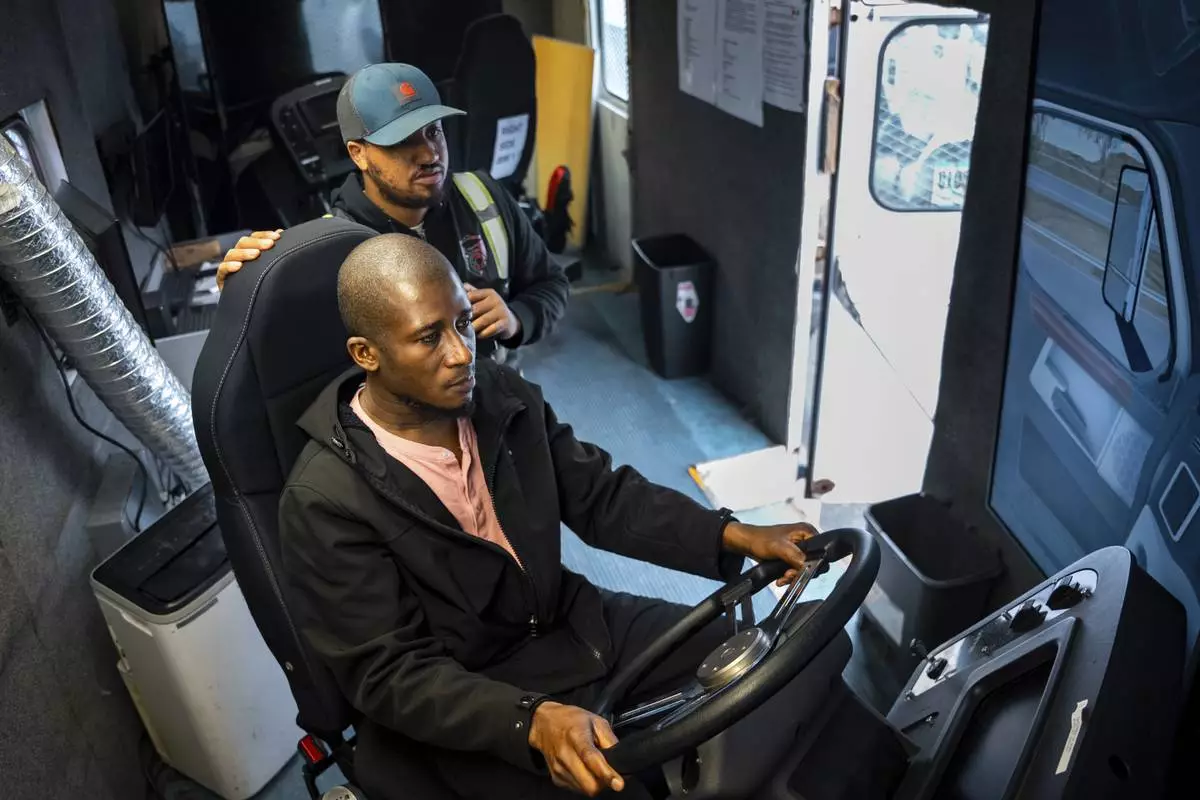
Trucking student Mohammed Kamal, left, overseen by instructor Tom Panton, practices driving a tractor-trailer truck in a simulation at the Driving Academy on Tuesday, June 10, 2025 in Linden, N.J. (AP Photo/Angelina Katsanis)

Mohammed Kamal practices handling a tractor-trailer truck in a driving simulator at the Driving Academy on Tuesday, June 10, 2025 in Linden, N.J., where students prepare to obtain a Commercial Driver’s License (CDL) with multilingual instructors. (AP Photo/Angelina Katsanis)
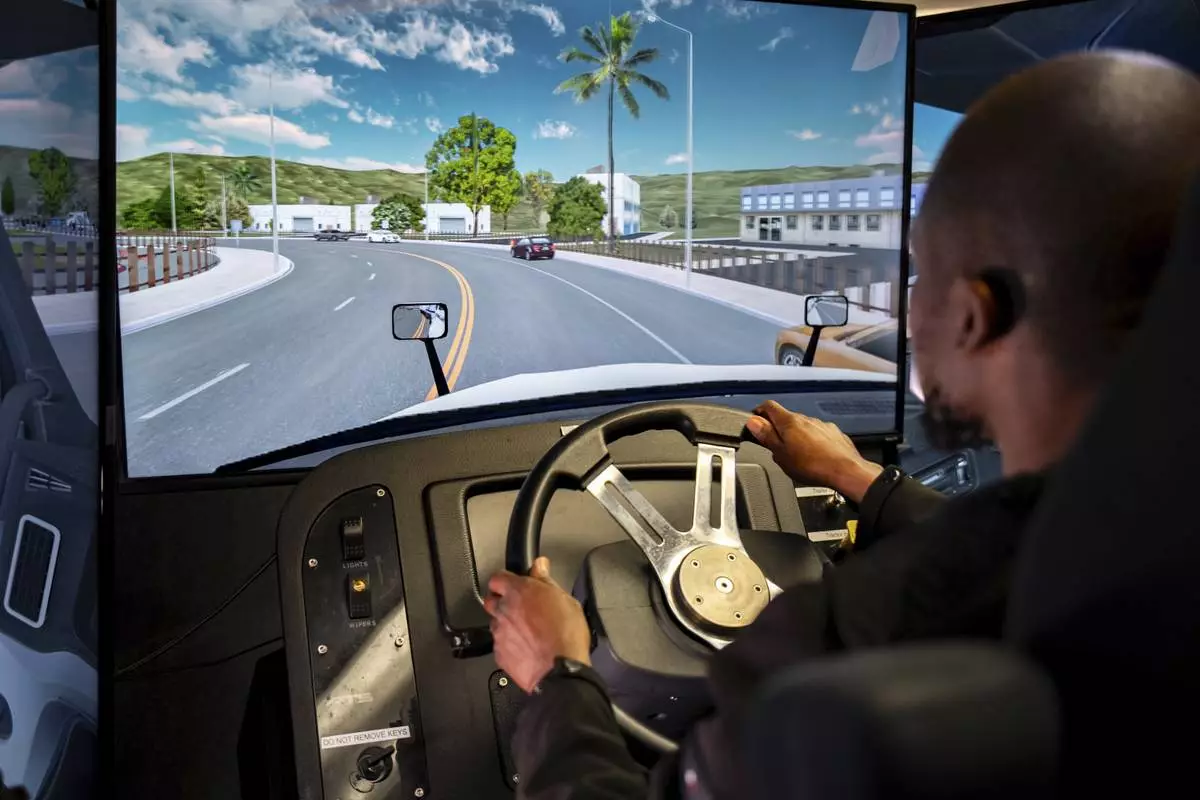
Mohammed Kamal practices handling a tractor-trailer truck in a driving simulator at the Driving Academy on Tuesday, June 10, 2025 in Linden, N.J. (AP Photo/Angelina Katsanis)
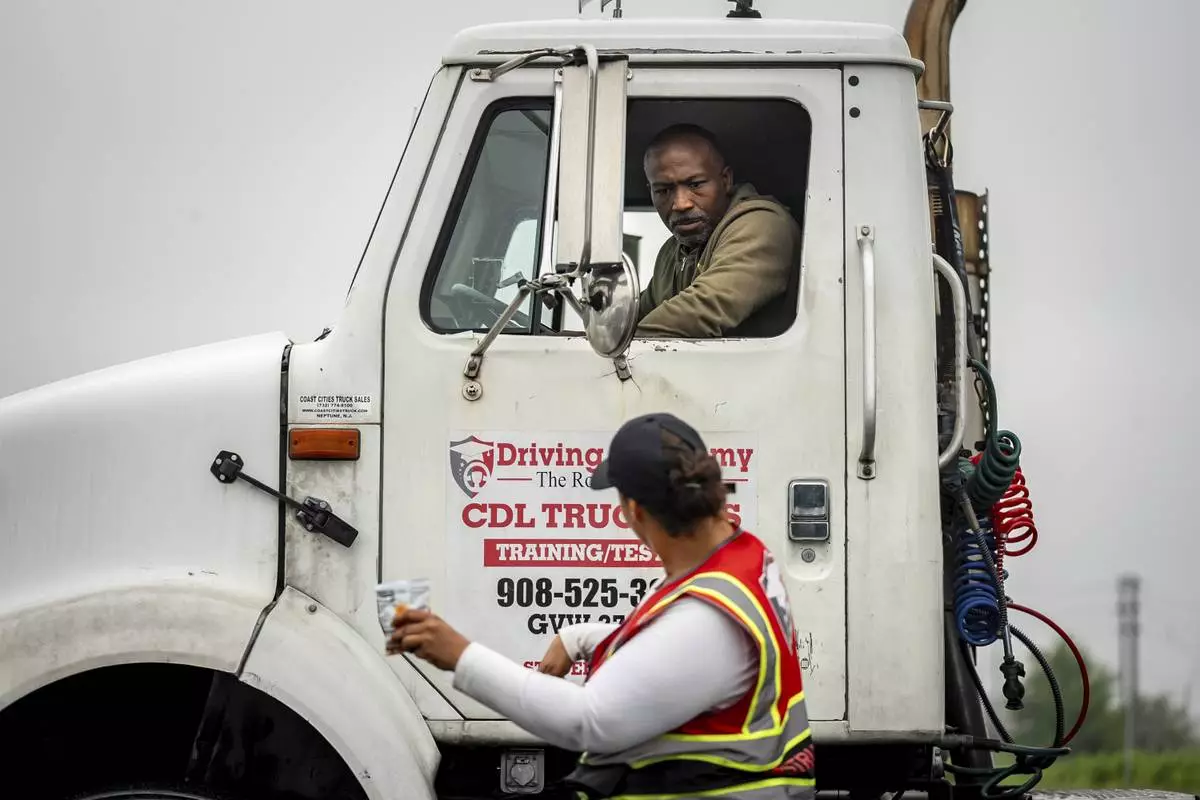
An instructor provides reverse parking advice to a student at the Driving Academy on Tuesday, June 10, 2025 in Linden, N.J., where students prepare to obtain a Commercial Driver’s License (CDL) with multilingual instructors.(AP Photo/Angelina Katsanis)
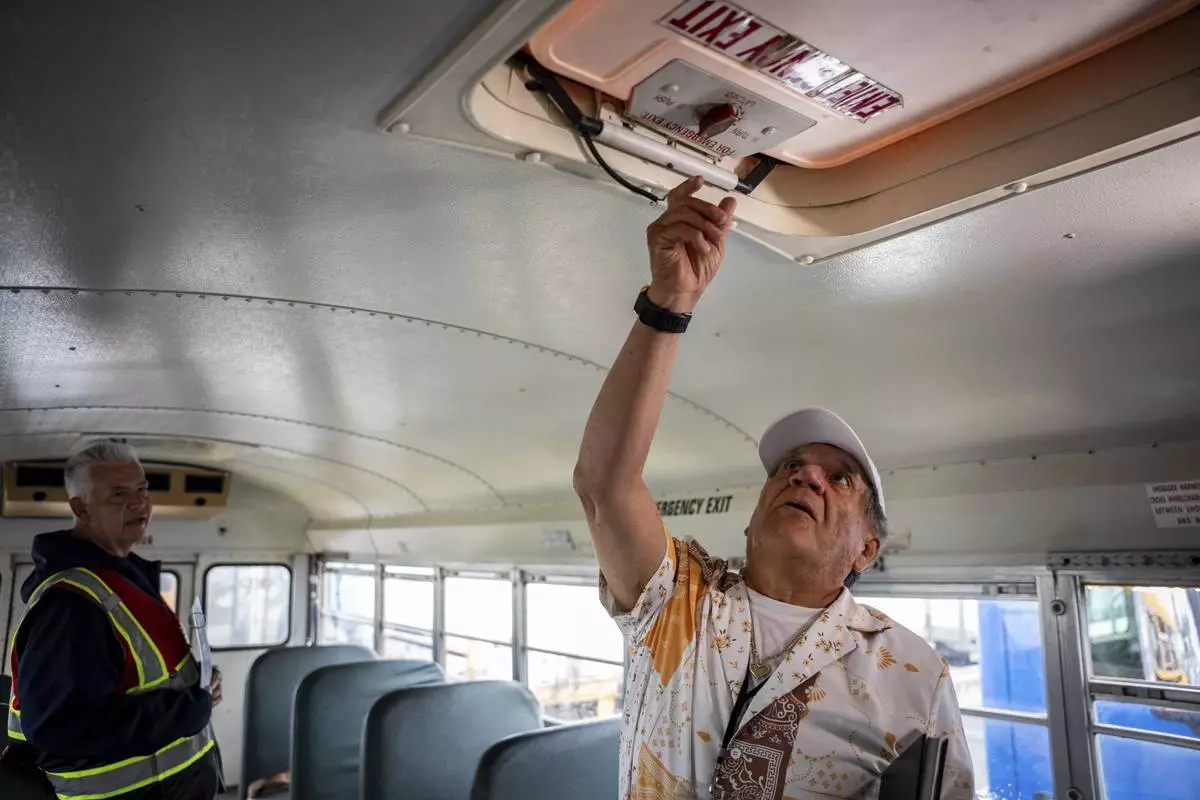
Manuel Castillo, right, one of the Spanish-speaking truck driving students, runs through a safety check with guidance from instructor Paul Cuartas on a training school bus at the Driving Academy on Tuesday, June 10, 2025 in Linden, N.J. (AP Photo/Angelina Katsanis)
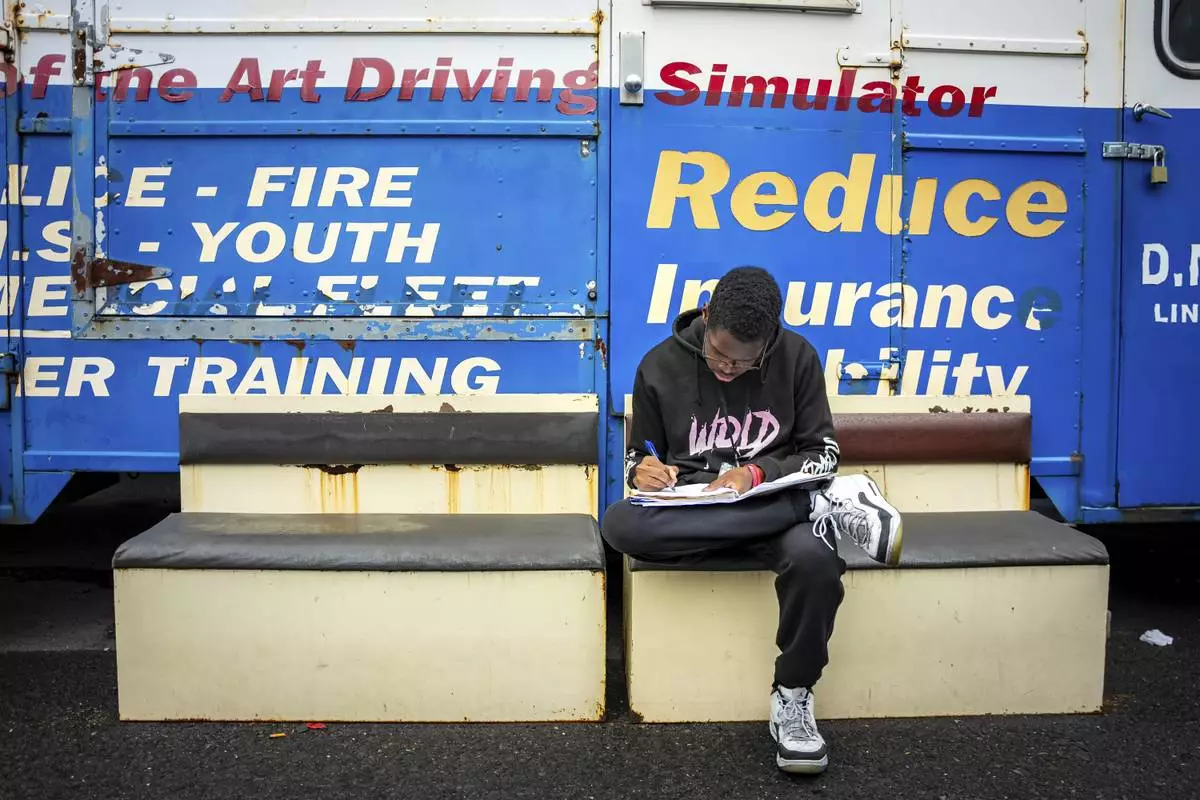
Solane Ellis studies at the Driving Academy on Tuesday, June 10, 2025 in Linden, N.J., where students prepare to obtain a Commercial Driver’s License (CDL) with multilingual instructors. (AP Photo/Angelina Katsanis)
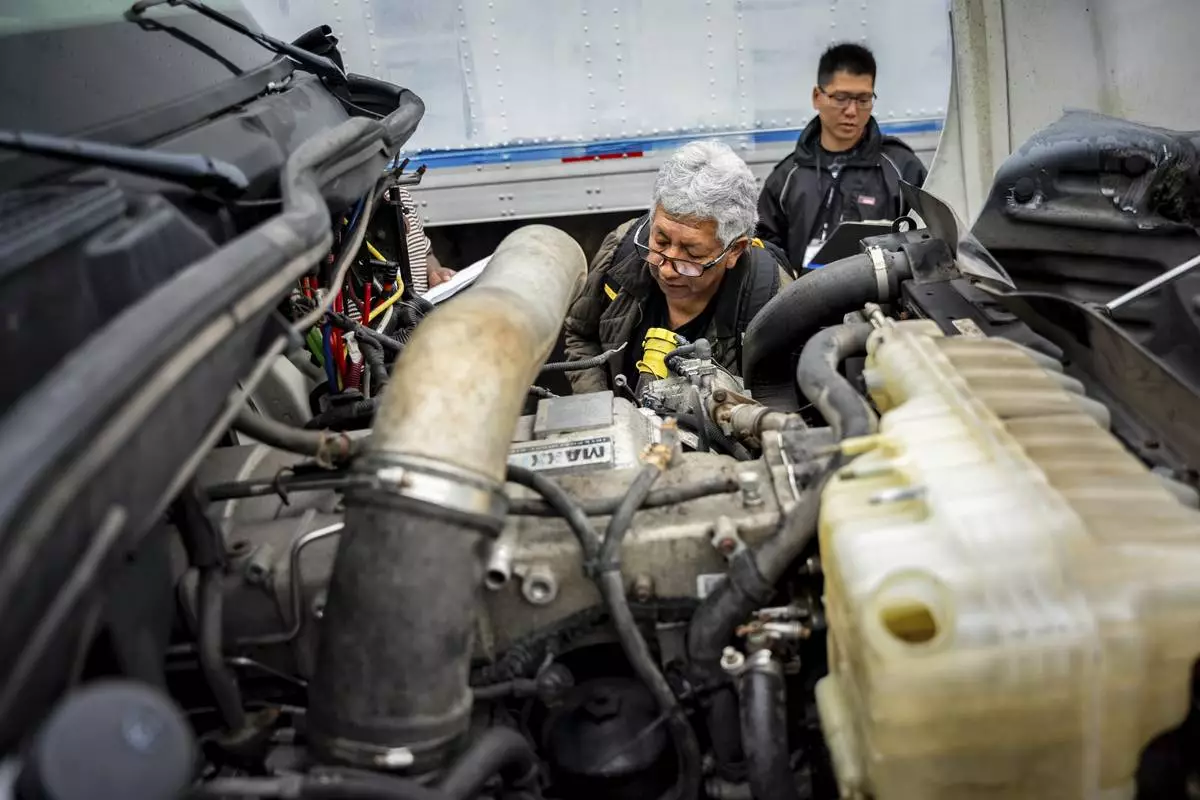
A student studies a truck engine at the Driving Academy on Tuesday, June 10, 2025 in Linden, N.J., where students prepare to obtain a Commercial Driver’s License (CDL) with multilingual instructors. (AP Photo/Angelina Katsanis)
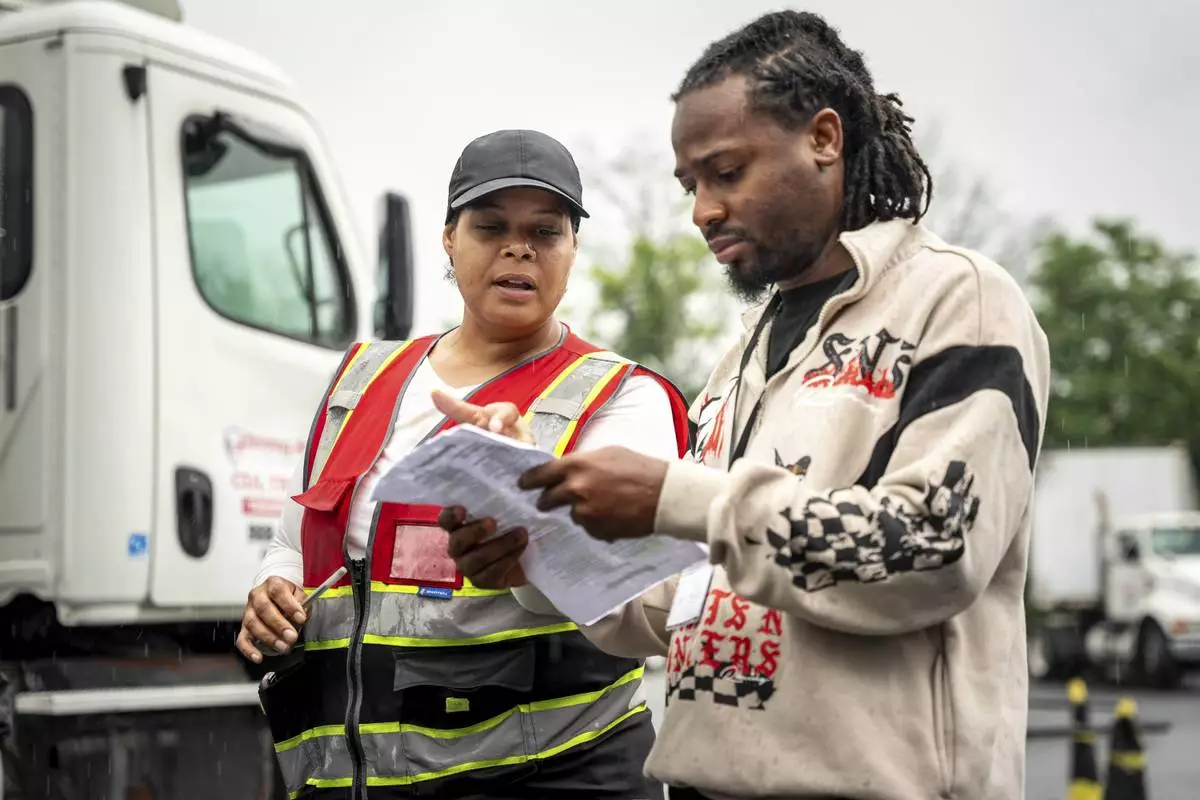
An instructor helps a student study at the Driving Academy on Tuesday, June 10, 2025 in Linden, N.J. where students prepare to obtain a Commercial Driver’s License (CDL) with multilingual instructors. (AP Photo/Angelina Katsanis)
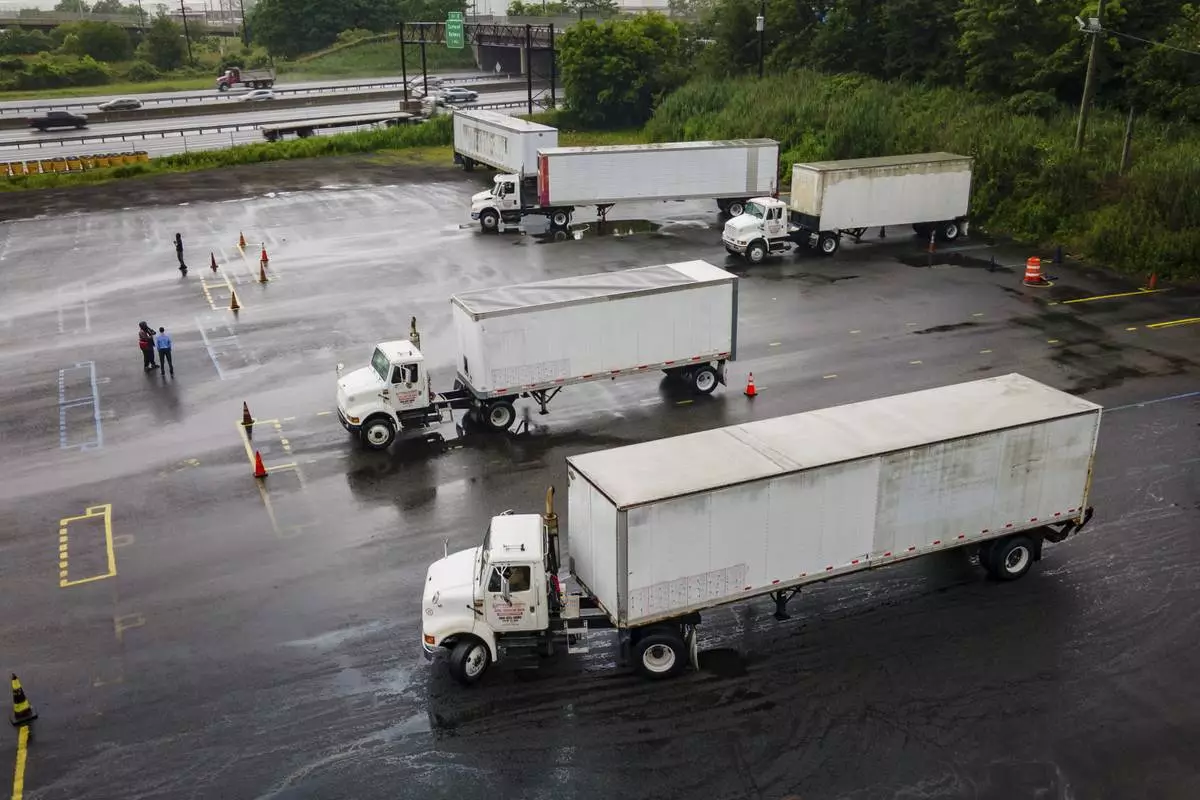
Trucking students practice reverse parking in training trucks at the Driving Academy on Thursday, Sept. 14, 2017 in Linden, N.J., where students prepare to obtain a Commercial Driver’s License (CDL) with multilingual instructors. (AP Photo/Angelina Katsanis)