Skip to Content Facebook Feature Image

Team physicians in college sports wary of greater liability risk with athletes now making big money

Sport

Team physicians in college sports wary of greater liability risk with athletes now making big money
Sport

Sport

Team physicians in college sports wary of greater liability risk with athletes now making big money

2025-06-25 03:59 Last Updated At:04:11

The professionalization of college sports has prompted concern among team physicians that they will be exposed to a greater risk of being sued by athletes who claim a poor outcome from treatment caused them to lose future earnings.

Before July 2021, when college athletes were cleared to be compensated by third parties for the use of their name, image and likeness, such lawsuits would have been virtually unwinnable.

Four years later, and with schools set to share millions directly with their athletes, team physicians are wary. Some of the most high-profile college athletes are already signing multimillion-dollar deals and six-figure contracts are common.

Though no malpractice lawsuits seeking lost future earnings at the college level are known to have been filed, it's only a matter of time, said Dr. James Borchers, Big Ten chief medical officer and president and CEO of the U.S. Council for Athletes’ Health.

“The complexity for the clinician is going to be significant,” he said. “I do think there are people who are going to evaluate this and say, ‘I didn’t sign up for an 18-year-old making a million dollars and then saying the decision I make affected their ability to make money.’ I think you may see people say this isn’t for me.”

The case of former Philadelphia Eagles player Chris Maragos jolted the sports medicine field in 2023 when a jury ordered his surgeon and an orthopedics group affiliated with the team to pay him $43.5 million for lost future earnings and pain and suffering after he alleged improper care of a knee injury. The orthopedics group ended its two-decade association with the Eagles out of fear of future lawsuits.

At the college level, it still would be hard for an athlete to contend a team doctor's errant care cost them an opportunity to make money in professional sports because there are no guarantees to play at the next level. However, a college athlete who didn't have an optimal recovery could argue treatment reduced their ability to make NIL money or to transfer to a higher-level school where they could make more money.

“You had an ACL tear, I did surgery and you never quite made it back — back in my day, you just had bad luck,” said Borchers, who played football at Ohio State from 1989-93. “You’re making a million dollars and that happens, you’re probably having a different discussion.”

Borchers offered a hypothetical situation to illustrate his concerns about the pressures faced by team doctors. A receiver is treated for a hamstring injury, returns to play and reinjures the hamstring. The receiver says the injury never felt fully healed and his agent takes him to another doctor who has a different opinion on how the injury should have been treated.

Borchers said the receiver would have been better off to sit out longer and miss a few more games.

“But there wasn’t money tied to that,” he said. "Now you could say you hurt my ability to go out and perform, so I’m not going to get as much money or (it) has cost me the ability to put more tape out there so I could have transferred to a better situation and made more money. Those are the types of issues we’re hearing about that used to not exist in college sports.”

Typically in college sports, team physicians are employed by a university-affiliated medical center or local medical group. Athletic trainers are employed by the athletic department.

Team physicians must carry liability insurance either individually or through the medical center or group. The most common limits for a malpractice insurance policy are $1 million per incident and $3 million total in a year, said Mike Matray, editor of Medical Liability Monitor.

“You can see how an athlete’s economic damages, should a medical error end his/her career, would easily exceed those limits,” Matray wrote in an email to The Associated Press.

MLM has followed the medical liability insurance industry since 1975, and though the publication does not track data specific to sports medicine practitioners who perform surgeries, Matray estimated rates for that specialty to be more than $100,000 per year in some states.

Dr. Jon Divine, head team physician at Cincinnati, said Big 12 team doctors are discussing among themselves and university general counsels whether they should increase their liability insurance limits, perhaps to $2 million or $6 million or more.

Divine said he and other team doctors also are taking extra steps in evaluating injuries in the new era of college sports.

“I’ve probably ordered more MRIs than I ever have in 25 years in the last two years,” he said. “It's to make sure we’re getting it right for the (coaching) staff, for the kids, for the kid's family. There’s that much more riding on it.”

A former Penn State football team doctor, Scott Lynch, alleged in 2019 that coach James Franklin attempted to interfere with medical decisions.

A Penn State internal review found evidence of “friction” between Lynch and Franklin but could not determine whether Franklin violated NCAA bylaws or Big Ten standards by interfering with medical decisions. Lynch was awarded $5.25 for wrongful termination by the hospital that had employed him.

Dr. David McAllister, head team physician at UCLA who has been practicing for 27 years, said the relationship between team doctor and athlete has gone from one built on trust to now being transactional and at times adversarial.

When athletes spent four or five years at the same school, as once was the norm, friendships were formed and the team doctor continued to provide care for the some athletes long after their playing days. Now, McAllister said, many football and basketball players are taking advice from agents and business managers whose priority is the athlete’s earning power, and that puts pressure on team physicians.

“There are seasoned, experienced people that do what I do who either recently got out of it or are really considering it because they don’t want to be exposed to the liability,” McAllister said, “and they don’t find it that much fun anymore.”

Get poll alerts and updates on the AP Top 25 throughout the season. Sign up here. AP college football: https://apnews.com/hub/ap-top-25-college-football-poll and https://apnews.com/hub/college-football
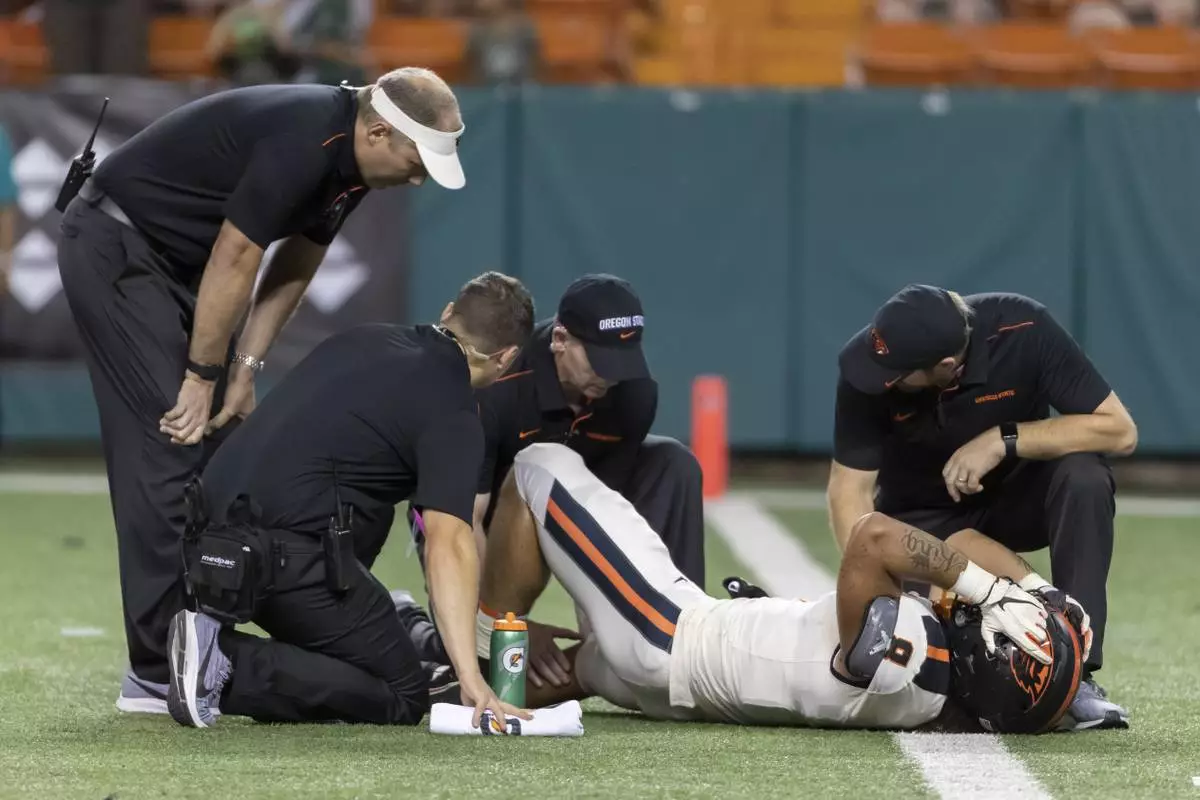
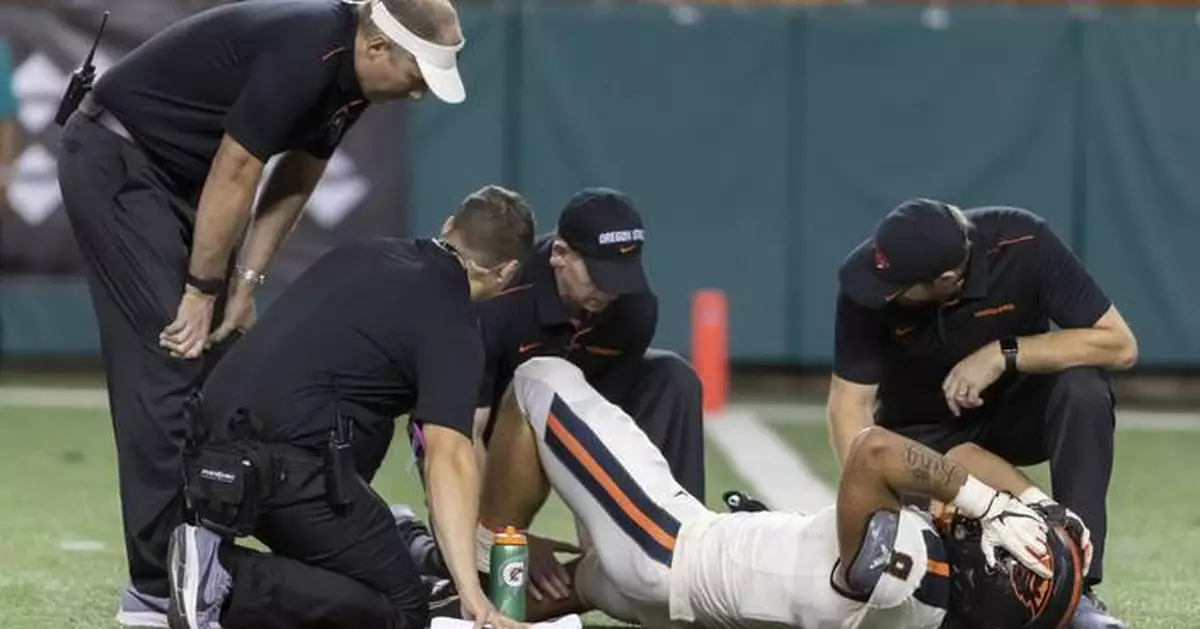
FILE - Oregon State medical trainers check the right knee of linebacker Matthew Tago (8) during the second half of an NCAA college football game against Hawaii, Saturday, Sept. 7, 2019, in Honolulu. (AP Photo/Eugene Tanner, File)
FILE - Oregon State medical trainers check the right knee of linebacker Matthew Tago (8) during the second half of an NCAA college football game against Hawaii, Saturday, Sept. 7, 2019, in Honolulu. (AP Photo/Eugene Tanner, File)
DUBAI, United Arab Emirates (AP) — U.S. President Donald Trump said Iran wants to negotiate with Washington after his threat to strike the Islamic Republic over its bloody crackdown on protesters, a move coming as activists said Monday the death toll in the nationwide demonstrations rose to at least 544.

Iran had no immediate reaction to the news, which came after the foreign minister of Oman — long an interlocutor between Washington and Tehran — traveled to Iran this weekend. It also remains unclear just what Iran could promise, particularly as Trump has set strict demands over its nuclear program and its ballistic missile arsenal, which Tehran insists is crucial for its national defense.

Meanwhile Monday, Iran called for pro-government demonstrators to head to the streets in support of the theocracy, a show of force after days of protests directly challenging the rule of 86-year-old Supreme Leader Ayatollah Ali Khamenei. Iranian state television aired chants from the crowd, who shouted “Death to America!” and “Death to Israel!”

Trump and his national security team have been weighing a range of potential responses against Iran including cyberattacks and direct strikes by the U.S. or Israel, according to two people familiar with internal White House discussions who were not authorized to comment publicly and spoke on condition of anonymity.

“The military is looking at it, and we’re looking at some very strong options,” Trump told reporters on Air Force One on Sunday night. Asked about Iran’s threats of retaliation, he said: “If they do that, we will hit them at levels that they’ve never been hit before.”

Trump said that his administration was in talks to set up a meeting with Tehran, but cautioned that he may have to act first as reports of the death toll in Iran mount and the government continues to arrest protesters.

“I think they’re tired of being beat up by the United States,” Trump said. “Iran wants to negotiate.”

He added: “The meeting is being set up, but we may have to act because of what’s happening before the meeting. But a meeting is being set up. Iran called, they want to negotiate.”

Iran through country's parliamentary speaker warned Sunday that the U.S. military and Israel would be “legitimate targets” if America uses force to protect demonstrators.

More than 10,600 people also have been detained over the two weeks of protests, said the U.S.-based Human Rights Activists News Agency, which has been accurate in previous unrest in recent years and gave the death toll. It relies on supporters in Iran crosschecking information. It said 496 of the dead were protesters and 48 were with security forces.

With the internet down in Iran and phone lines cut off, gauging the demonstrations from abroad has grown more difficult. The Associated Press has been unable to independently assess the toll. Iran’s government has not offered overall casualty figures.

Those abroad fear the information blackout is emboldening hard-liners within Iran’s security services to launch a bloody crackdown. Protesters flooded the streets in the country’s capital and its second-largest city on Saturday night into Sunday morning. Online videos purported to show more demonstrations Sunday night into Monday, with a Tehran official acknowledging them in state media.

In Tehran, a witness told the AP that the streets of the capital empty at the sunset call to prayers each night. By the Isha, or nighttime prayer, the streets are deserted.

Part of that stems from the fear of getting caught in the crackdown. Police sent the public a text message that warned: “Given the presence of terrorist groups and armed individuals in some gatherings last night and their plans to cause death, and the firm decision to not tolerate any appeasement and to deal decisively with the rioters, families are strongly advised to take care of their youth and teenagers.”

Another text, which claimed to come from the intelligence arm of the paramilitary Revolutionary Guard, also directly warned people not to take part in demonstrations.

“Dear parents, in view of the enemy’s plan to increase the level of naked violence and the decision to kill people, ... refrain from being on the streets and gathering in places involved in violence, and inform your children about the consequences of cooperating with terrorist mercenaries, which is an example of treason against the country,” the text warned.

The witness spoke to the AP on condition of anonymity due to the ongoing crackdown.

The demonstrations began Dec. 28 over the collapse of the Iranian rial currency, which trades at over 1.4 million to $1, as the country’s economy is squeezed by international sanctions in part levied over its nuclear program. The protests intensified and grew into calls directly challenging Iran’s theocracy.

Nikhinson reported from aboard Air Force One.

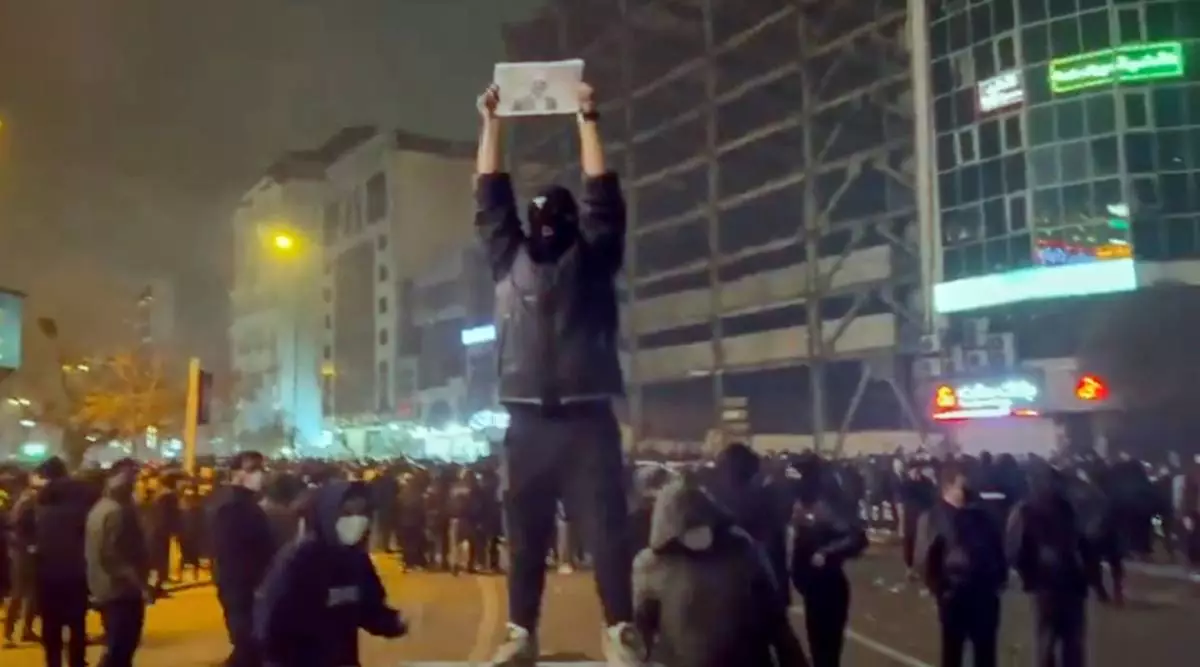
In this frame grab from video obtained by the AP outside Iran, a masked demonstrator holds a picture of Iran's Crown Prince Reza Pahlavi during a protest in Tehran, Iran, Friday, January. 9, 2026. (UGC via AP)

In this frame grab from video obtained by the AP outside Iran, a masked demonstrator holds a picture of Iran's Crown Prince Reza Pahlavi during a protest in Tehran, Iran, Friday, January. 9, 2026. (UGC via AP)

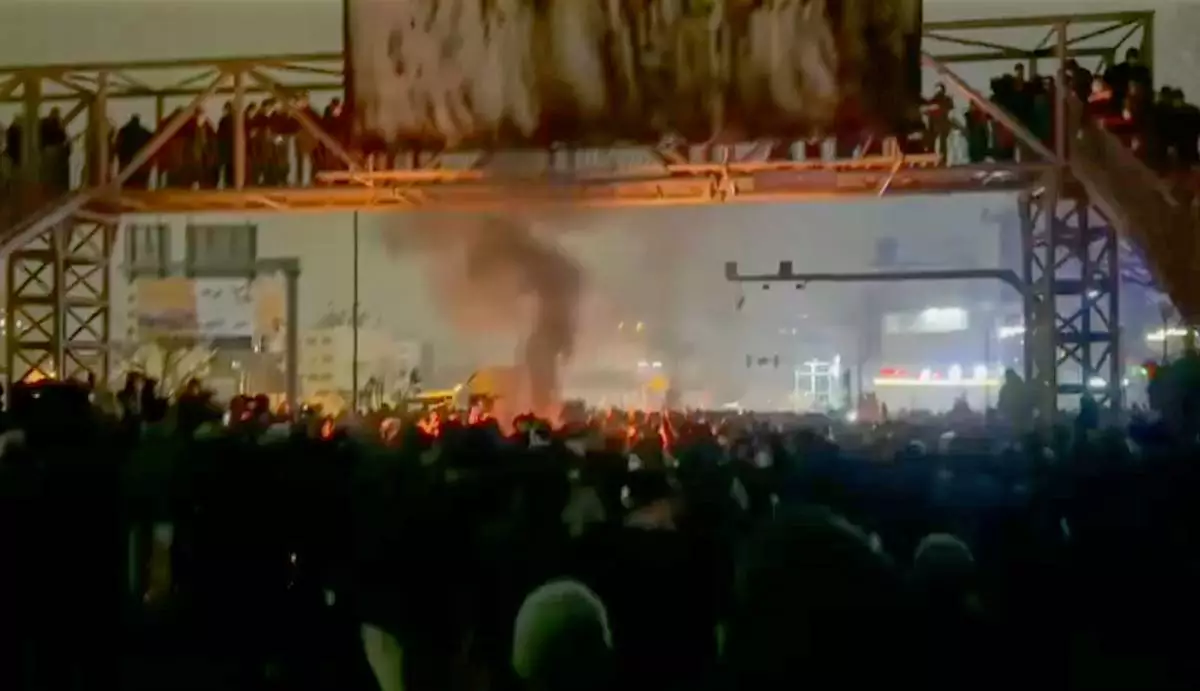
In this frame grab from footage circulating on social media from Iran shows protesters taking to the streets despite an intensifying crackdown as the Islamic Republic remains cut off from the rest of the world in Tehran, Iran, Friday, Jan. 9, 2026.(UGC via AP)

In this frame grab from footage circulating on social media from Iran shows protesters taking to the streets despite an intensifying crackdown as the Islamic Republic remains cut off from the rest of the world in Tehran, Iran, Friday, Jan. 9, 2026.(UGC via AP)

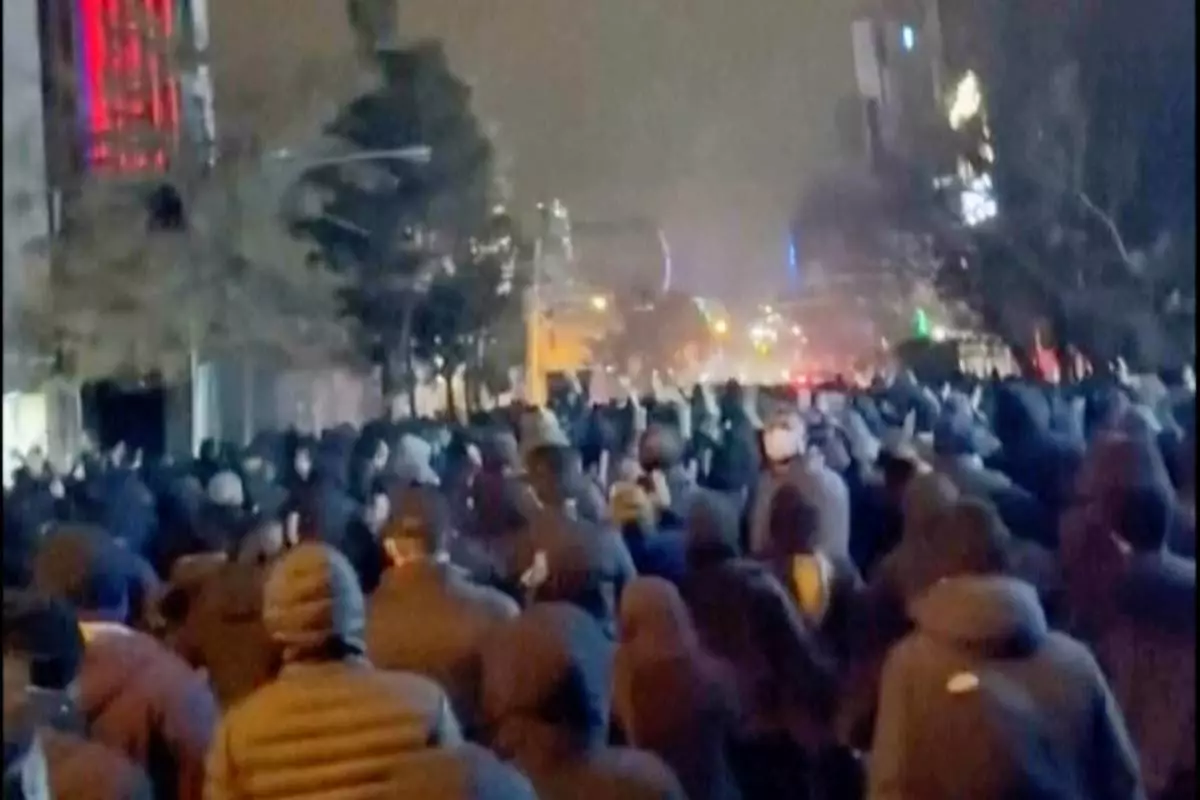
In this frame grab from footage circulating on social media from Iran showed protesters once again taking to the streets of Tehran despite an intensifying crackdown as the Islamic Republic remains cut off from the rest of the world in Tehran, Iran, Saturday Jan. 10, 2026. (UGC via AP)

In this frame grab from footage circulating on social media from Iran showed protesters once again taking to the streets of Tehran despite an intensifying crackdown as the Islamic Republic remains cut off from the rest of the world in Tehran, Iran, Saturday Jan. 10, 2026. (UGC via AP)

Recommended Articles