The Trump administration on Tuesday filed a lawsuit against all 15 federal judges in Maryland over an order blocking the immediate deportation of migrants challenging their removals, ratcheting up a fight with the federal judiciary over President Donald Trump's executive powers.
The remarkable action lays bare the administration’s determination to exert its will over immigration enforcement as well as a growing exasperation with federal judges who have time and again turned aside executive branch actions they see as lawless and without legal merit.
“It's extraordinary," Laurie Levenson, a professor at Loyola Law School, said of the Justice Department's lawsuit. “And it's escalating DOJ's effort to challenge federal judges.”
At issue is an order signed by Chief Judge George L. Russell III and filed in May blocking the administration from immediately removing from the U.S. any immigrants who file paperwork with the Maryland district court seeking a review of their detention. The order blocks the removal until 4 p.m. on the second business day after the habeas corpus petition is filed.
The administration says the automatic pause on removals violates a Supreme Court ruling and impedes the president’s authority to enforce immigration laws.
The Republican administration has been locked for weeks in a growing showdown with the federal judiciary amid a barrage of legal challenges to the president's efforts to carry out key priorities around immigration and other matters. The Justice Department has grown increasingly frustrated by rulings blocking the president's agenda, accusing judges of improperly impeding the president's powers.
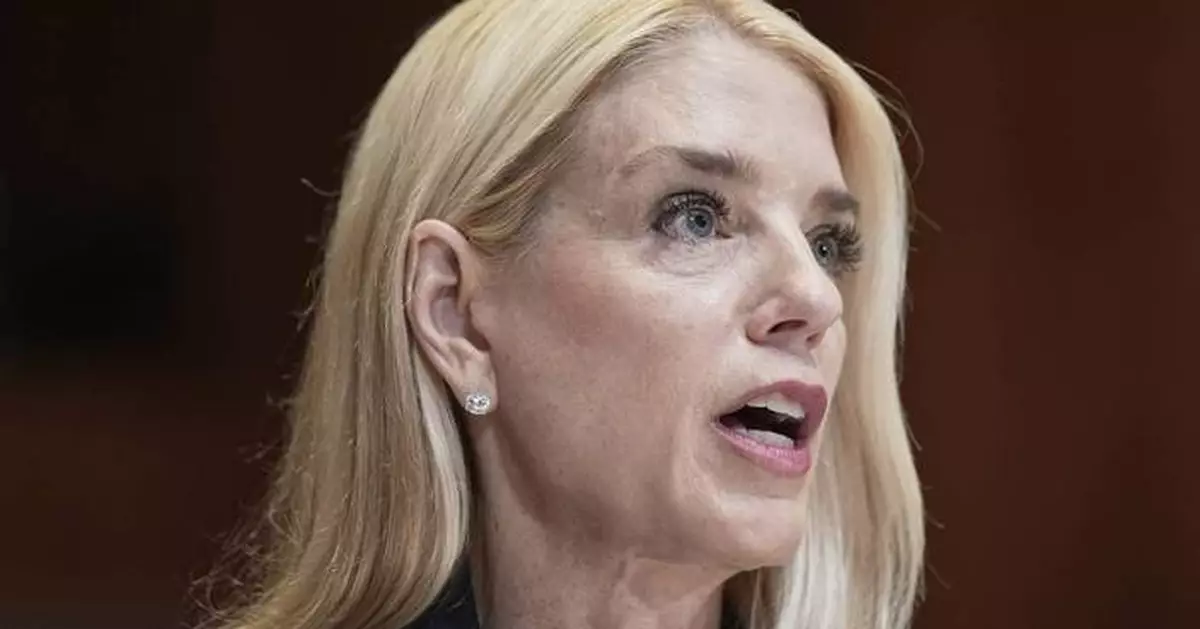
"President Trump’s executive authority has been undermined since the first hours of his presidency by an endless barrage of injunctions designed to halt his agenda,” Attorney General Pamela Bondi said in a statement Wednesday. “The American people elected President Trump to carry out his policy agenda: this pattern of judicial overreach undermines the democratic process and cannot be allowed to stand.”
A spokesman for the Maryland district court declined to comment.
Trump has railed against unfavorable judicial rulings, and in one case called for the impeachment of a federal judge in Washington who ordered planeloads of deported immigrants to be turned around. That led to an extraordinary statement from Supreme Court Chief Justice John Roberts, who said “impeachment is not an appropriate response to disagreement concerning a judicial decision.”
Among the judges named in the lawsuit is Paula Xinis, who has called the administration’s deportation of Kilmar Abrego Garcia to El Salvador illegal. Attorneys for Abrego Garcia have asked Xinis to impose fines against the administration for contempt, arguing that it ignored court orders for weeks to return him to the U.S.
The order signed by Russell says it aims to maintain existing conditions and the potential jurisdiction of the court, ensure immigrant petitioners are able to participate in court proceedings and access attorneys and give the government “fulsome opportunity to brief and present arguments in its defense.”
In an amended order, Russell said the court had received an influx of habeas petitions after hours that "resulted in hurried and frustrating hearings in that obtaining clear and concrete information about the location and status of the petitioners is elusive.”
The Trump administration has asked the Maryland judges to recuse themselves from the case. It wants a clerk to have a federal judge from another state hear it.
James Sample, a constitutional law professor at Hofstra University, described the lawsuit as further part of the erosion of legal norms by the administration. Normally when parties are on the losing side of an injunction, they appeal the order — not sue the court or judges, he said.
On one hand, he said, the Justice Department has a point that injunctions should be considered extraordinary relief; it’s unusual for them to be granted automatically in an entire class of cases. But, he added, it’s the administration’s own actions in repeatedly moving detainees to prevent them from obtaining writs of habeas corpus that prompted the court to issue the order.
“The judges here didn’t ask to be put in this unenviable position,” Sample said. “Faced with imperfect options, they have made an entirely reasonable, cautious choice to modestly check an executive branch that is determined to circumvent any semblance of impartial process.”
Associated Press reporters Gene Johnson in Seattle and Eric Tucker and Alanna Durkin Richer in Washington contributed to this report.
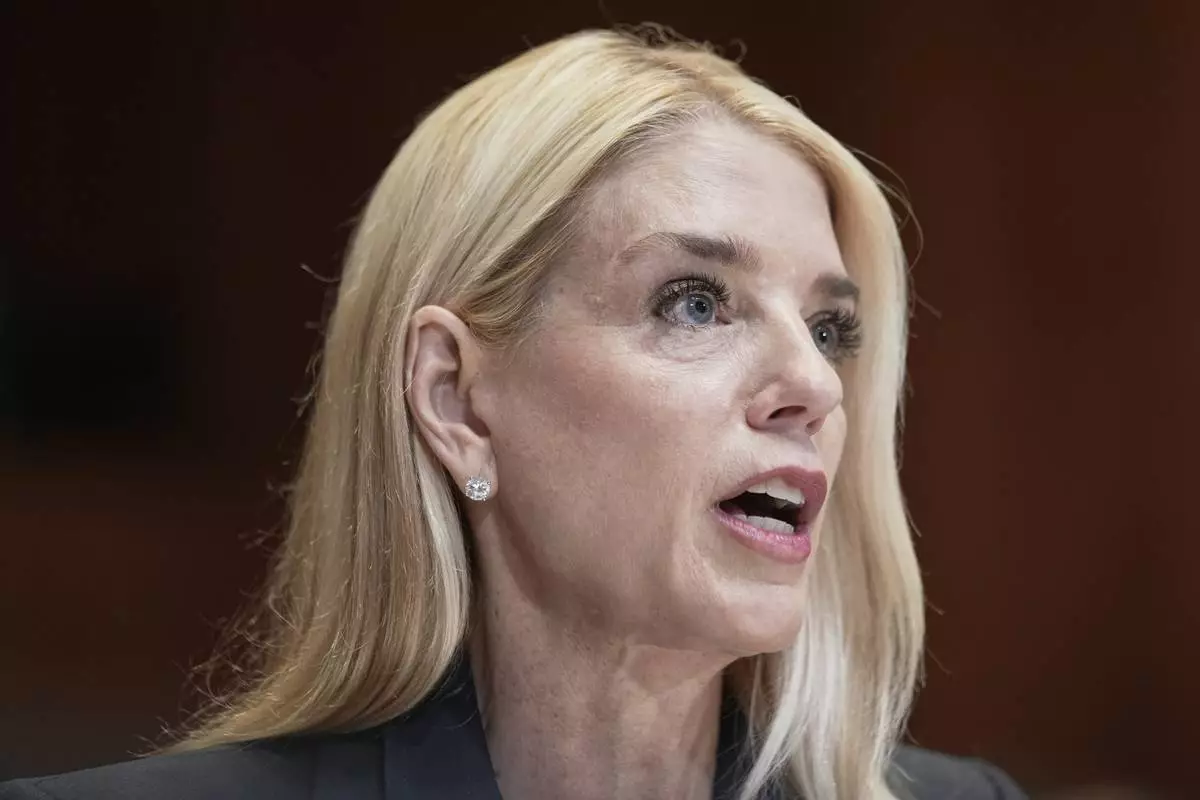
Attorney General Pam Bondi testifies during a Senate Appropriations Committee hearing on the President's Fiscal Year 2026 Budget on Capitol Hill, Wednesday, June 25, 2025, in Washington. (AP Photo/Mariam Zuhaib)
DUBAI, United Arab Emirates (AP) — U.S. President Donald Trump said Iran wants to negotiate with Washington after his threat to strike the Islamic Republic over its bloody crackdown on protesters, a move coming as activists said Monday the death toll in the nationwide demonstrations rose to at least 544.
Iran had no immediate reaction to the news, which came after the foreign minister of Oman — long an interlocutor between Washington and Tehran — traveled to Iran this weekend. It also remains unclear just what Iran could promise, particularly as Trump has set strict demands over its nuclear program and its ballistic missile arsenal, which Tehran insists is crucial for its national defense.
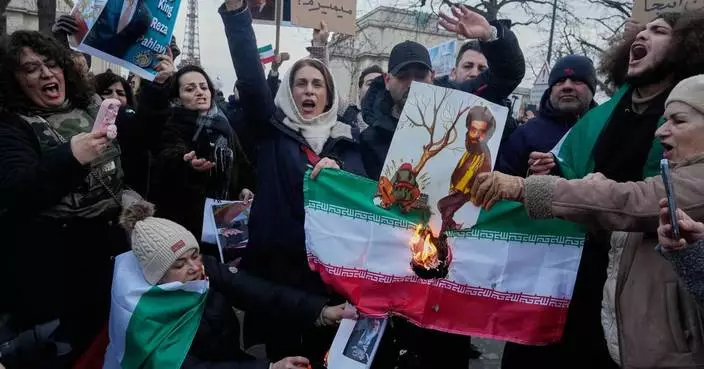
Meanwhile Monday, Iran called for pro-government demonstrators to head to the streets in support of the theocracy, a show of force after days of protests directly challenging the rule of 86-year-old Supreme Leader Ayatollah Ali Khamenei. Iranian state television aired chants from the crowd, who shouted “Death to America!” and “Death to Israel!”
Trump and his national security team have been weighing a range of potential responses against Iran including cyberattacks and direct strikes by the U.S. or Israel, according to two people familiar with internal White House discussions who were not authorized to comment publicly and spoke on condition of anonymity.
“The military is looking at it, and we’re looking at some very strong options,” Trump told reporters on Air Force One on Sunday night. Asked about Iran’s threats of retaliation, he said: “If they do that, we will hit them at levels that they’ve never been hit before.”
Trump said that his administration was in talks to set up a meeting with Tehran, but cautioned that he may have to act first as reports of the death toll in Iran mount and the government continues to arrest protesters.
“I think they’re tired of being beat up by the United States,” Trump said. “Iran wants to negotiate.”
He added: “The meeting is being set up, but we may have to act because of what’s happening before the meeting. But a meeting is being set up. Iran called, they want to negotiate.”
Iran through country's parliamentary speaker warned Sunday that the U.S. military and Israel would be “legitimate targets” if America uses force to protect demonstrators.
More than 10,600 people also have been detained over the two weeks of protests, said the U.S.-based Human Rights Activists News Agency, which has been accurate in previous unrest in recent years and gave the death toll. It relies on supporters in Iran crosschecking information. It said 496 of the dead were protesters and 48 were with security forces.
With the internet down in Iran and phone lines cut off, gauging the demonstrations from abroad has grown more difficult. The Associated Press has been unable to independently assess the toll. Iran’s government has not offered overall casualty figures.
Those abroad fear the information blackout is emboldening hard-liners within Iran’s security services to launch a bloody crackdown. Protesters flooded the streets in the country’s capital and its second-largest city on Saturday night into Sunday morning. Online videos purported to show more demonstrations Sunday night into Monday, with a Tehran official acknowledging them in state media.
In Tehran, a witness told the AP that the streets of the capital empty at the sunset call to prayers each night. By the Isha, or nighttime prayer, the streets are deserted.
Part of that stems from the fear of getting caught in the crackdown. Police sent the public a text message that warned: “Given the presence of terrorist groups and armed individuals in some gatherings last night and their plans to cause death, and the firm decision to not tolerate any appeasement and to deal decisively with the rioters, families are strongly advised to take care of their youth and teenagers.”
Another text, which claimed to come from the intelligence arm of the paramilitary Revolutionary Guard, also directly warned people not to take part in demonstrations.
“Dear parents, in view of the enemy’s plan to increase the level of naked violence and the decision to kill people, ... refrain from being on the streets and gathering in places involved in violence, and inform your children about the consequences of cooperating with terrorist mercenaries, which is an example of treason against the country,” the text warned.
The witness spoke to the AP on condition of anonymity due to the ongoing crackdown.
The demonstrations began Dec. 28 over the collapse of the Iranian rial currency, which trades at over 1.4 million to $1, as the country’s economy is squeezed by international sanctions in part levied over its nuclear program. The protests intensified and grew into calls directly challenging Iran’s theocracy.
Nikhinson reported from aboard Air Force One.
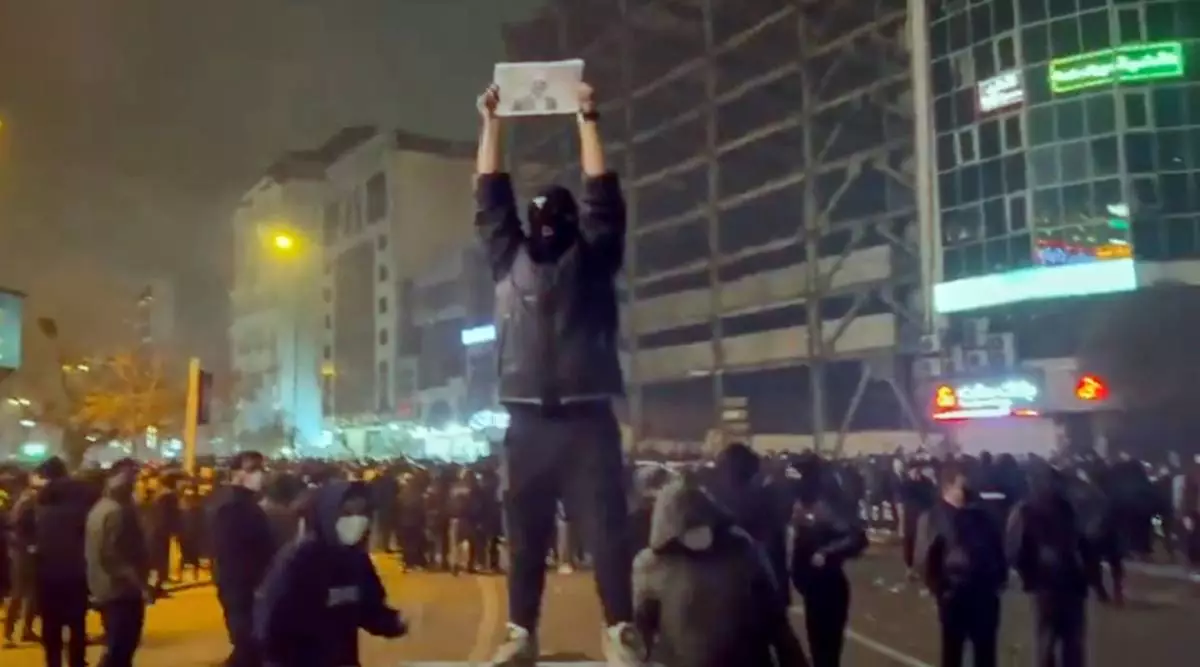
In this frame grab from video obtained by the AP outside Iran, a masked demonstrator holds a picture of Iran's Crown Prince Reza Pahlavi during a protest in Tehran, Iran, Friday, January. 9, 2026. (UGC via AP)
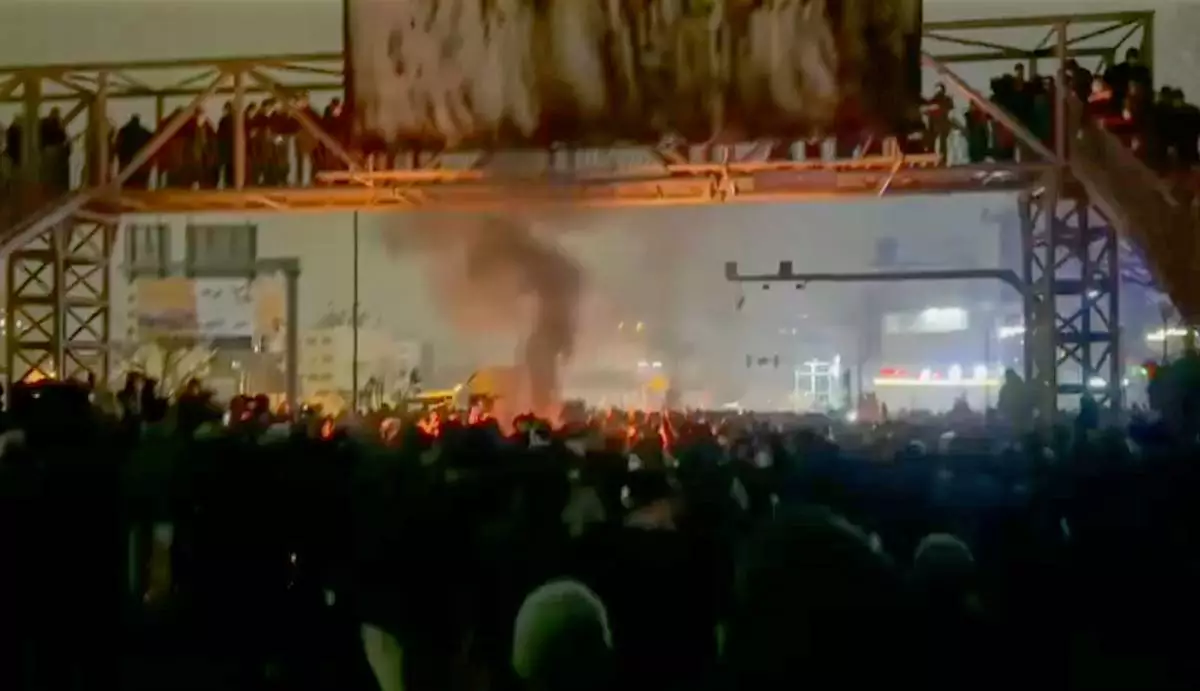
In this frame grab from footage circulating on social media from Iran shows protesters taking to the streets despite an intensifying crackdown as the Islamic Republic remains cut off from the rest of the world in Tehran, Iran, Friday, Jan. 9, 2026.(UGC via AP)
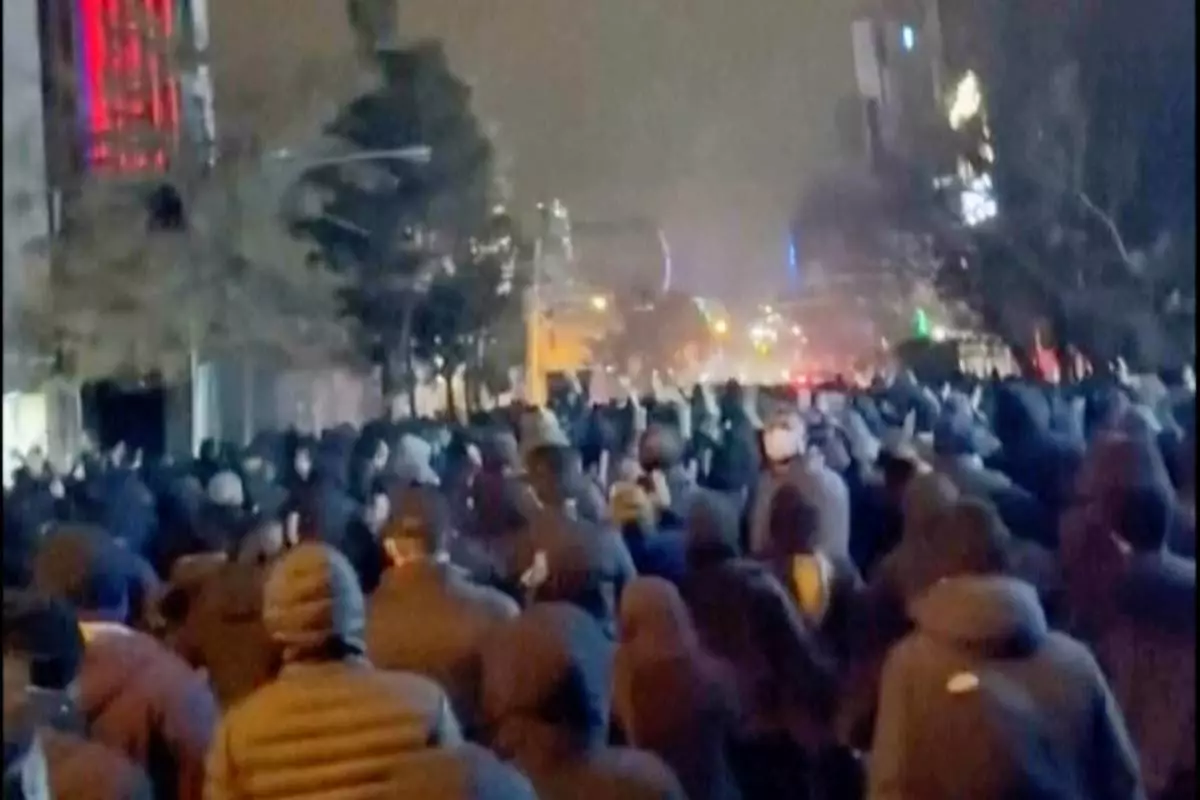
In this frame grab from footage circulating on social media from Iran showed protesters once again taking to the streets of Tehran despite an intensifying crackdown as the Islamic Republic remains cut off from the rest of the world in Tehran, Iran, Saturday Jan. 10, 2026. (UGC via AP)