DH announces timetable for establishing CMPR and roadmap towards phased implementation of "primary evaluation" (with photo/video)
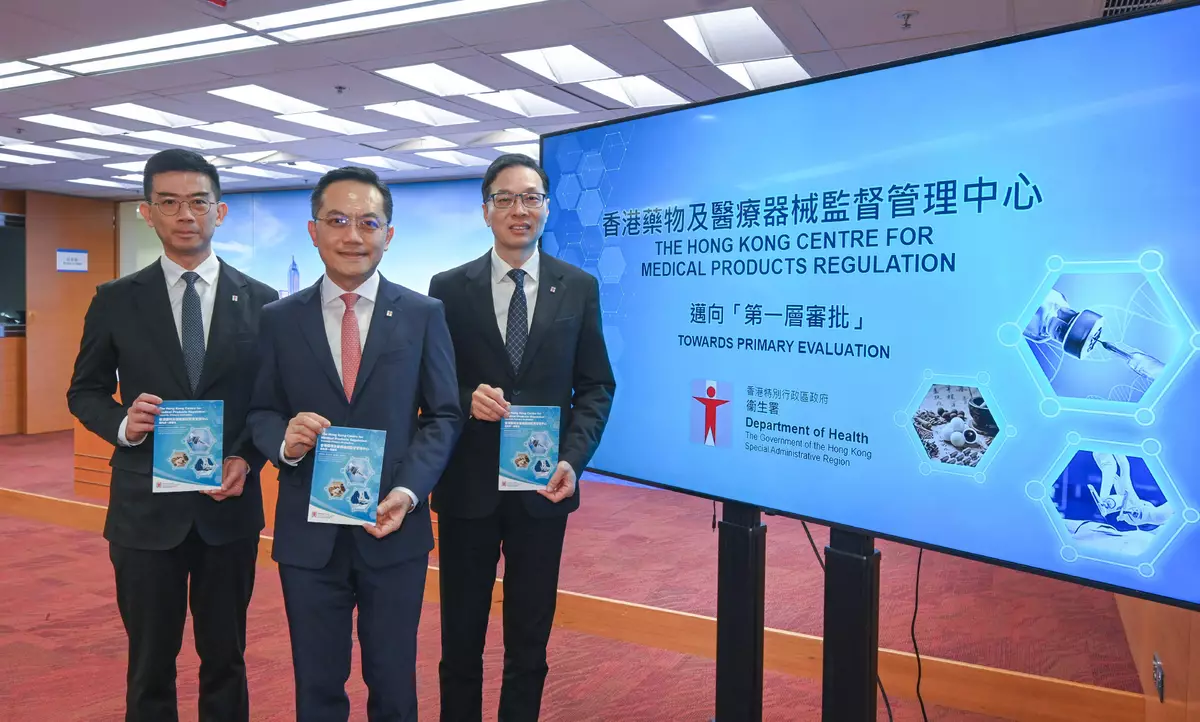
The Department of Health (DH) announced today (June 26) the timetable for establishing the Hong Kong Centre for Medical Products Regulation (CMPR) and the roadmap for implementing "primary evaluation". The CMPR will be established by the end of next year (2026), and the DH will implement "primary evaluation" for new drug registration in phases beginning next year, with full implementation by 2030. These developments mark a significant milestone in Hong Kong's transformation into an international health and medical innovation hub.
The Director of Health, Dr Ronald Lam, said, "The Hong Kong Special Administrative Region (HKSAR) Government is committed to raising regulatory standards for medical products in Hong Kong. With the establishment of the CMPR, we will consolidate regulatory functions for Western and Chinese medicines, as well as medical devices, and enhance the existing regulatory regime in a holistic manner. The vision of the CMPR is to become a "leading, internationally renowned medical products regulatory authority, driving excellence and innovation", with the goal of gaining international recognition in the field. The CMPR will promote innovation, and research and development (R&D) of drugs and devices by optimising medical products regulation. This will ensure that the public can benefit from the latest scientific research, and that patients will gain earlier access to innovative, safe and effective medical products. It also fosters growth in the local healthcare and biotechnology industries."
The DH established the Preparatory Office for the CMPR in June last year. Over the past year, preparatory work has been carried out progressively, focusing on three strategic areas: driving regulatory excellence, promoting medical product innovation, and deepening national and international collaboration.
In the future, the DH will adopt a multipronged approach for the establishment of the CMPR, with the following key areas of work:
(1) enact legislation to empower the CMPR to regulate Western and Chinese medicines and establish a statutory framework for the regulation of medical devices;
(2) continuously enhance professional capacity, strengthen regulatory efficiency, and implement "primary evaluation" in phases;
(3) deepen collaboration with local, Mainland and overseas stakeholders and regulatory authorities, strive for international recognition, and foster an innovation-friendly environment; and
(4) further optimise the regulation of Chinese medicine based on the Chinese Medicine Development Blueprint to be published by the Health Bureau in the fourth quarter of this year, leveraging the HKSAR's role as a national bridgehead for the internationalisation of Chinese medicine.
Regarding the implementation of "primary evaluation", the HKSAR Government has implemented the "1+" mechanism in November 2023. Under this mechanism, new drugs that are supported by local clinical data and recognised by relevant experts can be applied for registration in Hong Kong if the applicant provides approval from the drug regulatory authority of one of the reference places (instead of two in the past). This is an important step towards the adoption of "primary evaluation". The "1+" mechanism was extended to all new drugs on November 1 last year. Since its implementation, 11 new drugs have been approved for registration under this mechanism. Among them, five new drugs (two for treating colorectal cancer, one for treating paroxysmal nocturnal hemoglobinuria, and two for treating secondary hyperparathyroidism and certain hypercalcaemia) have already been listed on the Hospital Authority Drug Formulary, improving access to effective medications in Hong Kong.
Dr Lam said, "The DH has been proactively advancing preparatory work, including issuing good practice guides, enhancing the electronic registration platform, and introducing new registration pathways and a new fee charging mode, among others. The phased rollout of "primary evaluation" will begin next year, with full implementation by 2030. The initial phases will cover applications for the registration of products containing registered chemical entities and biological entities with extended applications (e.g. new indications, new strengths, new posology, new dosage forms, etc). This will progressively establish a robust approval system, providing strong momentum for the development and market expansion of the healthcare industry in the HKSAR, the Mainland, and beyond."
The HKSAR Government consulted the Advisory Committee on Health and Medical Innovation Development and the Steering Committee on Health and Medical Innovation Development in May and June 2025 respectively on the timetable for establishing the CMPR and the roadmap for implementing "primary evaluation". The HKSAR Government would like to express its sincere gratitude forthe invaluable insights provided by members of both Committees.
Members of the public who wish to learn more about the timetable for establishing the CMPR and the roadmap for implementing "primary evaluation" may visit the DH's thematic webpage.
DH announces timetable for establishing CMPR and roadmap towards phased implementation of "primary evaluation" Source: HKSAR Government Press Releases
CFS to follow up certain batches of powdered infant and young children formula with possible presence of Cereulide produced by Bacillus cereus
The Centre for Food Safety (CFS) of the Food and Environmental Hygiene Department (FEHD) today (January 10) said that, it took initiative to meet with Nestlé Hong Kong again today, and confirmed the company's today announcement of an additional batch of powdered infant and young children formula suspected to have possibly used the raw material concerned. Nestlé Hong Kong has voluntarily stopped sales, removed from shelves the affected products and has initiated a precautionary recall. The CFS has collected samples of powdered infant and young children formula from the market for Bacillus cereus testing, the test results so far were satisfactory. The Environmental and Ecology Bureau is also closely monitoring the supply situation of other formula milk powder and maintaining communication with other major suppliers. It is noted that there is sufficient formula milk powder to meet the demand.
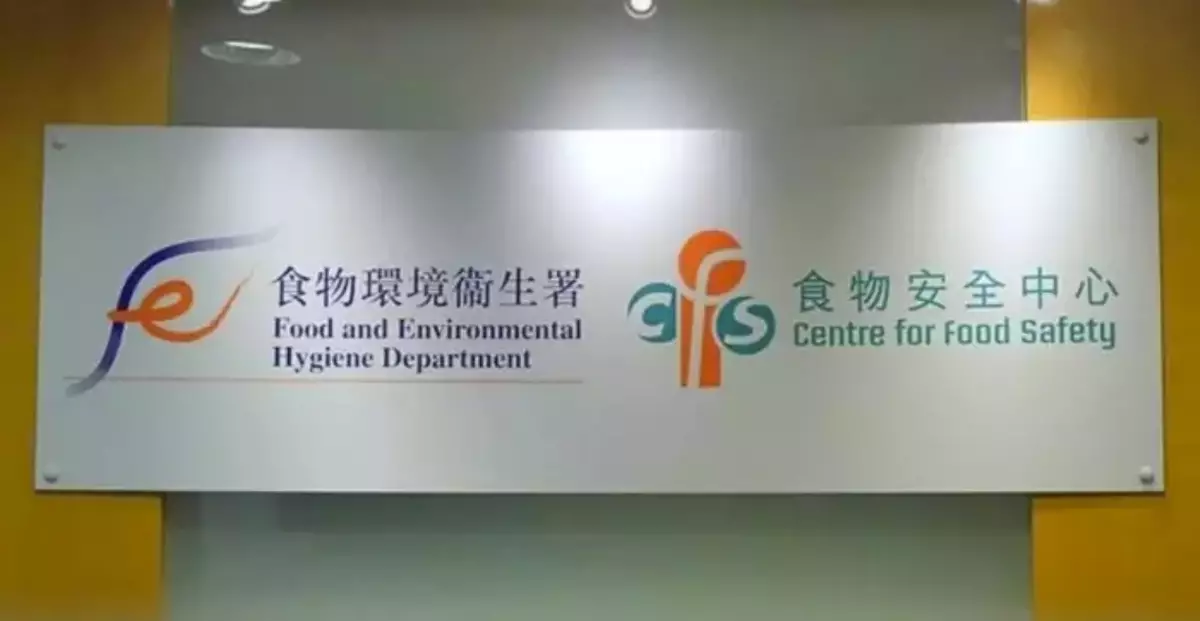
The Centre for Food Safety (CFS) of the Food and Environmental Hygiene Department (FEHD), Photo source: reference image
The spokesman said, the CFS has been actively following up on Nestlé company's voluntary and precautionary recalls of certain batches of its powdered infant and young children formula in certain areas in Europe due to possible presence of Cereulide produced by Bacillus cereus in the individual raw material. According to the latest information from Nestlé Hong Kong today, an additional batch of its powdered infant and young children formula imported into Hong Kong might have used the raw material concerned. The CFS had earlier enhanced surveillance in the market and collected a sample from the above batch for testing of Bacillus cereus. The test result of the sample was satisfactory. Nevertheless, as a precautionary measure, Nestlé Hong Kong has voluntarily stopped sales, removed from shelves the affected products and has initiated a precautionary recall.
Product details are as follows:
Product name (Net weight): NAN PRO 1 2 HMO (800g)
Batch number: 51670742F2
Best-before date: June 16, 2027
Place of Origin: Germany
"The CFS met Nestlé Hong Kong again today, urging them to properly handle the product recall issue and respond to public enquiries, in order to safeguard consumers' legitimate rights and interests. In addition, the CFS and Nestlé Hong Kong have jointly followed up, six suspected affected batches of infant and young children formula products that had not entered the market were marked and sealed. An additional 15 batches are currently en route to Hong Kong and will also be marked and sealed upon arrival. The CFS will continue to closely monitor the recall matters and remain fully committed to ensuring food safety, " the spokesman said.
Nestlé Hong Kong has initiated a recall of the affected batches of the products concerned. For enquiries about the recall, members of the public may contact the company through the following channels:
Consumer services hotline: 2599 8874 / 2797 6031/ 2179 8136 (Monday to Sunday, 9am to 9pm)
Email: consumerservices@hk.nestle.com
WhatsApp: 5283 4139 (NESTLÉ® NAN®) / 2599 8871 (Wyeth® Nutrition)
Online form: forms.office.com/e/BhqMhWfsUG?origin=lprLink
Consumers may choose to bring along the products (brand new or opened) for refund at place of purchase, or at exclusive service counters of Nestlé Nutrition Services from January 13 (Tuesday) onwards, to settle the recall and refund of the batches of the products concerned. Details of the exclusive service counters are as follows:
Kowloon Services Counter
Address: G/F, Park Hovan Commercial Building, 18 Hillwood Road, Tsim Sha Tsui, Kowloon (MTR Jordon Station Exit D)
Contact number: 3996 8196
Office hour: Monday to Saturday, 11am to 7.30pm; Sunday, 1pm to 5.30pm (except public holidays)
Hong Kong Services Counter
Address: 1/F, Ka Nin Wah Commercial Building, 423-425 Hennessy Road, Hong Kong (MTR Causeway Bay Station Exit B)
Contact number: 3996 8197
Office hour: Monday to Saturday, 11am to 7.30pm (except Sundays and public holidays)
The CFS, through its Food Incident Surveillance System, noted earlier that certain batches of Nestlé powdered infant formula were being voluntarily recalled in Europe due to possible contamination with Bacillus cereus. Upon learning of the incident, the CFS has immediately initiated follow up actions, published food incident posts to inform the public and the trade about the issue, and has been actively following up on the incident and enhanced surveillance.
Over the past three days (as of 4pm on January 9), the FEHD received a total of 18 food complaints and enquiries suspected to be related to the infant and young children formula products, including one anonymous complaint without contact information. The CFS and the Environmental Hygiene Branch have promptly followed up on all cases, including contacting the parties concerned to obtain details and collecting samples for testing. In addition, the CFS has referred the cases to the health department for follow-up. At present, no food poisoning cases related to the formula have been recorded.
Bacillus cereus is commonly found in the environment. Unhygienic conditions in food processing and storage may give rise to its growth. Cereulide is a heat-stable toxin produced in food by some strains of Bacillus cereus. Consuming food contaminated with excessive Bacillus cereus or its heat-stable toxins may cause gastrointestinal upset such as vomiting and diarrhoea.
The spokesman urged members of the public not to let infants and young children consume the affected batches of the products, and to seek medical treatment for infants or young children who felt unwell after taking the products concerned. The trade should also stop using or selling the affected batches of the products immediately.
"The CFS continues to closely monitor the developments of the situation, follow up and take appropriate action," the spokesman said.
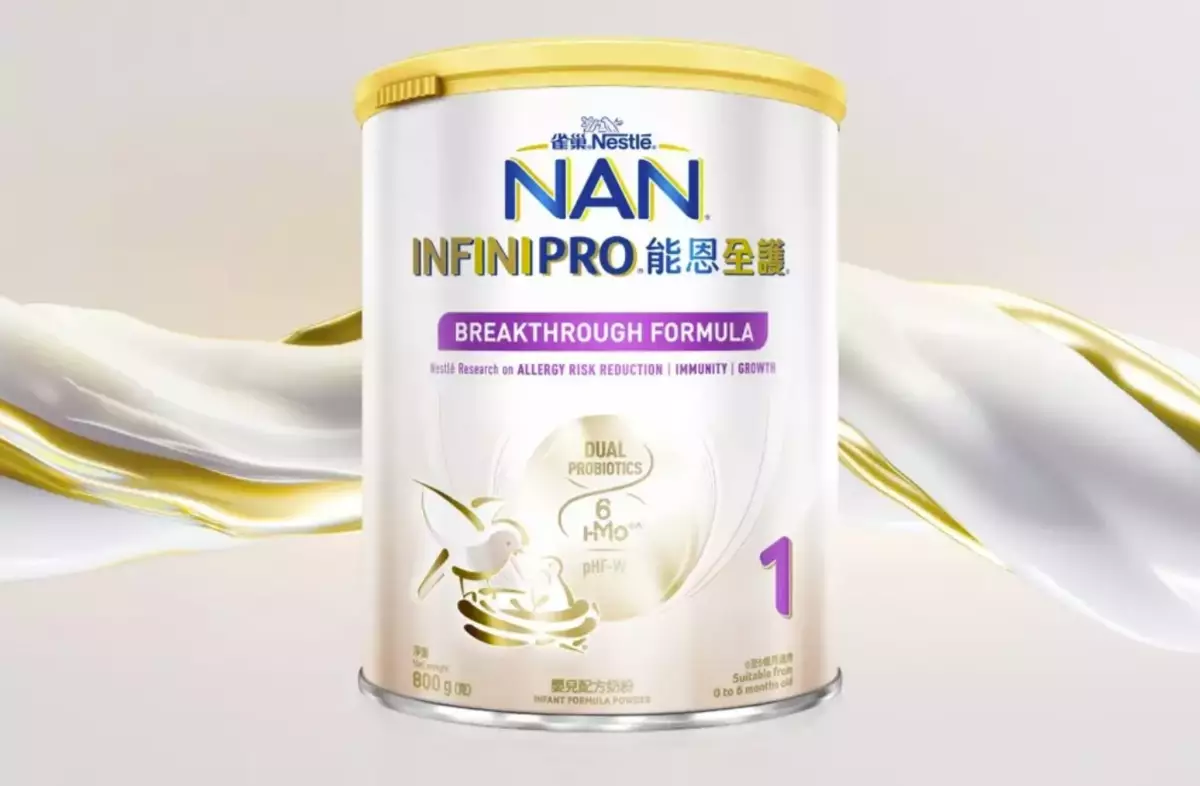
The infant formula of Nestlé, Photo source: online image