Skip to Content Facebook Feature Image

IFF Launches Transformational Culture to Drive Energy and Water Efficiency in Semi-Hard Cheese Production

News

IFF Launches Transformational Culture to Drive Energy and Water Efficiency in Semi-Hard Cheese Production
News

News

IFF Launches Transformational Culture to Drive Energy and Water Efficiency in Semi-Hard Cheese Production

2025-06-26 15:59 Last Updated At:16:10

LEIDEN, Netherlands--(BUSINESS WIRE)--Jun 26, 2025--

IFF (NYSE: IFF)—a global leader in flavors, fragrances, food ingredients, health, and biosciences—announced the launch of CHOOZIT ® LIFT, a first-of-its-kind culture developed to transform the production of semi-hard cheeses for significant sustainability and business benefits. Leveraging the company’s extensive bioscience expertise, the solution combines advanced strain design with practical cheesemaking knowledge to eliminate the curd washing step from the process entirely. In doing so, this novel culture helps reduce water and energy use in production while maintaining the high quality of the final products to meet consumer expectations.

This press release features multimedia. View the full release here: https://www.businesswire.com/news/home/20250626427440/en/

“The future of dairy production, including cheesemaking, is about achieving more with less—less water, less energy, less compromise. CHOOZIT ® LIFT helps combine the centuries-old craft of cheesemaking with cutting-edge bioscience to unlock that future,” said Annie Mornet, senior business product director for cheese at IFF. “Today’s producers face a tough balancing act: reducing costs, streamlining production processes, and reducing dependence on natural resources, while achieving greater outputs and maintaining quality. By removing curd washing from the process entirely, we’re transforming the way semi-hard cheese is made, both in principle and in practice.”

In traditional semi-hard cheese production, curd washing is a critical step used to control acidity and achieve the desired taste and texture. It involves rinsing the curd with water to remove excess lactose, preventing unwanted acid development. This step is water-intensive. CHOOZIT ® LIFT is a ready-to-use culture solution that combines different bacterial strains to naturally reduce the lactose level of whey, enabling cheese manufacturers to control post-acidification and reduce the risk of excessive acid development, ensuring a homogenous taste with no bitterness. This, in turn, eliminates the need for curd washing.

CHOOZIT ® LIFT has been successfully validated through trials with cheesemakers to ensure efficacy. Data show that by using CHOOZIT ® LIFT to produce 1 kilogram of semi-hard cheese, manufacturers can save 3 liters of water, making processes more cost- and energy-efficient without compromising quality. For plants producing 10,000 tons of semi-hard cheese per year, this product could save an average of 25,000 cubic meters of water annually. Plus, with no whey dilution required, CHOOZIT ® LIFT also enables lower costs associated with whey treatment, including energy usage, storage capacity, and transportation.

In addition to the direct economic benefits, removing the water-intensive curd washing step reduces the environmental footprint of operations and final products, offering cheese producers an effective way to meet growing demand for sustainable products. It also helps maintain consistent product quality during seasonal water shortages, ensuring reliable and efficient production.

“Our focus is to understand customer needs and provide solutions that make a real, measurable difference in our customers’ operations. CHOOZIT ® LIFT represents a new frontier in cheese production, and we’re excited to collaborate with customers to maximize its impact,” said Rossana Rodriguez, global business director for dairy biosciences at IFF. “With semi-hard cheeses like Gouda accounting for almost 30% of all industrial cheese produced every year, this is an opportunity to make a meaningful impact at scale, both for businesses and the planet, while preserving the high quality that defines great cheese.”

For more information on CHOOZIT ® LIFT, visit us here.

Welcome to IFF

At IFF (NYSE: IFF), we make joy through science, creativity and heart. As the global leader in flavors, fragrances, food ingredients, health and biosciences, we deliver groundbreaking, sustainable innovations that elevate everyday products—advancing wellness, delighting the senses and enhancing the human experience. Learn more at iff.com, LinkedIn, Instagram and Facebook.

©2025 International Flavors & Fragrances Inc. (IFF). IFF, the IFF Logo, and all trademarks and service marks denoted with ™, SM or ® are owned by IFF or affiliates of IFF unless otherwise noted. All Rights Reserved.

IFF Launches Transformational Culture to Drive Energy and Water Efficiency in Semi-Hard Cheese Production
IFF Launches Transformational Culture to Drive Energy and Water Efficiency in Semi-Hard Cheese Production
JERUSALEM (AP) — Over two dozen families from one of the few remaining Palestinian Bedouin villages in the central West Bank have packed up and fled their homes in recent days, saying harassment by Jewish settlers living in unauthorized outposts nearby has grown unbearable.

The village, Ras Ein el-Auja, was originally home to some 700 people from more than 100 families that have lived there for decades.

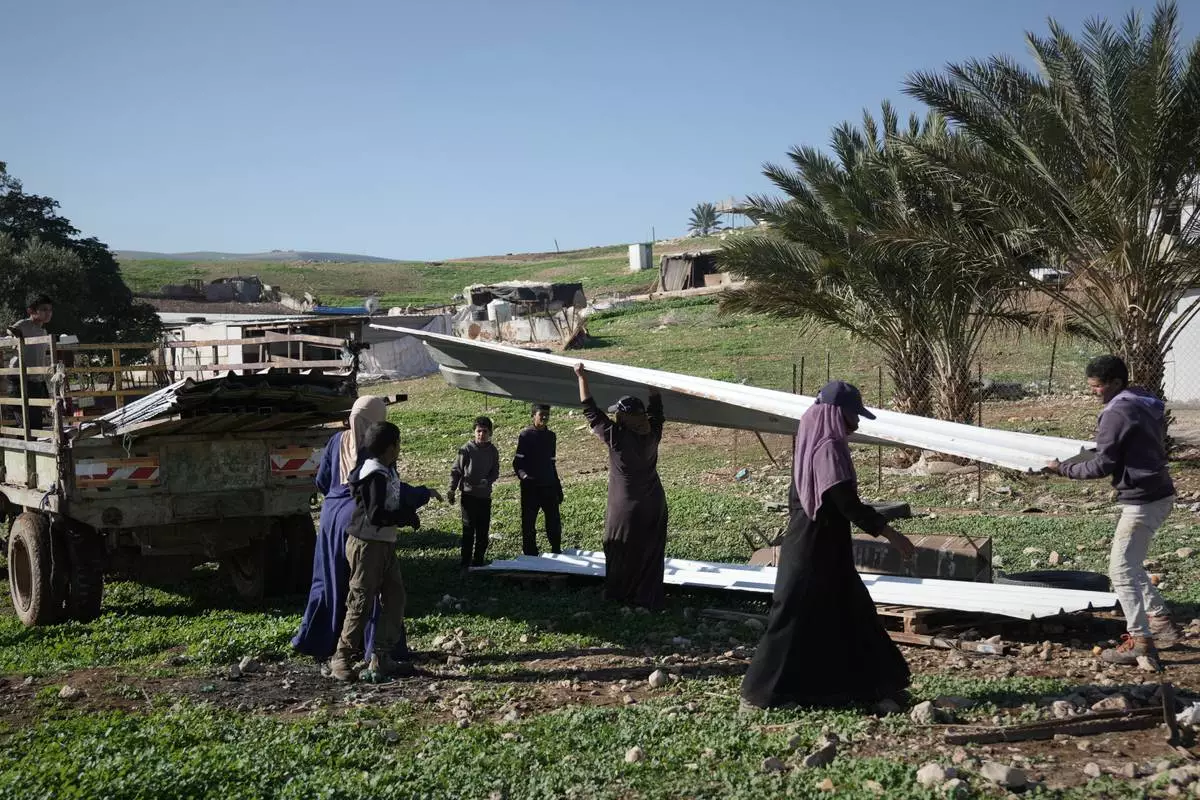
Twenty-six families already left on Thursday, scattering across the territory in search of safer ground, say rights groups. Several other families were packing up and leaving on Sunday.

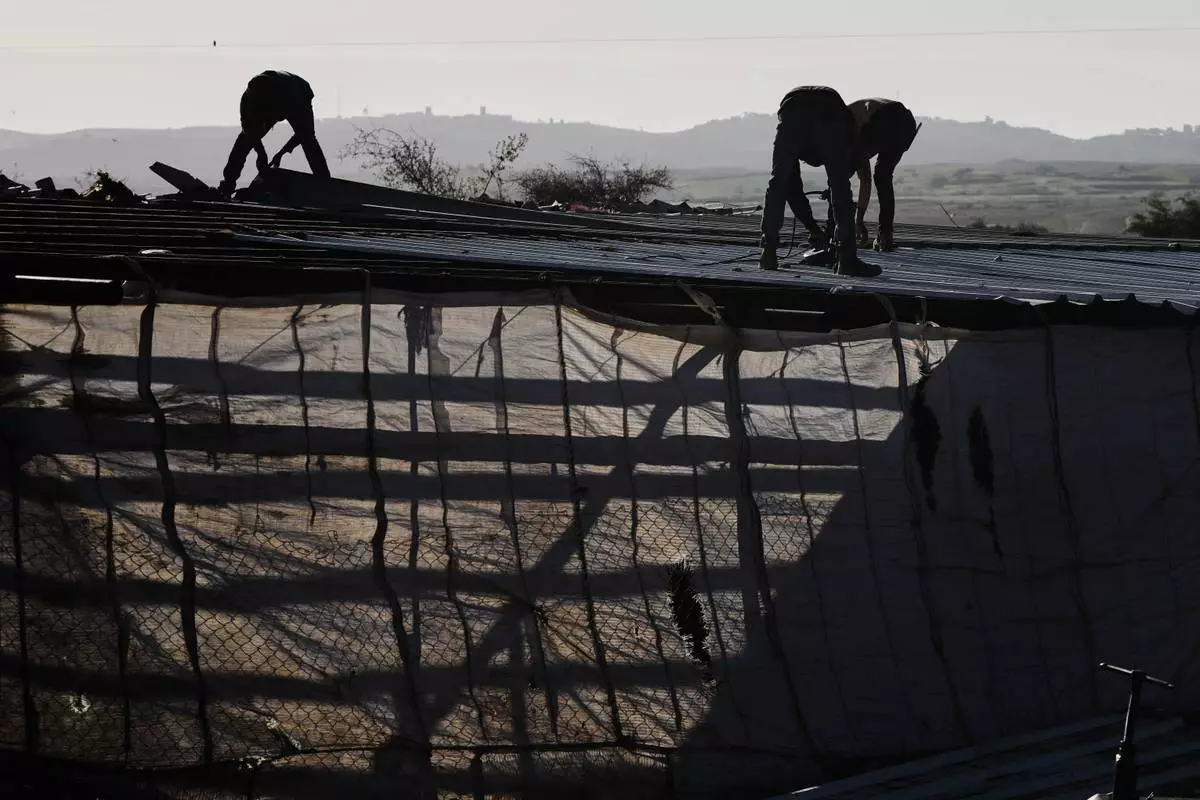
“We have been suffering greatly from the settlers. Every day, they come on foot, or on tractors, or on horseback with their sheep into our homes. They enter people’s homes daily,” said Nayef Zayed, a resident, as neighbors took down sheep pens and tin structures.

Israel's military and the local settler governing body in the area did not respond to requests for comment.

Other residents pledged to stay put for the time being. That makes them some of the last Palestinians left in the area, said Sarit Michaeli, international director at B’Tselem, an Israeli rights group helping the residents.

She said that mounting settler violence has already emptied neighboring Palestinian hamlets in the dusty corridor of land stretching from Ramallah in the West to Jericho, along the Jordanian border, in the east.

The area is part of the 60% of the West Bank that has remained under full Israeli control under interim peace accords signed in the 1990s. Since the war between Israel and Hamas erupted in October 2023, over 2,000 Palestinians — at least 44 entire communities — have been expelled by settler violence in the area, B'Tselem says.

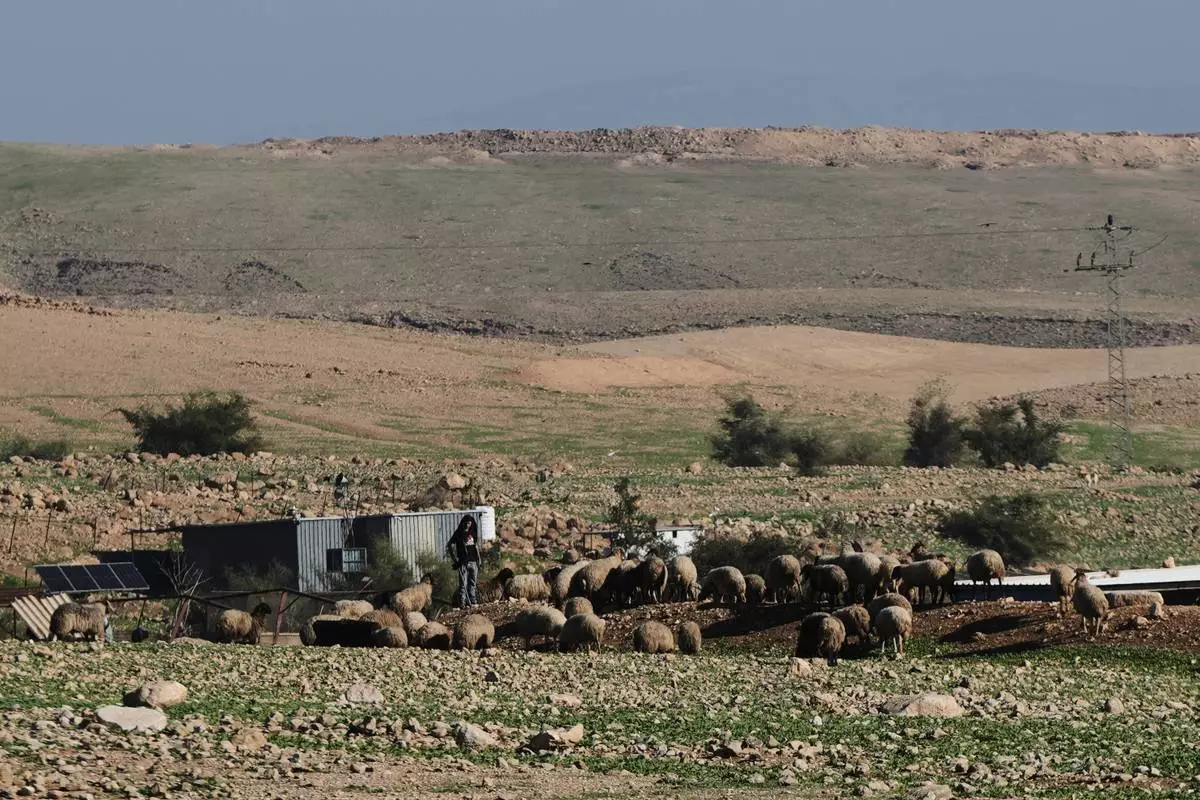
The turning point for the village came in December, when settlers put up an outpost about 50 meters (yards) from Palestinian homes on the northwestern flank of the village, said Michaeli and Sam Stein, an activist who has been living in the village for a month.

Settlers strolled easily through the village at night. Sheep and laundry went missing. International activists had to begin escorting children to school to keep them safe.

“The settlers attack us day and night, they have displaced us, they harass us in every way” said Eyad Isaac, another resident. “They intimidate the children and women.”

Michaeli said she’s witnessed settlers walk around the village at night, going into homes to film women and children and tampering with the village’s electricity.

The residents said they call the police frequently to ask for help — but it seldom arrives. Settlement expansion has been promoted by successive Israeli governments over nearly six decades. But Benjamin Netanyahu’s far-right government, which has placed settler leaders in senior positions, has made it a top priority.

That growth has been accompanied by a spike in settler violence, much of it carried out by residents of unauthorized outposts. These outposts often begin with small farms or shepherding that are used to seize land, say Palestinians and anti-settlement activists. United Nations officials warn the trend is changing the map of the West Bank, entrenching Israeli presence in the area.

Some 500,000 Israelis have settled in the West Bank since Israel captured the territory, along with east Jerusalem and the Gaza Strip, in the 1967 Mideast war. Their presence is viewed by most of the international community as illegal and a major obstacle to peace. The Palestinians seek all three areas for a future state.

For now, displaced families of the village have dispersed between other villages near the city of Jericho and near Hebron further south, said residents. Some sold their sheep and are trying to move into the cities.

Others are just dismantling their structures without knowing where to go.

"Where will we go? There’s nowhere. We’re scattered,” said Zayed, the resident, “People’s situation is bad. Very bad.”

An Israeli settler herds his flock near his outpost beside the Palestinian village of Ras Ein al-Auja in the West Bank, Sunday, Jan. 11, 2026. (AP Photo/Mahmoud Illean)

An Israeli settler herds his flock near his outpost beside the Palestinian village of Ras Ein al-Auja in the West Bank, Sunday, Jan. 11, 2026. (AP Photo/Mahmoud Illean)

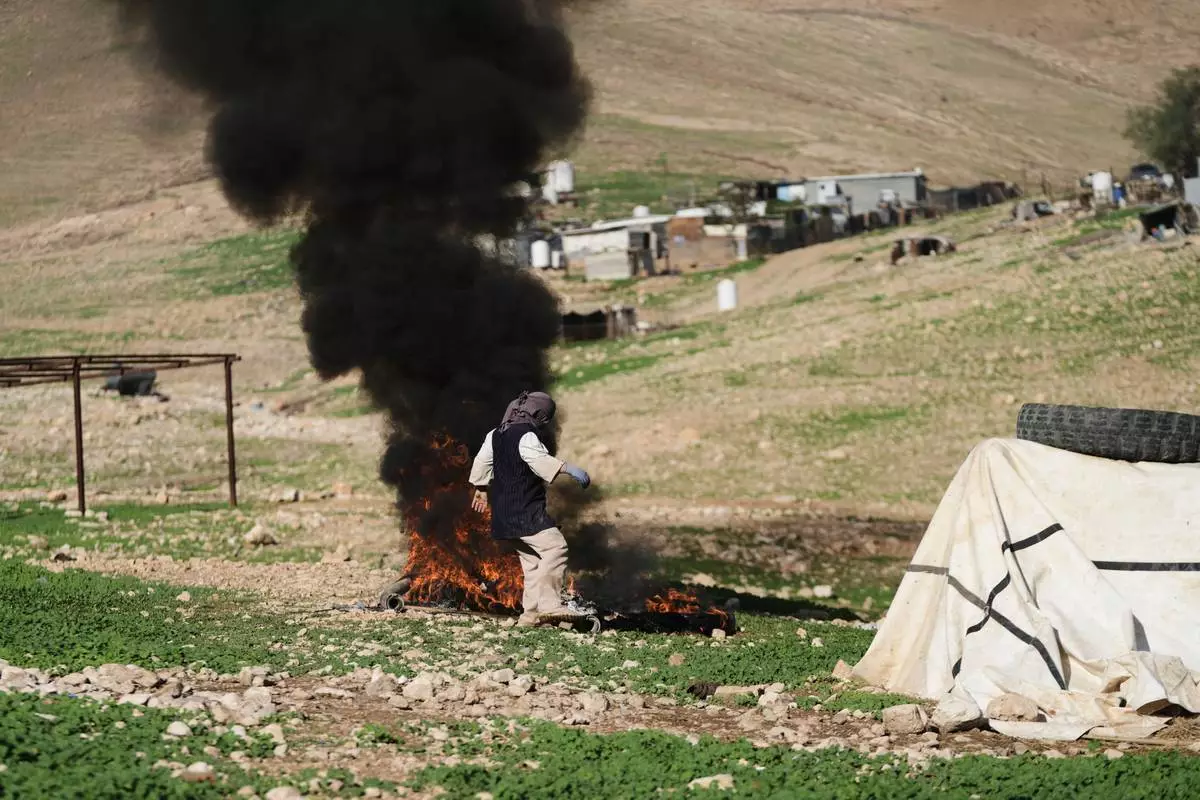
A Palestinian resident of Ras Ein al-Auja village, West Bank burns trash, Sunday, Jan. 11, 2026. (AP Photo/Mahmoud Illean)

A Palestinian resident of Ras Ein al-Auja village, West Bank burns trash, Sunday, Jan. 11, 2026. (AP Photo/Mahmoud Illean)

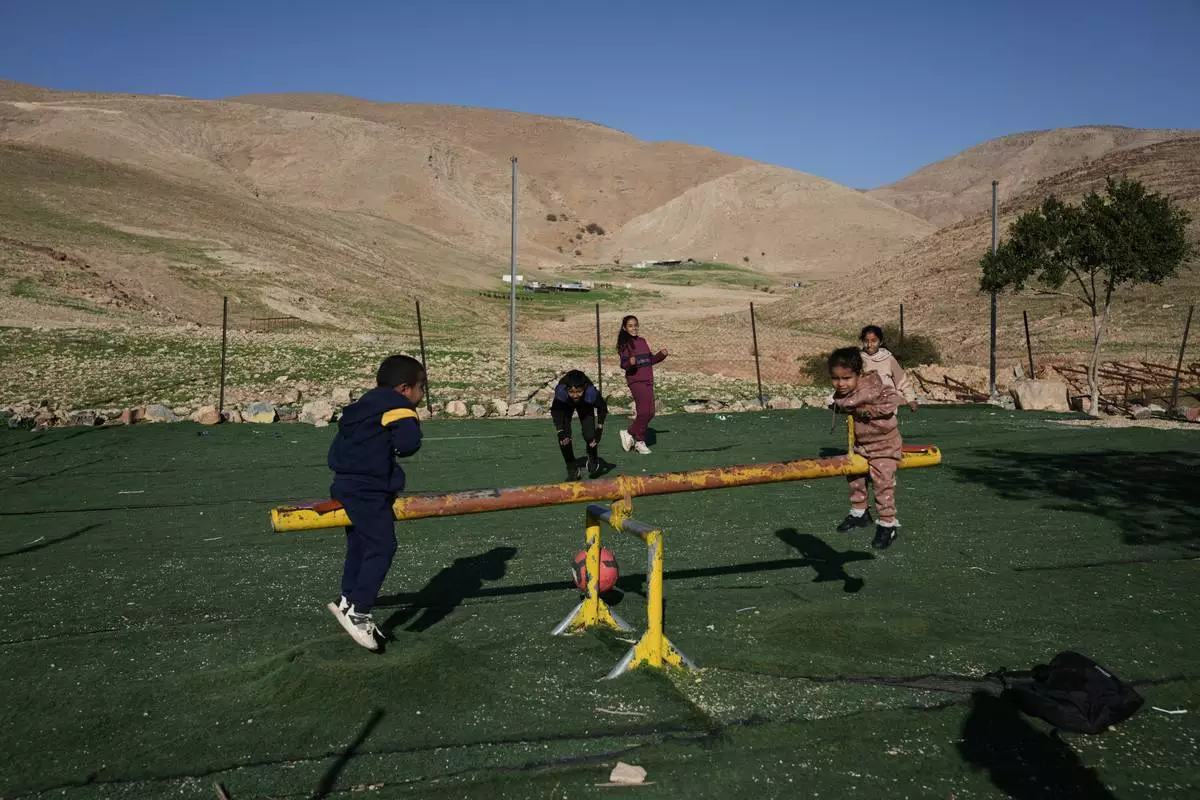
Palestinian children play in the West Bank village of Ras Ein al-Auja, Sunday, Jan. 11, 2026. (AP Photo/Mahmoud Illean)

Palestinian children play in the West Bank village of Ras Ein al-Auja, Sunday, Jan. 11, 2026. (AP Photo/Mahmoud Illean)

Palestinian residents of Ras Ein al-Auja village, West Bank pack up their belongings and prepare to leave their homes after deciding to flee mounting settler violence, Sunday, Jan. 11, 2026. (AP Photo/Mahmoud Illean)

Palestinian residents of Ras Ein al-Auja village, West Bank pack up their belongings and prepare to leave their homes after deciding to flee mounting settler violence, Sunday, Jan. 11, 2026. (AP Photo/Mahmoud Illean)

Palestinian residents of Ras Ein al-Auja village, West Bank pack up their belongings and prepare to leave their homes after deciding to flee mounting settler violence, Sunday, Jan. 11, 2026. (AP Photo/Mahmoud Illean)

Palestinian residents of Ras Ein al-Auja village, West Bank pack up their belongings and prepare to leave their homes after deciding to flee mounting settler violence, Sunday, Jan. 11, 2026. (AP Photo/Mahmoud Illean)

Recommended Articles