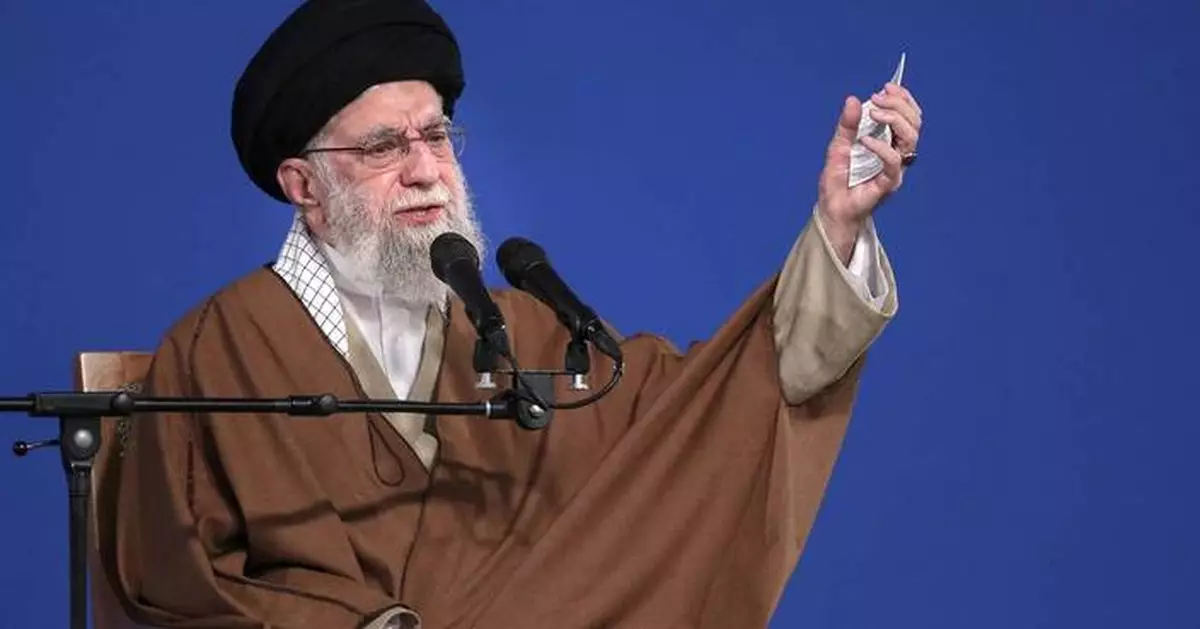
DUBAI, United Arab Emirates (AP) — Iran’s Supreme Leader Ayatollah Ali Khamenei said Thursday that his country had delivered a “slap to America’s face” by striking a U.S. air base in Qatar and warned against further attacks in his first public comments since a ceasefire agreement with Israel.
Khamenei's prerecorded speech that aired on Iranian state television, his first appearance since June 19, was filled with warnings and threats directed toward the United States and Israel, the Islamic Republic’s longtime adversaries.
The 86-year-old, a skilled orator known for his forceful addresses to the country’s more than 90 million people, appeared more tired than he had just a week ago, speaking in a hoarse voice and occasionally stumbling over his words.
The supreme leader downplayed U.S. strikes on three Iranian nuclear sites Sunday using bunker-buster bombs and cruise missiles, saying that U.S. President Donald Trump — who said the attack “completely and fully obliterated" Iran’s nuclear program — had exaggerated its impact.
“They could not achieve anything significant,” Khamenei said. Missing from his more than 10-minute video message was any mention of Iran's nuclear program and the status of their facilities and centrifuges after extensive U.S. and Israeli strikes.
His characterization of Monday's strike on the U.S. air base in Qatar contrasted with U.S. accounts of it as a limited attack with no casualties.
The White House responded to Khamenei's video, accusing him of trying to “save face.”
"Any commonsense, open-minded person knows the truth about the precision strikes on Saturday night," press secretary Karoline Leavitt told reporters Thursday. "They were wildly successful.”
The head of the U.N. nuclear watchdog, International Atomic Energy Agency Director Rafael Grossi, reiterated Thursday that the damage done by Israeli and U.S. strikes at Iranian nuclear facilities “is very, very, very considerable" and that he can only assume the centrifuges are not operational.
“I think annihilated is too much, but it suffered enormous damage,” Grossi told French broadcaster RFI. The IAEA has not been allowed to visit any of the Iranian facilities to do an independent assessment of the damage.
Iran’s Foreign Ministry spokesperson, Esmail Baghaei, also conceded Wednesday that "our nuclear installations have been badly damaged, that’s for sure.”
Khamenei has not been seen in public since taking shelter in a secret location after the outbreak of the war on June 13 when Israel attacked Iranian nuclear facilities and targeted top military commanders and scientists.
After Sunday's attack on Iran's nuclear facilities, Trump was able to help negotiate a ceasefire that came into effect Tuesday.
Khamenei claimed the U.S. had only intervened in the war because “it felt that if it did not intervene, the Zionist regime would be utterly destroyed.”
“It entered the war to save them, yet it gained nothing,” he said.
He said his country's attack Monday on the U.S. base in Qatar was significant, since it shows Iran “has access to important U.S. centers in the region and can act against them whenever it deems necessary.”
“The Islamic Republic was victorious and, in retaliation, delivered a hand slap to America’s face,” he said, adding, “This action can be repeated in the future."
“Should any aggression occur, the enemy will definitely pay a heavy price,” he said.
Trump has dismissed the retaliatory attack as a “very weak response,” saying that the U.S. had been warned by Iran in advance and emphasizing that there had been no casualties.
On Thursday, Iran partially reopened its airspace, which had been closed since the war began, and shops in Tehran’s capital began to reopen, with traffic returning to the streets.
Majid Akhavan, spokesperson for the Ministry of Roads and Urban Development, said Iran had reopened its airspace for the eastern half of the country to domestic and international flights, including those transiting Iranian airspace.
Earlier this week, Tehran said 606 people had been killed in the conflict in Iran, with 5,332 people wounded. The Washington-based Human Rights Activists group released figures Wednesday suggesting Israeli strikes on Iran had killed at least 1,054 and wounded 4,476.
The group, which has provided detailed casualty figures from multiple rounds of unrest in Iran, said 417 of those killed were civilians and 318 were security forces.
At least 28 people were killed in Israel and more than 1,000 wounded, according to officials there. During the 12-day war, Iran fired more than 550 missiles at Israel with a 90% interception rate, according to new statistics released by Israeli authorities Thursday. Israel, meantime, hit more than 720 Iranian military infrastructure targets and eight nuclear-related sites, Israel said.
Trump has also asserted that American and Iranian officials will talk next week, giving rise to cautious hope for longer-term peace.
Iran has not acknowledged that any such talks would take place, though U.S. Mideast envoy Steve Witkoff has said there has been direct and indirect communication between the countries. A sixth round of U.S.-Iran negotiations was scheduled for earlier this month in Oman but was canceled after Israel attacked Iran.
Iran has insisted that it will not give up its nuclear program. In a vote underscoring the tough path ahead, its parliament agreed Wednesday to fast-track a proposal that would effectively stop the country’s cooperation with the IAEA, which has monitored the program for years.
Associated Press writer John Leicester in Paris; Natalie Melzer in Nahariya, Israel; and Aamer Madhani in Washington contributed to this report.
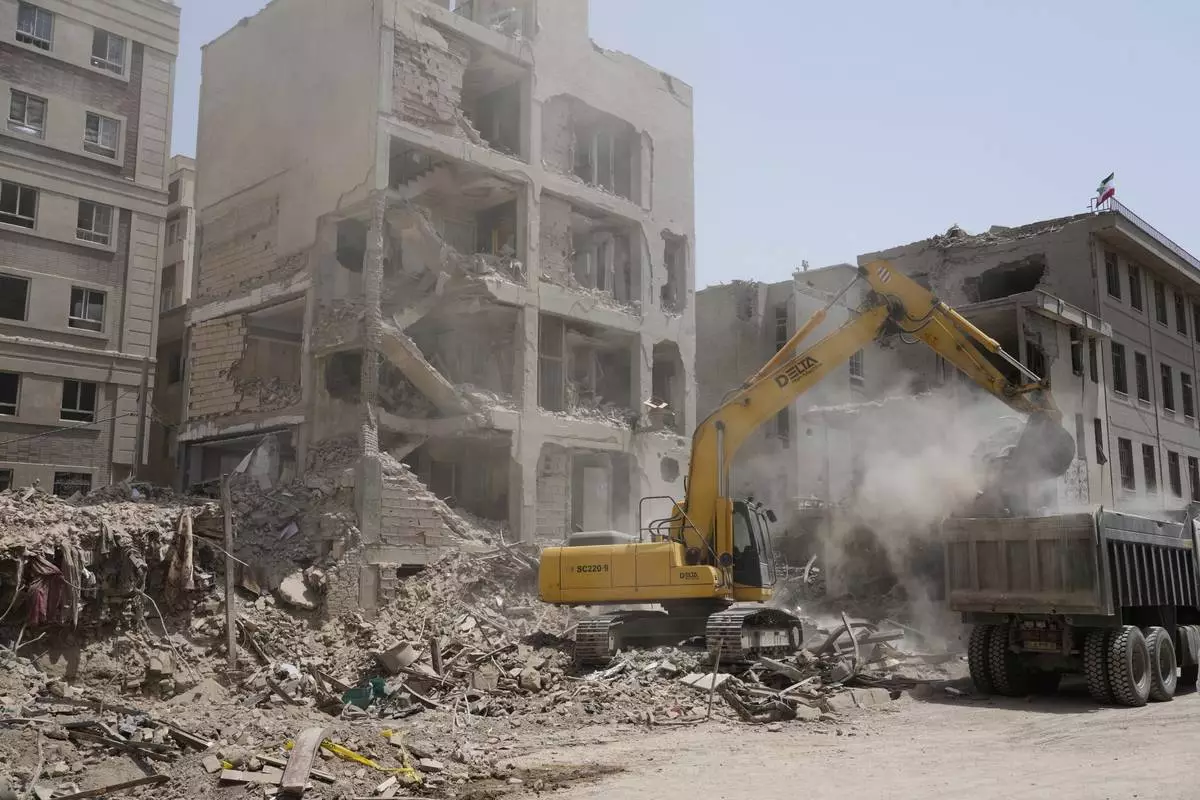
An excavator removes the rubble of a destroyed building hit by an Israeli airstrike on early Tuesday, in Tehran, Iran, Thursday, June 26, 2025. (AP Photo/Vahid Salemi)
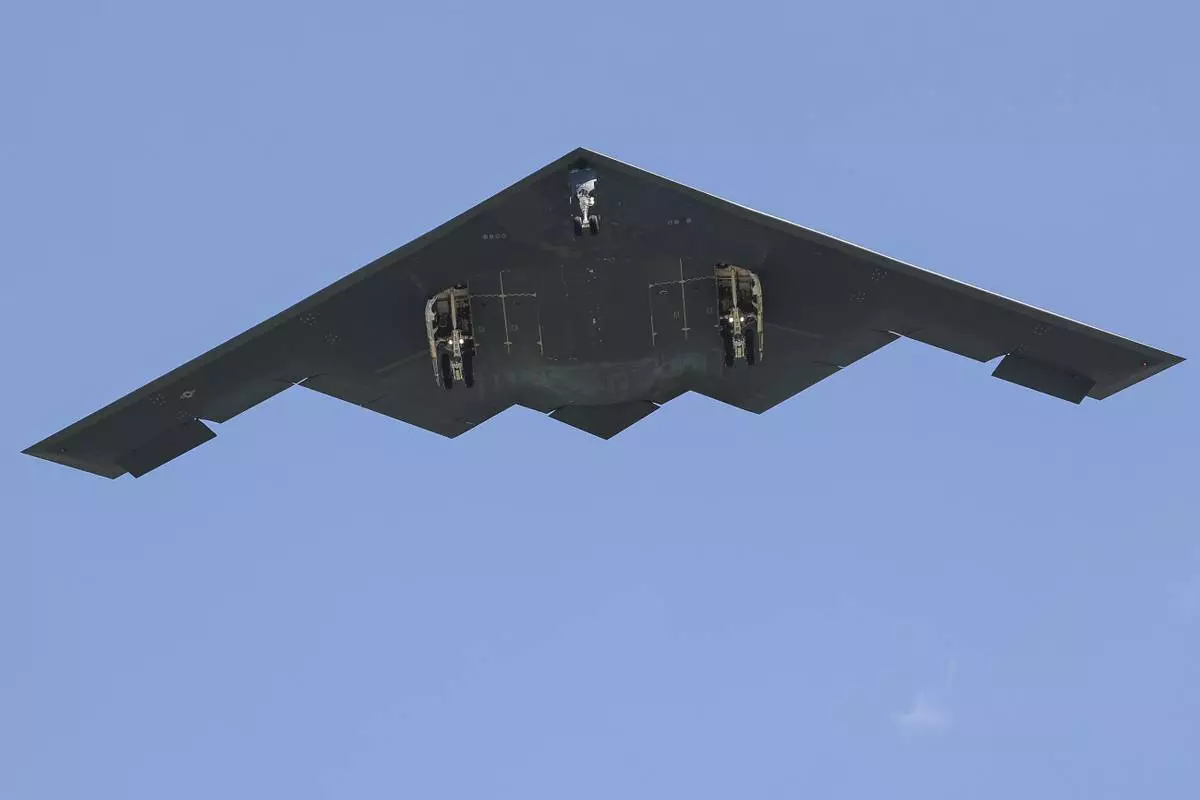
A B-2 bomber arrives at Whiteman Air Force Base Mo., Sunday, June 22, 2025, after returning from a massive strike on Iranian nuclear sites on Saturday. (AP Photo/David Smith)
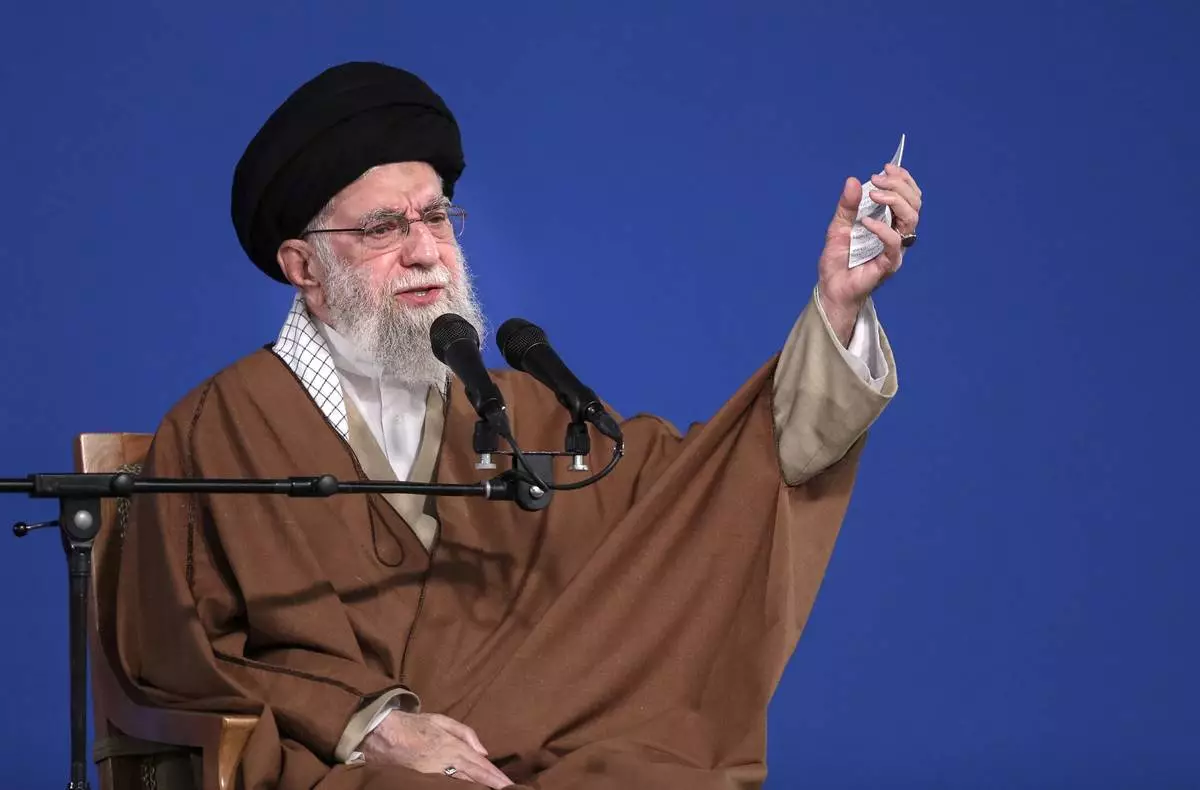
In this photo released by the official website of the office of the Iranian supreme leader, Supreme Leader Ayatollah Ali Khamenei speaks to a group of people and officials in Tehran, Iran, Friday, March 21, 2025. (Office of the Iranian Supreme Leader via AP)