Skip to Content Facebook Feature Image

Thimerosal: What to know about the vaccine preservative from a bygone flu-shot debate

TECH

Thimerosal: What to know about the vaccine preservative from a bygone flu-shot debate
TECH

TECH

Thimerosal: What to know about the vaccine preservative from a bygone flu-shot debate

2025-06-27 02:47 Last Updated At:02:51

The Trump administration’s vaccine advisers took up an old flu-shot debate: whether it’s time to wipe out the last small fraction of those vaccines that contain a controversial preservative called thimerosal.

It’s a question seemingly laid to rest years ago, as studies showed no evidence that the preservative causes any health problems. Yet that vaccine panel recommended Thursday that people should receive only thimerosal-free flu vaccinations this fall — something already easy to do since government data shows only a small share of last year's vaccine contained the preservative.

“This is really a nonissue,” said Dr. Sean O’Leary of the American Academy of Pediatrics, who worries the scrutiny “is sowing distrust” of safe vaccinations.

Here are some things to know about the substance.

Thimerosal is a preservative used in certain vaccines since the 1930s, as well as in some other medical products.

It was mostly used in multi-dose vials of vaccine, to prevent bacterial contamination as the vessel was repeatedly punctured to withdraw a dose.

Questions about thimerosal were raised in the late 1990s because it contains a form of mercury.

It’s not the same as the toxic type found in some seafood, called methylmercury. Instead, it’s a different type called ethylmercury that the body can excrete, O’Leary explained.

The amount of ethylmercury per vaccine dose was small and studies found no evidence of harm. Nor was it used in all vaccines. For example, vaccines for chickenpox, polio and measles, mumps and rubella never contained it, according to the Centers for Disease Control and Prevention.

But as a precaution, the U.S. phased the preservative out of childhood vaccines. Since 2001, all vaccines routinely recommended for children age 6 and younger in the U.S. come in formulas that don’t contain thimerosal.

The exception is a small subset of flu shot formulas in multi-dose vials that can be used for adults or kids. The vast majority of children, however, get their flu vaccination from a single-dose shot, O’Leary said.

According to the CDC, 96% of all flu vaccines in the U.S. administered last fall and winter — and an even higher share of those used in federal programs like Vaccines for Children — were thimerosal-free.

U.S. Health Secretary Robert F. Kennedy Jr. has long contended there was a tie between thimerosal and autism.

On Thursday, his newly appointed vaccine advisers heard a presentation from Lyn Redwood. She is past president of the anti-vaccine group he led for years and was just hired as an “expert” by his agency.

She told the group that thimerosal should be removed from remaining flu shots. Among her claims were that they could be a risk to pregnant women.

A CDC staff analysis prepared for the meeting — but not allowed to be publicly presented — concluded there was no link between the preservative and autism or other neurodevelopmental disorders. Some experts also note that autism rates rose after thimerosal was removed from young children's vaccines in the U.S.

The preservative is still used in vaccines in other countries.

The Associated Press Health and Science Department receives support from the Howard Hughes Medical Institute’s Department of Science Education and the Robert Wood Johnson Foundation. The AP is solely responsible for all content.
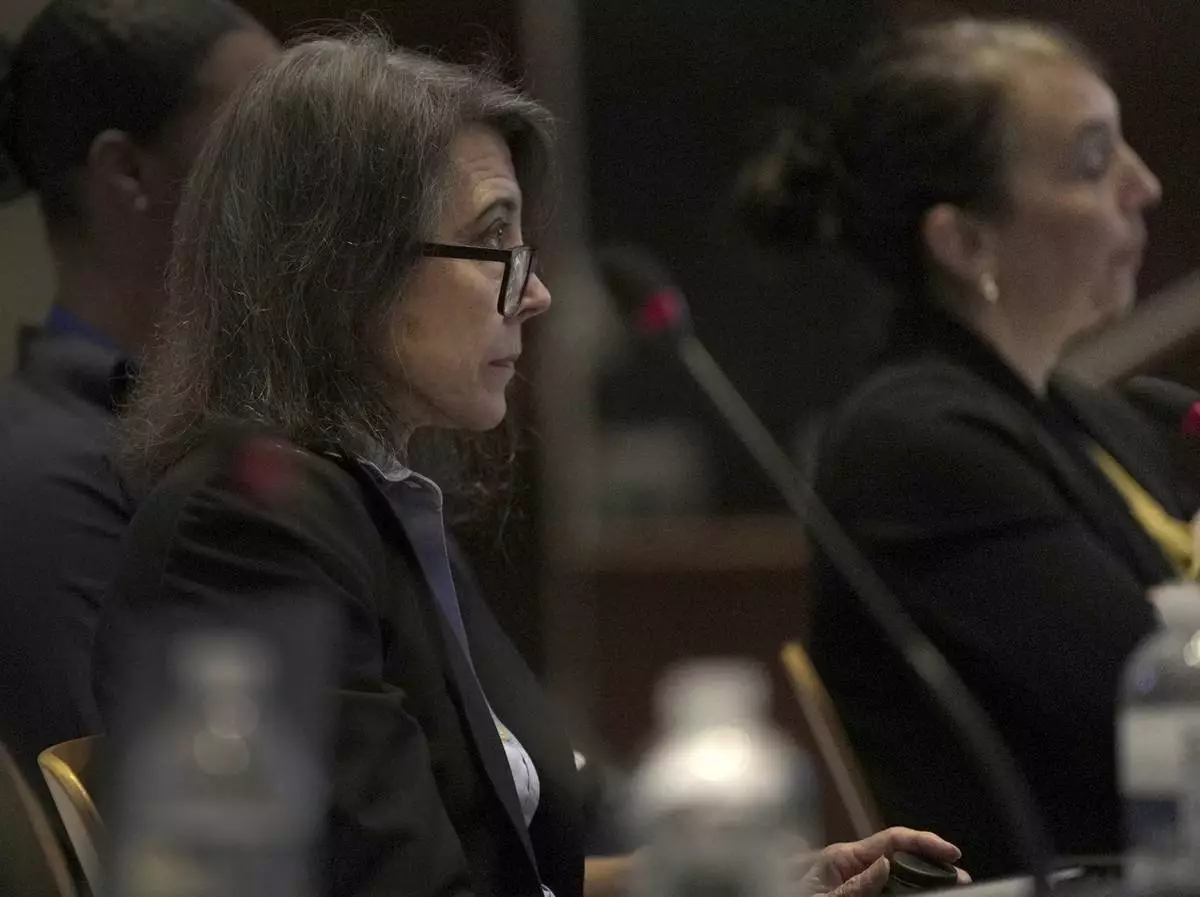
Lyn Redwood, a nurse practitioner who once ran the anti-vaccine group that Robert F. Kennedy Jr. founded, attends a meeting of the Advisory Committee on Immunization Practices at the Centers for Disease Control and Prevention in Atlanta on Thursday, June 26, 2025. (AP Photo/Shelby Lum)
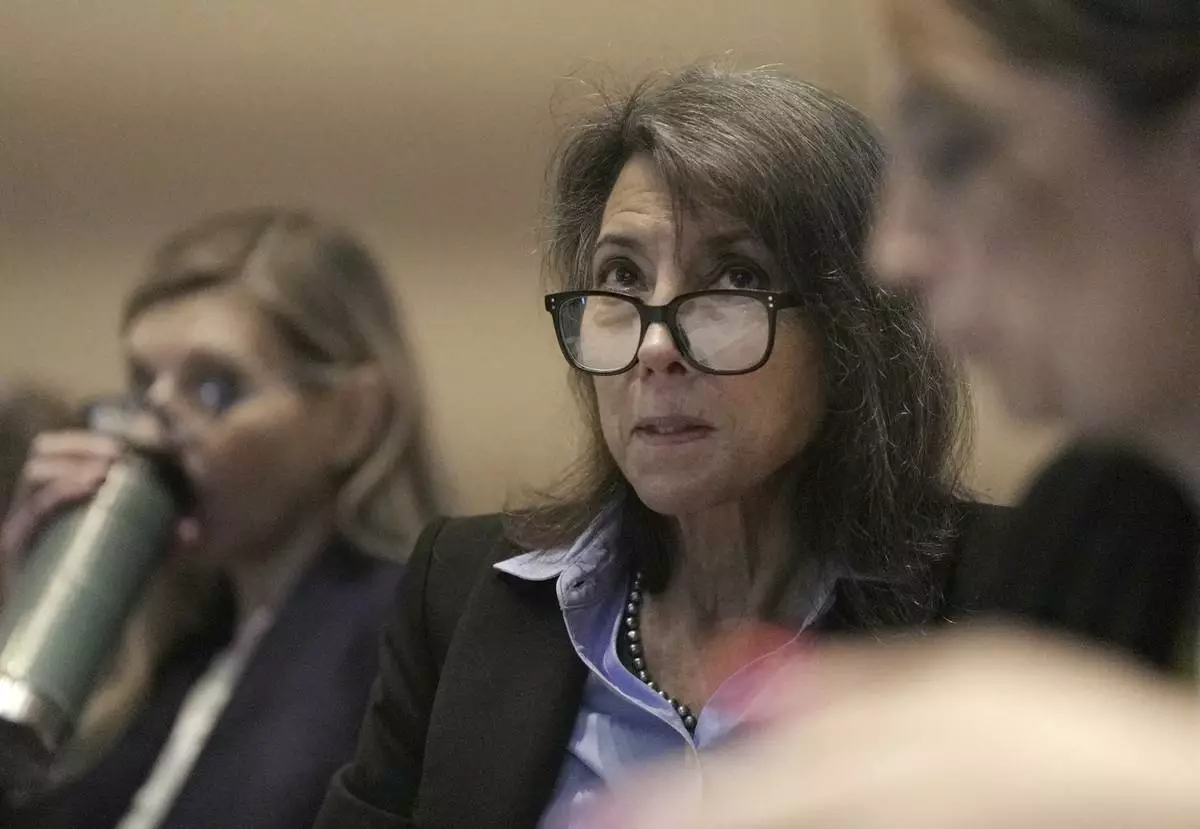
Lyn Redwood, a nurse practitioner who once ran the anti-vaccine group that Robert F. Kennedy Jr. founded, attends a meeting of the Advisory Committee on Immunization Practices at the Centers for Disease Control and Prevention in Atlanta on Thursday, June 26, 2025. (AP Photo/Shelby Lum)
Lyn Redwood, a nurse practitioner who once ran the anti-vaccine group that Robert F. Kennedy Jr. founded, attends a meeting of the Advisory Committee on Immunization Practices at the Centers for Disease Control and Prevention in Atlanta on Thursday, June 26, 2025. (AP Photo/Shelby Lum)

Lyn Redwood, a nurse practitioner who once ran the anti-vaccine group that Robert F. Kennedy Jr. founded, attends a meeting of the Advisory Committee on Immunization Practices at the Centers for Disease Control and Prevention in Atlanta on Thursday, June 26, 2025. (AP Photo/Shelby Lum)

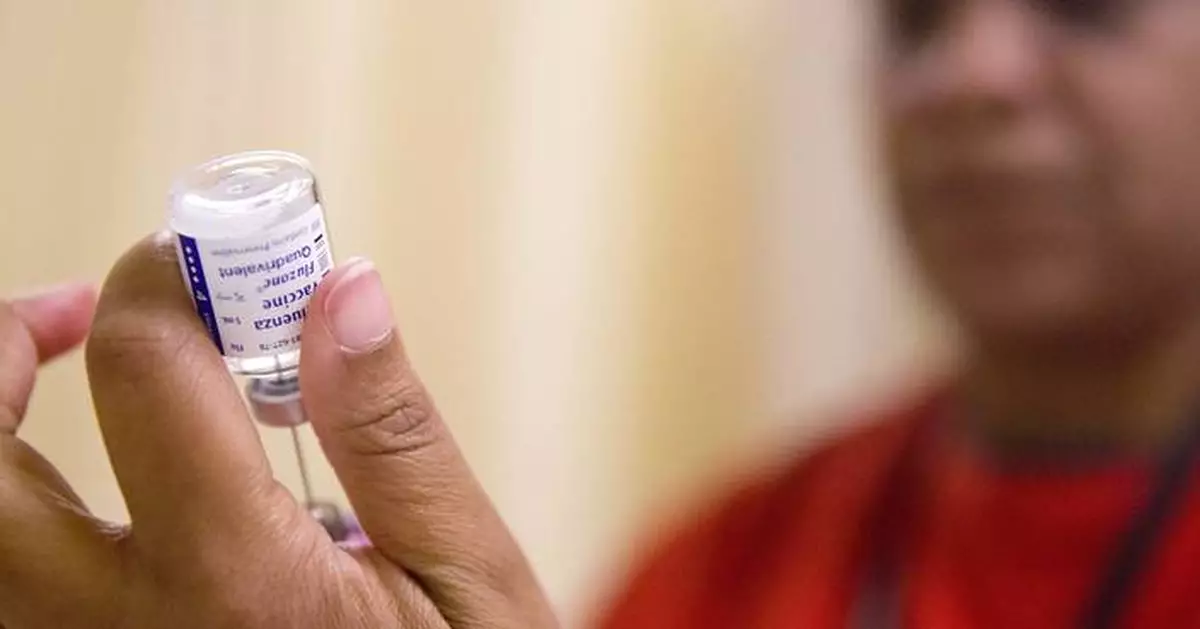
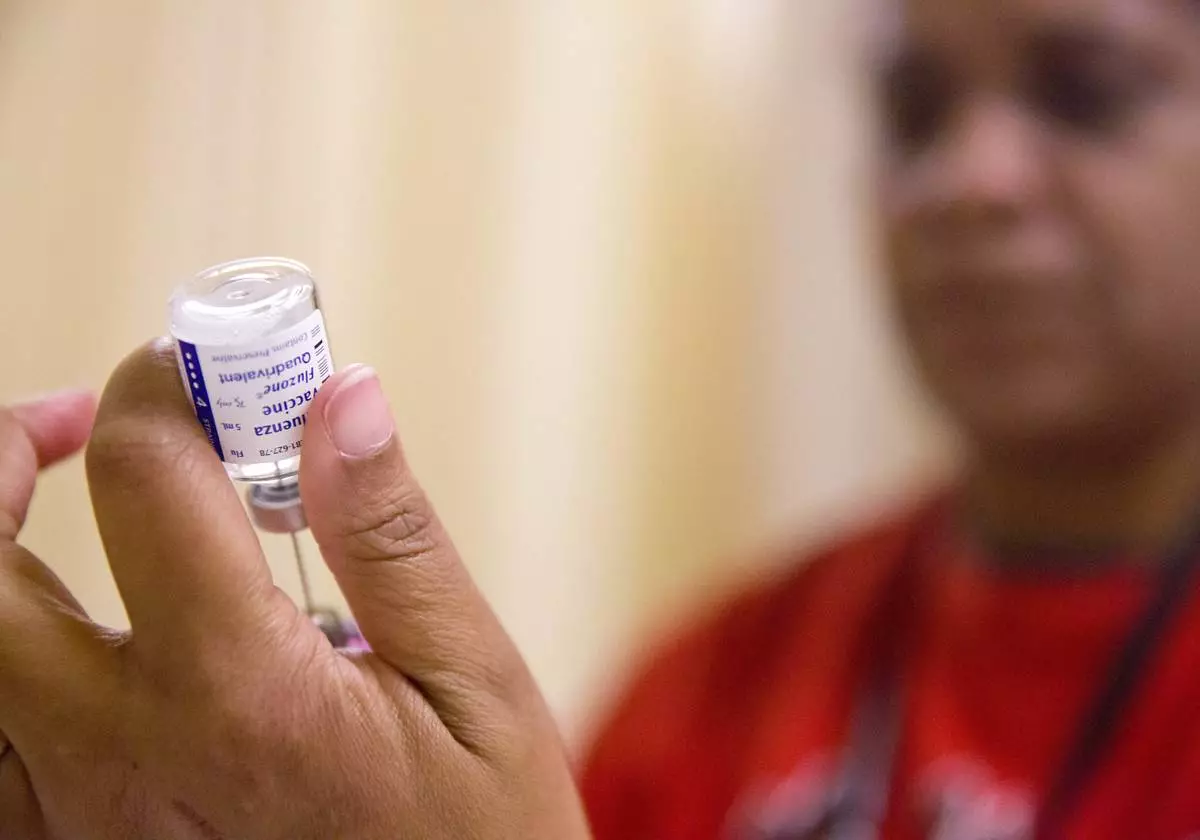
FILE - A nurse prepares a flu shot from a vaccine vial at the Salvation Army in Atlanta, Feb. 7, 2018. (AP Photo/David Goldman, File)
FILE - A nurse prepares a flu shot from a vaccine vial at the Salvation Army in Atlanta, Feb. 7, 2018. (AP Photo/David Goldman, File)

WASHINGTON (AP) — The U.S. Coast Guard said Friday it's still searching for people in the eastern Pacific Ocean who had jumped off alleged drug-smuggling boats when the U.S. military attacked the vessels days earlier, diminishing the likelihood that anyone survived.

Search efforts began Tuesday afternoon after the military notified the Coast Guard that survivors were in the water about 400 miles (650 kilometers) southwest of the border between Mexico and Guatemala, the maritime service said in a statement.

The Coast Guard dispatched a plane from Sacramento to search an area covering more than 1,000 miles (1,600 kilometers), while issuing an urgent warning to ships nearby. The agency said it coordinated more than 65 hours of search efforts, working with other countries as well as civilian ships and boats in the area.

The weather during that time has included 9-foot seas and 40-knot winds. The U.S. has not said how many people jumped into the water, and, if they are not found, how far the death toll may rise from the Trump administration's monthslong campaign of blowing up small boats accused of transporting drugs in the region.

The U.S. military said earlier this week that it attacked three boats traveling along known narco-trafficking routes and they “had transferred narcotics between the three vessels prior to the strikes.” The military did not provide evidence to back up the claim.

U.S. Southern Command, which oversees the region, said three people were killed when the first boat was struck, while people in the other two boats jumped overboard and distanced themselves from the vessels before they were attacked.

The strikes occurred in a part of the eastern Pacific where the Navy doesn’t have any ships operating. Southern Command said it immediately notified the U.S. Coast Guard to activate search and rescue efforts for the people who jumped overboard before the other boats were hit.

Calling in the Coast Guard is notable because the military drew heavy scrutiny after U.S. forces killed the survivors of the first attack in early September with a follow-up strike to their disabled boat. Some Democratic lawmakers and legal experts said the military committed a crime, while the Trump administration and some Republican lawmakers say the follow-up strike was legal.

There have been other survivors of the boat strikes, including one for whom the Mexican Navy suspended a search in late October after four days. Two other survivors of a strike on a submersible vessel in the Caribbean Sea that same month were sent to their home countries — Ecuador and Colombia. Authorities in Ecuador later released the man, saying they had no evidence he committed a crime in the South American nation.

Under President Donald Trump's direction, the U.S. military has been attacking boats in the Caribbean Sea and eastern Pacific since early September. As of Friday, the number of known boat strikes is 35 and the number of people killed is at least 115, according to numbers announced by the Trump administration.

Trump has justified the boat strikes as a necessary escalation to stem the flow of drugs into the United States and asserted that the U.S. is engaged in an “armed conflict” with drug cartels.

Along with the strikes, the Trump administration has built up military forces in the region as part of an escalating pressure campaign on Venezuelan President Nicolás Maduro, who has been charged with narco-terrorism in the United States.

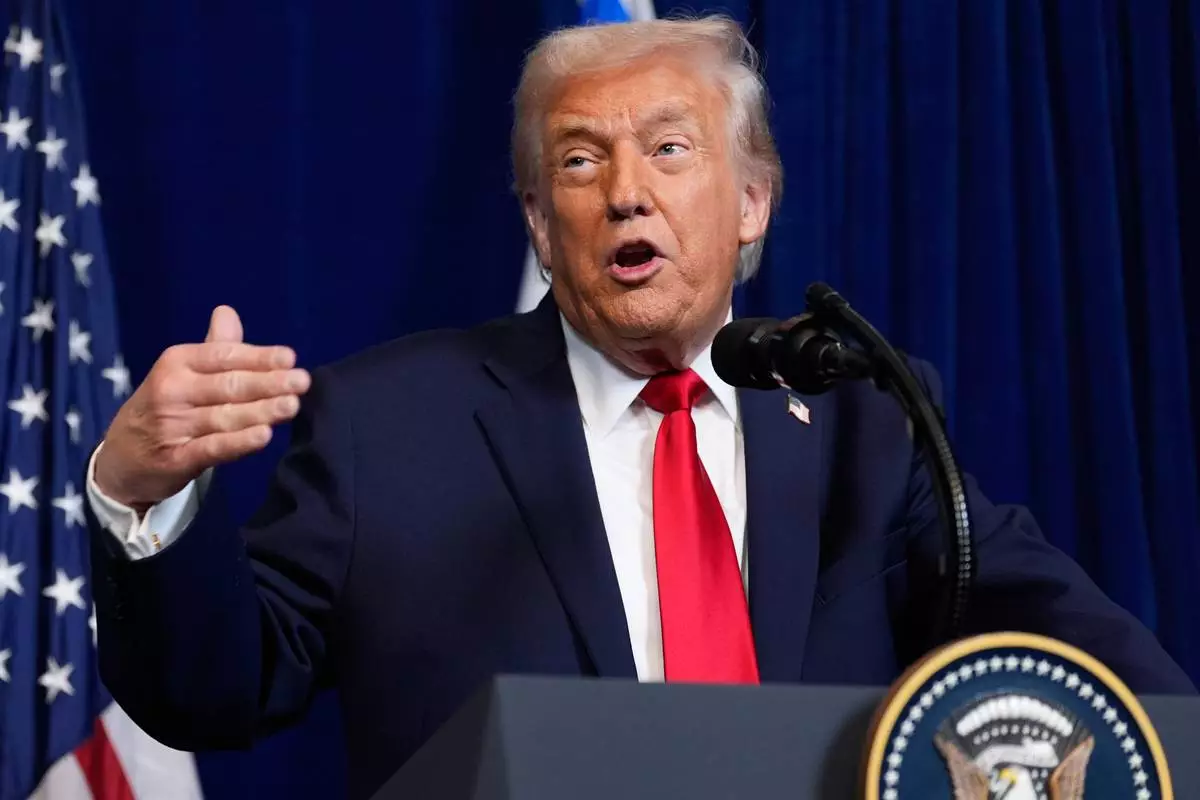
President Donald Trump speaks during a news conference with Israel's Prime Minister Benjamin Netanyahu at Mar-a-Lago, Monday, Dec. 29, 2025, in Palm Beach, Fla. (AP Photo/Alex Brandon)

President Donald Trump speaks during a news conference with Israel's Prime Minister Benjamin Netanyahu at Mar-a-Lago, Monday, Dec. 29, 2025, in Palm Beach, Fla. (AP Photo/Alex Brandon)

Recommended Articles