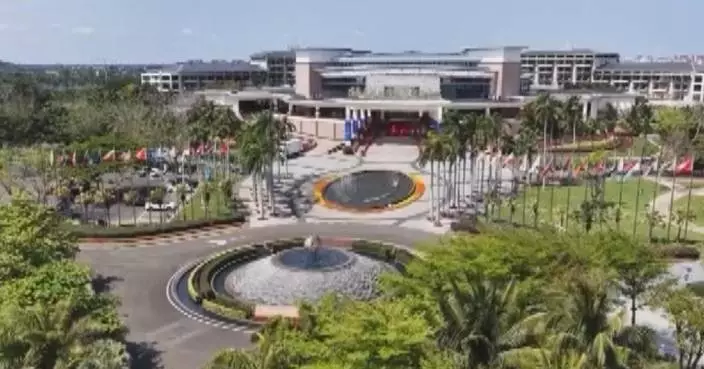
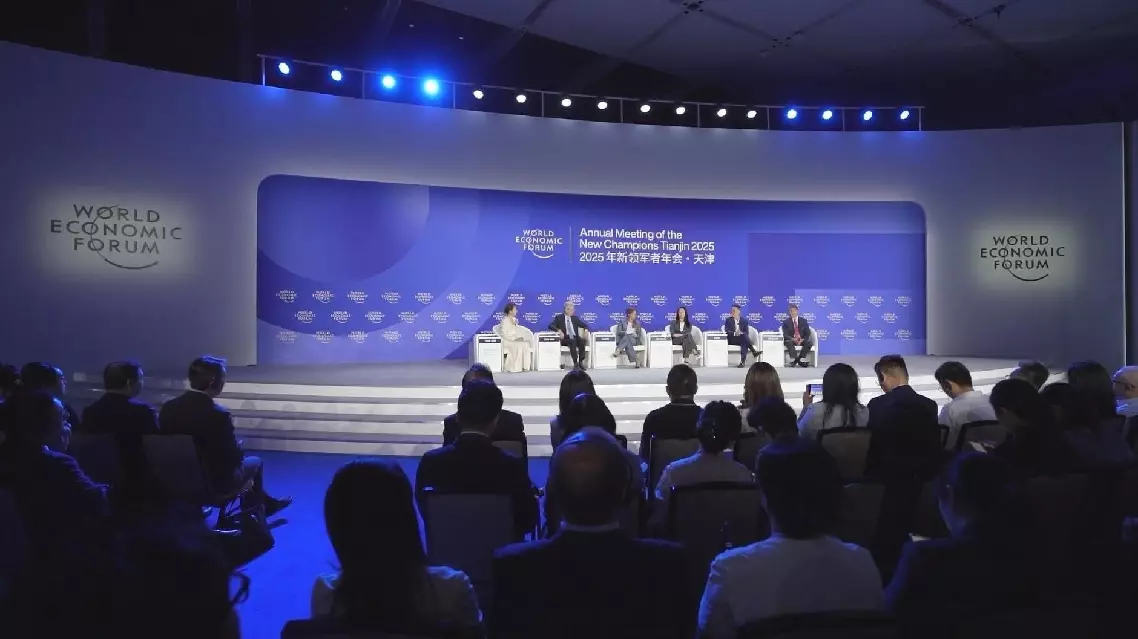
The 2025 Summer Davos concluded in north China's Tianjin Municipality on Thursday afternoon, with its last day focusing on topics such as China's economic outlook and the country's evolving AI strategy, as well as broader global discussions on geopolitical entrepreneurship and inclusive innovation.
The three-day event, organized by the World Economic Forum (WEF) and officially known as the 16th Annual Meeting of the New Champions in 2025, gathered more than 1,700 guests from over 90 countries and regions across the world, making it one of the largest editions to date.
Themed "Entrepreneurship for a New Era," the major gathering of global business leaders focused on five key areas: deciphering the world economy, outlook on China, industries disrupted, investing in people and the planet, and new energy and materials.
The Chinese economy was among the most discussed topics throughout the three-day forum, especially on the last day.
Participants highlighted China's pivotal role in reshaping global trade. As the world's growth engine - contributing roughly 30 percent to global GDP - China has deepened market integration and industrial cooperation, extending its developmental benefits worldwide.
"China's manufacturing capabilities, supporting capacities, and supply chain strengths benefit not only domestic markets but also global demand. Without multilateral trade, China's high-quality goods and services would remain confined within borders. Therefore, we have consistently advocated for maintaining normal trade relations among nations," said Yu Feng, President of Honeywell China, in an interview on the sideline of the event.
"I think that in order to keep the world trade flowing, the role of China is fundamental. And the rise of China, as the second largest for the moment, manufacturing and economy in the world certainly creates great potentialities for the cooperation between our two countries. If we were able to find a common ground, agree upon common rules, we will be able together to do much more," said Valentino Valentini, Deputy Minister for Enterprises and Made in Italy.
Global business leaders noted Chinese government's efforts to foster private sector development, including promoting innovation and the establishment of a robust legal framework.
"China has recently enacted a Private Economy Promotion Law, the first of its kind to bolster the private sector, aiming to ensure fair competition, protect private businesses' rights, and promote sustainable development. It provides a legal guarantee and a comprehensive institutional framework for the development of the private economy. This law will significantly boost confidence in the growth of private enterprises while laying a solid foundation for their long-term development," said Li Dongsheng, founder and chairman of TCL, a leading Chinese consumer electronics brand.
Echoing Chinese Premier Li Qiang's keynote speech at Wednesday's opening plenary, participants said that China's stable environment has boosted confidence for global traders and investors.
"He did highlight the stability of the China market. If you compare to many of the other countries in the world, probably China provides the most stable environment here. And he highlights the openness, the consistency of the policies and also the openness of the China market to the rest of the multinational companies. So, it gives us lots of inspiration and also confidence about the market here,” said Samantha Zhu, chairperson of Accenture Greater China.
The development of artificial intelligence (AI) was another popular topic during the event.
Participants pointed out that AI should be developed with a people-oriented approach and properly regulated, to ensure its trustworthiness.
"I think it helps very much that as you continue to test and apply then, when they see the measures and levels that are being put in place, they gain that confidence," said Paula Ingabire, Minister of Information Communication Technology and Innovation in Rwanda.
Established by the WEF in 2007, the summer event is held annually in China, alternating between the two port cities of Tianjin and Dalian.
2025 Summer Davos concludes in Tianjin