BIRMINGHAM, Ala. (AP) — Professors and students at the University of Alabama testified on Thursday that a new an anti-diversity, equity and inclusion law has jeopardized funding and changed curriculum, as a federal judge weighs whether the legislation is constitutional before the new school year begins.
The new state law, SB129, followed a slew of proposals from Republican lawmakers across the country taking aim at DEI programs on college campuses. Universities across the country have shuttered or rebranded student affinity groups and DEI offices.
The law prohibits public schools and universities from using state funds for any curriculum that endorses or compels assent to viewpoints about eight “divisive concepts” related to race, religion, gender identity and religion. Instructors are also prohibited from encouraging a person feel guilt because of those identities. Schools are still allowed to facilitate “objective” discussions on those topics, according to the law.
Dana Patton, a political science professor at the University of Alabama, was one of six professors and students who sued the school and Republican Gov. Kay Ivey in January, arguing that the law violates the First Amendment by placing viewpoint-based restrictions on educators’ speech. The lawsuit also argued that the law unconstitutionally targets Black students because it emphasizes concepts related to race and limits programs that benefit Black students.
Shortly after the law took effect in October, Patton said that school officials told her that five students had made complaints suggesting that the interdisciplinary honors program she administered had potential conflicts with the new legislation. The program focuses on social justice and community service.
University officials said a “powerful person” in the state Capitol was behind the five student complaints, Patton testified.
The complaints alleged the program “promoted socialism” and focused on “systematic racism" and “producing engaged global citizens as opposed to patriotic Americans,” according to evidence presented at the hearing. The complaints also said students “feel unsafe” because “the leadership of the program has a clear view of the world from a divisive perspective."
“I was completely shocked, stunned," Patton said.
After weeks of meetings where Patton exhaustively laid out the content of her courses to administrators, she said she was introduced to Alabama Republican Rep. Danny Garrett at a school football game.
Garret told her that “we need compromise here” because the legislators involved in the complaints are “tenacious” and “not going to let this go.” He then sent her links to work he had done with Black Democratic state legislators after the death of George Floyd to address racial tension.
Patton said the conversation “very much felt like a threat” because Garrett is the chair of the Alabama House Ways and Means Education Committee, which is one of two legislative committees that oversees the university's funding.
The tenured professor said she has since removed some course material from her syllabus and is no longer posting slides of her lectures online, out of fear that her lessons might be misinterpreted.
Garrett declined to comment on the pending litigation.
Jay Ezelle, the defense attorney for the University of Alabama Board of Trustees, said the school had an obligation to investigate if students complain about being tested on an opinion, not on a performance.
“If that’s violated, the university has to investigate, correct?” Ezelle asked during cross-examination.
He added that the law had not created any measurable harm against the plaintiffs, because no faculty had been terminated or formally disciplined, and school administrators had sourced private funding for some affinity groups, who still have access to campus facilities.
Other professors testified that they felt compelled to pull class assignments or stop offering classes altogether based on Patton’s experience, as well as formal instruction from the university about the “risks” of testing students on divisive concepts.
Rising senior Sydney Testman said she lost her scholarship because it was tied to her job at the Social Justice Advocacy Council, which was terminated after the anti-DEI legislation went into effect.
“No one wants to say it's disproportionately affecting Black people,” she said. “The vibes are kind of 'everyone fend for yourselves.'”
Federal U.S. Chief Judge R. David Proctor said the case will largely hinge on whether classroom speech is protected under the First Amendment and whether the state has a right to influence curriculum. Proctor will also consider if the six students and professors who brought the lawsuit against the University of Alabama have been harmed by the new law.
He said he will make a decision in time for Alabama schools to have “clarity by the start of school.”
Riddle is a corps member for The Associated Press/Report for America Statehouse News Initiative. Report for America is a nonprofit national service program that places journalists in local newsrooms to report on undercovered issues.
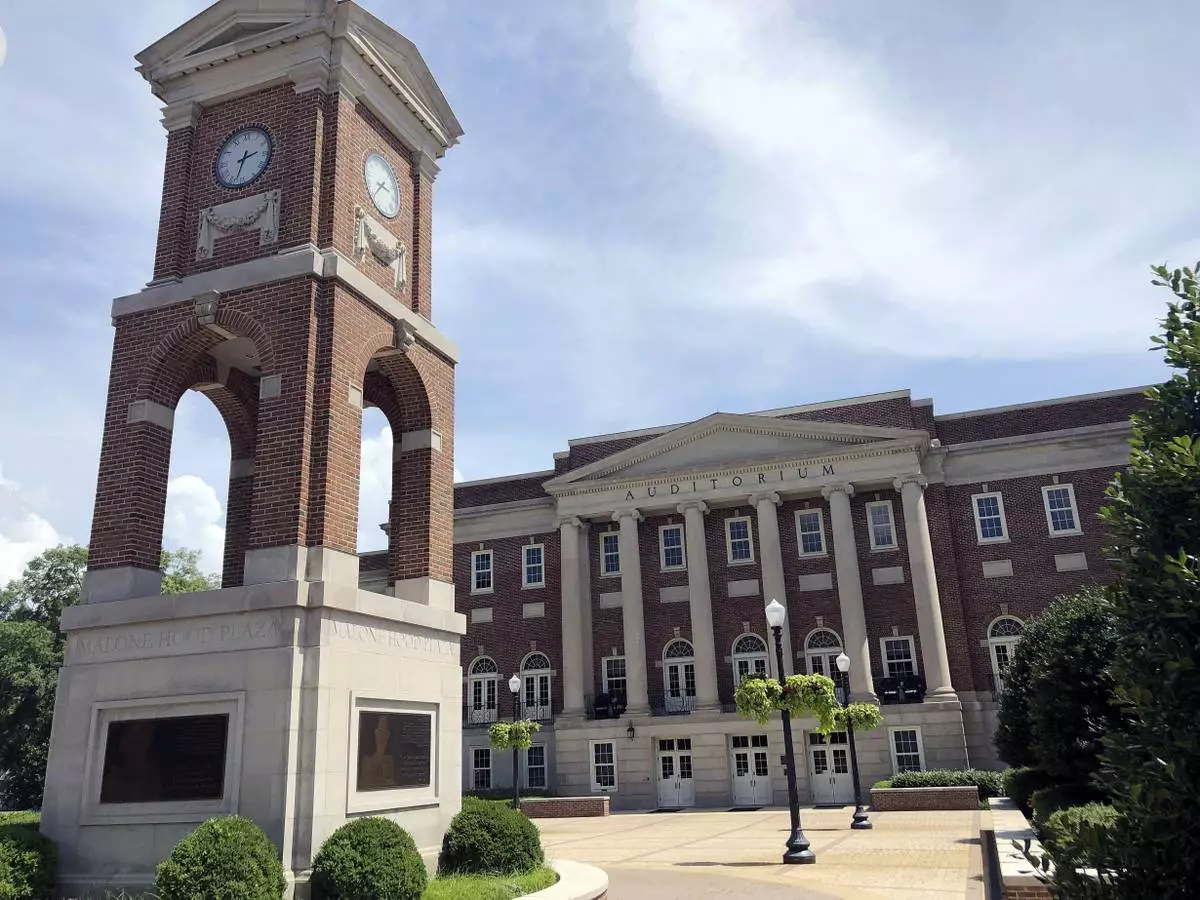
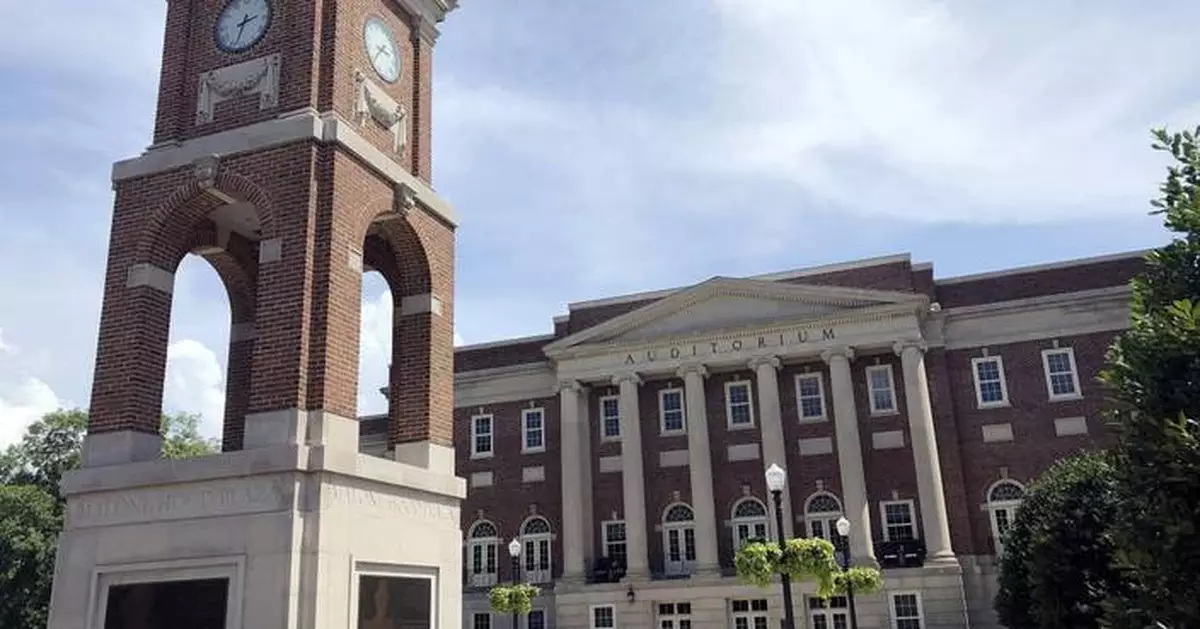
FILE - The Autherine Lucy Clock Tower at the Malone Hood Plaza stands in front of Foster Auditorium on the University of Alabama campus in Tuscaloosa, Ala., June 16, 2019. (AP Photo/Bill Sikes, File)
DUBAI, United Arab Emirates (AP) — U.S. President Donald Trump said Iran wants to negotiate with Washington after his threat to strike the Islamic Republic over its bloody crackdown on protesters, a move coming as activists said Monday the death toll in the nationwide demonstrations rose to at least 544.
Iran had no immediate reaction to the news, which came after the foreign minister of Oman — long an interlocutor between Washington and Tehran — traveled to Iran this weekend. It also remains unclear just what Iran could promise, particularly as Trump has set strict demands over its nuclear program and its ballistic missile arsenal, which Tehran insists is crucial for its national defense.
Meanwhile Monday, Iran called for pro-government demonstrators to head to the streets in support of the theocracy, a show of force after days of protests directly challenging the rule of 86-year-old Supreme Leader Ayatollah Ali Khamenei. Iranian state television aired chants from the crowd, who shouted “Death to America!” and “Death to Israel!”
Trump and his national security team have been weighing a range of potential responses against Iran including cyberattacks and direct strikes by the U.S. or Israel, according to two people familiar with internal White House discussions who were not authorized to comment publicly and spoke on condition of anonymity.
“The military is looking at it, and we’re looking at some very strong options,” Trump told reporters on Air Force One on Sunday night. Asked about Iran’s threats of retaliation, he said: “If they do that, we will hit them at levels that they’ve never been hit before.”
Trump said that his administration was in talks to set up a meeting with Tehran, but cautioned that he may have to act first as reports of the death toll in Iran mount and the government continues to arrest protesters.
“I think they’re tired of being beat up by the United States,” Trump said. “Iran wants to negotiate.”
He added: “The meeting is being set up, but we may have to act because of what’s happening before the meeting. But a meeting is being set up. Iran called, they want to negotiate.”
Iran through country's parliamentary speaker warned Sunday that the U.S. military and Israel would be “legitimate targets” if America uses force to protect demonstrators.
More than 10,600 people also have been detained over the two weeks of protests, said the U.S.-based Human Rights Activists News Agency, which has been accurate in previous unrest in recent years and gave the death toll. It relies on supporters in Iran crosschecking information. It said 496 of the dead were protesters and 48 were with security forces.
With the internet down in Iran and phone lines cut off, gauging the demonstrations from abroad has grown more difficult. The Associated Press has been unable to independently assess the toll. Iran’s government has not offered overall casualty figures.
Those abroad fear the information blackout is emboldening hard-liners within Iran’s security services to launch a bloody crackdown. Protesters flooded the streets in the country’s capital and its second-largest city on Saturday night into Sunday morning. Online videos purported to show more demonstrations Sunday night into Monday, with a Tehran official acknowledging them in state media.
In Tehran, a witness told the AP that the streets of the capital empty at the sunset call to prayers each night. By the Isha, or nighttime prayer, the streets are deserted.
Part of that stems from the fear of getting caught in the crackdown. Police sent the public a text message that warned: “Given the presence of terrorist groups and armed individuals in some gatherings last night and their plans to cause death, and the firm decision to not tolerate any appeasement and to deal decisively with the rioters, families are strongly advised to take care of their youth and teenagers.”
Another text, which claimed to come from the intelligence arm of the paramilitary Revolutionary Guard, also directly warned people not to take part in demonstrations.
“Dear parents, in view of the enemy’s plan to increase the level of naked violence and the decision to kill people, ... refrain from being on the streets and gathering in places involved in violence, and inform your children about the consequences of cooperating with terrorist mercenaries, which is an example of treason against the country,” the text warned.
The witness spoke to the AP on condition of anonymity due to the ongoing crackdown.
The demonstrations began Dec. 28 over the collapse of the Iranian rial currency, which trades at over 1.4 million to $1, as the country’s economy is squeezed by international sanctions in part levied over its nuclear program. The protests intensified and grew into calls directly challenging Iran’s theocracy.
Nikhinson reported from aboard Air Force One.
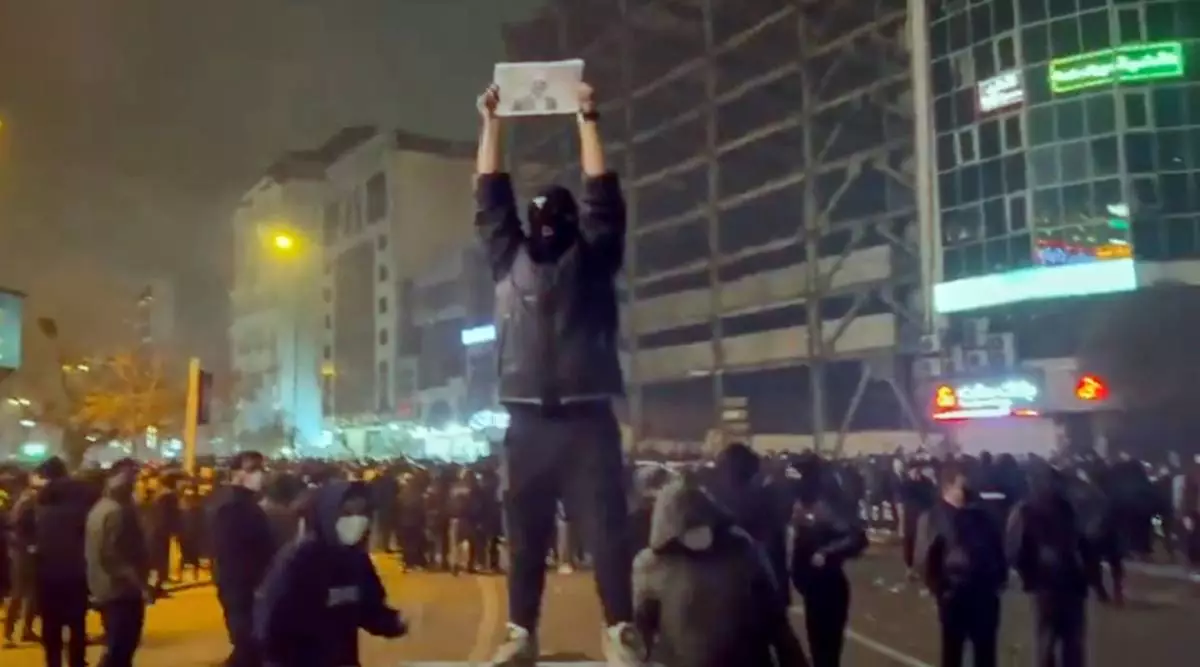
In this frame grab from video obtained by the AP outside Iran, a masked demonstrator holds a picture of Iran's Crown Prince Reza Pahlavi during a protest in Tehran, Iran, Friday, January. 9, 2026. (UGC via AP)
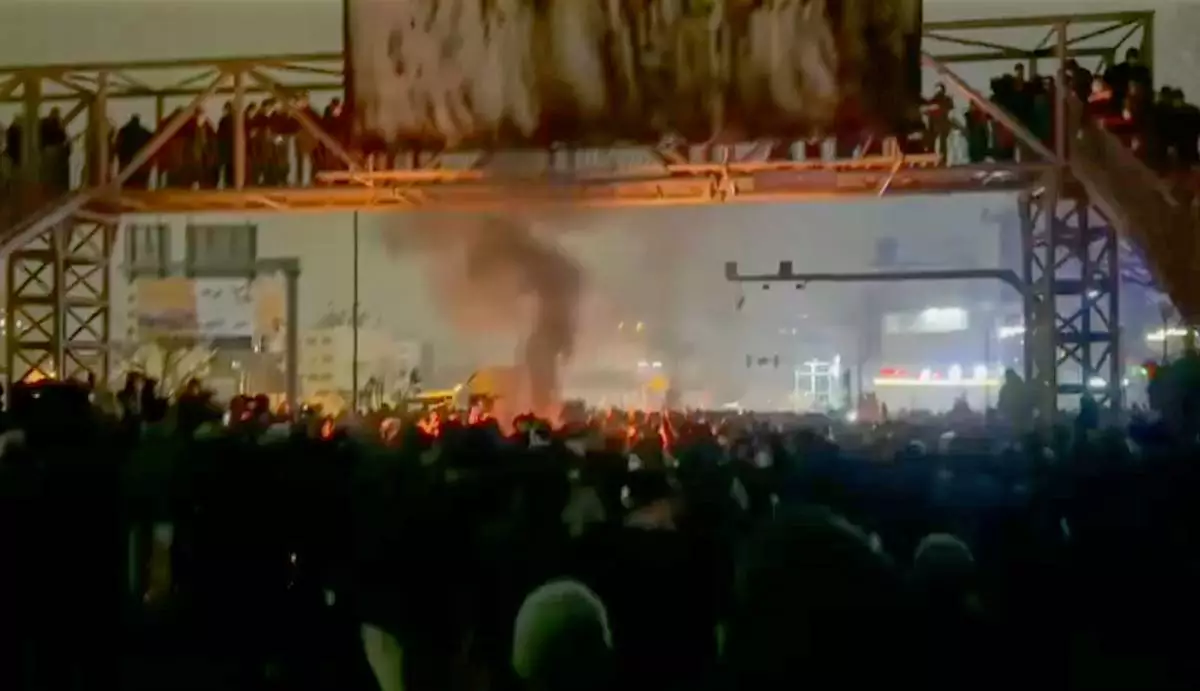
In this frame grab from footage circulating on social media from Iran shows protesters taking to the streets despite an intensifying crackdown as the Islamic Republic remains cut off from the rest of the world in Tehran, Iran, Friday, Jan. 9, 2026.(UGC via AP)
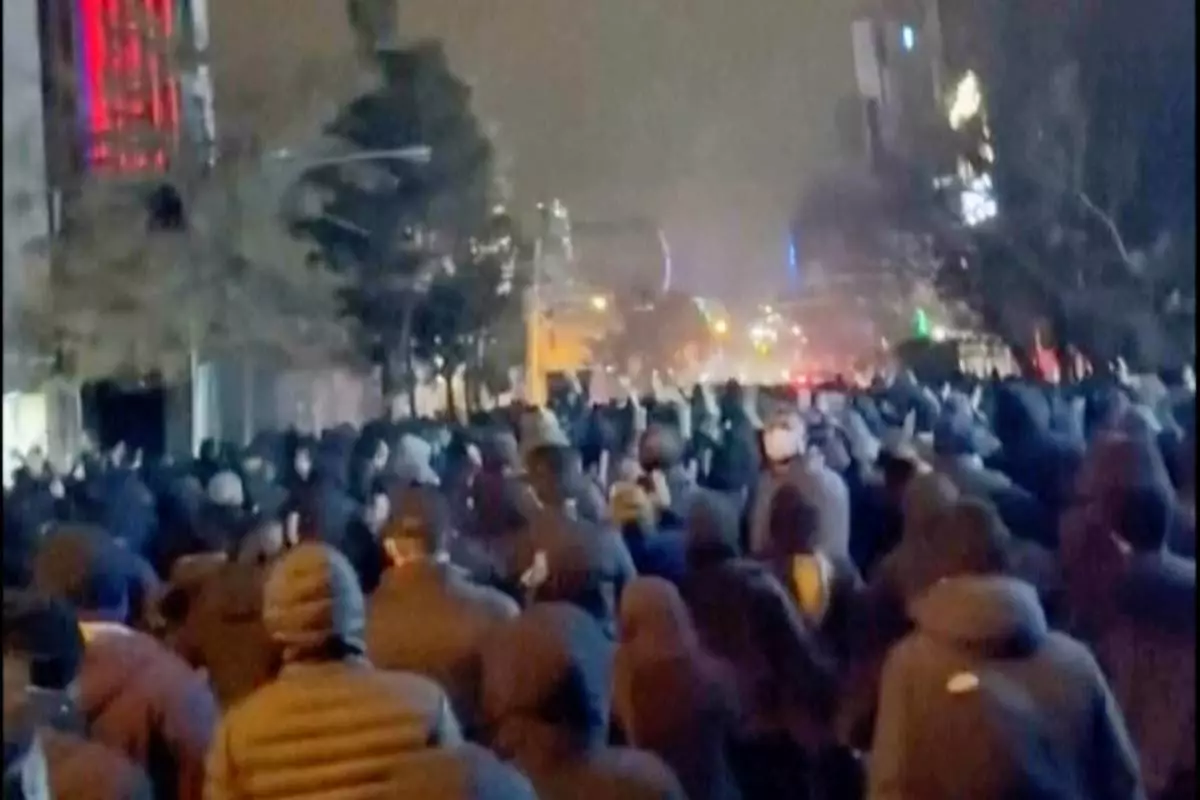
In this frame grab from footage circulating on social media from Iran showed protesters once again taking to the streets of Tehran despite an intensifying crackdown as the Islamic Republic remains cut off from the rest of the world in Tehran, Iran, Saturday Jan. 10, 2026. (UGC via AP)