Skip to Content Facebook Feature Image

Ecuador reveals how notorious gang leader 'Fito' hid in his hometown for 18 months after jailbreak

News

Ecuador reveals how notorious gang leader 'Fito' hid in his hometown for 18 months after jailbreak
News

News

Ecuador reveals how notorious gang leader 'Fito' hid in his hometown for 18 months after jailbreak

2025-06-27 12:34 Last Updated At:12:40

QUITO, Ecuador (AP) — Ever since Ecuador's most notorious gang leader vanished from his prison cell in January 2024, authorities have been searching the world, offering a $1 million reward for information leading to the capture of Adolfo Macías, alias “Fito."

It turned out the country’s most wanted man was hiding out at a family member’s mansion in his own hometown.

Ecuadorian security forces recaptured the kingpin Wednesday at an underground bunker beneath a marble-walled house in the port city of Manta, some 260 kilometers (161 miles) southwest of the capital of Quito.

In a remarks to reporters Thursday, authorities revealed further details about their efforts to locate Macías and the hiding place where he spent his final weeks as a fugitive.

Authorities had issued an international arrest warrant for Macías, who was serving a 34-year prison sentence for drug trafficking, organized crime and murder in a Guayaquil prison before his shock escape. Macías is also wanted by the United States on accusations of trafficking drugs and smuggling weapons.

A month ago, authorities closed in on the drug trafficker's family, arresting several of his relatives, seizing their assets and raiding their businesses. Interior Minister John Reimberg described the crackdown on Macías’ family as a “psychological operation” crucial to security forces' efforts to locate the notorious leader of Ecuador's “Los Choneros" gang.

“It contributes to a person's conflict, their loss of control,” he said in a press conference Thursday.

But what put Ecuadorian intelligence on his trail was the unusual behavior of a municipal transit official in Manta, who stopped showing up to work several months ago. Surveilling the official led intelligence services to Macías' inner circle, according to Víctor Ordóñez, a national police commander.

Authorities discovered that this official frequented a swanky three-story building equipped with an indoor pool, well-appointed gym and game room and outfitted with gleaming marble floors and walls.

Furniture was wrapped in plastic and flat screen TVs were still in their boxes. All over the house were statues of Saint Jude Thaddeus, the patron saint of hopeless causes venerated by Mexican drug traffickers. Los Choneros is believed to have been one of the first from Ecuador to forge ties with Mexican drug cartels.

Ordóñez also said that authorities received final confirmation that Macías would be in the house at the time of the 10-hourlong raid from his young daughter.

In the predawn darkness Wednesday, hundreds of heavily armed soldiers and security officers stormed the mansion and blocked off the surrounding streets. But Macías was nowhere to be found.

Security forces flew drones overhead and noticed that the land around the house appeared uneven, with suspiciously altered vegetation that suggested infrastructure and possible ventilation below the surface.

The fugitive was hunkered down in an air-conditioned bunker that could only be accessed through a small hatch, its entrance concealed by a cement and tile floor in the laundry room and openable only from the inside.

Police brought in heavy machinery to start excavating, and when the roof above his head began to cave in Macías recognized that capture was inevitable, Minister Reimberg said. The alternative was being crushed to death.

“When this happened, Fito panicked,” he said. “He opened the hatch where military and police personnel were located and left the hole.”

Within moments, Ecuador's most powerful drug lord was writhing on the ground with a gun pointed at his head, forced to repeat his full name out loud.

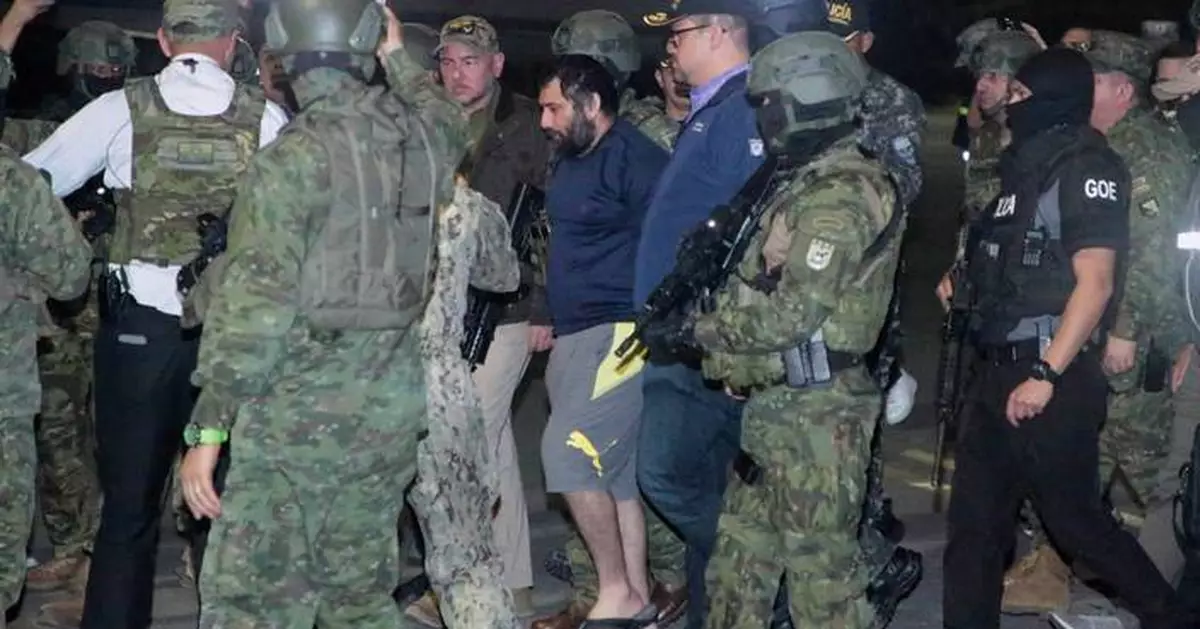
Shirtless and with an unkempt beard, a haggard “Fito” was shepherded outside by a squad of officers and brought to the country’s highest-security prison, known as La Roca, or the Rock, in Guayaquil, Ecuador’s largest city.

Ecuador’s President Daniel Noboa announced after the capture that the Macías would be extradited to the U.S. to face prosecution. He was indicted in New York City in April on charges of importing and distributing thousands of pounds of cocaine in the U.S.

“We have done our part,” Reimberg said. “I expect the U.S. extradition request to arrive in the next few hours or at most the next few days."
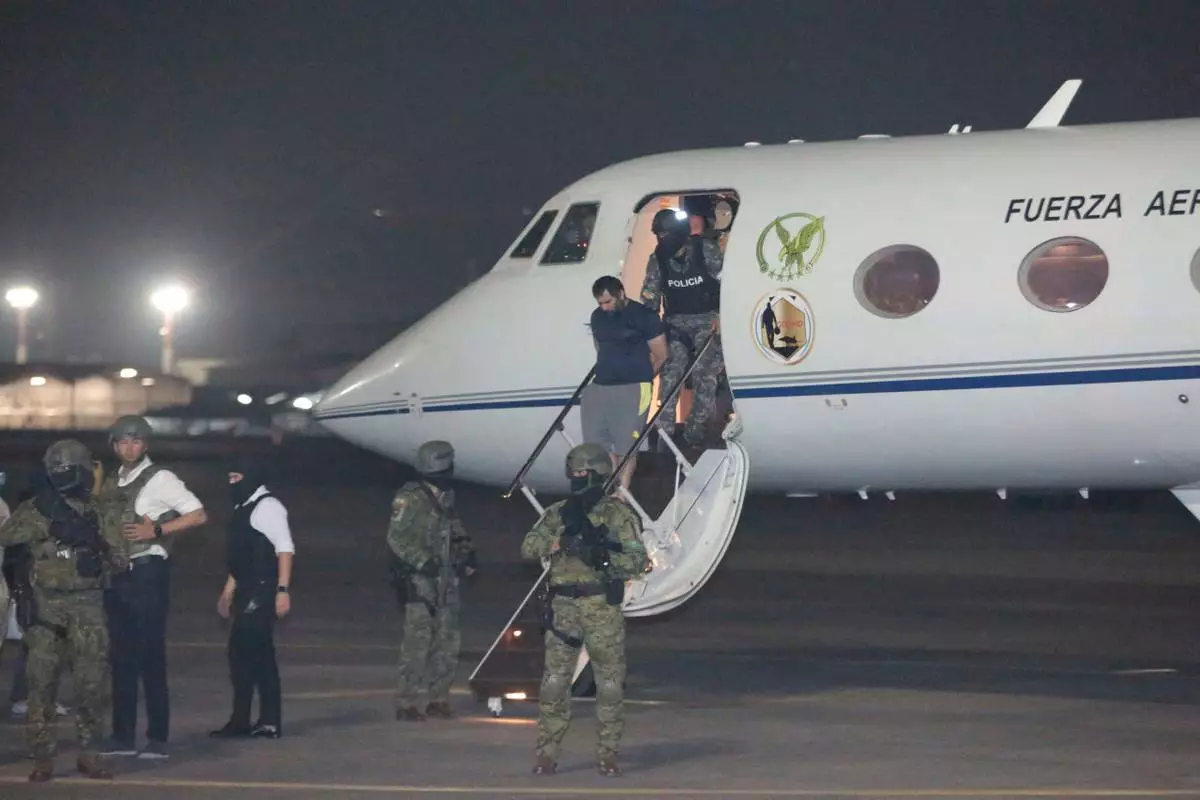
Escorted by soldiers and police officers, Adolfo "Fito" Macias, the leader of the Choneros gang, arrives in Guayaquil, Ecuador, after getting detained, Wednesday, June 25, 2025. (AP Photo/Joffre Flores)
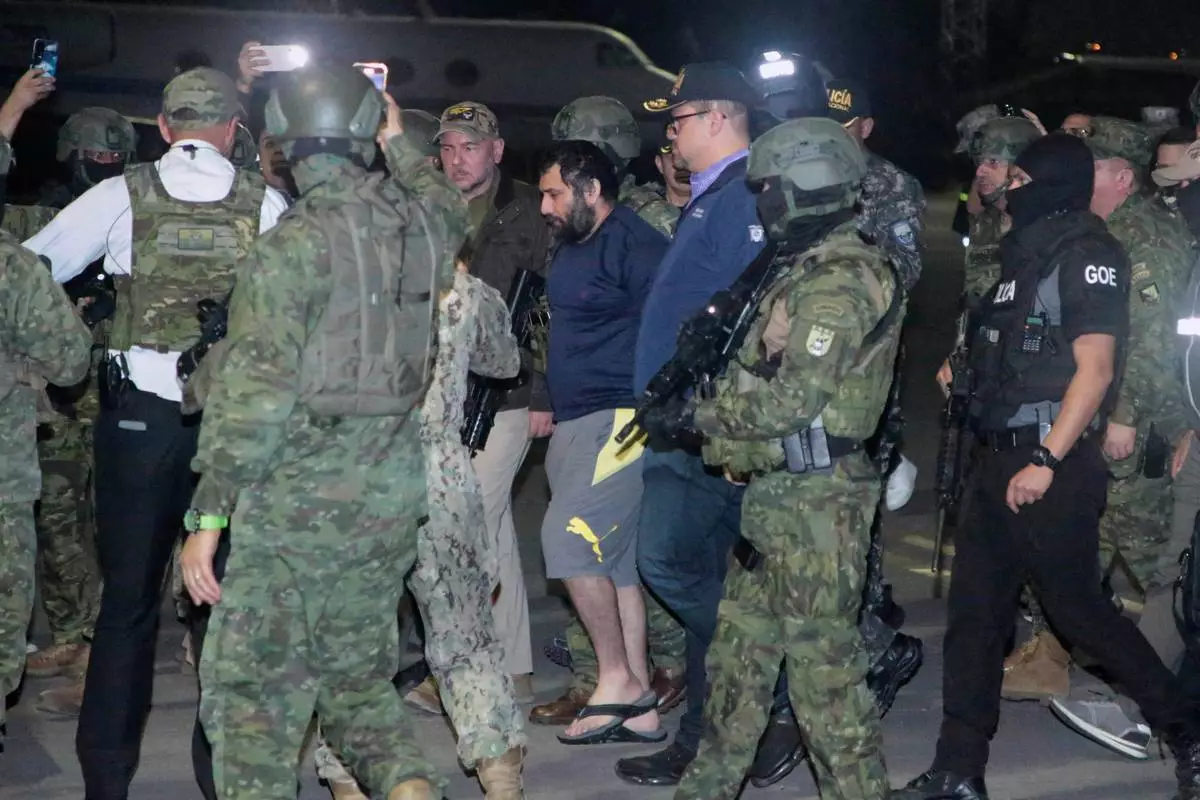
Escorted by soldiers and police officers, Adolfo "Fito" Macias, the leader of the Choneros gang, arrives in Guayaquil, Ecuador, after getting detained, Wednesday, June 25, 2025. (AP Photo/Joffre Flores)
Escorted by soldiers and police officers, Adolfo "Fito" Macias, the leader of the Choneros gang, arrives in Guayaquil, Ecuador, after getting detained, Wednesday, June 25, 2025. (AP Photo/Joffre Flores)
Escorted by soldiers and police officers, Adolfo "Fito" Macias, the leader of the Choneros gang, arrives in Guayaquil, Ecuador, after getting detained, Wednesday, June 25, 2025. (AP Photo/Joffre Flores)
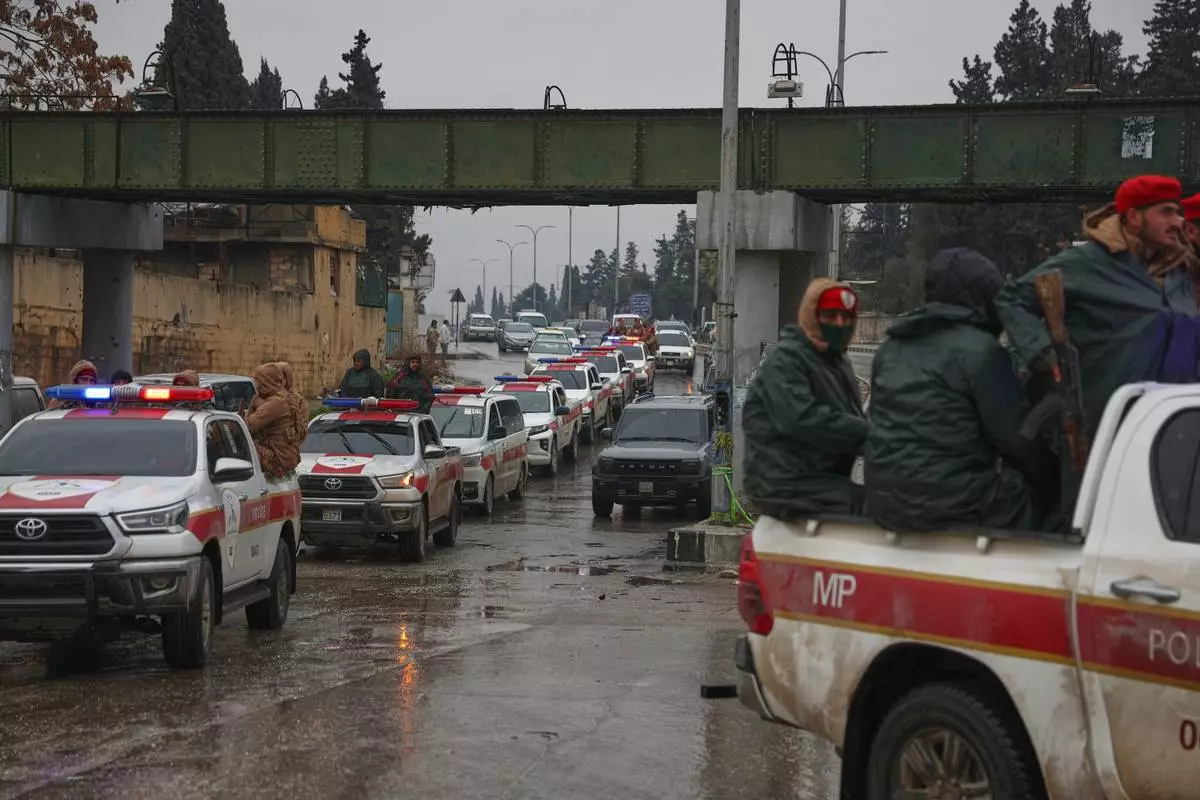
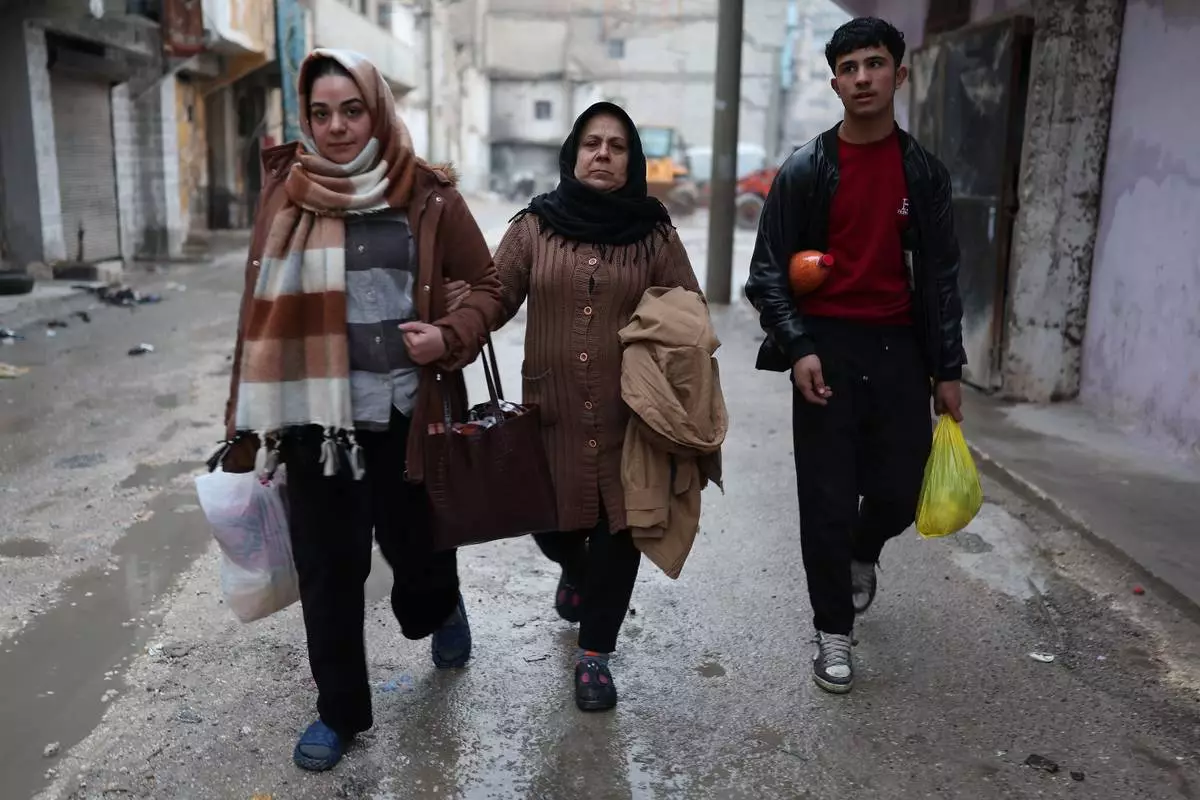
ALEPPO, Syria (AP) — First responders on Sunday entered a contested neighborhood in Syria’ s northern city of Aleppo after days of deadly clashes between government forces and Kurdish-led forces. Syrian state media said the military was deployed in large numbers.

The clashes broke out Tuesday in the predominantly Kurdish neighborhoods of Sheikh Maqsoud, Achrafieh and Bani Zaid after the government and the Syrian Democratic Forces, the main Kurdish-led force in the country, failed to make progress on how to merge the SDF into the national army. Security forces captured Achrafieh and Bani Zaid.

The fighting between the two sides was the most intense since the fall of then-President Bashar Assad to insurgents in December 2024. At least 23 people were killed in five days of clashes and more than 140,000 were displaced amid shelling and drone strikes.

The U.S.-backed SDF, which have played a key role in combating the Islamic State group in large swaths of eastern Syria, are the largest force yet to be absorbed into Syria's national army. Some of the factions that make up the army, however, were previously Turkish-backed insurgent groups that have a long history of clashing with Kurdish forces.

The Kurdish fighters have now evacuated from the Sheikh Maqsoud neighborhood to northeastern Syria, which is under the control of the SDF. However, they said in a statement they will continue to fight now that the wounded and civilians have been evacuated, in what they called a “partial ceasefire.”

The neighborhood appeared calm Sunday. The United Nations said it was trying to dispatch more convoys to the neighborhoods with food, fuel, blankets and other urgent supplies.

Government security forces brought journalists to tour the devastated area, showing them the damaged Khalid al-Fajer Hospital and a military position belonging to the SDF’s security forces that government forces had targeted.

The SDF statement accused the government of targeting the hospital “dozens of times” before patients were evacuated. Damascus accused the Kurdish-led group of using the hospital and other civilian facilities as military positions.

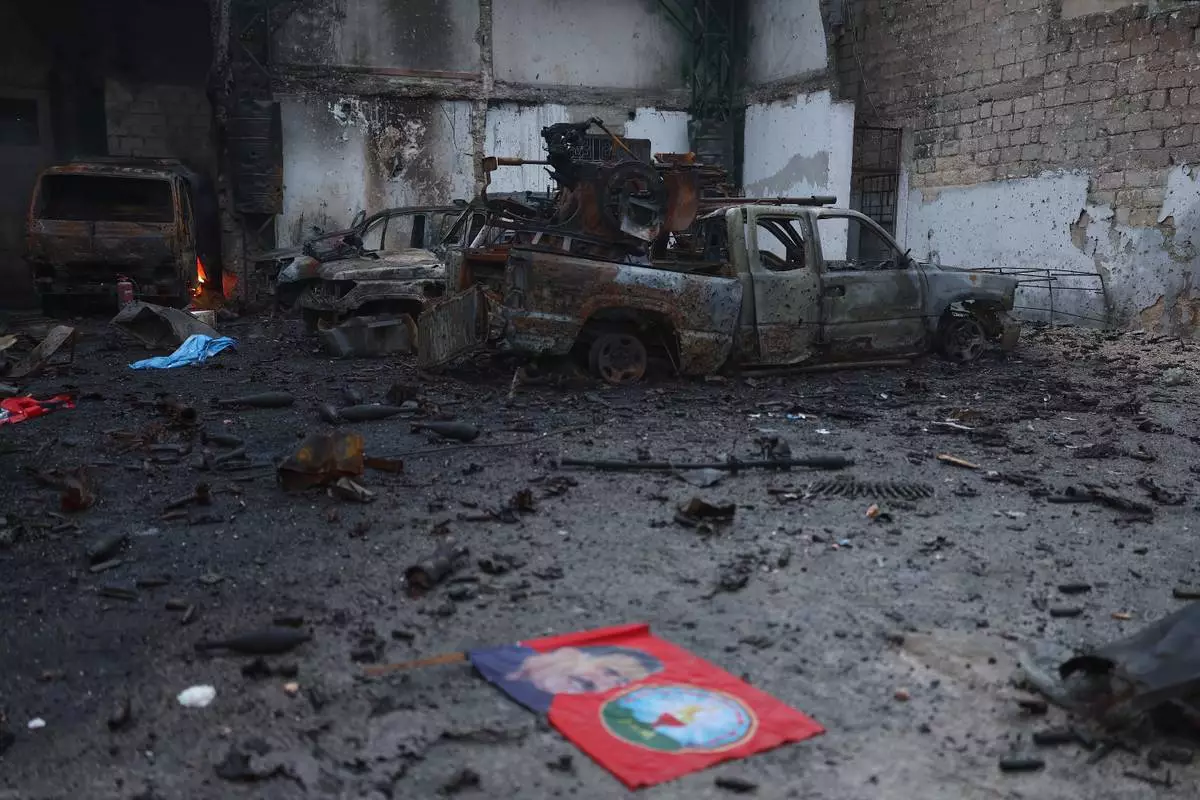
On one street, Syrian Red Crescent first responders spoke to a resident surrounded by charred cars and badly damaged residential buildings.

Some residents told The Associated Press that SDF forces did not allow their cars through checkpoints to leave.

“We lived a night of horror. I still cannot believe that I am right here standing on my own two feet,” said Ahmad Shaikho. “So far the situation has been calm. There hasn’t been any gunfire.”

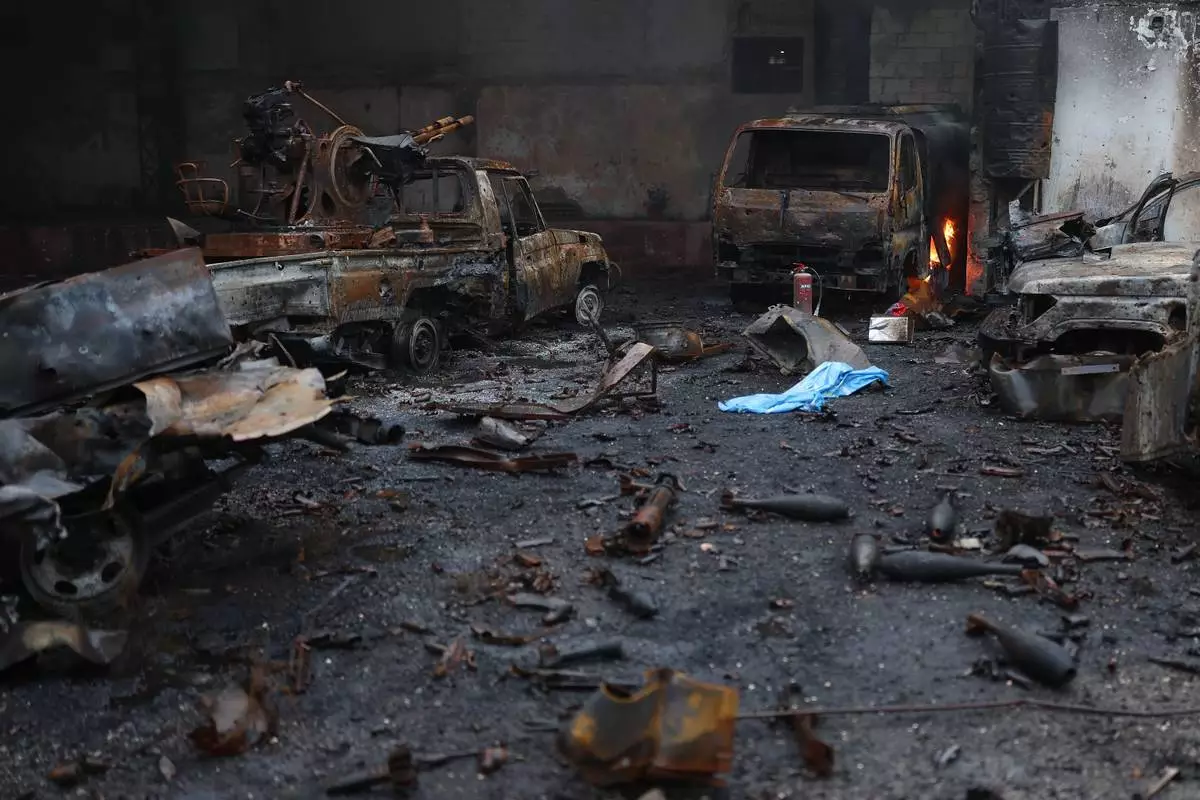
Syrian Civil Defense first responders have been disarming improvised mines that they say were left by the Kurdish forces as booby traps.

Residents who fled are not being allowed back into the neighborhood until all the mines are cleared. Some were reminded of the displacement during Syria’s long civil war.

“I want to go back to my home, I beg you,” said Hoda Alnasiri.

Associated Press journalist Kareem Chehayeb in Beirut contributed to this report.

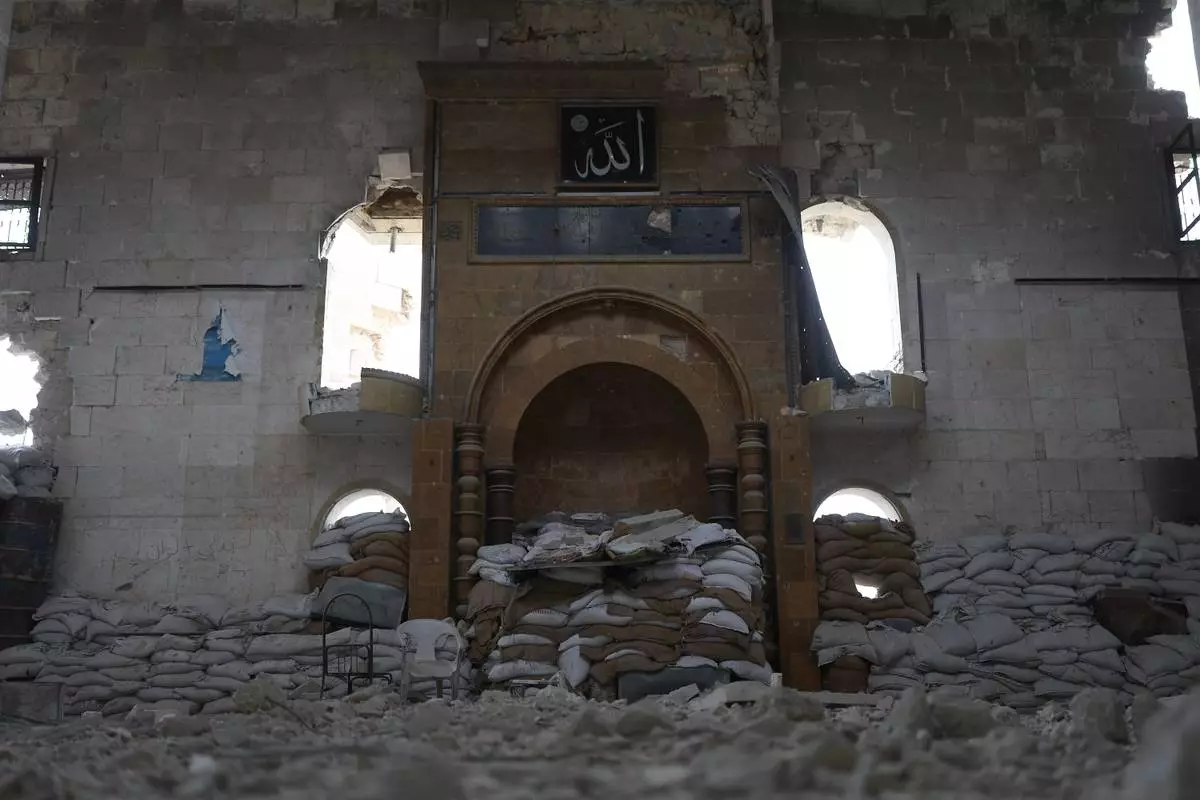
Sandbag barriers used as fighting positions by Kurdish fighters, left inside a destroyed mosque in the Sheikh Maqsoud neighborhood, where clashes between government forces and Kurdish fighters have been taking place in the northern city of Aleppo, Syria, Sunday, Jan. 11, 2026. (AP Photo/Ghaith Alsayed)

Sandbag barriers used as fighting positions by Kurdish fighters, left inside a destroyed mosque in the Sheikh Maqsoud neighborhood, where clashes between government forces and Kurdish fighters have been taking place in the northern city of Aleppo, Syria, Sunday, Jan. 11, 2026. (AP Photo/Ghaith Alsayed)

Burned vehicles at one of the Kurdish fighters positions at the Sheikh Maqsoud neighborhood, where clashes between government forces and Kurdish fighters have been taking place in the northern city of Aleppo, Syria, Sunday, Jan. 11, 2026. (AP Photo/Ghaith Alsayed)

Burned vehicles at one of the Kurdish fighters positions at the Sheikh Maqsoud neighborhood, where clashes between government forces and Kurdish fighters have been taking place in the northern city of Aleppo, Syria, Sunday, Jan. 11, 2026. (AP Photo/Ghaith Alsayed)

People flee the Sheikh Maqsoud neighborhood, where clashes between government forces and Kurdish fighters have been taking place in the northern city of Aleppo, Syria, Sunday, Jan. 11, 2026. (AP Photo/Ghaith Alsayed)

People flee the Sheikh Maqsoud neighborhood, where clashes between government forces and Kurdish fighters have been taking place in the northern city of Aleppo, Syria, Sunday, Jan. 11, 2026. (AP Photo/Ghaith Alsayed)

A Syrian military police convoy enters the Sheikh Maqsoud neighborhood, where clashes between government forces and Kurdish fighters have been taking place in the northern city of Aleppo, Syria, Sunday, Jan. 11, 2026. (AP Photo/Ghaith Alsayed)

A Syrian military police convoy enters the Sheikh Maqsoud neighborhood, where clashes between government forces and Kurdish fighters have been taking place in the northern city of Aleppo, Syria, Sunday, Jan. 11, 2026. (AP Photo/Ghaith Alsayed)

Burned vehicles and ammunitions left at one of the Kurdish fighters positions at the Sheikh Maqsoud neighborhood, where clashes between government forces and Kurdish fighters have been taking place in the northern city of Aleppo, Syria, Sunday, Jan. 11, 2026. (AP Photo/Ghaith Alsayed)

Burned vehicles and ammunitions left at one of the Kurdish fighters positions at the Sheikh Maqsoud neighborhood, where clashes between government forces and Kurdish fighters have been taking place in the northern city of Aleppo, Syria, Sunday, Jan. 11, 2026. (AP Photo/Ghaith Alsayed)

Recommended Articles