NEW YORK (AP) — Fans of the New Zealand singer-songwriter Lorde have long commended the artist for her visceral pop craft. Her music, to certain ears, sounds like freedom. On her new album, it is as though Lorde is able to hear it, too.
On “Virgin,” the singer born Ella Marija Lani Yelich-O’Connor's fourth studio album and first in four years, pop hits are devoid of any anxious filtering. She is raw.
When Lorde first emerged as a gothic popstar — with “Royals,” and its critique of celebrity culture and hyper consumerism — she did so with prescience. Her sparse production style and cursive-singing had come from the future, and its influence would be felt for many years to follow. Her debut, 2013's “Pure Heroine,” suggested that she possessed something her contemporaries did not; the synesthesia synth-pop “Melodrama” in 2017 all but confirmed her greatness.
She took a step back from all that for the sleepy sunshine of 2021's “Solar Power,” and then took another — veering away from the spotlight all together. It seemed that this outsider dynamo had distanced herself from fame in an attempt to centralize artmaking once again. (Later, as it was revealed in a “Rolling Stone” cover story, she was mourning the longest romantic relationship of her life, making up the bulk of her twenties, and that she was overcoming an eating disorder and anxiety through MDMA and psilocybin therapy.) “Virgin” was born after that period of reflection.
Musically, “Virgin” threads the needle from “Melodrama” to the current moment. The lead single, the synthpop “What Was That,” is a reserved derivation of her previous work but no doubt a banger; on the syncopated rhythms of “Hammer,” she's matured her racecar-fast pop. There's a new malleability here. She sings, “Some days I’m a woman / Some days I’m a man.”
An album standout, the metamorphic “Shapeshifter,” possesses a tension between organic and electronic sounds that continue onto “Man of the Year,” with its bass and cello contributions from frequent collaborator Dev Hynes.
Credit is due to her new production partners Jim-E Stack (Bon Iver,Danielle Haim) and Daniel Nigro (Olivia Rodrigo,Chappell Roan).
Thematically, Lorde's never been more fluid and feral than on “Virgin,” in her descriptions of gender experience ("Favourite Daughter”) and sexual autonomy (“Current Affairs,” with lyrics that might scandalize fans not expecting messy eroticism. “You tasted my underwear,” she sings, partnered with a sample of the dancehall record “Morning Love” by Dexta Daps.)
For a singer who has always performed physical pop songs, “Virgin” is her most bodily work to date as well. Take, for example, the shortest song on the record, the vocoder-affected a cappella performance of “Clearblue” — a play on the popular pregnancy test brand, and not the only place where motherhood appears on the album. (Fertility is another theme; the album cover features an X-ray of Lorde's pelvis while wearing jeans; in it, an intrauterine device is visible.)
This is a new Lorde — a more self-assured artist, warts and all — but one that recognizes and evolves her sonic signatures. Now, like in the early days of her career, “Virgin” is both avant-garde and pop radio ready, a confluence of unlike features that mirror its messaging. Only now, she sounds unshackled.
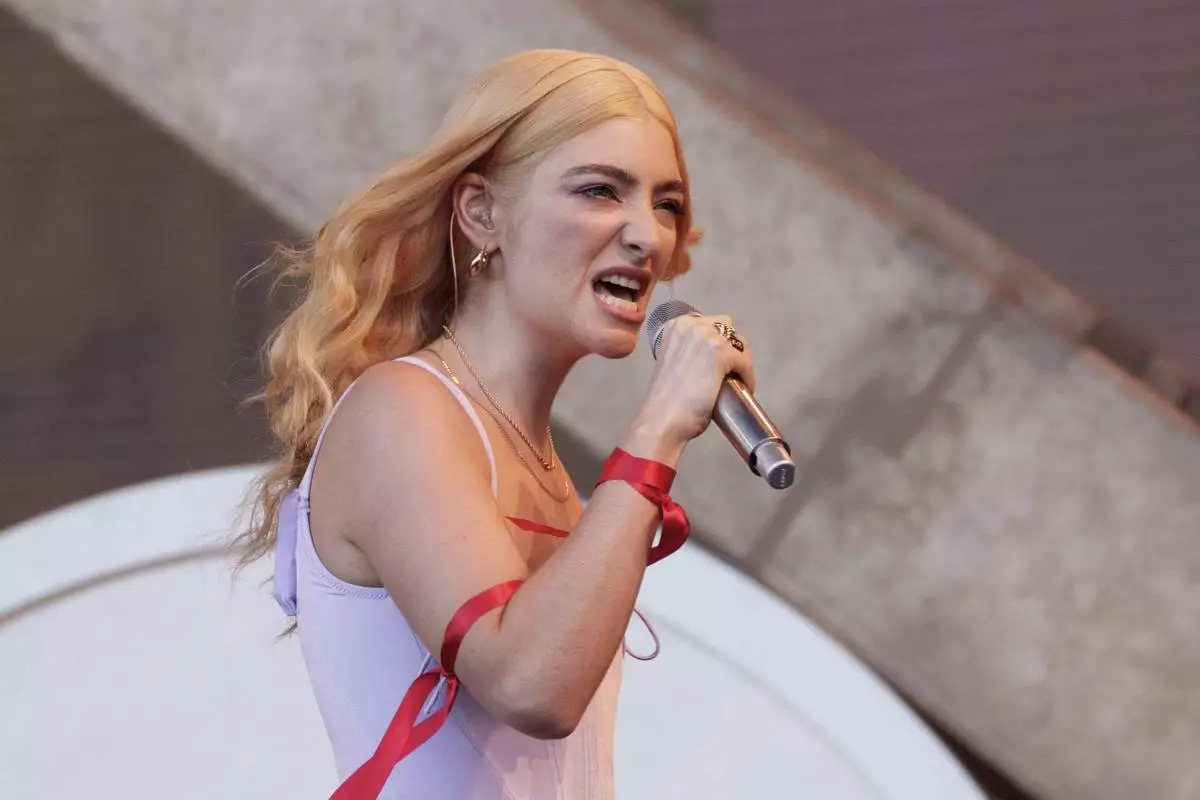
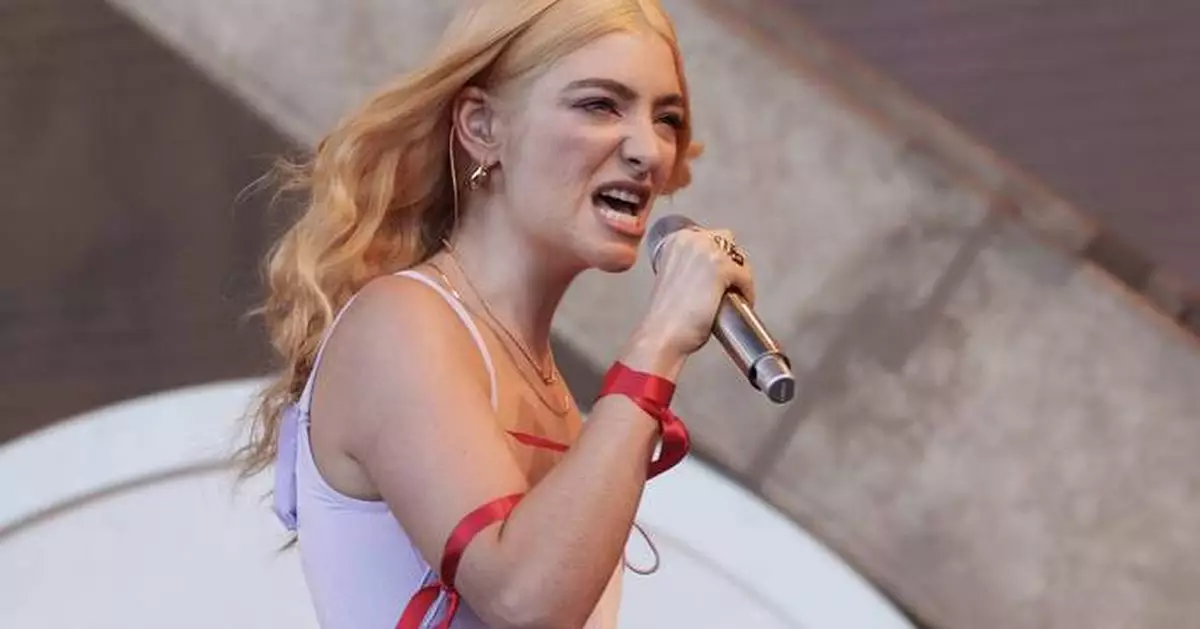
Lorde performs at the Glastonbury Festival in Worthy Farm, Somerset, England, Monday, June 27, 2022. (AP Photo/Scott Garfitt)
NEW YORK (AP) — Donald Trump was booed loudly by fans inside Madison Square Garden when he was shown on video screens during the national anthem prior to Game 3 of the NBA Finals on Monday night.
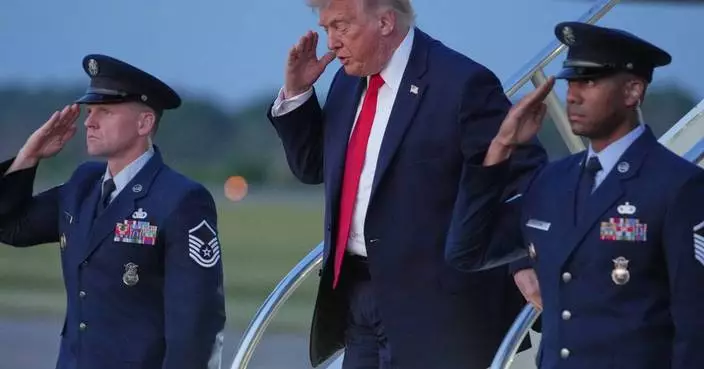
Trump was shown for several seconds giving a military salute. The boos ended when the U.S. flag followed him on the screens, and fans cheered when New York Knicks players were shown. Mentions of the San Antonio Spurs also elicited loud boos.
Trump is watching from Knicks owner James Dolan’s suite, along with granddaughter Kai, personal adviser Boris Epshteyn and Cabinet secretaries Lee Zeldin, Sean Duffy and Doug Burgum. He is the first sitting president to attend an NBA Finals game.
Trump’s Marine One helicopter flew from his home in New Jersey and landed near Wall Street before his motorcade made its way up through Manhattan and to the arena roughly an hour before tipoff. He encountered a handful of people making rude gestures, and outside the area, one group held signs saying “Trump must go.”
He settled into Dolan's suite shortly afterward.
During the afternoon before Trump's arrival, the New York Police Department and the U.S. Secret Service set up a large perimeter surrounding Madison Square Garden. Fans lined up to get inside the arena more than four hours before tipoff, in a scene more closely resembling New Year’s Eve in Times Square than the usual leadup to a basketball game.
They were required to provide a ticket or pass to get past various checkpoints, along with going through a Transportation Security Administration-style magnetometer. Secret Service personnel and police were positioned at every corner and in large numbers. Daily commuters, tourists visiting Manhattan and fans were all confounded at various times as they tried to maneuver the security.
After traveling from his new home in Florida for the game, Knicks fan Greg Weldon said the main inconvenience faced so far has been the lack of information.
“We’ve asked so many cops, secret service, guys with machine guns, what to do, where should we go,” he said. “Nobody knows.”
Knicks coach Mike Brown and Spurs counterpart Mitch Johnson downplayed any concept of being inconvenienced by the closures and enhanced security because of Trump.
“There’s a lot going on, and I’d much rather be a part of it than not,” Johnson said.
With security stepped up, a watch party outside was canceled, and ticket-holders were not allowed to bring bags inside the Garden. Fans had gathered near the arena to watch games during this playoff run, during which the Knicks have won 13 games in a row to reach the final for the first time since 1999 and move two victories from their first NBA title since 1973.
“We are looking forward to bringing back watch parties for Game 4,” Police Commissioner Jessica Tisch said at a news conference Monday. "But I think New Yorkers are used to presidents coming to town, and they understand that that generally means lockdowns of areas and that’s what you’re going to see tonight at the Garden.”
This is the latest major sporting event Trump has attended during his time as president, and the security measures have created major hassles for fans.
Thousands of fans missed the start of last year’s U.S. Open men’s singles final between Carlos Alcaraz and Jannik Sinner because of lengthy security lines. Even though the U.S. Tennis Association pushed back the start of the match by a half-hour, many fans still couldn’t get in because added measures meant that they had to go through screening not only when they arrived at the Billie Jean King National Tennis Center but again in front of the steps into Arthur Ashe Stadium, where Trump watched from a suite.
Federal law enforcement officials have been reexamining Trump’s security in light of three incidents in the past two years: a shooting at a 2024 rally in Butler, Pennsylvania; the discovery of a man armed with a rifle as Trump played golf in West Palm Beach, Florida, later that year; and the recent shooting at the White House Correspondents’ Association dinner.
Asked Sunday his thoughts on Trump attending, Knicks center Mitchell Robinson said: “Cool, I guess. We can still get out there and play (no matter) who’s here and who’s not.”
Mayor Zohran Mamdani and other dignitaries were also at the game.
It was already hard enough for Knicks fans to get inside Madison Square Garden because of astronomical ticket prices. The get-in price for a ticket is higher than the average cost of monthly rent in New York, surging over $5,000. The best seats are tens of thousands of dollars. Mamdani said he bought his ticket, which he said was standing-room-only, for about $1,000 directly from Madison Square Garden.
The difficulty of seeing the game in-person has prompted fans to crowd bars, streets and watch parties all over the city. The watch party near the Garden has become a major event all through the playoffs, but with Trump attending, that event was moved a few blocks away outside the security perimeter, at Bryant Park.
“We improvise,” said Knicks guard Jose Alvarado, who is a New York native. "We're New Yorkers. We’re going to find a way to watch a game, and that’s what we’re doing.”
AP Basketball Writer Brian Mahoney contributed to this report.
AP NBA: https://apnews.com/hub/NBA
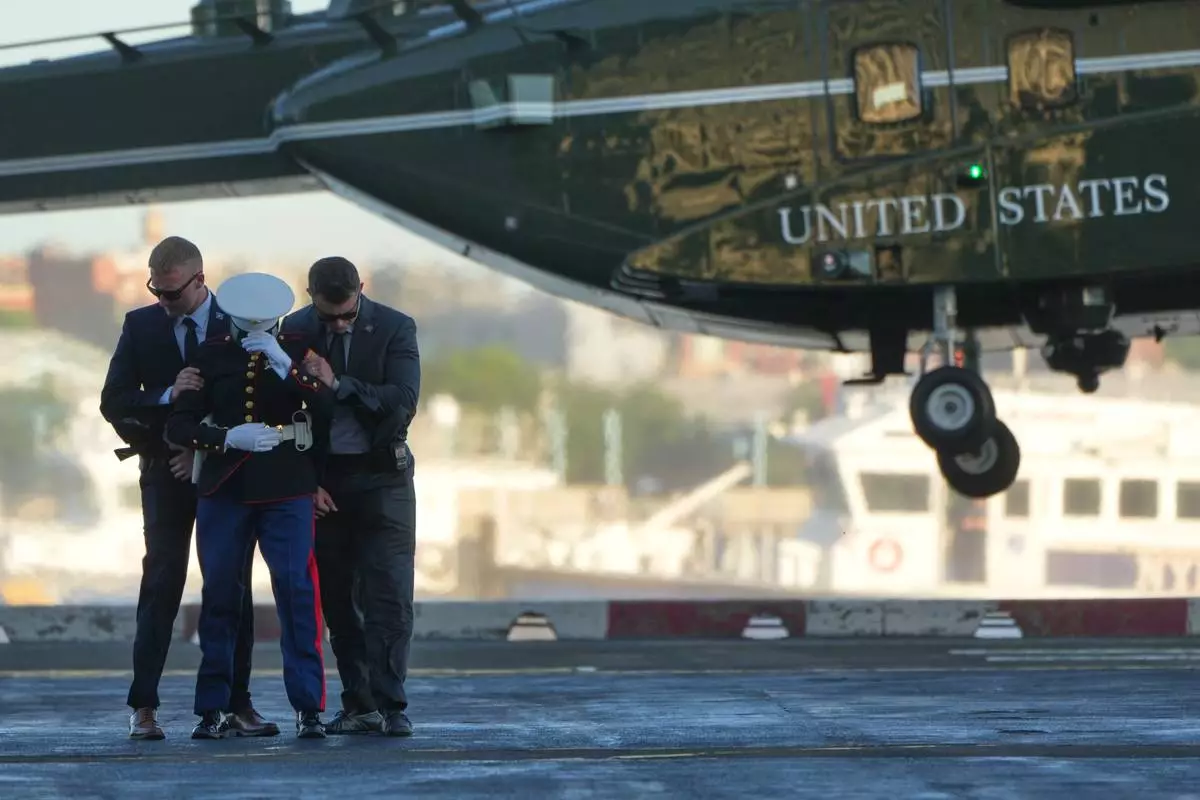
U.S. Secret Service agents and a U.S. Marine brace against the downdraft as a support helicopter lands before Marine One with President Donald Trump aboard, at the Downtown Manhattan Heliport at Pier 6 in New York, Monday, June 8, 2026. (AP Photo/Mark Schiefelbein)
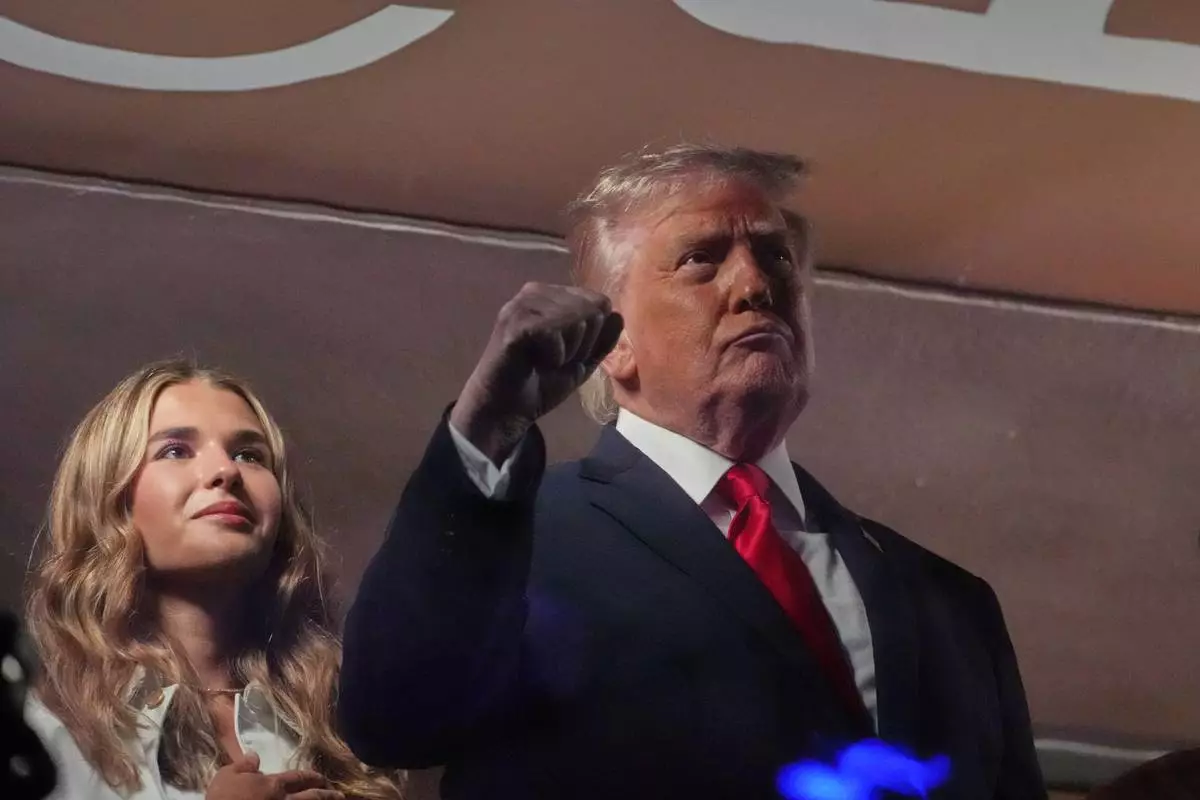
President Donald Trump gestures during the National Anthem as he attends an NBA Finals playoff basketball game between the New York Knicks and the San Antonio Spurs at Madison Square Garden in New York, Monday, June 8, 2026, with Kai Trump, left. (AP Photo/Mark Schiefelbein)
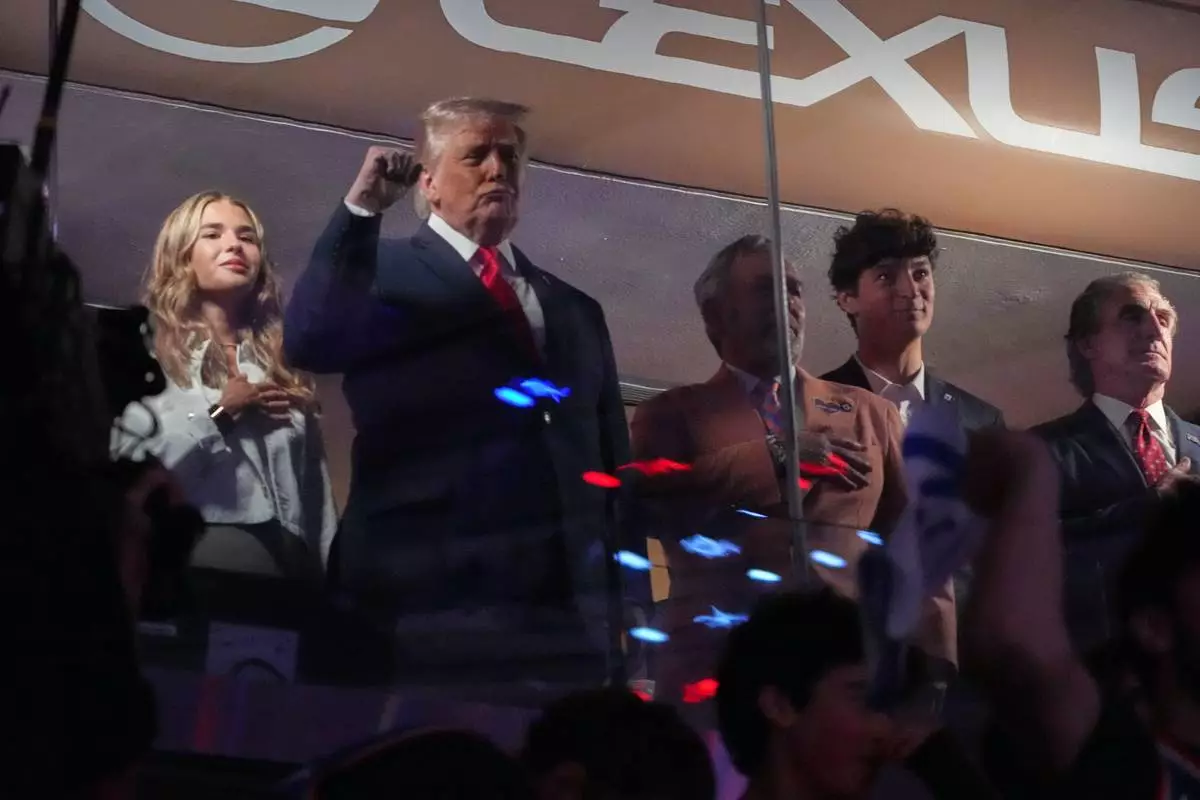
President Donald Trump gestures during the National Anthem as he attends an NBA Finals playoff basketball game between the New York Knicks and the San Antonio Spurs at Madison Square Garden in New York, Monday, June 8, 2026, with Kai Trump, left, Knicks owner James Dolan and Interior Secretary Doug Burgum, right. (AP Photo/Mark Schiefelbein)
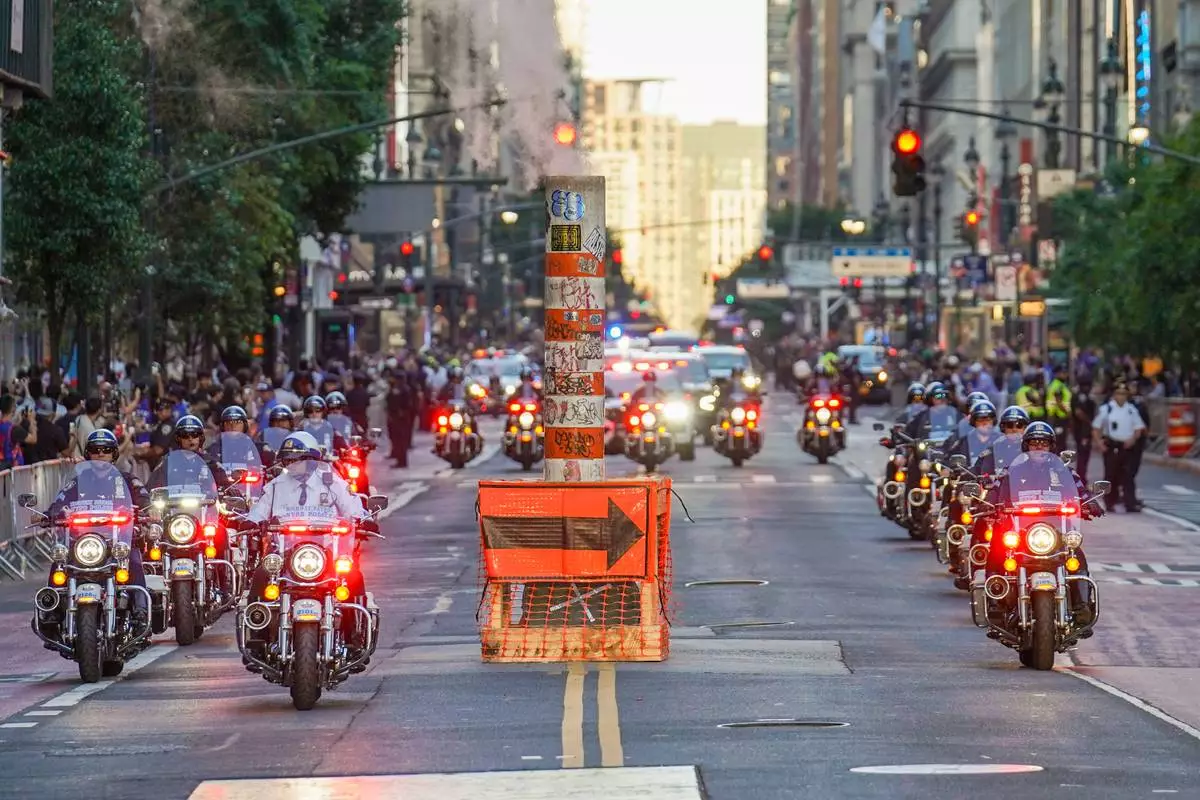
NYPD officers escort the motorcade of President Donald Trump outside of Madison Square Garden ahead of Game 3 of the NBA Finals basketball series, Monday, June 8, 2026, in New York. (AP Photo/Ryan Murphy)
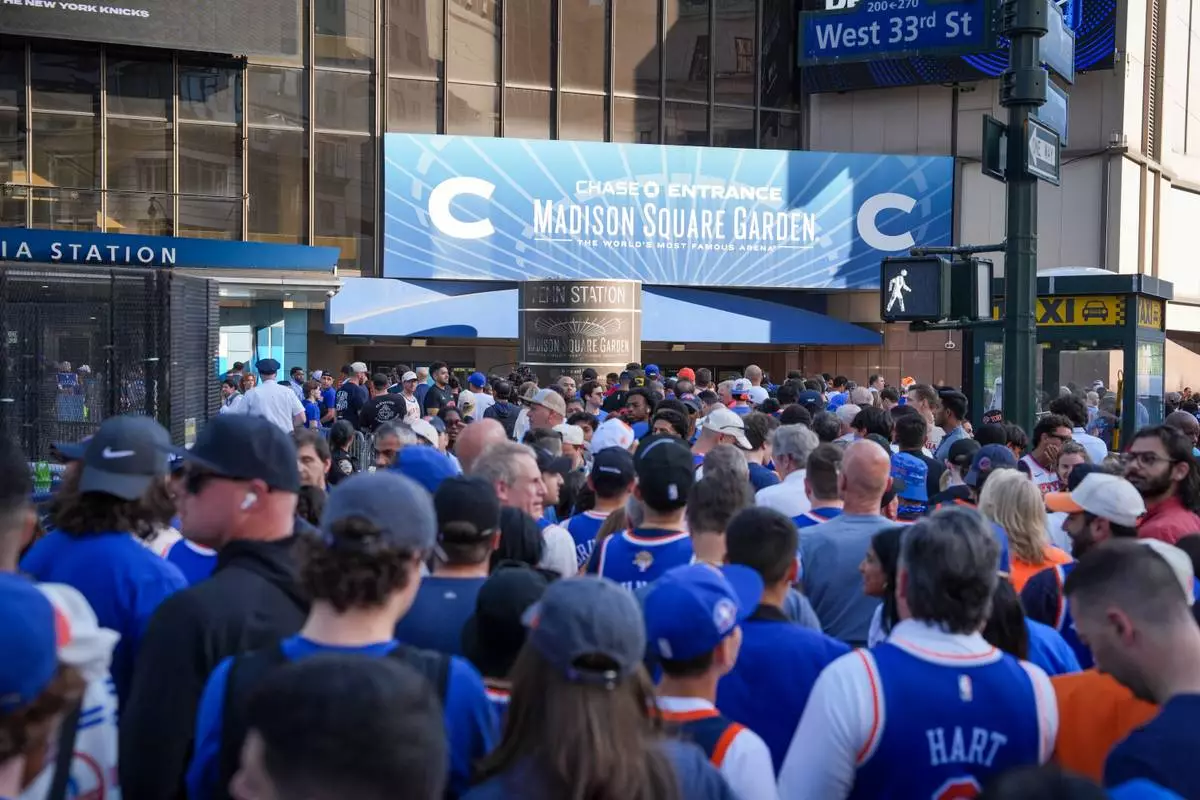
New York Knicks fans wait in line to enter Madison Square Garden ahead of Game 3 of the NBA Finals, Monday, June 8, 2026, in New York. (AP Photo/Ryan Murphy)
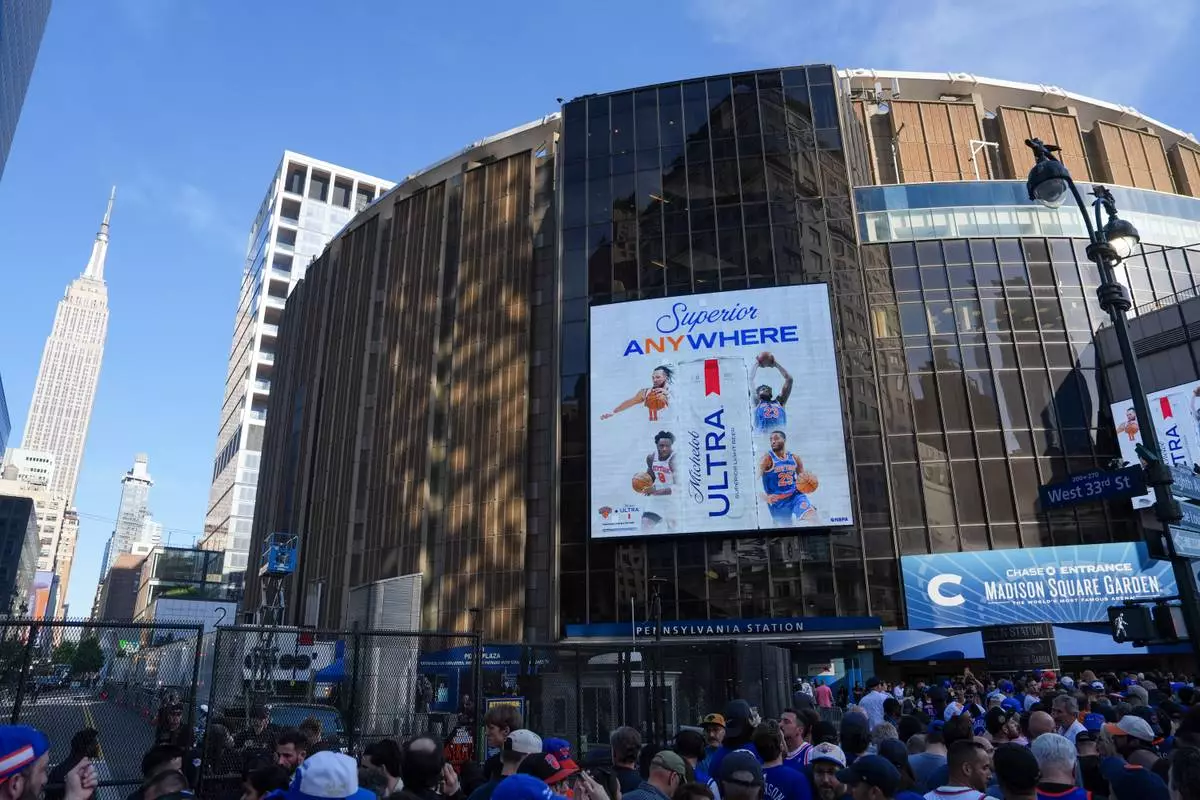
Madison Square Garden ahead of Game 3 of the NBA Finals, Monday, June 8, 2026, in New York. (AP Photo/Ryan Murphy)
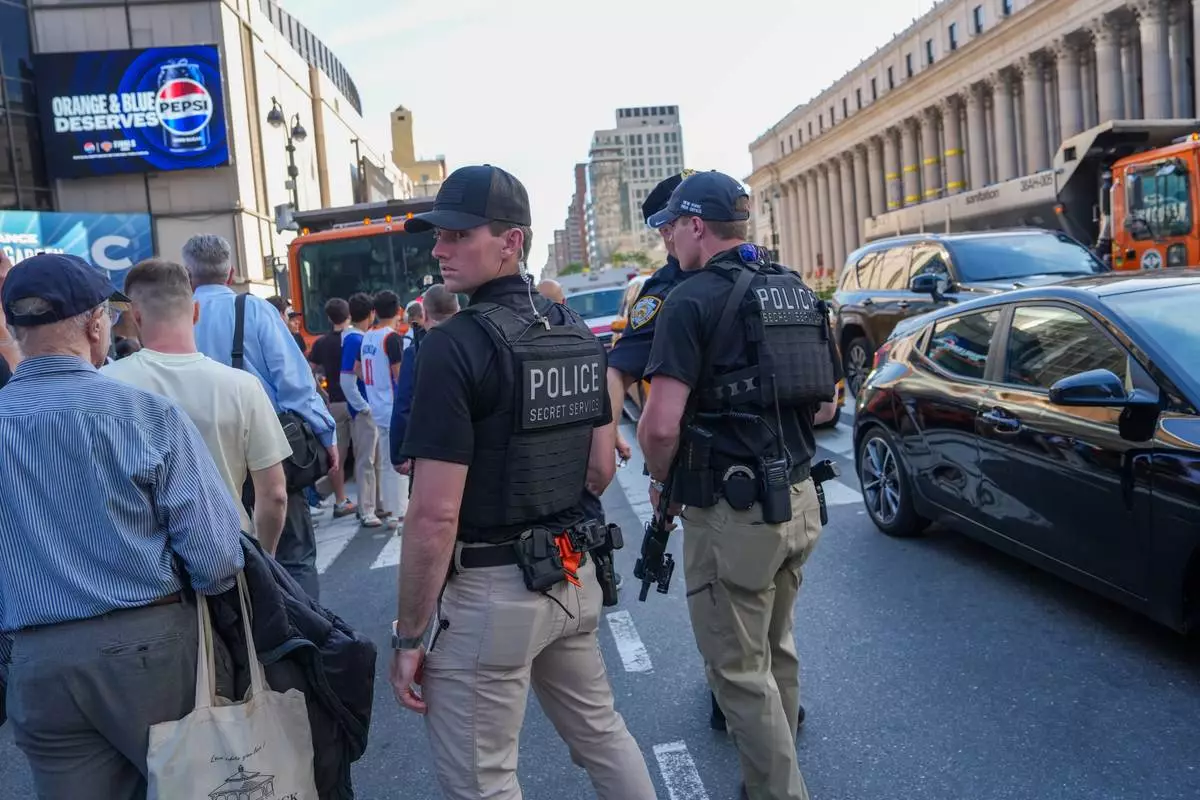
Secret Service agents stand guard in front of Madison Square Garden ahead of Game 3 of the NBA Finals, Monday, June 8, 2026, in New York. (AP Photo/Ryan Murphy)
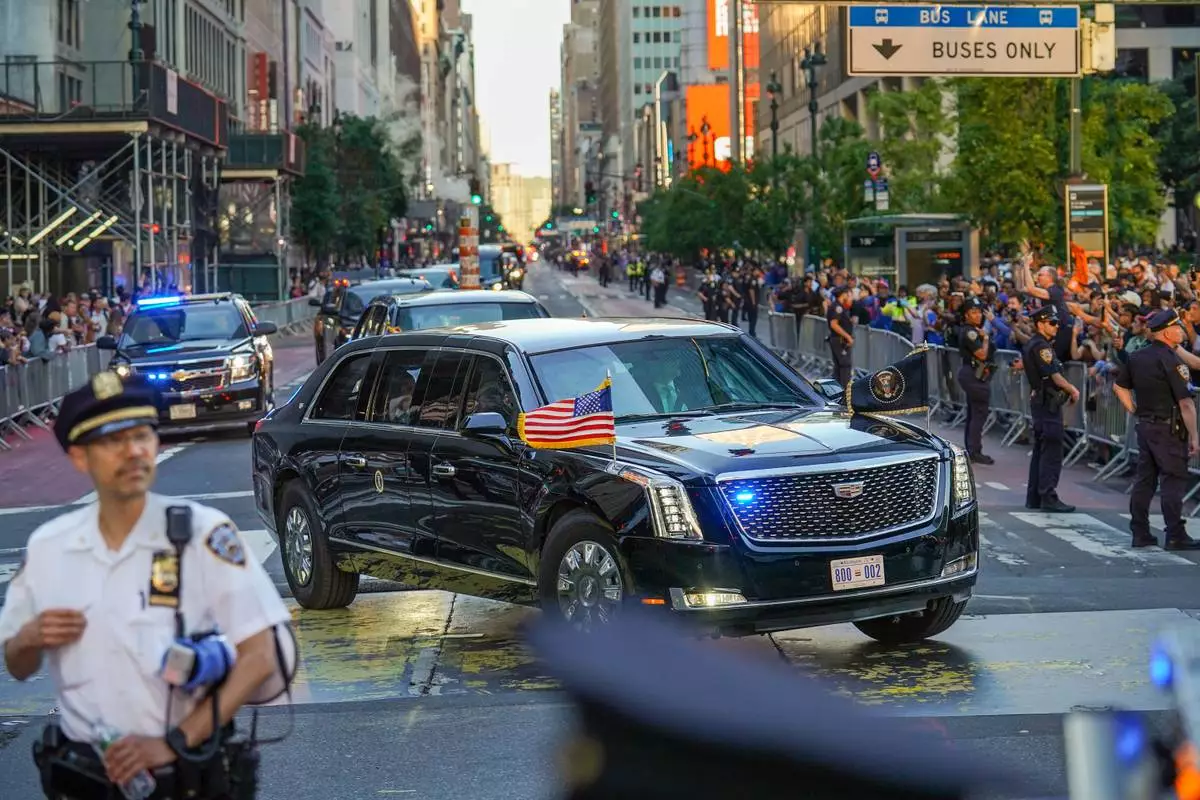
The motorcade of President Donald Trump arrives to Madison Square Garden ahead of Game 3 of the NBA Finals basketball series, Monday, June 8, 2026, in New York. (AP Photo/Ryan Murphy)
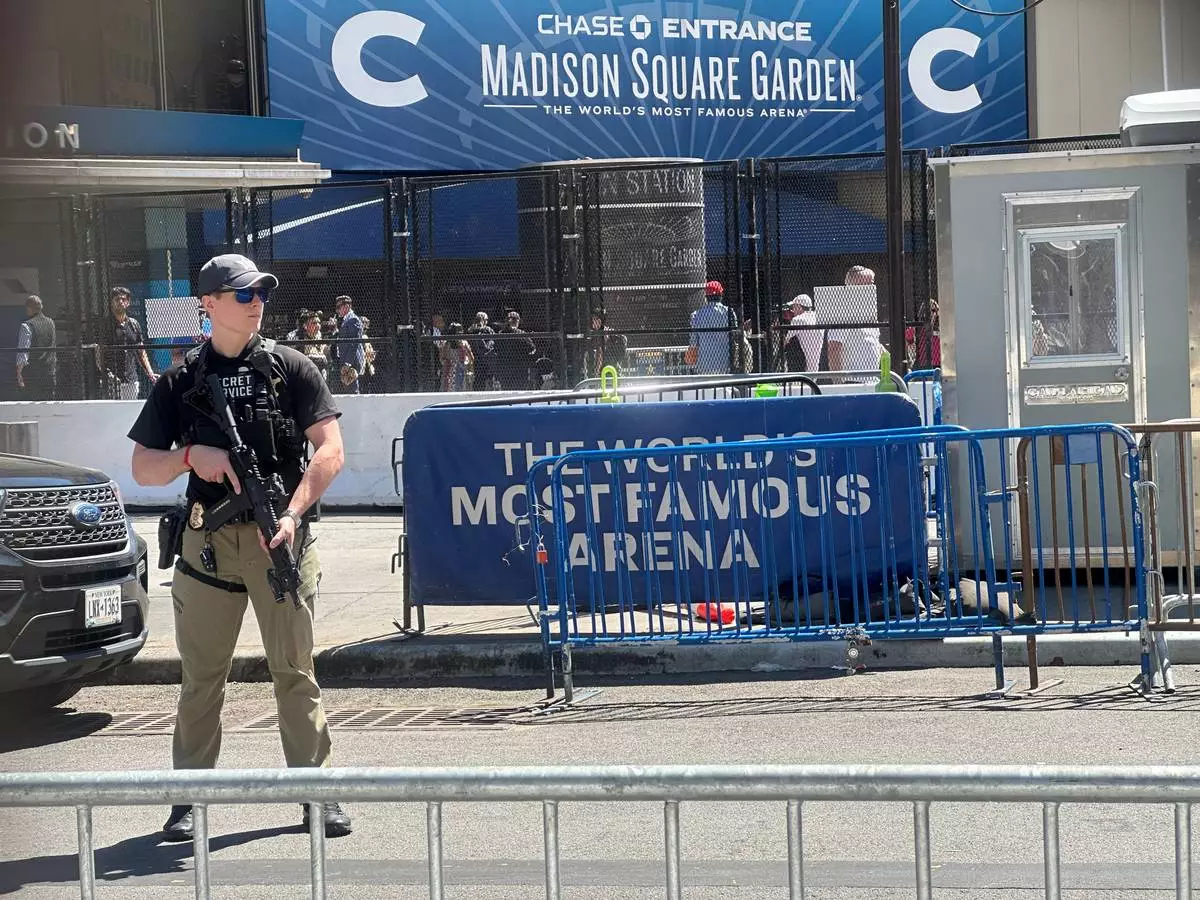
A Secret Service agent stands watch outside Madison Square Garden in New York, Monday, June 8, 2026, as President Donald Trump is set to attend Game 3 of the NBA Finals basketball series between the New York Knicks and the San Antonio Spurs. (AP Photo/Ted Shaffrey)
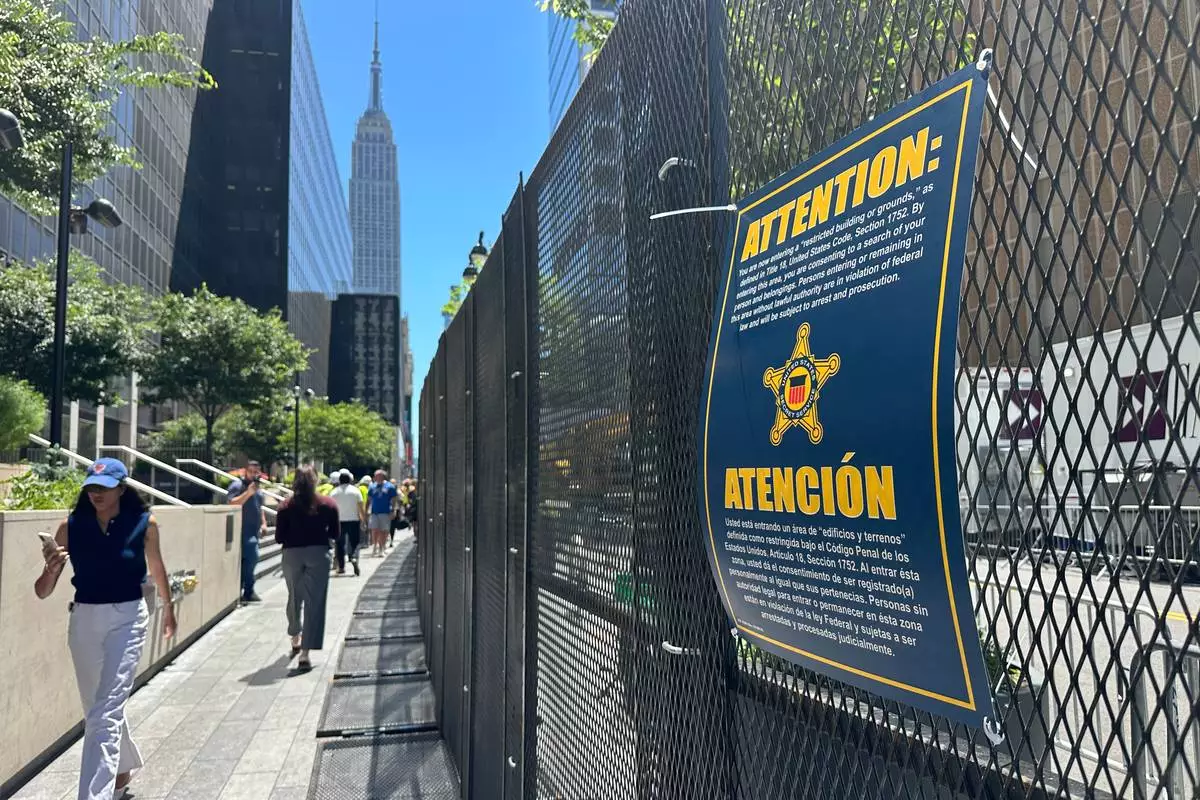
Security fencing is set up outside of Madison Square Garden in New York, Monday, June 8, 2026, as President Donald Trump is set to attend Game 3 of the NBA Finals basketball series between the New York Knicks and the San Antonio Spurs. (AP Photo/Ted Shaffrey)
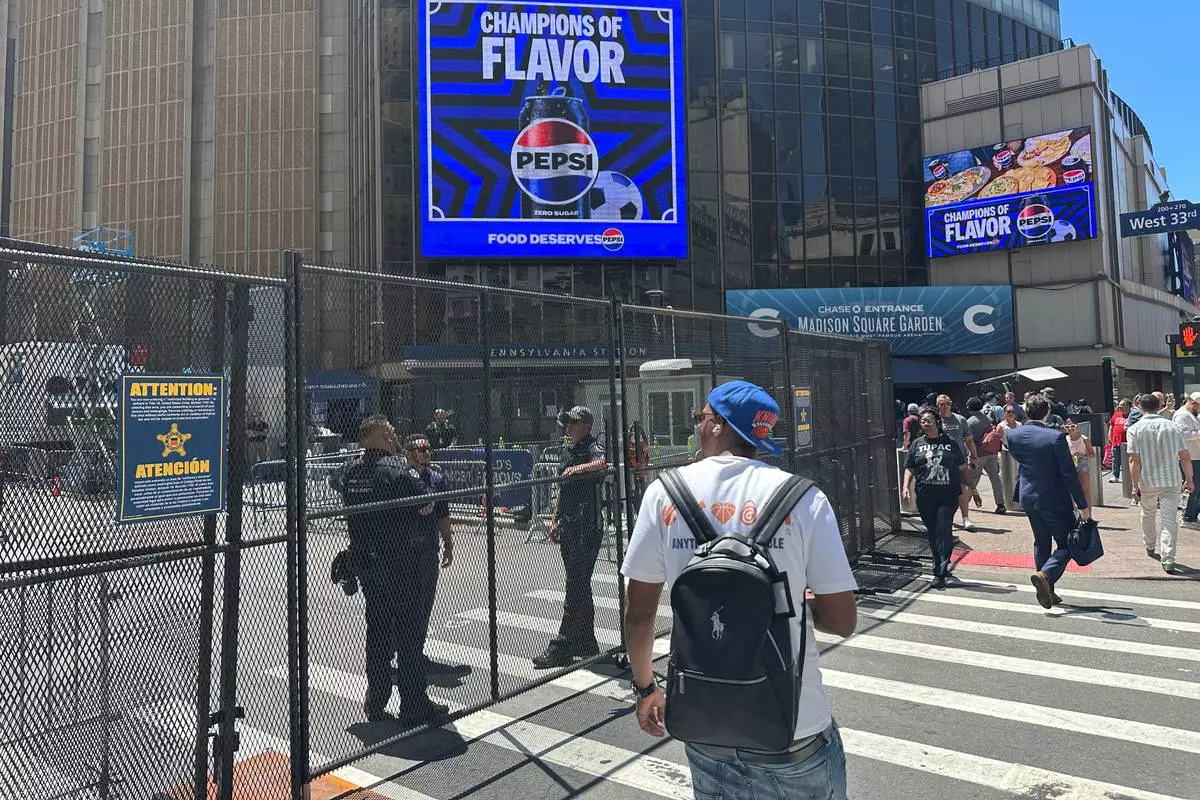
Security is set up outside of Madison Square Garden in New York, Monday, June 8, 2026, as President Donald Trump is set to attend Game 3 of the NBA Finals basketball series between the New York Knicks and the San Antonio Spurs. (AP Photo/Ted Shaffrey)
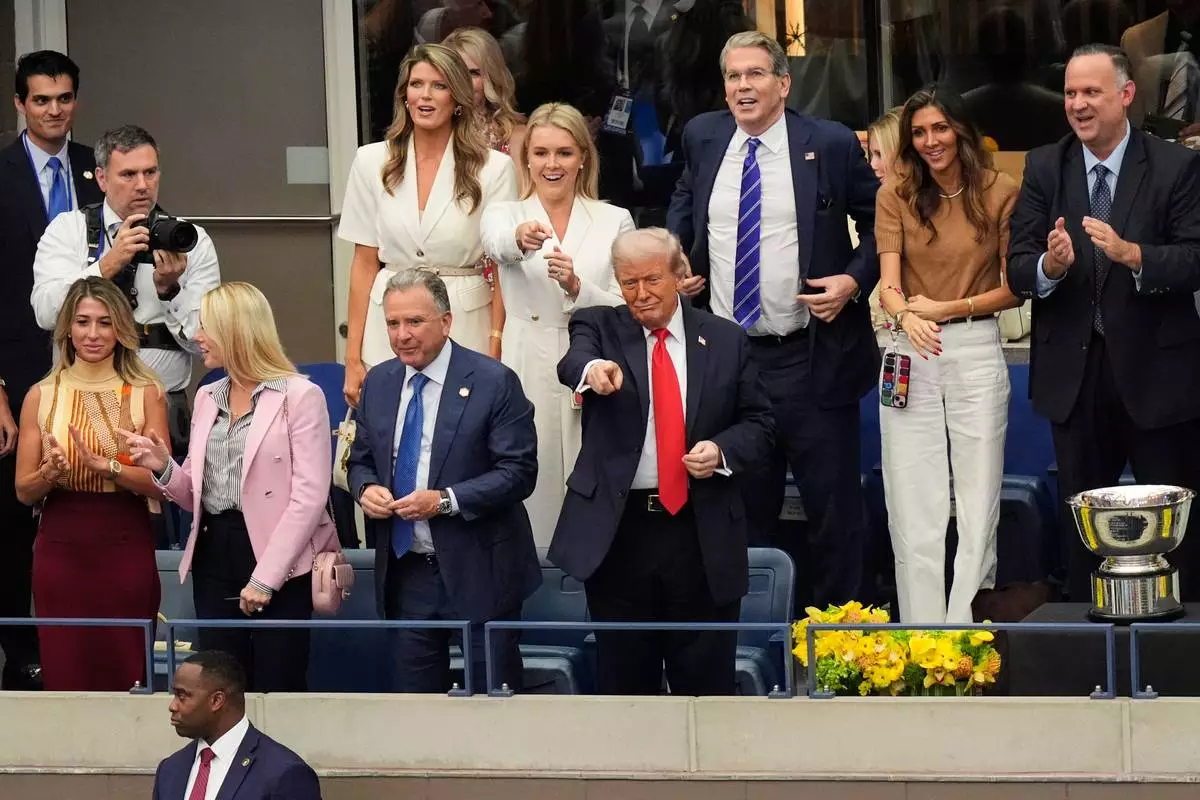
FILE - President Donald Trump, center, attends the men's singles final at the U.S. Open tennis tournament, Sept. 7, 2025, in New York. (AP Photo/Manuel Balce Ceneta, File)
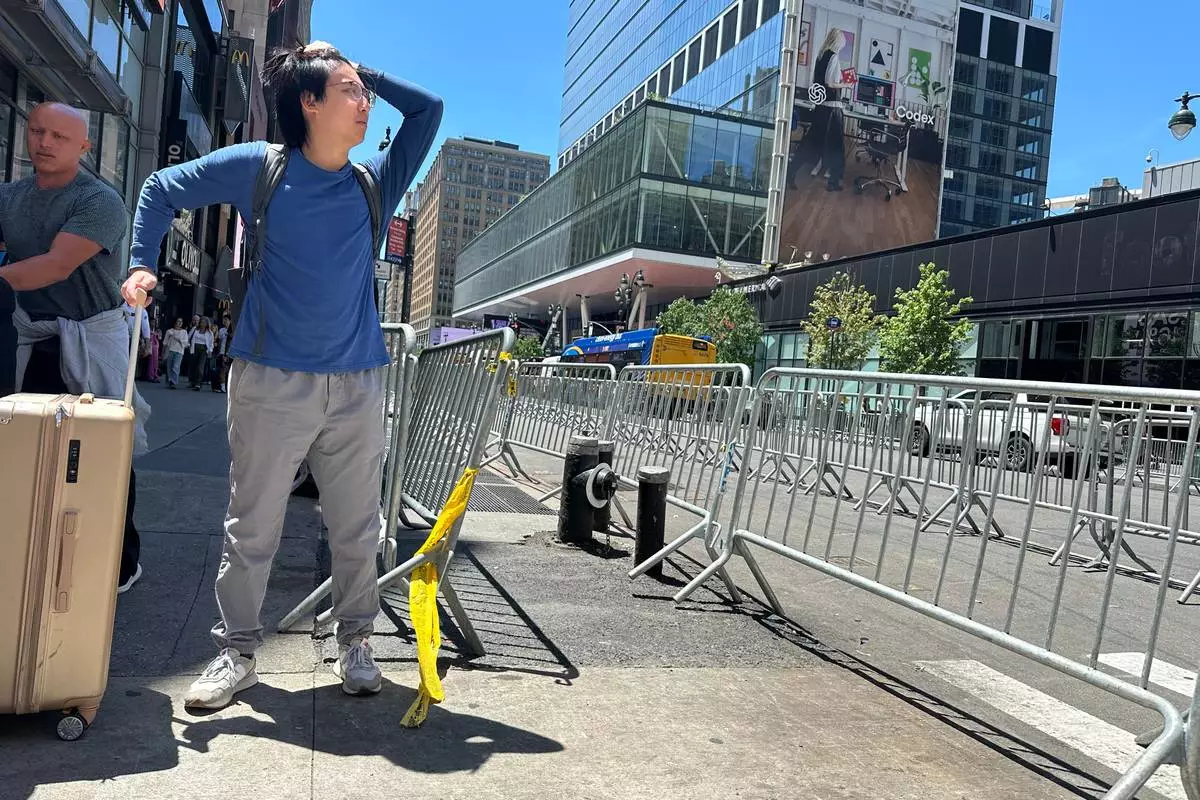
A traveler tries to navigate the area as stringent security measures are set up outside of Madison Square Garden in New York, Monday, June 8, 2026, as President Donald Trump is set to attend Game 3 of the NBA Finals basketball series between the New York Knicks and the San Antonio Spurs. (AP Photo/Ted Shaffrey)
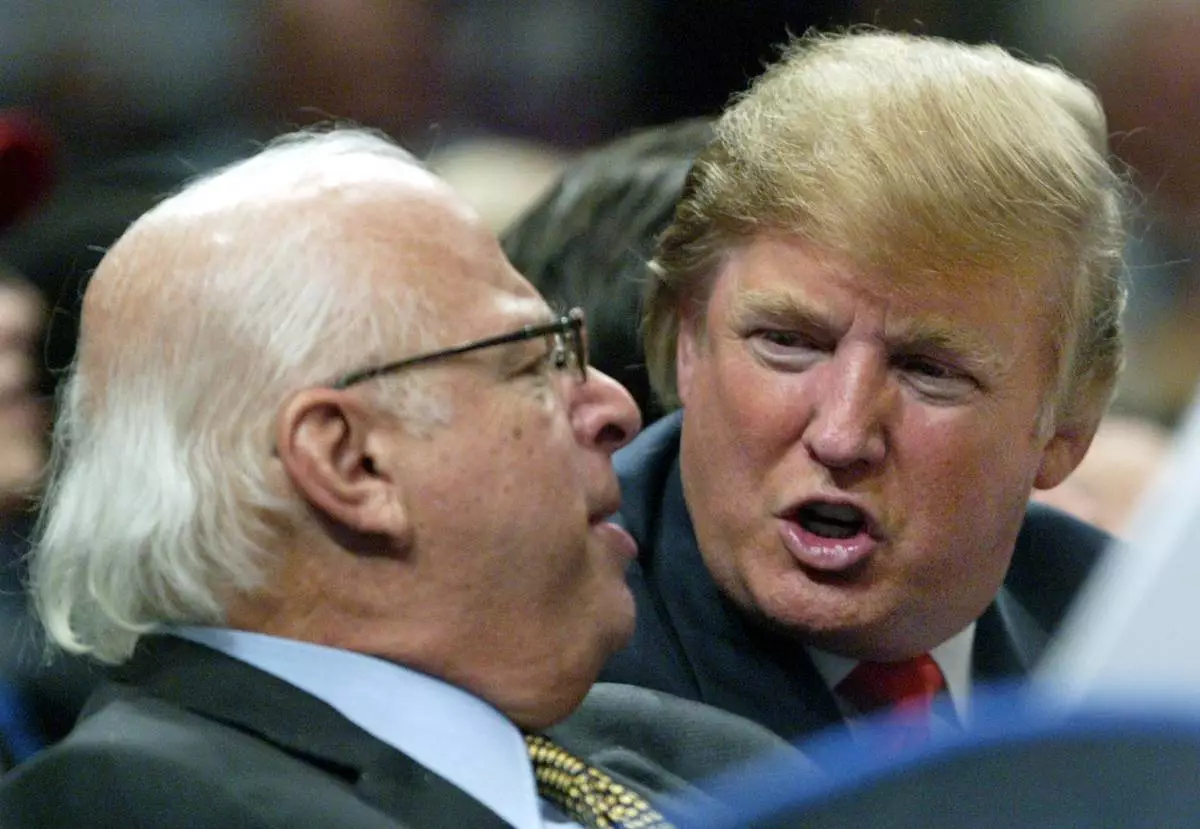
FILE - Donald Trump, right, talks to an unidentified man from the stands at Madison Square Garden during the New York Knicks game against the Dallas Mavericks on Jan. 11, 2006, in New York. (AP Photo/Kathy Willens, File)
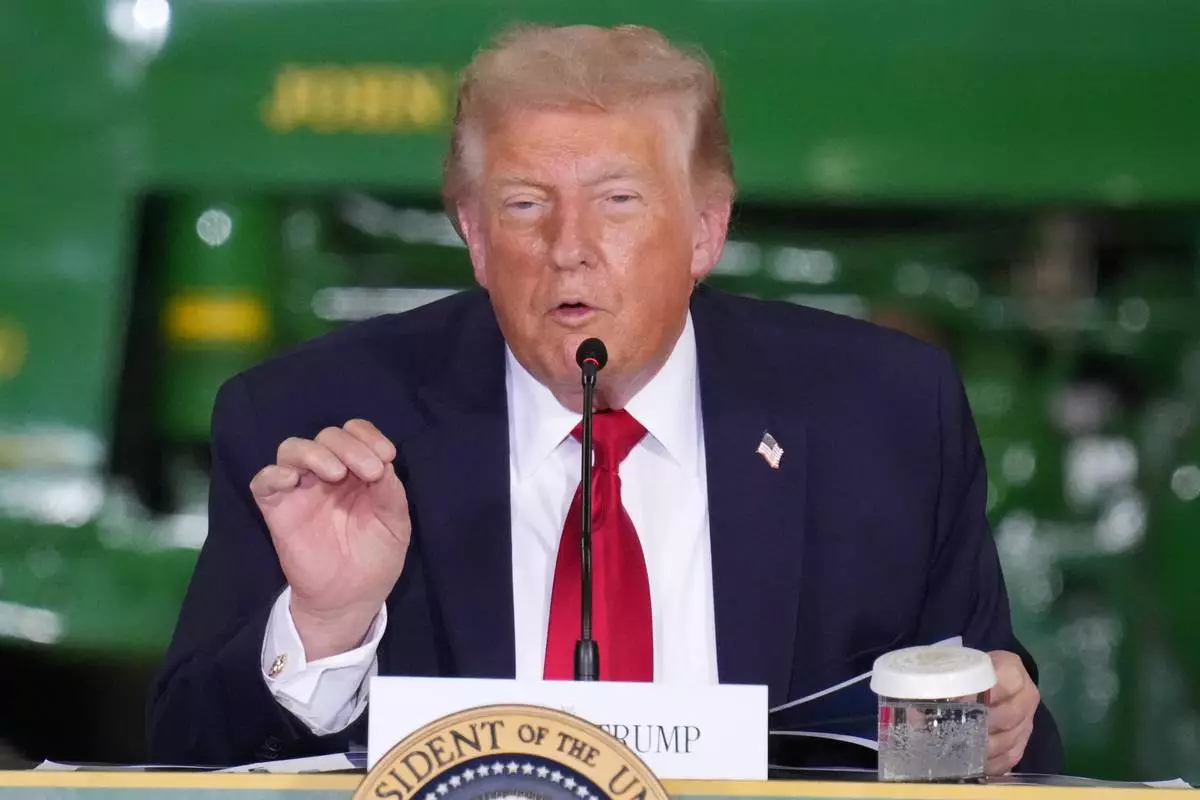
President Donald Trump speaks at Custer Farms in Chippewa Falls, Wis., Friday, June 5, 2026. (AP Photo/Glen Stubbe)