WASHINGTON (AP) — A key inflation gauge moved higher in May in the latest sign that prices remain stubbornly elevated while Americans also cut back on their spending last month.
Prices rose 2.3% in May compared with a year ago, up from just 2.1% in April, the Commerce Department said Friday. Excluding the volatile food and energy categories, core prices rose 2.7% from a year earlier, an increase from 2.6% the previous month. Both figures are modestly above the Federal Reserve’s 2% target. The Fed tracks core inflation because it typically provides a better guide to where inflation is headed.
Click to Gallery
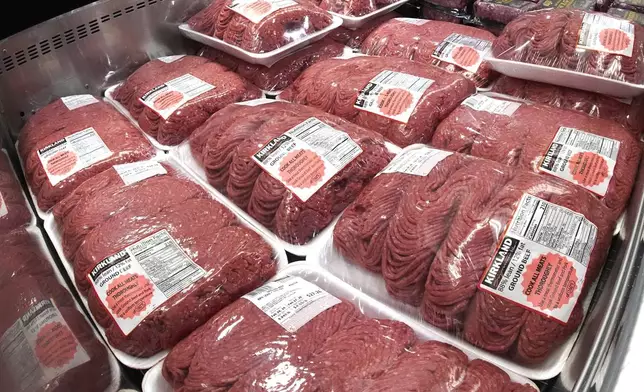
FILE - This is a cooler of ground beef in a Costco Warehouse in Pittsburgh on Wednesday, Feb. 26, 2025. (AP Photo/Gene J. Puskar, File)
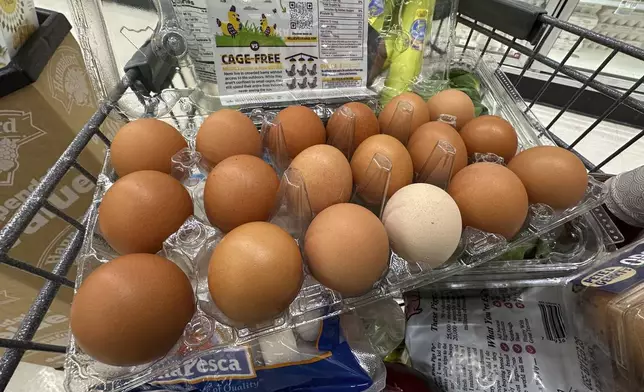
FILE - Eggs sit in a container in a shopping cart at grocery store, Monday, Jan. 27, 2025, in Windham, Maine. (AP Photo/Robert F. Bukaty, File)

FILE - A shopping cart filled with groceries sits in an aisle at an Asian grocery store in Rowland Heights, Calif., Thursday, April 3, 2025. (AP Photo/Jae C. Hong, File)
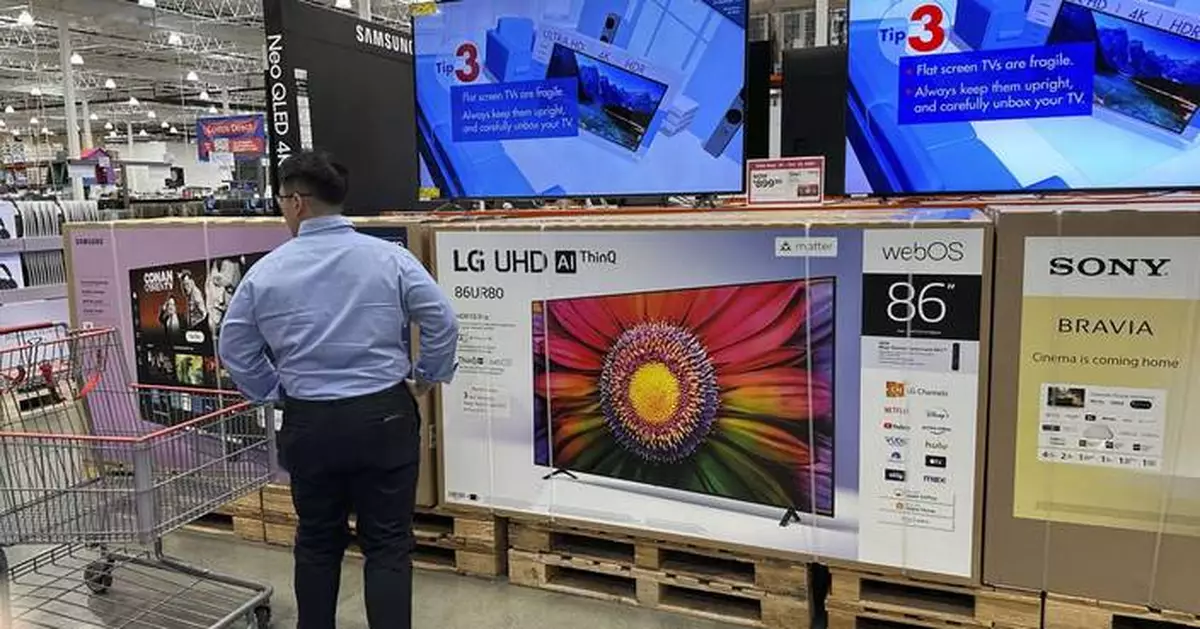
FILE - A shopper considers large-screen televisions on display in a Costco warehouse Oct. 3, 2024, in Timnath, Colo. (AP Photo/David Zalubowski, File)
At the same time, Americans cut back on spending for the first time since January, as overall spending fell 0.1%. Incomes dropped a sharp 0.4%. Both figures were distorted by one-time changes: Spending on cars plunged, pulling down overall spending, because Americans had moved more quickly to buy vehicles in the spring to get ahead of tariffs.
And incomes dropped after a one-time adjustment to Social Security benefits had boosted payments in March and April. Social Security payments were raised for some retirees who had worked for state and local governments.
Still, the data suggests that growth is cooling as Americans become more cautious, in part because President Donald Trump's tariffs have raised the cost of some goods, such as appliances, tools, and audio equipment. Consumer sentiment has also fallen sharply this year in the wake of the sometimes-chaotic rollout of the duties. And while the unemployment rate remains low, hiring has been weak, leaving those without jobs struggling to find new work.
Consumer spending rose just 0.5% in the first three months of this year and has been sluggish in the first two months of the second quarter.
And spending on services ticked up just 0.1% in May, the smallest montly increase in four and a half years.
“Because consumers are not in a strong enough shape to handle those (higher prices), they are spending less on recreation, travel, hotels, that type of thing,” said Luke Tilley, chief economist at Wilmington Trust.
Spending on airfares, restaurant meals, and hotels all fell last month, Friday's report showed.
At the same time, the figures suggest that President Donald Trump’s broad-based tariffs are still having only a modest effect on overall prices. The increasing costs of some goods have been partly offset by falling prices for new cars, airline fares, and apartment rentals, among other items.
On a monthly basis, in fact, inflation was mostly tame. Prices rose just 0.1% in May from April, according to the Commerce Department, the same as the previous month. Core prices climbed 0.2% in May, more than economists expected and above last month’s 0.1%. Gas prices fell 2.6% just from April to May.
Economists point to several reasons for why Trump’s tariffs have yet to accelerate inflation, as many analysts expected. Like American consumers, companies imported billions of dollars of goods in the spring before the duties took full affect, and many items currently on store shelves were imported without paying higher levies.
There are early indications that that is beginning to change.
Nike announced this week that it expects U.S. tariffs will cost the company $1 billion this year. It will institute “surgical” price increases in the fall. It's not the first retailer to warn of price hikes when students are heading back to school.
Walmart said last month that that its customers will start to see higher prices this month and next as back-to-school shopping goes into high gear.
Also, much of what the U.S. imports is made up of raw materials and parts that are used to make goods in the U.S. It can take time for those higher input costs to show up in consumer prices. Economists at JPMorgan have argued that many companies are absorbing the cost of the tariffs, for now. Doing so can reduce their profit margins, which could weigh on hiring.
Cooling inflation has put more of a spotlight on the Federal Reserve and its chair, Jerome Powell. The Fed ramped up its short-term interest rate in 2022 and 2023 to slow the economy and combat inflation, which jumped to a four-decade high nearly three years ago. With price increases now nearly back to the Fed’s target, some economists — and some Fed officials — say that the central bank could reduce its rate back to a level that doesn’t slow or stimulate growth.
Trump has also repeatedly attached the Fed for not cutting rates, calling Powell a “numskull” and a “fool.”
But Powell said in congressional testimony earlier this week that the Fed wants to see how inflation and the economy evolve before it cuts rates. Most other Fed policymakers have expressed a similar view.
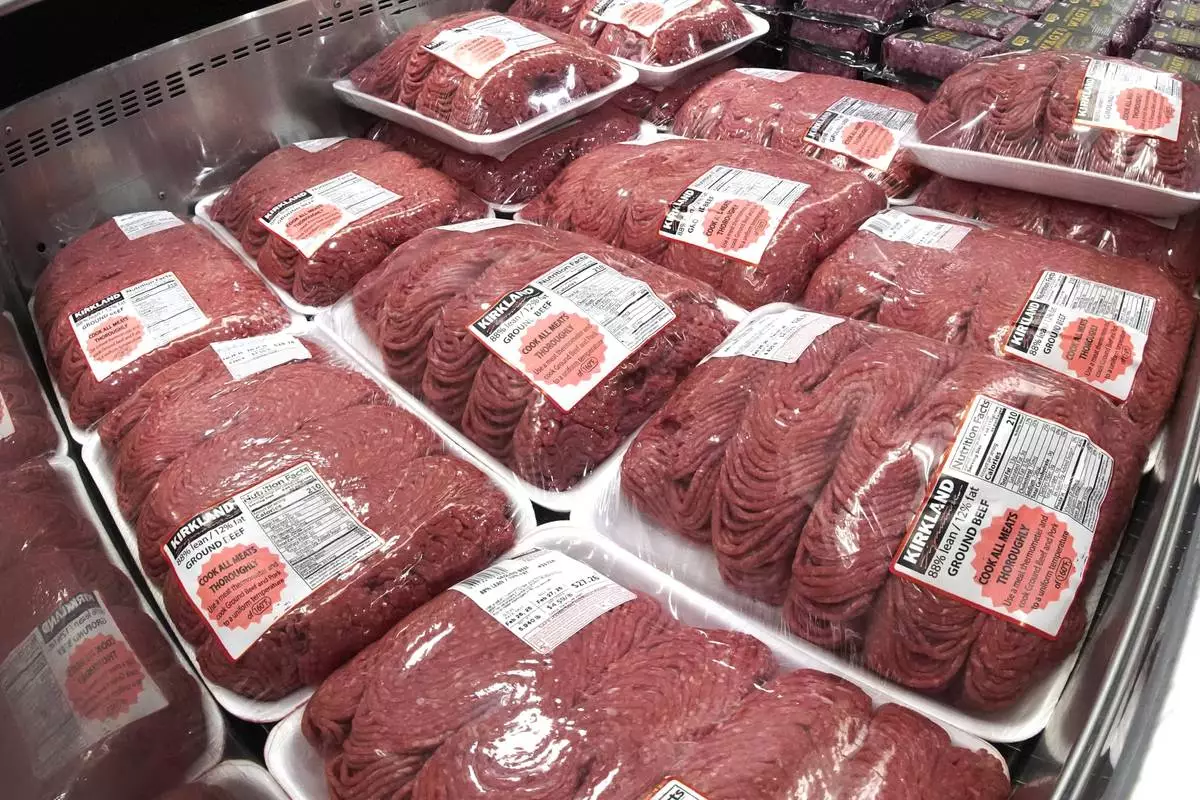
FILE - This is a cooler of ground beef in a Costco Warehouse in Pittsburgh on Wednesday, Feb. 26, 2025. (AP Photo/Gene J. Puskar, File)
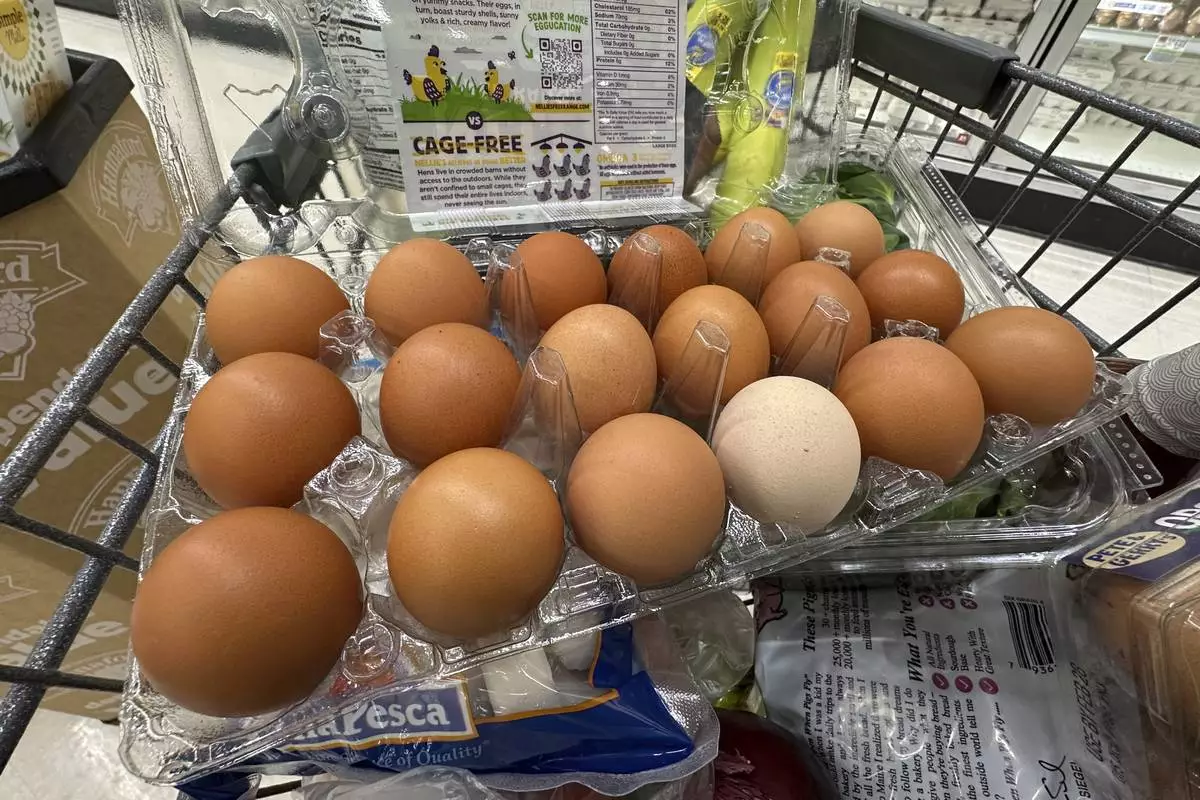
FILE - Eggs sit in a container in a shopping cart at grocery store, Monday, Jan. 27, 2025, in Windham, Maine. (AP Photo/Robert F. Bukaty, File)

FILE - A shopping cart filled with groceries sits in an aisle at an Asian grocery store in Rowland Heights, Calif., Thursday, April 3, 2025. (AP Photo/Jae C. Hong, File)
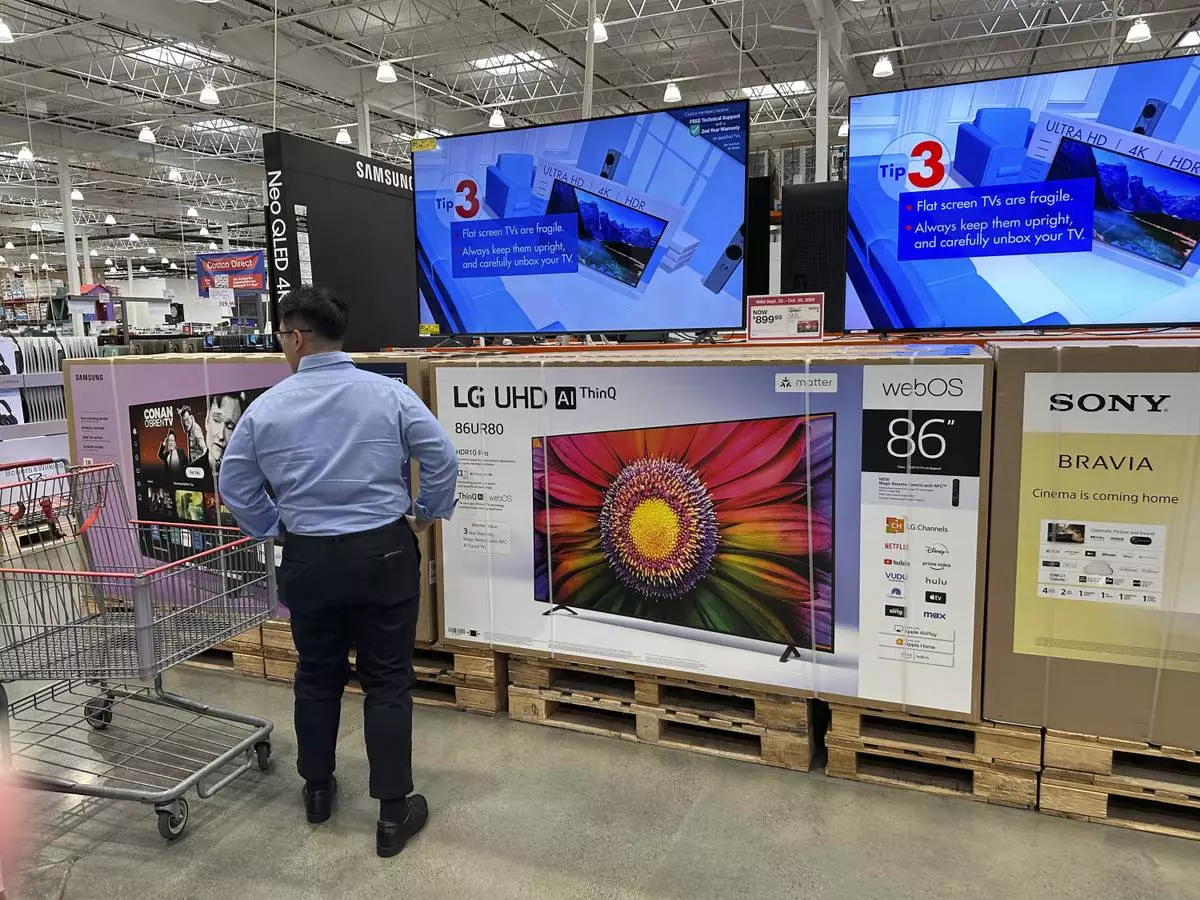
FILE - A shopper considers large-screen televisions on display in a Costco warehouse Oct. 3, 2024, in Timnath, Colo. (AP Photo/David Zalubowski, File)