Skip to Content Facebook Feature Image

How ‘Sorry, Baby’ writer-director-star Eva Victor made the year’s most exciting debut

ENT

How ‘Sorry, Baby’ writer-director-star Eva Victor made the year’s most exciting debut
ENT

ENT

How ‘Sorry, Baby’ writer-director-star Eva Victor made the year’s most exciting debut

2025-06-27 22:01 Last Updated At:22:11

The Oscar-winning producer of “Moonlight” really wanted to get in touch with Eva Victor.

Adele Romanski and her producing partner Mark Ceryak were “kind of obsessed” with the short, comedic videos Victor was putting out on various social media platforms. Titles of some that still exist online include “when I definitely did not murder my husband” and a series called “Eva vs. Anxiety.”

Romanski and Ceryak started bugging their Pastel productions partner Barry Jenkins, certainly the most well-known name of the bunch, to make the first move and send Victor a direct message. But they had to ask themselves a big question first: Would that be weird?

“We had to negotiate whether or not that was appropriate for Barry, a married man, to send Eva a DM,” Romanski said. “We were like ‘Yessss, do it!’”

What started as a curiosity about a distinct voice, someone whose observations about the world and society were hilarious, sharp and undeniable, just a few years later would become one of the most exciting debuts in recent memory. “Sorry, Baby,” which Victor wrote, directed and stars in, is a gentle film about trauma. It’s also funny and strange and fresh, a wholly original statement from an artist with a vision. And there’s a cat too.

The film opens Friday in New York and Los Angeles and expands nationwide in the coming weeks.

It’s a wild turn of events for Victor, who uses they/she pronouns and who never dared to dream that they could possibly direct.

Victor grew up in San Francisco in a family that cherished and pursued artistic endeavors, even if it wasn’t their primary careers. At Northwestern University, Victor focused on playwriting — it was something they could have control over while also pursuing acting. After college it was improv, writing for the satirical website Reductress (“Woman Seduced by Bangs Despite Knowing They’re Bad for Her,” “How to Cut Out All the People who are Not Obsessed with Your Dog”), some acting gigs, like a recurring role on the Showtime series “Billions,” and social media, where their tweets and videos often went viral.

But there was an itch to work on something longer form, something beyond that immediate gratification of virality. Jenkins’ message came at the right time. Then at Victor’s first meeting at Pastel productions, he planted a seed of an idea: Maybe Victor was already a director.

“He said something that very profoundly impacted me: That the comedy videos I was doing were me directing without me realizing it,” Victor said. “It was just a different scale. That kind of stuck with me.”

“Sorry, Baby” was born out of a personal story that Victor had wanted to write about for a while. After the general meeting, they had a renewed sense of purpose and went away one snowy winter to a cabin in Maine to write, with their cat, movies and books as companions. The screenplay, in which a New England graduate student named Agnes is assaulted by her thesis adviser, poured out of them.

“I wanted to make a film that was about feeling stuck when everyone around you keeps moving that didn’t center any violence. The goal was to have the film and its structure support the time afterwards, not the actual experience,” Victor said. “I really think the thing it’s about is trying to heal and the slow pace at which healing comes and how it’s really not linear and how there are joys to be found in the everyday and especially in very affirming friendships and sometimes, like, a sandwich depending on the day.”

Somewhere along the way Victor started to also believe that they were the best person for the job. They were the only person standing in their way.

“The less focus there was on me as the creator of it, and the more focus there was on how to tell the story as effectively as possible, the more comfortable I became,” Victor said. “I understood exactly what I wanted it to look and feel like.”

But there was a lot to learn. Before the shoot, Victor also asked Jane Schoenbrun, who they’d met once for pie, if they could come to the “I Saw the TV Glow” set to just watch. Schoenbrun said yes.

“It was a completely wonderful, transforming experience of friendship and learning,” Victor said. “Jane is so confident about what they want in their films and it was a real honor to watch them so many decisions and stay so calm.”

Empowered by what they’d seen, Victor assembled a “dream team” of experts, like cinematographer Mia Cioffi Henry, who also teaches at NYU, and an editor, Alex O’Flinn, who teaches at UCLA. Victor rounded out the cast with Lucas Hedges, as a kind neighbor, “Billions” alum Louis Cancelmi, as the thesis adviser, and Naomi Ackie as her best friend Lydie — the first person she talks to after the incident, the one who accompanies her to the hospital, and the one whose life doesn’t stop.

“We built the schedule in a way that allowed us to have all our friendship fun scenes at first,” Victor said. “We kind of got to go through the experience of building a friendship in real time.”

Ackie immediately connected to the script and thought whoever wrote it, “must be the coolest.” The reality of Victor, she said, did not disappoint.

“They don’t realize how magnetic their openness is,” Ackie said. “There’s something extremely honest about them and curious and playful.”

Romanski and everyone at Pastel productions knew they had something special, a gem even.

“They’re chasing something tonally that I’ve never seen anybody go after before,” Romanski said. “It’s the blend of both a very, very specific, personal comedic tone and also a true sense of artistry.”

But nothing’s ever guaranteed until you put it in front of a public audience, which they did earlier this year at the Sundance Film Festival where it quickly became a breakout sensation, with standing ovations and the screenwriting award, whose past winners include Lisa Cholodenko, Kenneth Lonergan, Christopher Nolan and Debra Granik.

“You just don’t know. Then on the other side, you know,” Romanski said. “We felt it with ‘Aftersun.’ We felt it with ‘Moonlight.’ And we definitely felt it with ‘Sorry, Baby.’”

And like “Aftersun” and “Moonlight” before it, “Sorry, Baby” also found a home with A24, which promised a theatrical release. Among the giants of the summer movie calendar, in which everything is big, bigger, biggest, “Sorry, Baby” is the delicate discovery.

“I wanted it to exist in this space between reality and escape. I wanted it to be this immersive thing,” Victor said. “It’s a sensitive film. I hope it finds people when they need it. That’s my biggest wish.”
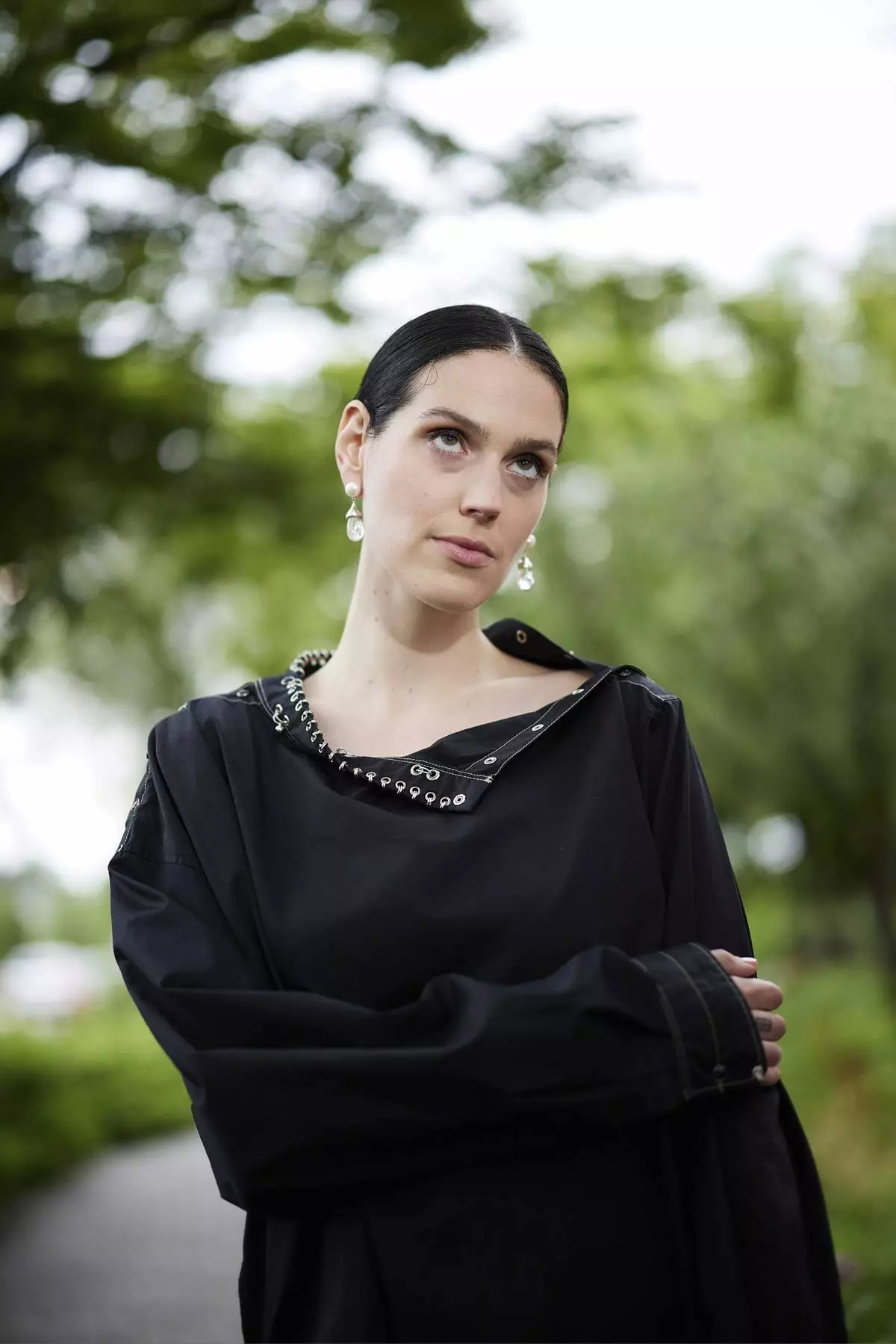
Actor-director Eva Victor poses for a portrait to promote "Sorry, Baby" on Monday, June 16, 2025, in New York. (Photo by Matt Licari/Invision/AP)
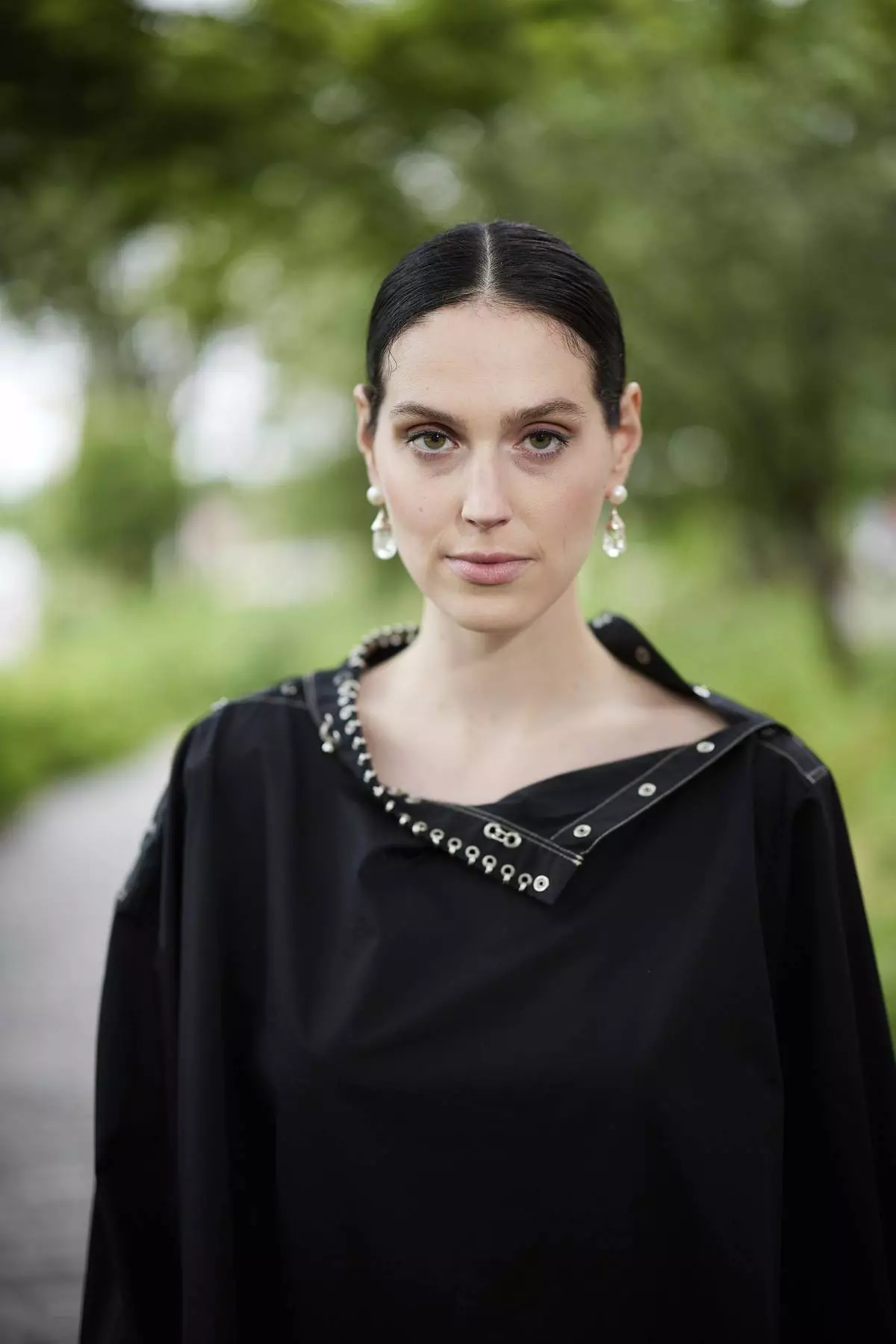
Actor-director Eva Victor poses for a portrait to promote "Sorry, Baby" on Monday, June 16, 2025, in New York. (Photo by Matt Licari/Invision/AP)
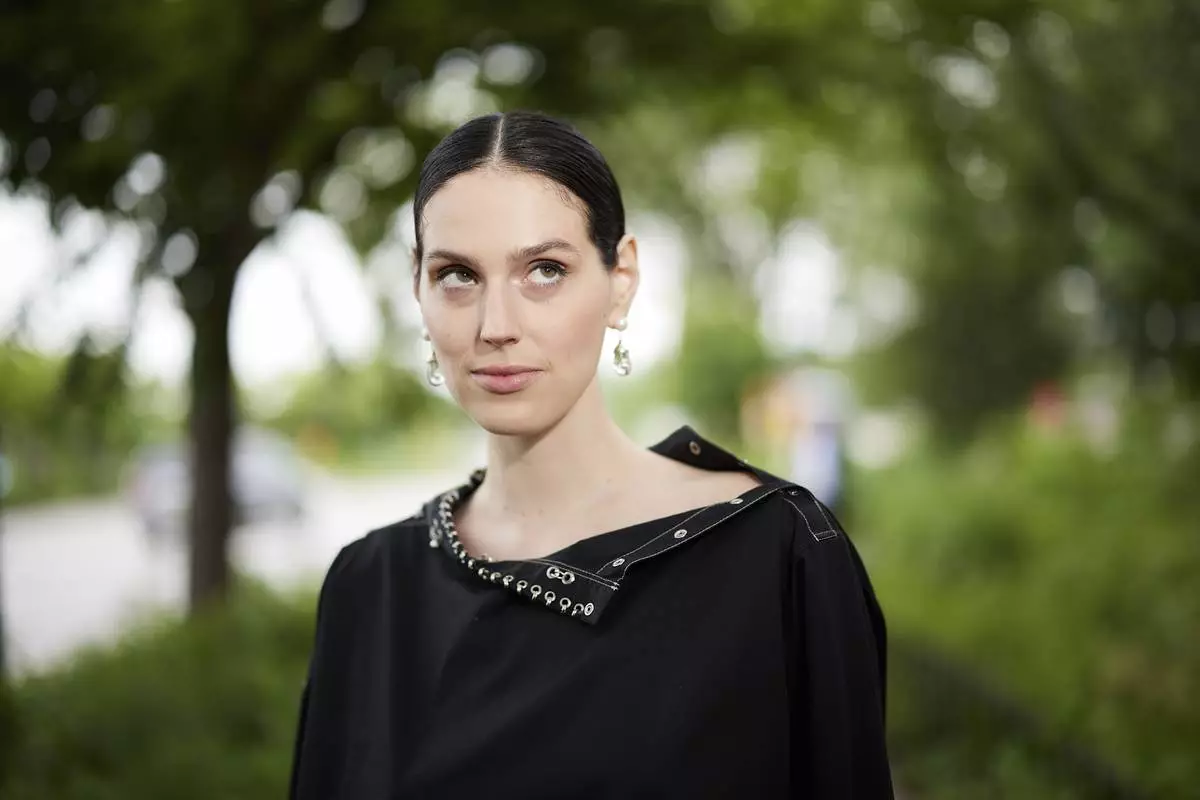
Actor-director Eva Victor poses for a portrait to promote "Sorry, Baby" on Monday, June 16, 2025, in New York. (Photo by Matt Licari/Invision/AP)
Actor-director Eva Victor poses for a portrait to promote "Sorry, Baby" on Monday, June 16, 2025, in New York. (Photo by Matt Licari/Invision/AP)
Actor-director Eva Victor poses for a portrait to promote "Sorry, Baby" on Monday, June 16, 2025, in New York. (Photo by Matt Licari/Invision/AP)
Actor-director Eva Victor poses for a portrait to promote "Sorry, Baby" on Monday, June 16, 2025, in New York. (Photo by Matt Licari/Invision/AP)
DUBAI, United Arab Emirates (AP) — U.S. President Donald Trump said Iran wants to negotiate with Washington after his threat to strike the Islamic Republic over its bloody crackdown on protesters, a move coming as activists said Monday the death toll in the nationwide demonstrations rose to at least 544.

Iran had no immediate reaction to the news, which came after the foreign minister of Oman — long an interlocutor between Washington and Tehran — traveled to Iran this weekend. It also remains unclear just what Iran could promise, particularly as Trump has set strict demands over its nuclear program and its ballistic missile arsenal, which Tehran insists is crucial for its national defense.

Meanwhile Monday, Iran called for pro-government demonstrators to head to the streets in support of the theocracy, a show of force after days of protests directly challenging the rule of 86-year-old Supreme Leader Ayatollah Ali Khamenei. Iranian state television aired chants from the crowd, who shouted “Death to America!” and “Death to Israel!”

Trump and his national security team have been weighing a range of potential responses against Iran including cyberattacks and direct strikes by the U.S. or Israel, according to two people familiar with internal White House discussions who were not authorized to comment publicly and spoke on condition of anonymity.

“The military is looking at it, and we’re looking at some very strong options,” Trump told reporters on Air Force One on Sunday night. Asked about Iran’s threats of retaliation, he said: “If they do that, we will hit them at levels that they’ve never been hit before.”

Trump said that his administration was in talks to set up a meeting with Tehran, but cautioned that he may have to act first as reports of the death toll in Iran mount and the government continues to arrest protesters.

“I think they’re tired of being beat up by the United States,” Trump said. “Iran wants to negotiate.”

He added: “The meeting is being set up, but we may have to act because of what’s happening before the meeting. But a meeting is being set up. Iran called, they want to negotiate.”

Iran through country's parliamentary speaker warned Sunday that the U.S. military and Israel would be “legitimate targets” if America uses force to protect demonstrators.

More than 10,600 people also have been detained over the two weeks of protests, said the U.S.-based Human Rights Activists News Agency, which has been accurate in previous unrest in recent years and gave the death toll. It relies on supporters in Iran crosschecking information. It said 496 of the dead were protesters and 48 were with security forces.

With the internet down in Iran and phone lines cut off, gauging the demonstrations from abroad has grown more difficult. The Associated Press has been unable to independently assess the toll. Iran’s government has not offered overall casualty figures.

Those abroad fear the information blackout is emboldening hard-liners within Iran’s security services to launch a bloody crackdown. Protesters flooded the streets in the country’s capital and its second-largest city on Saturday night into Sunday morning. Online videos purported to show more demonstrations Sunday night into Monday, with a Tehran official acknowledging them in state media.

In Tehran, a witness told the AP that the streets of the capital empty at the sunset call to prayers each night. By the Isha, or nighttime prayer, the streets are deserted.

Part of that stems from the fear of getting caught in the crackdown. Police sent the public a text message that warned: “Given the presence of terrorist groups and armed individuals in some gatherings last night and their plans to cause death, and the firm decision to not tolerate any appeasement and to deal decisively with the rioters, families are strongly advised to take care of their youth and teenagers.”

Another text, which claimed to come from the intelligence arm of the paramilitary Revolutionary Guard, also directly warned people not to take part in demonstrations.

“Dear parents, in view of the enemy’s plan to increase the level of naked violence and the decision to kill people, ... refrain from being on the streets and gathering in places involved in violence, and inform your children about the consequences of cooperating with terrorist mercenaries, which is an example of treason against the country,” the text warned.

The witness spoke to the AP on condition of anonymity due to the ongoing crackdown.

The demonstrations began Dec. 28 over the collapse of the Iranian rial currency, which trades at over 1.4 million to $1, as the country’s economy is squeezed by international sanctions in part levied over its nuclear program. The protests intensified and grew into calls directly challenging Iran’s theocracy.

Nikhinson reported from aboard Air Force One.

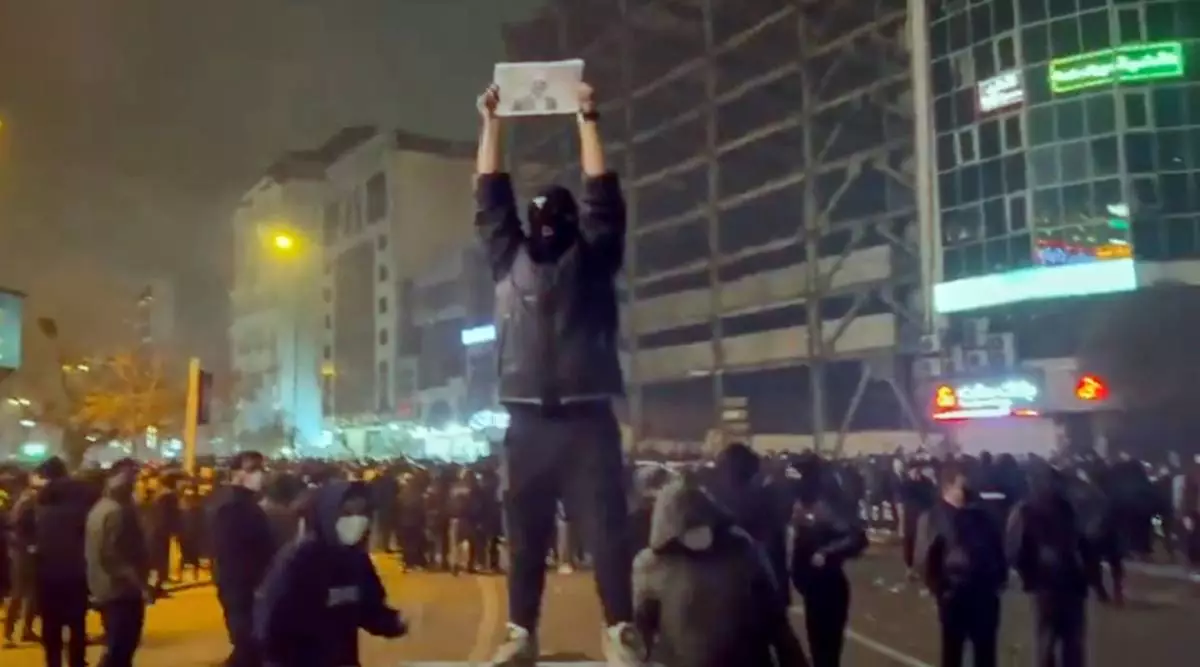
In this frame grab from video obtained by the AP outside Iran, a masked demonstrator holds a picture of Iran's Crown Prince Reza Pahlavi during a protest in Tehran, Iran, Friday, January. 9, 2026. (UGC via AP)

In this frame grab from video obtained by the AP outside Iran, a masked demonstrator holds a picture of Iran's Crown Prince Reza Pahlavi during a protest in Tehran, Iran, Friday, January. 9, 2026. (UGC via AP)

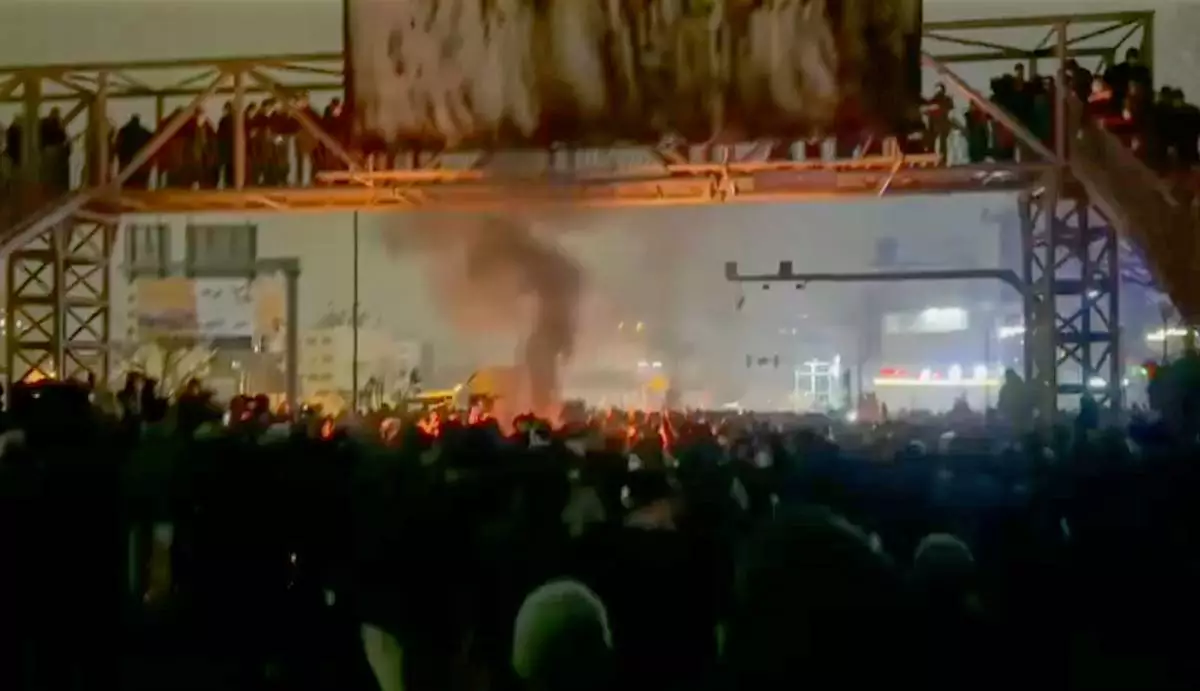
In this frame grab from footage circulating on social media from Iran shows protesters taking to the streets despite an intensifying crackdown as the Islamic Republic remains cut off from the rest of the world in Tehran, Iran, Friday, Jan. 9, 2026.(UGC via AP)

In this frame grab from footage circulating on social media from Iran shows protesters taking to the streets despite an intensifying crackdown as the Islamic Republic remains cut off from the rest of the world in Tehran, Iran, Friday, Jan. 9, 2026.(UGC via AP)

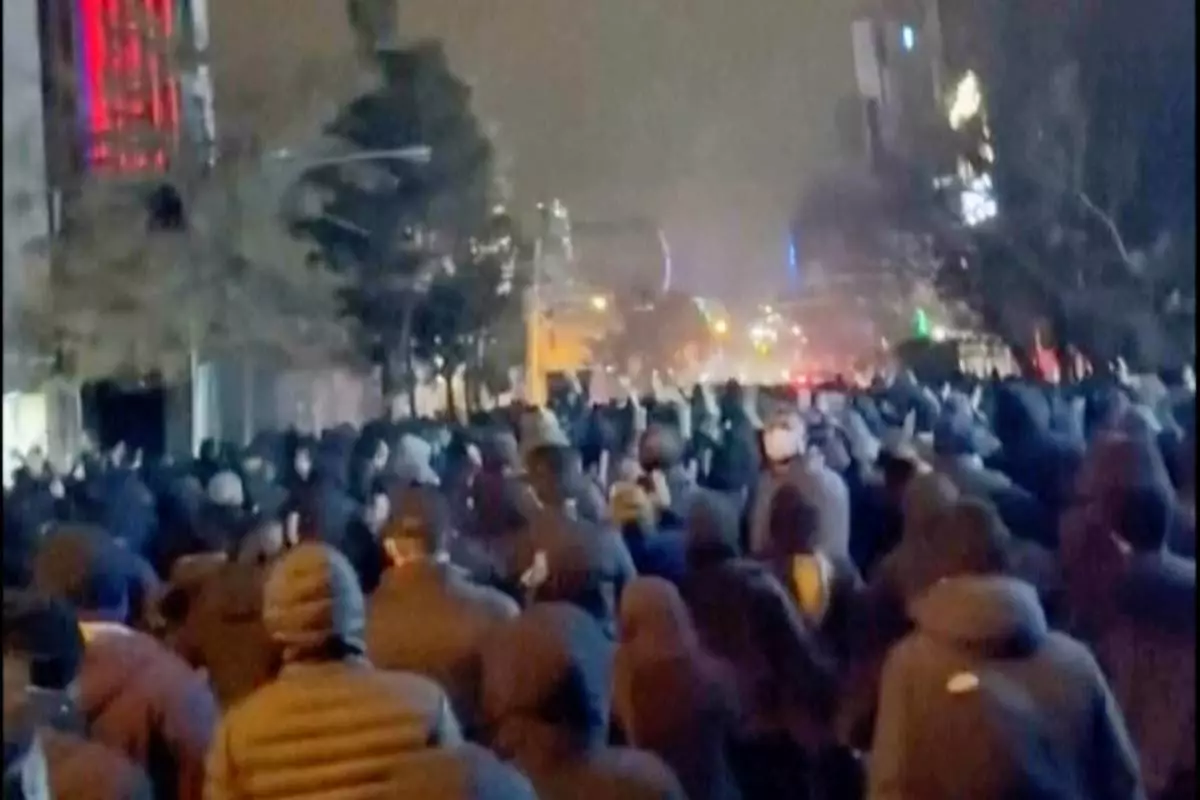
In this frame grab from footage circulating on social media from Iran showed protesters once again taking to the streets of Tehran despite an intensifying crackdown as the Islamic Republic remains cut off from the rest of the world in Tehran, Iran, Saturday Jan. 10, 2026. (UGC via AP)

In this frame grab from footage circulating on social media from Iran showed protesters once again taking to the streets of Tehran despite an intensifying crackdown as the Islamic Republic remains cut off from the rest of the world in Tehran, Iran, Saturday Jan. 10, 2026. (UGC via AP)

Recommended Articles