WASHINGTON (AP) — The Supreme Court ruled on Friday that Maryland parents who have religious objections can pull their children from public school lessons using LGBTQ storybooks.
With the six conservative justices in the majority, the court reversed lower-court rulings in favor of the Montgomery County school system in suburban Washington. The high court ruled that the schools likely could not require elementary school children to sit through lessons involving the books if parents expressed religious objections to the material.
The lack of an “opt-out,” Justice Samuel Alito wrote for the court, “places an unconstitutional burden on the parents' rights to the free exercise of their religion.”
Justice Sonia Sotomayor wrote in dissent for the three liberal justices that exposure to different views in a multicultural society is a critical feature of public schools. “Yet it will become a mere memory if children must be insulated from exposure to ideas and concepts that may conflict with their parents’ religious beliefs,” Sotomayor wrote. “Today’s ruling ushers in that new reality.”
The decision was not a final ruling in the case, but the justices strongly suggested that the parents will win in the end. The court ruled that policies like the one at issue in the case are subjected to the strictest level of review, nearly always dooming them.
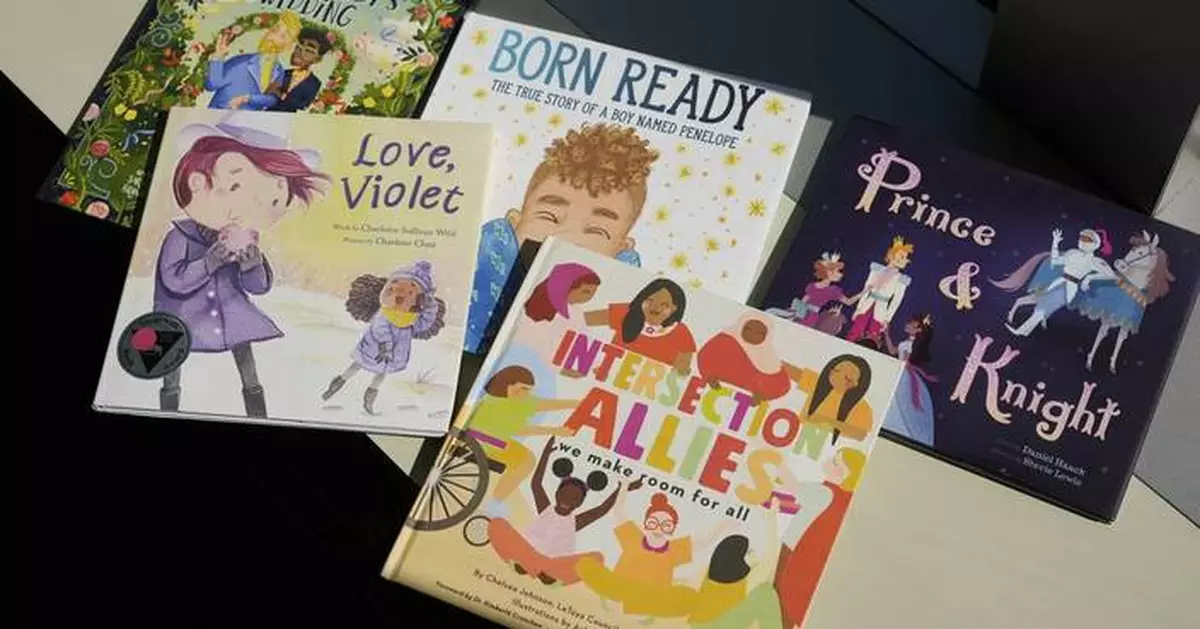
The school district introduced the storybooks, including “Prince & Knight” and “Uncle Bobby’s Wedding,” in 2022 as part of an effort to better reflect the district’s diversity. In “Uncle Bobby’s Wedding,” a niece worries that her uncle won't have as much time for her after he gets married to another man.
The justices have repeatedly endorsed claims of religious discrimination in recent years, and the case is among several religious-rights cases at the court this term. The decision also comes amid increases in recent years in books being banned from public school and public libraries.
Many of the removals were organized by Moms for Liberty and other conservative organizations that advocate for more parental input over what books are available to students. Soon after President Donald Trump, a Republican, took office in January, the Education Department called the book bans a “hoax” and dismissed 11 complaints that had been filed under Trump's predecessor, President Joe Biden, a Democrat.
The writers’ group PEN America said in a court filing in the Maryland case that the objecting parents wanted “a constitutionally suspect book ban by another name.” PEN America reported more than 10,000 books were banned in the last school year.
“By allowing parents to pull their children out of classrooms when they object to particular content, the justices are laying the foundation for a new frontier in the assault on books of all kinds in schools,” said Elly Brinkley, a lawyer for the group's U.S. Free Expression Programs. “In practice, opt outs for religious objections will chill what is taught in schools and usher in a more narrow orthodoxy as fear of offending any ideology or sensibility takes hold."
Lawyer Eric Baxter, who represented the Maryland parents at the Supreme Court, said the decision was a “historic victory for parental rights."
"Kids shouldn’t be forced into conversations about drag queens, pride parades, or gender transitions without their parents’ permission," Baxter said.
Parents initially had been allowed to opt their children out of the lessons for religious and other reasons, but the school board reversed course a year later, prompting protests and eventually a lawsuit.
At arguments in April, a lawyer for the school district told the justices that the “opt outs” had become disruptive. Sex education is the only area of instruction in Montgomery schools that students can be excused from, lawyer Alan Schoenfeld said.
The case hit unusually close to home, as three justices live in the county, though they didn't send their children to public schools.
Follow the AP's coverage of the U.S. Supreme Court at https://apnews.com/hub/us-supreme-court.
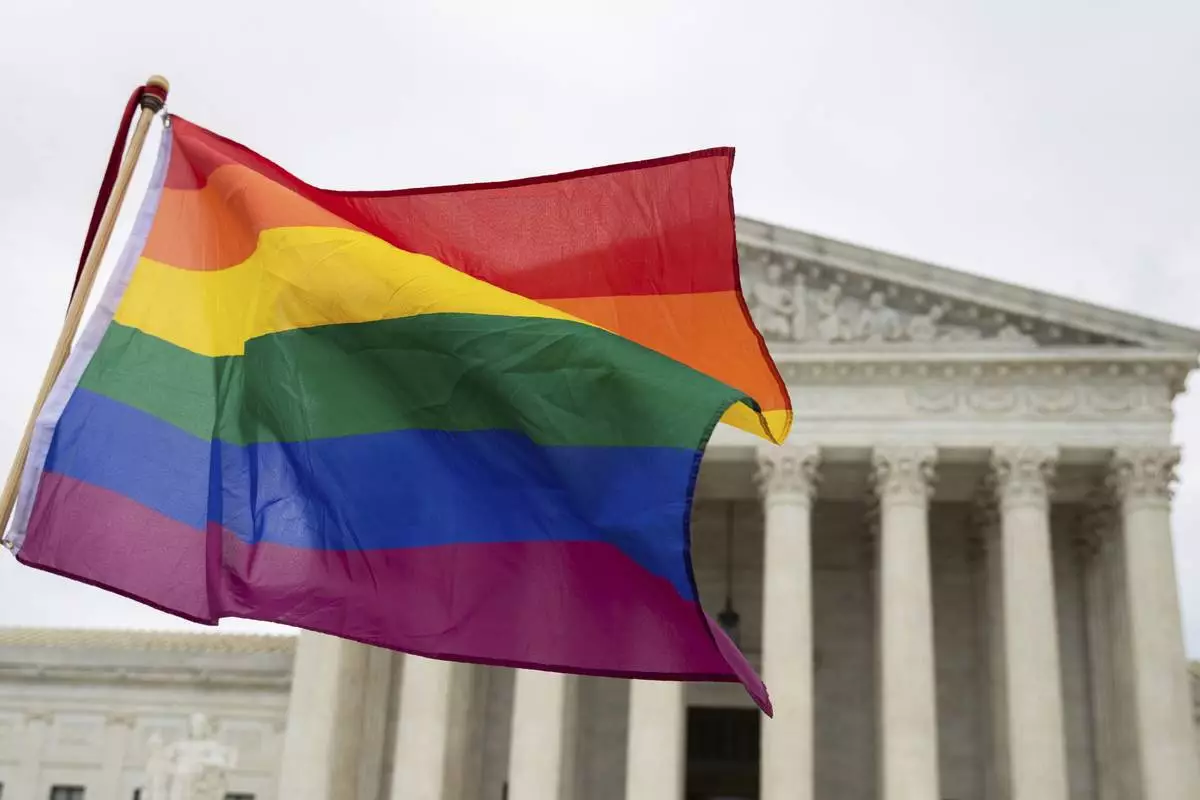
FILE - A pride flag is seen in front of the U.S. Supreme Court, Oct. 8, 2019, in Washington. (AP Photo/Manuel Balce Ceneta, File)

FILE - A selection of books featuring LGBTQ characters that are part of a Supreme Court case are pictured, April, 15, 2025, in Washington. (AP Photo/Pablo Martinez Monsivais, File)
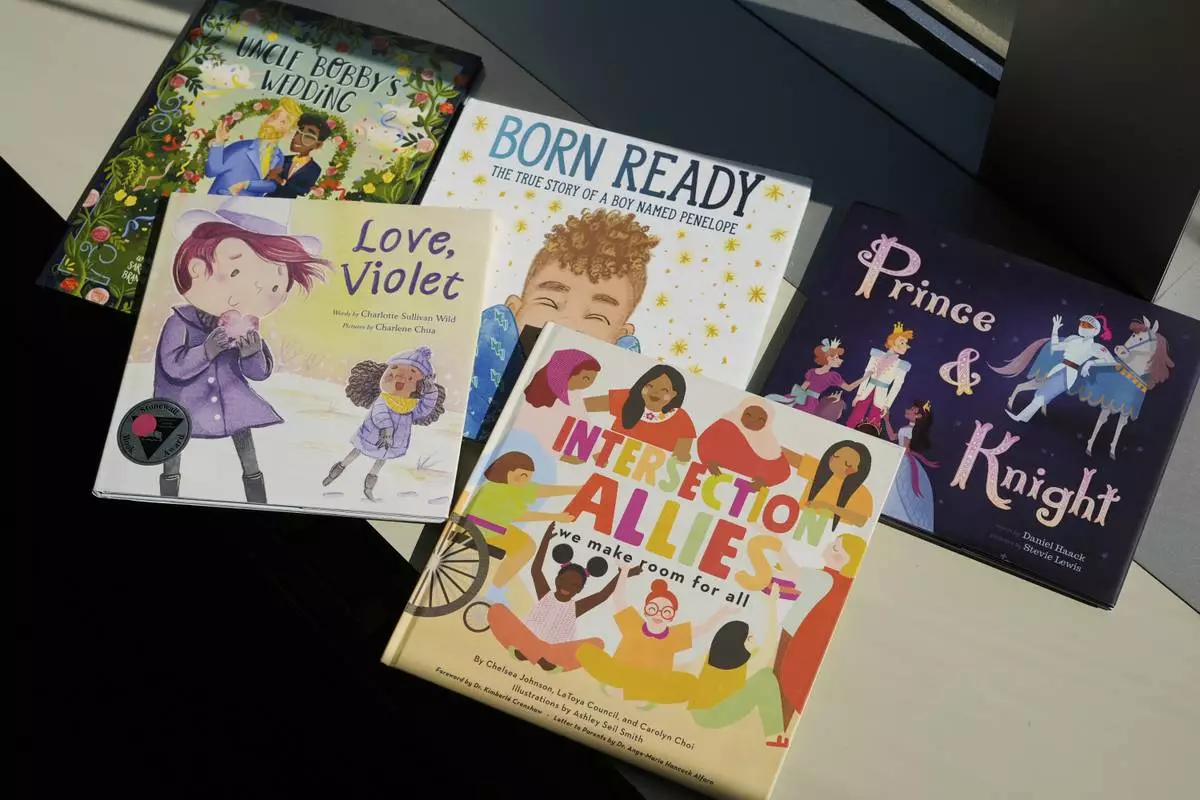
FILE - A selection of books featuring LGBTQ characters that are part of a Supreme Court case are pictured, April, 15, 2025, in Washington. (AP Photo/Pablo Martinez Monsivais, File)
MINNEAPOLIS (AP) — Federal agents carrying out immigration arrests in Minnesota's Twin Cities region already shaken by the fatal shooting of a woman rammed the door of one home Sunday and pushed their way inside, part of what the Department of Homeland Security has called its largest enforcement operation ever.
In a dramatic scene similar to those playing out across Minneapolis, agents captured a man in the home just minutes after pepper spraying protesters outside who had confronted the heavily armed federal agents. Along the residential street, protesters honked car horns, banged on drums and blew whistles in attempts to disrupt the operation.
Video of the clash taken by The Associated Press showed some agents pushing back protesters while a distraught woman later emerged from the house with a document that federal agents presented to arrest the man. Signed by an immigration officer, the document — unlike a warrant signed by a judge — does not authorize forced entry into a private residence. A warrant signed by an immigration officer only authorizes arrest in a public area.
Immigrant advocacy groups have conducted extensive “know-your-rights” campaigns urging people not to open their doors unless agents have a court order signed by a judge.
But within minutes of ramming the door in a neighborhood filled with single-family homes, the handcuffed man was led away.
More than 2,000 immigration arrests have been made in Minnesota since the enforcement operation began at the beginning of December, said Homeland Security spokesperson Tricia McLaughlin.
Homeland Security Secretary Kristi Noem told Fox News on Sunday that the administration would send additional federal agents to Minnesota to protect immigration officers and continue enforcement.
The Twin Cities — the latest target in President Donald Trump’s immigration enforcement campaign — is bracing for what is next after 37-year-old Renee Good was shot and killed by an immigration officer on Wednesday.
“We’re seeing a lot of immigration enforcement across Minneapolis and across the state, federal agents just swarming around our neighborhoods,” said Jason Chavez, a Minneapolis city councilmember. “They’ve definitely been out here.”
Chavez, the son of Mexican immigrants who represents an area with a growing immigrant population, said he is closely monitoring information from chat groups about where residents are seeing agents operating.
People holding whistles positioned themselves in freezing temperatures on street corners Sunday in the neighborhood where Good was killed, watching for any signs of federal agents.
More than 20,000 people have taken part in a variety of trainings to become “observers” of enforcement activities in Minnesota since the 2024 election, said Luis Argueta, a spokesperson for Unidos MN, a local human rights organization .
“It’s a role that people choose to take on voluntarily, because they choose to look out for their neighbors,” Argueta said.
The protests have been largely peaceful, but residents remained anxious. On Monday, Minneapolis public schools will start offering remote learning for the next month in response to concerns that children might feel unsafe venturing out while tensions remain high.
Many schools closed last week after Good’s shooting and the upheaval that followed.
While the enforcement activity continues, two of the state’s leading Democrats said that the investigation into Good's shooting death should not be overseen solely by the federal government.
Minneapolis Mayor Jacob Frey and U.S. Sen. Tina Smith said in separate interviews Sunday that state authorities should be included in the investigation because the federal government has already made clear what it believes happened.
“How can we trust the federal government to do an objective, unbiased investigation, without prejudice, when at the beginning of that investigation they have already announced exactly what they saw — what they think happened," Smith said on ABC’s "This Week."
The Trump administration has defended the officer who shot Good in her car, saying he was protecting himself and fellow agents and that Good had “weaponized” her vehicle.
Todd Lyons, acting director of U.S. Immigration and Customs Enforcement, defended the officer on Fox News Channel’s “The Sunday Briefing.”
"That law enforcement officer had milliseconds, if not short time to make a decision to save his life and his other fellow agents,” he said.
Lyons also said the administration’s enforcement operations in Minnesota wouldn't be needed “if local jurisdictions worked with us to turn over these criminally illegal aliens once they are already considered a public safety threat by the locals.”
The killing of Good by an ICE officer and the shooting of two people by federal agents in Portland, Oregon, led to dozens of protests in cities across the country over the weekend, including New York, Los Angeles, Washington D.C. and Oakland, California.
Contributing were Associated Press journalists Giovanna Dell’Orto in Minneapolis; Thomas Strong in Washington; Bill Barrow in Atlanta; Christopher Weber in Los Angeles; and John Seewer in Toledo, Ohio.
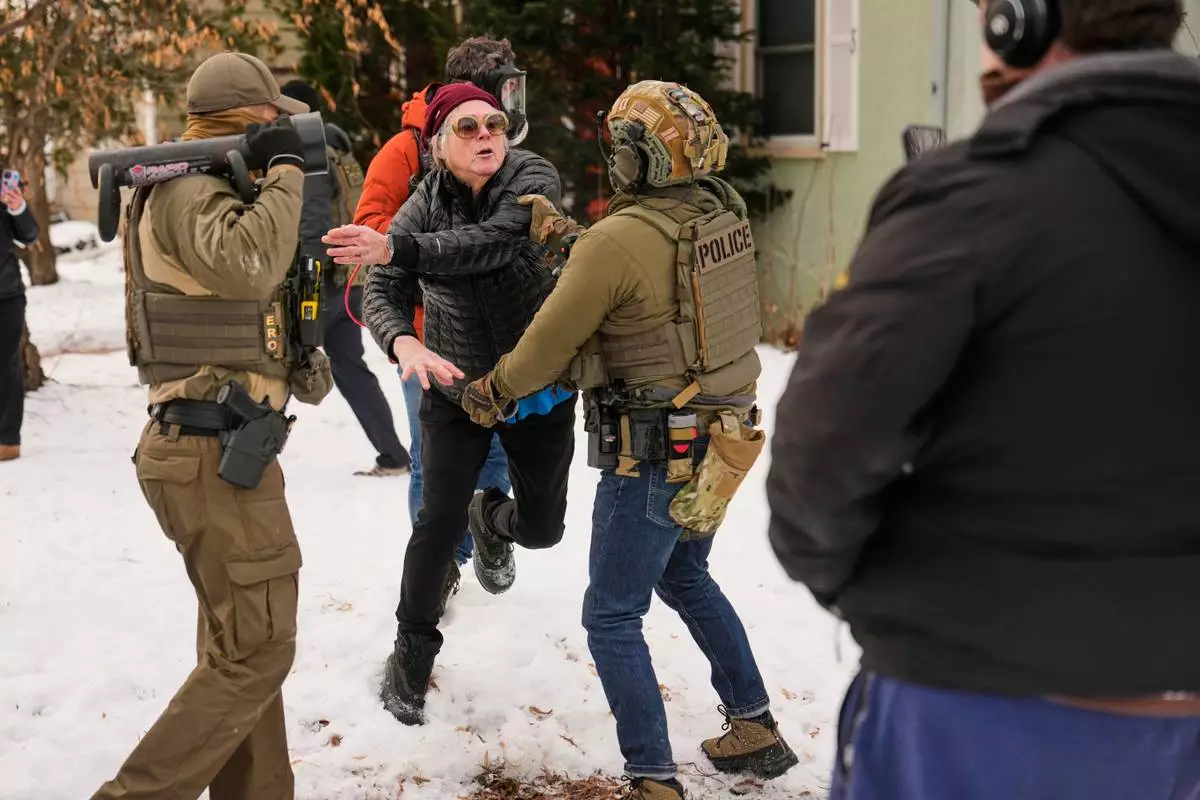
A woman gets into an altercation with a federal immigration officer as officers make an arrest Sunday, Jan. 11, 2026, in Minneapolis. (AP Photo/John Locher)
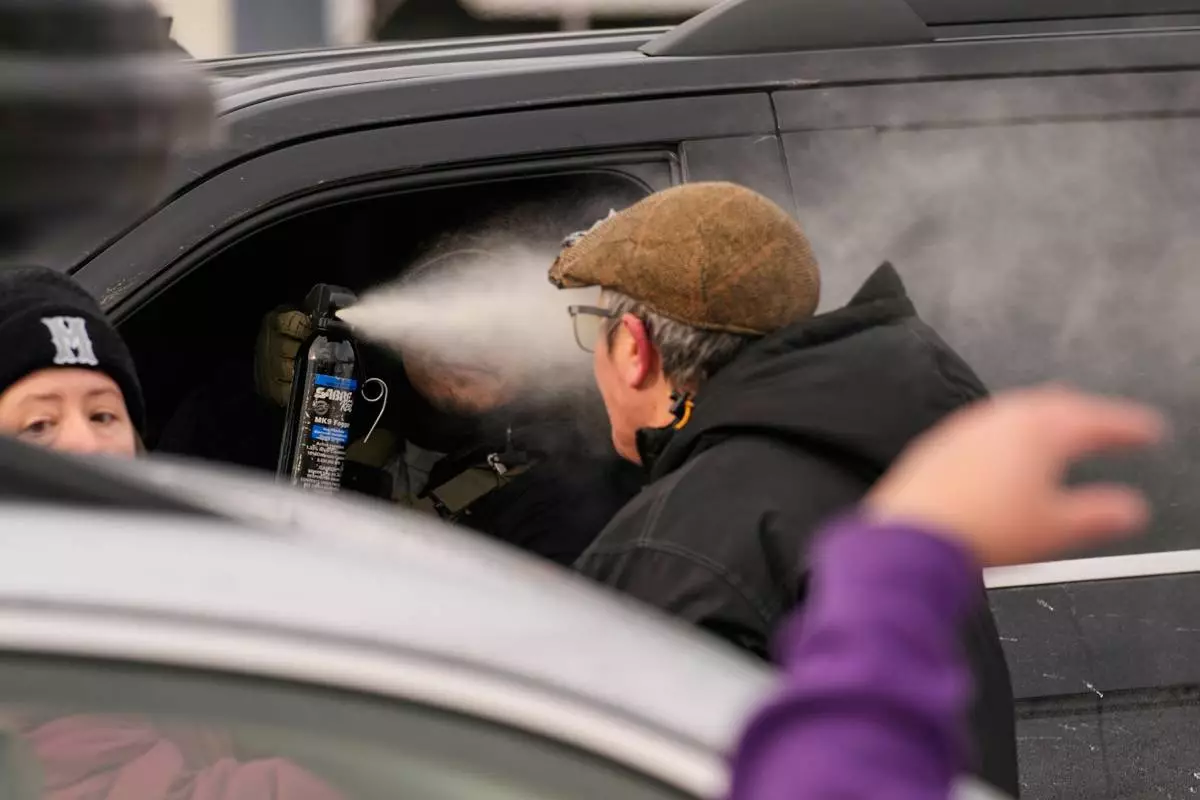
A federal immigration officer deploys pepper spray as officers make an arrest Sunday, Jan. 11, 2026, in Minneapolis. (AP Photo/John Locher)
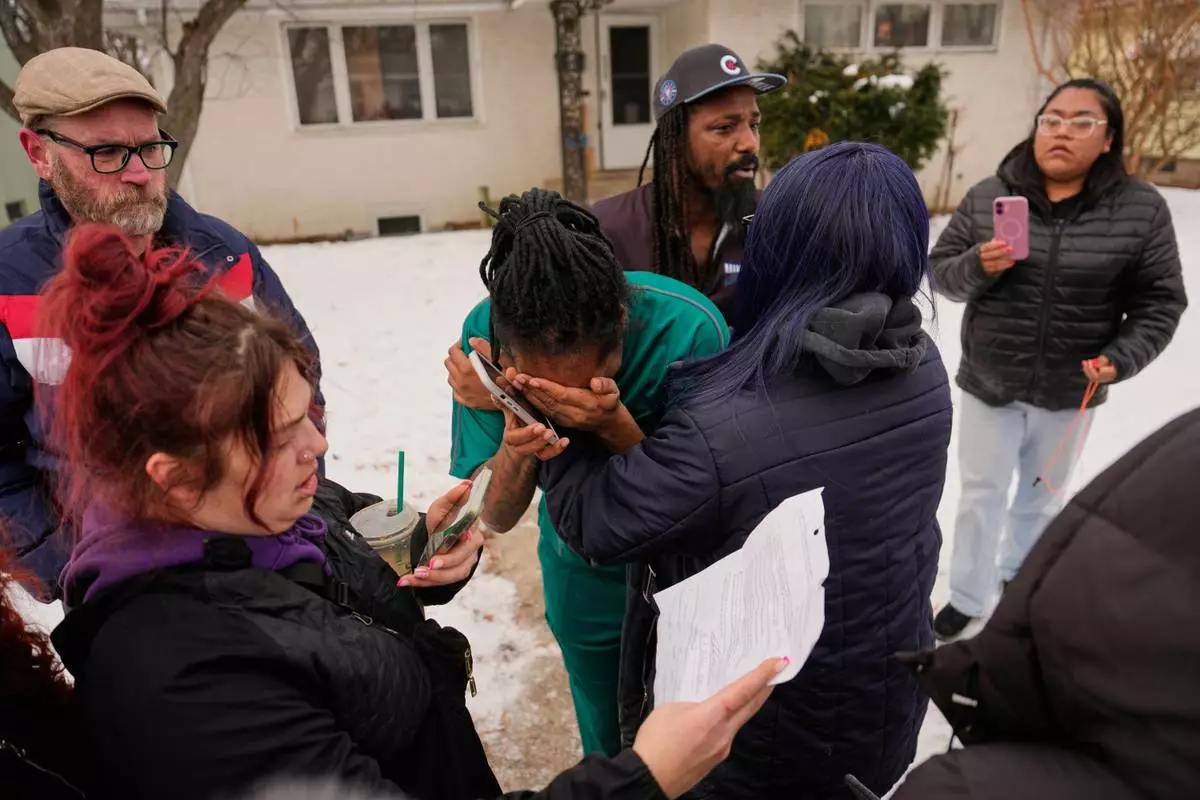
A family member, center, reacts after federal immigration officers make an arrest Sunday, Jan. 11, 2026, in Minneapolis. (AP Photo/John Locher)
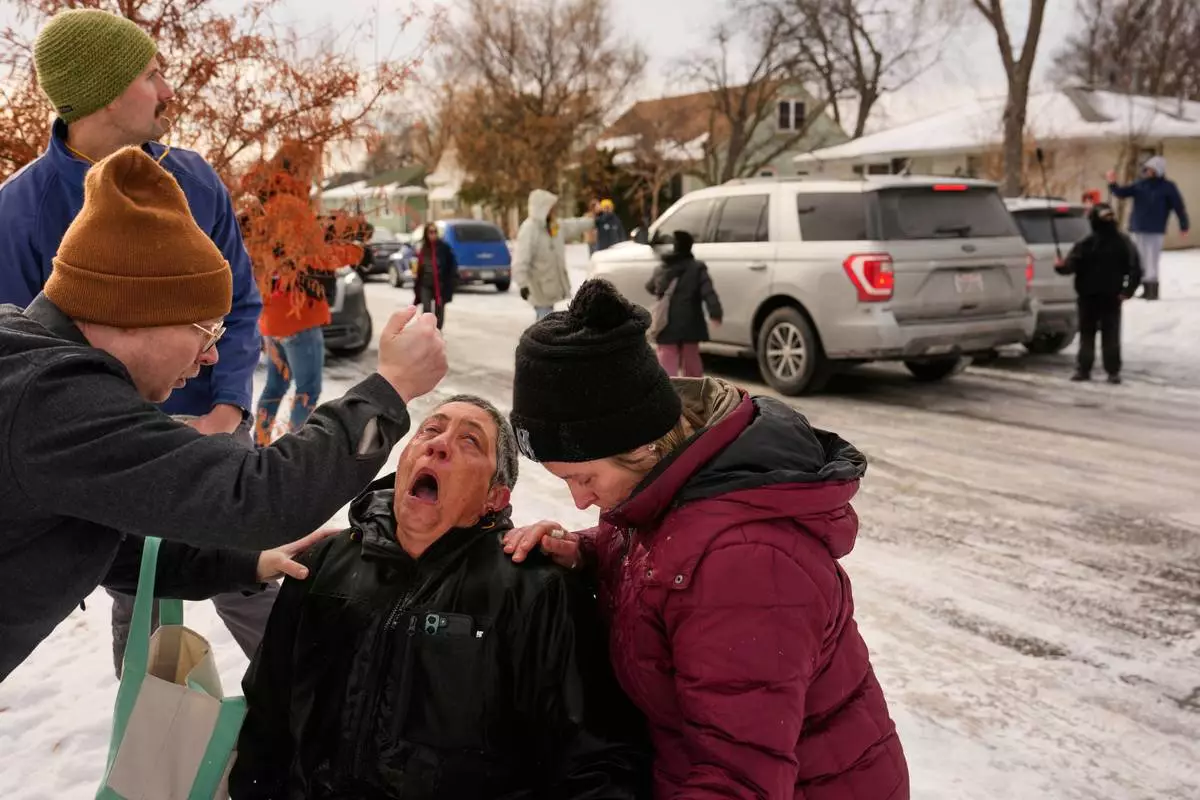
Bystanders are treated after being pepper sprayed as federal immigration officers make an arrest Sunday, Jan. 11, 2026, in Minneapolis. (AP Photo/John Locher)
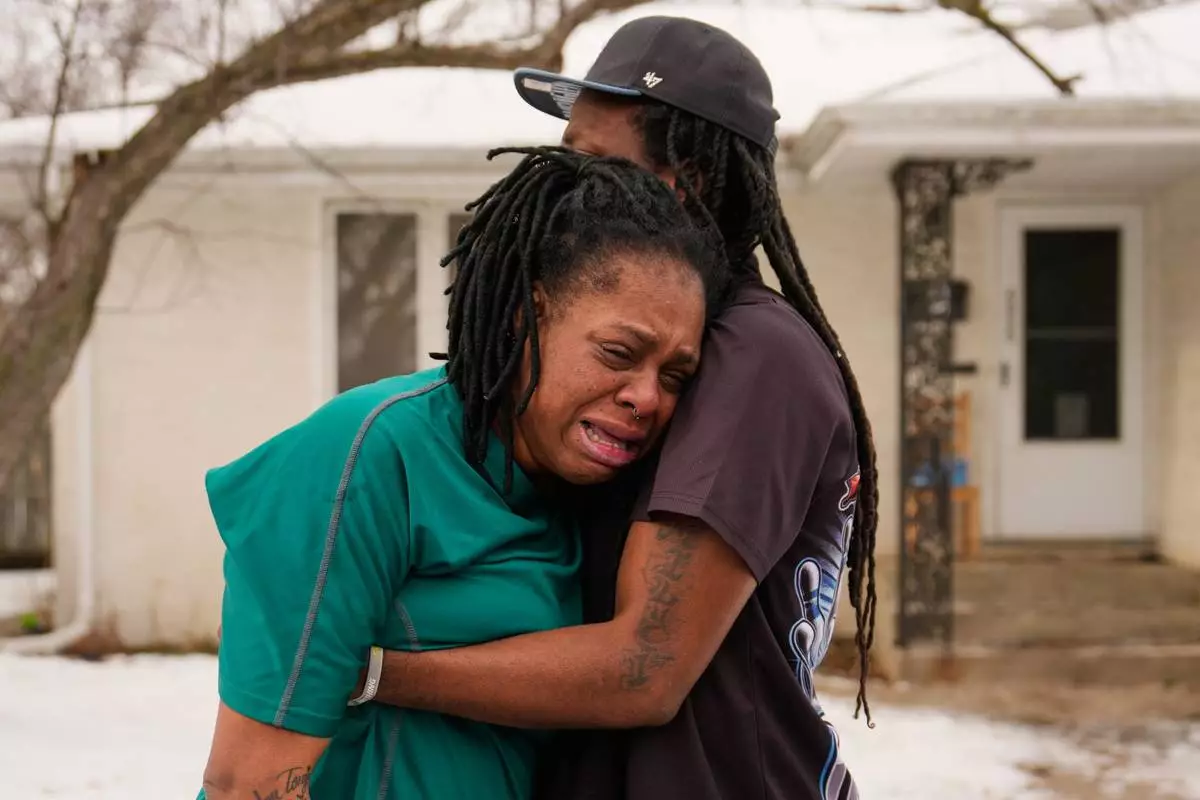
A family member reacts after federal immigration officers make an arrest Sunday, Jan. 11, 2026, in Minneapolis. (AP Photo/John Locher)
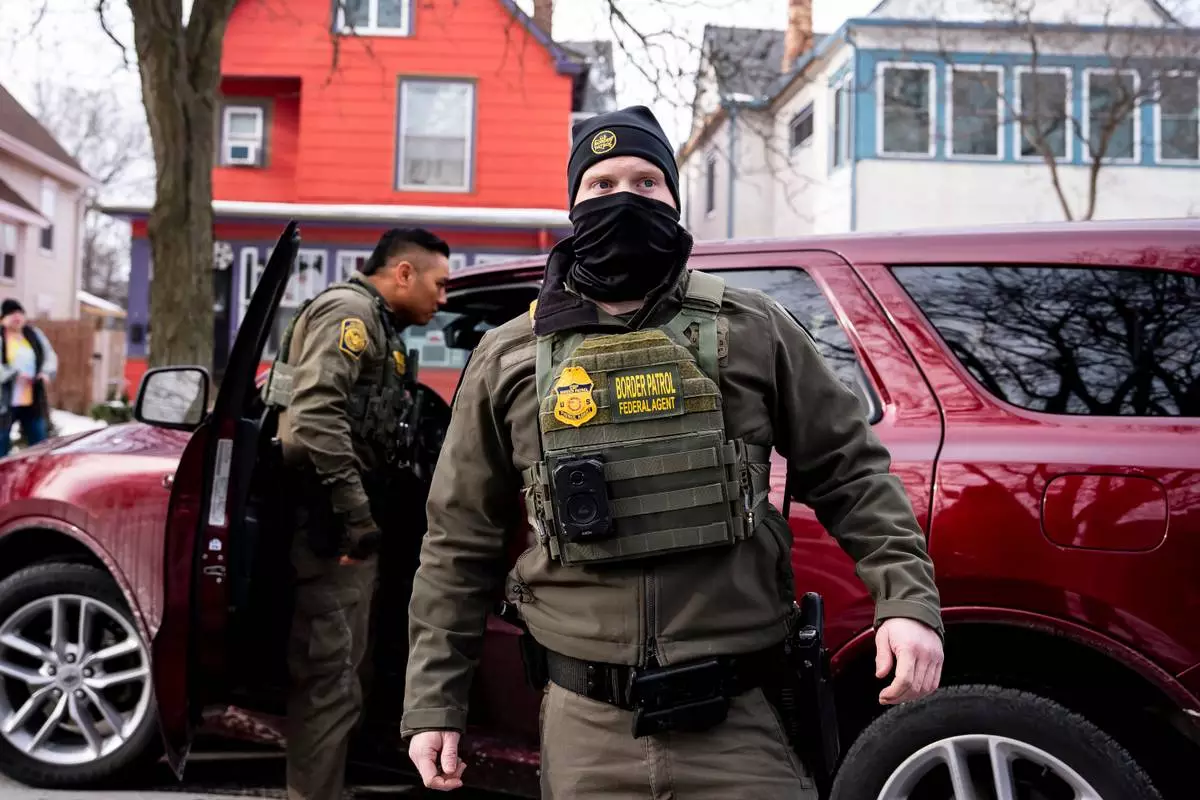
Federal agents look on after detaining a person during a patrol in Minneapolis, Minn., Sunday, Jan. 11, 2026. (Christopher Katsarov/The Canadian Press via AP)
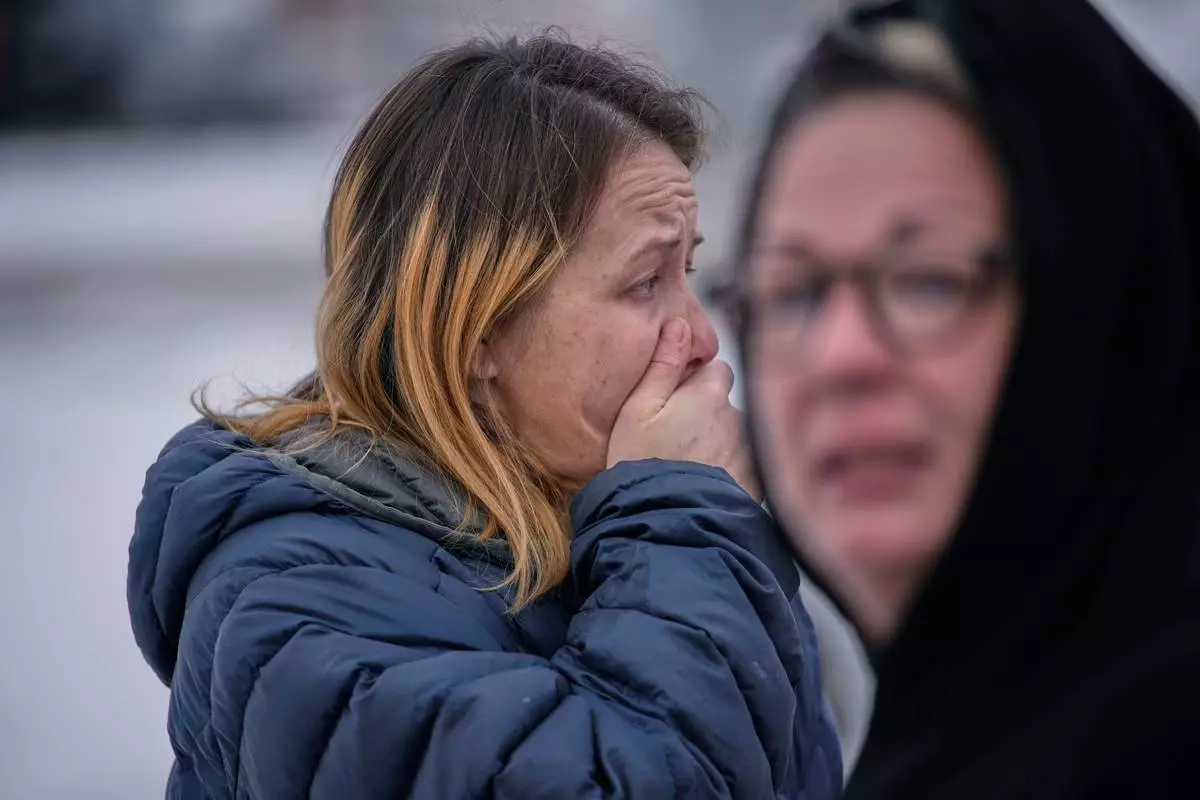
Bystanders react after a man was detained by Immigration and Customs Enforcement (ICE) agents during a traffic stop, Sunday, Jan. 11, 2026, in Robbinsdale, Minn. (AP Photo/John Locher)
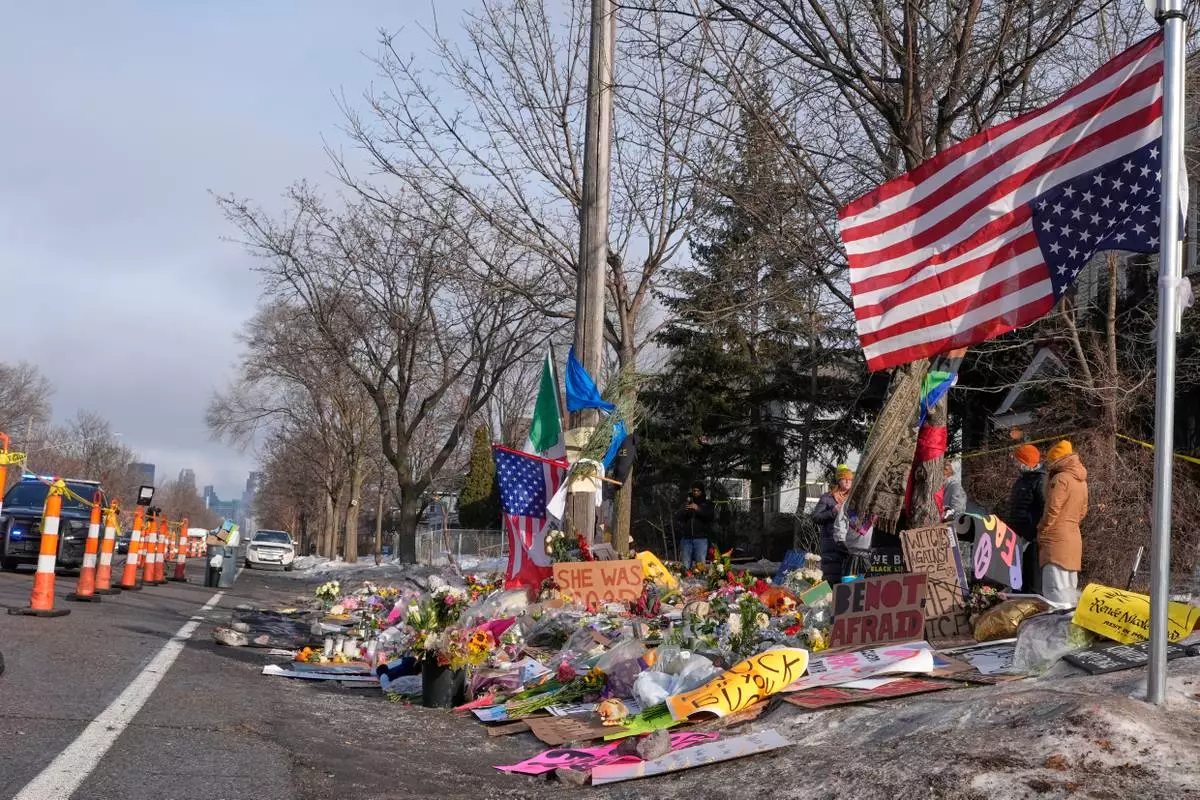
People stand near a memorial at the site where Renee Good was fatally shot by an ICE agent, Sunday, Jan. 11, 2026, in Minneapolis. (AP Photo/Jen Golbeck)
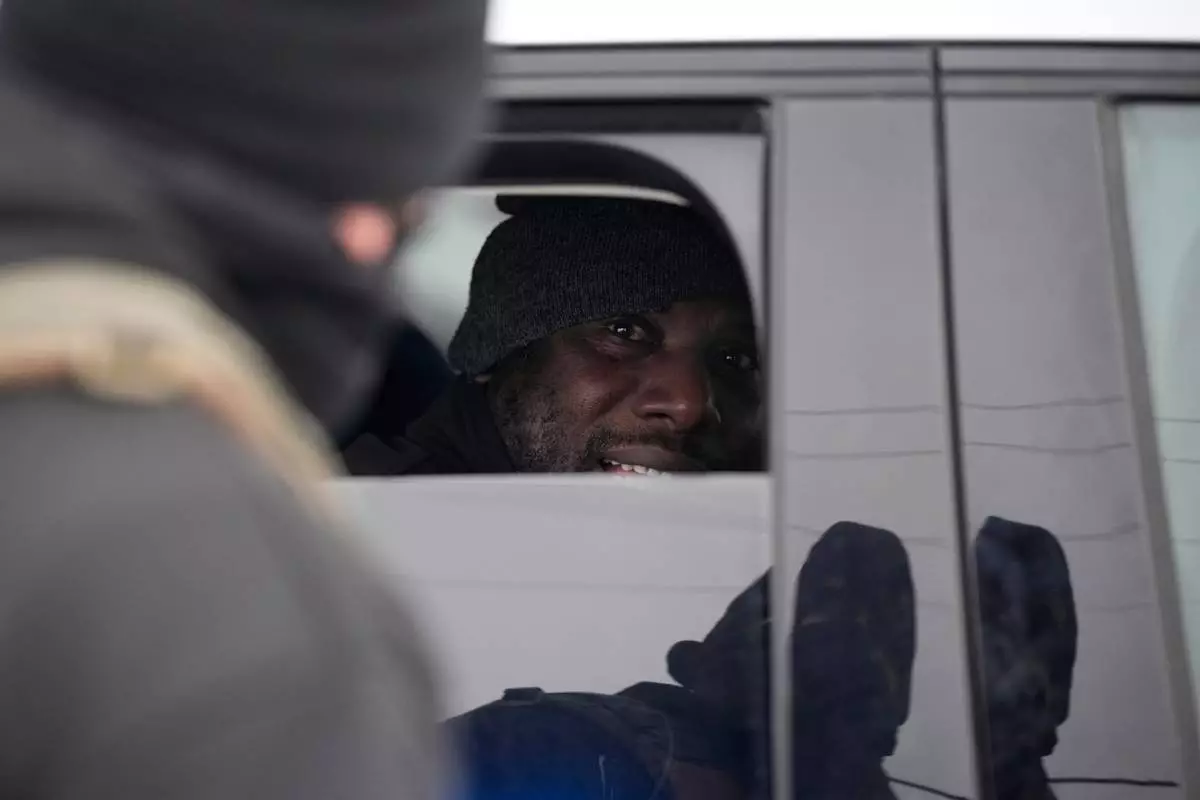
A man looks out of a car window after being detained by Immigration and Customs Enforcement (ICE) agents during a traffic stop, Sunday, Jan. 11, 2026, in Robbinsdale, Minn. (AP Photo/John Locher)
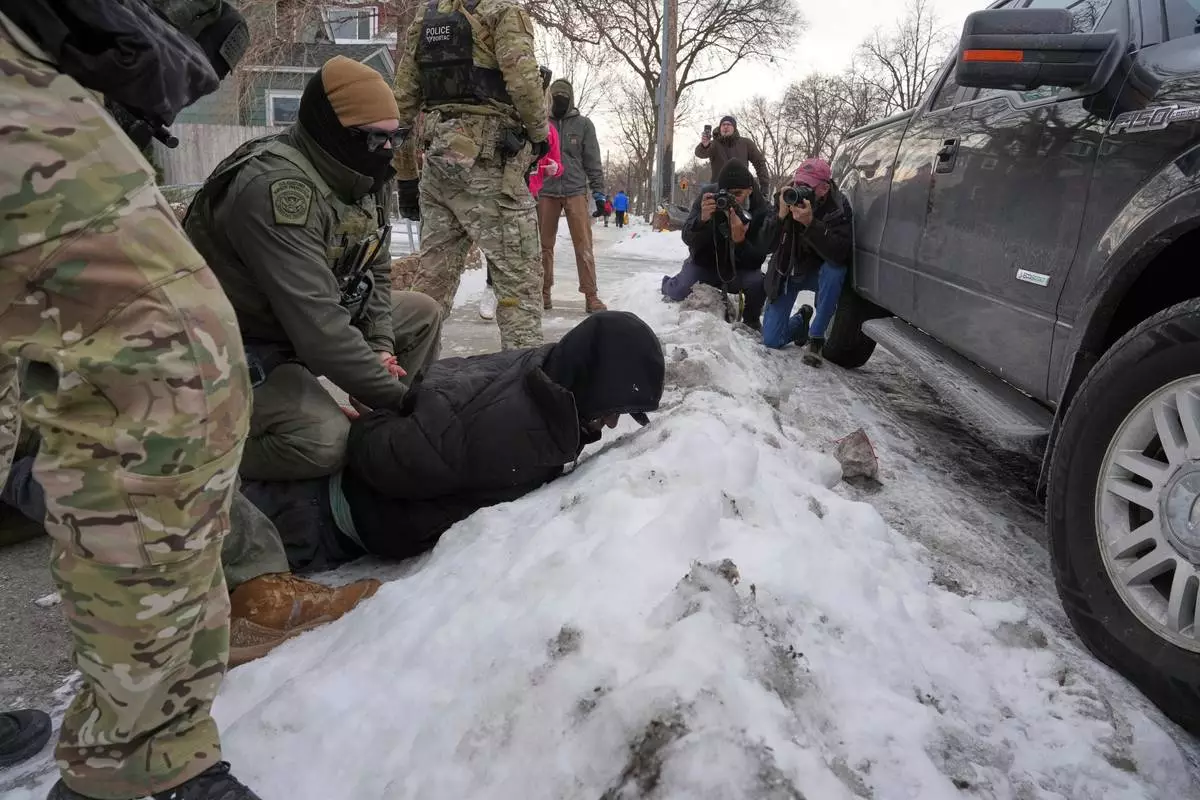
Border Patrol agents detain a man, Sunday, Jan. 11, 2026, in Minneapolis. (AP Photo/Adam Gray)
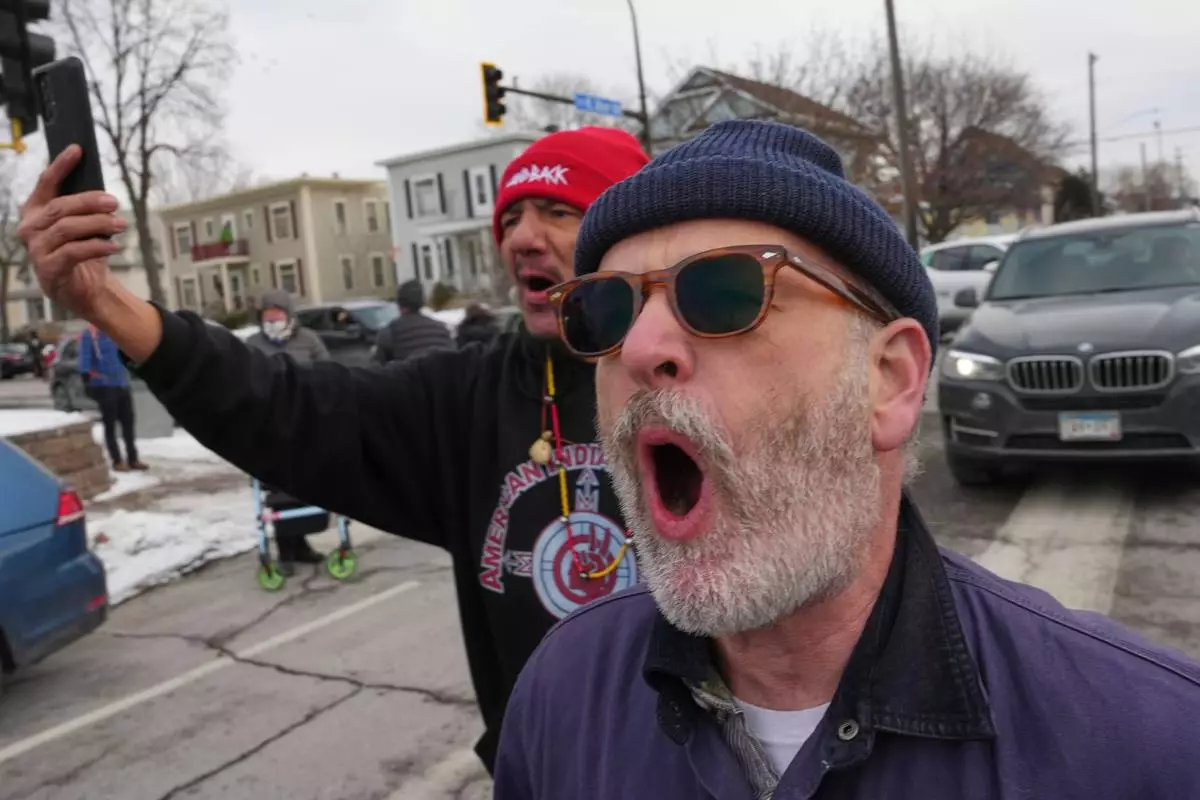
People shout toward Border Patrol agents making an arrest, Sunday, Jan. 11, 2026, in Minneapolis. (AP Photo/Adam Gray)
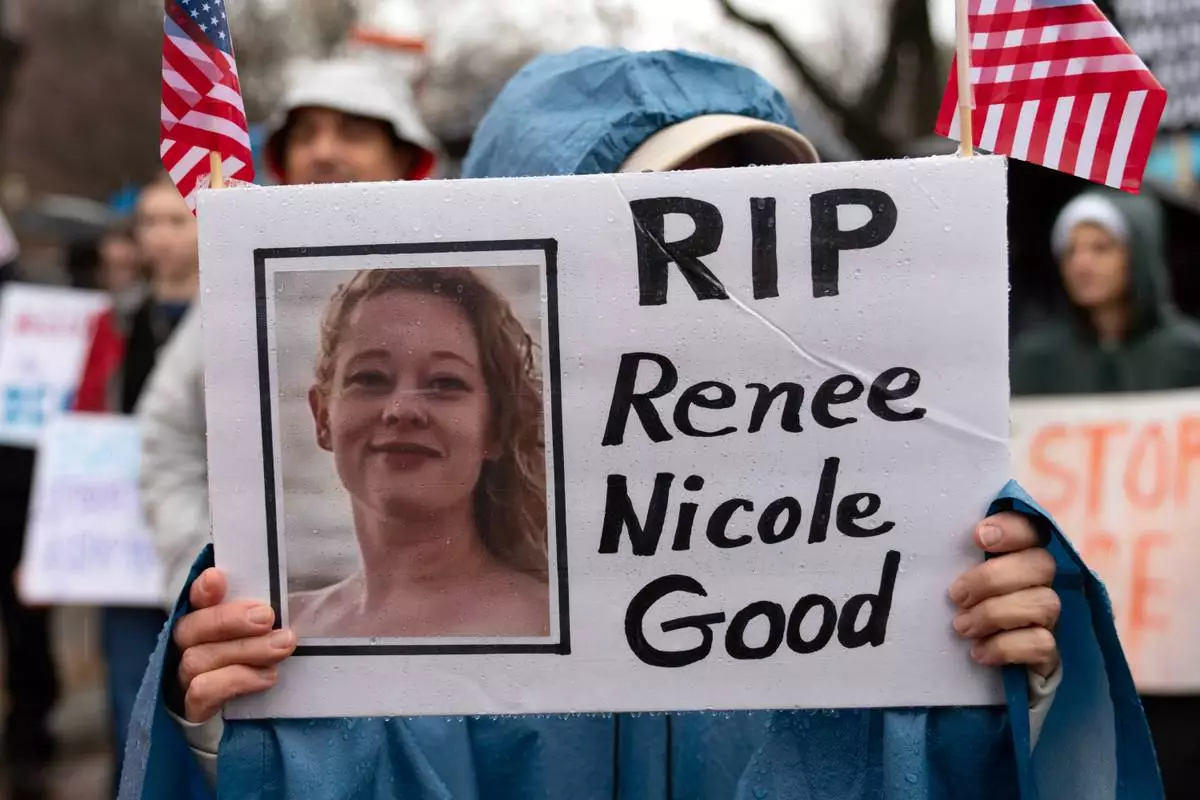
Demonstrators protest outside the White House in Washington, Saturday, Jan. 10, 2026, against the Immigration and Customs Enforcement agent who fatally shot Renee Good in Minneapolis. (AP Photo/Jose Luis Magana)
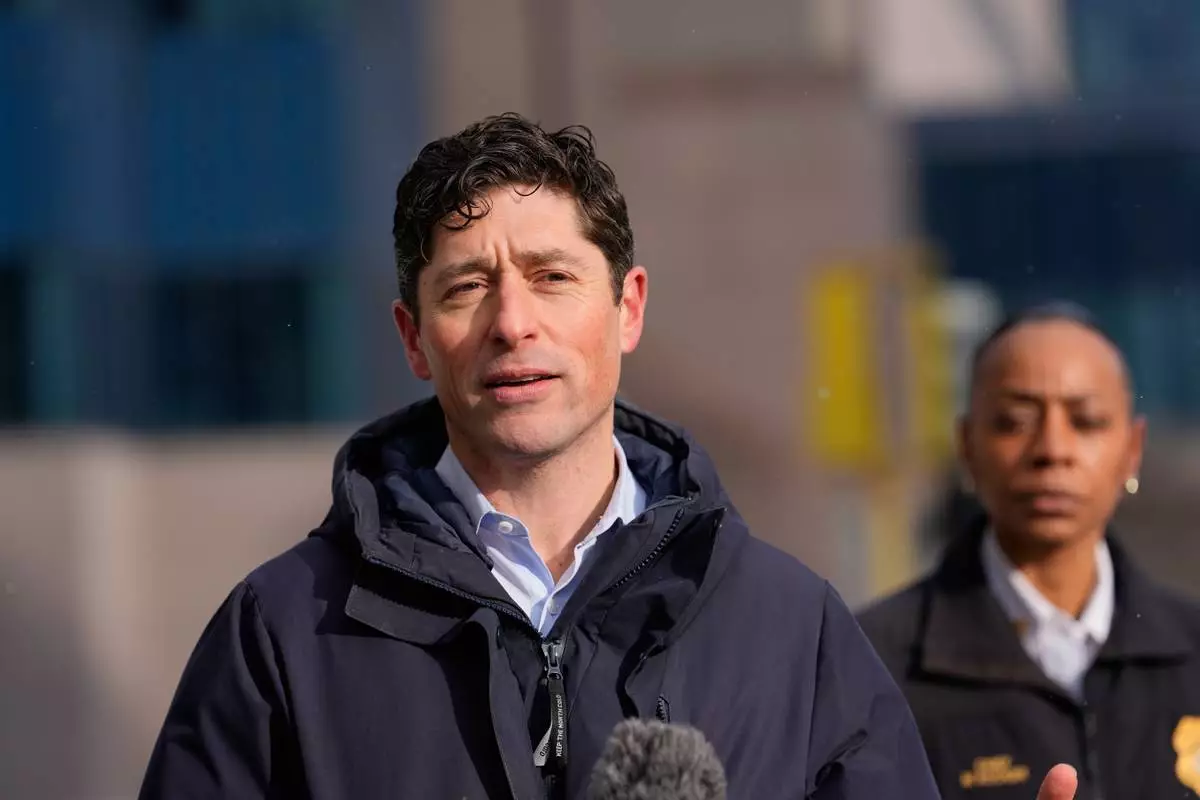
Minneapolis Mayor Jacob Frey holds a news conference on Saturday, Jan. 10, 2026, in Minneapolis. (AP Photo/Jen Golbeck)
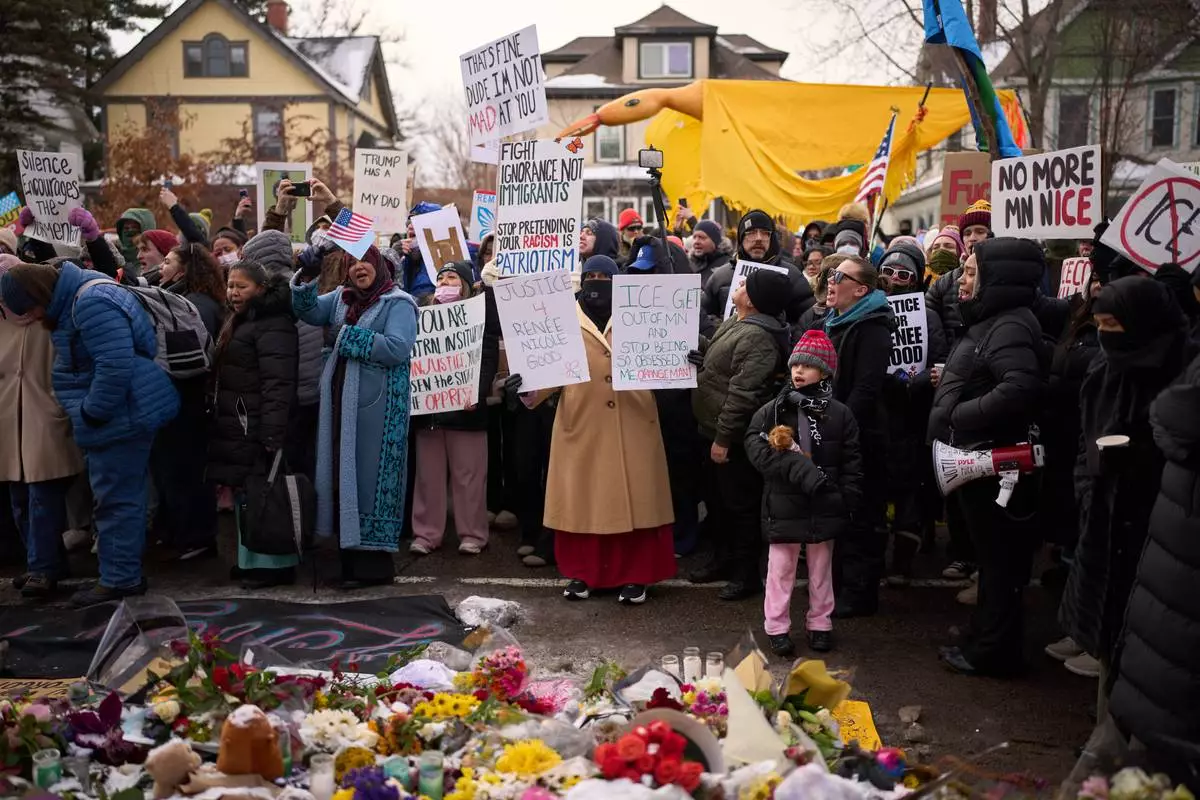
Protesters react as they visit a makeshift memorial during a rally for Renee Good, who was fatally shot by an ICE officer earlier in the week, Saturday, Jan. 10, 2026, in Minneapolis. (AP Photo/John Locher)