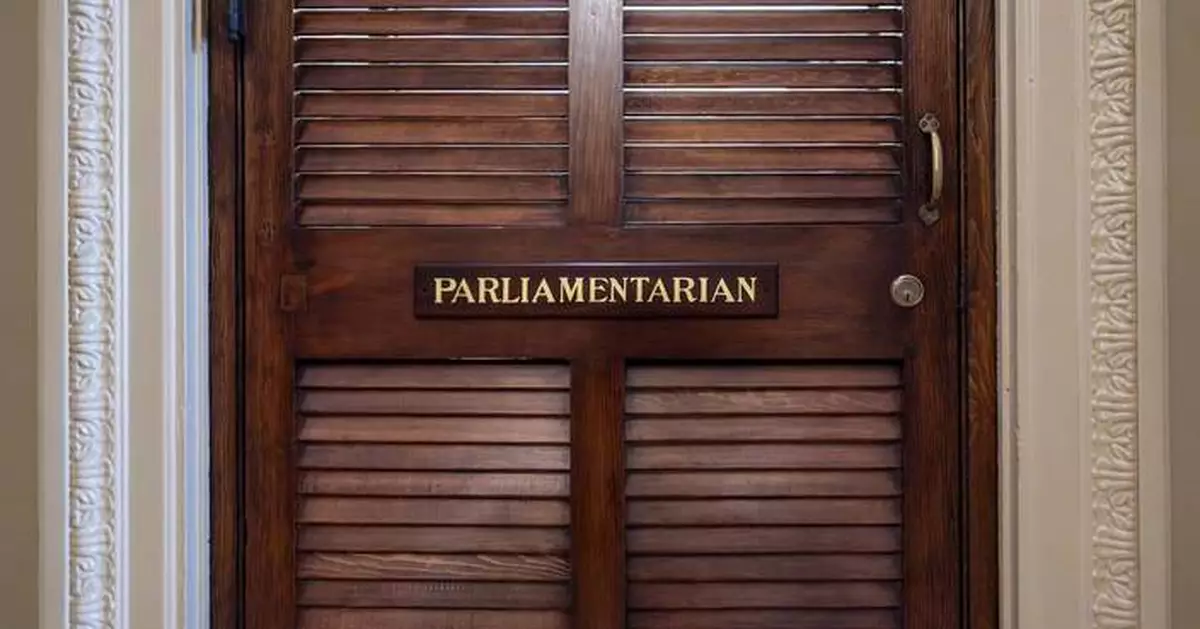
WASHINGTON (AP) — A Republican plan to expand private school vouchers nationwide was dealt a major setback Friday when the Senate parliamentarian said the proposal would run afoul of procedural rules.
The years-in-the-making plan would have created a federal tax credit supporting scholarships to help families send their children to private schools or other options beyond their local public schools. But in an overnight announcement, the Senate parliamentarian advised against including the proposal in President Donald Trump’s tax cut and spending bill.
It added to mounting problems for Republicans as key proposals were deemed ineligible for the filibuster-proof reconciliation package. The parliamentarian’s rulings are advisory but are rarely, if ever, ignored. It’s unclear if Republicans will try to rewrite the provisions or simply drop them from the bill.
School choice advocates vowed to fight for the provision, saying it's in line with government priorities to improve education options.
“We will continue to work with Senators to ensure the parliamentarian’s misguided and highly political ruling doesn’t survive,” Tommy Schultz, CEO of the American Federation for Children, said in a statement.
Another education plan deemed ineligible for reconciliation would have exempted religious colleges from a federal endowment tax. The proposal sought to raise the tax rate on wealthier colleges’ endowments while carving out religious institutions like Hillsdale College, a conservative, Christian school in Michigan and an ally of the Trump administration.
Oregon Sen. Jeff Merkley, the top Democrat on the Senate Budget Committee, said, “We have been successful in removing parts of this bill that hurt families and workers, but the process is not over, and Democrats are continuing to make the case against every provision in this Big, Beautiful Betrayal of a bill that violates Senate rules."
The school voucher provision was seen as a breakthrough victory for proponents who have been pushing the idea for years. A similar plan failed to gain support from Congress in 2019 when it was championed by Betsy DeVos, the education secretary during Trump’s first term. Campaigning for his second term, Trump again promised to deliver some form of “universal school choice.”
Under the reconciliation plan, donors who gave money or stock to K-12 scholarship programs would receive 100% of the contribution back in the form of a discount on their tax bills. It would allow stock holders to avoid paying taxes they would usually face if they donated or transferred their stock.
Nearly all families would qualify to receive scholarships except those making more than three times their area’s median income.
A House version of the bill allowed up to $5 billion in tax credits a year, running through 2029. The Senate version reduced it to $4 billion but included no end date.
Supporters said the proposal would expand education options for families across the country, offering alternatives to students in areas with lower-performing public schools. Opponents said it would siphon money from public schools and open the door for fraud and abuse.
Similar scholarship and voucher programs have proliferated in Republican-led states such as Texas, which recently passed a $1 billion program. States have increasingly offered vouchers to families beyond only the neediest ones, contributing to budget concerns as expenses rapidly pile up.
The Senate’s college endowment proposal sought to raise a tax on schools’ investment income, from 1.4% now to 4% or 8% depending on their wealth. It would apply only to colleges with endowments of at least $500,000 per student, and it excluded all religious institutions. It would have exempted a small number of colleges, including Hillsdale, which lobbied against it.
Some small colleges that would have been hit hard by the proposal are now hopeful that Republicans will carve out an exemption for all smaller schools.
“The religious schools exemption showed senators were concerned about the endowment tax hike’s impact on small colleges,” said Lori White, president of DePauw University, a private liberal arts school in Indiana. “After the parliamentarian’s rulings, the best way to protect those and other small institutions from that impact is now to exempt all colleges with fewer than 5,000 undergraduate students.”
The Associated Press’ education coverage receives financial support from multiple private foundations. The AP is solely responsible for all content. Find the AP’s standards for working with philanthropies, a list of supporters and funded coverage areas at AP.org.
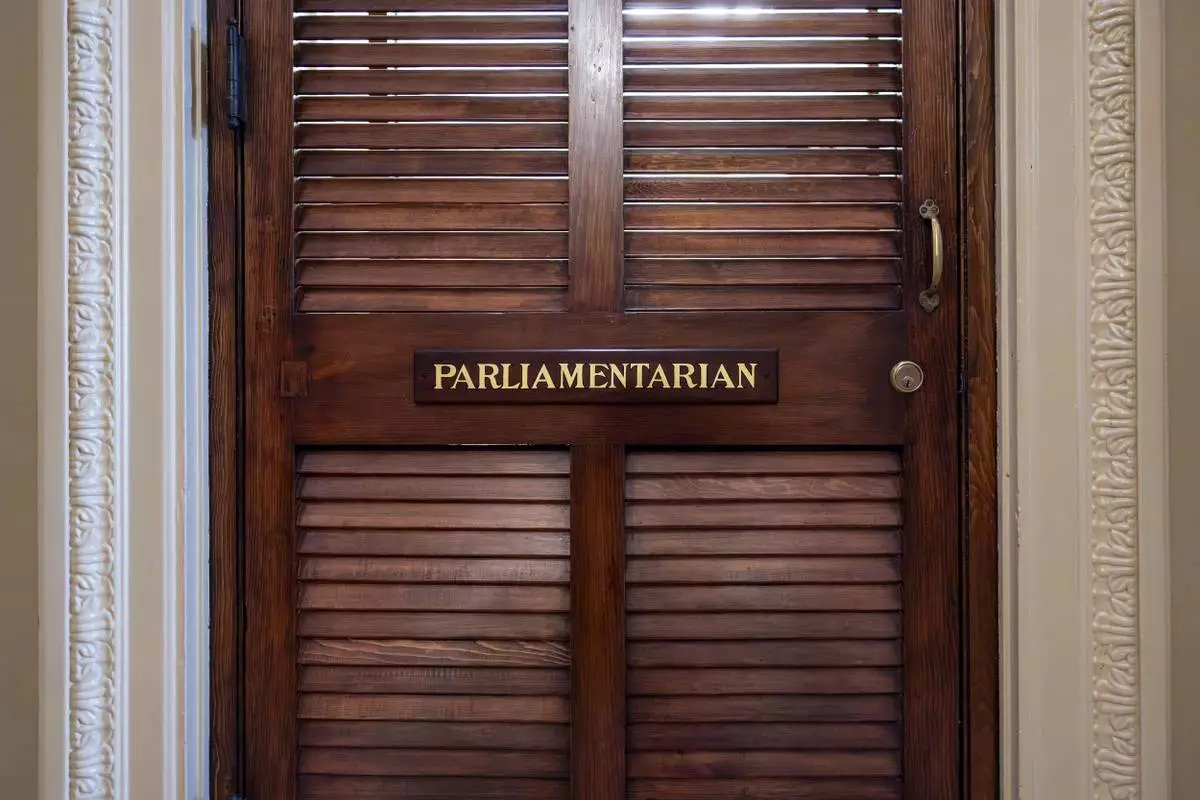
The office of Senate Parliamentarian Elizabeth MacDonough is seen at the Capitol in Washington, Friday, June 27, 2025. (AP Photo/J. Scott Applewhite)
DUBAI, United Arab Emirates (AP) — U.S. President Donald Trump said Iran wants to negotiate with Washington after his threat to strike the Islamic Republic over its bloody crackdown on protesters, a move coming as activists said Monday the death toll in the nationwide demonstrations rose to at least 544.
Iran had no immediate reaction to the news, which came after the foreign minister of Oman — long an interlocutor between Washington and Tehran — traveled to Iran this weekend. It also remains unclear just what Iran could promise, particularly as Trump has set strict demands over its nuclear program and its ballistic missile arsenal, which Tehran insists is crucial for its national defense.
Meanwhile Monday, Iran called for pro-government demonstrators to head to the streets in support of the theocracy, a show of force after days of protests directly challenging the rule of 86-year-old Supreme Leader Ayatollah Ali Khamenei. Iranian state television aired chants from the crowd, who shouted “Death to America!” and “Death to Israel!”
Trump and his national security team have been weighing a range of potential responses against Iran including cyberattacks and direct strikes by the U.S. or Israel, according to two people familiar with internal White House discussions who were not authorized to comment publicly and spoke on condition of anonymity.
“The military is looking at it, and we’re looking at some very strong options,” Trump told reporters on Air Force One on Sunday night. Asked about Iran’s threats of retaliation, he said: “If they do that, we will hit them at levels that they’ve never been hit before.”
Trump said that his administration was in talks to set up a meeting with Tehran, but cautioned that he may have to act first as reports of the death toll in Iran mount and the government continues to arrest protesters.
“I think they’re tired of being beat up by the United States,” Trump said. “Iran wants to negotiate.”
He added: “The meeting is being set up, but we may have to act because of what’s happening before the meeting. But a meeting is being set up. Iran called, they want to negotiate.”
Iran through country's parliamentary speaker warned Sunday that the U.S. military and Israel would be “legitimate targets” if America uses force to protect demonstrators.
More than 10,600 people also have been detained over the two weeks of protests, said the U.S.-based Human Rights Activists News Agency, which has been accurate in previous unrest in recent years and gave the death toll. It relies on supporters in Iran crosschecking information. It said 496 of the dead were protesters and 48 were with security forces.
With the internet down in Iran and phone lines cut off, gauging the demonstrations from abroad has grown more difficult. The Associated Press has been unable to independently assess the toll. Iran’s government has not offered overall casualty figures.
Those abroad fear the information blackout is emboldening hard-liners within Iran’s security services to launch a bloody crackdown. Protesters flooded the streets in the country’s capital and its second-largest city on Saturday night into Sunday morning. Online videos purported to show more demonstrations Sunday night into Monday, with a Tehran official acknowledging them in state media.
In Tehran, a witness told the AP that the streets of the capital empty at the sunset call to prayers each night. By the Isha, or nighttime prayer, the streets are deserted.
Part of that stems from the fear of getting caught in the crackdown. Police sent the public a text message that warned: “Given the presence of terrorist groups and armed individuals in some gatherings last night and their plans to cause death, and the firm decision to not tolerate any appeasement and to deal decisively with the rioters, families are strongly advised to take care of their youth and teenagers.”
Another text, which claimed to come from the intelligence arm of the paramilitary Revolutionary Guard, also directly warned people not to take part in demonstrations.
“Dear parents, in view of the enemy’s plan to increase the level of naked violence and the decision to kill people, ... refrain from being on the streets and gathering in places involved in violence, and inform your children about the consequences of cooperating with terrorist mercenaries, which is an example of treason against the country,” the text warned.
The witness spoke to the AP on condition of anonymity due to the ongoing crackdown.
The demonstrations began Dec. 28 over the collapse of the Iranian rial currency, which trades at over 1.4 million to $1, as the country’s economy is squeezed by international sanctions in part levied over its nuclear program. The protests intensified and grew into calls directly challenging Iran’s theocracy.
Nikhinson reported from aboard Air Force One.
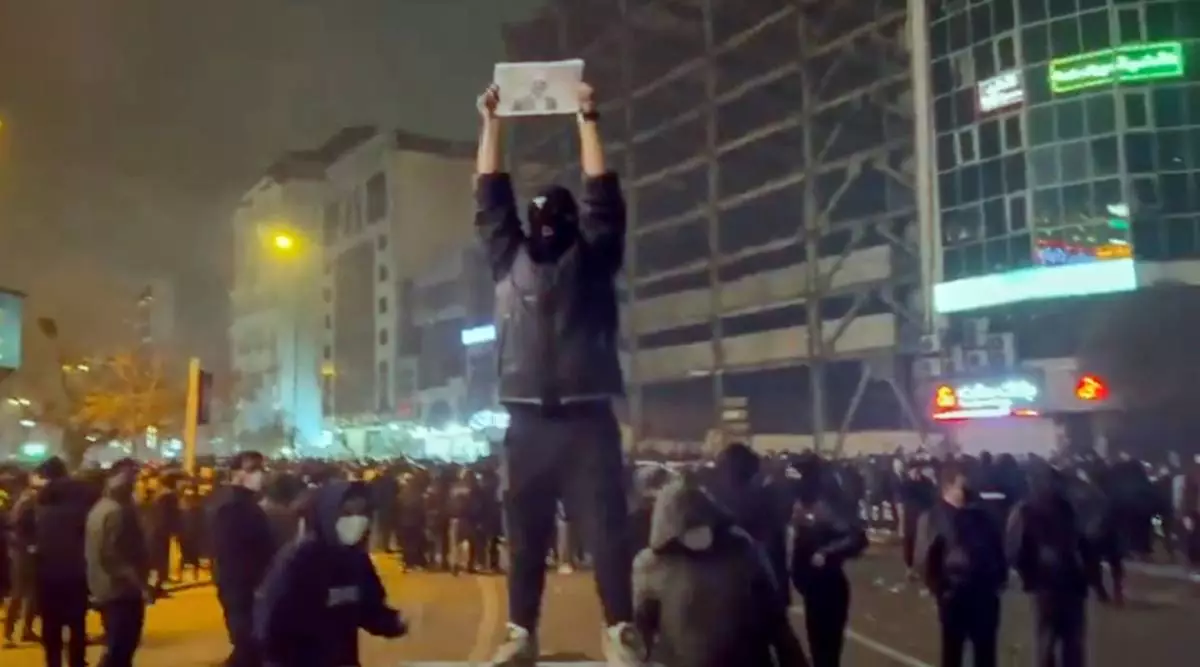
In this frame grab from video obtained by the AP outside Iran, a masked demonstrator holds a picture of Iran's Crown Prince Reza Pahlavi during a protest in Tehran, Iran, Friday, January. 9, 2026. (UGC via AP)
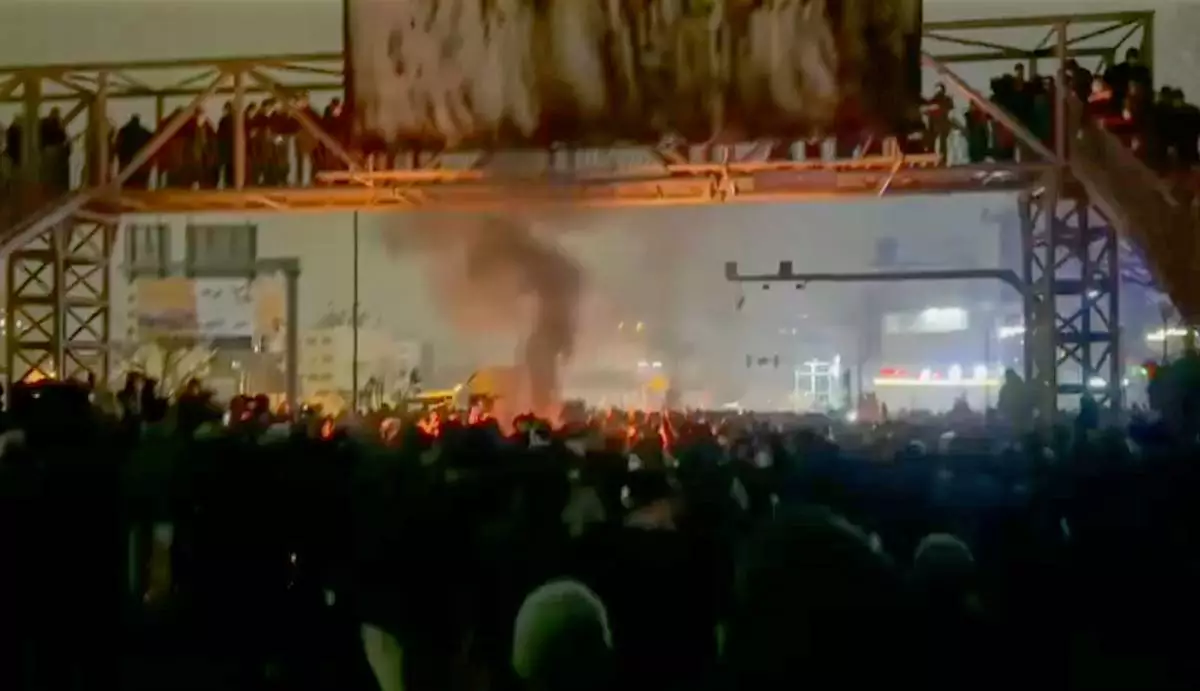
In this frame grab from footage circulating on social media from Iran shows protesters taking to the streets despite an intensifying crackdown as the Islamic Republic remains cut off from the rest of the world in Tehran, Iran, Friday, Jan. 9, 2026.(UGC via AP)
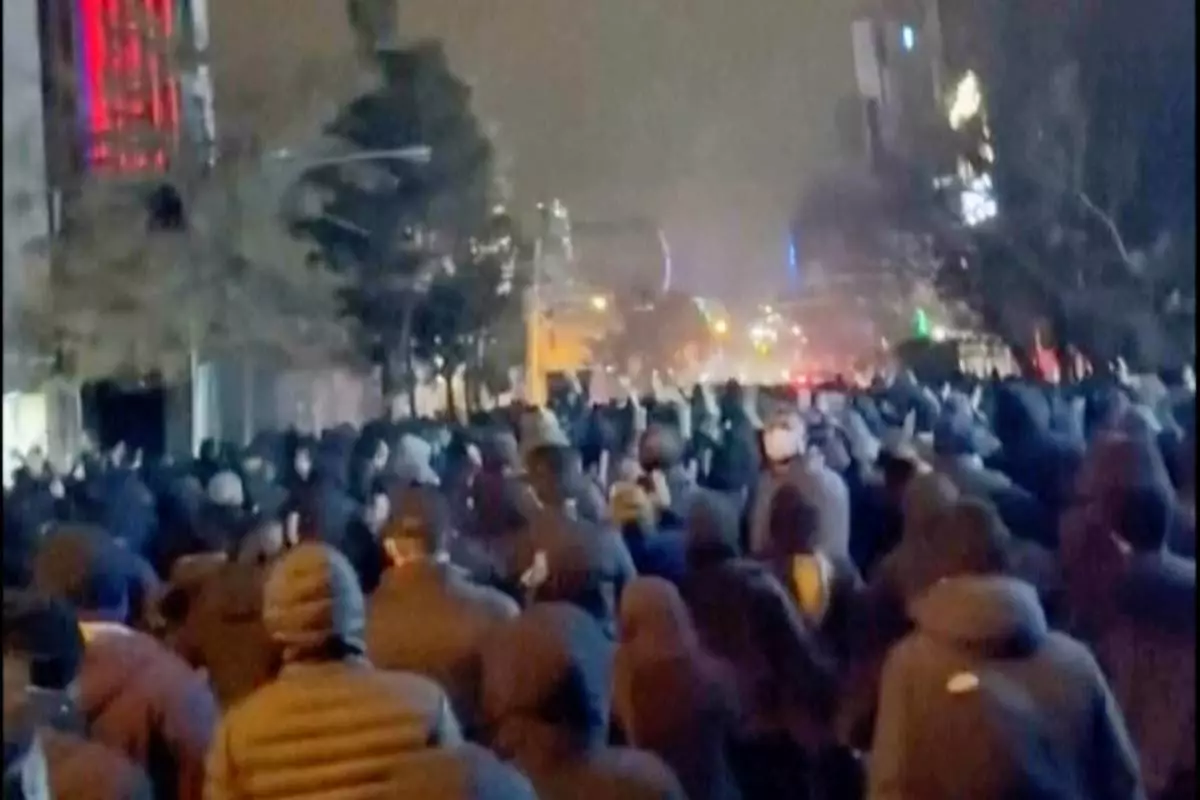
In this frame grab from footage circulating on social media from Iran showed protesters once again taking to the streets of Tehran despite an intensifying crackdown as the Islamic Republic remains cut off from the rest of the world in Tehran, Iran, Saturday Jan. 10, 2026. (UGC via AP)