Skip to Content Facebook Feature Image

University of Virginia president, pressured over DEI, resigns rather than 'fight federal government'

News

University of Virginia president, pressured over DEI, resigns rather than 'fight federal government'
News

News

University of Virginia president, pressured over DEI, resigns rather than 'fight federal government'

2025-06-28 08:18 Last Updated At:08:20

WASHINGTON (AP) — The president of the University of Virginia, facing heavy pressure from conservative critics and the Trump administration over the school’s diversity, equity and inclusion practices, announced Friday that he was resigning rather than “fight the federal government.”

The departure of James Ryan, who had led the school since 2018, represents a dramatic escalation in the Trump administration’s effort to reshape higher education. Doing it at a public university marks a new frontier in a campaign that has almost exclusively targeted Ivy League schools. It also widens the rationale behind the government’s aggressive tactics, focusing on DEI rather than alleged tolerance of antisemitism.

Ryan had faced conservative criticism that he failed to heed federal orders to eliminate DEI policies, and his removal was pushed for by the Justice Department as it investigated the school, according to a person who was not authorized to discuss the matter by name and spoke on condition of anonymity to The Associated Press.

Ryan referenced the Trump administration pressure in a statement to the university community Friday in which he said he had submitted his resignation with a “very heavy heart.”

“To make a long story short, I am inclined to fight for what I believe in, and I believe deeply in this University,” he said. “But I cannot make a unilateral decision to fight the federal government in order to save my job.”

Ryan had already decided that next year would be his last, he said, and remaining in his position until then would be “knowingly and willingly sacrificing this community.”

The New York Times first reported on the resignation and the Justice Department’s insistence on it.

In a CNN appearance Friday, the Justice Department's assistant attorney general for civil rights denied that Ryan's removal was an explicit demand but said the agency “significantly lacked confidence” in his leadership. “I don’t have any confidence that he was going to be willing and able to preside over the dismantling of DEI,” Harmeet Dhillon said.

Ryan’s removal is another example of the Trump administration using “thuggery instead of rational discourse,” said Ted Mitchell, president of the American Council on Education, which represents university presidents.

“This is a dark day for the University of Virginia, a dark day for higher education, and it promises more of the same,” Mitchell said. “It’s clear the administration is not done and will use every tool that it can make or invent to exert its will over higher education.”

In a joint statement, Virginia’s Democratic senators said it was outrageous that the Trump administration would demand Ryan’s resignation over “‘culture war’ traps.” “This is a mistake that hurts Virginia’s future,” Sens. Mark R. Warner and Tim Kaine said.

After campaigning on a promise to end “wokeness” in education, Trump signed a January action ordering the elimination of DEI programs nationwide. The Education Department has opened investigations into dozens of colleges, arguing that diversity initiatives discriminate against white and Asian American students.

The response from schools has been scattered. Some have closed DEI offices, ended diversity scholarships and no longer require diversity statements as part of the hiring process. Some others have rebranded DEI work under other names, while some have held firm on diversity policies.

The University of Virginia became a flashpoint after conservative critics accused it of simply renaming its DEI initiatives. The school’s governing body voted to shutter the DEI office in March and end diversity policies in admissions, hiring, financial aid and other areas. Republican Gov. Glenn Youngkin celebrated the action, declaring that “DEI is done at the University of Virginia.”

Among those drawing attention to the Charlottesville campus was America First Legal, a conservative group founded by Trump aide Stephen Miller. In a May letter to the Justice Department, the group said the university failed to dismantle DEI programs and chose to “rename, repackage, and redeploy the same unlawful infrastructure under a lexicon of euphemisms.”

The group directly took aim at Ryan, noting that he joined hundreds of other college presidents in signing a public statement condemning the “overreach and political interference” of the Trump administration.

On Friday, the group said it will continue to use every available tool to root out what it has called discriminatory systems.

“This week's developments make clear: public universities that accept federal funds do not have a license to violate the Constitution,” Megan Redshaw, an attorney at the group, said in a statement. “They do not get to impose ideological loyalty tests, enforce race and sex-based preferences, or defy lawful executive authority."

Ryan was hired to lead the University of Virginia in 2018 and previously served as the dean of Harvard University’s Graduate School of Education. Earlier in his career he spent more than a decade as a law professor at the University of Virginia. A biography on Harvard’s website credits Ryan with increasing the “size, strength and diversity” of the faculty, adding that building a diverse community was a priority.

Robert D. Hardie, leader of the University of Virginia's governing board, said he accepted Ryan's resignation with “profound sadness,” adding that the university “has forever been changed for the better as a result of Jim’s exceptional leadership.”

Until now, the White House had directed most of its attention at Harvard University and other elite institutions that Trump sees as bastions of liberalism. Harvard has lost more than $2.6 billion in federal research grants amid its battle with the government, which has also attempted to block the school from hosting foreign students and threatened to revoke its tax-exempt status.

Harvard and its $53 billion endowment are uniquely positioned to weather the government’s financial pressure. Public universities, however, are far more dependent on taxpayer money and could be more vulnerable. The University of Virginia’s $10 billion endowment is among the largest for public universities, while the vast majority have far less.

The Associated Press’ education coverage receives financial support from multiple private foundations. AP is solely responsible for all content. Find AP’s standards for working with philanthropies, a list of supporters and funded coverage areas at AP.org.
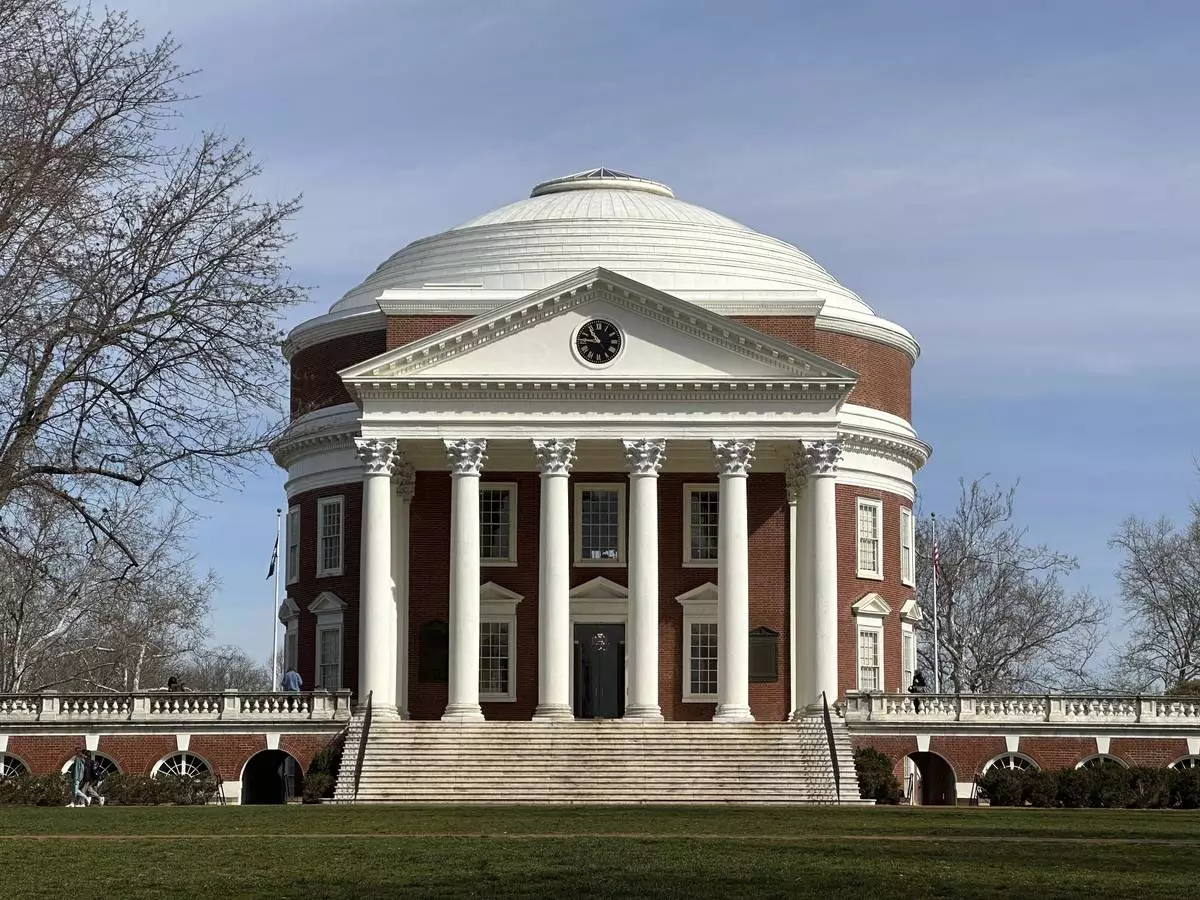
FILE - The Rotunda is shown at the University of Virginia on March 1, 2024, in Charlottesville, Va. (AP Photo/Peter Morgan, File)
FILE - The Rotunda is shown at the University of Virginia on March 1, 2024, in Charlottesville, Va. (AP Photo/Peter Morgan, File)

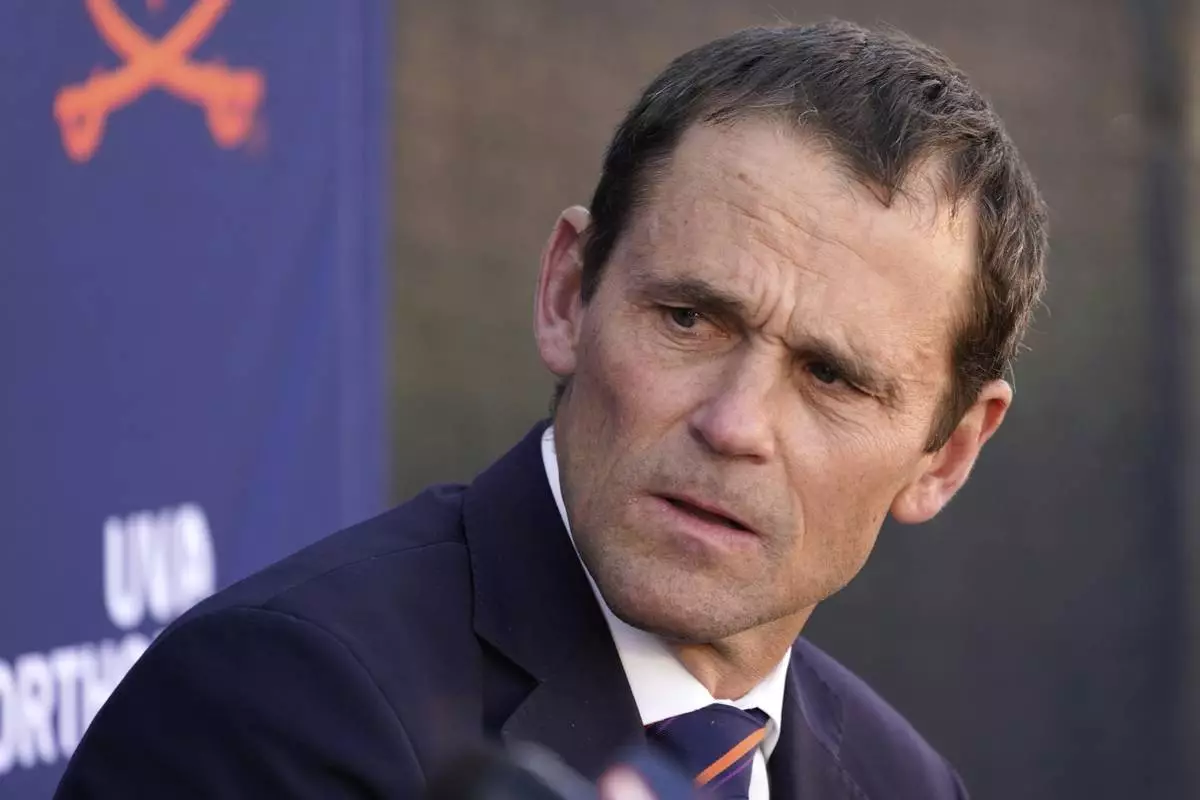
FILE - University of Virginia president, James Ryan speaks during a press conference at the school, Dec 13, 2021, in Charlottesville, Va. (AP Photo/Steve Helber, File)
FILE - University of Virginia president, James Ryan speaks during a press conference at the school, Dec 13, 2021, in Charlottesville, Va. (AP Photo/Steve Helber, File)

NEW YORK (AP) — Reviving a campaign pledge, President Donald Trump wants a one-year, 10% cap on credit card interest rates, a move that could save Americans tens of billions of dollars but drew immediate opposition from an industry that has been in his corner.

Trump was not clear in his social media post Friday night whether a cap might take effect through executive action or legislation, though one Republican senator said he had spoken with the president and would work on a bill with his “full support.” Trump said he hoped it would be in place Jan. 20, one year after he took office.

Strong opposition is certain from Wall Street in addition to the credit card companies, which donated heavily to his 2024 campaign and have supported Trump's second-term agenda. Banks are making the argument that such a plan would most hurt poor people, at a time of economic concern, by curtailing or eliminating credit lines, driving them to high-cost alternatives like payday loans or pawnshops.

“We will no longer let the American Public be ripped off by Credit Card Companies that are charging Interest Rates of 20 to 30%,” Trump wrote on his Truth Social platform.

Researchers who studied Trump’s campaign pledge after it was first announced found that Americans would save roughly $100 billion in interest a year if credit card rates were capped at 10%. The same researchers found that while the credit card industry would take a major hit, it would still be profitable, although credit card rewards and other perks might be scaled back.

About 195 million people in the United States had credit cards in 2024 and were assessed $160 billion in interest charges, the Consumer Financial Protection Bureau says. Americans are now carrying more credit card debt than ever, to the tune of about $1.23 trillion, according to figures from the New York Federal Reserve for the third quarter last year.

Further, Americans are paying, on average, between 19.65% and 21.5% in interest on credit cards according to the Federal Reserve and other industry tracking sources. That has come down in the past year as the central bank lowered benchmark rates, but is near the highs since federal regulators started tracking credit card rates in the mid-1990s. That’s significantly higher than a decade ago, when the average credit card interest rate was roughly 12%.

The Republican administration has proved particularly friendly until now to the credit card industry.

Capital One got little resistance from the White House when it finalized its purchase and merger with Discover Financial in early 2025, a deal that created the nation’s largest credit card company. The Consumer Financial Protection Bureau, which is largely tasked with going after credit card companies for alleged wrongdoing, has been largely nonfunctional since Trump took office.

In a joint statement, the banking industry was opposed to Trump's proposal.

“If enacted, this cap would only drive consumers toward less regulated, more costly alternatives," the American Bankers Association and allied groups said.

Bank lobbyists have long argued that lowering interest rates on their credit card products would require the banks to lend less to high-risk borrowers. When Congress enacted a cap on the fee that stores pay large banks when customers use a debit card, banks responded by removing all rewards and perks from those cards. Debit card rewards only recently have trickled back into consumers' hands. For example, United Airlines now has a debit card that gives miles with purchases.

The U.S. already places interest rate caps on some financial products and for some demographics. The Military Lending Act makes it illegal to charge active-duty service members more than 36% for any financial product. The national regulator for credit unions has capped interest rates on credit union credit cards at 18%.

Credit card companies earn three streams of revenue from their products: fees charged to merchants, fees charged to customers and the interest charged on balances. The argument from some researchers and left-leaning policymakers is that the banks earn enough revenue from merchants to keep them profitable if interest rates were capped.

"A 10% credit card interest cap would save Americans $100 billion a year without causing massive account closures, as banks claim. That’s because the few large banks that dominate the credit card market are making absolutely massive profits on customers at all income levels," said Brian Shearer, director of competition and regulatory policy at the Vanderbilt Policy Accelerator, who wrote the research on the industry's impact of Trump's proposal last year.

There are some historic examples that interest rate caps do cut off the less creditworthy to financial products because banks are not able to price risk correctly. Arkansas has a strictly enforced interest rate cap of 17% and evidence points to the poor and less creditworthy being cut out of consumer credit markets in the state. Shearer's research showed that an interest rate cap of 10% would likely result in banks lending less to those with credit scores below 600.

The White House did not respond to questions about how the president seeks to cap the rate or whether he has spoken with credit card companies about the idea.

Sen. Roger Marshall, R-Kan., who said he talked with Trump on Friday night, said the effort is meant to “lower costs for American families and to reign in greedy credit card companies who have been ripping off hardworking Americans for too long."

Legislation in both the House and the Senate would do what Trump is seeking.

Sens. Bernie Sanders, I-Vt., and Josh Hawley, R-Mo., released a plan in February that would immediately cap interest rates at 10% for five years, hoping to use Trump’s campaign promise to build momentum for their measure.

Hours before Trump's post, Sanders said that the president, rather than working to cap interest rates, had taken steps to deregulate big banks that allowed them to charge much higher credit card fees.

Reps. Alexandria Ocasio-Cortez, D-N.Y., and Anna Paulina Luna, R-Fla., have proposed similar legislation. Ocasio-Cortez is a frequent political target of Trump, while Luna is a close ally of the president.

Seung Min Kim reported from West Palm Beach, Fla.

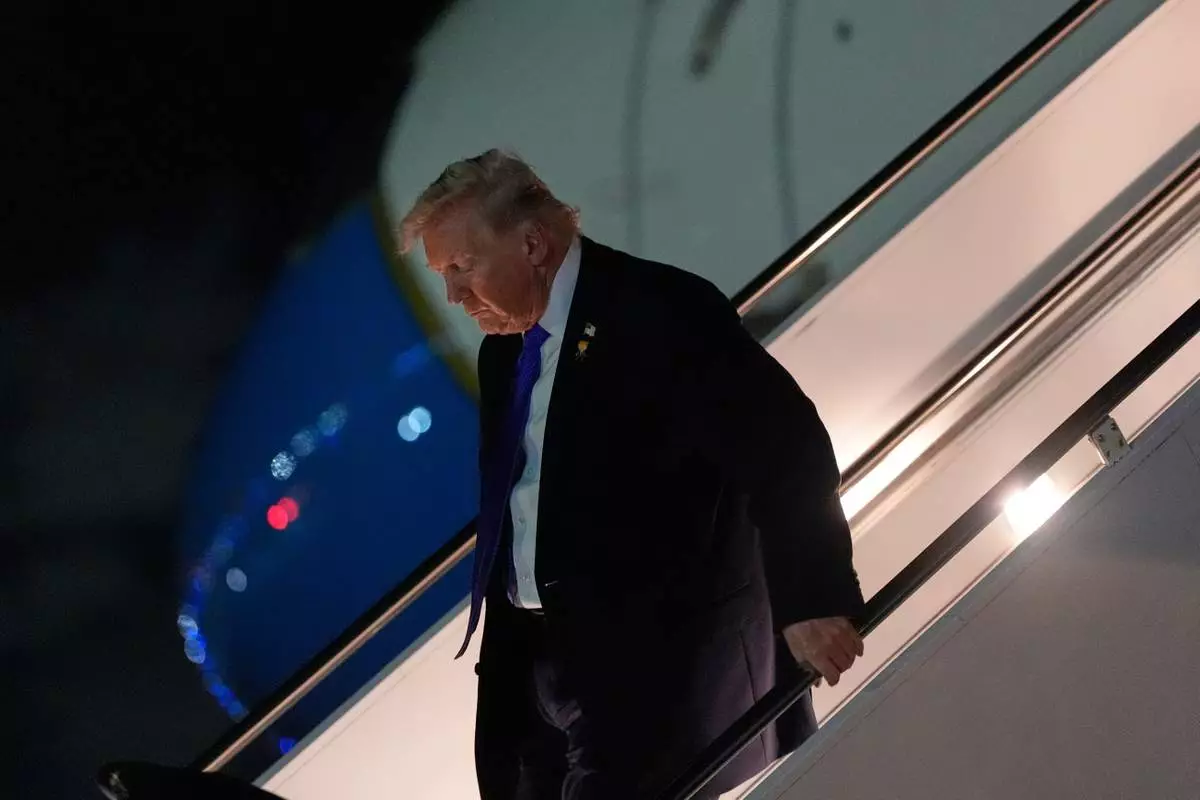
President Donald Trump arrives on Air Force One at Palm Beach International Airport, Friday, Jan. 9, 2025, in West Palm Beach, Fla. (AP Photo/Julia Demaree Nikhinson)

President Donald Trump arrives on Air Force One at Palm Beach International Airport, Friday, Jan. 9, 2025, in West Palm Beach, Fla. (AP Photo/Julia Demaree Nikhinson)

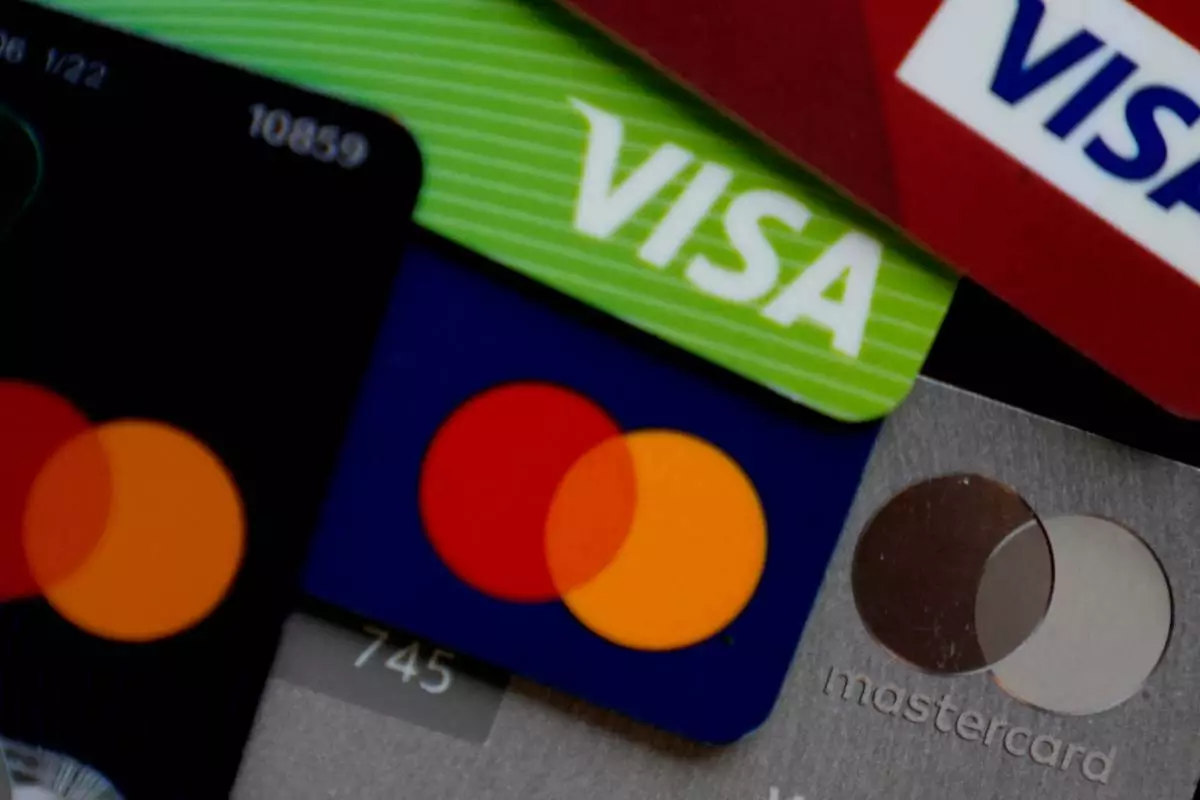
FILE - Visa and Mastercard credit cards are shown in Buffalo Grove, Ill., Feb. 8, 2024. (AP Photo/Nam Y. Huh, File)

FILE - Visa and Mastercard credit cards are shown in Buffalo Grove, Ill., Feb. 8, 2024. (AP Photo/Nam Y. Huh, File)

Recommended Articles