MIAMI (AP) — The Department of Homeland Security said Friday that it is terminating legal protections for hundreds of thousands of Haitians, setting them up for potential deportation.
DHS said that conditions in Haiti have improved and Haitians no longer meet the conditions for the temporary legal protections.
The termination of temporary protected status, or TPS, applies to about 500,000 Haitians who are already in the United States, some of whom have lived here for more than a decade. It is coming three months after the Trump administration revoked legal protections for thousands of Haitians who arrived legally in the country under a humanitarian parole program, and it is part of part of a series of measures implemented to curb immigration.
Recently, the U.S. Supreme Court overturned a federal judge’s order preventing the administration from revoking the parole program.
TPS allows people already in the United States to stay and work legally if their homelands are deemed unsafe. Immigrants from 17 countries, including Haiti, Afghanistan, Sudan and Lebanon, were receiving those protections before President Donald Trump took office for his second term in January.
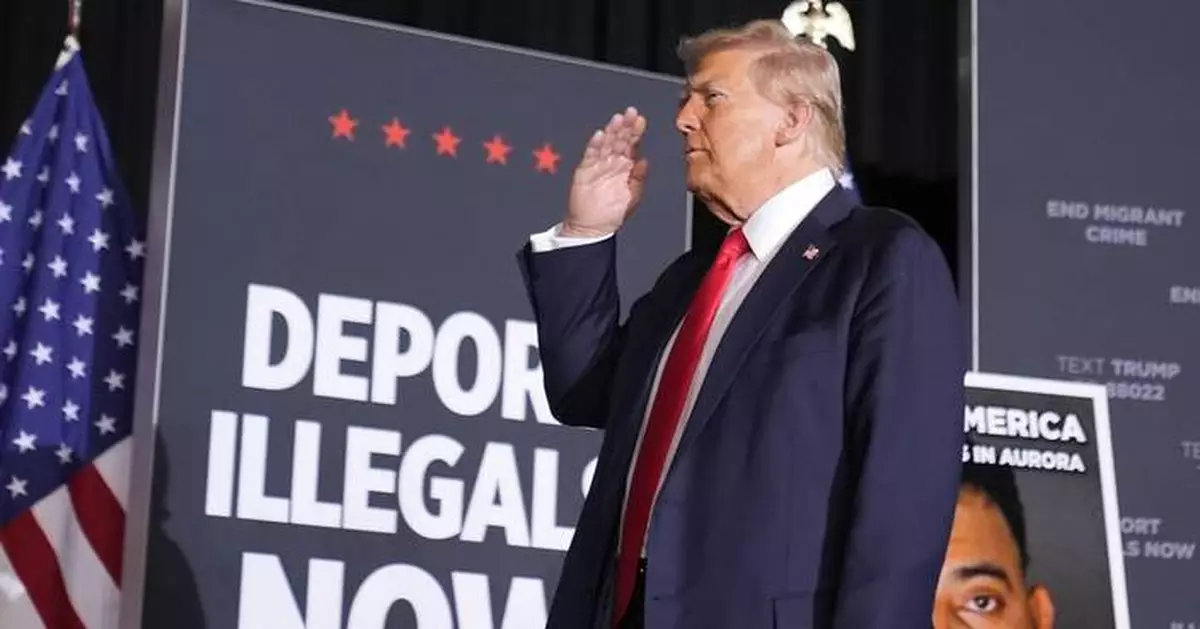
President Trump is ending protections and programs for immigrants as part of his mass deportations promises. During his political campaign he said his administration would scale back the use of TPS, which covered more than 1 million immigrants. His campaign highlighted unfounded claims that Haitians who live and work legally in Springfield, Ohio, as TPS holders were eating their neighbors’ pets.
Hundreds of thousands of Venezuelans and some Afghans have been told already that they’re losing their TPS status.
Some of the Haitians who benefit from TPS have requested asylum or other lawful immigration status that could protect them from deportation, although it is not clear how many could be left without any relief.
“This decision restores integrity in our immigration system and ensures that Temporary Protective Status is actually temporary,” a DHS spokesperson said. “The environmental situation in Haiti has improved enough that it is safe for Haitian citizens to return home.”
The Department of State, nonetheless, has not changed its travel advisory and still recommends Americans “do not travel to Haiti due to kidnapping, crime, civil unrest, and limited health care.”
Temporary protected status for Haitians expires on Aug. 3, and the termination will be effective on Sept. 2, Homeland Security Secretary Kristi Noem said.
DHS advised TPS holders to return to Haiti using a mobile application called CBP Home.
Gang violence has displaced 1.3 million people across Haiti as the local government and international community struggle to contain an spiraling crisis, according to a recent report from the International Organization for Migration. The report warned of a 24% increase in displaced people since December, with gunmen having chased 11% of Haiti’s nearly 12 million inhabitants from their home.
“Deporting people back to these conditions is a death sentence for many, stripping them of their fundamental right to safety and dignity,” said Tessa Pettit, a Haitian-American who is executive director of the Florida Immigrant Coalition.
Frantz Desir, 36, has been in the U.S. since 2022 on asylum, but he says he is concerned by the Trump administration’s decision to terminate TPS.
“You see your friends who used to go to work every day, and suddenly—without being sick or fired—they just can’t go anymore. It hits you. Even if it hasn’t happened to you yet, you start to worry, ‘What if it’s me next?’”
Desir says his asylum court date was set for this year, but the judge rescheduled it for 2028.
Desir lives in Springfield, Ohio, with his wife and two children, and he works in a car parts manufacturing plant.
——-
AP reporter Obed Lamy contributed from Indianapolis
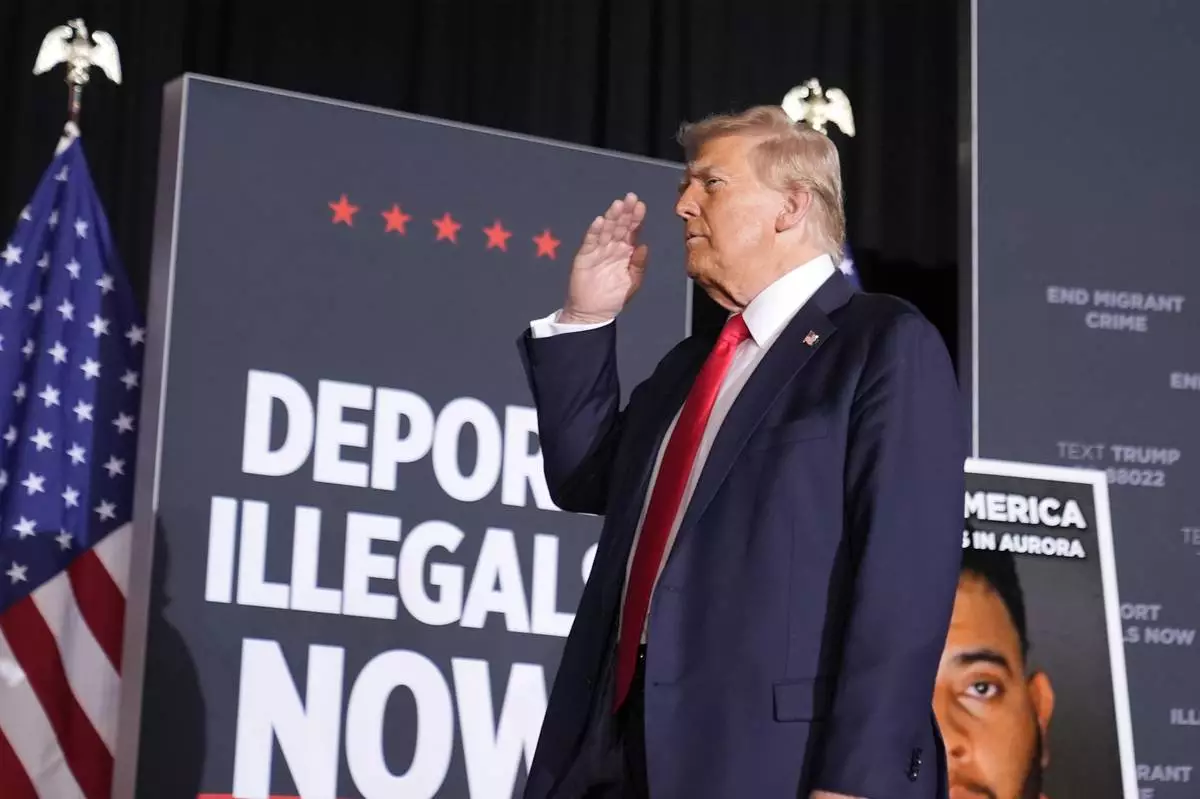
FILE - Republican presidential nominee former President Donald Trump salutes at a campaign rally at the Gaylord Rockies Resort & Convention Center, Oct. 11, 2024, in Aurora, Colo. (AP Photo/Alex Brandon, File)
DUBAI, United Arab Emirates (AP) — U.S. President Donald Trump said Iran wants to negotiate with Washington after his threat to strike the Islamic Republic over its bloody crackdown on protesters, a move coming as activists said Monday the death toll in the nationwide demonstrations rose to at least 544.
Iran had no immediate reaction to the news, which came after the foreign minister of Oman — long an interlocutor between Washington and Tehran — traveled to Iran this weekend. It also remains unclear just what Iran could promise, particularly as Trump has set strict demands over its nuclear program and its ballistic missile arsenal, which Tehran insists is crucial for its national defense.
Meanwhile Monday, Iran called for pro-government demonstrators to head to the streets in support of the theocracy, a show of force after days of protests directly challenging the rule of 86-year-old Supreme Leader Ayatollah Ali Khamenei. Iranian state television aired chants from the crowd, who shouted “Death to America!” and “Death to Israel!”
Trump and his national security team have been weighing a range of potential responses against Iran including cyberattacks and direct strikes by the U.S. or Israel, according to two people familiar with internal White House discussions who were not authorized to comment publicly and spoke on condition of anonymity.
“The military is looking at it, and we’re looking at some very strong options,” Trump told reporters on Air Force One on Sunday night. Asked about Iran’s threats of retaliation, he said: “If they do that, we will hit them at levels that they’ve never been hit before.”
Trump said that his administration was in talks to set up a meeting with Tehran, but cautioned that he may have to act first as reports of the death toll in Iran mount and the government continues to arrest protesters.
“I think they’re tired of being beat up by the United States,” Trump said. “Iran wants to negotiate.”
He added: “The meeting is being set up, but we may have to act because of what’s happening before the meeting. But a meeting is being set up. Iran called, they want to negotiate.”
Iran through country's parliamentary speaker warned Sunday that the U.S. military and Israel would be “legitimate targets” if America uses force to protect demonstrators.
More than 10,600 people also have been detained over the two weeks of protests, said the U.S.-based Human Rights Activists News Agency, which has been accurate in previous unrest in recent years and gave the death toll. It relies on supporters in Iran crosschecking information. It said 496 of the dead were protesters and 48 were with security forces.
With the internet down in Iran and phone lines cut off, gauging the demonstrations from abroad has grown more difficult. The Associated Press has been unable to independently assess the toll. Iran’s government has not offered overall casualty figures.
Those abroad fear the information blackout is emboldening hard-liners within Iran’s security services to launch a bloody crackdown. Protesters flooded the streets in the country’s capital and its second-largest city on Saturday night into Sunday morning. Online videos purported to show more demonstrations Sunday night into Monday, with a Tehran official acknowledging them in state media.
In Tehran, a witness told the AP that the streets of the capital empty at the sunset call to prayers each night. By the Isha, or nighttime prayer, the streets are deserted.
Part of that stems from the fear of getting caught in the crackdown. Police sent the public a text message that warned: “Given the presence of terrorist groups and armed individuals in some gatherings last night and their plans to cause death, and the firm decision to not tolerate any appeasement and to deal decisively with the rioters, families are strongly advised to take care of their youth and teenagers.”
Another text, which claimed to come from the intelligence arm of the paramilitary Revolutionary Guard, also directly warned people not to take part in demonstrations.
“Dear parents, in view of the enemy’s plan to increase the level of naked violence and the decision to kill people, ... refrain from being on the streets and gathering in places involved in violence, and inform your children about the consequences of cooperating with terrorist mercenaries, which is an example of treason against the country,” the text warned.
The witness spoke to the AP on condition of anonymity due to the ongoing crackdown.
The demonstrations began Dec. 28 over the collapse of the Iranian rial currency, which trades at over 1.4 million to $1, as the country’s economy is squeezed by international sanctions in part levied over its nuclear program. The protests intensified and grew into calls directly challenging Iran’s theocracy.
Nikhinson reported from aboard Air Force One.
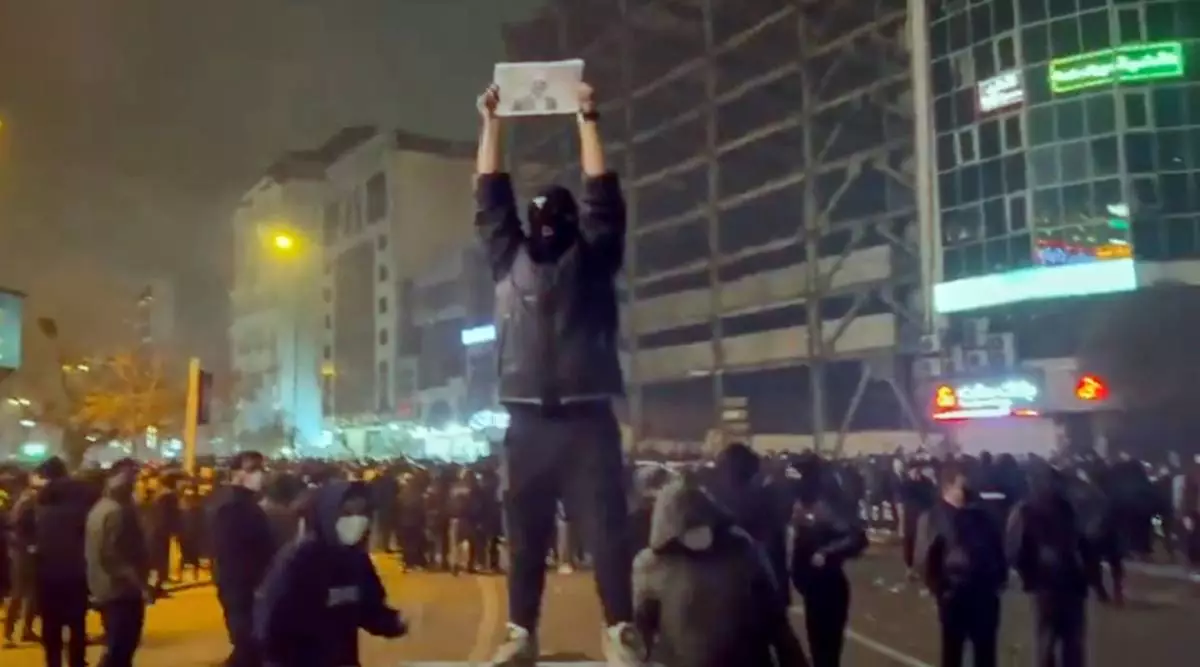
In this frame grab from video obtained by the AP outside Iran, a masked demonstrator holds a picture of Iran's Crown Prince Reza Pahlavi during a protest in Tehran, Iran, Friday, January. 9, 2026. (UGC via AP)
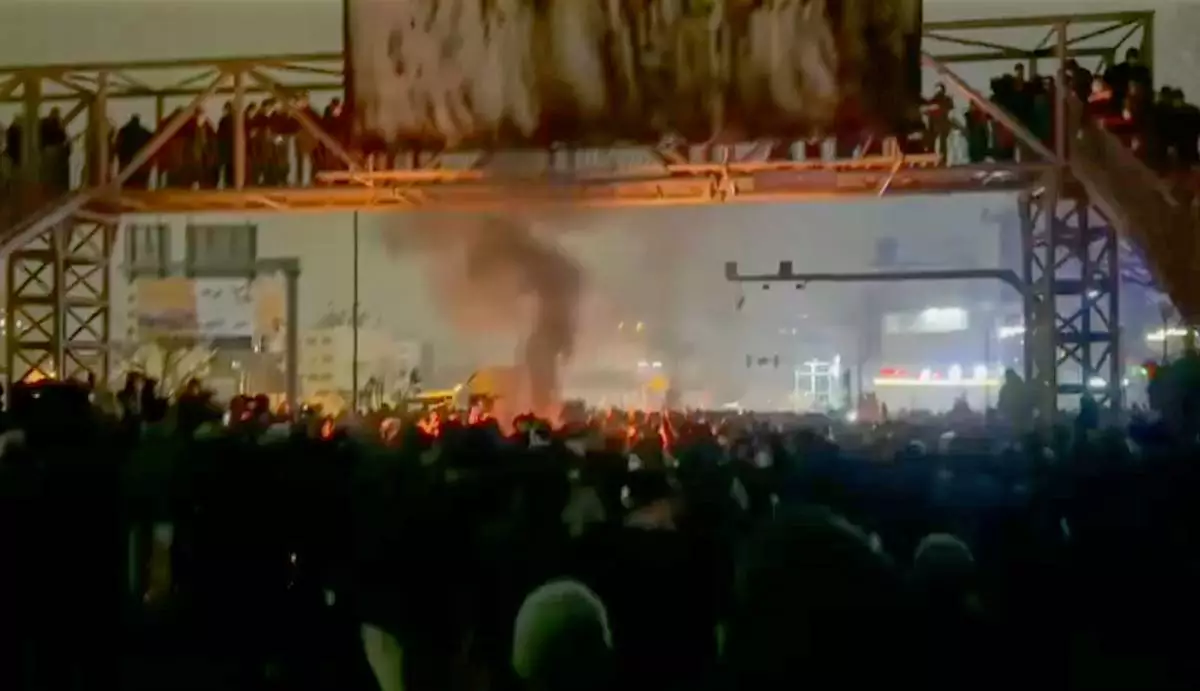
In this frame grab from footage circulating on social media from Iran shows protesters taking to the streets despite an intensifying crackdown as the Islamic Republic remains cut off from the rest of the world in Tehran, Iran, Friday, Jan. 9, 2026.(UGC via AP)
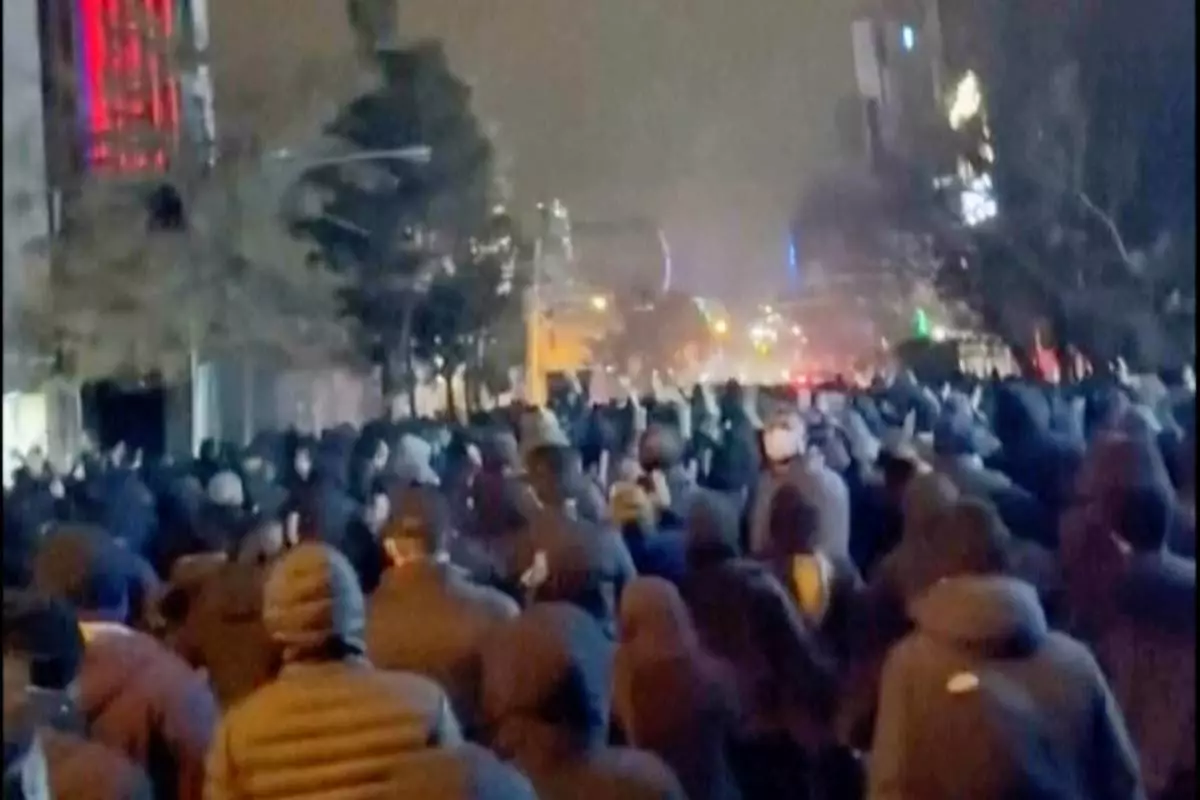
In this frame grab from footage circulating on social media from Iran showed protesters once again taking to the streets of Tehran despite an intensifying crackdown as the Islamic Republic remains cut off from the rest of the world in Tehran, Iran, Saturday Jan. 10, 2026. (UGC via AP)