Skip to Content Facebook Feature Image

China's revised anti-unfair competition law to take effect Oct. 15

China

China

China

China's revised anti-unfair competition law to take effect Oct. 15

2025-06-28 14:01 Last Updated At:14:37

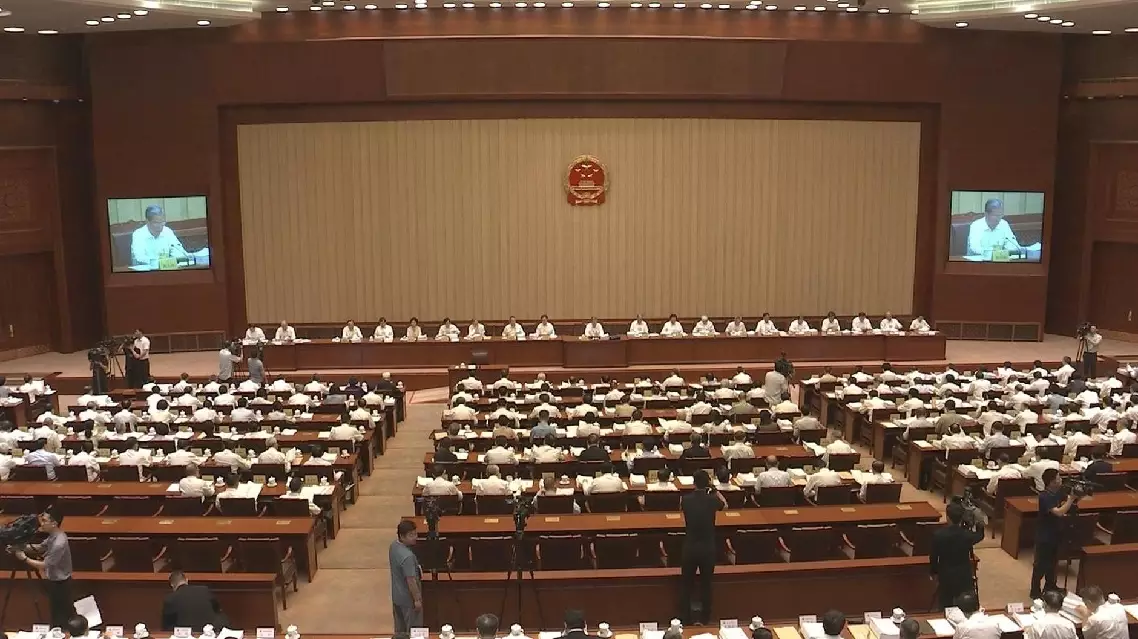
Chinese lawmakers on Friday passed a revised version of the anti-unfair competition law, which will take effect on October 15, 2025.

The revised law, adopted at a session of the Standing Committee of the National People's Congress (NPC), China's top legislature, consists of five chapters that include general provisions, acts of unfair competition, investigation of suspected violations, legal liabilities and supplementary provisions.

The law stipulates that China will improve the rules and systems to combat unfair competition, strengthen law enforcement and judicial work in this area, maintain the order of market competition, and promote a unified, open, competitive and orderly market system.

"The revision of the anti-unfair competition law focuses on several aspects: fully implementing the CPC Central Committee's spirit on comprehensively addressing issues such as rat-race competition and resolving overdue payments to small and medium-sized enterprises (SMEs). It actively responds to new situations and problems in the current anti-unfair competition efforts, refines the types and identification criteria of unfair competition practices and increases regulations covering areas like keyword search, infringement of data rights, fake transactions, fraudulent reviews, malicious returns, and platform accountability. The goal is to foster an economic order that is both flexible enough to encourage vitality and regulated enough to ensure control, while scientifically balancing the relationship between the anti-unfair competition law and other laws such as the Civil Code, anti-monopoly law, trademark law, consumer rights protection law, and e-commerce law," said Gao Lina, deputy director of the Social Law Office under the Legislative Affairs Commission of the NPC Standing Committee.
China's revised anti-unfair competition law to take effect Oct. 15


China's revised anti-unfair competition law to take effect Oct. 15

Chinese Premier Li Qiang on Thursday presided over a State Council executive meeting that studied work on building a unified national market and reviewed and approved a plan for the development of a modern emergency response system during the 15th Five-Year Plan period (2026-2030).

Noting that building a unified national market is essential to advancing high-quality development, the meeting called for deepening institutional frameworks in areas such as property rights protection, market access, fair competition, social credit and market exit mechanisms.

The meeting also urged efforts to advance high-standard connectivity of market infrastructure to facilitate smooth economic circulation and effectively reduce logistics costs across society.

Emergency management is critical to protecting people's lives and property, the meeting said. It called for accelerating the development of a modern emergency response system, deepening reform and innovation in emergency management, and improving coordinated response mechanisms.

Efforts should be made to strengthen risk prevention at the source, enhance monitoring, forecasting and early warning, and accelerate a shift in governance toward proactive prevention, according to the meeting.

A draft revision of the Law on the People's Bank of China was also discussed and approved in principle at the meeting, which decided to submit the draft to the Standing Committee of the National People's Congress for deliberation.

Chinese premier chairs State Council executive meeting

Chinese premier chairs State Council executive meeting

Recommended Articles