WASHINGTON (AP) — Senate Republicans voting in a dramatic late Saturday session narrowly cleared a key procedural step as they race to advance President Donald Trump's package of tax breaks, spending cuts and bolstered deportation funds by his July Fourth deadline.
The tally, 51-49, came after a tumultuous night with Vice President JD Vance at the Capitol to break a potential tie. Tense scenes played out in the chamber as voting came to a standstill, dragging for more than three hours as holdout senators huddled for negotiations, and took private meetings off the floor. In the end, two Republicans opposed the motion to proceed, joining all Democrats.
Click to Gallery

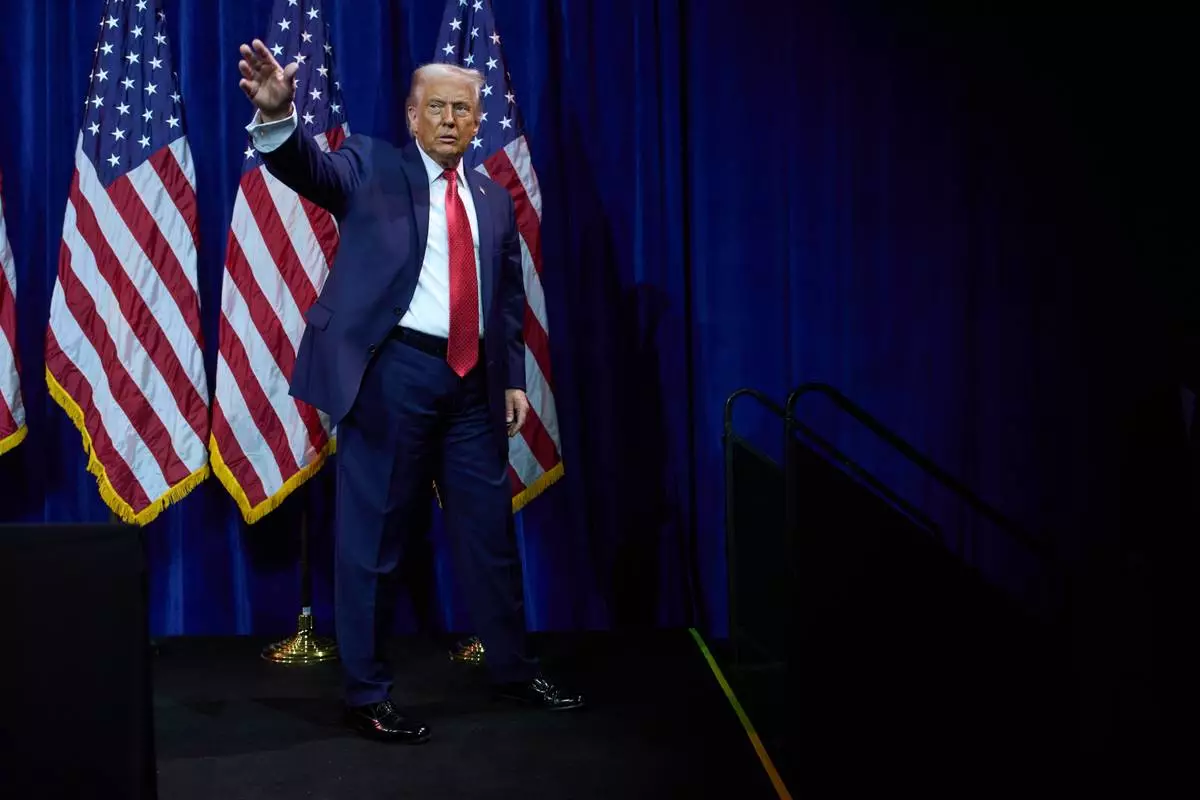
President Donald Trump speaks to the media, Friday, June 27, 2025, in the briefing room of the White House in Washington. (AP Photo/Jacquelyn Martin)

Speaker of the House Mike Johnson, R-La., pauses for a reporters as he heads to the chamber for the final votes of the week, as President Donald Trump's sweeping domestic policy bill lingers in the Senate, awaiting consensus from divided Republicans, at the Capitol in Washington, Friday, June 27, 2025. (AP Photo/J. Scott Applewhite)
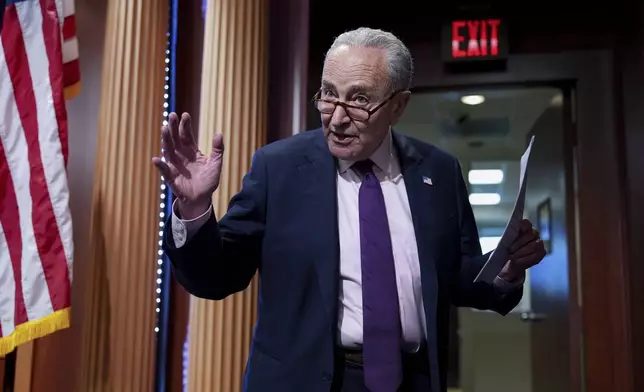
Senate Minority Leader Chuck Schumer, D-N.Y., updates reporters as Senate Republicans work to advance President Donald Trump's sweeping domestic policy bill, at the Capitol in Washington, Friday, June 27, 2025. (AP Photo/J. Scott Applewhite)
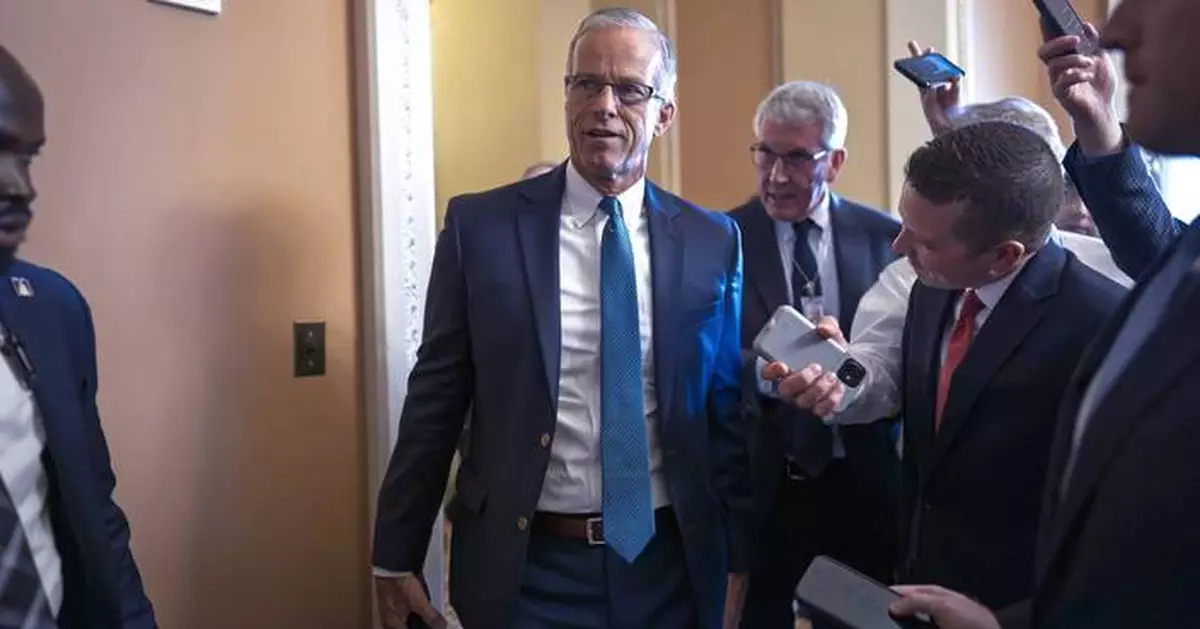
Senate Majority Leader John Thune, R-S.D., arrives for a closed-door Republican meeting to advance President Donald Trump's sweeping domestic policy bill, at the Capitol in Washington, Friday, June 27, 2025. (AP Photo/J. Scott Applewhite)
There's still a long weekend of work to come.
Republicans are using their majorities in Congress to push aside Democratic opposition, but they have run into a series of political and policy setbacks. Not all GOP lawmakers are on board with proposals to reduce spending on Medicaid, food stamps and other programs as a way to help cover the cost of extending some $3.8 trillion in Trump tax breaks.
“It’s time to get this legislation across the finish line,” said Senate Majority Leader John Thune, R-S.D.
Ahead of roll call, the White House released a statement of administrative policy saying it “strongly supports passage” of the bill. Trump himself was at his golf course in Virginia on Saturday with GOP senators posting about the visit on social media.
But by nightfall, Trump was lashing out against holdouts, threatening to campaign against one Republican, Sen. Thom Tillis of North Carolina, who had announced he could not support the bill because of grave Medicaid cuts that he worried would leave many without health care in his state. Tillis and Sen. Rand Paul of Kentucky voted against. The president was working the phones from the Oval Office late Saturday night, according to a person familiar with the discussions who was not authorized to speak publicly and spoke on condition of anonymity.
Pressure was mounting from all sides — billionaire Elon Musk criticized the package as “utterly insane and destructive.”
The 940-page "One Big Beautiful Bill Act was released shortly before midnight Friday, and senators are expected to grind through all-night debate and amendments in the days ahead. If the Senate is able to pass it, the bill would go back to the House for a final round of votes before it could reach the White House.
With the narrow Republican majorities in the House and Senate, leaders need almost every lawmaker on board. A new analysis from the nonpartisan Congressional Budget Office said the Senate bill would increase by 11.8 million the number of people without health insurance in 2034.
Senate Democratic leader Chuck Schumer of New York said Republicans unveiled the bill “in the dead of night” and are rushing to finish the bill before the public fully knows what’s in it. He immediately forced a full reading of the text late Saturday in the Senate, which would take hours.
The weekend session could be a make-or-break moment for Trump's party, which has invested much of its political capital on his signature domestic policy plan. Trump is pushing Congress to wrap it up and has admonished the “grandstanders” among GOP holdouts to fall in line.
The legislation is an ambitious but complicated series of GOP priorities. At its core, it would make permanent many of the tax breaks from Trump's first term that would otherwise expire by year's end if Congress fails to act, resulting in a potential tax increase on Americans. The bill would add new breaks, including no taxes on tips, and commit $350 billion to national security, including for Trump's mass deportation agenda.
But the cutbacks to Medicaid, food stamps and green energy investments, which a top Democrat, Sen. Ron Wyden of Oregon said would be a “death sentence” for America's wind and solar industries, are also causing dissent within GOP ranks.
The Republicans are relying on the reductions to offset the lost tax revenues but some lawmakers say the cuts go too far, particularly for people receiving health care through Medicaid. Meanwhile, conservatives, worried about the nation's debt, are pushing for steeper cuts.
Tillis said he spoke with Trump late Friday explaining his concerns. Paul of Kentucky had been opposed to the bill’s provision to raise the nation’s debt limit by $5 trillion.
And GOP Sen. Ron Johnson of Wisconsin, who initially voted no, switched hours later after private talks to agree to advance the bill.
As the roll call teetered, attention turned to Sen. Lisa Murkowski of Alaska who was surrounded by GOP leaders in intense conversation. She voted to proceed.
A short time later, Thune drew conservative holdouts Sen. Rick Scott of Florida, Mike Lee of Utah and Cynthia Lummis of Wyoming to his office, with Vance and Johnson also joining. Talks dragged on.
Then swiftly, Vance led them all back in to vote.
Later, Scott said he had met with the president, adding, “We all want to get to yes.”
Lee said the group "had an internal discussion about the strategy to achieve more savings and more deficit reduction, and I feel good about the direction where this is going, and more to come.”
The release of the bill's draft had been delayed as the Senate parliamentarian reviewed the measure to ensure it complied with the chamber’s strict “Byrd Rule,” named for the late Sen. Robert C. Byrd, D-W.Va. It largely bars policy matters from inclusion in budget bills unless a provision can get 60 votes to overcome objections. That would be a tall order in a Senate with a 53-47 GOP edge and Democrats unified against Trump’s bill.
Republicans suffered a series of setbacks after several proposals, including shifting food stamp costs from the federal government to the states or gutting the funding structure of the Consumer Financial Protection Bureau, were deemed out of compliance with the rules.
But over the past days, Republicans have quickly revised those proposals and reinstated them.
The final text includes a proposal for cuts to the Medicaid provider tax that had run into parliamentary hurdles and objections from several senators worried about the fate of rural hospitals. The new version extends the start date for those cuts and establishes a $25 billion fund to aid rural hospitals and providers.
The CBO had said that under the House-passed version of the bill, some 10.9 million more people would go without health care and at least 3 million fewer would qualify for food aid. The budget office has started releasing initial assessments of the Senate draft, which proposes steeper reductions.
Top income-earners would see about a $12,000 tax cut under the House bill, while the package would cost the poorest Americans $1,600, the CBO said.
The Senate included a compromise over the so-called SALT provision, a deduction for state and local taxes that has been a top priority of lawmakers from New York and other high-tax states, but the issue remains unsettled.
The current SALT cap is $10,000 a year, and a handful of Republicans wanted to boost it to $40,000 a year. The final draft includes a $40,000 cap, but limits it for five years. Many Republican senators say that is still too generous, but House Republicans are not fully satisfied either.
House Speaker Mike Johnson sent his colleagues home for the weekend with plans to be on call to return to Washington.
Associated Press writers Ali Swenson, Fatima Hussein, Michelle L. Price and Matthew Daly contributed to this report.

President Donald Trump speaks to the media, Friday, June 27, 2025, in the briefing room of the White House in Washington. (AP Photo/Jacquelyn Martin)
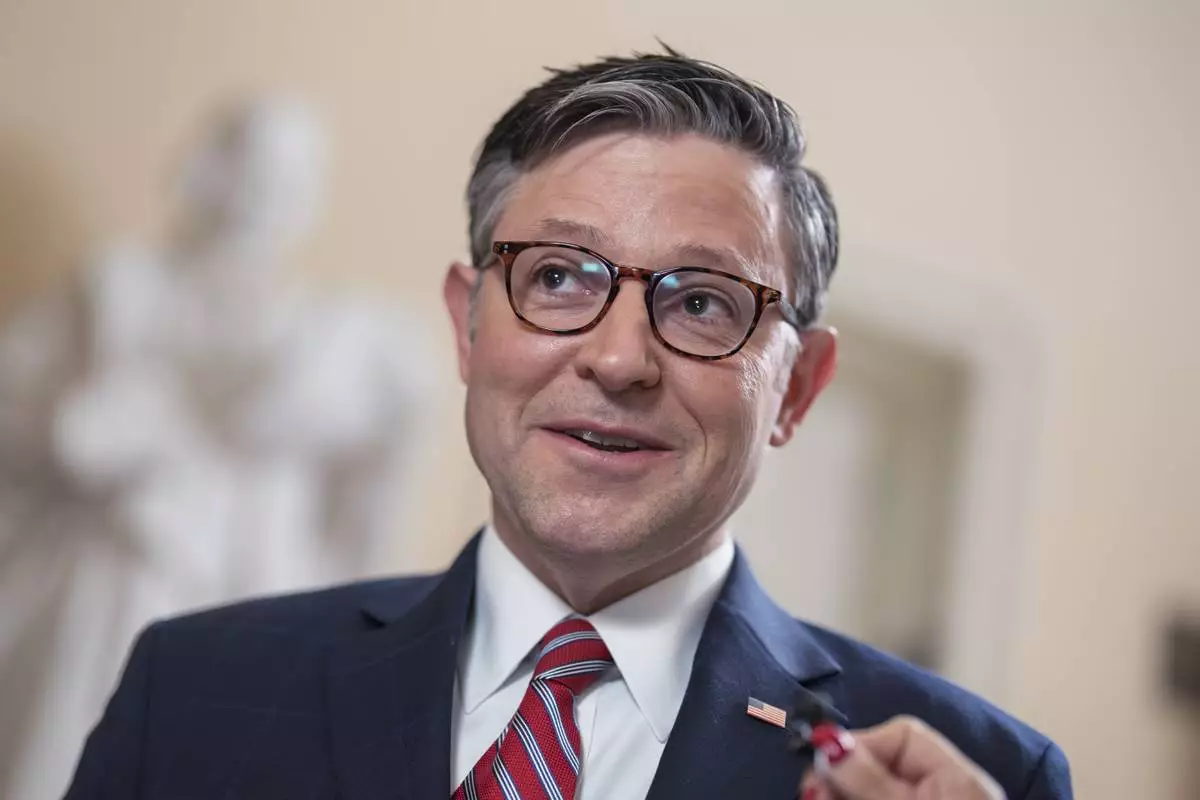
Speaker of the House Mike Johnson, R-La., pauses for a reporters as he heads to the chamber for the final votes of the week, as President Donald Trump's sweeping domestic policy bill lingers in the Senate, awaiting consensus from divided Republicans, at the Capitol in Washington, Friday, June 27, 2025. (AP Photo/J. Scott Applewhite)
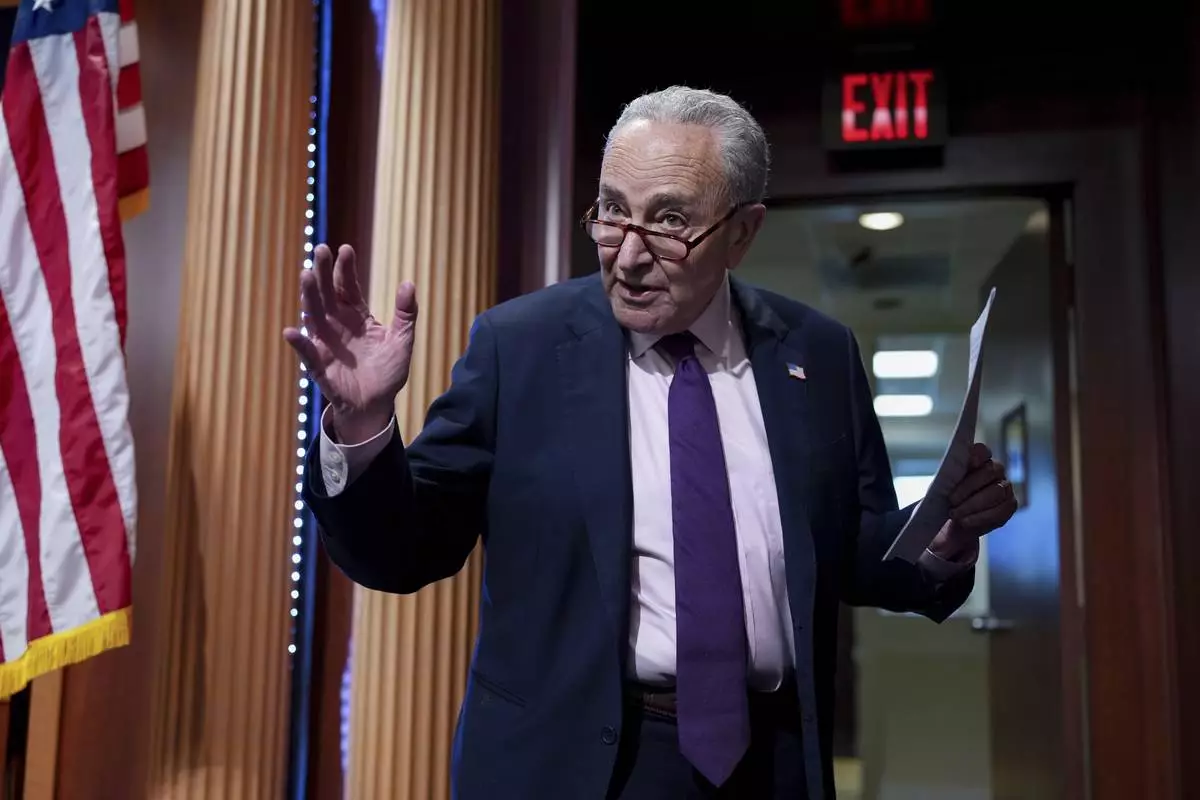
Senate Minority Leader Chuck Schumer, D-N.Y., updates reporters as Senate Republicans work to advance President Donald Trump's sweeping domestic policy bill, at the Capitol in Washington, Friday, June 27, 2025. (AP Photo/J. Scott Applewhite)
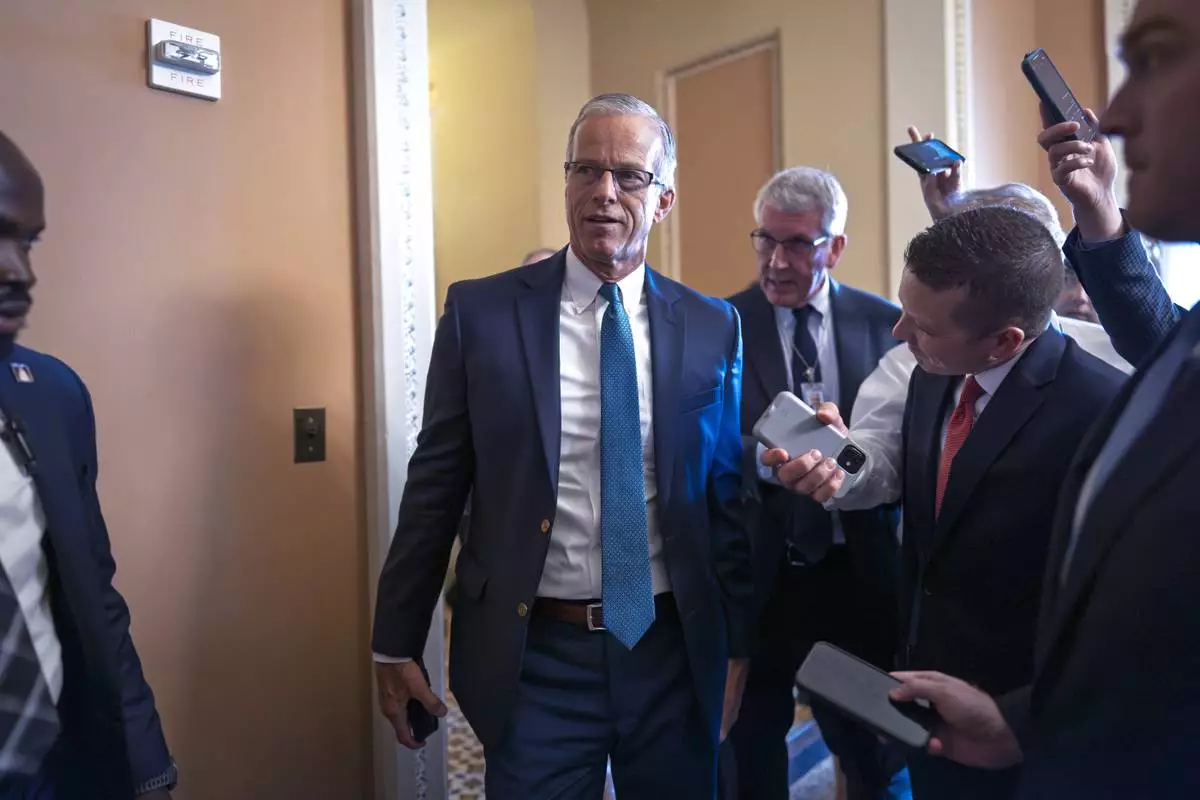
Senate Majority Leader John Thune, R-S.D., arrives for a closed-door Republican meeting to advance President Donald Trump's sweeping domestic policy bill, at the Capitol in Washington, Friday, June 27, 2025. (AP Photo/J. Scott Applewhite)