Skip to Content Facebook Feature Image

Around 100,000 march in Budapest Pride in open defiance of Hungary's ban

News

Around 100,000 march in Budapest Pride in open defiance of Hungary's ban
News

News

Around 100,000 march in Budapest Pride in open defiance of Hungary's ban

2025-06-29 01:54 Last Updated At:02:01

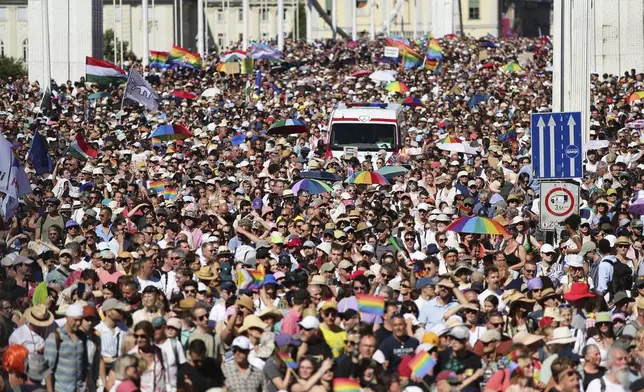
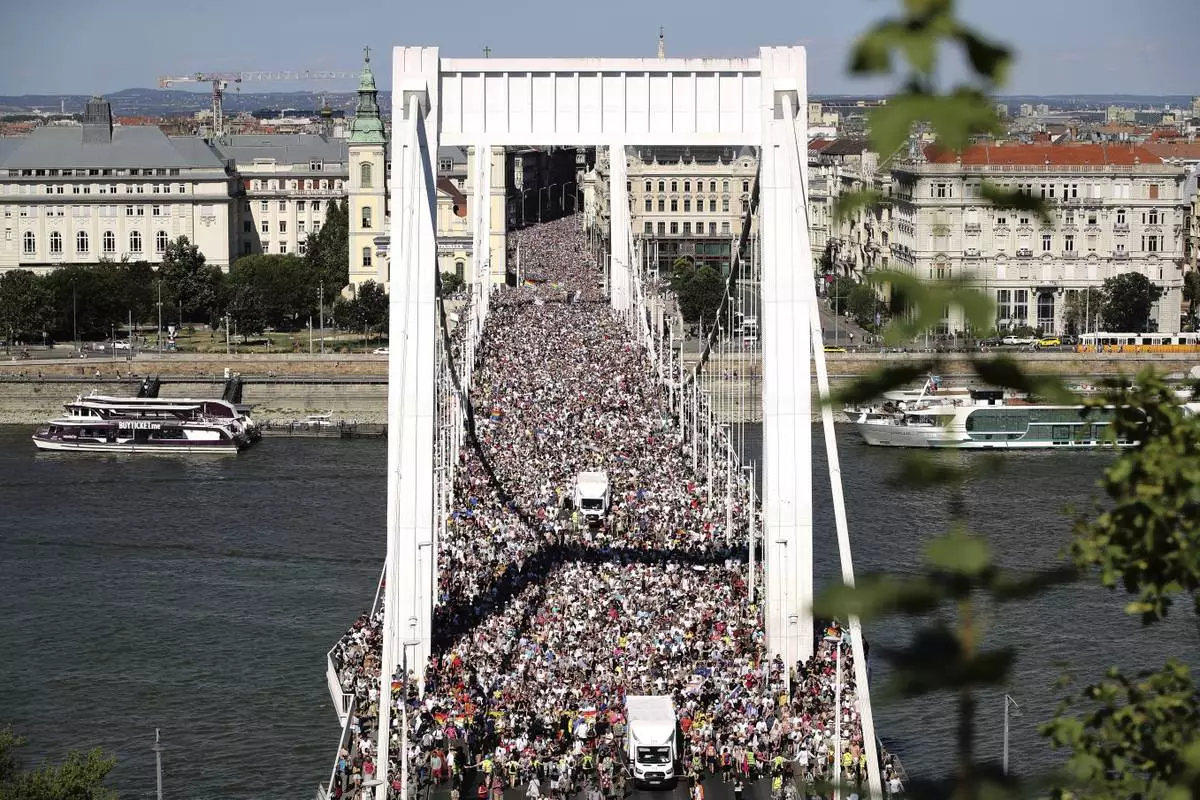
BUDAPEST, Hungary (AP) — Around 100,000 people defied a government ban and police orders Saturday to march in what organizers called the largest LGBTQ+ Pride event in Hungary's history in an open rebuke of Prime Minister Viktor Orbán's government.

Marchers gambled with potential police intervention and heavy fines to participate in the 30th annual Budapest Pride, which was outlawed in March by Orbán's right-wing populist governing party.

More Images
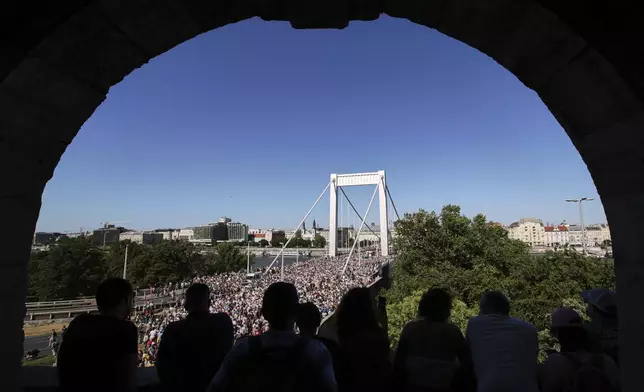
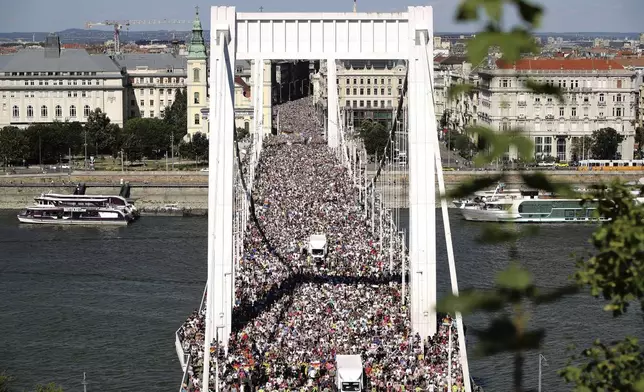
Participants in the Pride march cross the Elisabeth Bridge in Budapest, Hungary, Saturday, June 28, 2025. (AP Photo/Rudolf Karancsi)
Participants in the Pride march cross the Elisabeth Bridge in Budapest, Hungary, Saturday, June 28, 2025. (AP Photo/Rudolf Karancsi)
Participants in the Pride march cross the Elisabeth Bridge in Budapest, Hungary, Saturday, June 28, 2025. (AP Photo/Rudolf Karancsi)

Participants in the Pride march cross the Elisabeth Bridge in Budapest, Hungary, Saturday, June 28, 2025. (AP Photo/Rudolf Karancsi)

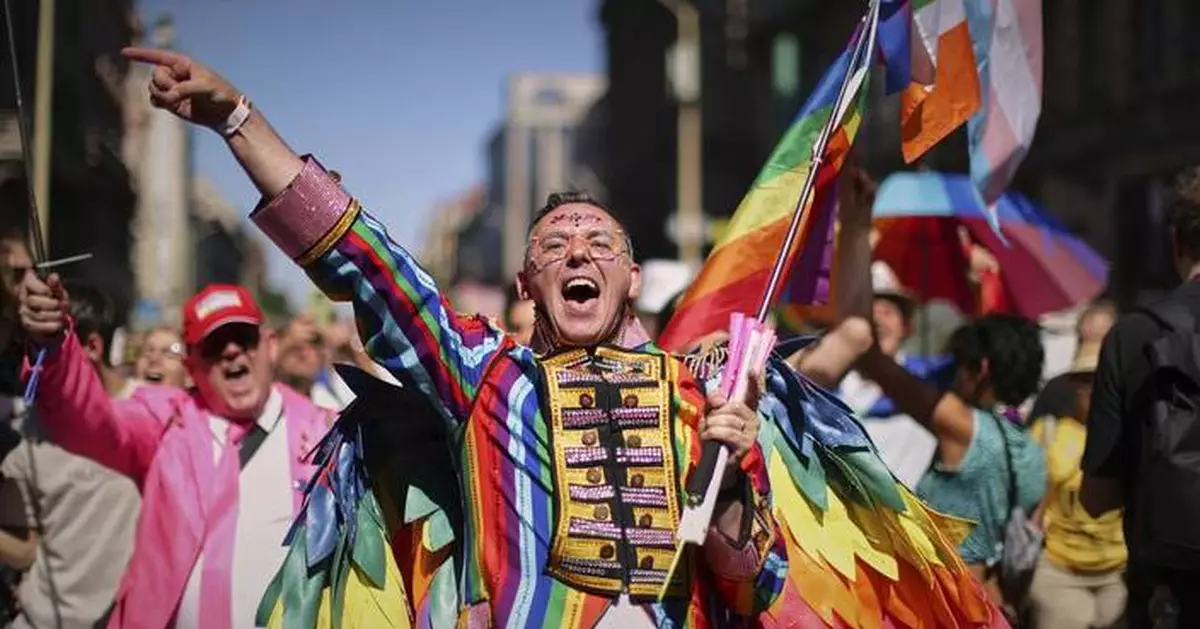
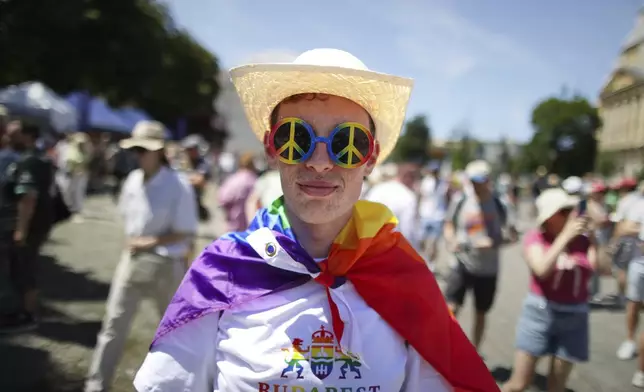
A participant poses as people start gathering for the Pride march in Budapest, Hungary, Saturday, June 28, 2025. (AP Photo/Rudolf Karancsi)
A participant poses as people start gathering for the Pride march in Budapest, Hungary, Saturday, June 28, 2025. (AP Photo/Rudolf Karancsi)

Participants in the Pride march cross the Elisabeth Bridge in Budapest, Hungary, Saturday, June 28, 2025. (AP Photo/Rudolf Karancsi)
Participants in the Pride march cross the Elisabeth Bridge in Budapest, Hungary, Saturday, June 28, 2025. (AP Photo/Rudolf Karancsi)

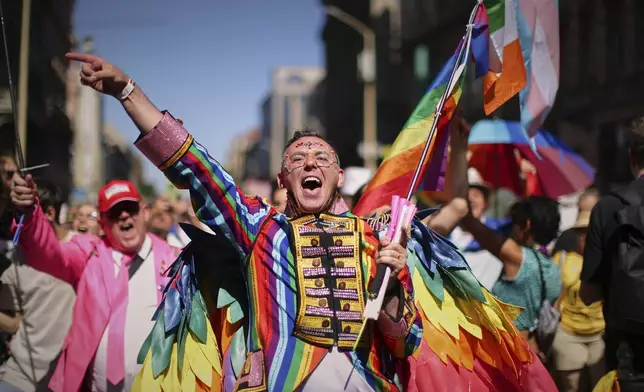
A participant in the Pride march cheers in Budapest, Hungary, Saturday, June 28, 2025. (AP Photo/Rudolf Karancsi)

A participant in the Pride march cheers in Budapest, Hungary, Saturday, June 28, 2025. (AP Photo/Rudolf Karancsi)

The march began at Budapest City Hall and wound through the city center before crossing the capital's Erzsébet Bridge over the Danube River. Police diverted the crowd from its planned route to keep it separated from a small group of far-right counterprotesters, while members of Hungary's LGBTQ+ community and masses of supporters danced to music and waved rainbow and anti-government flags.

One marcher, Blanka Molnár, said it was “a fantastic feeling” that more people had attended the Pride march than ever before despite it being outlawed. She said it was “increasingly important” for Hungarians, “even those who have never been to Pride before,” to push back against the government's policies.

"This isn’t just about LGBQT+ rights, it's also about the right to assemble and about standing up for each other and not allowing (the government) to oppress us,” she said.

The massive size of the march, which the government for months had insisted would no longer be permitted in Hungary, was seen as a major blow to Orbán's prestige, as the European Union's longest-serving leader's popularity slumps in the polls where a new opposition force has taken the lead.

Orbán and his party have insisted that Pride, a celebration of LGBTQ+ visibility and struggle for equal rights, was a violation of children's rights to moral and spiritual development — rights that a recent constitutional amendment declared took precedence over other fundamental protections including the right to peacefully assemble.

The law fast-tracked through parliament in March made it an offense to hold or attend events that “depict or promote” homosexuality to minors underage 18. Orbán earlier made clear that Budapest Pride was the explicit target of the law.

Authorities installed additional cameras throughout the city center before the march, and were expected to use facial recognition tools to identify individuals who attend the banned event. According to the new law, being caught attending Pride could result in fines of up to 200,000 Hungarian forints ($586).

Marcher András Faludy said the “hysteria” that has emerged in Hungary over the Pride march in recent months was “damn pathetic. It’s nonsense.”

"I could use an uglier word because I’m extremely angry, but I won’t,” he added.

The ban was the latest crackdown on LGBTQ+ rights by Orbán's government, which has already effectively banned both same-sex adoption and same-sex marriage and disallowed transgender individuals from changing their sex in official documents.

Police rejected several requests by organizers in recent weeks to register the Pride march, citing the recent law. But Budapest Mayor Gergely Karácsony joined with organizers and declared it would be held as a separate municipal event — something he said doesn't require police approval.

But Hungary’s government remained firm, insisting that holding the Pride march, even if it's sponsored by the city, would be unlawful. Hungary’s justice minister this week warned Karácsony that organizing Pride or encouraging people to attend would be punishable by up to a year in prison.

Many marchers expressed their belief that the Pride march represented a struggle not just for the protections of the rights of sexual minorities, but for the democratic future of their country.

Participant Zsófia Szekér said the number of attendees showed that a major part of society desired a new direction for Hungary.

"I think we can only achieve change if so many people take to the streets,” she said.
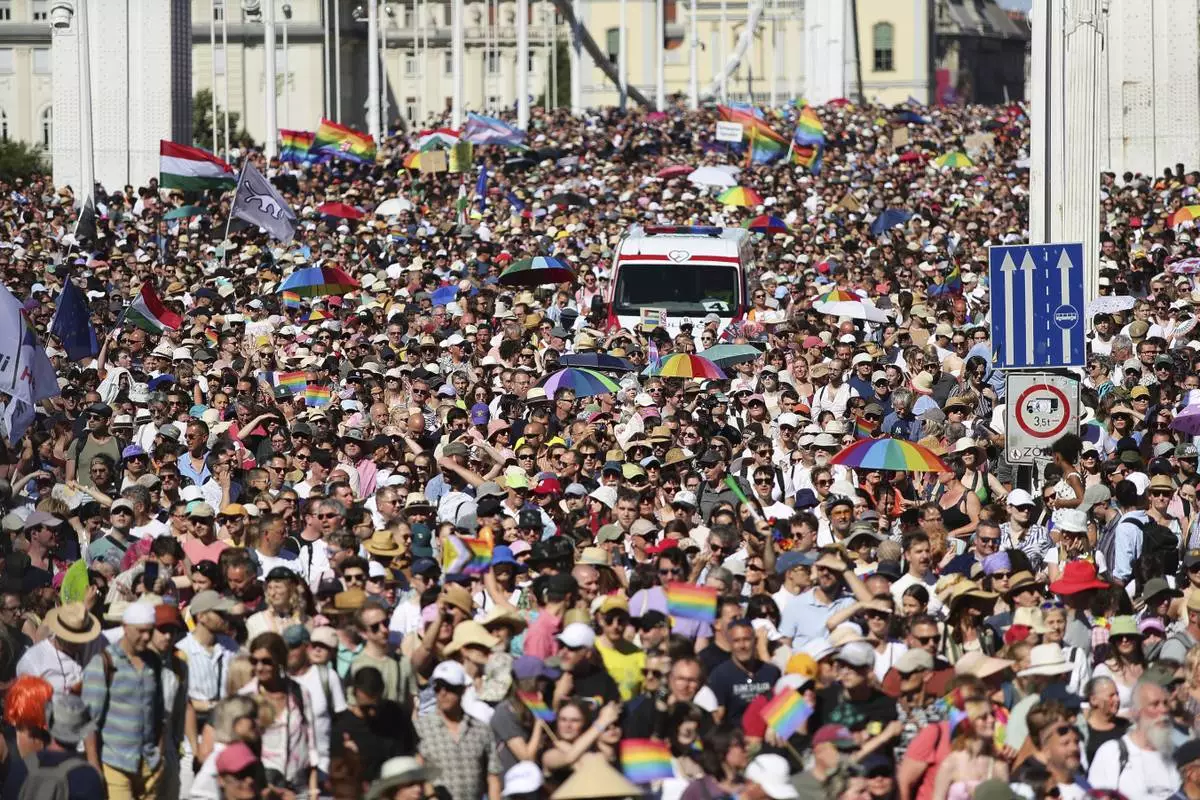
Participants in the Pride march cross the Elisabeth Bridge in Budapest, Hungary, Saturday, June 28, 2025. (AP Photo/Rudolf Karancsi)
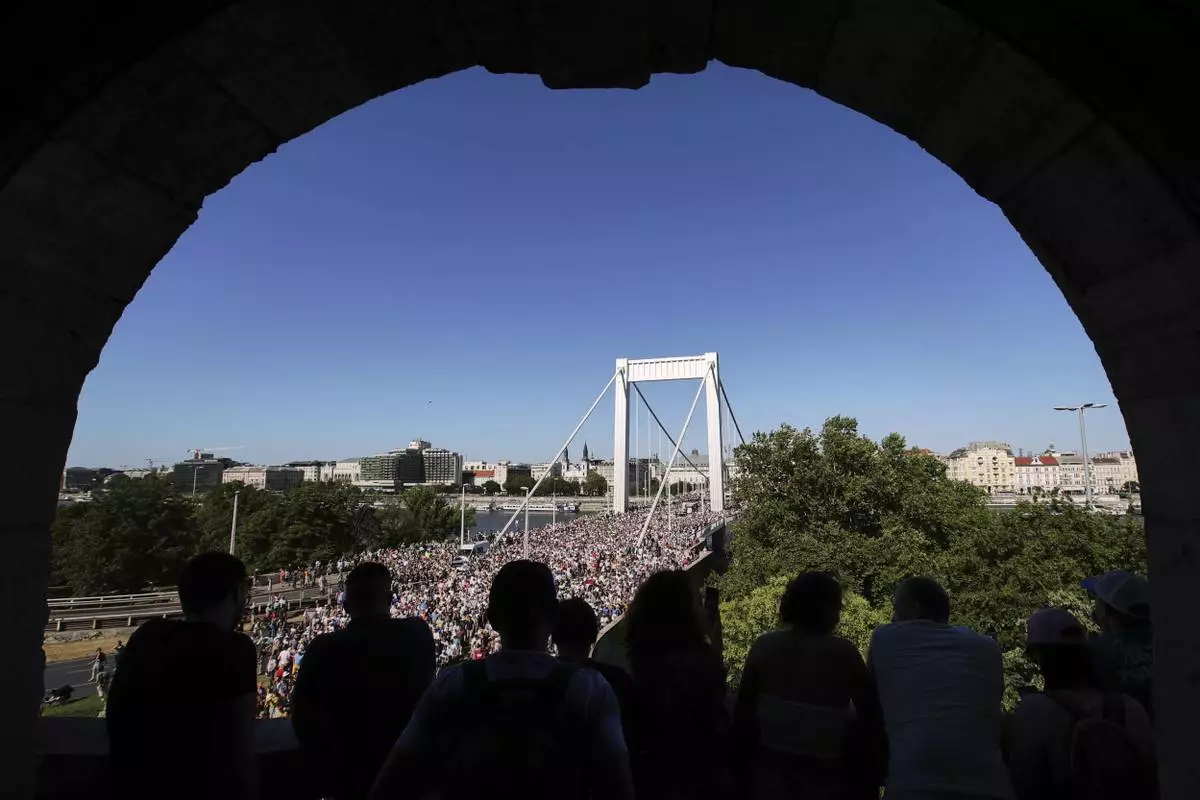
Participants in the Pride march cross the Elisabeth Bridge in Budapest, Hungary, Saturday, June 28, 2025. (AP Photo/Rudolf Karancsi)
Participants in the Pride march cross the Elisabeth Bridge in Budapest, Hungary, Saturday, June 28, 2025. (AP Photo/Rudolf Karancsi)

Participants in the Pride march cross the Elisabeth Bridge in Budapest, Hungary, Saturday, June 28, 2025. (AP Photo/Rudolf Karancsi)

A participant poses as people start gathering for the Pride march in Budapest, Hungary, Saturday, June 28, 2025. (AP Photo/Rudolf Karancsi)
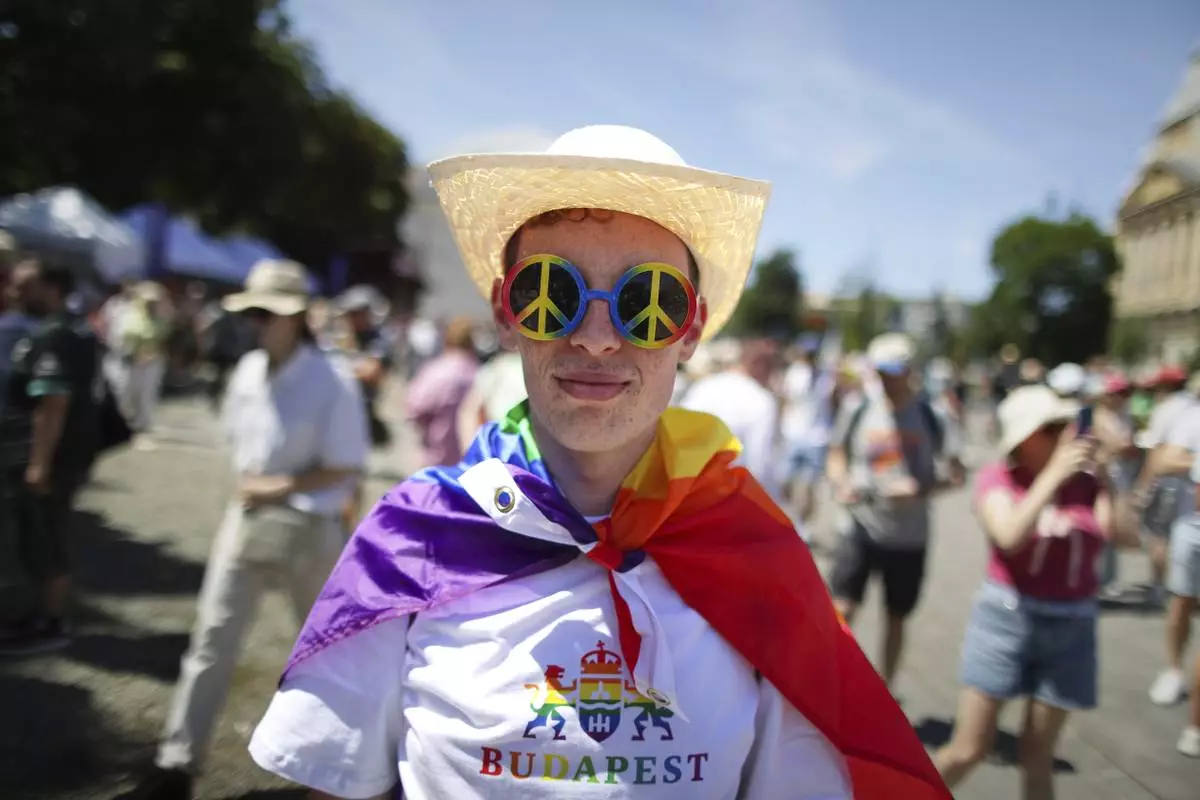
A participant poses as people start gathering for the Pride march in Budapest, Hungary, Saturday, June 28, 2025. (AP Photo/Rudolf Karancsi)

Participants in the Pride march cross the Elisabeth Bridge in Budapest, Hungary, Saturday, June 28, 2025. (AP Photo/Rudolf Karancsi)
Participants in the Pride march cross the Elisabeth Bridge in Budapest, Hungary, Saturday, June 28, 2025. (AP Photo/Rudolf Karancsi)

A participant in the Pride march cheers in Budapest, Hungary, Saturday, June 28, 2025. (AP Photo/Rudolf Karancsi)
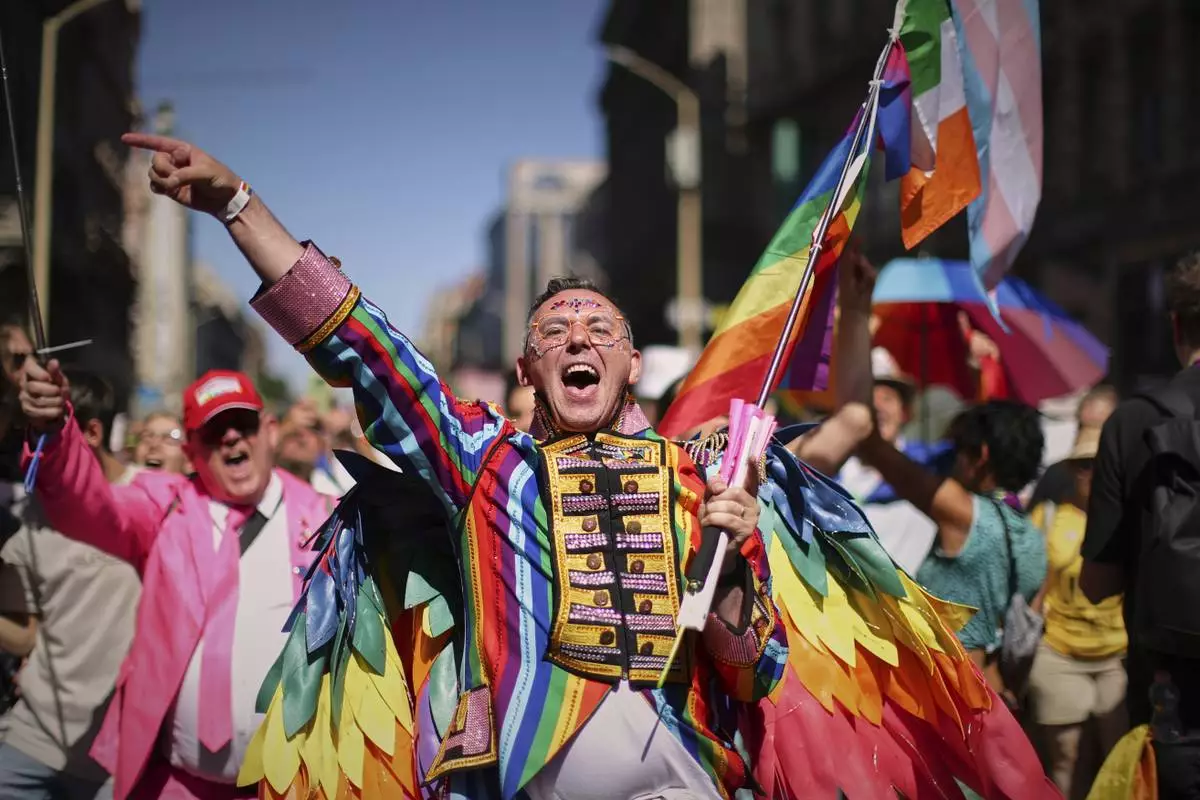
A participant in the Pride march cheers in Budapest, Hungary, Saturday, June 28, 2025. (AP Photo/Rudolf Karancsi)
WASHINGTON (AP) — President Donald Trump is meeting with oil executives at the White House on Friday in hopes of securing $100 billion in investments to revive Venezuela’s ability to fully tap into its expansive reserves of petroleum — a plan that rides on their comfort in making commitments in a country plagued by instability, inflation and uncertainty.

Since the U.S. military raid to capture former Venezuelan leader Nicolás Maduro on Saturday, Trump has quickly pivoted to portraying the move as a newfound economic opportunity for the U.S., seizing tankers carrying Venezuelan oil, saying the U.S. is taking over the sales of 30 million to 50 million barrels of previously sanctioned Venezuelan oil and will be controlling sales worldwide indefinitely.

On Friday, U.S. forces seized their fifth tanker over the past month that has been linked to Venezuelan oil. The action reflected the determination of the U.S. to fully control the exporting, refining and production of Venezuelan petroleum, a sign of the Trump administration's plans for ongoing involvement in the sector as it seeks commitments from private companies.

It's all part of a broader push by Trump to keep gasoline prices low. At a time when many Americans are concerned about affordability, the incursion in Venezuela melds Trump’s assertive use of presidential powers with an optical spectacle meant to convince Americans that he can bring down energy prices.

The meeting, set for 2:30 p.m. EST, will be open to the news media, according to an update to the president's daily schedule. “At least 100 Billion Dollars will be invested by BIG OIL, all of whom I will be meeting with today at The White House,” Trump said Friday in a pre-dawn social media post.

Trump is set to meet with executives from 17 oil companies, according to the White House. Among the companies attending are Chevron, which still operates in Venezuela, and ExxonMobil and ConocoPhillips, which both had oil projects in the country that were lost as part of a 2007 nationalization of private businesses under Maduro’s predecessor, Hugo Chávez.

The president is meeting with a wide swath of domestic and international companies with interests ranging from construction to the commodity markets. Other companies slated to be at the meeting include Halliburton, Valero, Marathon, Shell, Singapore-based Trafigura, Italy-based Eni and Spain-based Repsol.

Large U.S. oil companies have so far largely refrained from affirming investments in Venezuela as contracts and guarantees need to be in place. Trump has suggested on social media that America would help to backstop any investments.

Venezuela’s oil production has slumped below one million barrels a day. Part of Trump's challenge to turn that around will be to convince oil companies that his administration has a stable relationship with Venezuela’s interim President Delcy Rodríguez, as well as protections for companies entering the market.

Secretary of State Marco Rubio, Energy Secretary Chris Wright and Interior Secretary Doug Burgum are slated to attend the oil executives meeting, according to the White House.

Meanwhile, the United States and Venezuelan governments said Friday they were exploring the possibility of r estoring diplomatic relations between the two countries, and that a delegation from the Trump administration arrived to the South American nation on Friday.

The small team of U.S. diplomats and diplomatic security officials traveled to Venezuela to make a preliminary assessment about the potential re-opening of the U.S. Embassy in Caracas, the State Department said in a statement.

Trump also announced on Friday he’d meet with President Gustavo Petro in early February, but called on the Colombian leader to make quick progress on stemming flow of cocaine into the U.S.

Trump, following the ouster of Maduro, had made vague threats to take similar action against Petro. Trump abruptly changed his tone Wednesday about his Colombian counterpart after a friendly phone call in which he invited Petro to visit the White House.

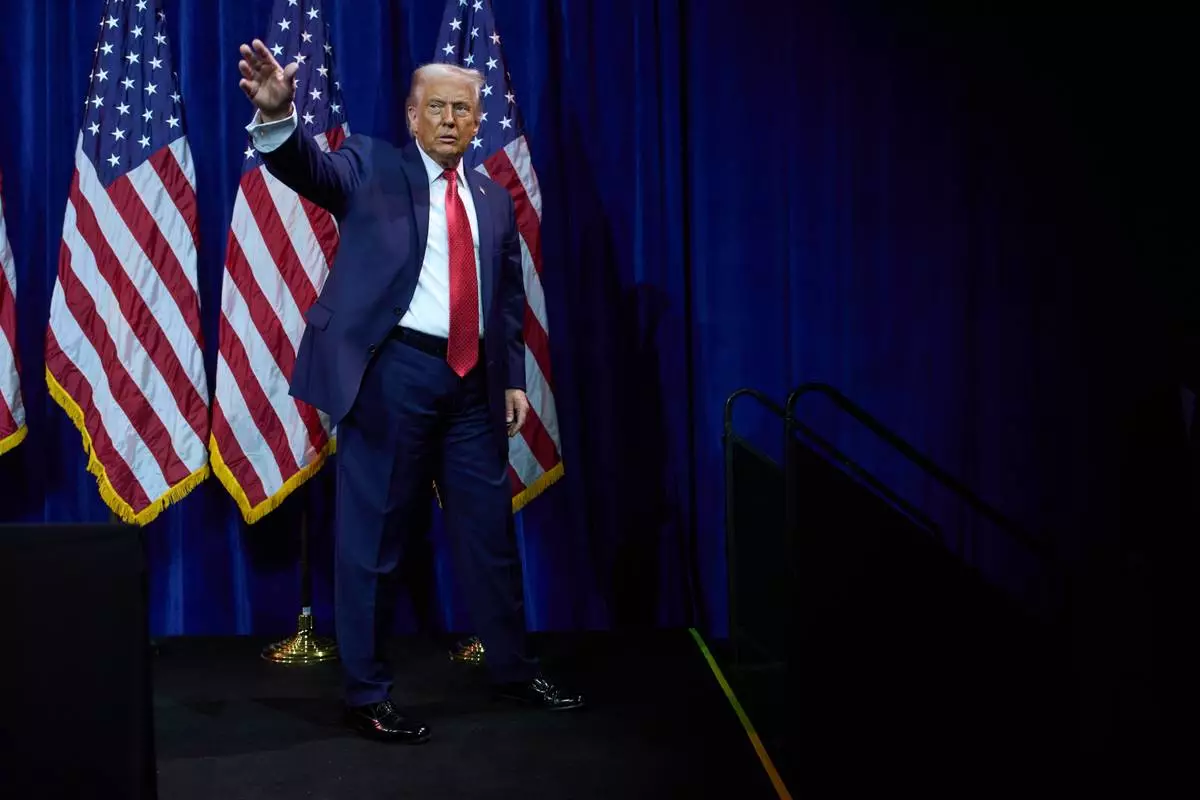
President Donald Trump waves as he walks off stage after speaking to House Republican lawmakers during their annual policy retreat, Tuesday, Jan. 6, 2026, in Washington. (AP Photo/Evan Vucci)

President Donald Trump waves as he walks off stage after speaking to House Republican lawmakers during their annual policy retreat, Tuesday, Jan. 6, 2026, in Washington. (AP Photo/Evan Vucci)

Recommended Articles