TOKYO (AP) — Japan on Sunday successfully launched a climate change monitoring satellite on its mainstay H-2A rocket, which made its final flight before it is replaced by a new flagship model designed to be more cost competitive in the global space market.
The H-2A rocket lifted off from the Tanegashima Space Center in southwestern Japan, carrying the GOSAT-GW satellite as part of Tokyo’s effort to mitigate climate change. The satellite was safely separated from the rocket and released into a planned orbit about 16 minutes later.
Click to Gallery
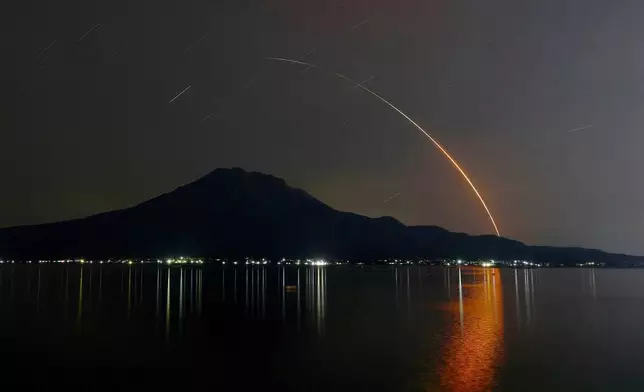
In this long exposure photo, an H-2A rocket carrying Global Observing SATellite for Greenhouse gases and Water cycle, or GOSAT-GW satellite, lifts off from Tanegashima Space Center, seen in Kagoshima, southern Japan, early Sunday, June 29, 2025. (Kotaro Ueda/Kyodo News via AP)
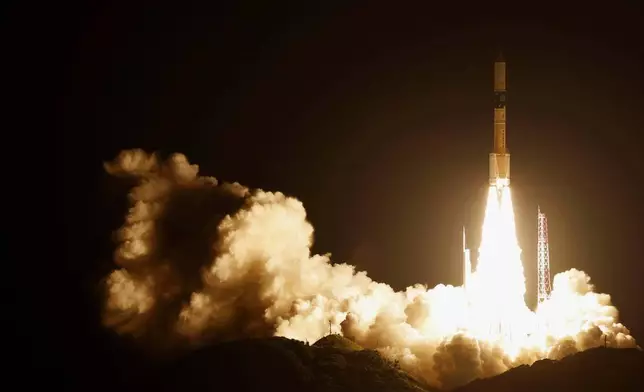
An H-2A rocket carrying Global Observing SATellite for Greenhouse gases and Water cycle, or GOSAT-GW satellite, lifts off from a launch pad in Tanegashima Space Center in Tanegashima, southern Japan, early Sunday, June 29, 2025. (Haruna Furuhashi/Kyodo News via AP)
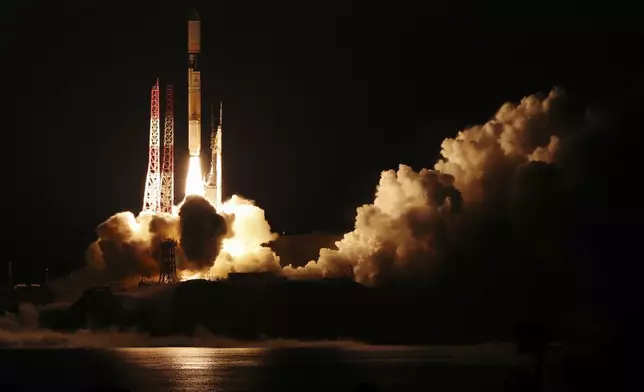
An H-2A rocket carrying Global Observing SATellite for Greenhouse gases and Water cycle, or GOSAT-GW satellite, lifts off from a launch pad in Tanegashima Space Center in Tanegashima, southern Japan, early Sunday, June 29, 2025. (Takumi Sato/Kyodo News via AP)
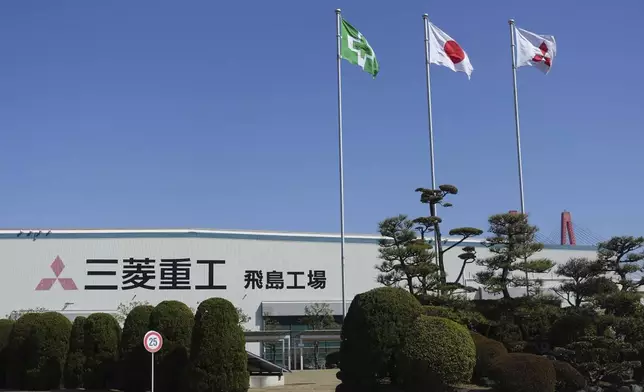
FILE - This photo shows the exterior of the Mitsubishi Heavy Industries' Nagoya Aerospace Systems Works Tobishima Plant in Tobishima, Aichi prefecture, March 21, 2024. (AP Photo/Mari Yamaguchi, File)
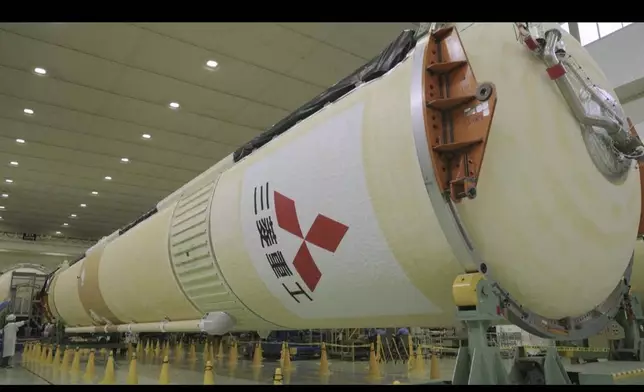
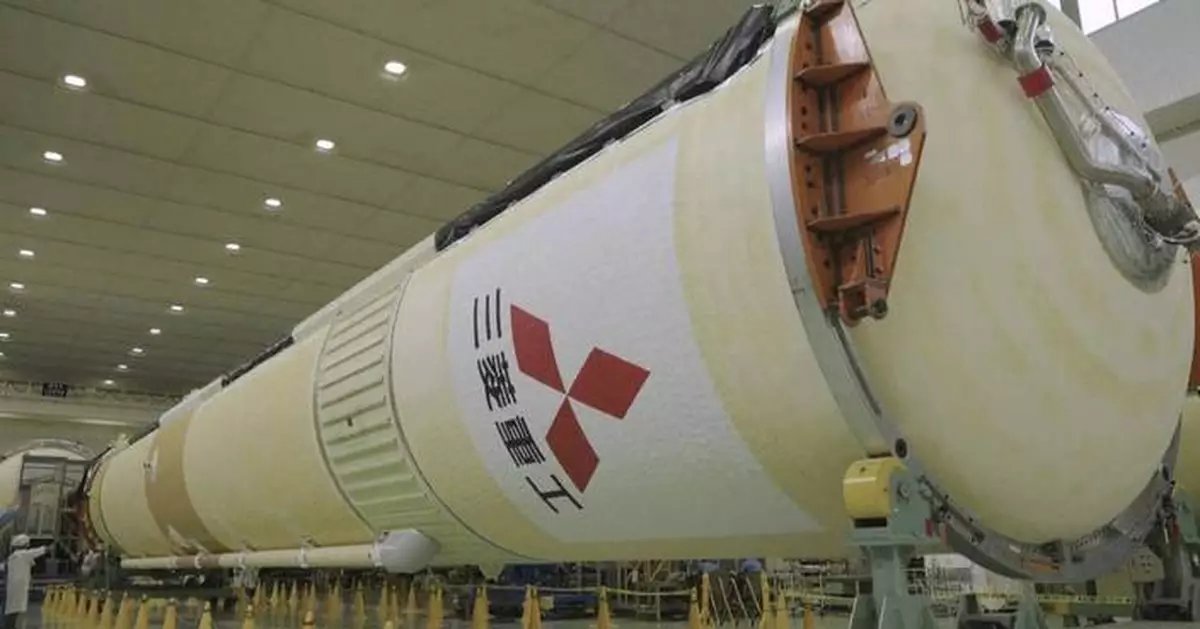
This image made from video shows Mitsubishi Heavy Industries' H2A rocket in Tobishima, Japan, Sept. 25, 2024. (AP Photo)
Scientists and space officials at the control room exchanged hugs and handshakes to celebrate the successful launch, which was delayed by several days due to a malfunctioning of the rocket's electrical systems.
Keiji Suzuki, a Mitsubishi Heavy Industries official in charge of rocket launch operations, said he was more nervous than ever for the final mission of the rocket, which has been his career work. “I've spent my entire life at work not to drop H-2A rocket ... All I can say is I'm so relieved."
Sunday's launch marked the 50th and final flight for the H-2A, which has served as Japan’s mainstay rocket to carry satellites and probes into space with a near-perfect record since its 2001 debut. After its retirement, it will be fully replaced by the H3, which is already in operation, as Japan's new main flagship.
“It is a deeply emotional moment for all of us at JAXA as a developer,” Hiroshi Yamakawa, president of the Japan Aerospace Exploration Agency, told a news conference.
The GOSAT-GW, or Global Observing SATellite for Greenhouse gases and Water cycle, is a third series in the mission to monitor carbon, methane and other greenhouse gasses in the atmosphere. Within one year, it will start distributing data such as sea surface temperature and precipitation with much higher resolution to users around the world, including the U.S. National Oceanic and Atmospheric Administration, officials said.
The liquid-fuel H-2A rocket with two solid-fuel sub-rockets developed by Japan Aerospace Exploration Agency has so far had 49 flights with a 98% success record, with only one failure in 2003. Mitsubishi Heavy has provided its launch operation since 2007.
H-2A successfully carried into space many satellites and probes, including Japan’s moon lander SLIM last year, and a popular Hayabusa2 spacecraft in 2014 to reach a distant asteroid, contributing to the country’s space programs.
The completion of H-2A lets him put more resources into further development of the H3, Suzuki said.
Japan sees a stable, commercially competitive space transport capability as key to its space program and national security, and has been developing two new flagship rockets as successors of the H-2A series — the larger H3 with Mitsubishi, and a much smaller Epsilon system with the aerospace unit of the heavy machinery maker IHI. It hopes to cater to diverse customer needs and improve its position in the growing satellite launch market.
The H3, is designed to carry larger payloads than the H-2A at about half its launch cost to be globally competitive, though officials say more cost reduction efforts are needed to achieve better price competitiveness in the global market.
The H3 has made four consecutive successful flights after a failed debut attempt in 2023, when the rocket had to be destroyed with its payload.
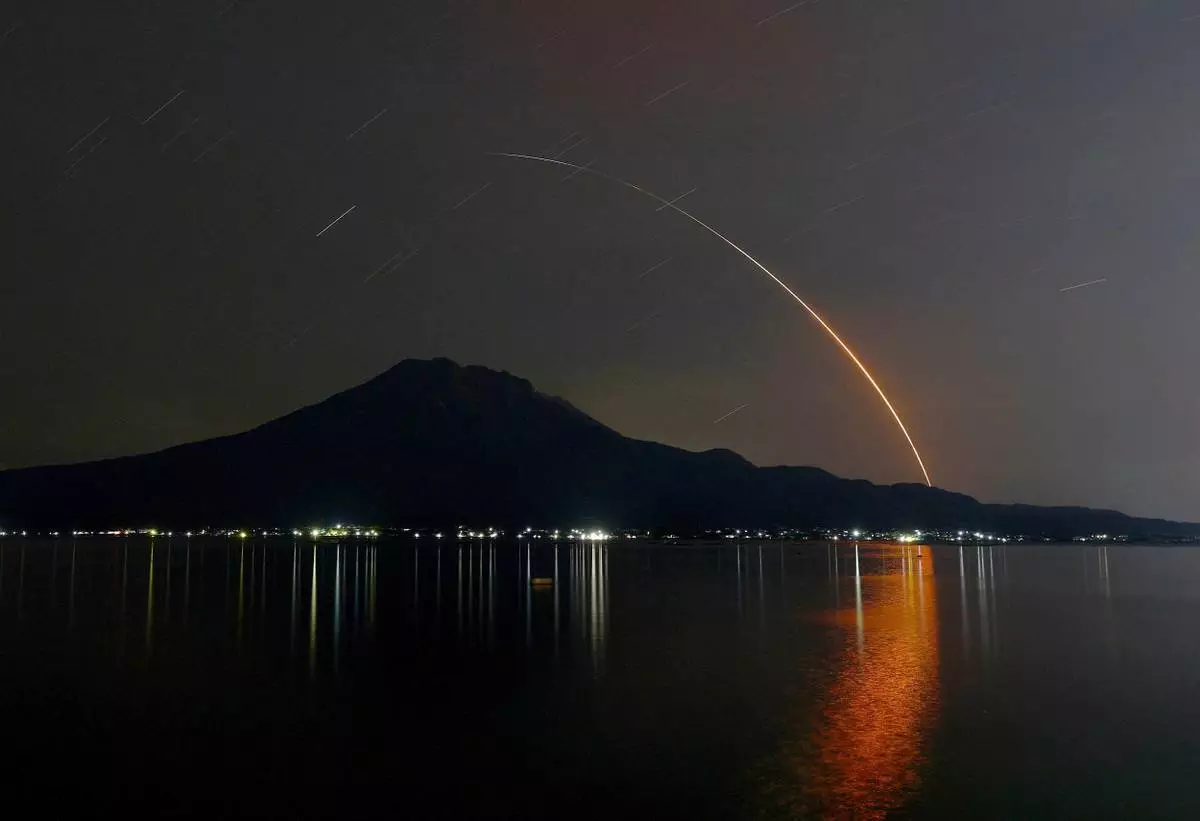
In this long exposure photo, an H-2A rocket carrying Global Observing SATellite for Greenhouse gases and Water cycle, or GOSAT-GW satellite, lifts off from Tanegashima Space Center, seen in Kagoshima, southern Japan, early Sunday, June 29, 2025. (Kotaro Ueda/Kyodo News via AP)
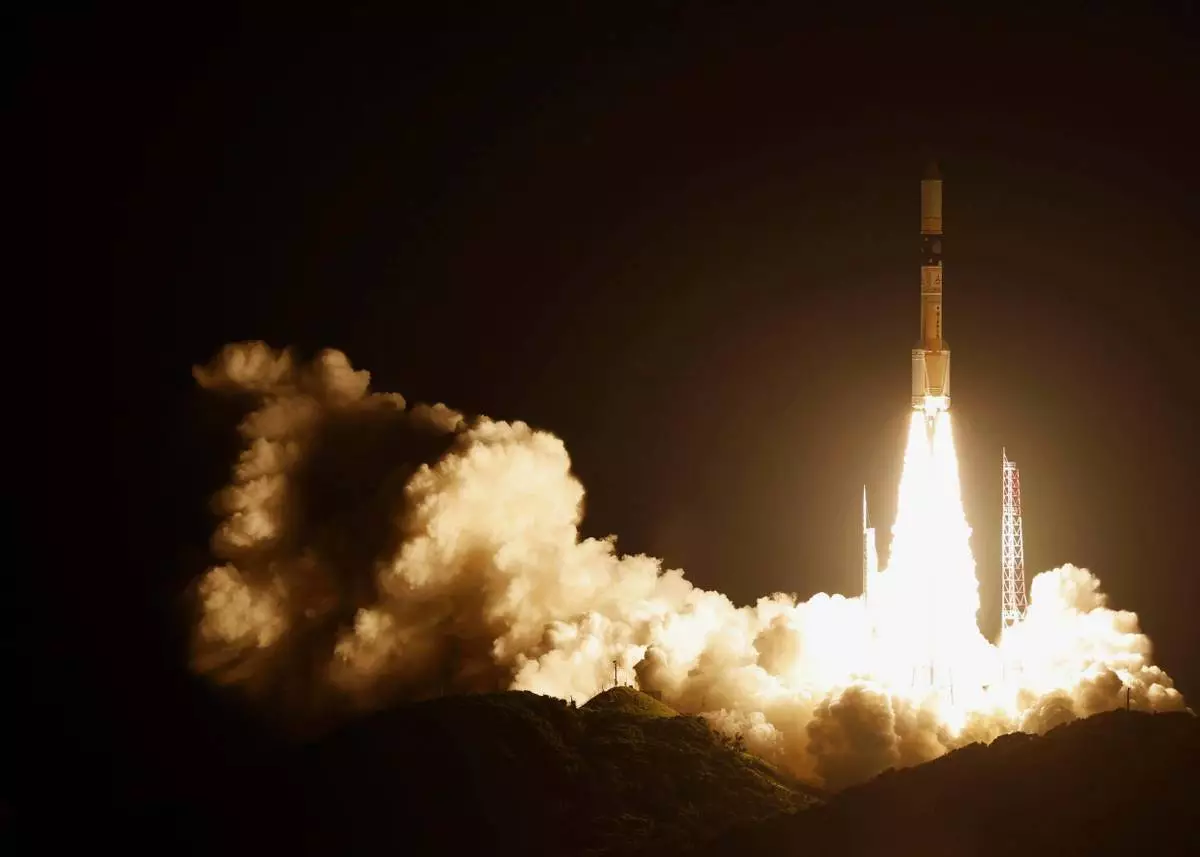
An H-2A rocket carrying Global Observing SATellite for Greenhouse gases and Water cycle, or GOSAT-GW satellite, lifts off from a launch pad in Tanegashima Space Center in Tanegashima, southern Japan, early Sunday, June 29, 2025. (Haruna Furuhashi/Kyodo News via AP)
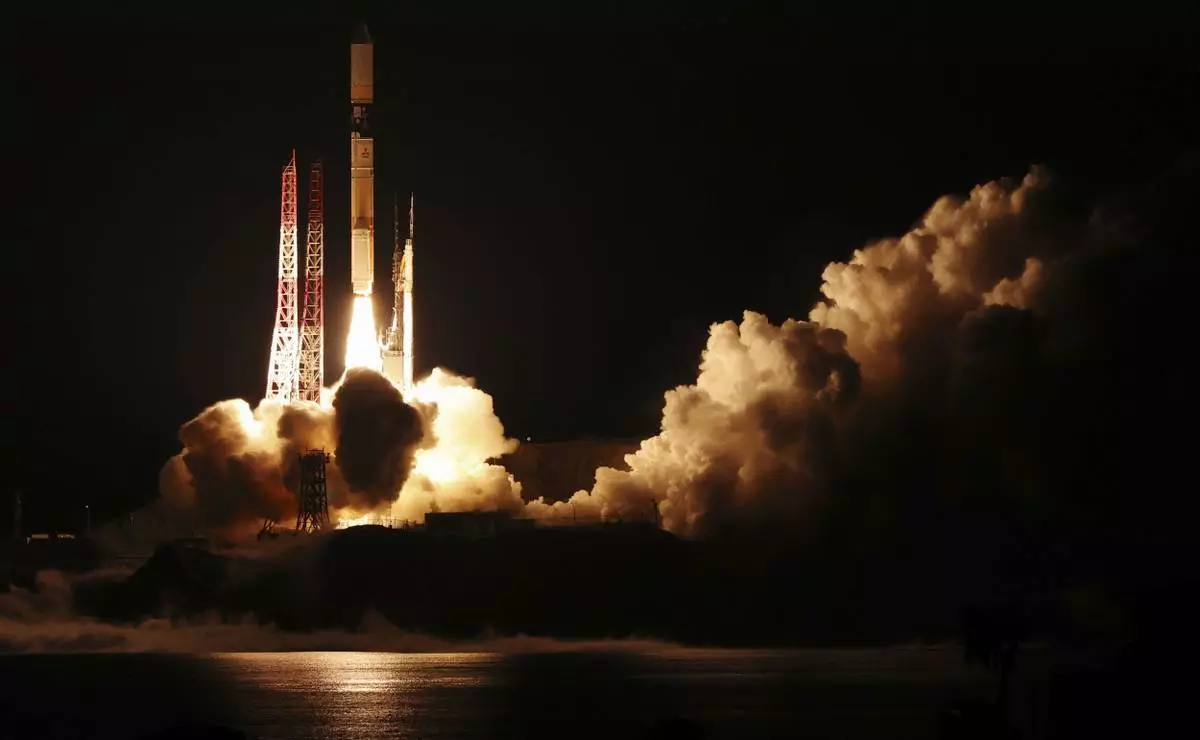
An H-2A rocket carrying Global Observing SATellite for Greenhouse gases and Water cycle, or GOSAT-GW satellite, lifts off from a launch pad in Tanegashima Space Center in Tanegashima, southern Japan, early Sunday, June 29, 2025. (Takumi Sato/Kyodo News via AP)
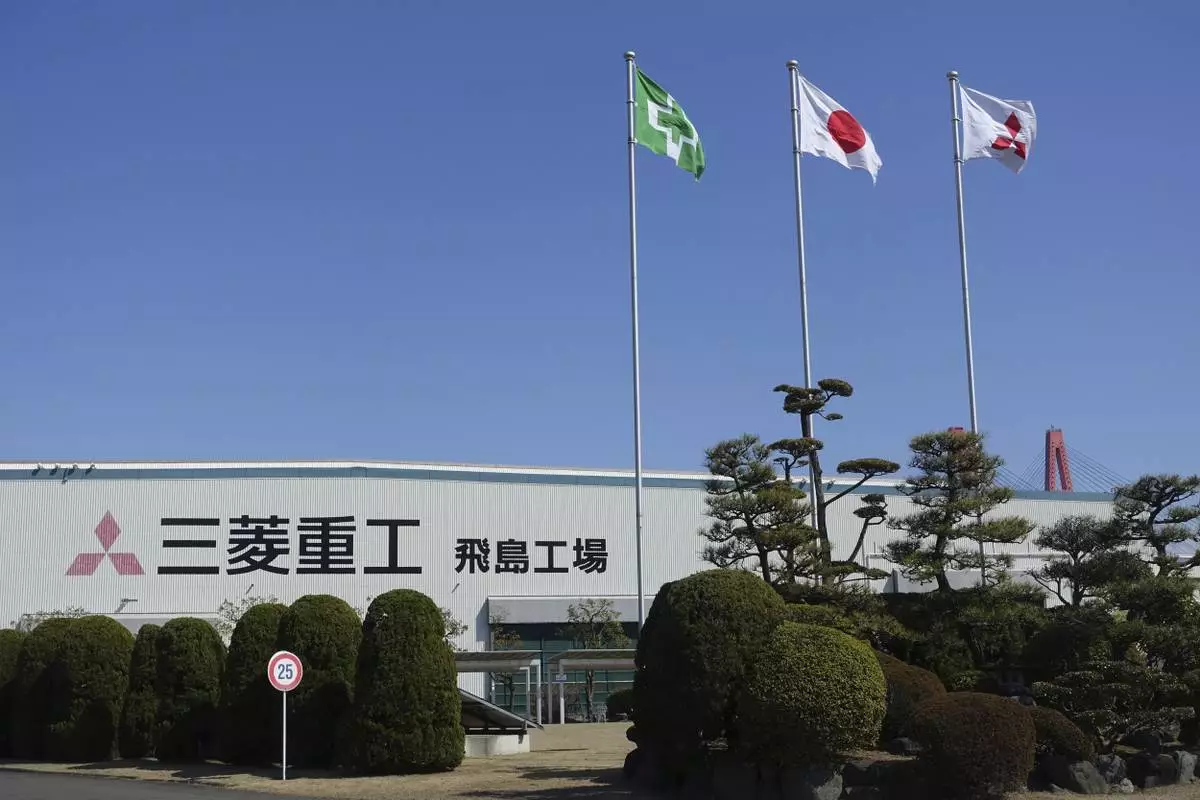
FILE - This photo shows the exterior of the Mitsubishi Heavy Industries' Nagoya Aerospace Systems Works Tobishima Plant in Tobishima, Aichi prefecture, March 21, 2024. (AP Photo/Mari Yamaguchi, File)
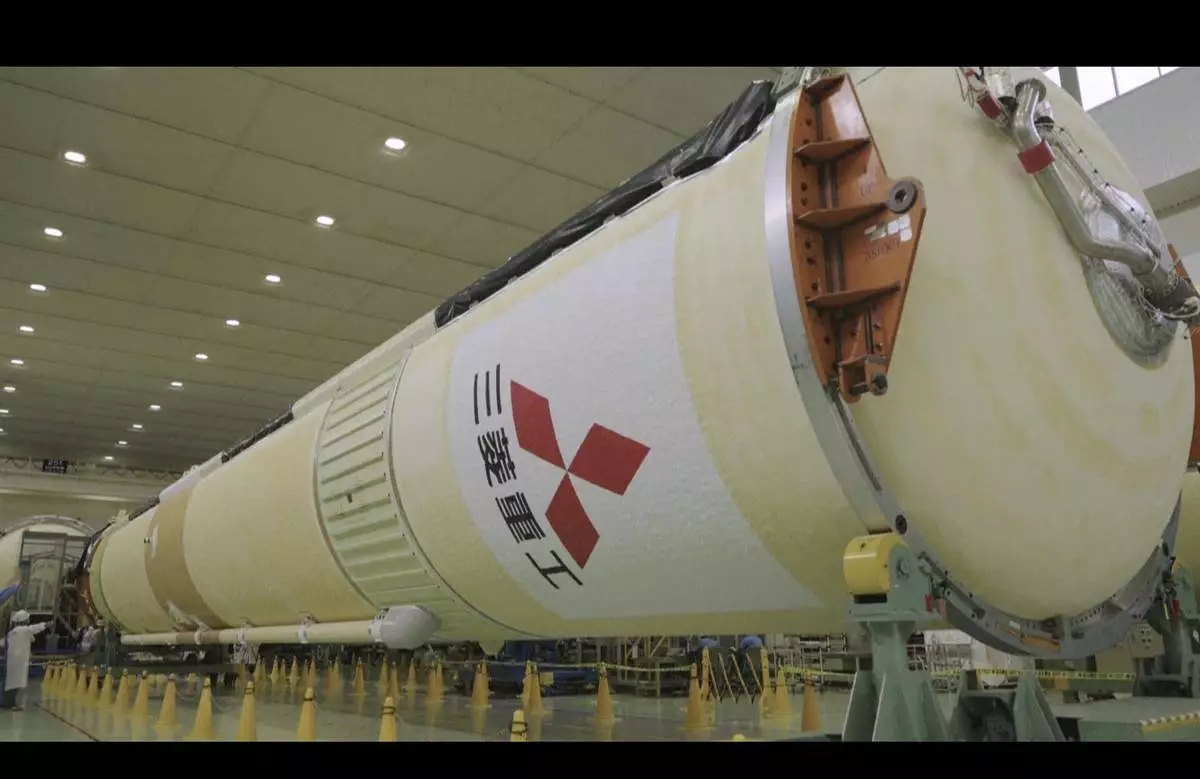
This image made from video shows Mitsubishi Heavy Industries' H2A rocket in Tobishima, Japan, Sept. 25, 2024. (AP Photo)