China's logistics industry maintained steady growth and continued structural optimization in the first five months of 2025, with robust demand in industrial logistics and accelerating momentum in consumer-related logistics, according to data released by the China Federation of Logistics and Purchasing (CFLP) on Sunday.
From January to May, the total value of social logistics nationwide reached 138.7 trillion yuan (about 19.35 trillion U.S. dollars), up 5.3 percent year on year, the data showed. In May alone, logistics grew by 5.0 percent, a slight dip of 0.5 percentage points from April.
Driven by industrial upgrades and supportive policies, logistics demand in most industrial sub-sectors remained resilient.
Equipment manufacturing contributed over 50 percent of the growth in industrial logistics, and logistics demand in automotive manufacturing, computer and communication equipment, and other electronics industries all grew by more than 10 percent.
Policies promoting equipment renewal also boosted logistics volumes for motors and shipbuilding.
"The structure of overall logistics demand continues to improve. In terms of its component, the industrial sector remains the stabilizing force, while demand from new growth drivers like intelligent manufacturing has grown rapidly," said Liu Yuhang, director of the China Logistics Information Center.
Consumer logistics also saw accelerated growth, the data showed.
In the first five months this year, logistics related to goods for individuals and households rose 6.4 percent from the previous, up 0.5 percentage points from the January-April period. In May alone, this segment grew 8.3 percent, a 2.1-percentage point increase from April.
Policies encouraging the consumer goods trade-in and the holiday economy helped drive this surge. And maturing new consumption models such as livestream e-commerce and instant retail have further stimulated the demand.
Online retail sales of physical goods rose 6.3 percent year on year in the first five months, up 0.5 percentage points from the previous period.
However, import logistics continued to decline amid global uncertainties. From January to May, the total value of import logistics fell 4.1 percent year on year. In May, the decline widened 2.7 percentage points from April to 3.8 percent in May.
Bulk commodity imports saw notable drops: iron ore and concentrates decreased 5.2 percent, coal and lignite dropped 7.9 percent, and steel imports plunged 16.1 percent.
In contrast, imports of machine tools and integrated circuits rose 25.1 percent and 8.4 percent respectively, indicating a shift from traditional bulk commodities to high-value industrial goods.
"China's economy is driven by domestic economy. Despite global headwinds, we are leveraging domestic economy to offset import declines with domestic production. We are able to leverage our own strengths and maintain autonomy," said Zhang Mingyu, a professor at Beijing Jiaotong University.
Green and renewable logistics also showed strong performance.
From January to May, logistics related to renewable resources grew 16.2 percent year on year, up 0.3 percentage points from the January-April period. In May alone, growth reached 13.3 percent.
Logistics demand for new energy vehicles and lithium-ion batteries for automotive use surged over 30 percent from the previous year, the data showed.
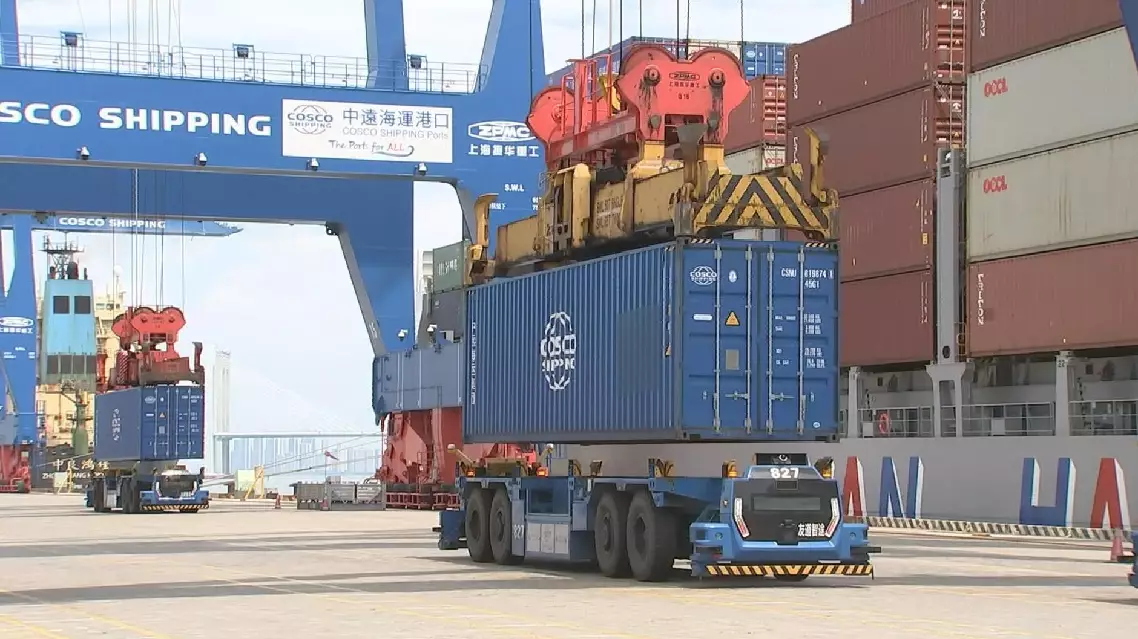
China's logistics sees steady growth, structural upgrade in Jan-May 2025
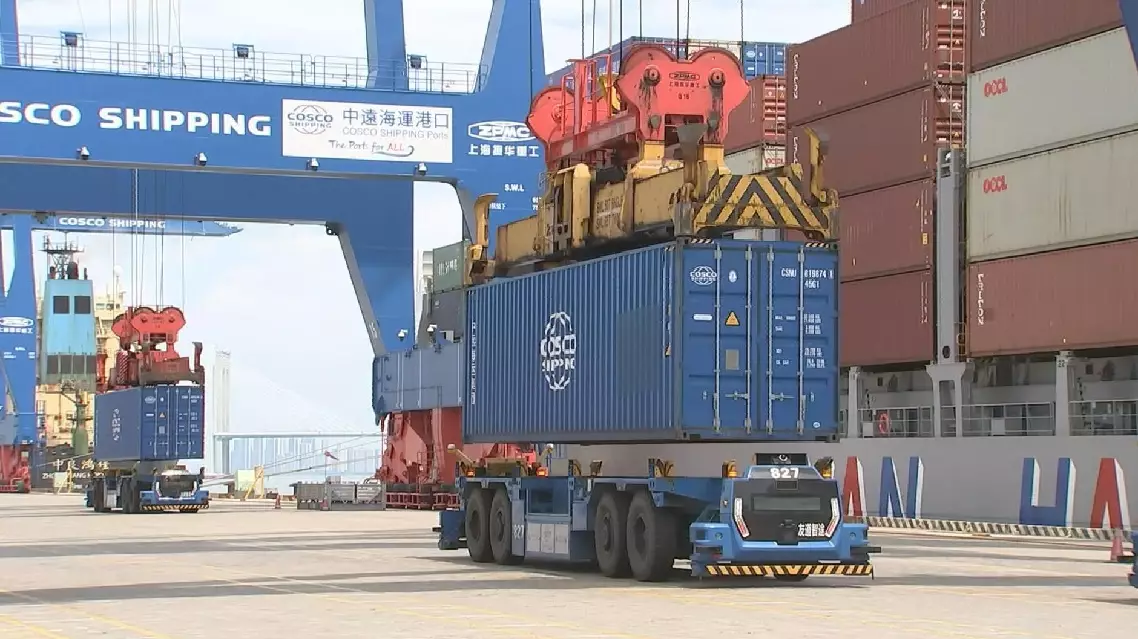
China's logistics sees steady growth, structural upgrade in Jan-May 2025