Starting Saturday, foreign tourists can use major international bank cards they hold to pass through subway gates at all stations of the Shanghai Metro with a simple tap without bothering to queue at ticket machines or counters.
The newly enabled payment method allows passengers to use Visa, Mastercard, American Express, JCB, and UnionPay cards as well as China's digital currency "hard wallet" (cards, wearables, etc.) to enter the metro system, which further facilitates travel for inbound passengers arriving in Shanghai as it improves the convenience of payment in the metro system.
At the Yuyuan Station, one of Shanghai's busiest tourist hubs, foreign travelers were seen swiping their cards to board the subway trains.
The new payment alternative marks a major improvement over previous methods, as it can save time and reduce language barriers for these travelers. In the past, international travelers had to pay cash for tickets or queue at manned counters to buy tickets with their foreign cards via point-of-sale (POS) terminals.
"It's very good, because, for us, that is coming from Europe, and like this, we use a lot of visas. So it's immediate. And otherwise we have difficulties to find the tickets and so on. So, very good," said Daniel, an Italian business traveler.
The expansion of the payment system involves upgrading the software compatibility of existing gate hardware while also developing ticketing data systems.
"The payment system upgrading this time requires integration of multiple card networks. To ensure that all cards from different networks can work seamlessly on a same device requires significant integrated development and coordination," said Peng Cheng, assistant general manager of China UnionPay Shanghai Branch.
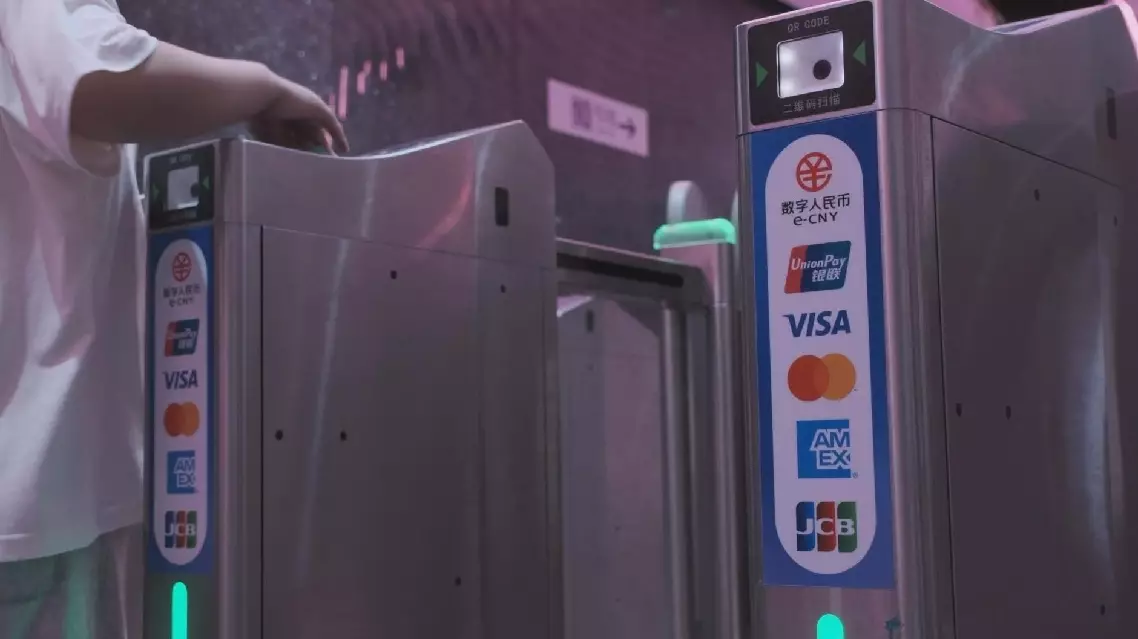
Global tourists can swipe bank cards to ride all metro lines in Shanghai
China is gaining a growing reputation as one of the top global tourism destination as more international travelers marvel at its modern infrastructure and enjoy its safe and hospitable environment.
The country is experiencing a surge in tourism during the five-day May Day Holiday which began on Friday, with more and more global visitors making the trip thanks to the introduction of a range of visa-free and transit visa policies for ordinary passport holders from many countries.
The bustling city of Shanghai has seen a hike in international tourism in recent days, with a number of foreign visitors flocking in to explore China's culture and enjoy the local cuisine.
"We are impressed with China. We love China now, and we are similar in the culture. For example, the spicy food," said a tourist from Mexico.
Meanwhile, Chongqing, a mountainous metropolis in the country's southwest has also become a trending destination for tourists from across the world, with many amazed by its stunning and distinctive cityscape.
"[This] city on the hills is amazing, so when you first go to one of the rivers and you see how the huge buildings cluster over the rivers, that's amazing," said a British traveler.
"I also think that the infrastructures are very good and very futuristic and modern, like the subway is very efficient and it's very good. So I want to give a thumbs-up to like the Chinese people because I think they are very kind with foreigners, like every Chinese people I met in Shanghai and here, they always are very friendly," said a tourist from France.
On top of the eye-catching attractions and impressive infrastructure, many highlighted the friendly nature of the Chinese people and the sense of security they feel while traveling in the country.
A group of three friends from Spain said they have been impressed by the hospitable welcome they have received, and the level of social trust they have encountered during their stay China.
"We feel like at home, even though most of them they don't speak English, they are nice," said one of the group.
"You can [not worry about] the pocket, they don't try to like steal from you or anything. If you forget the phone at the table, they go like: 'hey, you forgot that'," said another.
"When we just arrived in Shanghai and he forgot the e-book in the plane and I received an email, like 'guys you you forgot the e-book in the plane'. So for us, it was wow, crazy," added another of the Spanish tourists.

Foreign visitors marvel at China's modern infrastructure; safe, hospitable environment