Skip to Content Facebook Feature Image

Drought-resistant variety, irrigation ensure coffee yield in Esporito Santo amid climate crisis

China

China

China

Drought-resistant variety, irrigation ensure coffee yield in Esporito Santo amid climate crisis

2025-06-29 17:24 Last Updated At:18:37

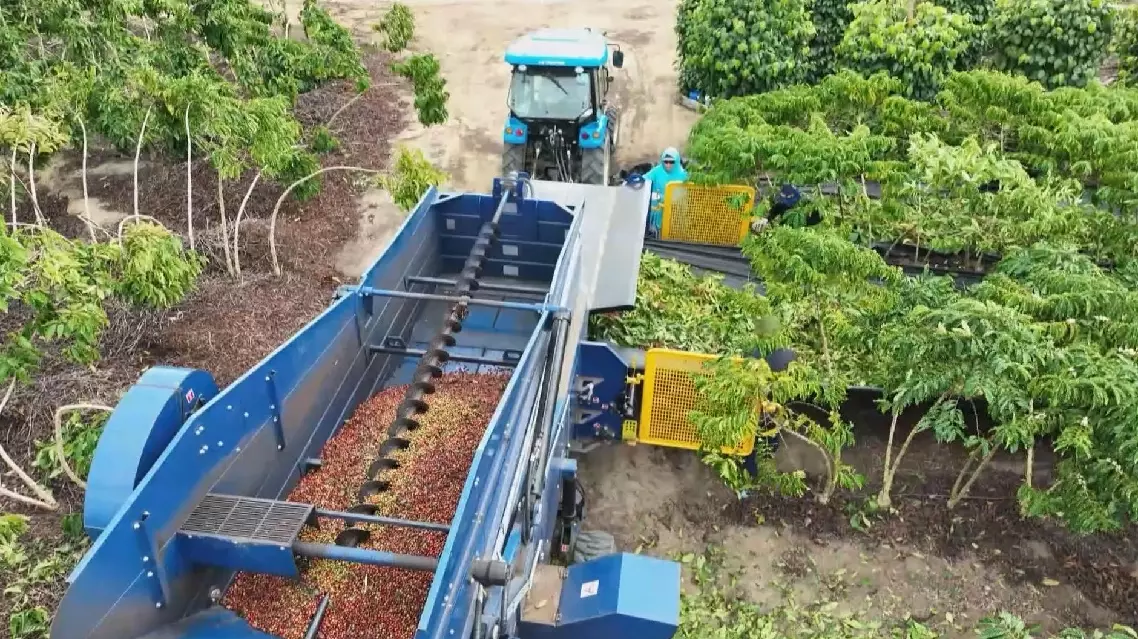
Coffee growers in southeastern Brazil's Esporito Santo State still embrace a good harvest despite high temperatures and drought in recent years, thanks to the cultivation of a drought-resistant variety and the large-scale introduction of irrigation systems.

Robusta coffee, one of the two main coffee varieties in the world, is widely grown in the state, and has entered a harvest season so far this month. Compared with arabica coffee, the other main variety, robusta coffee trees, are more heat-resistant and more drought-resistant, and has a higher yield per unit area.

According to a forecast released by the National Supply Company in May, Brazil's robusta coffee yield is expected to increase by 28.3 percent to 18.7 million bags (60 kilograms per bag), while for arabica coffee, the yield is expected to decrease by 6.6 percent to around 37 million bags.

Esporito Santo is the country's largest robusta coffee producing area, where over 90 percent of coffee plantations have introduced irrigation systems. the climate was relatively favorable. Coupled with the technical guidance of agronomists, we've hit a new record in the annual yield," said Kennedy Antonio Pifer, a coffee grower.

Fabricia Colombi Ortolani, another coffee grower, said that the yield in her plantation is expected to increase by around 50 percent.

She said that many farmers in Minas Gerais where arabica coffee is mainly grown are troubled by drought, and she had long realized that water source management is crucial for stable coffee production.

Therefore, she chose to grow more drought-resistant robusta coffee and introduced a drip irrigation system.

"We are using the intelligent drip irrigation system. At 22:00 every night, the system will automatically make a calculation based on the data and supply water the next day. The volume of water just meets the needs of coffee trees, no less and no more. The arabica coffee growers have indeed been greatly affected by the drought. We have also experienced similar difficulties, especially in the severe droughts from 2014 to 2016, when many farms were forced to abandon planting. However, we realized that only with a well-equipped irrigation system can coffee be grown well, because irrigation is very important. Without water, nothing can be done," said Ortolani.

Local agricultural technicians like Tales Fontes are also cultivating new varieties of coffee that are more drought-resistant. The cooperative where Fontes works focuses on breeding higher-yielding robusta coffee that can withstand higher temperatures and drought.

"We are facing many challenges from the climate, especially in terms of temperature and moisture. Therefore, we will evaluate different coffee varieties based on the conditions. Farmers will also make a choice based on their own actual situations to see which variety can better withstand these challenges. This not only ensures the yield, but also makes the variety more durable and better respond to various challenges it faces," said Fontes.
Drought-resistant variety, irrigation ensure coffee yield in Esporito Santo amid climate crisis

Drought-resistant variety, irrigation ensure coffee yield in Esporito Santo amid climate crisis
Drought-resistant variety, irrigation ensure coffee yield in Esporito Santo amid climate crisis
Drought-resistant variety, irrigation ensure coffee yield in Esporito Santo amid climate crisis
The Iranian government is focusing on public concerns and maintaining stable supplies of essential goods amid recent protests, Iranian President Masoud Pezeshkian said in a televised interview on Sunday.

In the city of Karaj, northwest of the capital Tehran, daily life has largely continued as normal. A video filmed by a local resident on Sunday shows food stores open and grocery shelves fully stocked.

"This is the block near my home, and there are some food stores here. Daily life continues here. Last night we did not see many protests in Karaj. Right now the city is very safe. This is a grocery store close to my home. All the food is available; nothing is in shortage. Here are noodles and different types of beans. Here are dairy products, cheese, and yogurt. I also checked other grocery stores and didn't see any shortages. Everything is available," said local resident Ali Reza.

Iranian officials have described recent disturbances as acts orchestrated by the "enemy," including some carried out by well-trained and armed "terrorists." The incidents have caused casualties among security personnel and civilians, as well as property damage.

The Secretary of Iran's Supreme National Security Council Ali Larijani has directed authorities to severely punish the "terrorists."

Meanwhile, Iran's police chief Ahmad-Reza Radan said on Sunday that the police had raised alert levels and arrested several leaders of the troublemakers during the operations on Saturday.

President Pezeshkian noted in the interview that the normal demands of the Iranian people are reasonable and justified, but they must realize that triggering riots and carrying out terrorist acts are the enemy's attempts to undermine the country. He urged the public to remain vigilant.

Also on Sunday, Iranian Parliament Speaker Mohammad Baqer Qalibaf warned that Tehran would regard U.S. and Israeli bases and facilities in the Middle East as "legitimate targets" if Washington takes military action against Iran. His remarks followed media reports saying U.S. President Donald Trump is "seriously considering authorizing a strike" against Iran.

Iranian state media reported that at least 109 members of Iran's security forces have been killed in clashes since the protests began 14 days ago. Meanwhile, human rights groups based outside the country said the number of protesters killed has exceeded 200, though the figure could not be independently verified.

The protests initially erupted over a sharp depreciation of the rial and sweeping subsidy reforms. Iranian authorities have blamed the unrest on foreign-linked agents and sanctions imposed by the United States.

Iranian president says government focusing on ensuring supplies amid protests

Iranian president says government focusing on ensuring supplies amid protests

Recommended Articles