Skip to Content Facebook Feature Image

After centuries of isolation, ultra-Orthodox Jews engage with the world more than ever

News

After centuries of isolation, ultra-Orthodox Jews engage with the world more than ever
News

News

After centuries of isolation, ultra-Orthodox Jews engage with the world more than ever

2025-06-29 19:52 Last Updated At:20:11

NEW YORK (AP) — Frieda Vizel left an ultra-Orthodox Jewish sect in New York in a crisis of faith at 25. But instead of cutting ties, she became a successful online personality and guide to the tight-knit world she had been raised in.

She gives sold-out tours of Williamsburg, Brooklyn — home base of the Satmar dynasty — and runs a popular YouTube channel focused on the subculture engaging more with the outside world after centuries of separation.

More Images
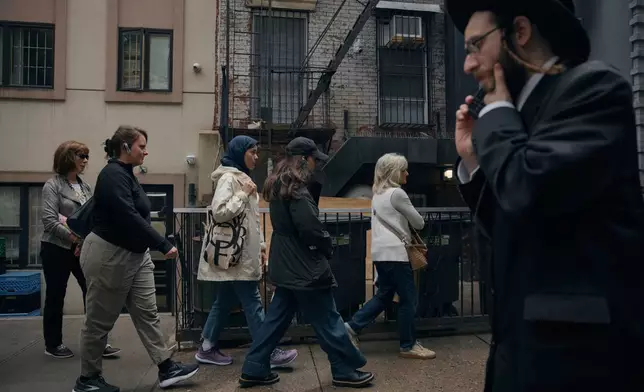
A tourist passes ultra-Orthodox Jews during a guided walk through the Hasidic section of Williamsburg in the Brooklyn borough of New York on Monday, June 16, 2025. (AP Photo/Andres Kudacki)
A tourist passes ultra-Orthodox Jews during a guided walk through the Hasidic section of Williamsburg in the Brooklyn borough of New York on Monday, June 16, 2025. (AP Photo/Andres Kudacki)

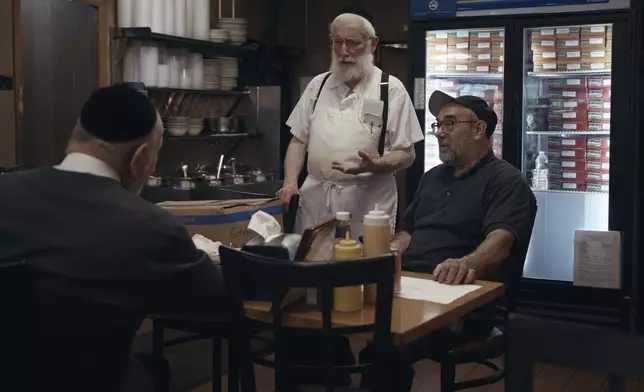
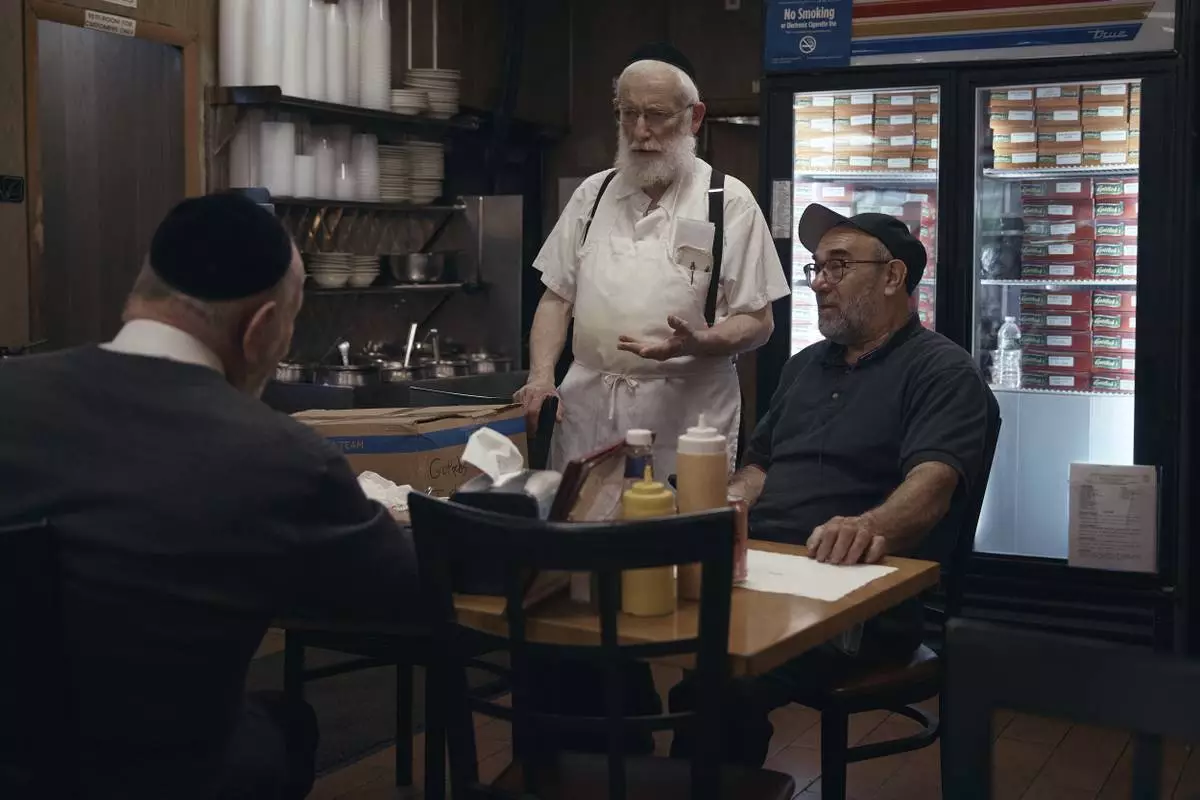
Hasidic Jewish men chat inside Gottlieb's Restaurant on Monday, June 16, 2025, in the Brooklyn borough of New York. (AP Photo/Andres Kudacki)
Hasidic Jewish men chat inside Gottlieb's Restaurant on Monday, June 16, 2025, in the Brooklyn borough of New York. (AP Photo/Andres Kudacki)

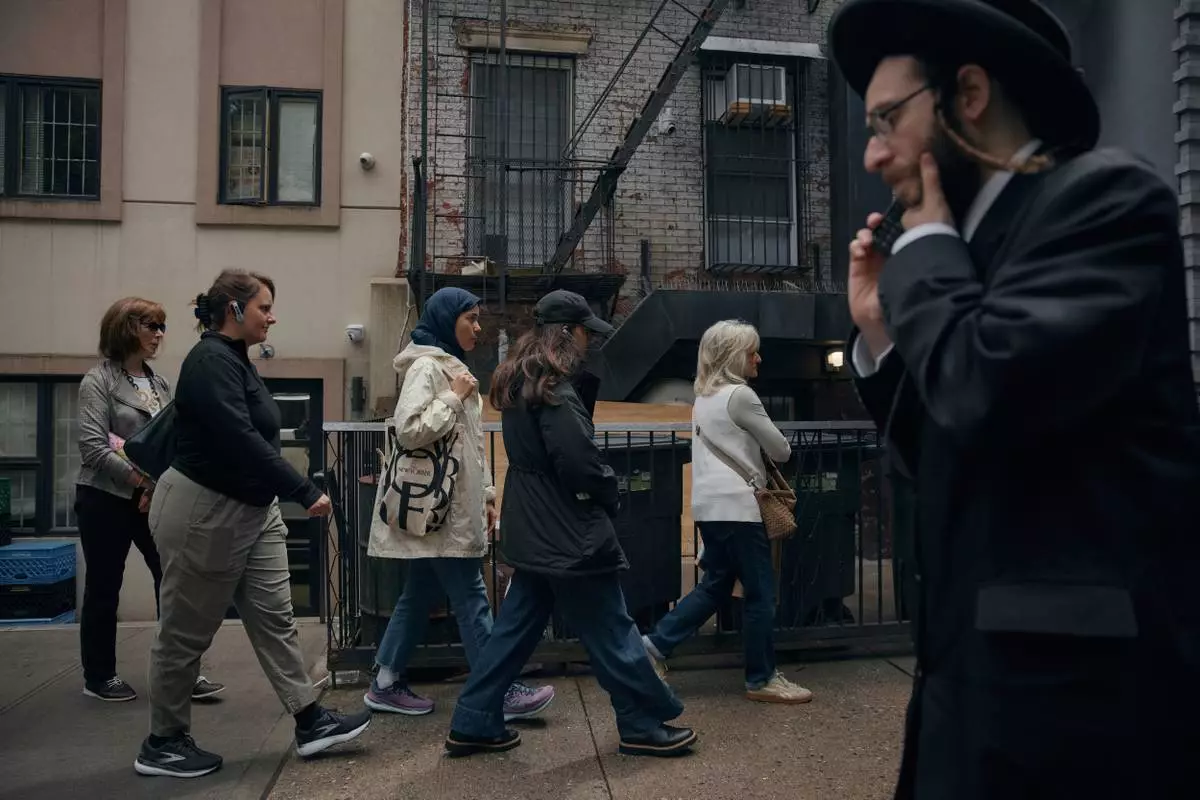
Tour participants walk past an ultra-Orthodox Jewish man during a tour by Frieda Vizel of the Hasidic section of Williamsburg in the Brooklyn borough of New York on Monday, June 16, 2025. (AP Photo/Andres Kudacki)
Tour participants walk past an ultra-Orthodox Jewish man during a tour by Frieda Vizel of the Hasidic section of Williamsburg in the Brooklyn borough of New York on Monday, June 16, 2025. (AP Photo/Andres Kudacki)

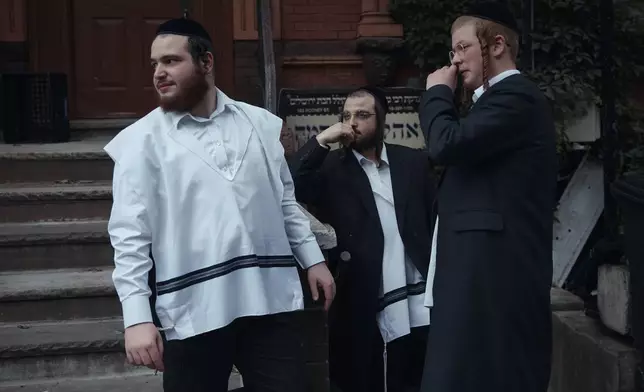
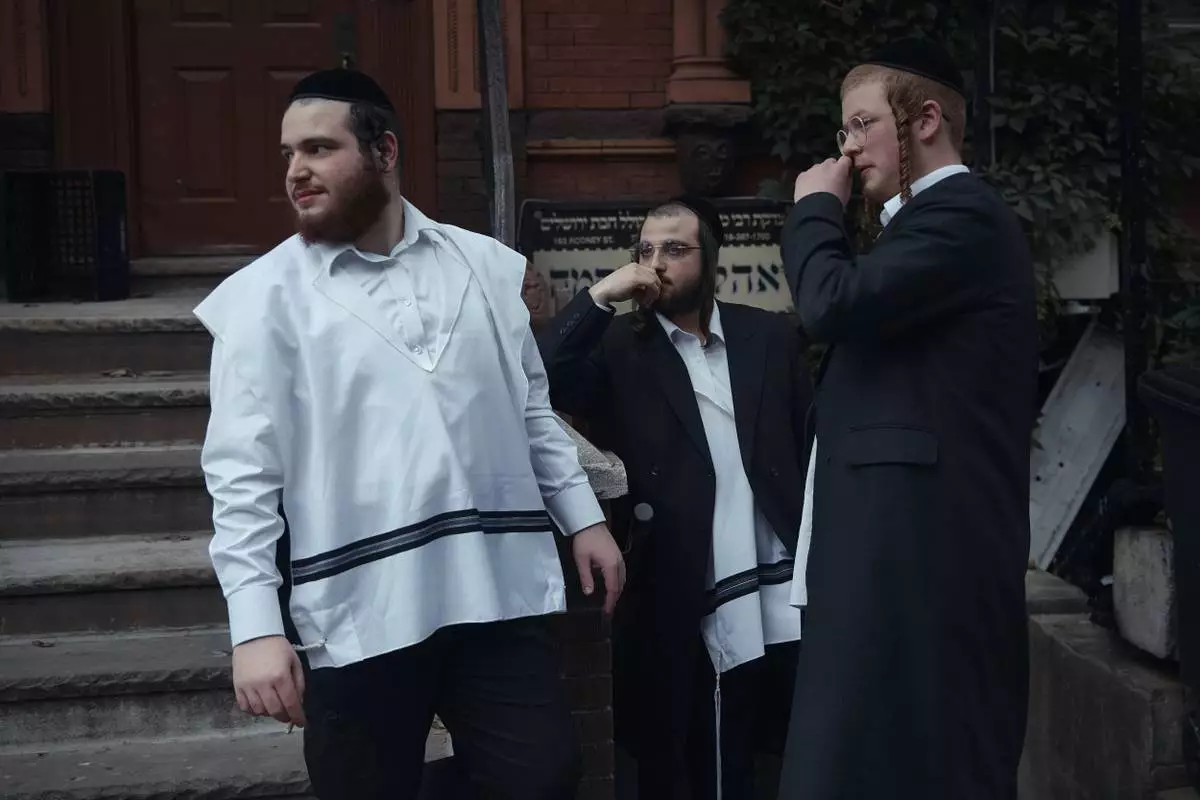
Hasidic Jewish men chat on Monday, June 16, 2025, in the Brooklyn borough of New York. (AP Photo/Andres Kudacki)
Hasidic Jewish men chat on Monday, June 16, 2025, in the Brooklyn borough of New York. (AP Photo/Andres Kudacki)

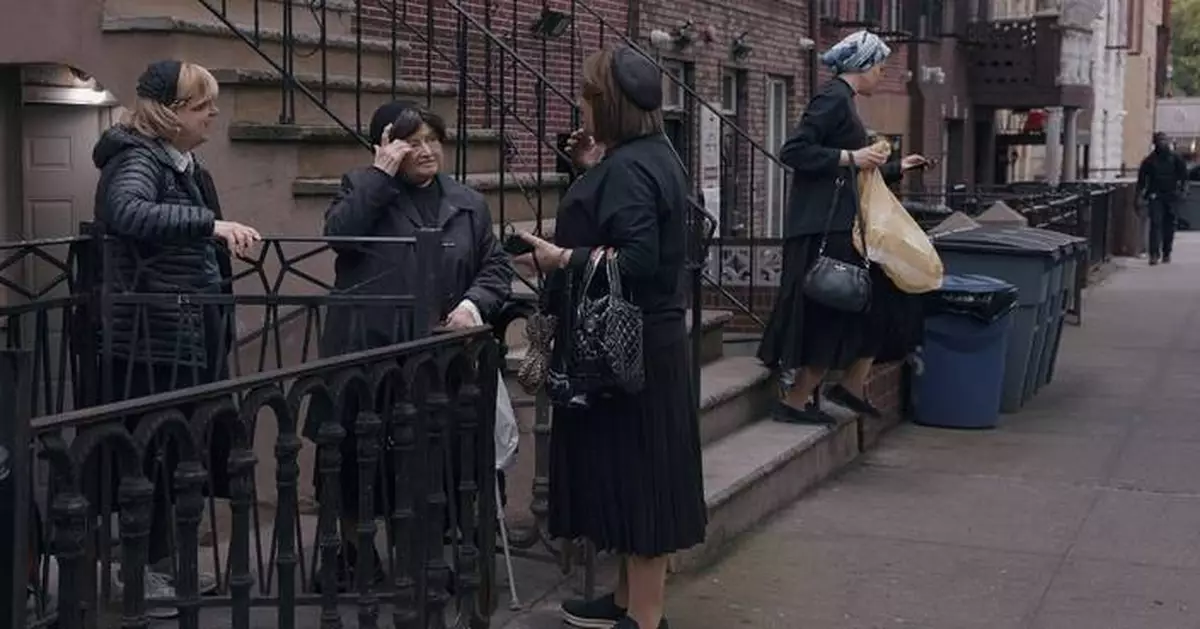
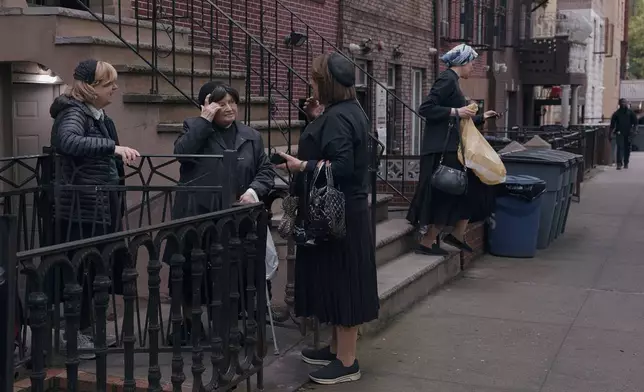
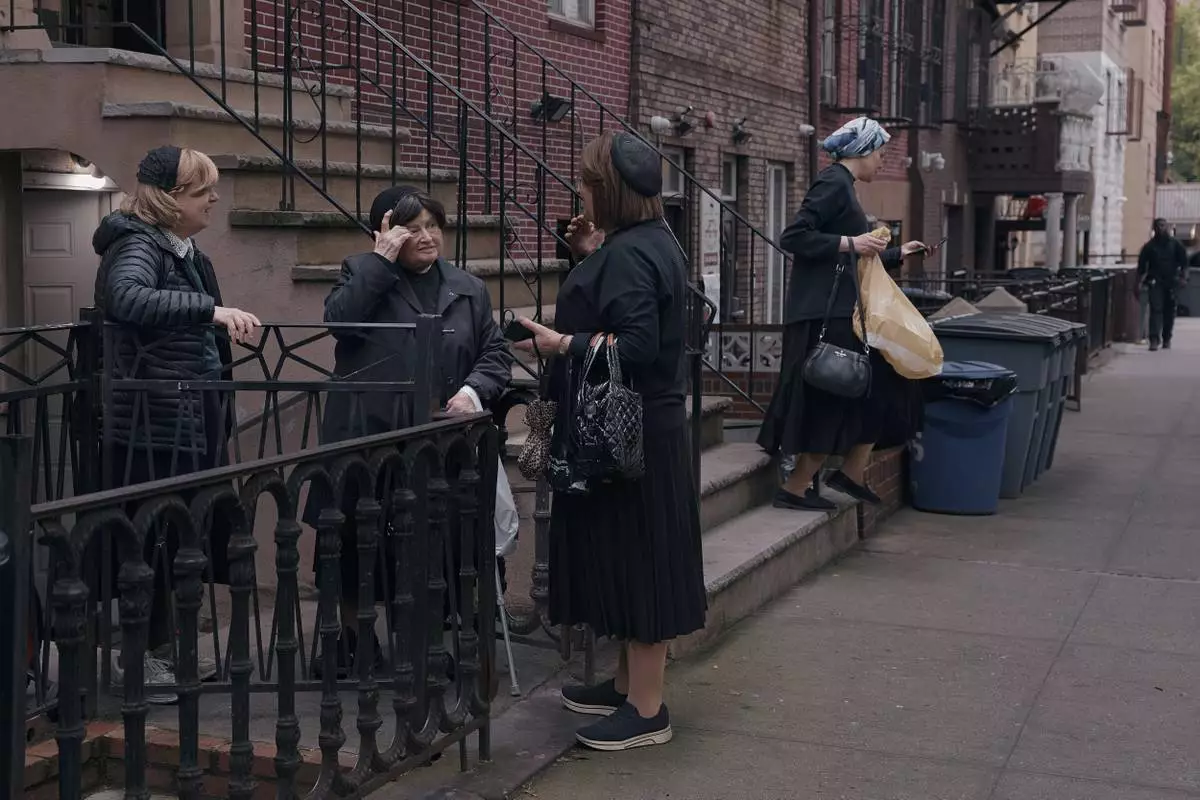
Hasidic Jewish women chat on Monday, June 16, 2025, in the Brooklyn borough of New York. (AP Photo/Andres Kudacki)

Hasidic Jewish women chat on Monday, June 16, 2025, in the Brooklyn borough of New York. (AP Photo/Andres Kudacki)

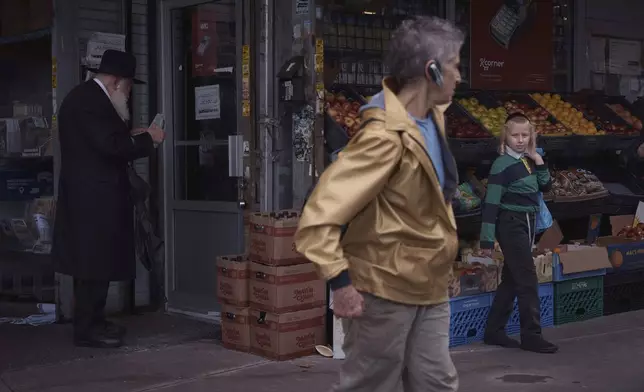
In mid-June, Vizel took a group of Jewish, Christian and Muslim tourists to see synagogues and schools, and visit kosher delis and shops. Instead of Barbie dolls, there were little ultra-Orthodox Jewish figurines. The rabbinically approved products included cellphones without screens, and DVDs and MP3 players preloaded with approved music and films, so no internet connection is needed.

Yet ultra-Orthodox men on the street offered friendly greetings and praise for Vizel's recent postings even though rabbis advise them to avoid the internet unless needed for business, family or other essential needs.

“It’s an interesting moment,” Vizel said. “They’re saying, ’What is the whole world saying about us?’"

Williamsburg and a handful of other locations worldwide — from Monsey, New York, to Stamford Hill, London to Bnei Brak, Israel — host the strictest followers of Orthodox Judaism. In a minority religion it's a minority set apart by its dedication above all else to the Torah and its 613 commandments, from No. 1 — worshipping God — to less-followed measures like No. 568 — not cursing a head of state.

One in seven Jews worldwide are strictly Orthodox, or Haredi. It's a population of roughly 2 million out of 15 million Jews, according to Daniel Staetsky, a demographer with the London-based Institute for Jewish Policy Research.

In a 2022 report, he projects that the strictly Orthodox population could double in size in 15 years. Another study projects that a third of American Jews will be Orthodox by 2063.

Many in the community marry young and have large families.

“You’re getting three generations of ultra-Orthodox for every two generations of Reform Jews in the U.S.,” said Alan Cooperman, director of religion research at the Pew Research Center.

“They are becoming the face of Judaism,” Vizel said.

It's happening while many Reform Jews in the U.S. are becoming less religious and intermarrying. That means that Jewish Americans as a whole are becoming either Orthodox or more secular, Cooperman said.

“There has been a major change, I think, that has taken place over the last generation or two and that is the polarization of American Jewry, much as we’ve seen the vast polarization of America as a whole,” said Jonathan Sarna, a professor of American Jewish history at Brandeis University.

Among American Jews aged 18 to 29, 17% are Orthodox — a bigger share than in older generations, Pew found. And as a growing number of American Jews are Orthodox, a greater percent is Republican. Still, the majority of American Jews remain Democrats.

The Pew Research Center found in 2020 that 75% of Orthodox Jews voted or leaned Republican.

Walking out of Gottlieb’s Restaurant with his salami sandwich, Samuel Sabel — a grocery store worker and journalist — said that “a lot of the policies Republicans have go together with our beliefs,” citing school choice, and opposition to abortion and same-sex marriage as examples.

Orthodox political activism is “at the highest point it’s ever been,” said Rabbi Avi Shafran, the retired director of public affairs at the Orthodox group Agudath Israel. “No question about that.”

“There is time and money and ability and savvy and education that allows for a much more, aggressive, much more positive and active effort on political things,” he said.

But while cultural issues are important, “when push comes to shove, we’ll vote our interests, our immediate interests, not the larger issues that are always on the table,” Shafran said.

“We are practical,” he said. “Put it that way.”

Vizel guided her group past “Get out the vote” signs in Yiddish, along with a campaign letter from Donald Trump in the window of Gottlieb’s deli.

In New York City's Democratic primary for the mayoral election, former Gov. Andrew Cuomo intensely courted Orthodox communities, counting at least 36 sects and yeshivas — religious schools — among his supporters.

But Cuomo suffered a stunning upset at the hands of Zohran Mamdani in a demonstration of grassroots organizing over bloc voting.

In Florida, Orthodox Jews backed Republican Gov. Ron DeSantis before he signed a expansion of taxpayer-funded vouchers for private schools, a movement that has galvanized religious groups across denominations.

But the election this month for the World Zionist Congress — an international body predating Israel that controls more than 1,500 square miles (3885 square kilometers) of land there, along with about $1 billion a year from land sales — showed dominance by the Reform bloc despite intense campaigning by Orthodox parties and strong results ahead of coalition building.

The 2020 Pew study found that Reform Jews are 37% of the American Jewish populace, followed by Jews that claim no particular branch — 32% —and then Conservatives at 17% .

The Orthodox make up 9%.

The president of the Union for Reform Judaism, the largest Jewish group in North America, said “it’s a mistake to assume unaffiliated Jews don’t care about being Jewish — many do, and Reform Judaism often reflects their spiritual and moral values.

“Reform Jews continue to hold overwhelmingly liberal worldviews and political values,” Rabbi Rick Jacobs wrote. “In the aftermath of October 7th, many have deepened their connection to Jewish peoplehood while remaining firmly committed to justice, equity, and peace through the Reform Movement.”

Rabbi Pesach Lerner founded the Orthodox party Eretz Hakodesh five years ago to compete in the election for the World Zionist Congress.

The main American party representing Reform Judaism in the Zionist Congress had a better individual showing than Lerner’s in voting in the United States, but Orthodox parties did well and said they were optimistic that coalition-building would let them compete with traditional liberal Jewish interests.

Reform Jews and their allies “went so far to the left of traditional, of national, or family values, in ‘wokeism,’ that I’m glad the right finally decided that they can’t sit back on the sidelines,” Lerner said.

Associated Press religion coverage receives support through the AP’s collaboration with The Conversation US, with funding from Lilly Endowment Inc. The AP is solely responsible for this content.
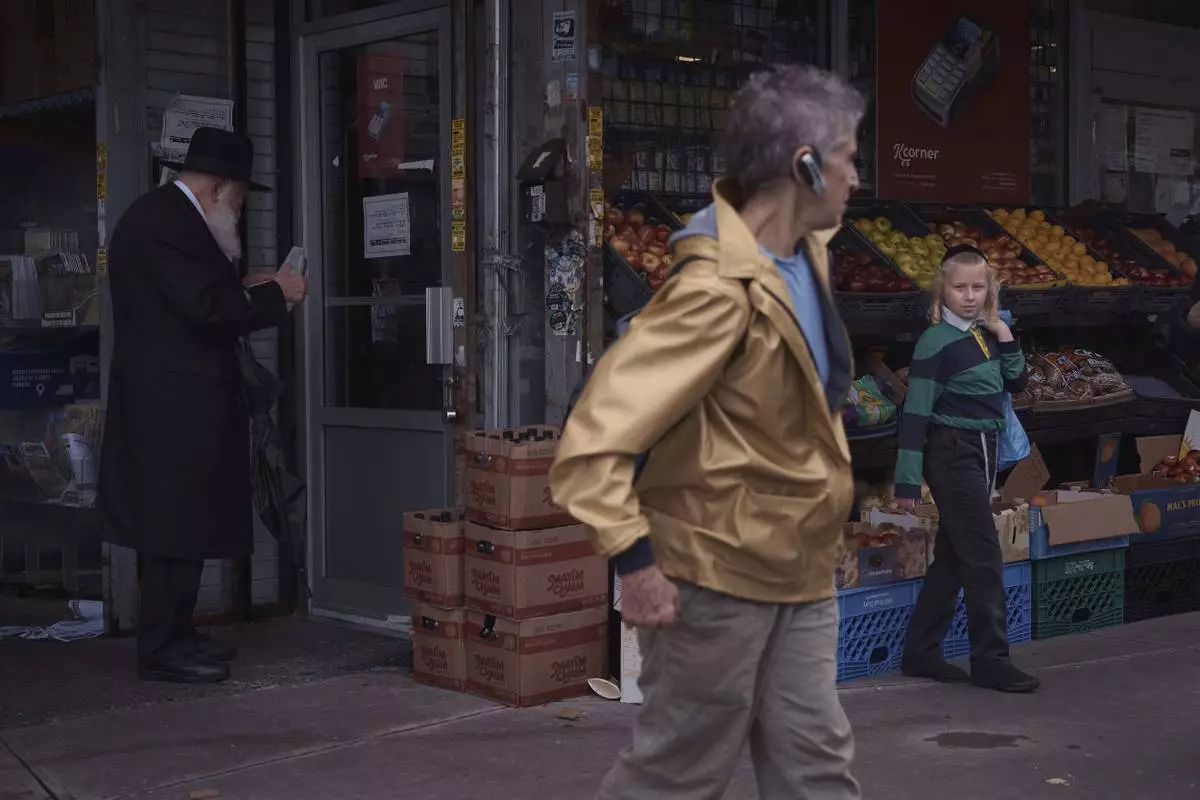
A tourist passes ultra-Orthodox Jews during a guided walk through the Hasidic section of Williamsburg in the Brooklyn borough of New York on Monday, June 16, 2025. (AP Photo/Andres Kudacki)
A tourist passes ultra-Orthodox Jews during a guided walk through the Hasidic section of Williamsburg in the Brooklyn borough of New York on Monday, June 16, 2025. (AP Photo/Andres Kudacki)

Hasidic Jewish men chat inside Gottlieb's Restaurant on Monday, June 16, 2025, in the Brooklyn borough of New York. (AP Photo/Andres Kudacki)
Hasidic Jewish men chat inside Gottlieb's Restaurant on Monday, June 16, 2025, in the Brooklyn borough of New York. (AP Photo/Andres Kudacki)

Tour participants walk past an ultra-Orthodox Jewish man during a tour by Frieda Vizel of the Hasidic section of Williamsburg in the Brooklyn borough of New York on Monday, June 16, 2025. (AP Photo/Andres Kudacki)
Tour participants walk past an ultra-Orthodox Jewish man during a tour by Frieda Vizel of the Hasidic section of Williamsburg in the Brooklyn borough of New York on Monday, June 16, 2025. (AP Photo/Andres Kudacki)

Hasidic Jewish men chat on Monday, June 16, 2025, in the Brooklyn borough of New York. (AP Photo/Andres Kudacki)
Hasidic Jewish men chat on Monday, June 16, 2025, in the Brooklyn borough of New York. (AP Photo/Andres Kudacki)

Hasidic Jewish women chat on Monday, June 16, 2025, in the Brooklyn borough of New York. (AP Photo/Andres Kudacki)
Hasidic Jewish women chat on Monday, June 16, 2025, in the Brooklyn borough of New York. (AP Photo/Andres Kudacki)
VATICAN CITY (AP) — Pope Leo XIV made a historic apology on Monday for the Holy See's role in legitimizing slavery and for having failed to condemn it for centuries, calling the Vatican’s record a “wound in Christian memory.”

Past popes have apologized for Christians’ involvement in the trans-Atlantic slave trade. But no pope had ever publicly acknowledged, much less apologized for, the role that past popes played in giving European sovereigns explicit authority to subjugate and enslave “infidels.”

History’s first U.S.-born pope, whose family history includes both enslaved people and slave owners, delivered the apology in his first encyclical, “Magnifica Humanitas,” (Magnificent Humanity), which was released Monday.

The sweeping manifesto is about safeguarding humanity in an era of increasing reliance on artificial intelligence. Leo raised the slave trade in relation to what he called the new forms of slavery and colonialism that the digital revolution is fueling.

Black American Catholics, activists and scholars have long called for the Holy See to atone for its role in the colonial-era trade in human beings, beyond generic apologies for the involvement of individual Christians.

“It is impossible not to feel deep sorrow when contemplating the immense suffering and humiliation endured by so many in stark contrast to their immeasurable dignity as persons infinitely loved by the Lord,” Leo wrote. “For this, in the name of the church, I sincerely ask for pardon.”

Shannen Dee Williams, historian at the University of Dayton and author of the 2022 history of American Black Catholic nuns, “Subversive Habits,” welcomed the apology as a "monumental step toward the kind of essential truth-telling and reparation that many Catholics have prayed and worked to witness.”

“The Catholic Church has never been an innocent bystander in the history of white supremacy," said Williams. “Black Catholics have waited a long time to hear the Vatican speak honestly about the church’s leading roles in the trans-Atlantic slave trade and chattel slavery--and thus by extension the enduring systems of anti-Black racism in the world today.”

The Vatican has insisted that it always upheld the dignity of all human beings as children of God. But a series of 15th-century directives from the Vatican authorized Portuguese sovereigns to conquer Africa and the Americas and enslave non-Christians.

In 1452, for example, Pope Nicholas V issued the papal bull Dum Diversas, which gave the Portuguese king and his successors the right “to invade, conquer, fight and subjugate” and take all possessions — including land — of “Saracens, and pagans, and other infidels, and enemies of the name of Christ” anywhere.

The bull also gave the Portuguese permission “to reduce their persons to perpetual slavery.”

That bull and another issued three years later, Romanus Pontifex, formed the basis of the Doctrine of Discovery, the theory that legitimized the colonial-era seizure of land in Africa and the Americas.

Nicholas V’s permissions to the Portuguese were confirmed or renewed by Pope Callixtus III in 1456, Pope Sixtus IV in 1481 and Pope Leo X in 1514, according to the Rev. Christopher J. Kellerman, a Jesuit priest and author of “All Oppression Shall Cease: A History of Slavery, Abolitionism, and the Catholic Church.”

Spanish kings received the rights for the Americas.

In 2023, the Vatican formally repudiated the Doctrine of Discovery, but it never formally rescinded, abrogated or rejected the bulls themselves. The Vatican insists that a later bull, Sublimis Deus in 1537, reaffirmed that Indigenous peoples shouldn’t be deprived of their liberty or the possession of their property, and weren't to be enslaved.

In his encyclical, Leo recalled that his namesake, Pope Leo XIII, was the first pope to explicitly condemn slavery in 1888, long after many countries had abolished it. Before that, in antiquity and the Middle Ages, church institutions and even popes — Gregory the Great — had slaves, Kellerman said.

In acknowledging the 15th century papal bulls, Leo wrote in his encyclical: “Already in the early modern period, the Apostolic See of Rome, responding to the requests of sovereigns, intervened several times in order to regulate and legitimize forms of subjugation, and, in certain cases, including the enslavement of ‘infidels.’”

Leo said it wasn't possible to judge the morality of the decisions with today’s standards.

“Yet neither can we deny or diminish the delay with which both society and the church came to denounce the scourge of slavery,” he said.

The pope said that the church has long affirmed the dignity of every human being as the basis of its doctrine, “even if it took eighteen centuries for its full incompatibility with slavery to be explicitly recognized.”

“This constitutes a wound in Christian memory, one from which we cannot consider ourselves detached,” he said.

Leo said that the church must firmly condemn all forms of trafficking related to the digital technological revolution “if we want to avoid the need to ask for pardon again in the future for having failed to respect the treasure of human dignity that is required by our faith.”

Anthea Butler, senior fellow at the Koch History Center, Oxford University, said Leo needed to acknowledge and atone for the church's complicity in historic slavery if he wanted to credibly “speak to the current issues of technological enslavement.”

“For descendants of enslaved persons, this is once again a much needed apology from the pope,” said Butler, who is Black.

Kellerman, the scholar, welcomed Leo’s apology but said more needs to be done to further acknowledge how the Catholic Church legitimized and expanded slavery.

“Pope Leo has strengthened the moral credibility of the church with this admission and apology today,” he told The Associated Press. “Hopefully a future document will explain in more detail the church’s involvement with slaveholding. As a scholar I have some quibbles with the wording, but this is a truly remarkable moment.”

During a 1985 visit to Cameroon, St. John Paul II asked forgiveness of Africans for the slave trade on behalf of Christians who participated in it, but not the popes. In a 1992 visit to Goree Island, Senegal, which was the largest slave-trading center in West Africa, he denounced the injustice of slavery and called it a “tragedy of a civilization that called itself Christian.”

According to genealogical research published by Henry Louis Gates Jr., 17 of Leo’s American ancestors were Black, listed in census records as mulatto, Black, Creole or a free person of color. His family tree includes slaveholders and enslaved people, Gates wrote in The New York Times.

During a visit to Angola last month, Leo prayed at a Catholic shrine at the site of an important hub of the African slave trade during Portugal’s colonial rule. While at the Sanctuary of Mama Muxima, Leo recalled the “sorrow and great suffering” Angolans endured for centuries, but he didn’t refer specifically to slavery.

Winfield reported from Middletown, Connecticut.

Associated Press religion coverage receives support through the AP’s collaboration with The Conversation US, with funding from Lilly Endowment Inc. The AP is solely responsible for this content.

Pope Leo XIV speaks during the presentation of his first encyclical, "Magnifica humanitas: On Safeguarding the Human Person in the Time of Artificial Intelligence," at the Vatican, Monday, May 25, 2026. (AP Photo/Alessandra Tarantino)

Pope Leo XIV speaks during the presentation of his first encyclical, "Magnifica humanitas: On Safeguarding the Human Person in the Time of Artificial Intelligence," at the Vatican, Monday, May 25, 2026. (AP Photo/Alessandra Tarantino)

Pope Leo XIV listens to Cardinal Víctor Manuel Fernández, prefect of the Dicastery for the Doctrine of the Faith, right, during the presentation of Pope Leo XIV's first encyclical, "Magnifica humanitas: On Safeguarding the Human Person in the Time of Artificial Intelligence," at the Vatican, Monday, May 25, 2026. (AP Photo/Alessandra Tarantino)

Pope Leo XIV listens to Cardinal Víctor Manuel Fernández, prefect of the Dicastery for the Doctrine of the Faith, right, during the presentation of Pope Leo XIV's first encyclical, "Magnifica humanitas: On Safeguarding the Human Person in the Time of Artificial Intelligence," at the Vatican, Monday, May 25, 2026. (AP Photo/Alessandra Tarantino)

Pope Leo XIV, left, attends the presentation of his first encyclical, "Magnifica humanitas: On Safeguarding the Human Person in the Time of Artificial Intelligence," at the Vatican, Monday, May 25, 2026. (AP Photo/Alessandra Tarantino)

Pope Leo XIV, left, attends the presentation of his first encyclical, "Magnifica humanitas: On Safeguarding the Human Person in the Time of Artificial Intelligence," at the Vatican, Monday, May 25, 2026. (AP Photo/Alessandra Tarantino)

Pope Leo XIV, left, arrives with Vatican Secretary of State Cardinal Pietro Parolin for the presentation of his first encyclical, "Magnifica humanitas: On Safeguarding the Human Person in the Time of Artificial Intelligence," at the Vatican, Monday, May 25, 2026. (AP Photo/Alessandra Tarantino)

Pope Leo XIV, left, arrives with Vatican Secretary of State Cardinal Pietro Parolin for the presentation of his first encyclical, "Magnifica humanitas: On Safeguarding the Human Person in the Time of Artificial Intelligence," at the Vatican, Monday, May 25, 2026. (AP Photo/Alessandra Tarantino)

Vatican Secretary of State Cardinal Pietro Parolin, right, talks to theologian Leocadie Lushombo during the presentation of his first encyclical, "Magnifica humanitas: On Safeguarding the Human Person in the Time of Artificial Intelligence," at the Vatican, Monday, May 25, 2026. (AP Photo/Alessandra Tarantino)

Vatican Secretary of State Cardinal Pietro Parolin, right, talks to theologian Leocadie Lushombo during the presentation of his first encyclical, "Magnifica humanitas: On Safeguarding the Human Person in the Time of Artificial Intelligence," at the Vatican, Monday, May 25, 2026. (AP Photo/Alessandra Tarantino)

Pope Leo XIV holds the pastoral staff as he celebrates the Pentecost Mass in St. Peter's Basilica, at the Vatican, Sunday, May 24, 2026. (AP Photo/Gregorio Borgia)

Pope Leo XIV holds the pastoral staff as he celebrates the Pentecost Mass in St. Peter's Basilica, at the Vatican, Sunday, May 24, 2026. (AP Photo/Gregorio Borgia)

Recommended Articles