NEW YORK (AP) — In choosing Zohran Mamdani as their candidate for mayor, Democrats in America’s most Jewish city have nominated an outspoken critic of Israel, alarming some in New York's Jewish community and signaling a sea change in the priorities of one of the party's most loyal voting groups.
The 33-year-old democratic socialist's surprisingly strong performance against former Gov. Andrew Cuomo makes clear that taking a stance against Israel is no longer disqualifying in a Democratic primary. The state Assembly member has declined to support the right of Israel to exist as a Jewish state, refused to denounce the term “global intifada" and supports an organized effort to put economic pressure on Israel through boycotts and other tactics.
Click to Gallery
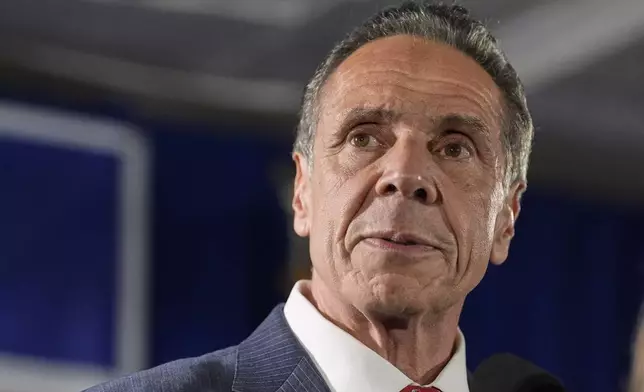
Mayoral candidate Andrew Cuomo speaks to supporters during a Democratic primary watch party, Tuesday, June 24, 2025, in New York. (AP Photo/Yuki Iwamura)
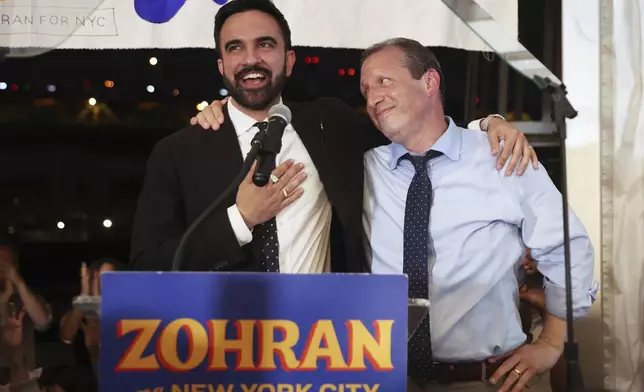
Democratic mayoral candidate Zohran Mamdani, left, speaks on stage with fellow candidate Comptroller Brad Lander at his primary election party, Wednesday, June 25, 2025, in New York. (AP Photo/Heather Khalifa)
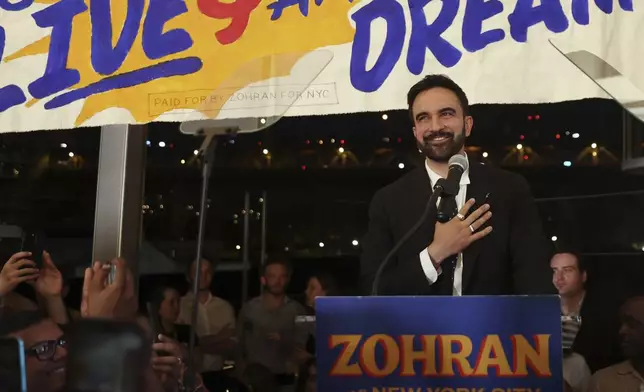
Democratic mayoral candidate Zohran Mamdani takes the stage at his primary election party, Wednesday, June 25, 2025, in New York. (AP Photo/Heather Khalifa)
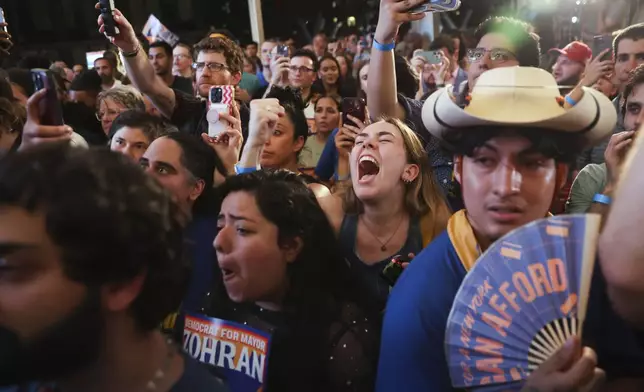
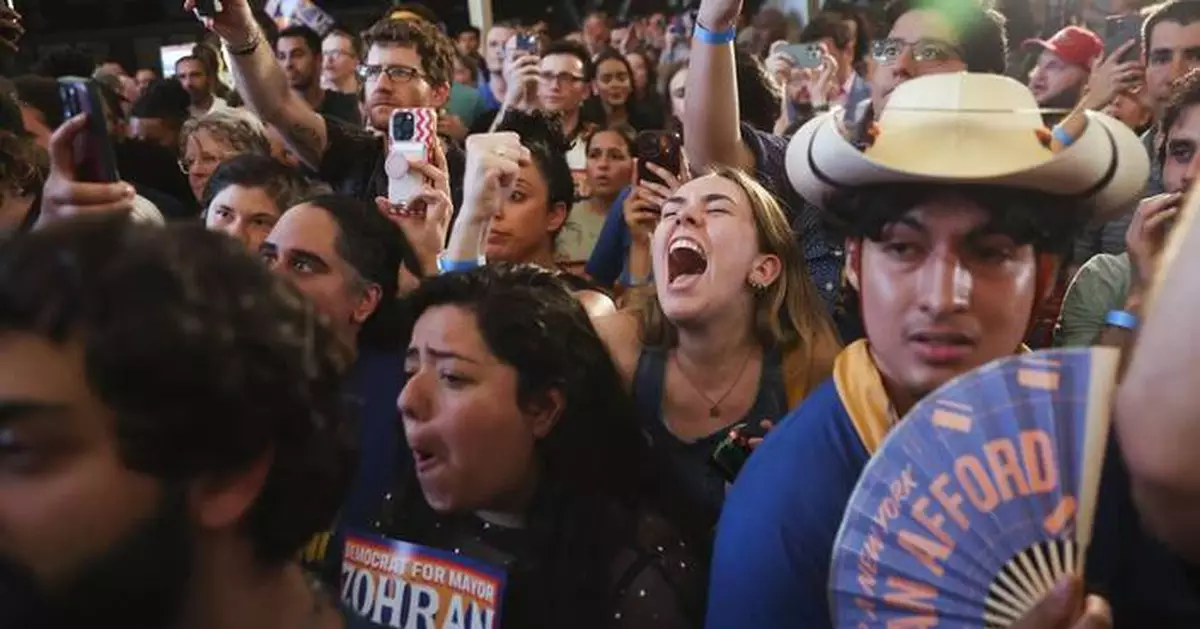
Supporters of Democratic mayoral candidate Zohran Mamdani cheer while he speaks at his primary election party, Wednesday, June 25, 2025, in New York. (AP Photo/Heather Khalifa)
Yet he excelled in the city with the largest Jewish population outside of Israel, and with the support of many Jewish voters.
Mamdani's success reflects the ideological realignment of many American Jews since the Oct. 7, 2023, attack by Hamas on Israel that led to Israel's invasion of Gaza. Many Democratic voters, including Jews, have grown dismayed by Israel’s conduct in the war and are deeply critical of Israeli Prime Minister Benjamin Netanyahu. That is especially true among younger, more progressive voters, many of whom have rejected the once-broadly accepted notion that anti-Israel sentiment is inherently antisemitic.
For others, Mamdani's showing has spurred new fears about safety and the waning influence of Jewish voters in a city where anti-Jewish hate crime has surged. Last year, Jews were the target of more than half of the hate crimes in the city.
“Definitely people are concerned," said Rabbi Shimon Hecht, of Congregation B’nai Jacob in Brooklyn, who said he has heard from congregants in recent days who hope Mamdani will be beaten in the November general election, where he will face Mayor Eric Adams, who is running as an independent, Republican Curtis Sliwa, and possibly Cuomo, if he stays in the race.
“I think like every upsetting election, it’s a wake-up call for people,” Hecht said. “I strongly believe that he will not be elected as our next mayor, but it's going to take a lot of uniting among the Jewish people and others who are concerned about these issues. We have to unify."
Veteran New York Democratic political strategist Hank Sheinkopf put it more bluntly, predicting a hasty exodus of religious Jews from the city and a decline in long-standing Jewish influence that would be replicated elsewhere.
“It’s the end of Jewish New York as we know it,” he said, adding: “New York is a petri dish for national Democratic politics. And what happened here is what will likely happen in cities across the country."
Mamdani’s top Democratic rival, the former governor, had called antisemitism and support for Israel "the most important issue” of the campaign.
Mamdani's backers repeatedly accused Cuomo of trying to weaponize the issue. Many drew parallels to the way Republican President Donald Trump has cast any criticism of Israel's actions as antisemitic, claiming Jews who vote for Democrats “hate Israel" and their own religion.
For some Mamdani supporters, the election results signaled a rejection by voters of one of Cuomo’s arguments: that an upstart socialist with pro-Palestinian views posed a threat to New York’s Jewish community.
Many were focused on issues such as affordability in a notoriously expensive city, or flat-out opposed to Cuomo, who was forced to resign in disgrace amid sexual harassment allegations.
Aiyana Leong Knauer, a 35-year-old Brooklyn bartender who is Jewish and backed Mamdani, said the vote represented “New Yorkers, many of them Jewish, saying we care more about having an affordable city than sowing division.”
“Many of us take really deep offense to our history being weaponized against us,” she said. “Jewish people all over the world have well-founded fears for their safety, but Jews in New York are safe overall.”
Others agreed with Mamdani's views on Israel.
Beth Miller, political director of Jewish Voice for Peace Action, an anti-Zionist, progressive group that worked on Mamdani's behalf, said Mamdani “was actually pretty popular among a lot of Jewish voters."
“That is not in spite of his support for Palestinian rights. That is because of his support for Palestinian rights,” she said. “There has been a massive rupture within the Jewish community and more and more Jews of all generations, but especially younger generations,” she said, now refuse to be tied to what they see as a rogue government committing atrocities against civilians.
Polls show support for Israel has declined since the war began. Overall, a slight majority of Americans now express a “somewhat” or “very” unfavorable opinion of Israel, according to a March Pew Research Center poll, compared with 42% in 2022. Democrats’ views are particularly negative, with nearly 70% holding an unfavorable opinion versus less than 40% of Republicans.
Mamdani's wasn't the only race where Israel was on voters' minds.
In Brooklyn, City Councilwoman Shahana Hanif, who represents Park Slope and surrounding areas, drew criticism for her Palestinian advocacy. Some said she had failed to respond forcefully to antisemitic incidents in the district.
Yet Hanif, the first Muslim woman elected to the City Council, easily beat her top challenger, Maya Kornberg, who is Jewish, despite an influx of money from wealthy, pro-Israel groups and donors.
That outcome dismayed Ramon Maislen, a developer who launched Brooklyn BridgeBuilders to oppose Hanif's reelection and said antisemitism did not seem to resonate with voters.
“We were very disappointed with our neighbors' response," he said.
While campaigning against Hanif, he said he was routinely screamed at by residents and accused of supporting genocide.
“I think that those of us in the Jewish community that are attuned to that are cognizant that there's been some kind of cultural sea change that’s occurring," he said. “What we’re seeing is a legitimatization of hatred that isn’t happening in any other liberal or progressive space."
Mamdani has repeatedly pledged to fight antisemitism, including during an appearance on “The Late Show With Stephen Colbert,” where he was grilled on his stance. He was joined on the show by city comptroller and fellow candidate Brad Lander, the city's highest-ranking Jewish official, who had cross-endorsed him. He has also said he would increase funding for anti-hate crime programming by 800%.
But many of his comments have angered Jewish groups and officials, most notably his refusal to disavow the phrase “globalize the intifada," which has been used as a slogan in recent protests. Many Jews see it as a call to violence against Israeli civilians. In a podcast interview, Mamdani said the phrase captured a “a desperate desire for equality and equal rights in standing up for Palestinian human rights."
Given another opportunity to condemn the phrase, Mamdani on Sunday told NBC's “Meet the Press” that it was not his role to police speech and he pledged to be a mayor who “protects Jewish New Yorkers and lives up to that commitment through the work that I do.”
Mamdani also supports the Boycott, Divestment and Sanctions movement, which aims to pressure governments, schools and other institutions to boycott Israeli products, divest from companies that support the country, and impose sanctions. The Anti-Defamation League calls it antisemitic and part of a broader campaign to "delegitimize and isolate the State of Israel.”
Mamdani has also said that, as mayor, he would arrest Netanyahu if the Israeli leader tried to enter the city.
The ADL in a statement Thursday warned candidates and their supporters not to use "language playing into dangerous antisemitic canards that time and time again have been used to incite hatred and violence against Jews.”
In his victory speech, Mamdani alluded to the criticism he'd received and said he would not abandon his beliefs. But he also said he would "reach further to understand the perspectives of those with whom I disagree and to wrestle deeply with those disagreements.”
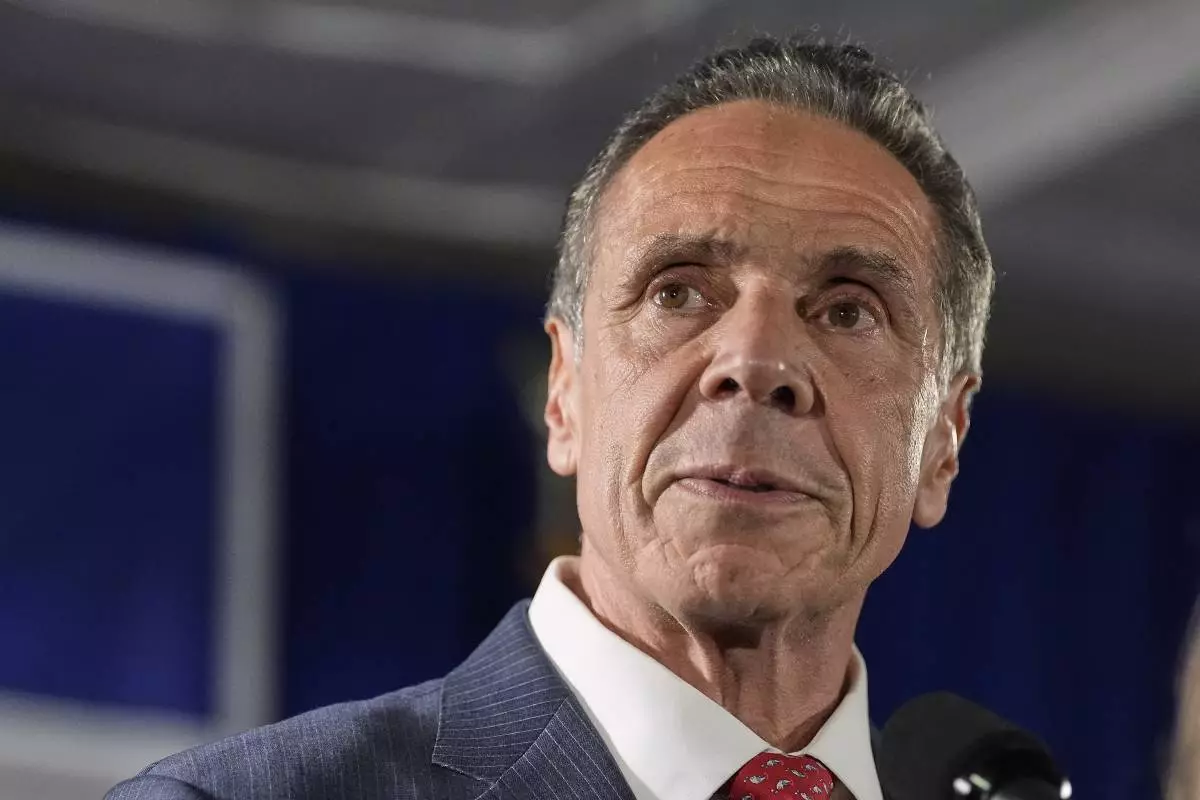
Mayoral candidate Andrew Cuomo speaks to supporters during a Democratic primary watch party, Tuesday, June 24, 2025, in New York. (AP Photo/Yuki Iwamura)
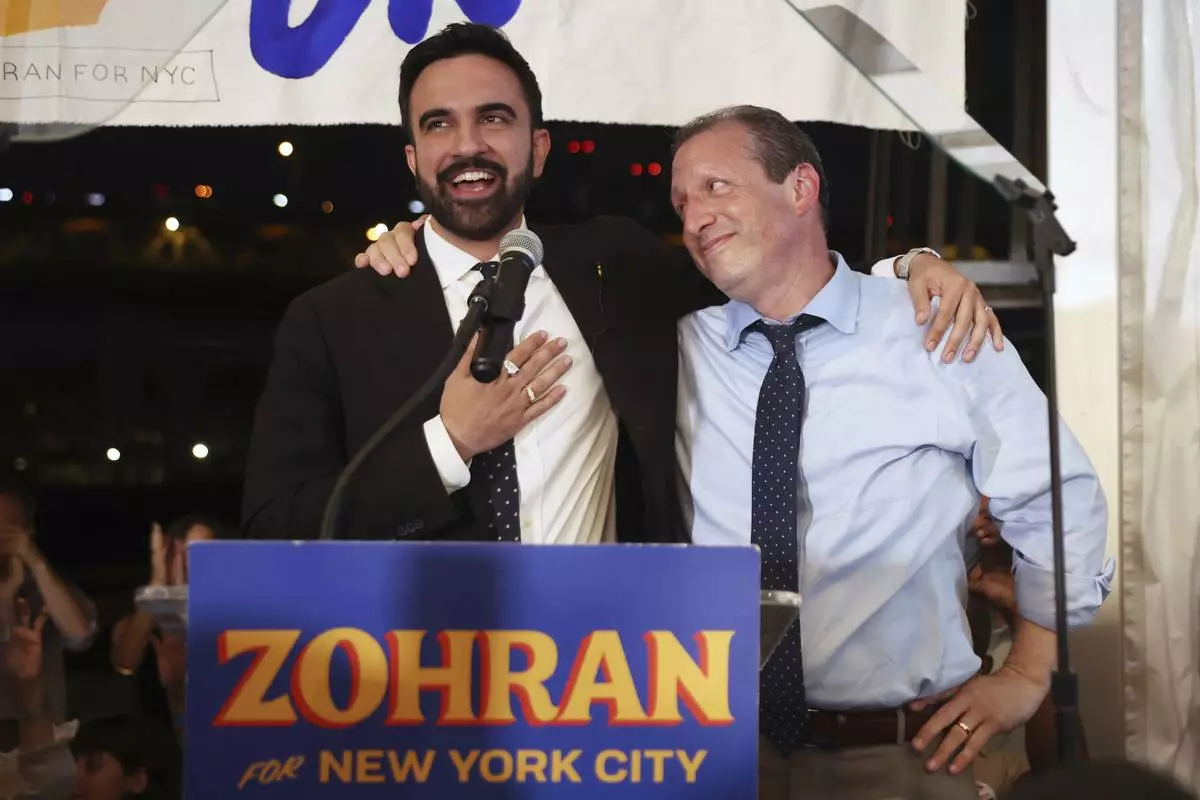
Democratic mayoral candidate Zohran Mamdani, left, speaks on stage with fellow candidate Comptroller Brad Lander at his primary election party, Wednesday, June 25, 2025, in New York. (AP Photo/Heather Khalifa)
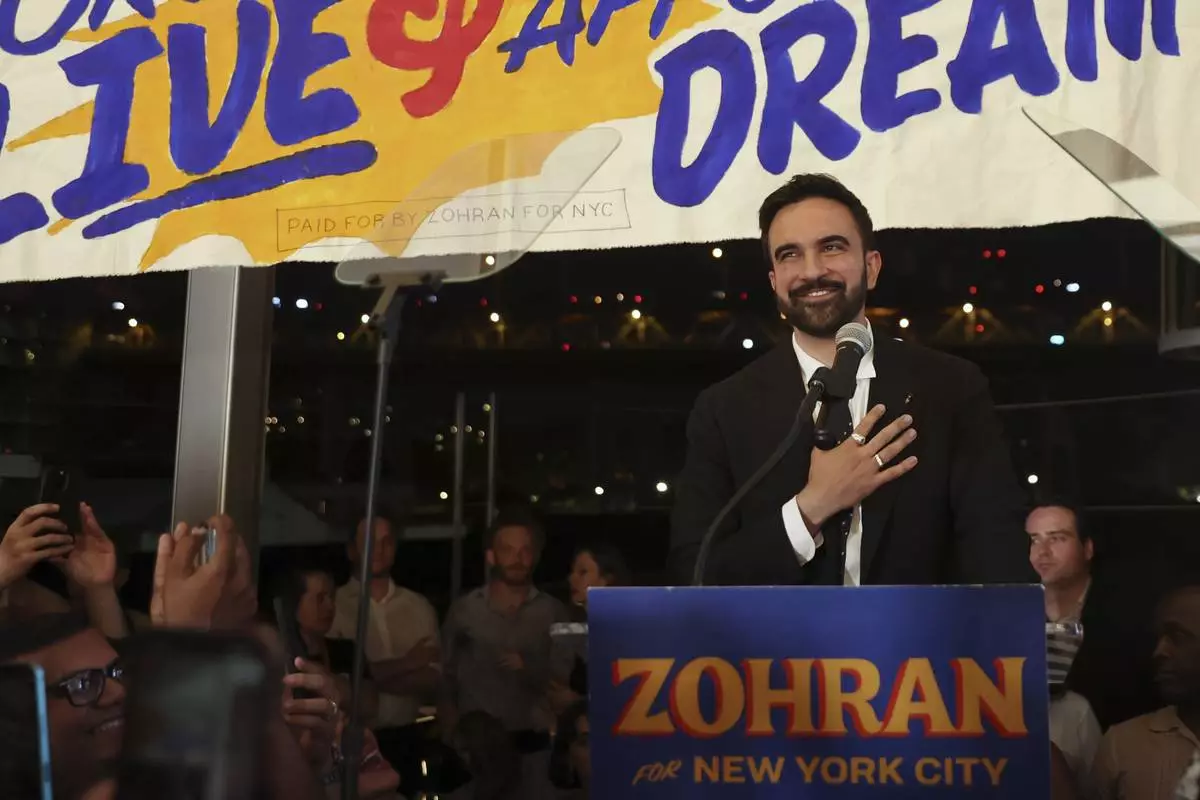
Democratic mayoral candidate Zohran Mamdani takes the stage at his primary election party, Wednesday, June 25, 2025, in New York. (AP Photo/Heather Khalifa)
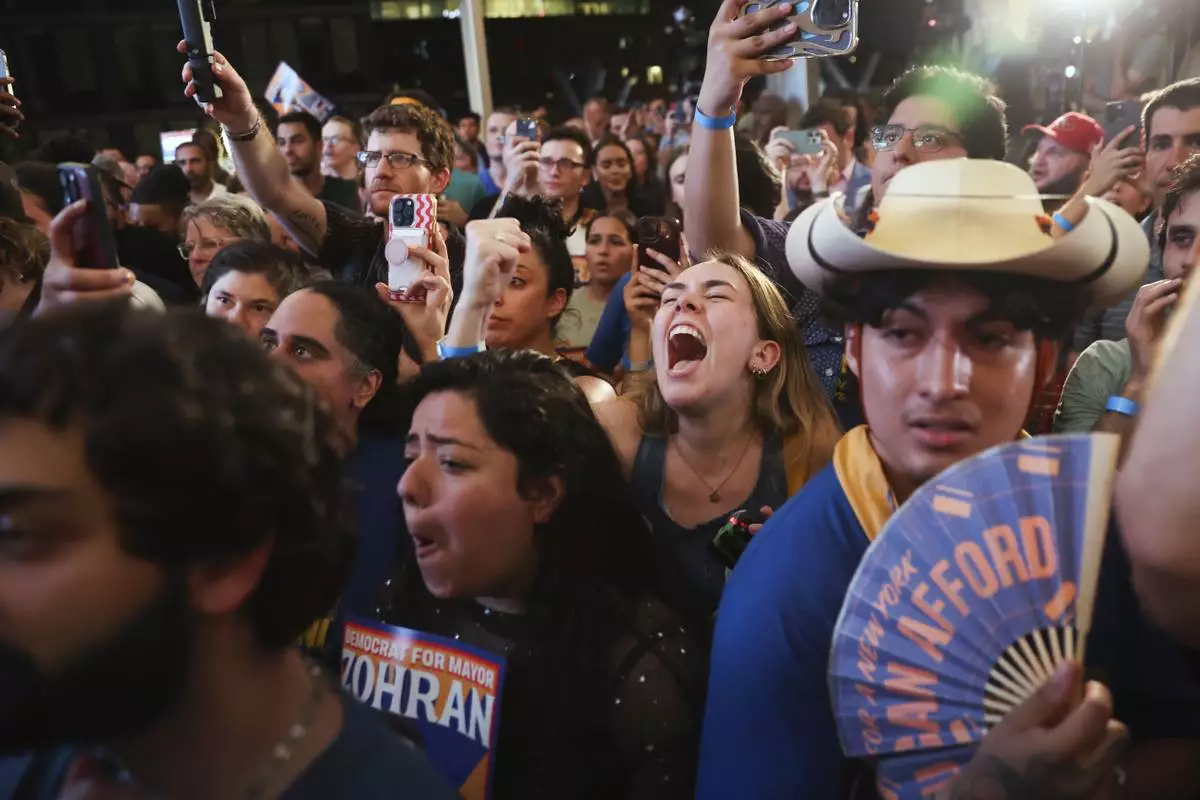
Supporters of Democratic mayoral candidate Zohran Mamdani cheer while he speaks at his primary election party, Wednesday, June 25, 2025, in New York. (AP Photo/Heather Khalifa)