FLINT, Mich. (AP) — Jeffrey Bell watched as crews dug up and replaced neighbors’ lead water pipes, hoping his mother’s house would be next. Workers told him it wasn’t on their list but probably assigned to another contractor.
With Flint's lead pipe replacement program winding down this year, Bell and his elderly mother worried the home they share was forgotten. Betty Bell repeatedly called the city while continuing to buy bottled drinking water, as she had for years. Finally someone called to say the water line was fine — records indicate it was checked in 2017. But the Bells hadn't known that, exemplifying residents’ confusion over a process marred by delays and poor communication.
“I have even more questions now,” Jeffrey Bell said.
About a decade after Flint’s water crisis caused national outrage, replacement of lead water pipes still isn’t finished. Although the city recently said it completed work required under a legal settlement, the agreement didn’t cover vacant homes and allowed owners to refuse, potentially leaving hundreds of pipes in the ground. The state agreed to oversee work on those properties and says it’s determined to finish by fall.
Flint’s missteps offer lessons for municipalities that face a recently imposed federal mandate to replace their own lead service lines. The Trump administration is expected to soon tell a federal appeals court if it will stand by that mandate.
“I think other cities are racing not to be Flint,” said Margie Kelly, a spokesperson with the environmental nonprofit Natural Resources Defense Council, which reached a settlement with the city to force it to replace lead pipes.
Flint’s crisis was set in motion in 2014, when a state-appointed emergency manager ended a contract with Detroit’s water system and switched to the Flint River to save money. But the state didn't require treatment to prevent corrosion that caused lead to leach into the water.
High levels of lead eventually were detected in drinking water and children’s blood. Outbreaks of Legionnaires’ disease that killed a dozen people were also linked, in part, to the city’s water.
In 2017, Flint entered into a settlement requiring it to replace all lead pipes and fix dug-up yards for free within three years. Funds were directed first toward homes with known lead lines at the NRDC's insistence, which meant workers couldn't tackle neighborhoods systematically. And finding those homes proved challenging because many records were missing or inaccurate — some handwritten on notecards dating to the early 1900s.
“The city’s overall management of the program was ineffective,” and it could have better coordinated work geographically, said Sarah Tallman, an attorney with the NRDC.
That stalled the program and, ultimately, the city had to check every pipe anyway. COVID-19 also slowed work.
Flint Department of Public Works Director Kenneth Miller, who was hired last year, said the city didn’t know how many homeowners had opted out of lead pipe replacement or how many properties had simply been missed as contractors came and went.
“Just like any other organization, people get lax, people stop doing things, people get laid off and the person that used to do it doesn’t do it anymore,” he said.
Because the city didn’t keep accurate records of repairs, a judge ordered officials to visually check thousands of properties that had been excavated.
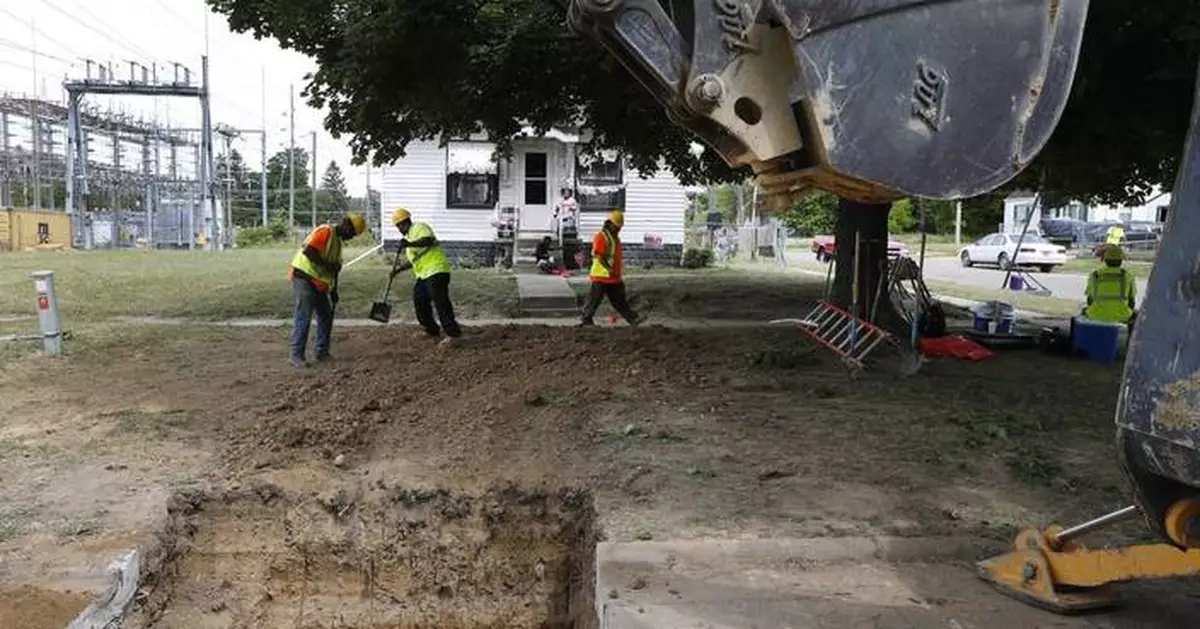
Yards torn up by contractors sometimes sat that way for months or years. For months, Danyele Darrough’s lawn was a mess and the sidewalk and driveway were covered, she said. Grass seed that workers applied never grew. Finally this spring, nearly three years later, she bought bags of topsoil and seed to fix her lawn herself.
“It was like, yeah, we knew it; we couldn’t trust them,” said Darrough.
Miller said the city now has robust data management, which he recommends to other communities tackling lead lines.
Steep population loss left thousands of vacant homes that will require contractors to cap lead lines where they’re found, said Eric Oswald, drinking water director at Michigan’s Department of Environment, Great Lakes and Energy.
“The state and the city wanted to absolutely make sure that ... we leave no stone unturned,” he said.
In Flint, government at every level caused the lead crisis or delayed fixing it, according to an EPA inspector general report. The scandal damaged trust in government — nearly 700 Flint homeowners declined free lead pipe replacement, the NRDC said.
Flint finally adopted an ordinance last year to prevent homeowners from opting out.
“It’s very difficult to get across the finish line unless you’ve got something to enforce,” Oswald said. Benton Harbor, across the state, implemented a similar provision early on, helping its work move smoothly.
Now officials are working from a list of more than 4,000 properties where there could be a lead line, sending letters and making in-person visits to homes, if needed. Miller said he hopes the outreach will show that customer service is now a priority, but it will take time to rebuild trust.
Some also distrust the Environmental Protection Agency, which in May lifted a long-standing emergency order for Flint water. The agency said it’s now safe to drink from the tap after years of tests showing sharply reduced lead levels.
“We don’t know what to believe,” resident Aonie Gilcreast said at a recent community gathering. “We don’t trust the system” because officials have said “time after time after time .... that everything was fine.”
As other cities and towns start replacing their own lead pipes — there are roughly 9 million in the U.S. — one thing should be top of mind, experts say: Digging them up isn’t just a construction job, but also a test of community trust.
To replace the lines that connect the water main in the street to homes, workers usually must dig in the street and yard, and enter the home. When residents trust local government, they’re more willing to grant that access.
“With lead, as with everything else, the first time people hear from their water utility can’t be when there is a concern,” said Greg Kail, spokesperson at utility industry group American Water Works Association. Instead, it is important for utilities to reach out to residents about what they plan to do and enlist trusted community groups in the effort.
Newark, New Jersey, avoided Flint's pitfalls when facing its own lead crisis.
In 2019, about two years after elevated levels were revealed and with funds available, the mayor said the city would replace more than 20,000 lead pipes at no cost to residents — and do it within three years. But a challenge soon emerged: Newark has lots of renters who couldn’t approve the work.
“We couldn’t get into the houses. We couldn’t find the owners,” said Kareem Adeem, Newark’s water and sewer director. “They don’t live there. They had no interest in taking care of the lead service line.”
So the city passed an ordinance making lead pipe removals mandatory and giving renters permission to approve the work.
Then contractors moved quickly through the city block by block — a lesson learned from Flint.
For the most stubborn holdouts, officials told them when they’d start replacement work and said they'd turn the water off until the resident allowed them to complete it. The threat was enough. They never had to actually turn off anybody’s water, Adeem said.
Sometimes, people would recognize Adeem from TV and he could start a conversation — a crack in a resident’s determination to say no. He worked with trusted community groups, too.
And the decision that ensured people’s property was cleaned up afterward? The contractors weren’t fully paid until they finished the work and fixed any damage.
The Associated Press receives support from the Walton Family Foundation for coverage of water and environmental policy. The AP is solely responsible for all content. For all of AP’s environmental coverage, visit https://apnews.com/hub/climate-and-environment
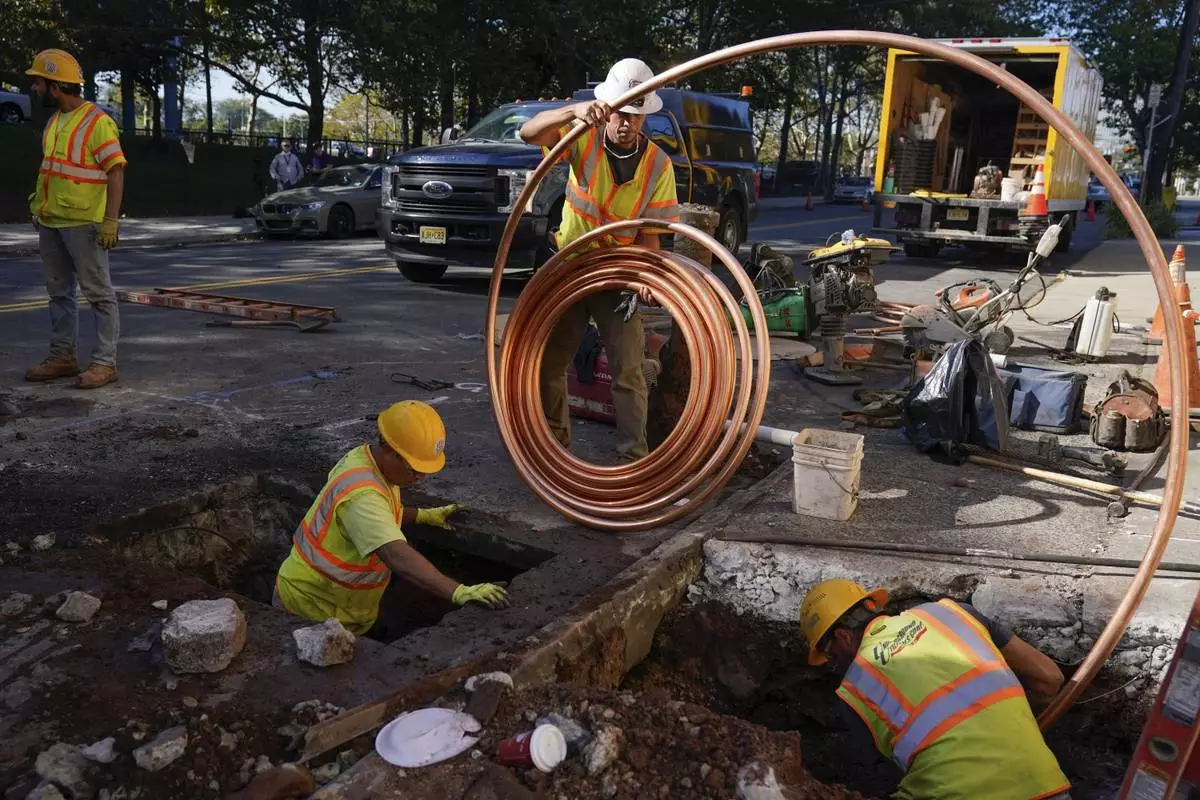
FILE - Workmen prepare to replace older water pipes with a new copper one in Newark, N.J., Oct. 21, 2021. (AP Photo/Seth Wenig, File)
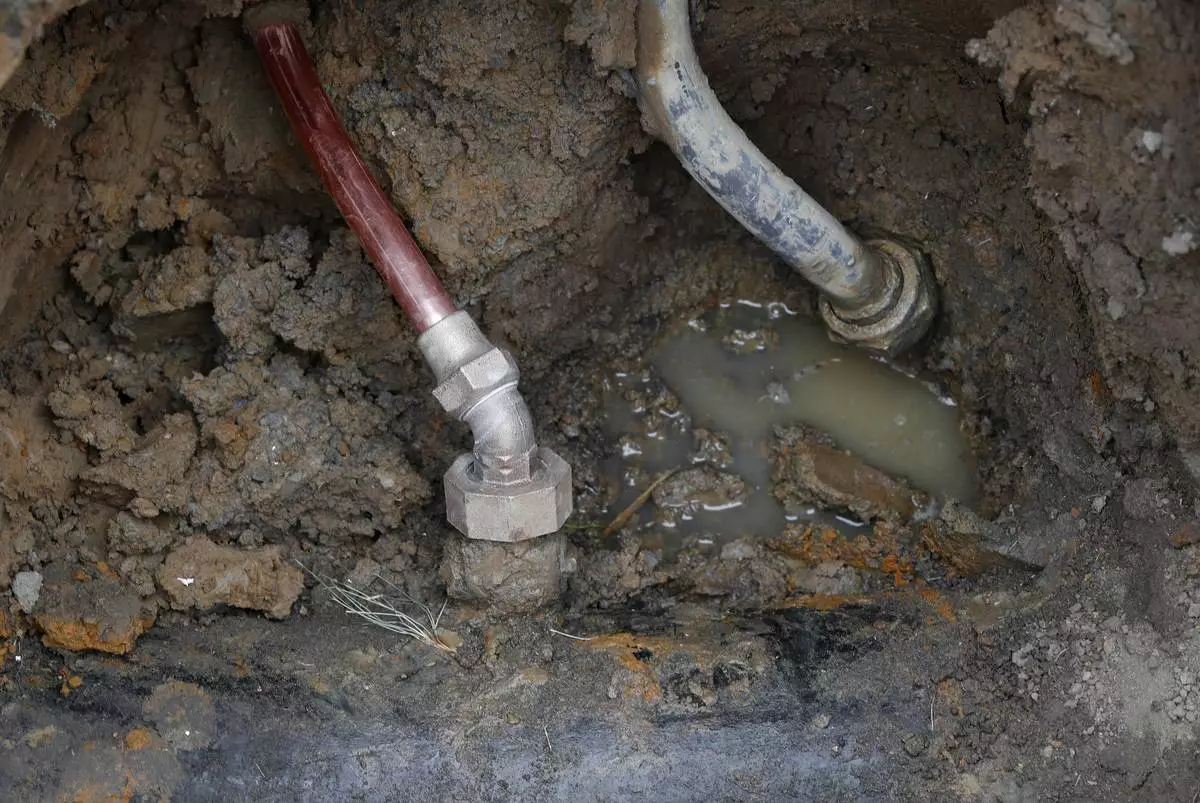
FILE - A copper water supply line, left, is shown connected to a water main after being installed for lead pipe, right, in Flint, Mich., Friday, July 20, 2018. (AP Photo/Paul Sancya, File)
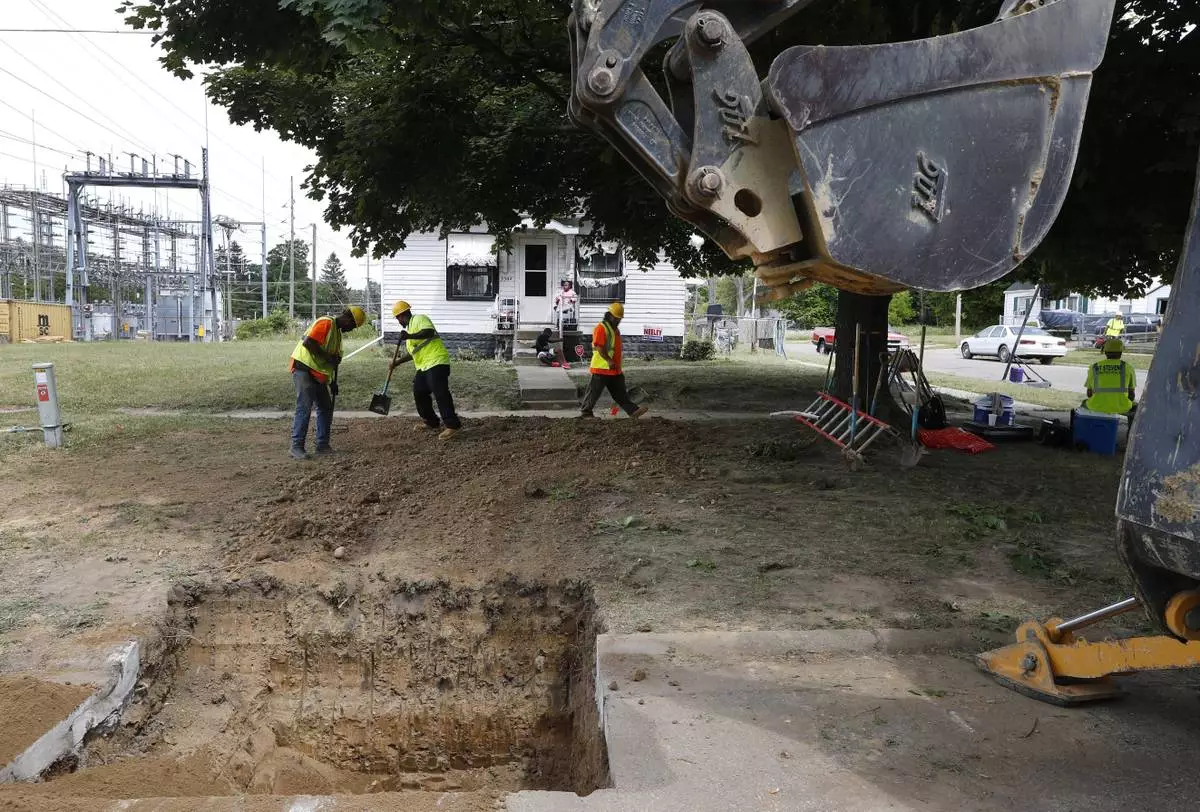
FILE - Workers back fill a hole used to replace lead pipe with copper water supply lines to a home in Flint, Mich., July 20, 2018. (AP Photo/Paul Sancya, File)