MEUDON, France--(BUSINESS WIRE)--Jun 30, 2025--
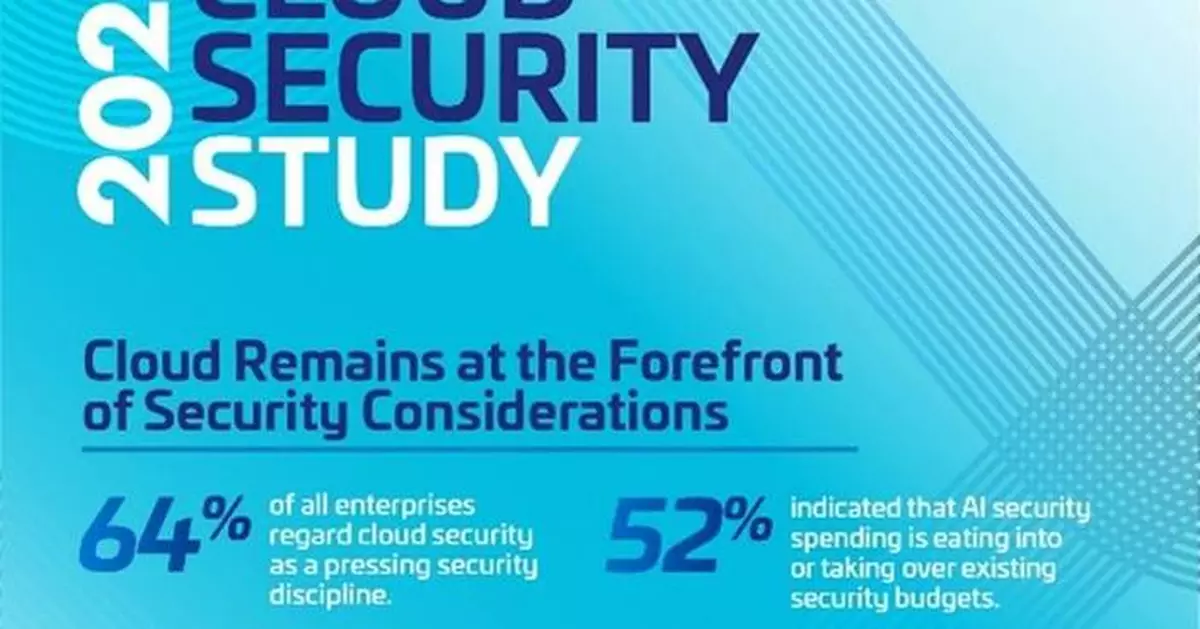
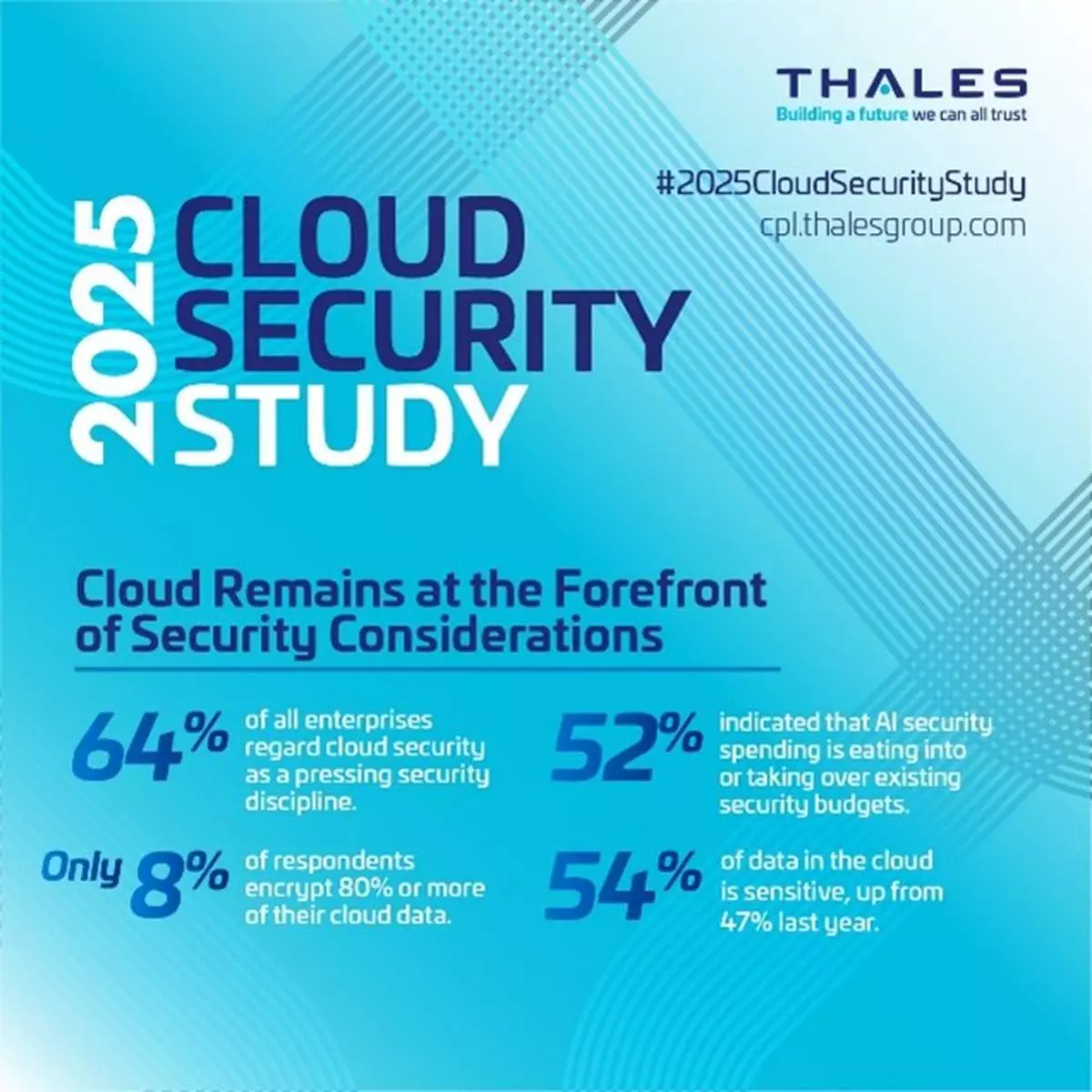
Thales, a global leader in technology and cybersecurity, today released the findings of its2025 Cloud Security Studyconducted by S&P Global Market Intelligence 451 Research, revealing that AI-specific security has rapidly emerged as a top enterprise priority, ranking second only to cloud security. Over half (52%) of respondents said they are prioritizing AI security investments over other security needs, signaling a shift in how organizations are allocating budgets in response to the accelerated adoption of AI. This year’s research captures perspectives on cloud security challenges from nearly 3,200 respondents in 20 countries across a variety of seniority levels.
This press release features multimedia. View the full release here: https://www.businesswire.com/news/home/20250630070161/en/
Cloud remains at the forefront of security considerations
Cloud is now an essential part of modern enterprise infrastructure, but many organizations are still building the skills and strategies needed to secure it effectively. The variability of controls across cloud providers, combined with the distinct mindset required for cloud security, continues to challenge security teams. This pressure is only increasing as AI initiatives drive more sensitive data into cloud environments, amplifying the need for robust, adaptable protections.
This year’s Thales Cloud Security Study confirms that cloud security remains a top concern for enterprises worldwide. Nearly two-thirds (64%) of respondents ranked it among their top five security priorities, with 17% identifying it as their number one. Security for AI, a new addition to the list of spending priorities this year, ranked second overall, highlighting its growing importance. Despite sustained investment, cloud security remains a complex, persistent challenge that goes beyond technology to include staffing, operations, and the evolving threat landscape.
“The accelerating shift to cloud and AI is forcing enterprises to rethink how they manage risk at scale,” SebastienCano, Senior Vice President, Cyber Security Products at Thales, said. “With over half of cloud data now classified as sensitive, and yet only a small fraction fully encrypted, it’s clear that security strategies haven’t kept pace with adoption. To remain resilient and competitive, organizations must embed strong data protection into the core of their digital infrastructure.”
The average number of public cloud providers per organization has risen to 2.1, with most also maintaining on-prem infrastructure. This growing complexity is driving security challenges with 55% of respondents reporting that cloud is harder to secure than on-prem, a 4-percentage-point increase from last year. As organizations expand through growth or M&A, they’re also seeing a surge in SaaS usage, now averaging 85 applications per enterprise, complicating access control and data visibility.
This complexity extends to security operations, with many teams struggling to align policies across varied platforms. The study found that 61% of organizations use five or more tools for data discovery, monitoring, or classification, and 57% use five or more encryption key managers.
Attacks target cloud resources with human error remaining a top vulnerability
Cloud infrastructure is a prime target for attackers as organizations continue to struggle with securing increasingly complex environments. According to the 2025 Thales Cloud Security Study, four of the top five most targeted assets in reported attacks are cloud-based. The rise in access-based attacks, as reported by 68% of respondents, underscores growing concerns around stolen credentials and insufficient access controls. Meanwhile, 85% of organizations say at least 40% of their cloud data is sensitive, yet only 66% have implemented multifactor authentication (MFA), leaving critical data exposed. Compounding the issue, human error remains a major contributing factor in cloud security incidents, from misconfigurations to poor credential management.
“ A rising number of respondents report challenges in securing their cloud assets, an issue that is further amplified by the demands of AI projects that often operate in the cloud and require access to large volumes of sensitive data ,” Eric Hanselman, Chief Analyst at S&P Global Market Intelligence 451 Research, said. “ Compounding this issue, four of the top five targeted assets in reported attacks are cloud-based. In this environment, strengthening cloud security and streamlining operations are essential steps toward enhancing overall security effectiveness and resilience .”
For more information, please download the full report and join our webinar hosted by Eric Hanselman, Chief Analyst at S&P Global Market Intelligence 451 Research .
About Thales
Thales (Euronext Paris: HO) is a global leader in advanced technologies for the Defence, Aerospace, and Cyber & Digital sectors. Its portfolio of innovative products and services addresses several major challenges: sovereignty, security, sustainability and inclusion.
The Group invests more than €4 billion per year in Research & Development in key areas, particularly for critical environments, such as Artificial Intelligence, cybersecurity, quantum and cloud technologies.
Thales has more than 83,000 employees in 68 countries. In 2024, the Group generated sales of €20.6 billion.
PLEASE VISIT
Thales Group
Cloud Protection & Licensing Solutions | Thales Group
Cybersecurity Solutions | Thales Group
©Thales
DUBAI, United Arab Emirates (AP) — Iran responded to U.S. President Donald Trump’s address to Americans on the war with new missile attacks targeting Israel and the Gulf Arab states Thursday, underlining Tehran’s insistence that it rejected Washington’s outreach for a ceasefire while maintaining its grip on the Strait of Hormuz.
Britain planned to hold a call Thursday with nearly three dozen countries about how to reopen the strait, through which 20% of all oil and natural gas traded passes in peacetime. The 35 countries, including all G7 industrialized democracies except the U.S., as well as the United Arab Emirates and Bahrain, signed a declaration last month demanding Iran stop blocking the strait. The call will discuss “diplomatic and political measures” that could restore shipping once the fighting is over.
Washington has insisted that Iran allow ships to freely transit the strait, but Trump this week has said it is not up to the U.S. to force it, and in his address encouraged countries that receive oil through Hormuz to “build some delayed courage” and go “take it.”
In his address, Trump said the U.S. would hit Iran “extremely hard over the next two to three weeks,” while also insisting American “core strategic objectives are nearing completion.”
Iran's military said defiantly on Thursday that its armament facilities are hidden and will never be reached by Israeli or American attacks.
“The centers you think you have targeted are insignificant,” said Lt. Col. Ebrahim Zolfaghari, a spokesman for the Iranian military’s Khatam Al-Anbiya Central Headquarters.
Just before Trump began his nearly 20-minute address on Wednesday, explosions were heard in Dubai as air defenses worked to intercept an Iranian missile barrage. Less than a half hour after the president was done, Israel said its military was working to intercept incoming missiles.
Sirens sounded in Bahrain, home to the U.S. Navy's 5th Fleet, immediately after the speech.
Following a joint statement in March condemning Iranian attacks on unarmed commercial vessels that called upon Iran to “cease immediately its threats, laying of mines, drone and missile attacks and other attempts to block the strait,” the 35 signatories were to hold a virtual meeting Thursday hosted by British Foreign Secretary Yvette Cooper.
Though the oil and gas that typically transits the Strait of Hormuz primarily is sold to Asian nations, Japan and South Korea were the only two countries from the region that were joining.
“Trump’s message was that the United States can sustain its own economic and energy ecosystem, while countries dependent on regional exports will either have to buy from the United States or manage the Strait themselves,” the New York-based Soufan Center think tank wrote after the address.
“While Trump explicitly thanked U.S. allies in the Persian Gulf for their cooperation and allyship, an expedited U.S. withdrawal without securing the strait will leave many of these countries, whose economies are dependent on energy exports, in the lurch.”
No country appears willing to try and open the strait by force while the war is raging. British Prime Minister Keir Starmer said the group “will assess all viable diplomatic and political measures we can take to restore freedom of navigation, guarantee the safety of trapped ships and seafarers and to resume the movement of vital commodities.”
Bahrain, which now holds the presidency of the United Nations Security Council, has been working to get the world body to address the crisis as well.
Though Iran has allowed a trickle of ships through the strait, it remains largely closed. Iran has also been repeatedly attacking Gulf Arab energy infrastructure, sending oil prices skyrocketing and giving rise to broader economic problems worldwide.
Following Trump's speech, Brent crude, the international standard, rose again and was at $108 in early spot trading, up nearly 50% from Feb. 28 when Israel and the U.S. started the war with their attacks on Iran.
The rising energy prices and stock market jitters have been putting increasing domestic pressure on Trump, who used his address to offer a defense of the war while also suggesting it was close to winding down.
He acknowledged American service members who had been killed and said: “We are going to finish the job, and we’re going to finish it very fast. We’re getting very close.”
The U.S. has presented Iran with a 15-point plan for a ceasefire, but Trump didn’t say anything about the diplomatic efforts or bring up his April 6 deadline for Iran to reopen the Strait of Hormuz or face severe retaliation from the U.S.
More than 1,900 people have been killed in Iran during the war, while 19 have been reported dead in Israel. More than two dozen people have died in Gulf states and the occupied West Bank, while 13 U.S. service members have been killed.
More than 1,200 people have been killed in Lebanon and more than 1 million displaced, according to authorities. Ten Israeli soldiers have also died there.
Weissert reported from Washington and Rising reported from Bangkok.
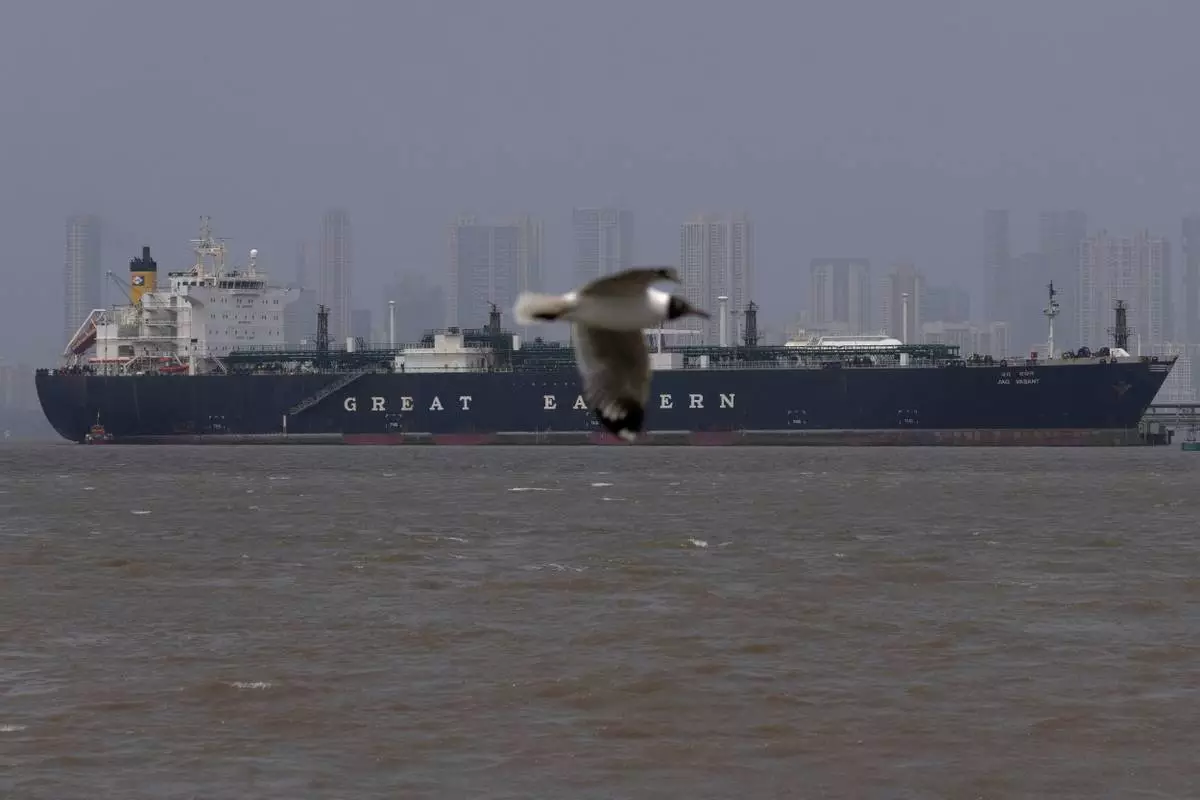
The Indian flagged LPG carrier Jag Vasant transporting liquefied petroleum gas, is seen at the Mumbai Port in Mumbai, India, after it arrived clearing the Strait of Hormuz, Wednesday, April 1, 2026. (AP Photo/Rafiq Maqbool)
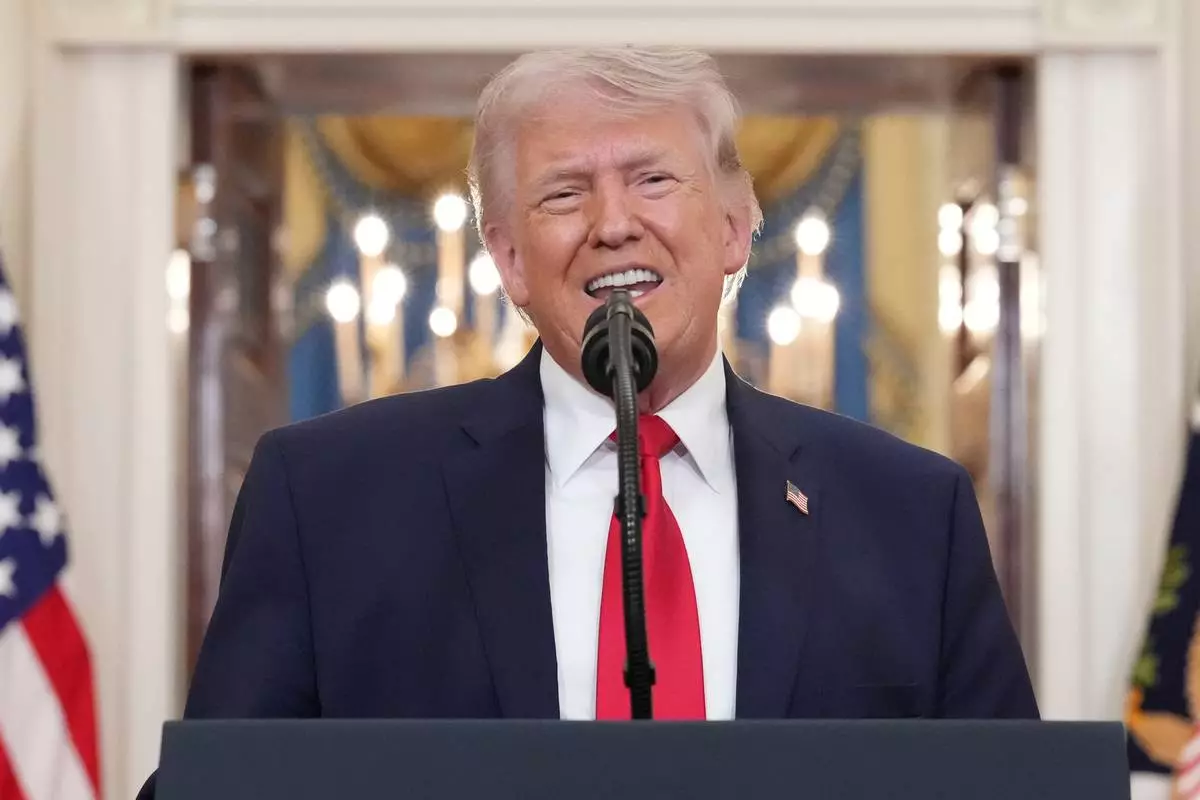
President Donald Trump speaks about the Iran war from the Cross Hall of the White House on Wednesday, April 1, 2026, in Washington. (AP Photo/Alex Brandon, Pool)
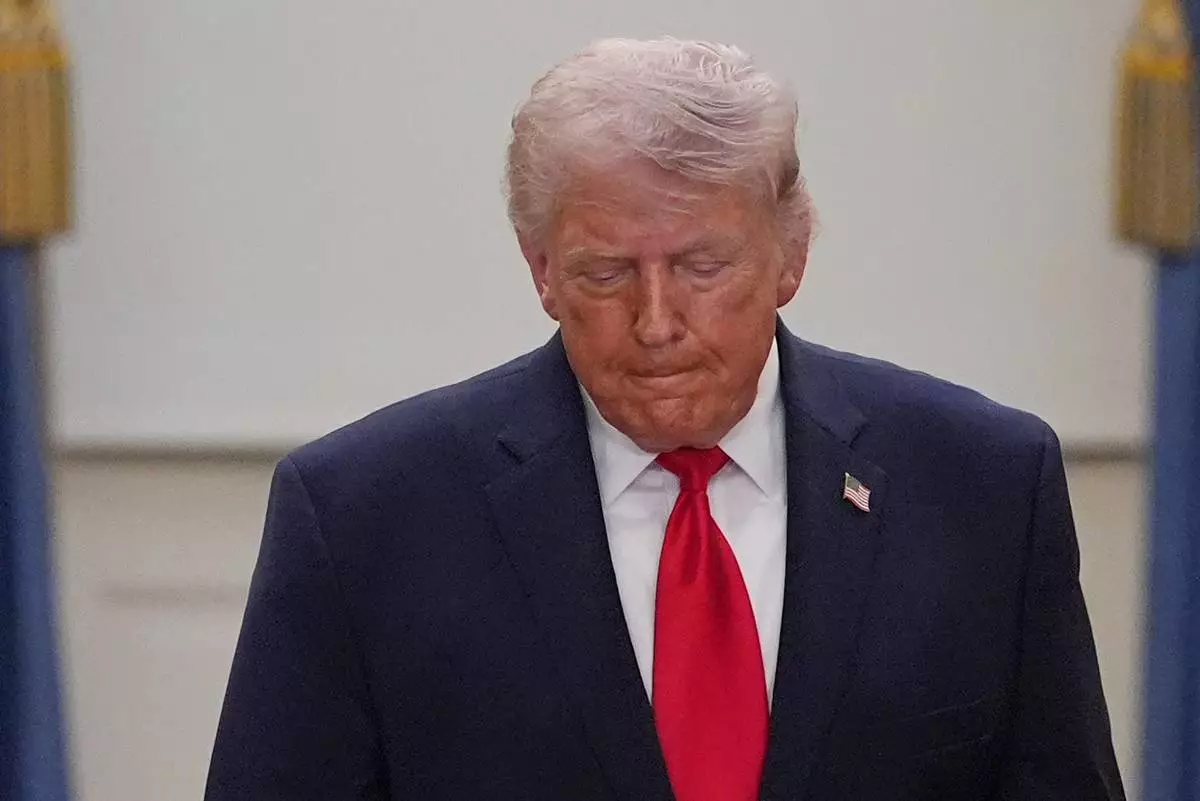
President Donald Trump walks from the Blue Room to speak about the Iran war from the Cross Hall of the White House on Wednesday, April 1, 2026, in Washington. (AP Photo/Alex Brandon, Pool)
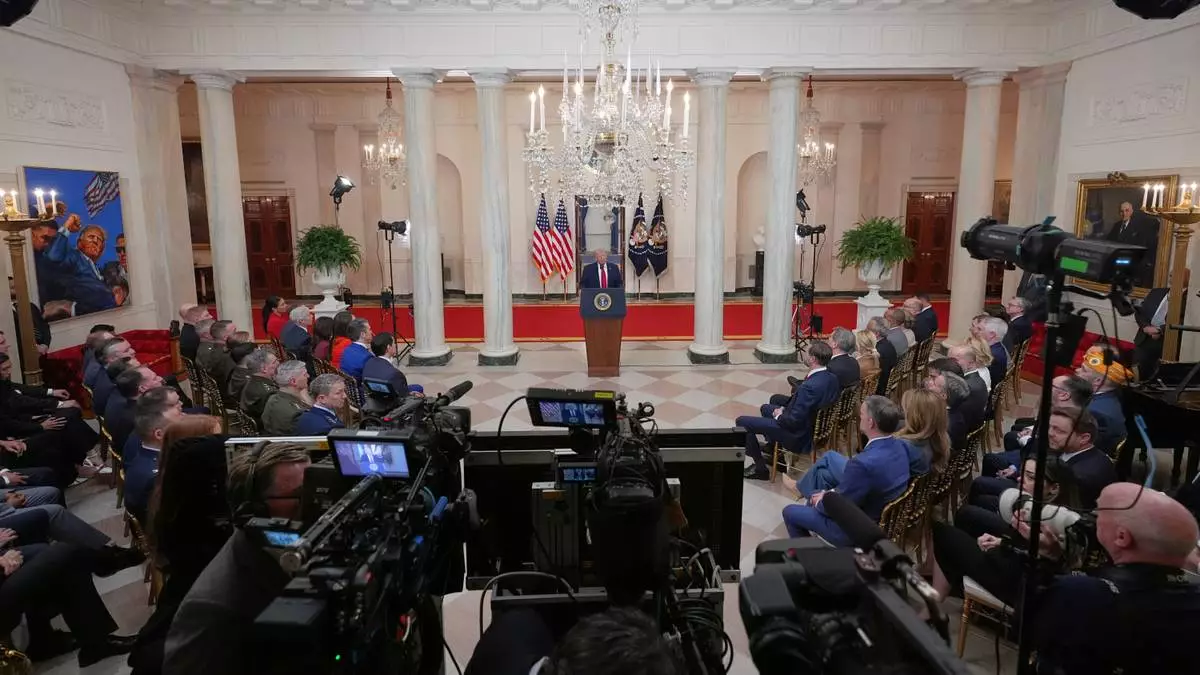
President Donald Trump speaks about the Iran war from the Cross Hall of the White House on Wednesday, April 1, 2026, in Washington. (AP Photo/Alex Brandon, Pool)
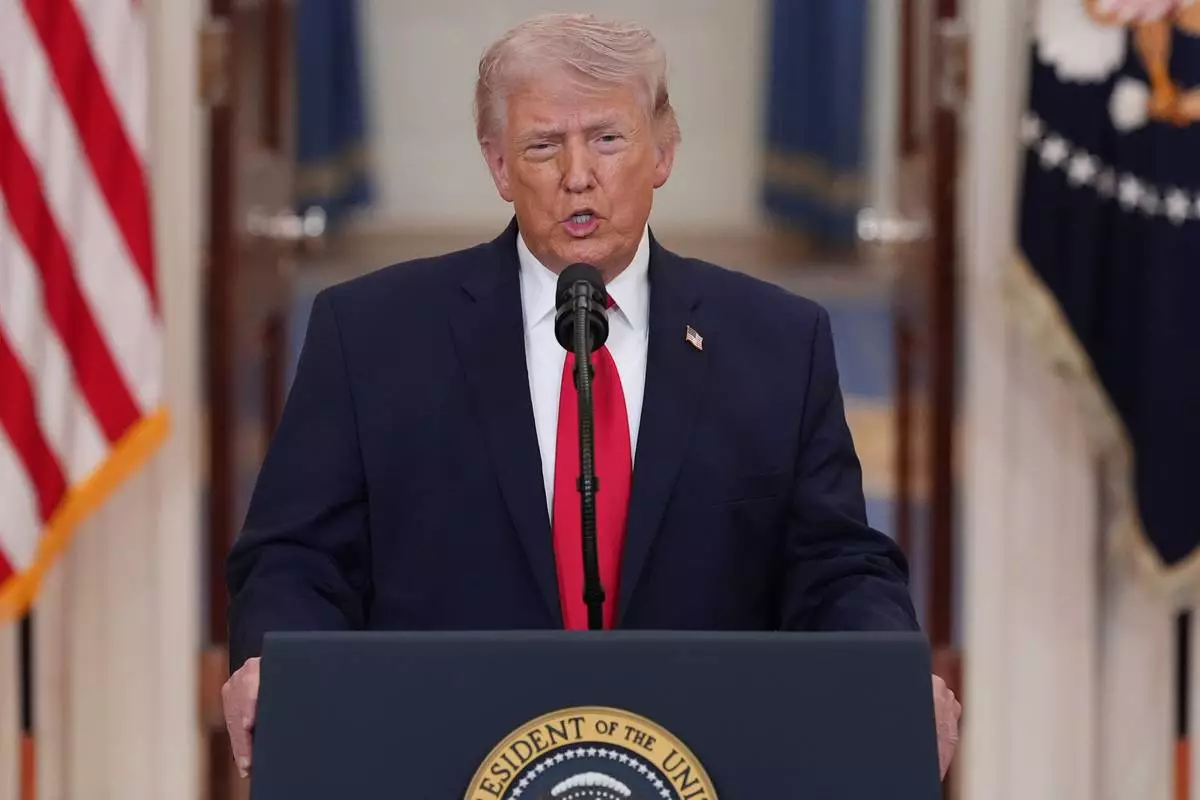
President Donald Trump speaks about the Iran war from the Cross Hall of the White House on Wednesday, April 1, 2026, in Washington. (AP Photo/Alex Brandon, Pool)