LONDON (AP) — Two-time Wimbledon runner-up Ons Jabeur retired during her first-round match Monday after taking a medical timeout, the latest issue for her during an injury-filled season.
Jabeur, a 30-year-old from Tunisia, quit playing while trailing Viktoriya Tomova 7-6 (5), 2-0.
Jabeur was visited by a trainer in the first set. At one point, she sat on her sideline seat and cried into a towel.
“I wasn't expecting not to feel good. I have been practicing pretty well the last few days. But I guess these things happen,” Jabeur said afterward. “I'm pretty sad. Doesn't really help me with my confidence and what I keep pushing myself to do even though it was a very tough season for me. I hope I can feel better.”
She lost to Elena Rybakina in the 2022 final and to Marketa Vondrousova in the 2023 final. Jabeur also was a finalist at the 2022 U.S. Open, losing to Iga Swiatek.
Jabeur's 2024 season ended early because of a shoulder injury and she's dealt with leg problems this year.
AP tennis: https://apnews.com/hub/tennis

Viktoriya Tomova of Bulgaria returns the ball to Ons Jabeur of Tunisia during their first round women's single match at the Wimbledon Tennis Championships in London, Monday, June 30, 2025. (AP Photo/Kin Cheung)

Ons Jabeur of Tunisia leaves the court after her match against Varvara Gracheva of France at the women's first round singles match at the Wimbledon Tennis Championships in London, Monday, June 30, 2025. (AP Photo/Kin Cheung)

Ons Jabeur of Tunisia get medical assistance during her match against Varvara Gracheva of France at the first round singles match at the Wimbledon Tennis Championships in London, Monday, June 30, 2025. (AP Photo/Kin Cheung)
NEW DELHI (AP) — India raised fuel prices by 3 rupees ($0.03) per liter Friday as the government moved to offset losses due to higher global oil prices.
In New Delhi, gasoline prices rose to 97.77 rupees ($1.17) a liter, while diesel climbed to 90.67 rupees ($1.09) a liter.
India imports about 90% of its oil and has been hit hard by rising energy prices and supply disruptions linked to the Iran war and the closure of the Strait of Hormuz. It had until now avoided raising retail fuel prices despite sharp increases in energy costs, making it one of the last major economies to pass higher crude prices on to consumers.
The price increases came days after Prime Minister Narendra Modi urged Indians to adopt voluntary austerity measures.
Modi on Sunday called on people to work from home where possible, limit foreign travel and reduce purchases of gold. He described fuel conservation and saving foreign exchange as an act of “patriotism,” and encouraged greater use of public transportation, carpooling and lower fertilizer consumption.
Opposition leaders said Modi’s appeal came only after a key round of state elections had concluded, noting that fuel prices were kept unchanged during the campaign.
Manoj Kumar, a 48-year-old taxi driver in New Delhi, said the rise in fuel prices was adding to the strain on working-class people.
“For common people like us, even one rupee has great value. People work so hard from morning till evening just to make ends meet. The government is not seeing this," he said.
Earlier this week, India also raised import duties on gold and silver to 15% in an effort to curb demand for imports that drain foreign exchange reserves.
The Indian rupee has fallen to record lows in recent weeks as higher oil prices increased pressure on imports and foreign exchange reserves.
Meanwhile, India’s capital has become the first state to roll out austerity measures.
Authorities in New Delhi on Thursday announced fuel-saving measures, including mandatory work-from-home days for some government employees. Delhi Chief Minister Rekha Gupta said the 90-day campaign aims to reduce official fuel use and encourage people in the capital to rely more on public transportation instead of private vehicles.
Under the plan, employees whose work can be done remotely will work from home two days a week, while private companies are being encouraged to adopt similar measures voluntarily.
India has also accelerated ethanol blending in gasoline as part of its push to cut crude oil imports.
Most fuel stations across the country now sell gasoline blended with 20% ethanol, and the government has proposed expanding the use of fuels containing 85% — or even 100% — ethanol in compatible vehicles.
Energy experts said blending biofuel can help shield from global energy shocks but can lead to further stressing already depleting groundwater resources, encroach on land meant for food crops and impact older vehicles’ engines.
AP journalists Sibi Arasu in Bengaluru, India and Shonal Ganguly in New Delhi contributed to this report.
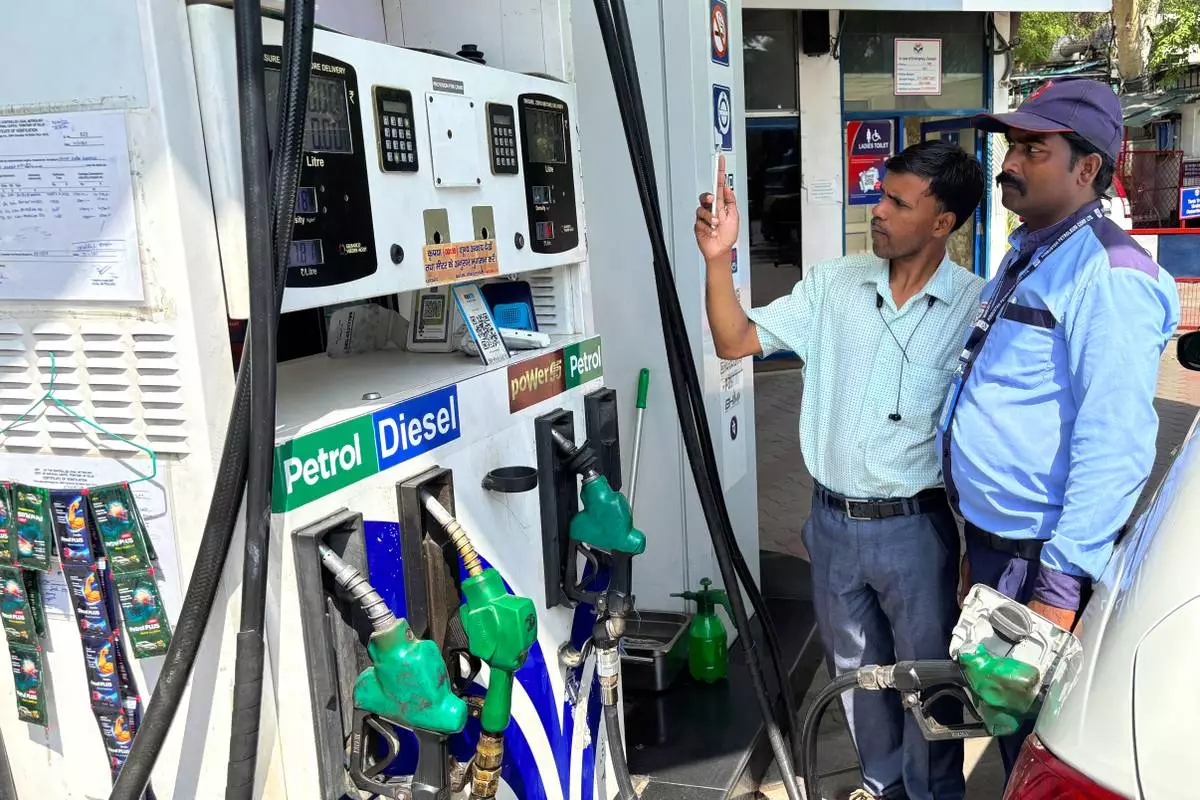
A commuter monitors the meter as an attendant refuels his vehicle at a filling station in New Delhi, India, Friday, May 15, 2026. (AP Photo/Shonal Ganguly)
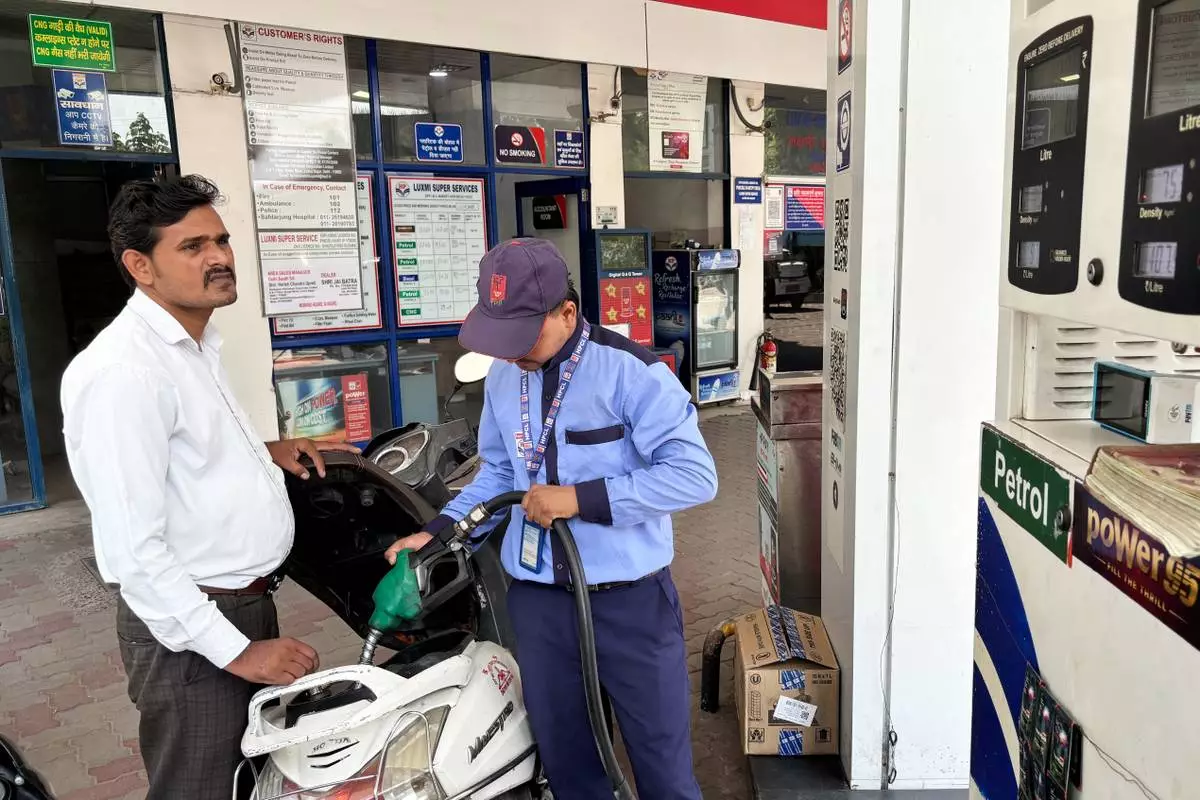
A commuter monitors the meter as an attendant refuels his scooter at a filling station in New Delhi, India, Friday, May 15, 2026. (AP Photo/Shonal Ganguly)