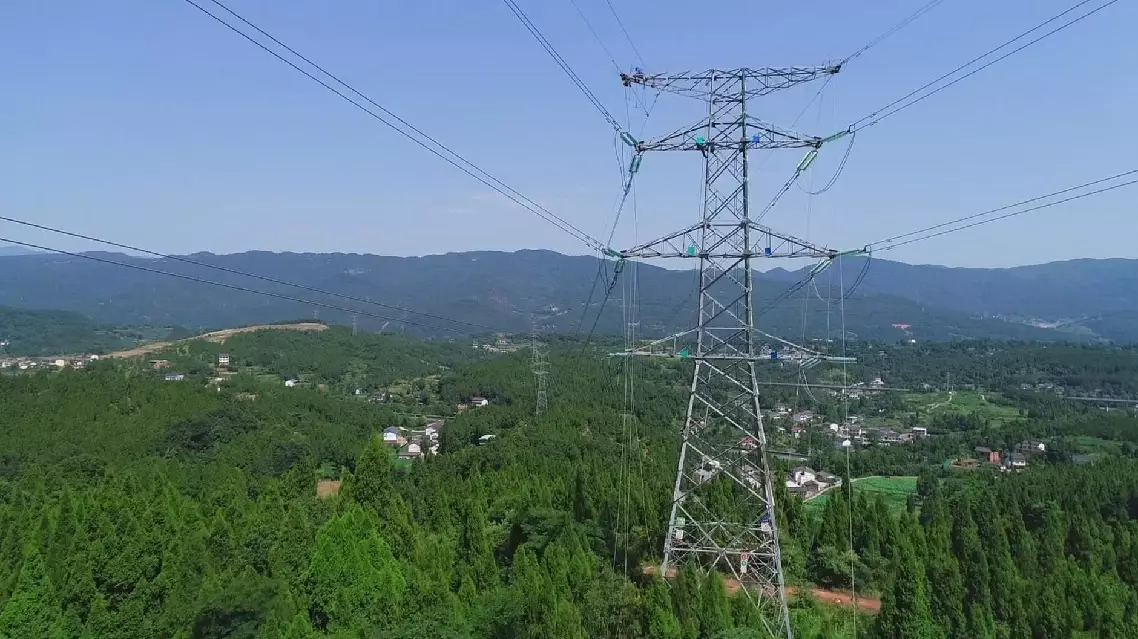
According to the State Grid Corporation of China (State Grid), all 140 key projects designed to meet this summer's peak electricity demand in the State Grid operation area have been completed and are running as of Monday, providing strong support for the safe operation of power grids and reliable supply of electricity.
On Monday, several power grid projects are completed and put into operation.
In east China's Jiangsu Province, a 220-kV intercity line project completed renovation, doubling the transmission capacity. It will further enhance the mutual assistance between grid networks in the Yangtze River Delta region.
In southwest China's Sichuan Province, the 500 kV transmission project of the Bala Hydropower Station was successfully put into operation, with 746,000 kilowatts of hydro and photovoltaic power installed capacity successfully connected to power grids in Sichuan. This will effectively alleviate the power supply pressure during summer.
So far, all of State Grid's 140 key projects designed to meet the peak summer demand have been put into operation on schedule, with a total investment of more than 30 billion yuan (about 4.18 billion U.S. dollars). The newly-added transformer capacity has reached 50.06 million kilowatts, which will increase the power supply capacity by more than 30 million kilowatts. "Upon completion, this batch of key projects will significantly improve the power supply capacity of power grids, greatly solve the problem of overload in some areas, provide strong support to secure power supply during summer, and effectively meet the electricity demand for high-quality economic and social development," said Zhou Xinfeng, deputy director of the infrastructure department at the State Grid Corporation of China.
China's State Grid completes 140 key projects for peak summer electricity demand
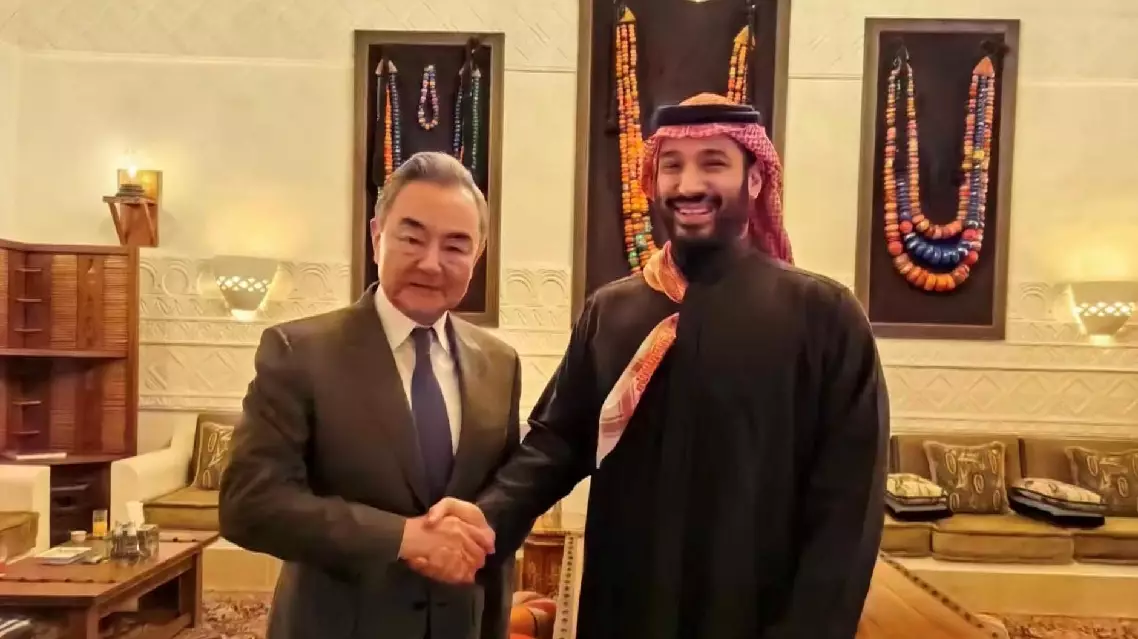
China is ready to be the most trustworthy and reliable partner in Saudi Arabia's national revitalization process, Chinese Foreign Minister Wang Yi said on Sunday when meeting with Saudi Crown Prince and Prime Minister Mohammed bin Salman Al Saud in Riyadh.
China aims to strengthen all-round, mutually beneficial cooperation with the Saudi side, consolidate traditional energy collaboration, expand cooperation in emerging and future industries, and open up new prospects for the China-Saudi Arabia comprehensive strategic partnership, said Wang, also a member of the Political Bureau of the Communist Party of China Central Committee.
During the meeting, the crown prince asked Wang to convey the sincere greetings and best wishes of Saudi King Salman bin Abdulaziz Al Saud and himself to Chinese President Xi Jinping.
He said that Saudi leaders highly value their deep friendship with Xi and attach great importance to developing the comprehensive strategic partnership between the two countries.
The crown prince said that the Saudi side stands ready to work with China to elevate bilateral relations to a higher level, adding that Saudi Arabia always adheres to the one-China principle, firmly supports China in safeguarding its national sovereignty and territorial integrity, and resolutely opposes interference in China's internal affairs by external forces.
The Saudi side is willing to further deepen cooperation with China in areas such as oil and gas, new energy, artificial intelligence and high and new technologies, he said, adding that Saudi Arabia supports China's hosting of the second China-Arab States Summit and the second China-Gulf Cooperation Council (GCC) Summit in 2026, and is willing to promote the early conclusion of negotiations on the China-GCC free trade agreement.
He also thanked China for its efforts in promoting the normalization of relations between Saudi Arabia and Iran, adding that Saudi Arabia stands ready to maintain regular communication and coordination with China in international and multilateral affairs.
Wang conveyed Xi's cordial greetings to King Salman and the crown prince, noting that Xi has forged deep friendship and mutual trust with Saudi leaders.
China welcomes the crown prince to visit China next year to attend the second China-Arab States Summit, Wang said, adding that China stands ready to work with GCC countries to strive for the early conclusion of the China-GCC free trade agreement.
Wang said that China also stands ready to continue close communication with Saudi Arabia to inject more stabilizing factors into peace and security in the Middle East.
China ready to be Saudi Arabia's most trustworthy partner in national development: Chinese FM