WASHINGTON (AP) — President Donald Trump signed an executive order on Monday ending many U.S. economic sanctions on Syria, following through on a promise he made to the country's new interim leader.
White House press secretary Karoline Leavitt said the move was designed to “promote and support the country's path to stability and peace.”
Click to Gallery
FILE - Syria's interim president, Ahmad al-Sharaa, listens during a press conference in Paris, May 7, 2025. (Stephanie Lecocq/Pool via AP, File)
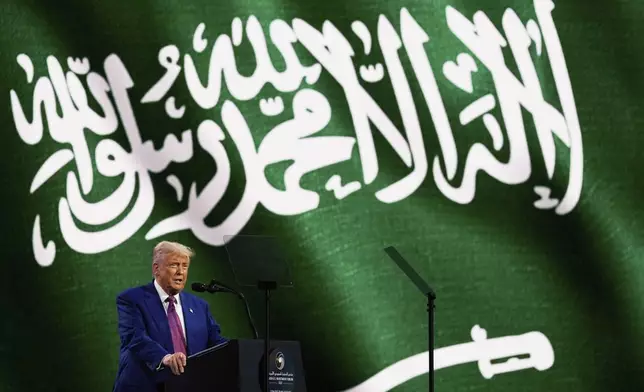
FILE - President Donald Trump speaks at the Saudi-U.S. Investment Forum in Riyadh, Saudi Arabia, May 13, 2025. (AP Photo/Alex Brandon, File)
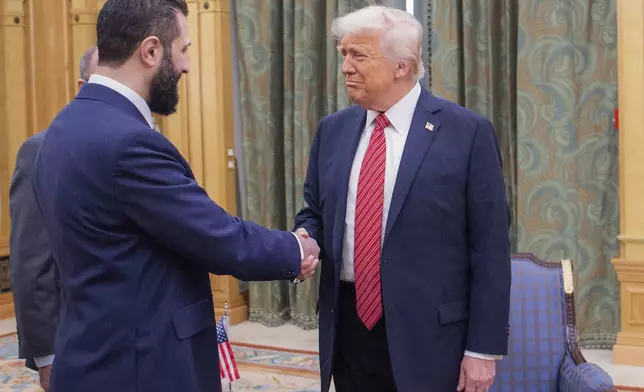
In this photo released by the Saudi Royal Palace, President Donald Trump, right, shakes hands with Syria's interim President Ahmad al-Sharaa, in Riyadh, Saudi Arabia, May 14, 2025. (Bandar Aljaloud/Saudi Royal Palace via AP)
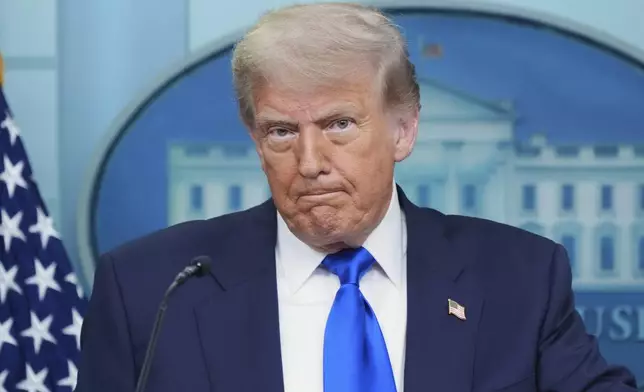
President Donald Trump speaks to the media, Friday, June 27, 2025, in the briefing room of the White House in Washington. (AP Photo/Jacquelyn Martin)
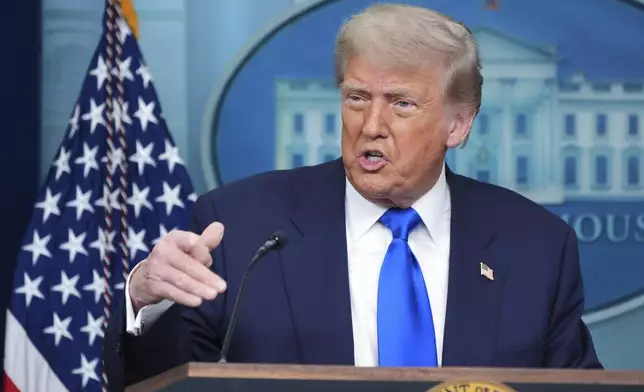
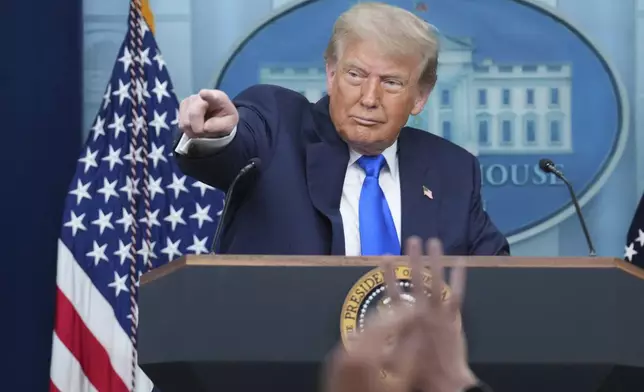
President Donald Trump points to a reporter to take a question as he speaks to the media, Friday, June 27, 2025, in the briefing room of the White House in Washington. (AP Photo/Jacquelyn Martin)
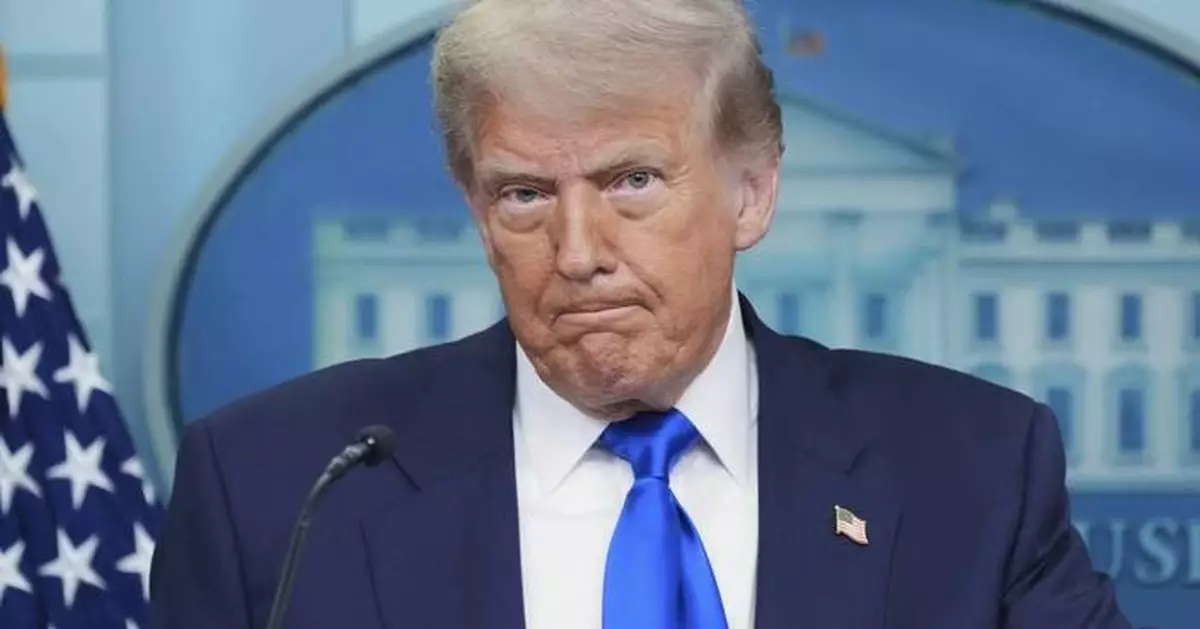
President Donald Trump listens during a briefing with the media, Friday, June 27, 2025, at the White House in Washington. (AP Photo/Jacquelyn Martin)
The executive order is meant to “end the country’s isolation from the international financial system, setting the stage for global commerce and galvanizing investments from its neighbors in the region, as well as from the United States,” Treasury’s acting undersecretary for terrorism and financial intelligence, Brad Smith, told reporters on a call Monday to preview the administration’s action.
Monday’s actions do not rescind sanctions imposed on ousted former President Bashar Assad, his top aides, family members and officials who had been determined to have committed human rights abuses or been involved in drug trafficking or part of Syria’s chemical weapons program.
It also leaves intact a major set of sanctions passed by Congress targeting anyone doing business with or offering support to Syria’s military, intelligence or other suspect institutions. While the Trump administration has passed temporary waivers on those sanctions, known as the Caesar Act, they can only be permanently repealed by law.
The White House posted the text of the order on X after the signing, which was not open to the press.
The U.S. granted Syria sweeping exemptions from sanctions in May, which was a first step toward fulfilling the Republican president’s pledge to lift a half-century of penalties on a country shattered by 13 years of civil war.
Along with the lifting of economic sanctions, Monday’s executive order lifts the national emergency outlined in an executive order issued by former President George W. Bush in response to Syria’s occupation of Lebanon and pursuit of weapons of mass destruction and missile programs, Treasury officials said. Five other previous executive orders related to Syria were also lifted.
Sanctions targeting terrorist groups and manufacturers and sellers of the amphetamine-like stimulant Captagon will remain in place.
Trump met with Syria’s interim leader, Ahmed al-Sharaa, in Saudi Arabia in May and told him he would lift sanctions and explore normalizing relations in a major policy shift in relations between the U.S. and Syria.
“This is another promise made and promise kept,” Leavitt said Monday.
The European Union has also followed through with lifting nearly all remaining sanctions on Syria.
Still, some restrictions remain in place. The U.S. still designates Syria as a state sponsor of terrorism and the group led by al-Sharaa as a foreign terrorist organization.
A State Department official said the department is reviewing those designations.
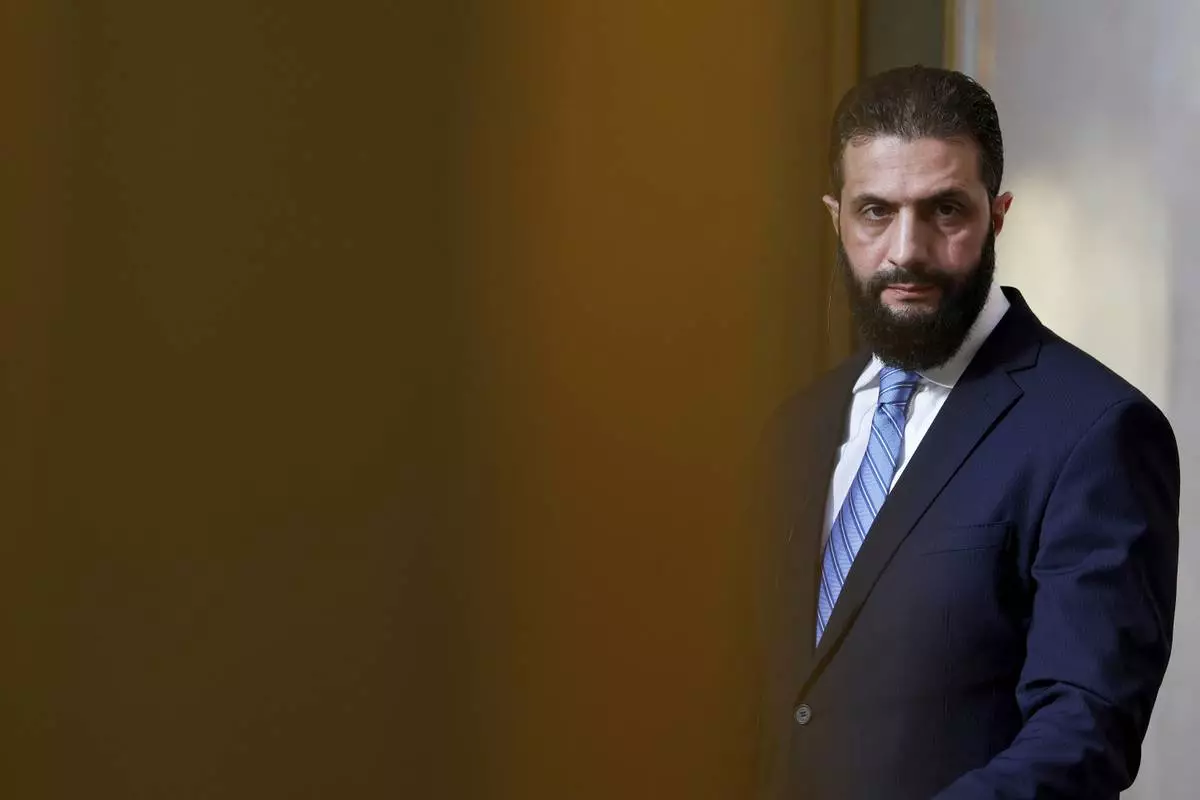
FILE - Syria's interim president, Ahmad al-Sharaa, listens during a press conference in Paris, May 7, 2025. (Stephanie Lecocq/Pool via AP, File)
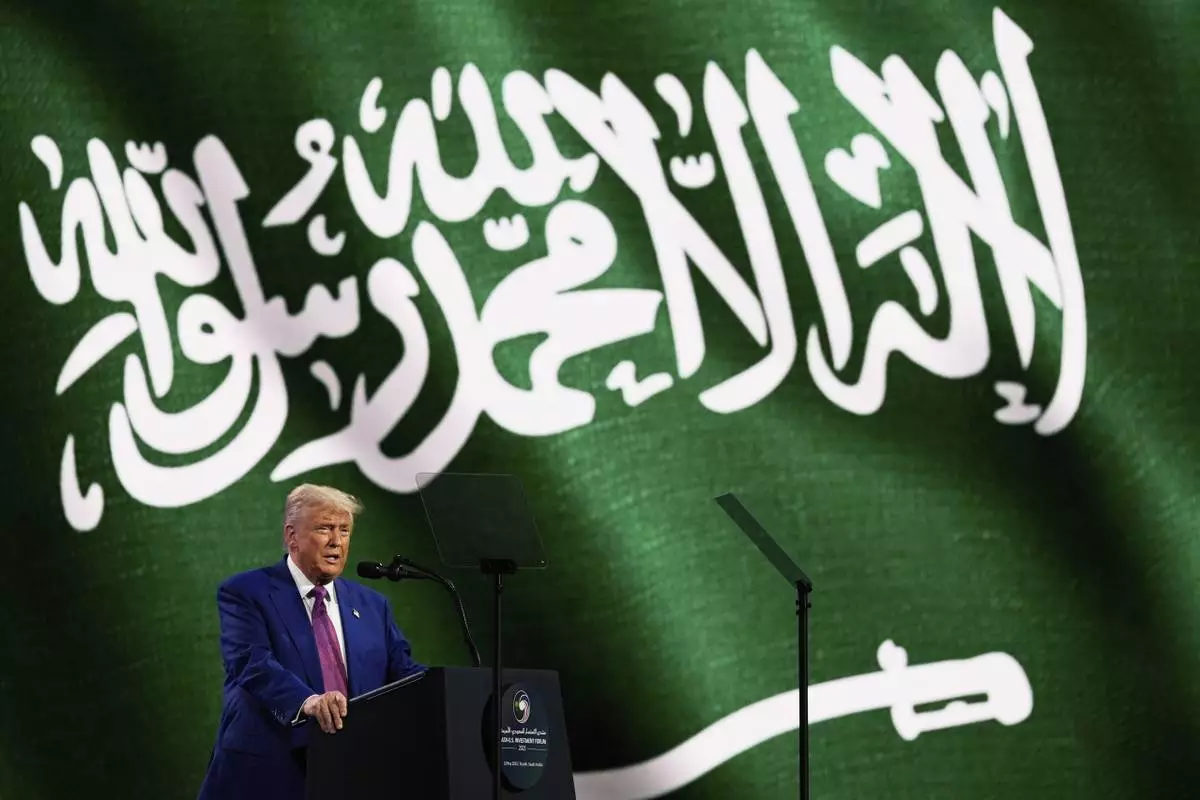
FILE - President Donald Trump speaks at the Saudi-U.S. Investment Forum in Riyadh, Saudi Arabia, May 13, 2025. (AP Photo/Alex Brandon, File)
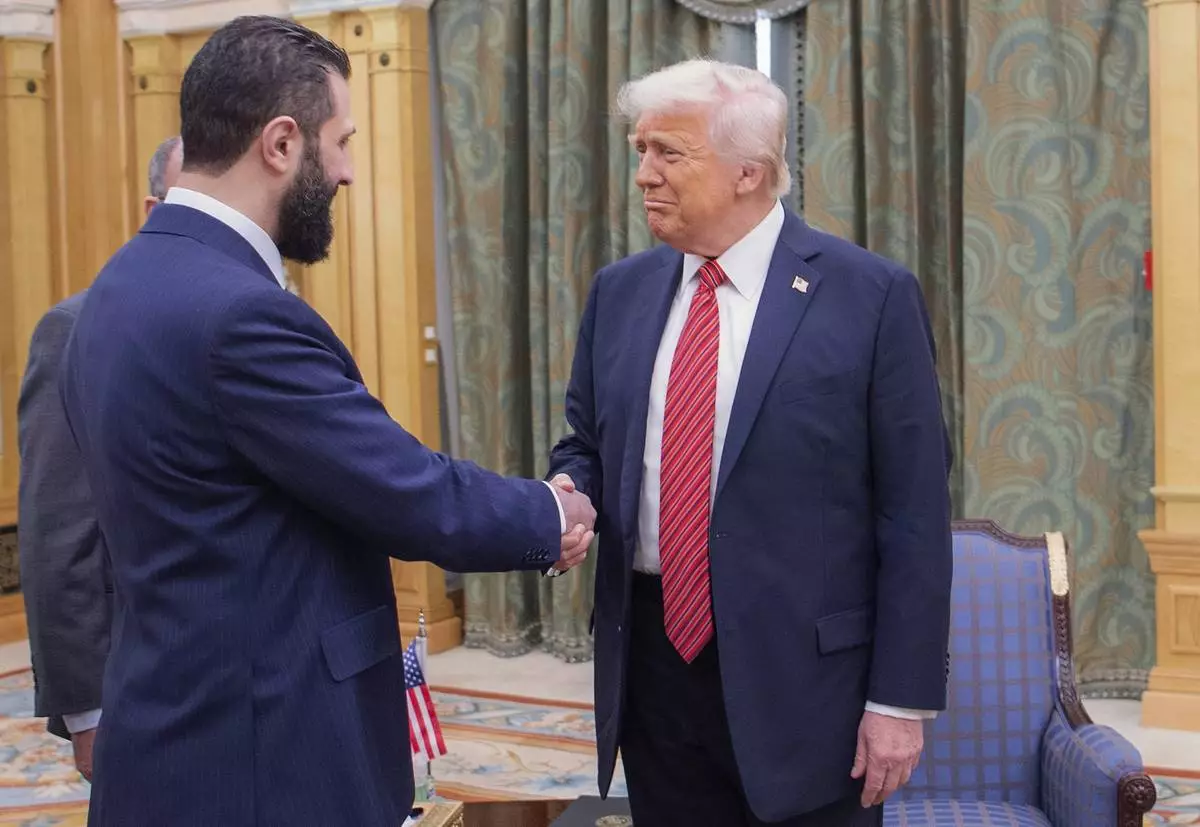
In this photo released by the Saudi Royal Palace, President Donald Trump, right, shakes hands with Syria's interim President Ahmad al-Sharaa, in Riyadh, Saudi Arabia, May 14, 2025. (Bandar Aljaloud/Saudi Royal Palace via AP)
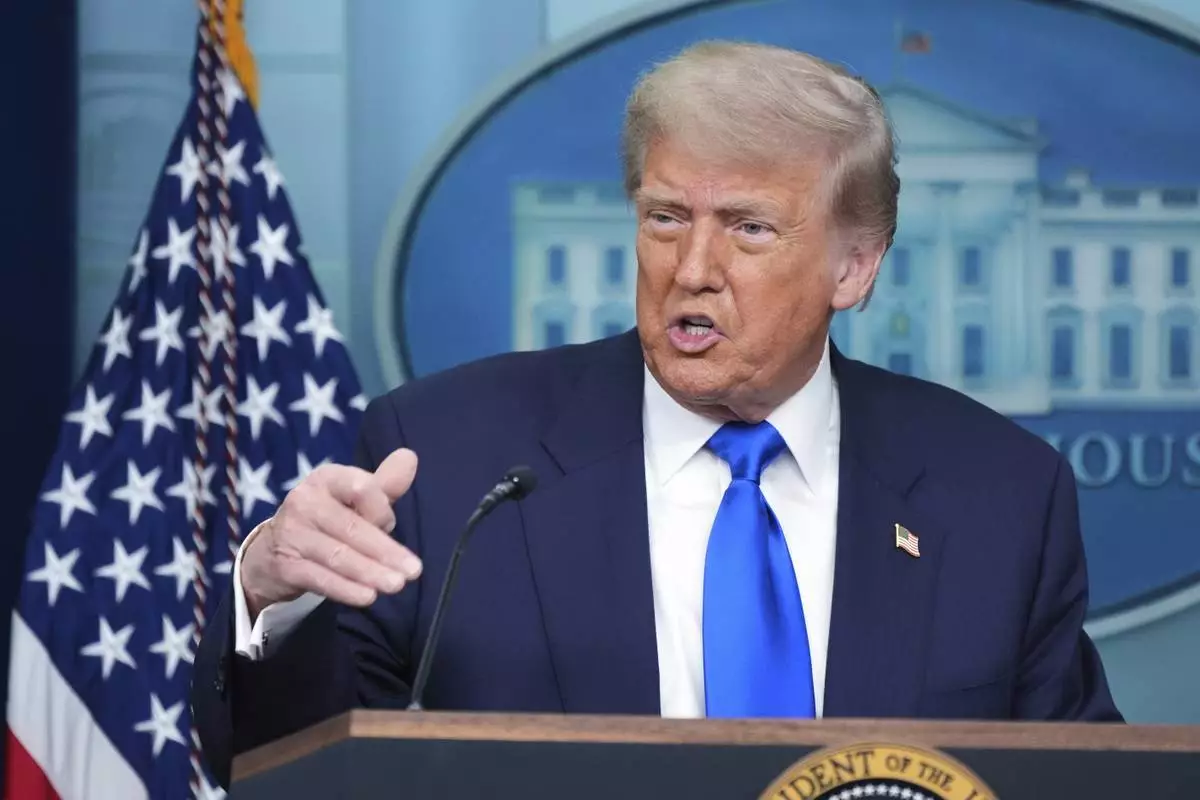
President Donald Trump speaks to the media, Friday, June 27, 2025, in the briefing room of the White House in Washington. (AP Photo/Jacquelyn Martin)
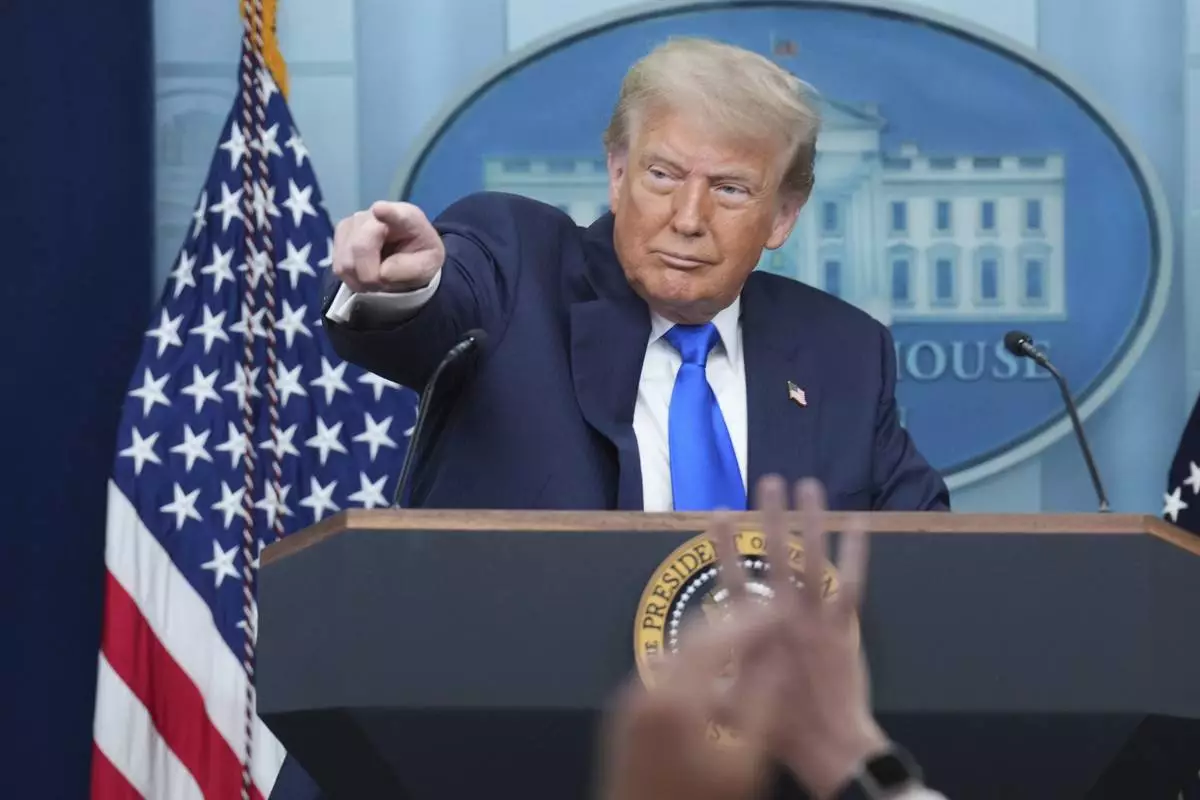
President Donald Trump points to a reporter to take a question as he speaks to the media, Friday, June 27, 2025, in the briefing room of the White House in Washington. (AP Photo/Jacquelyn Martin)
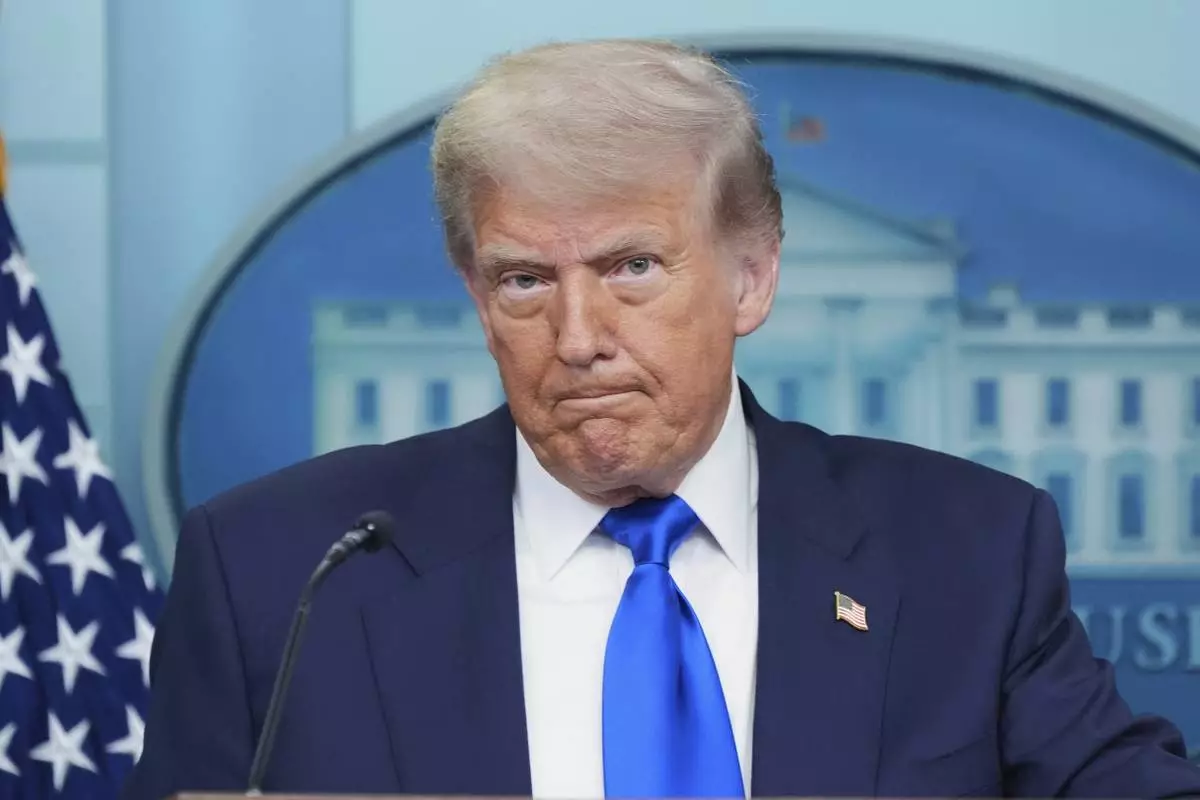
President Donald Trump listens during a briefing with the media, Friday, June 27, 2025, at the White House in Washington. (AP Photo/Jacquelyn Martin)
NEW YORK (AP) — Reviving a campaign pledge, President Donald Trump wants a one-year, 10% cap on credit card interest rates, a move that could save Americans tens of billions of dollars but drew immediate opposition from an industry that has been in his corner.
Trump was not clear in his social media post Friday night whether a cap might take effect through executive action or legislation, though one Republican senator said he had spoken with the president and would work on a bill with his “full support.” Trump said he hoped it would be in place Jan. 20, one year after he took office.
Strong opposition is certain from Wall Street in addition to the credit card companies, which donated heavily to his 2024 campaign and have supported Trump's second-term agenda. Banks are making the argument that such a plan would most hurt poor people, at a time of economic concern, by curtailing or eliminating credit lines, driving them to high-cost alternatives like payday loans or pawnshops.
“We will no longer let the American Public be ripped off by Credit Card Companies that are charging Interest Rates of 20 to 30%,” Trump wrote on his Truth Social platform.
Researchers who studied Trump’s campaign pledge after it was first announced found that Americans would save roughly $100 billion in interest a year if credit card rates were capped at 10%. The same researchers found that while the credit card industry would take a major hit, it would still be profitable, although credit card rewards and other perks might be scaled back.
About 195 million people in the United States had credit cards in 2024 and were assessed $160 billion in interest charges, the Consumer Financial Protection Bureau says. Americans are now carrying more credit card debt than ever, to the tune of about $1.23 trillion, according to figures from the New York Federal Reserve for the third quarter last year.
Further, Americans are paying, on average, between 19.65% and 21.5% in interest on credit cards according to the Federal Reserve and other industry tracking sources. That has come down in the past year as the central bank lowered benchmark rates, but is near the highs since federal regulators started tracking credit card rates in the mid-1990s. That’s significantly higher than a decade ago, when the average credit card interest rate was roughly 12%.
The Republican administration has proved particularly friendly until now to the credit card industry.
Capital One got little resistance from the White House when it finalized its purchase and merger with Discover Financial in early 2025, a deal that created the nation’s largest credit card company. The Consumer Financial Protection Bureau, which is largely tasked with going after credit card companies for alleged wrongdoing, has been largely nonfunctional since Trump took office.
In a joint statement, the banking industry was opposed to Trump's proposal.
“If enacted, this cap would only drive consumers toward less regulated, more costly alternatives," the American Bankers Association and allied groups said.
Bank lobbyists have long argued that lowering interest rates on their credit card products would require the banks to lend less to high-risk borrowers. When Congress enacted a cap on the fee that stores pay large banks when customers use a debit card, banks responded by removing all rewards and perks from those cards. Debit card rewards only recently have trickled back into consumers' hands. For example, United Airlines now has a debit card that gives miles with purchases.
The U.S. already places interest rate caps on some financial products and for some demographics. The Military Lending Act makes it illegal to charge active-duty service members more than 36% for any financial product. The national regulator for credit unions has capped interest rates on credit union credit cards at 18%.
Credit card companies earn three streams of revenue from their products: fees charged to merchants, fees charged to customers and the interest charged on balances. The argument from some researchers and left-leaning policymakers is that the banks earn enough revenue from merchants to keep them profitable if interest rates were capped.
"A 10% credit card interest cap would save Americans $100 billion a year without causing massive account closures, as banks claim. That’s because the few large banks that dominate the credit card market are making absolutely massive profits on customers at all income levels," said Brian Shearer, director of competition and regulatory policy at the Vanderbilt Policy Accelerator, who wrote the research on the industry's impact of Trump's proposal last year.
There are some historic examples that interest rate caps do cut off the less creditworthy to financial products because banks are not able to price risk correctly. Arkansas has a strictly enforced interest rate cap of 17% and evidence points to the poor and less creditworthy being cut out of consumer credit markets in the state. Shearer's research showed that an interest rate cap of 10% would likely result in banks lending less to those with credit scores below 600.
The White House did not respond to questions about how the president seeks to cap the rate or whether he has spoken with credit card companies about the idea.
Sen. Roger Marshall, R-Kan., who said he talked with Trump on Friday night, said the effort is meant to “lower costs for American families and to reign in greedy credit card companies who have been ripping off hardworking Americans for too long."
Legislation in both the House and the Senate would do what Trump is seeking.
Sens. Bernie Sanders, I-Vt., and Josh Hawley, R-Mo., released a plan in February that would immediately cap interest rates at 10% for five years, hoping to use Trump’s campaign promise to build momentum for their measure.
Hours before Trump's post, Sanders said that the president, rather than working to cap interest rates, had taken steps to deregulate big banks that allowed them to charge much higher credit card fees.
Reps. Alexandria Ocasio-Cortez, D-N.Y., and Anna Paulina Luna, R-Fla., have proposed similar legislation. Ocasio-Cortez is a frequent political target of Trump, while Luna is a close ally of the president.
Seung Min Kim reported from West Palm Beach, Fla.
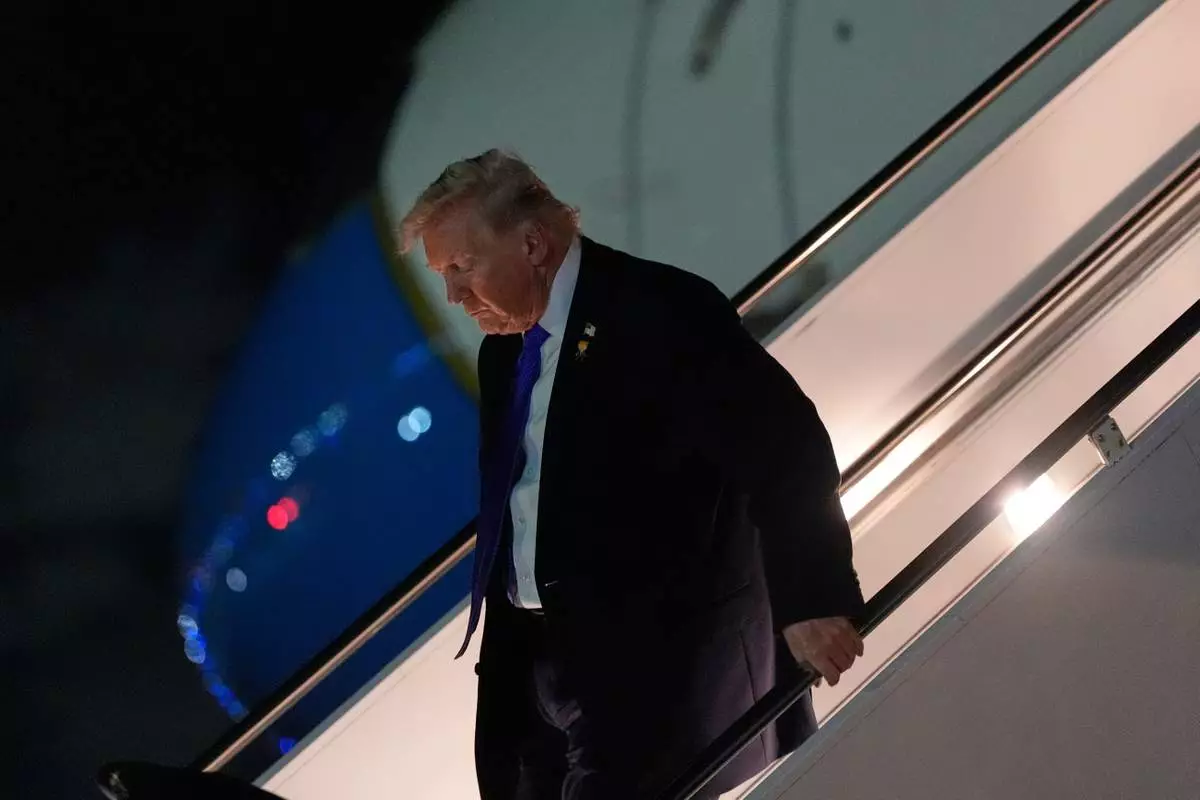
President Donald Trump arrives on Air Force One at Palm Beach International Airport, Friday, Jan. 9, 2025, in West Palm Beach, Fla. (AP Photo/Julia Demaree Nikhinson)
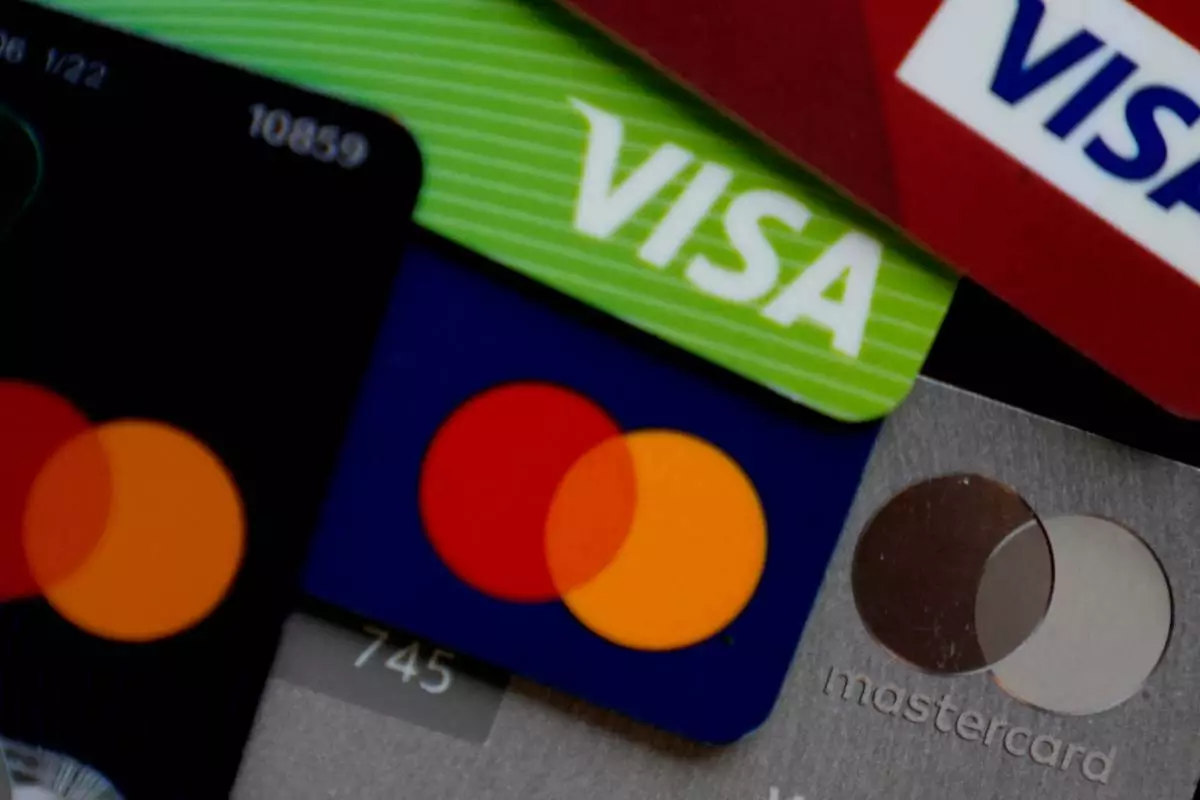
FILE - Visa and Mastercard credit cards are shown in Buffalo Grove, Ill., Feb. 8, 2024. (AP Photo/Nam Y. Huh, File)