RIYADH, Saudi Arabia--(BUSINESS WIRE)--Jun 30, 2025--
Jadwa Investment, a leading investment management and advisory firm in the Middle East, today announced it has led a USD 50 million investment round in PetroApp, Saudi Arabia’s leading fuel management platform, through its flagship blind-pool vehicle, Jadwa GCC Diversified Private Equity Fund. Bunat Ventures, a regional venture capital firm, also participated in the round.
This press release features multimedia. View the full release here: https://www.businesswire.com/news/home/20250630030795/en/
Founded in 2018, PetroApp is Saudi Arabia’s first independent provider of digital fuel payment and fleet management solutions. It is transforming vehicle operations by eliminating cash transactions, reducing fraud, and improving cost control for corporate and government fleets. Beyond fuel, PetroApp also enables access to ancillary services—such as car washes, oil changes, tire and battery replacements—via a seamless, fully cashless platform.
Today, PetroApp manages over 500,000 vehicles for 10,000+ corporate clients through a network of more than 5,000 fuel stations across Saudi Arabia, Egypt, Thailand, and Nigeria, as the company continues its international expansion. It was recently accredited by the Expenditure and Projects Efficiency Authority (EXPRO) as a qualified provider for government sector services and is preparing to launch its retail offering in the Kingdom, unlocking significant avenues for growth.
This transaction marks Jadwa’s fifth investment under its Jadwa GCC Diversified Private Equity Fund, launched in late 2024. It follows the fund’s recent landmark acquisition of a majority stake in Makhazen Alenaya, a market leader in Saudi Arabia’s beauty and personal care retail sector, highlighting Jadwa’s active pipeline across high-growth verticals.
Tariq Al-Sudairy, Managing Director and CEO of Jadwa Investment, commented: “PetroApp presents a compelling investment opportunity, supported by a robust technology infrastructure and strong network effects. The investment aligns with our fund’s strategy of backing ambitious management teams leading high-growth, scalable businesses across a diversified range of promising sectors.”
Elie El-Khoury, Head of Private Equity at Jadwa Investment, added: “PetroApp’s impactful solution reflects the kind of innovation that supports Vision 2030’s broader shift toward digitizing critical sectors across the Kingdom. This is further reflected in PetroApp’s recent accreditation as a qualified service provider by EXPRO.”
Abdullah Al Kasabi, Chairman of PetroApp and CEO of RZM Investment, emphasized the significance of this investment round, describing it as a turning point for the company. He stated: “Back in 2020, we saw in PetroApp a promising model that blends innovation with operational efficiency in serving both fuel stations and corporate clients. Our decision to invest was driven by a clear conviction in the company’s vision and its strong potential to deliver sustainable growth. Today, we are proud to welcome Jadwa Investment and Bunat Ventures. This marks a defining milestone in PetroApp’s institutional journey and supports our ambition to list on the Saudi Exchange’s Main Market.”
Abdulaziz Al Senan, Co-Founder and CEO of PetroApp, expressed his enthusiasm about the deal, saying: “We are excited to embark on this partnership at a pivotal stage in PetroApp’s journey. Jadwa’s institutional expertise will be critical in strengthening our foundation, accelerating growth, and expanding our leadership in Saudi Arabia and beyond. Together, we remain committed to setting new benchmarks in fuel and fleet management innovation, aligning with our customers’ evolving expectations and the broader objectives of Saudi Vision 2030.”
About Jadwa Investment
Jadwa Investment is a Riyadh-headquartered investment management and advisory firm with more than SAR 100 billion (USD 30 billion) in client assets across public equity, private equity, real estate, private credit, fixed income, and money market investments. Its clients include government-related entities, local and international institutional investors, prominent family offices, and high-net-worth individuals.
Jadwa Investment is licensed by the Capital Market Authority of Saudi Arabia (CMA) as a capital market institution, with registration number 06034-37.
Source:AETOSWire

Jadwa leads a USD 50 million investment round in PetroApp (Photo: AETOSWire)
NEW YORK (AP) — Taylor Swift broke records at the 2026 MTV Video Music Awards, as she is known to do.
The pop powerhouse received the inaugural Artist Director Honors on Sunday night, becoming the most-awarded artist in VMA history.
Previously, she was tied with Beyoncé for the title, with 30 VMAs each. The new award is meant to recognize artists “whose work behind the camera has expanded the possibilities of music video and advanced the art of visual storytelling."
“I got to start making music videos and being a part of music videos 20 years ago,” Swift said in her speech, adding that she's been involved in making roughly 60 music videos, 18 of which she wrote and directed.
“You, the fans, make it so much fun,” she said.
She also took home the top prize of the night — video of the year — for “The Fate of Ophelia" from her album “The Life of a Showgirl.”
Swift dedicated that award to the “ultimate showgirl,” the late Dolly Parton.
“I think we were all very lucky to share this planet with Dolly Parton for a time," Swift said.
Swift also debuted the music video for her new song, “Patient Zero,” during the award show. She directed the visual, which stars Colin Farrell and Dakota Johnson. Johnson and Swift portray mirror images of each other.
“Patient Zero” is also her first single since marrying Kansas City Chiefs tight end Travis Kelce at Madison Square Garden in July.
The two-hour show was broadcast live on CBS from the Peacock Theater in Los Angeles.
“It's mother," were the first words uttered by Madonna as she opened the VMAs with her 2026 single “Bring Your Love" alongside collaborator Sabrina Carpenter. Later in the night, the pair won the award for best collaboration for the song.
“It’s been a while since I did one of these things,” Madonna joked. “So, I’ve prepared nothing.”
When it came time for her return to the stage to accept the award for artist of the year, Madonna began with, “First of all, I would like to thank my fingers because I can always count on them.” Returning a third time to accept for best dance, she said simply, "I came alive on the dance floor. ... We’re all equal on the dance floor.”
If her aim was to bring the dance floor to the award show stage, Madonna did exactly that in her opening number — and then some, when Charli xcx emerged from a club bathroom to perform their reworked version of “Danceteria.” Around them? A trove of dancers and various famous friends, including actor Debi Mazar, Sombr and Julia Garner.
The show, which was delayed 20 minutes by a tight NFL game, wasted no time getting heart rates up.
Snoop Dogg, a 13-time VMAs nominee and three-time winner, emerged as host shortly thereafter.
“Now that is an icon,” Dogg said of Madonna, before pivoting to a joke: “She ain't a virgin no more.”
Teyana Taylor then presented the first award for best pop to LISA for “Dream,” featuring Kentaro Sakaguchi.
“Thank you MTV for this amazing award,” she said while holding back tears. “All those late-night dreams brought me here today.” It was a different scene about an hour later, when she returned to the stage for her hip-hop heavy hitter “Sawadika,” which loosely translates to “Hello” in her native Thai.
There was always going to be a big musical tribute to Dolly Parton. Kacey Musgraves paid homage to the late, great country music icon with a cover of Parton’s “I Will Always Love You.”
Parton, whose soaring vibrato vocals, poignant songwriting and sparkling costumes defined her rise from a log cabin in the Tennessee mountains to the height of stardom and acclaim, died in Nashville of cancer in August. She was 80.
Performances arrived fast and furious: Raye delivered a medley of her throwback soul, including “I Will Overcome” and “Where Is My Husband!”
Bruno Mars slowed things down with “Dance With Me.” Shaboozey launched into his saloon single “Cowgirl,” before being joined by Gunna for some hybrid country-rap with their crossover track, “High Noon.”
“Survivor” host Jeff Probst and actor Brandon Sklenar introduced the final performance of the night and arguably its best – a partial reenactment of GENER8ION and Yung Lean’s "STORM" music video – which began with Lean smashing a VMA ‘Moon person’ trophy.
Sienna Spiro belted out her “Great Expectation.” It was a welcome introduction to the new talent, who was named best new artist shortly thereafter.
Orville Peck introduced a tribute to George Michael, who died 10 years ago on Christmas Day. He was 53.
If this year's VMAs felt too pop-heavy for some viewers, that changed when the coveted Video Vanguard Award was awarded to Nirvana.
“They were completely original and always fearless at a time when the status quo kind of got to the point of being formulaic,” Public Enemy rapper Chuck D said of the grunge greats.
The award was presented to surviving members Krist Novoselic, Dave Grohl and Pat Smear. Frontman Kurt Cobain died in 1994.
“Kurt was one of one,” Novoselic said in their acceptance speech, adding that the band never imagined its sound and aesthetic would resonate with so many people. He said the music continues to endure because people are still hungry for “something real, something uncompromising” and a message that “it’s just OK to come as you are.”
For more coverage of this year’s MTV Video Music Awards, visit https://apnews.com/hub/mtv-video-music-awards
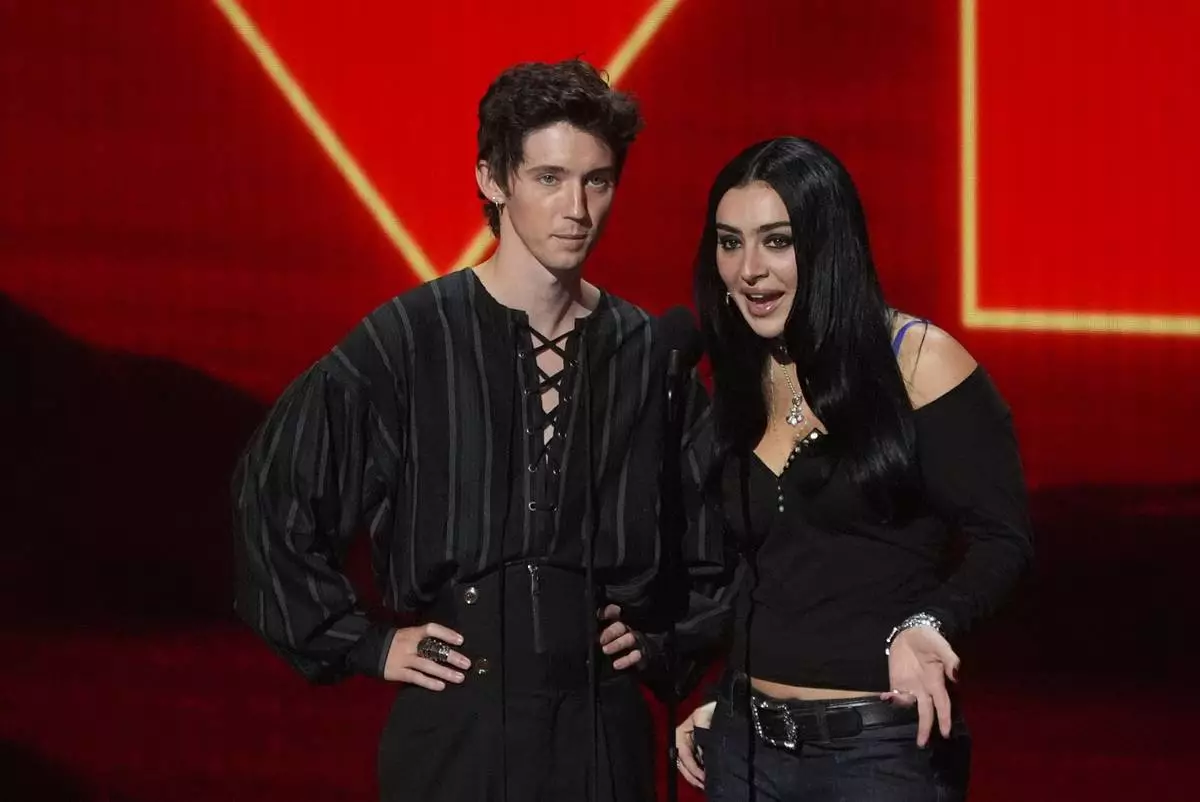
Troye Sivan, left, and Charli xcx present the award for best dance during the MTV Video Music Awards on Sunday, Sept. 27, 2026, at the Peacock Theater in Los Angeles. (AP Photo/Chris Pizzello)
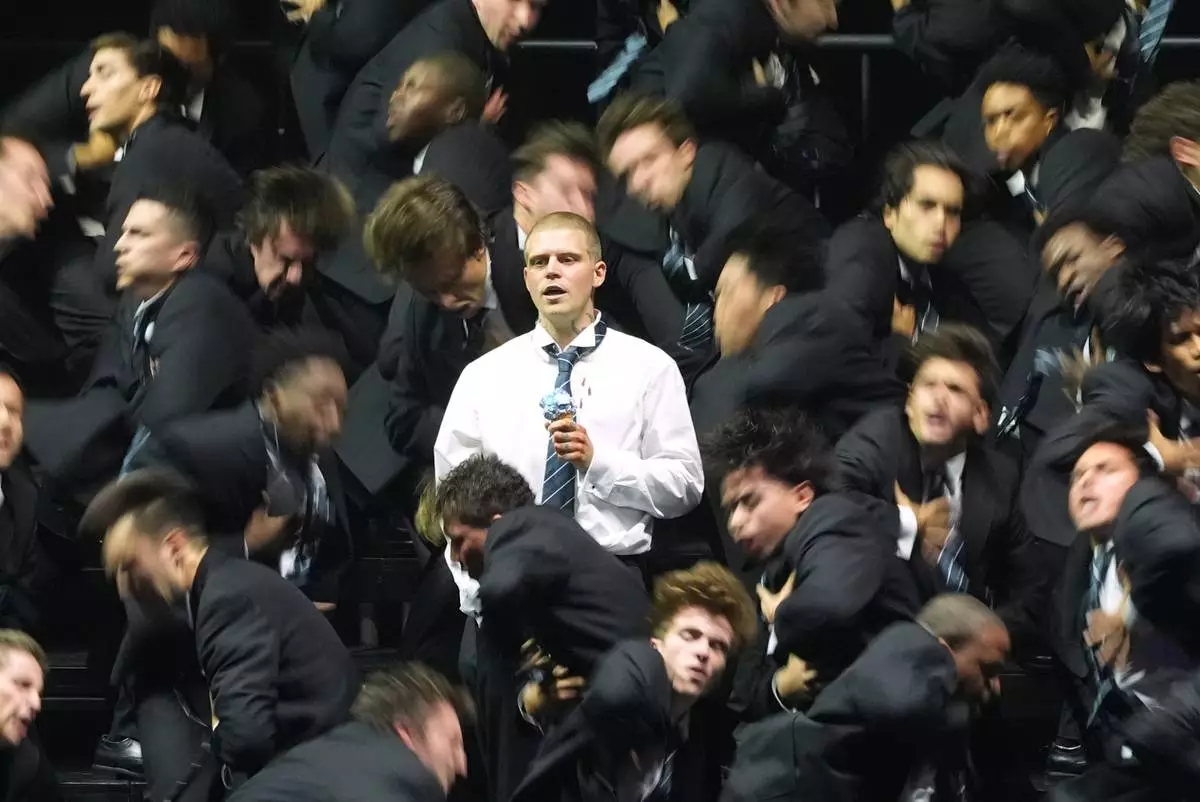
Yung Lean performs "Storm II" during the MTV Video Music Awards on Sunday, Sept. 27, 2026, at the Peacock Theater in Los Angeles. (AP Photo/Chris Pizzello)

Lisa accepts the award for best pop for "Dream feat. Kentaro Sakaguchi" during the MTV Video Music Awards on Sunday, Sept. 27, 2026, at the Peacock Theater in Los Angeles. (AP Photo/Chris Pizzello) CORRECTION: Corrects name to Kentaro, instead of Kentara
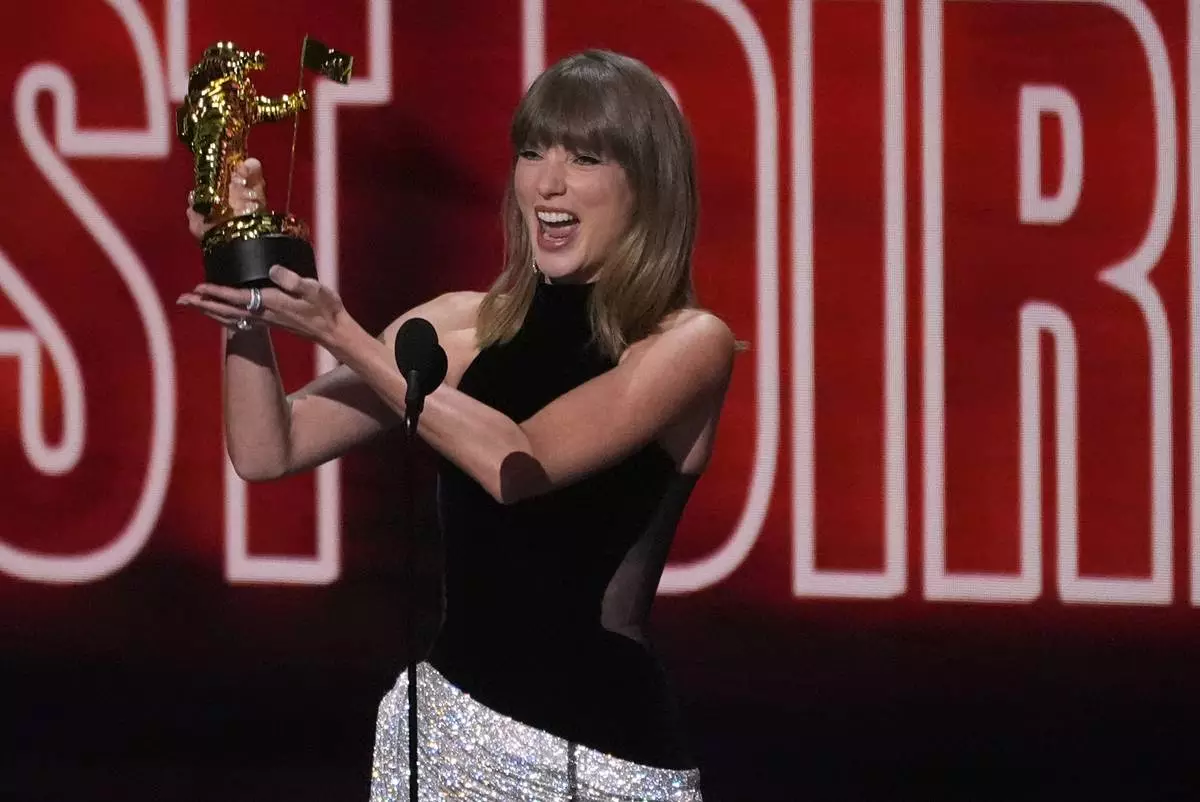
Taylor Swift accepts the MTV VMA Artist Director Honors award during the MTV Video Music Awards on Sunday, Sept. 27, 2026, at the Peacock Theater in Los Angeles. (AP Photo/Chris Pizzello)
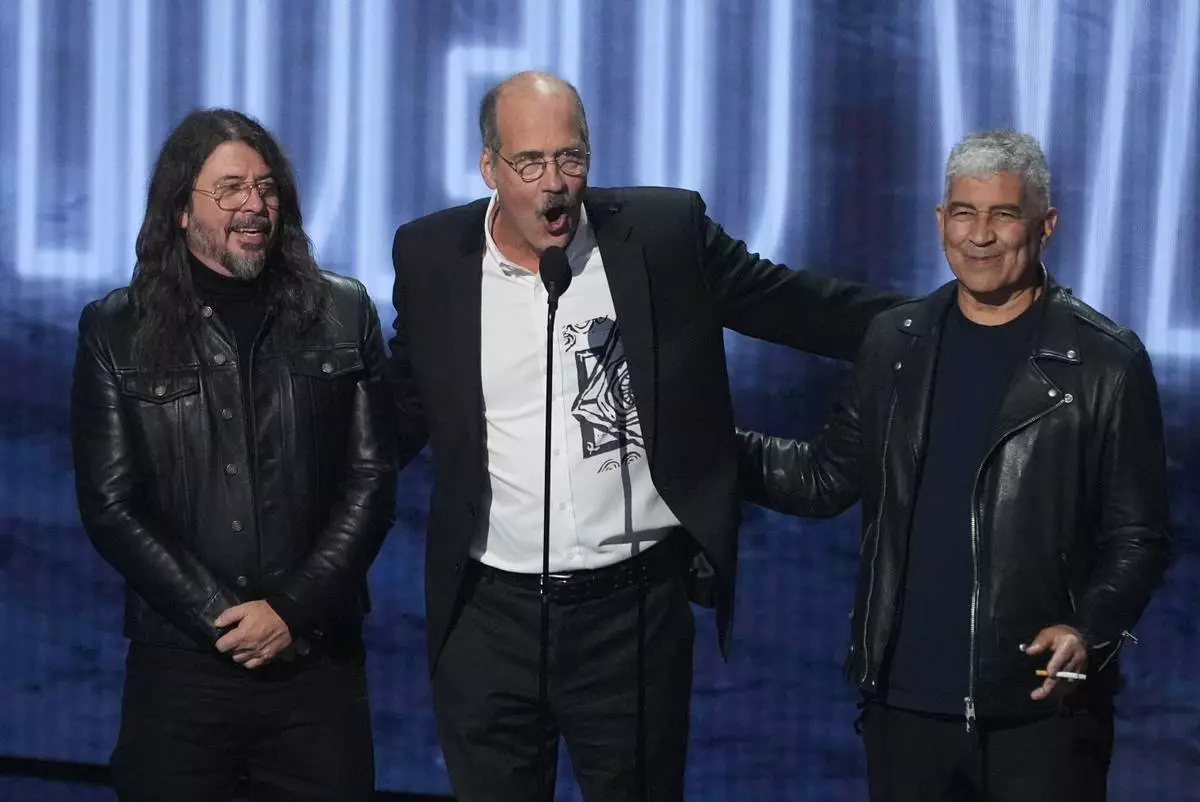
David Grohl, from left, Krist Novoselic, and Pat Smear of Nirvana accept the video vanguard award during the MTV Video Music Awards on Sunday, Sept. 27, 2026, at the Peacock Theater in Los Angeles. (AP Photo/Chris Pizzello)
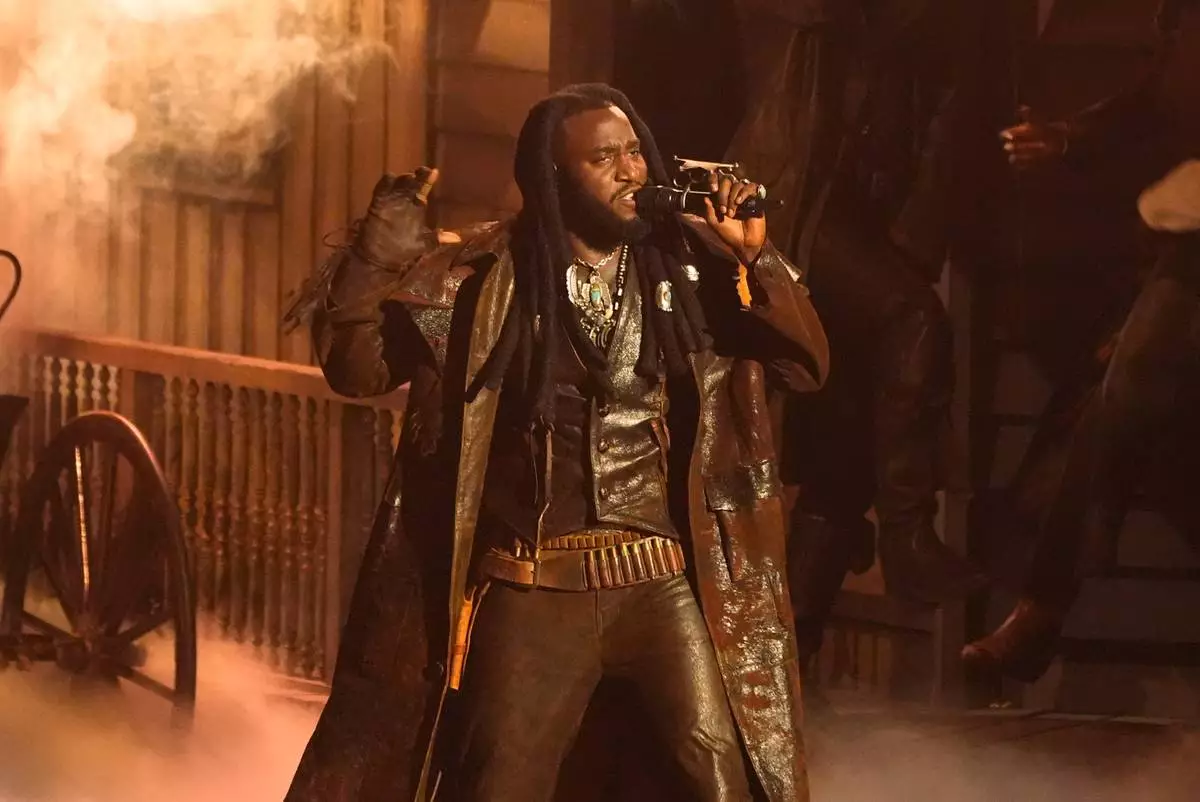
Shaboozey performs during the MTV Video Music Awards on Sunday, Sept. 27, 2026, at the Peacock Theater in Los Angeles. (AP Photo/Chris Pizzello)
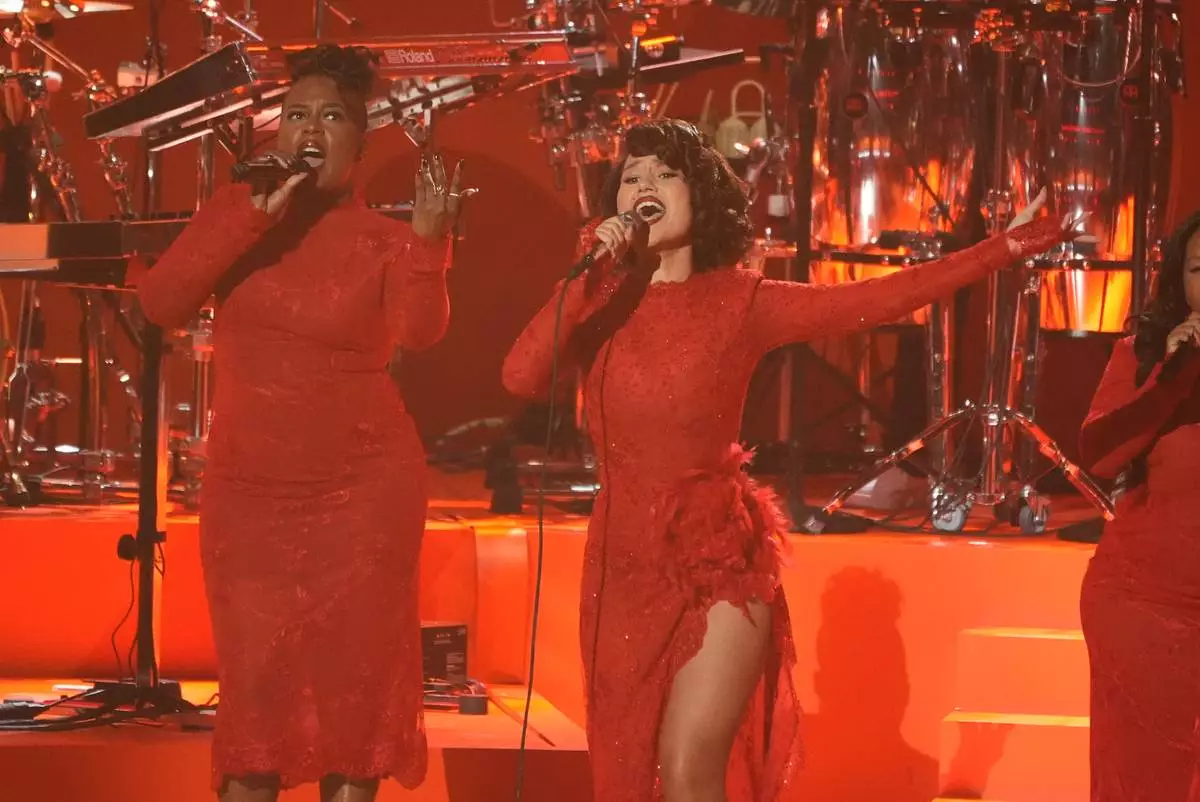
RAYE, center, performs "Where is my husband!!" during the MTV Video Music Awards on Sunday, Sept. 27, 2026, at the Peacock Theater in Los Angeles. (AP Photo/Chris Pizzello)
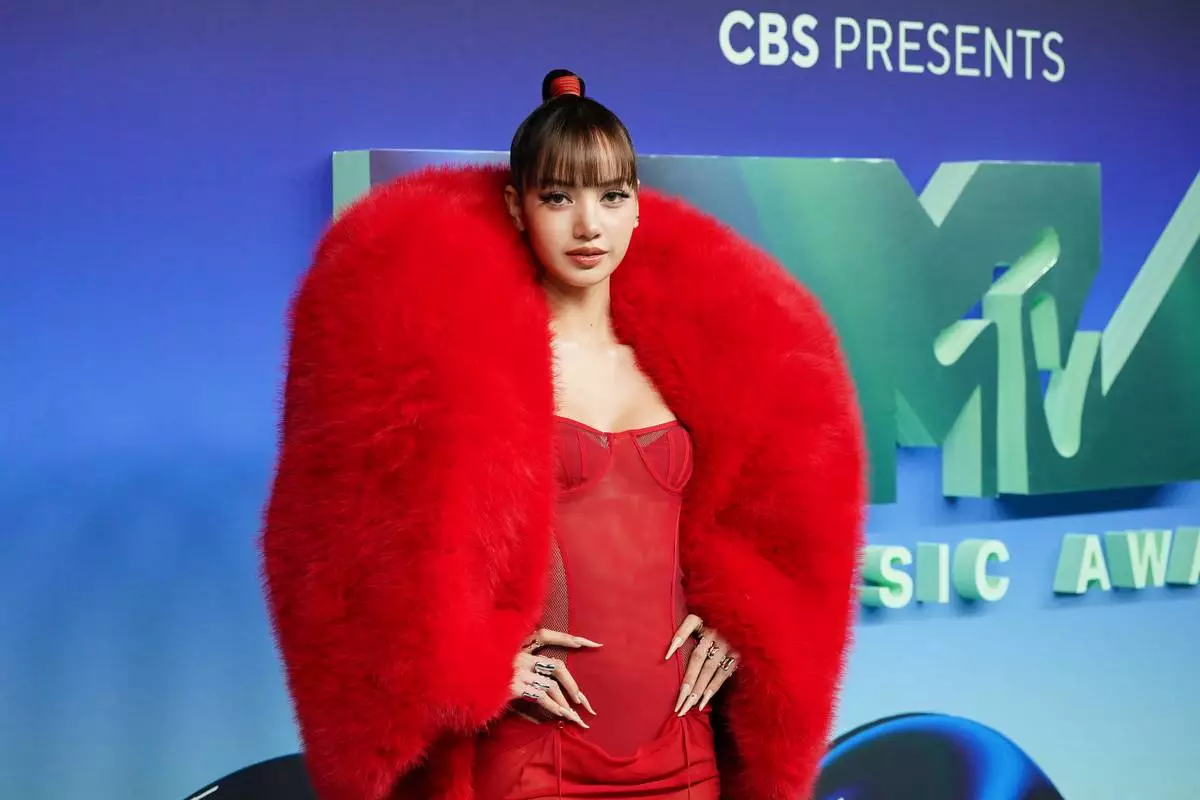
LISA arrives at the MTV Video Music Awards on Sunday, Sept. 27, 2026, at the Peacock Theater in Los Angeles. (Photo by Jordan Strauss/Invision/AP)
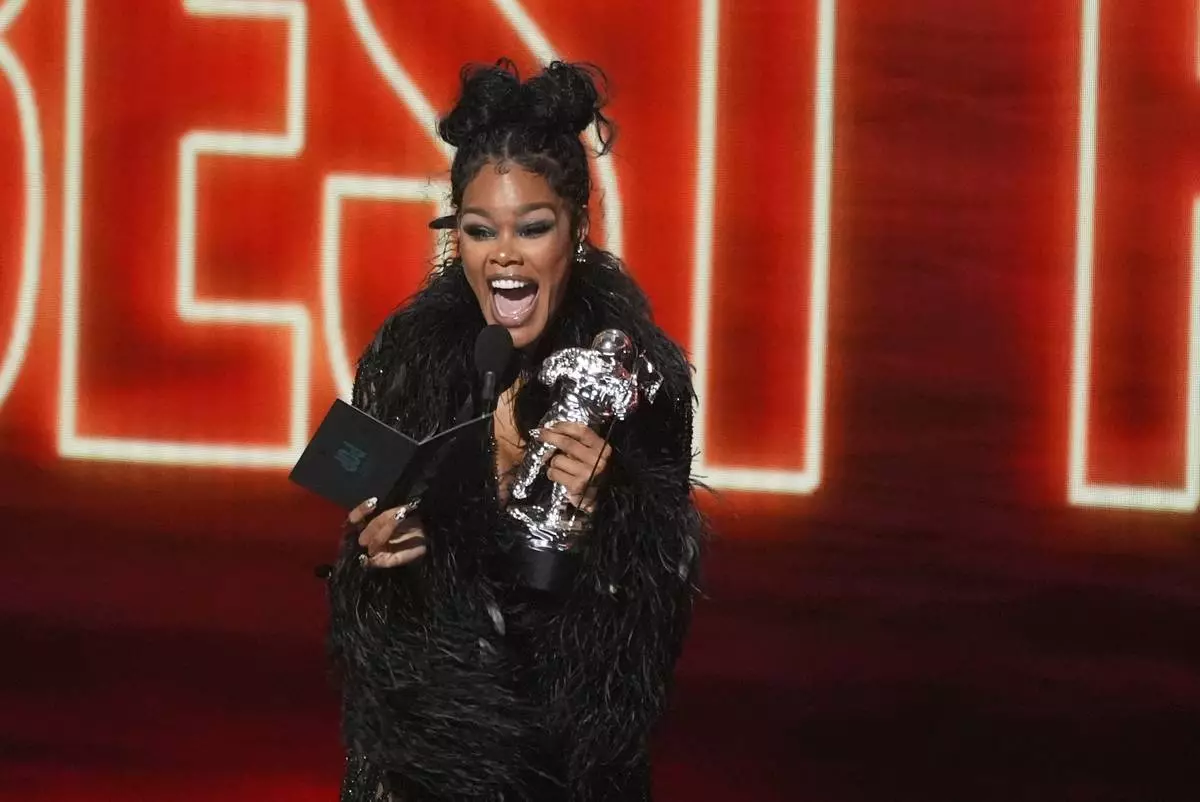
Teyana Taylor presents the award for best pop during the MTV Video Music Awards on Sunday, Sept. 27, 2026, at the Peacock Theater in Los Angeles. (AP Photo/Chris Pizzello)

Lisa accepts the award for best pop for "Dream feat. Kentara Sakaguchi" during the MTV Video Music Awards on Sunday, Sept. 27, 2026, at the Peacock Theater in Los Angeles. (AP Photo/Chris Pizzello)
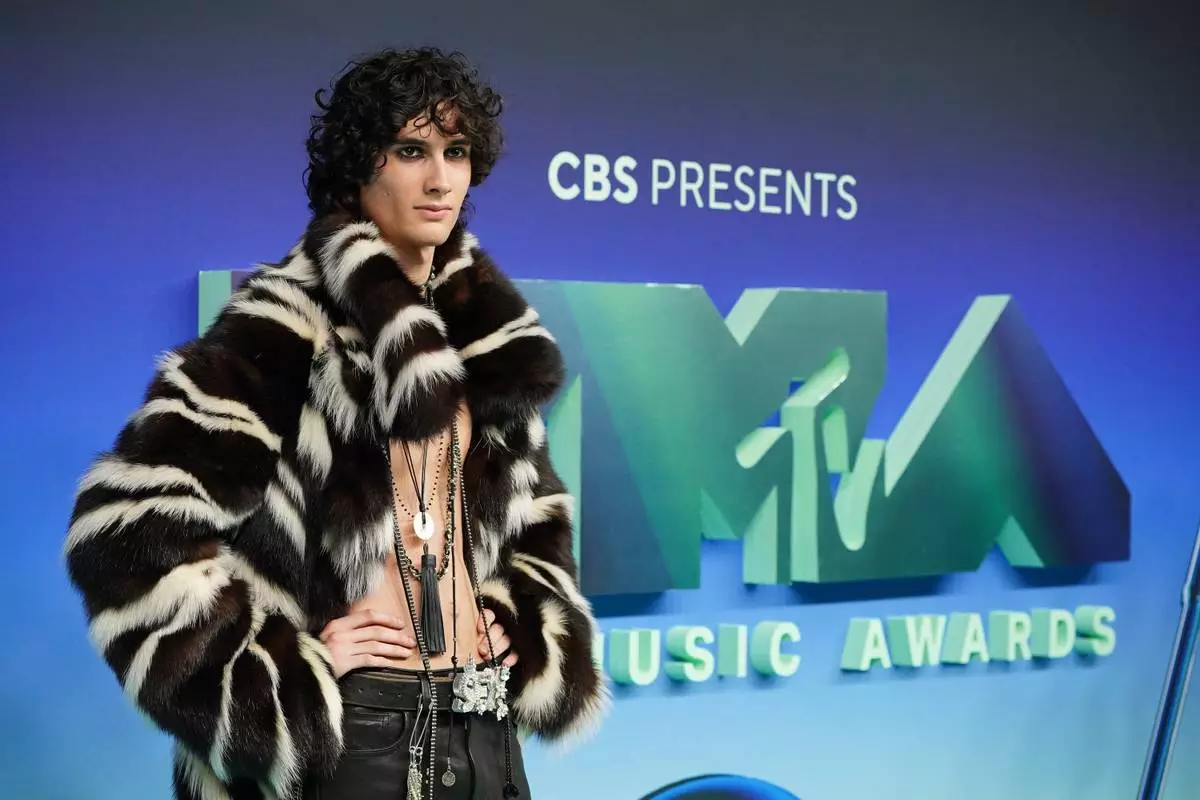
Sombr arrives at the MTV Video Music Awards on Sunday, Sept. 27, 2026, at the Peacock Theater in Los Angeles. (Photo by Jordan Strauss/Invision/AP)
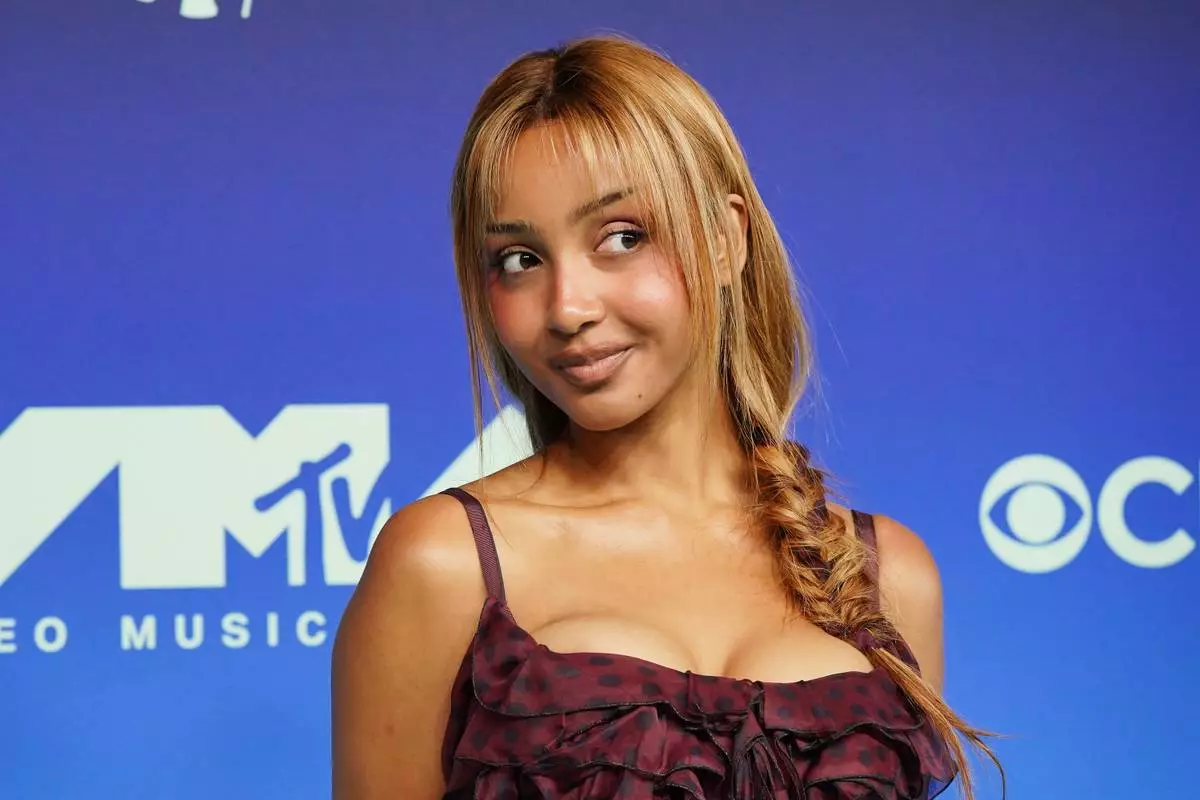
PinkPantheress arrives at the MTV Video Music Awards on Sunday, Sept. 27, 2026, at the Peacock Theater in Los Angeles. (Photo by Jordan Strauss/Invision/AP)
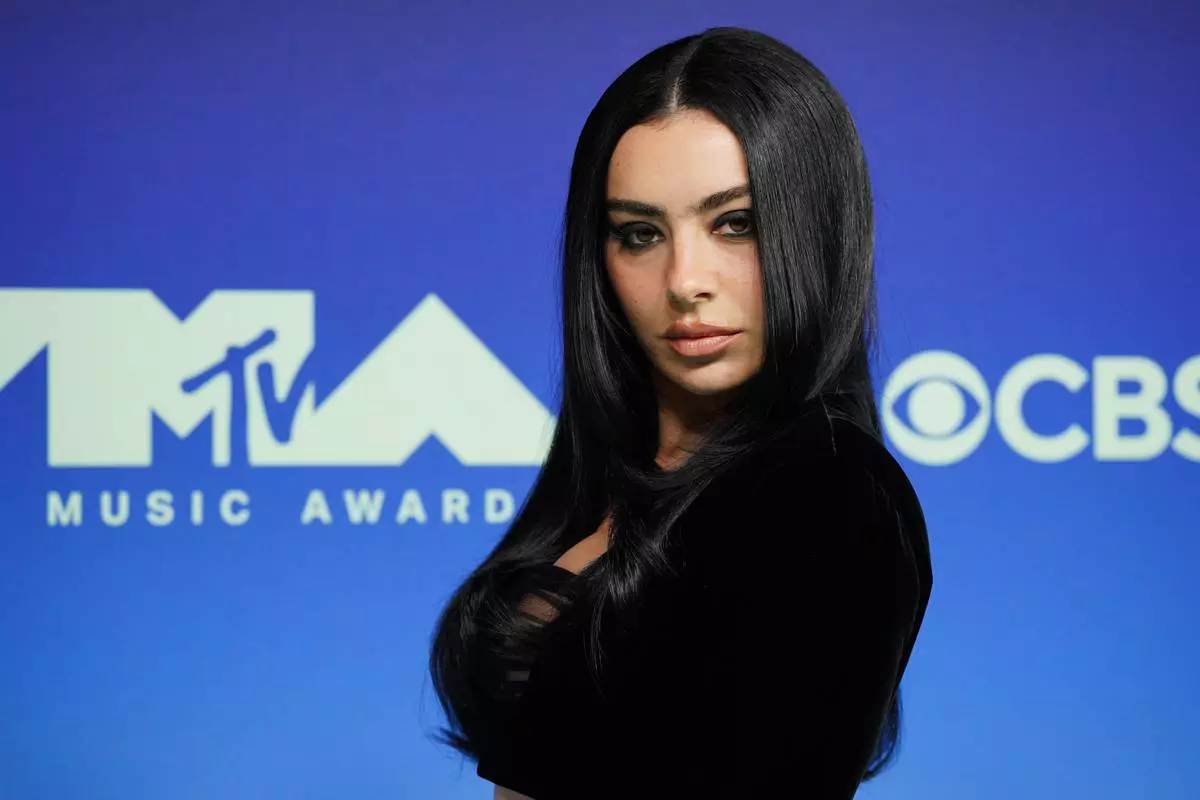
Charli xcx arrives at the MTV Video Music Awards on Sunday, Sept. 27, 2026, at the Peacock Theater in Los Angeles. (Photo by Jordan Strauss/Invision/AP)
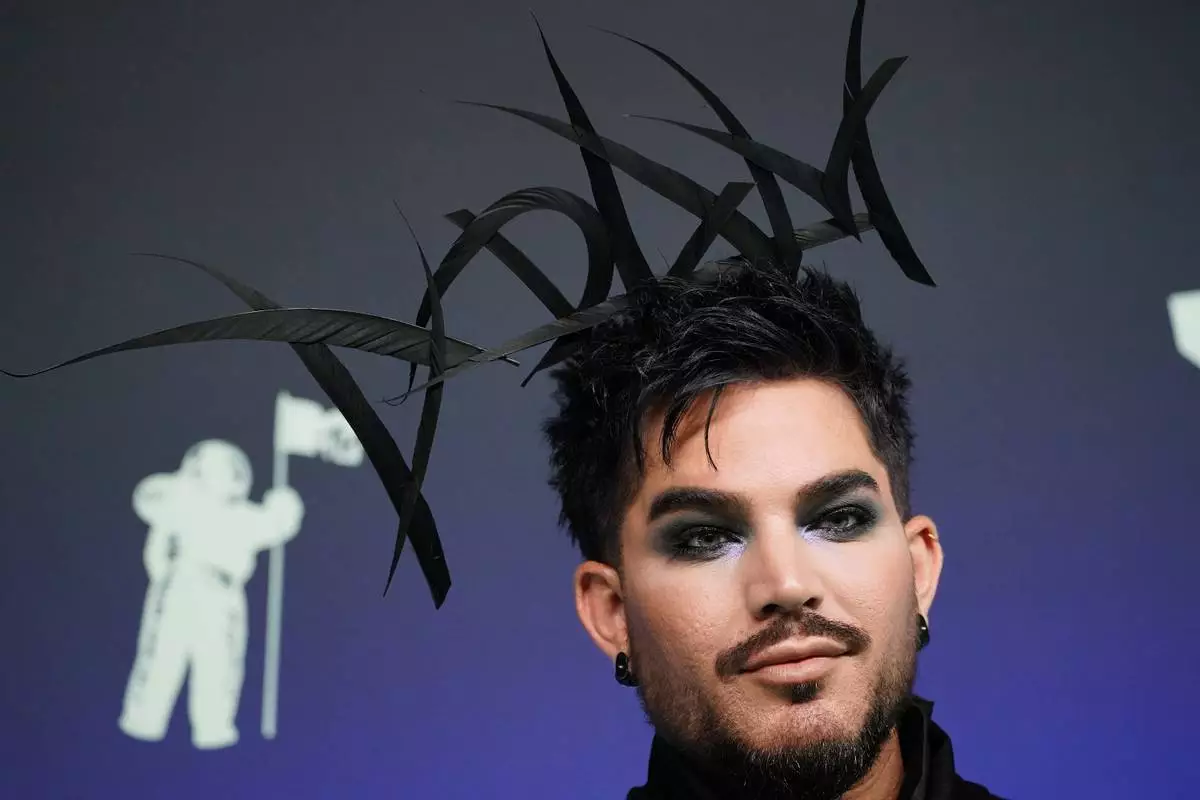
Adam Lambert arrives at the MTV Video Music Awards on Sunday, Sept. 27, 2026, at the Peacock Theater in Los Angeles. (Photo by Jordan Strauss/Invision/AP)
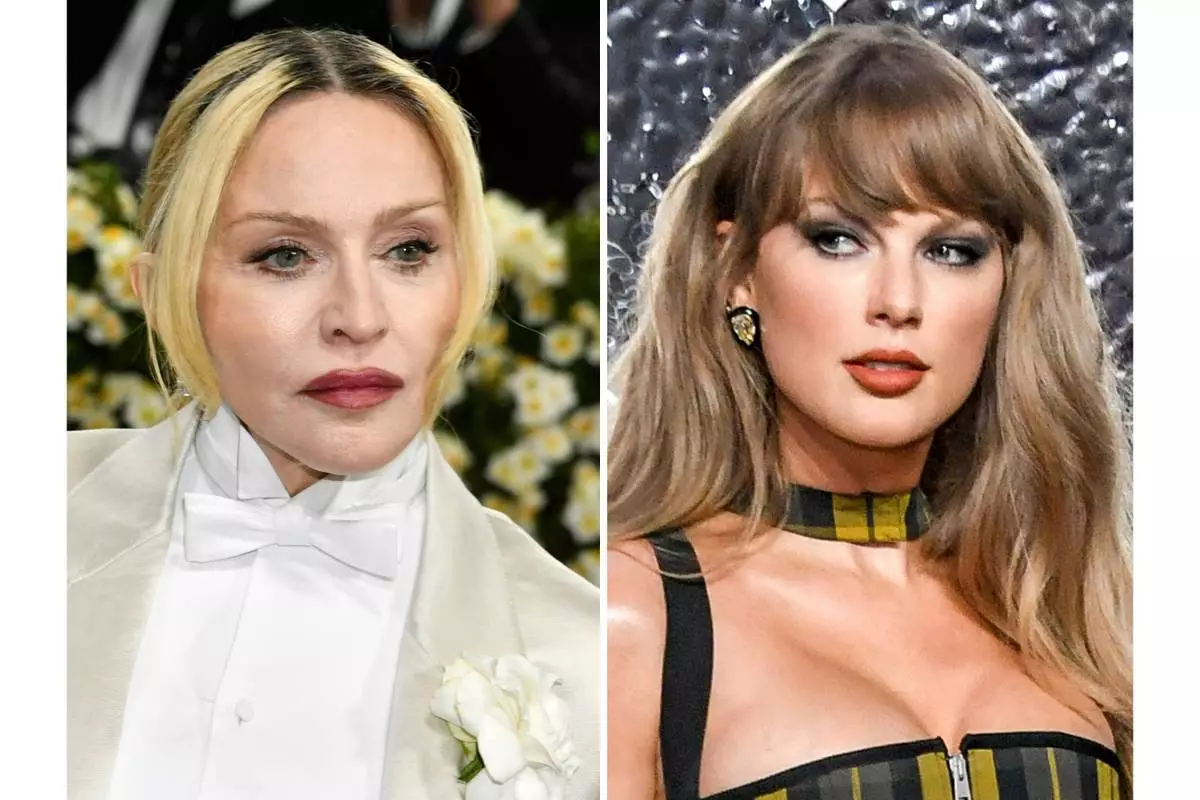
Madonna appears at The Metropolitan Museum of Art's Costume Institute benefit gala in New York on May 5, 2025, left, and Taylor Swift appears at the MTV Video Music Awards in Elmont, N.Y., on Sept. 11, 2024. (Photos by Evan Agostini/Invision/AP, File)
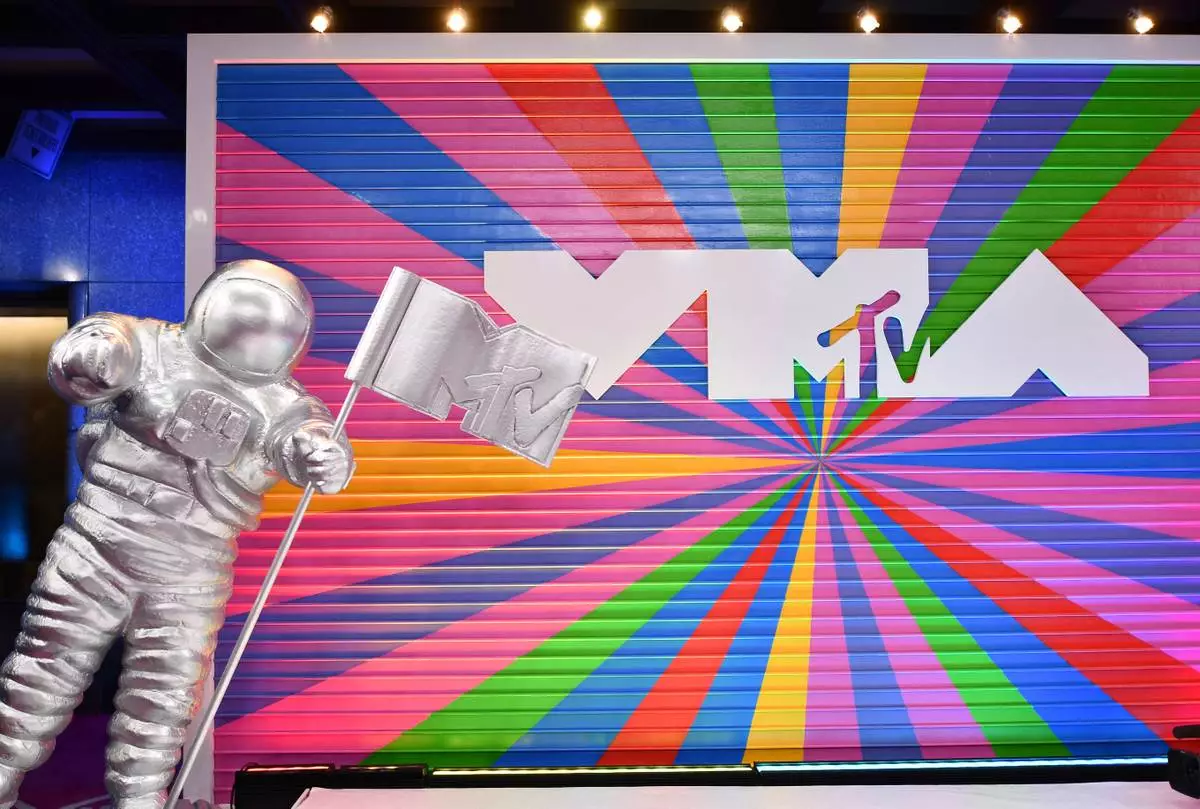
FILE - A statue of the MTV Moon Man appears on the red carpet at the MTV Video Music Awards on Aug. 20, 2018, in New York. (Photo by Charles Sykes/Invision/AP, File)